Nurturing Little Kitchen Storage Ideas for a Peaceful Home
For many years, I lived with a kitchen that felt perpetually dim, no matter how many overhead bulbs I replaced. I used to think that “more light” simply meant “brighter bulbs,” but that mistake left my little kitchen feeling like a cold, clinical exam room rather than the warm heart of my home. I’ve realized that the secret to those beautiful, bright mornings isn’t about intensity; it’s about the gentle placement of light that catches the steam from your tea and welcomes you into the day. This discovery changed everything for me, turning a cramped cooking space into a sanctuary.
Creating a luminous kitchen is a journey of layers, and it’s perfectly fine to take your time as you find what feels right for your family. If you are just beginning to rethink your space, you might find my broader guide on the Heart of the Home: 20 Loving Little Kitchen Ideas to Maximize Your Space a wonderful place to start. Today, however, let’s focus specifically on how we can invite the light in, even when the square footage is modest.
✨ Before You Start: Bright Mornings: Little Kitchen Lighting Ideas Mindset
Under-Cabinet Comfort
One of the most transformative things you can do for a small kitchen is to address the shadows living under your cabinets. When you illuminate those counters, it does more than just help you see your cutting board; it actually pushes the “walls” of your kitchen back. By lighting up the periphery, the whole room feels significantly larger and more breathing room is created. It is a gentle way to expand your space without moving a single wall.
Under-Cabinet LED Warmth
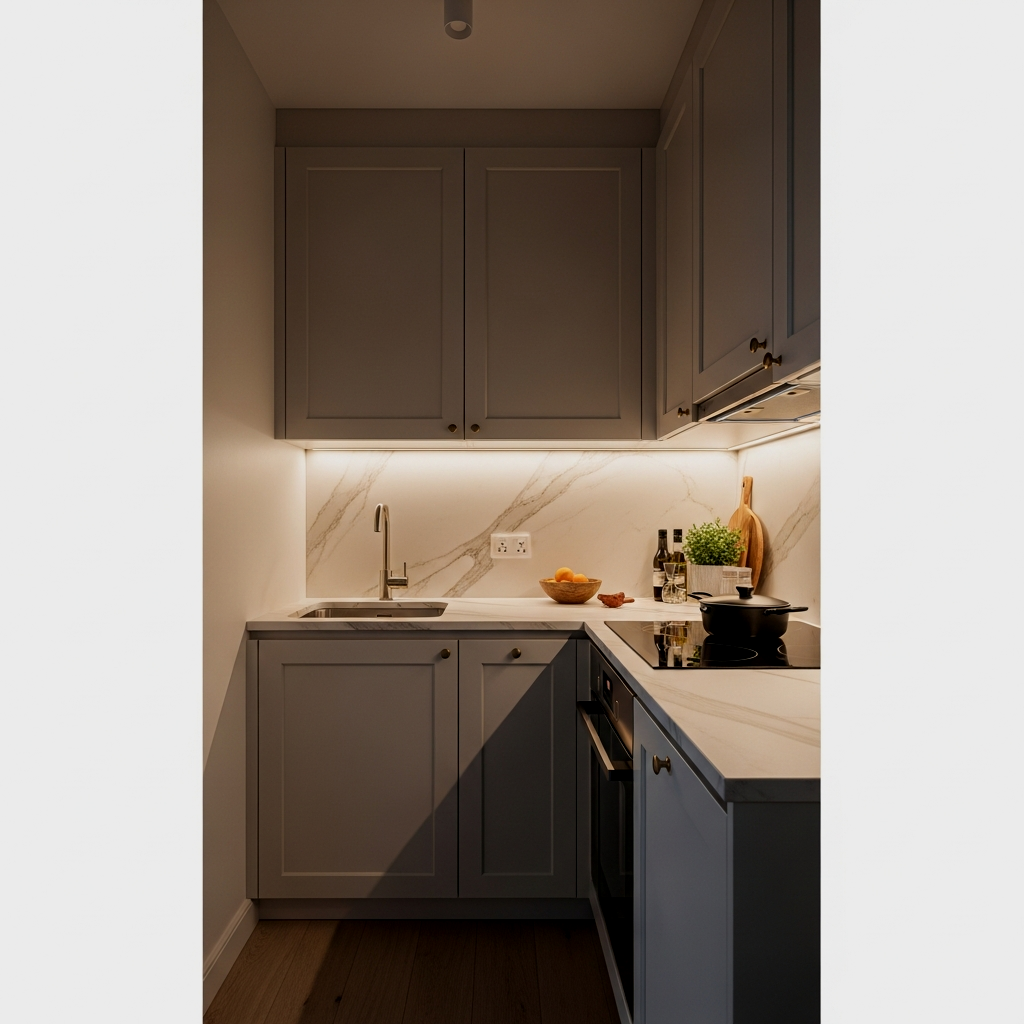
LED strips or puck lights under your upper cabinets provide a continuous glow that eliminates the harsh shadows that often make a small kitchen feel cluttered. I always suggest choosing a warm-toned LED; it creates a space that holds you comfortably while you prep your morning toast. This steady, soft light makes the countertops feel like an extension of the room’s floor plan, giving the illusion of a wider workspace.
Mount your LED strips closer to the front lip of the cabinet rather than the back wall. This prevents a “spotlight” effect on your backsplash and provides a more even, helpful wash of light over your entire counter surface.
The Glass Globe Pendant
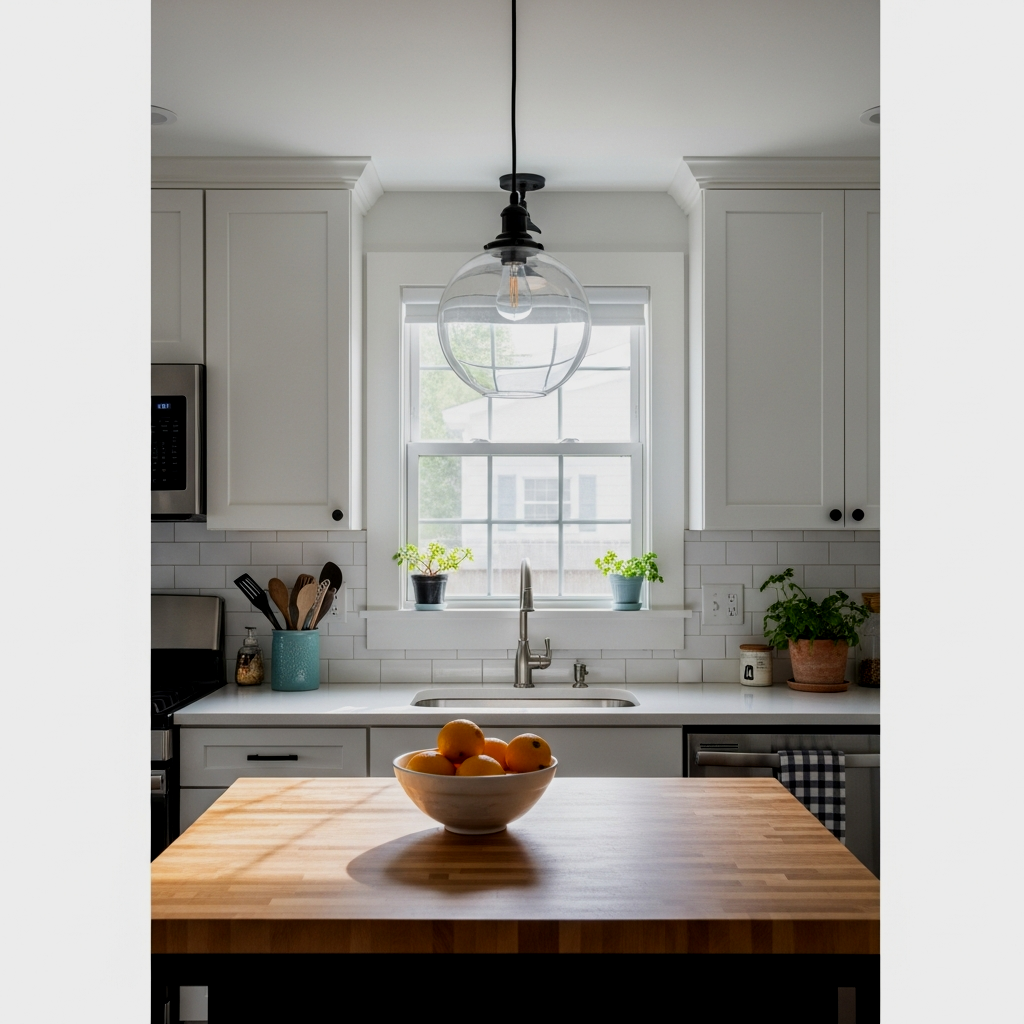
In a small kitchen, we often worry that hanging a light will make the ceiling feel lower. A glass globe pendant is the perfect solution for this. Because it is transparent, it provides a focal point over a sink or island without visually blocking the view. It allows the eye to travel through the fixture, maintaining an airy and open atmosphere. It’s a lovely way to add a touch of timeless elegance while keeping the “visual weight” of the room light and easy.
Sun-Drenched Breakfast Nook
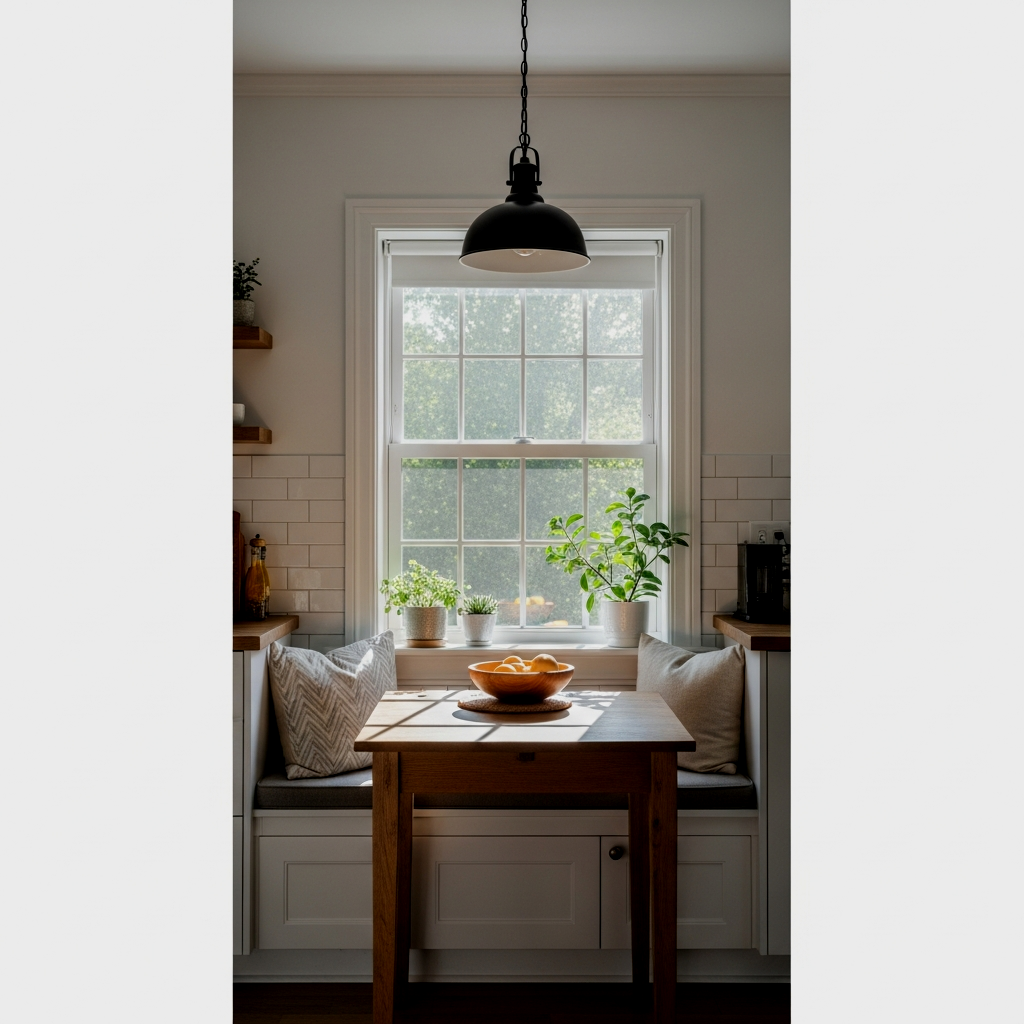
Nothing compares to the beauty of natural light. If you have a window, try to position your seating nearby to create a sun-drenched breakfast nook. Using light-filtering shades rather than heavy curtains allows the morning sun to bathe the room. This natural brightness works beautifully when you are considering finding your flow in a little kitchen layout, as it draws people toward the light and creates a natural gathering spot for that first cup of coffee.
The Rule of Three Heights: For a kitchen that feels balanced, ensure you have light at three different levels: eye level (pendants or sconces), counter level (under-cabinet), and ceiling level (flush mounts). This prevents “flat” lighting and creates a cozy, dimensional atmosphere.
Pendants with Personality
Choosing a focal point light is an opportunity to express your style, but in a small space, we must be careful not to overwhelm the ceiling. Look for fixtures that have character—perhaps a touch of brass or a unique shape—but maintain a sense of proportion. These “jewelry” pieces of the kitchen should complement the room, not dominate it. Remember to always use warm bulbs; they ensure the light feels like a hug rather than a searchlight.
Industrial Task Sconces
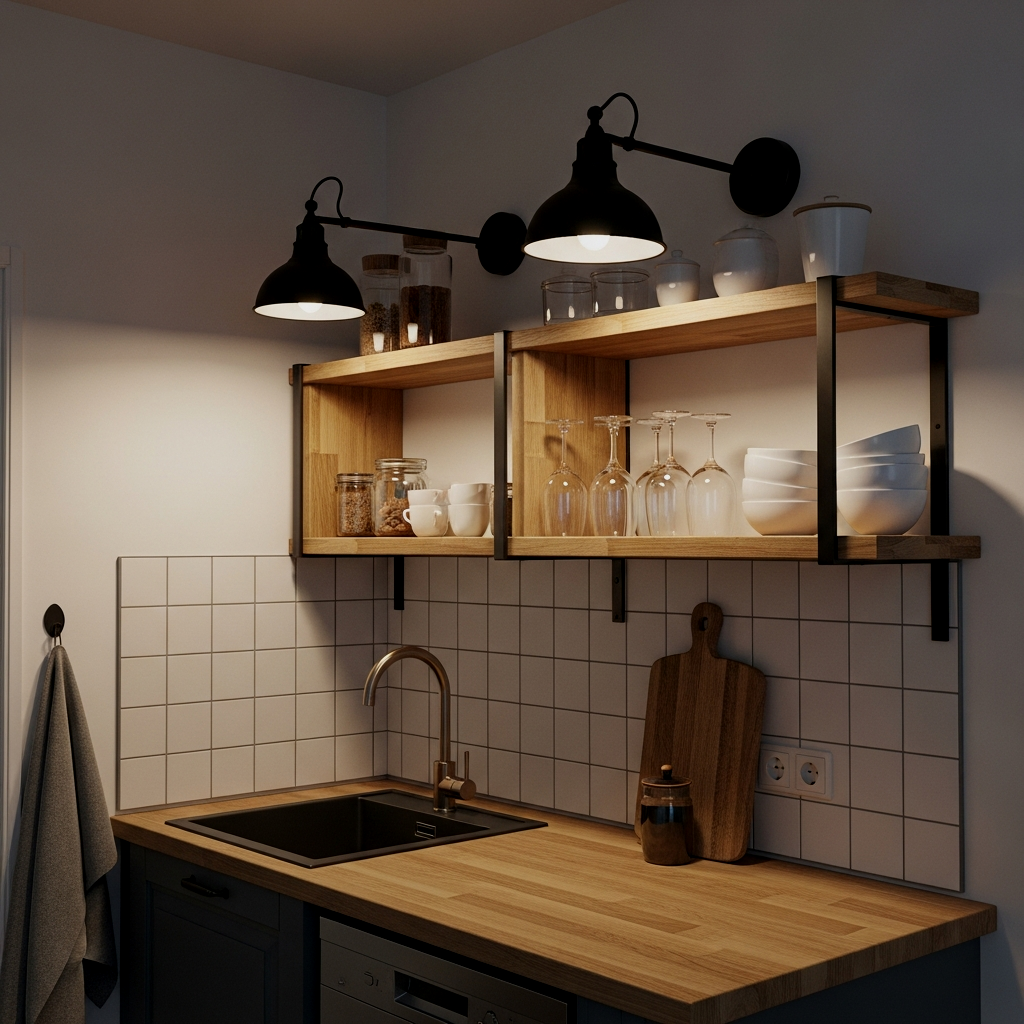
If you lack the ceiling height for pendants, consider wall-mounted industrial sconces. These are wonderful for providing “task lighting” directly where you need it, such as over a butcher block or a coffee station. They add a sophisticated, vintage feel to the room and free up your ceiling for a cleaner look. I find that an adjustable arm on a sconce is a tiny luxury that makes a big difference in daily life.
Install your wall sconces on a separate switch from your main overhead light. In the evening, turning off the big light and leaving only the sconces on creates a peaceful, low-light “wind down” mode for the whole house.
Edison Bulb Ambiance
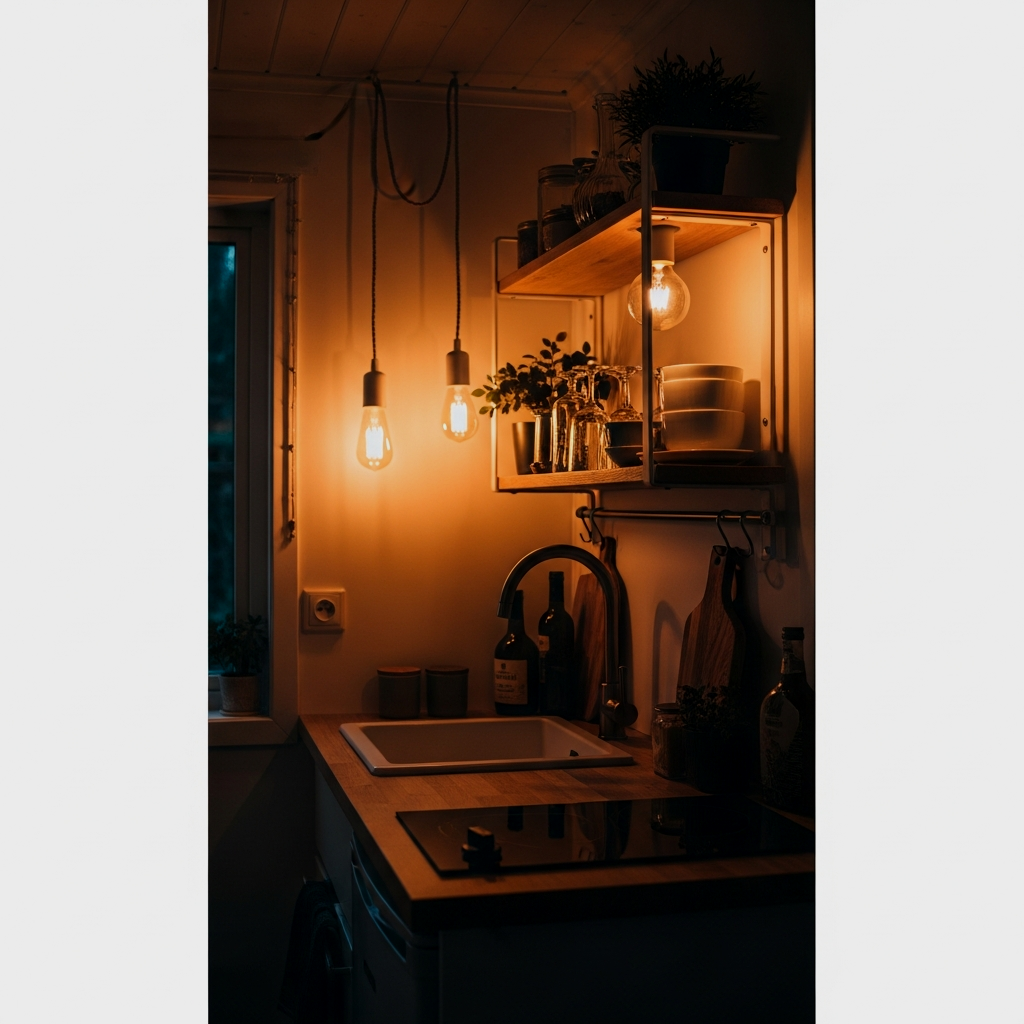
There is something so nostalgic and comforting about the soft, amber glow of an Edison bulb. These are perfect for fixtures where the bulb is exposed, as they are beautiful to look at even when they aren’t turned on. They emit a very warm light that is incredibly forgiving and makes every meal feel like a special occasion. It’s a simple way to add “soul” to a modern kitchen.
Slim Track Lighting Solutions
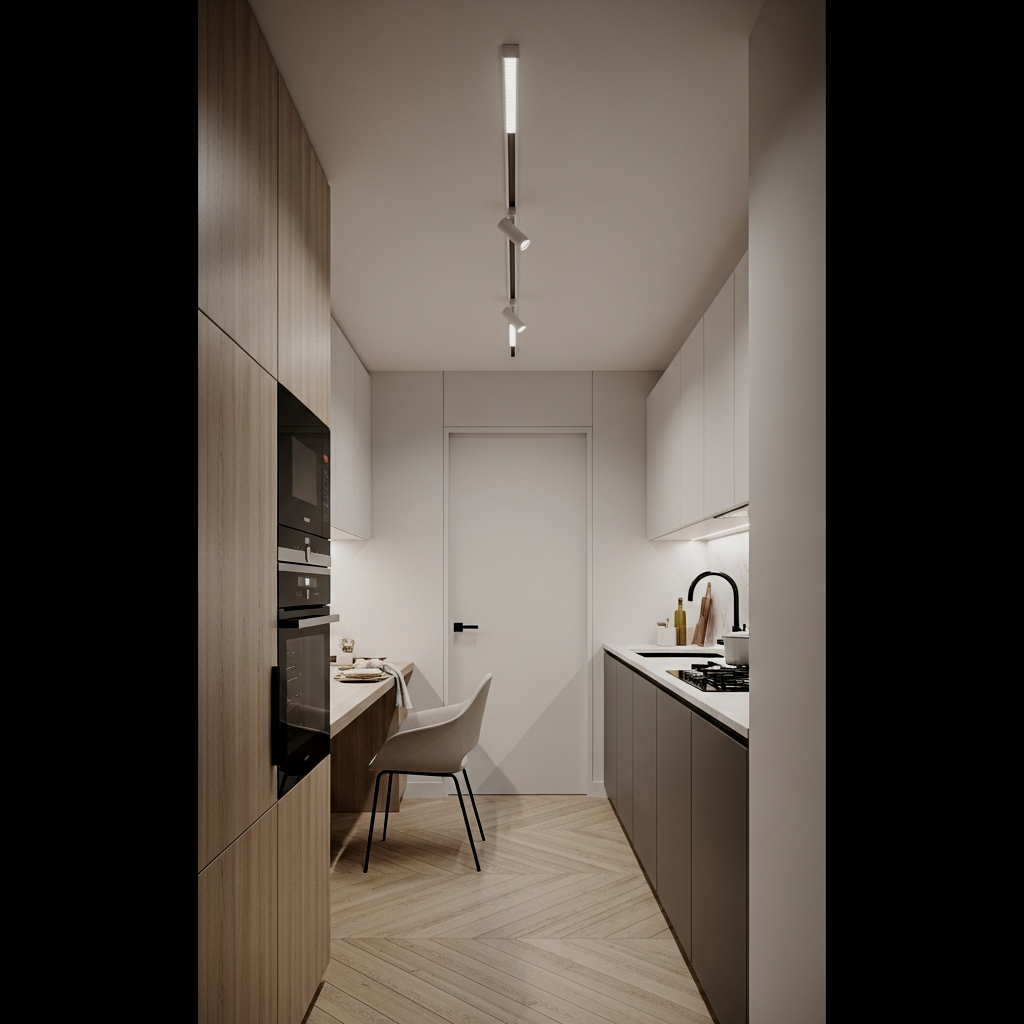
Track lighting often gets a bad reputation for being “office-like,” but modern, slim versions are actually a small kitchen’s best friend. They allow you to aim light into several different dark corners from a single electrical box. This versatility is essential when you are trying to illuminate a tight space without cluttering the ceiling with multiple fixtures. Trust the process of adjusting each head until every corner feels loved.
Reflective Subway Tile Glow
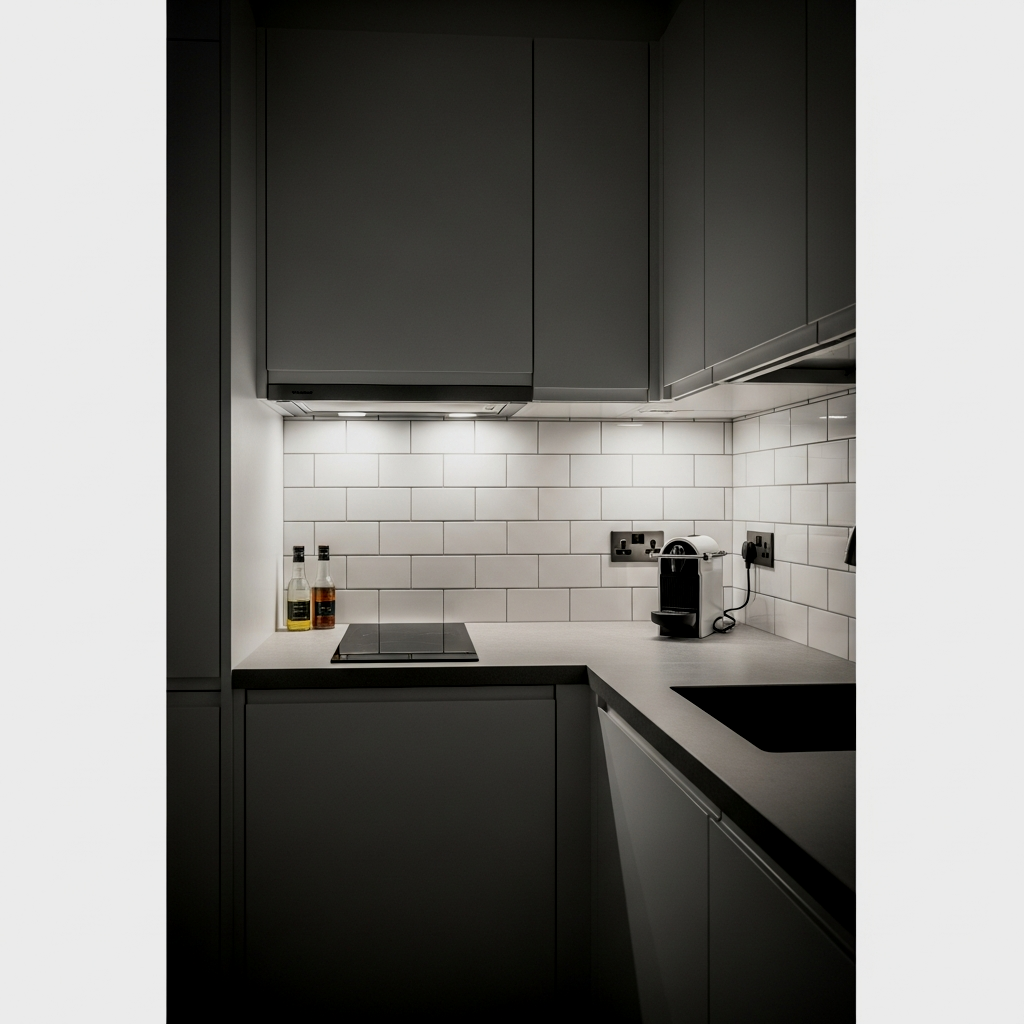
Your lighting and your surfaces should work together. When you choose a glossy subway tile, your lighting will bounce off the ceramic and double its impact. This “glow” makes the room feel brighter without needing higher-wattage bulbs. If you are exploring little kitchen color ideas, consider how a pale, reflective backsplash can act as a secondary light source for your space.
If your tile is matte rather than glossy, you can achieve a similar reflective effect by hanging a small, framed mirror on a backsplash wall or using metallic canisters that catch and scatter the light.
The exact pieces that make these ideas work:
The Petite Brass Flush Mount
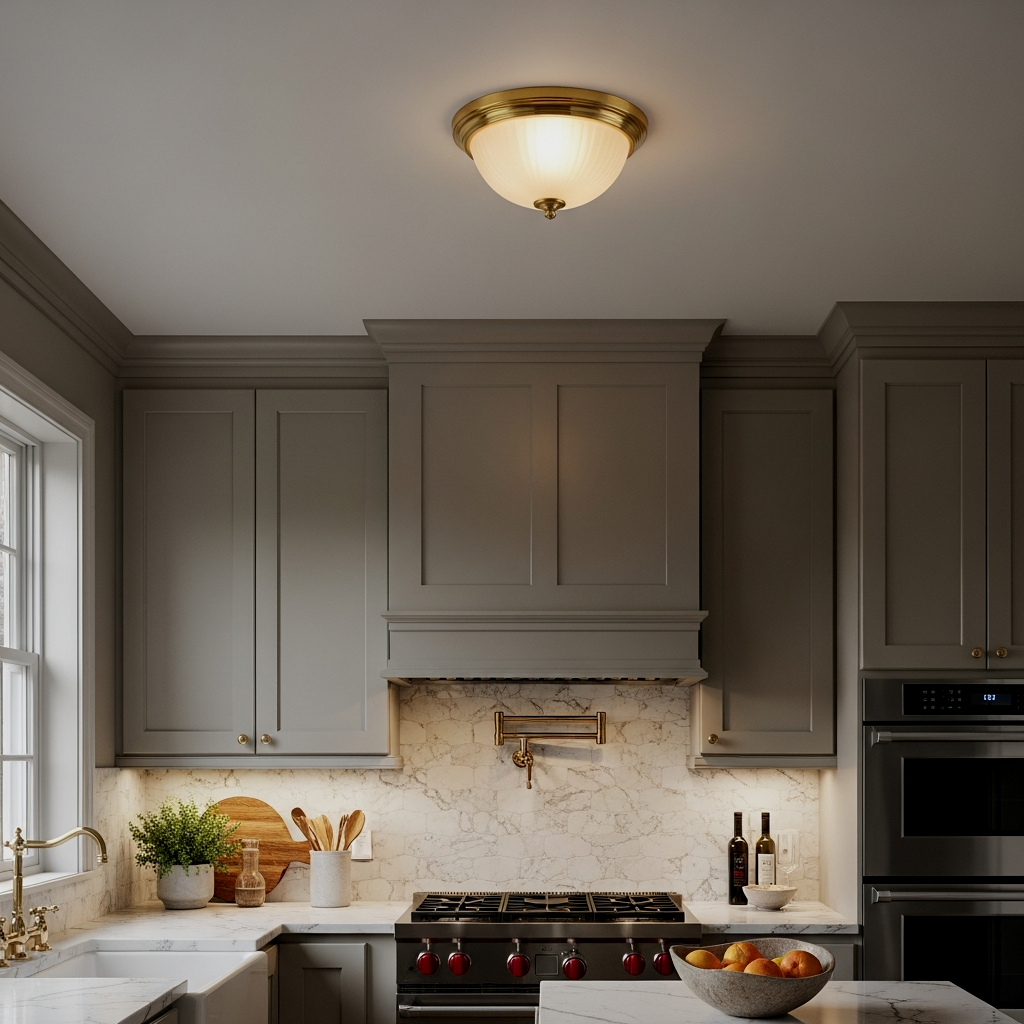
For very small kitchens with low ceilings, a petite brass flush mount acts like a piece of jewelry. The brass adds a warm, reflective quality even when the light is off, and the “flush” design keeps the space feeling open and unobstructed. It’s a wonderful example of a focal point that respects the boundaries of a small room. It’s perfectly fine to go small; sometimes the littlest details shine the brightest.
Look for “semi-flush” mounts if you have just an extra inch or two of clearance. They cast a lovely glow upward toward the ceiling, which makes the entire room feel taller by highlighting the highest point of the space.
Internal Cabinet Illumination
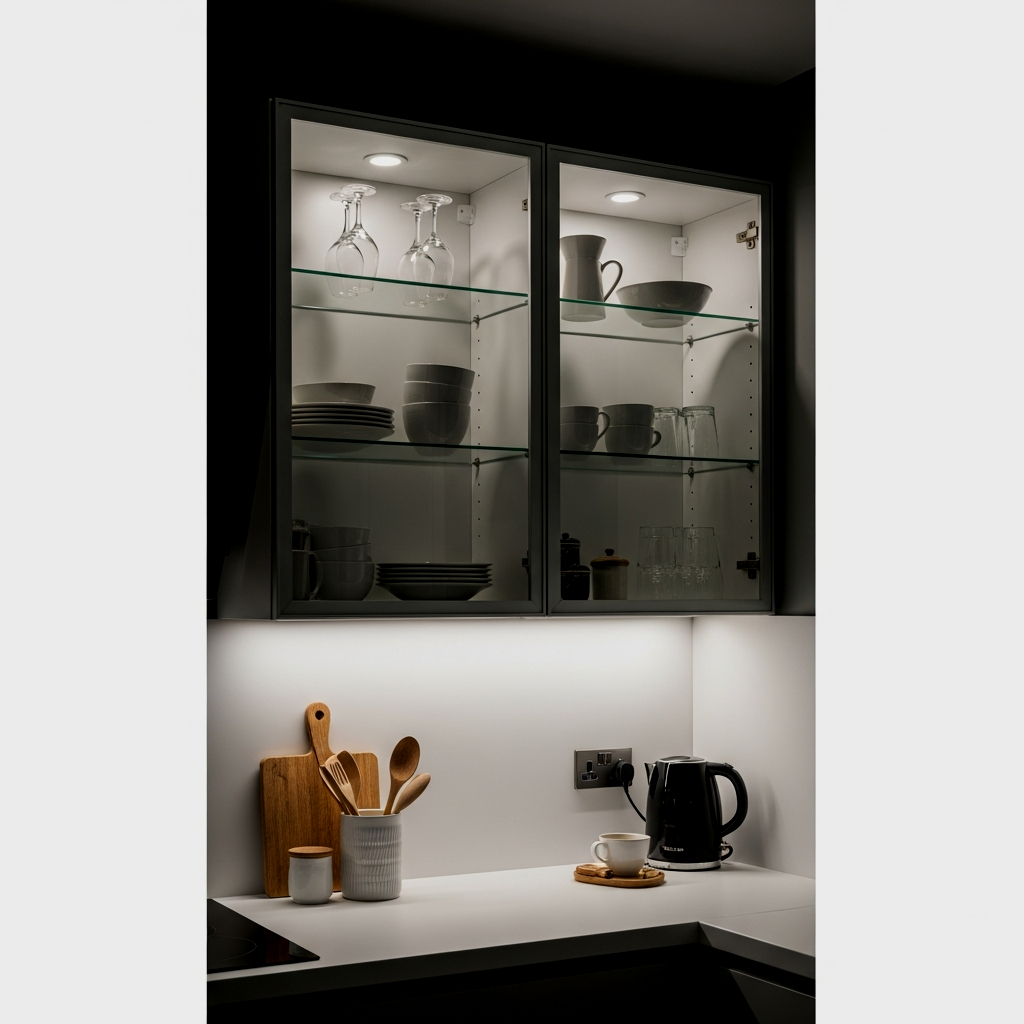
If you have glass-front cabinets, adding small lights inside them can be a game-changer. It turns your glassware into a decorative display and adds a soft, “lantern-like” glow to the room. This secondary light source is incredibly gentle in the early morning hours. It’s a beautiful way to celebrate small wins, like having your favorite heirloom teacups neatly displayed and softly lit.
Use battery-operated motion-sensor lights inside pantry cabinets or dark lower cupboards. They provide a “magical” burst of light exactly when you need it without requiring a professional electrician.
Woven Texture Pendant
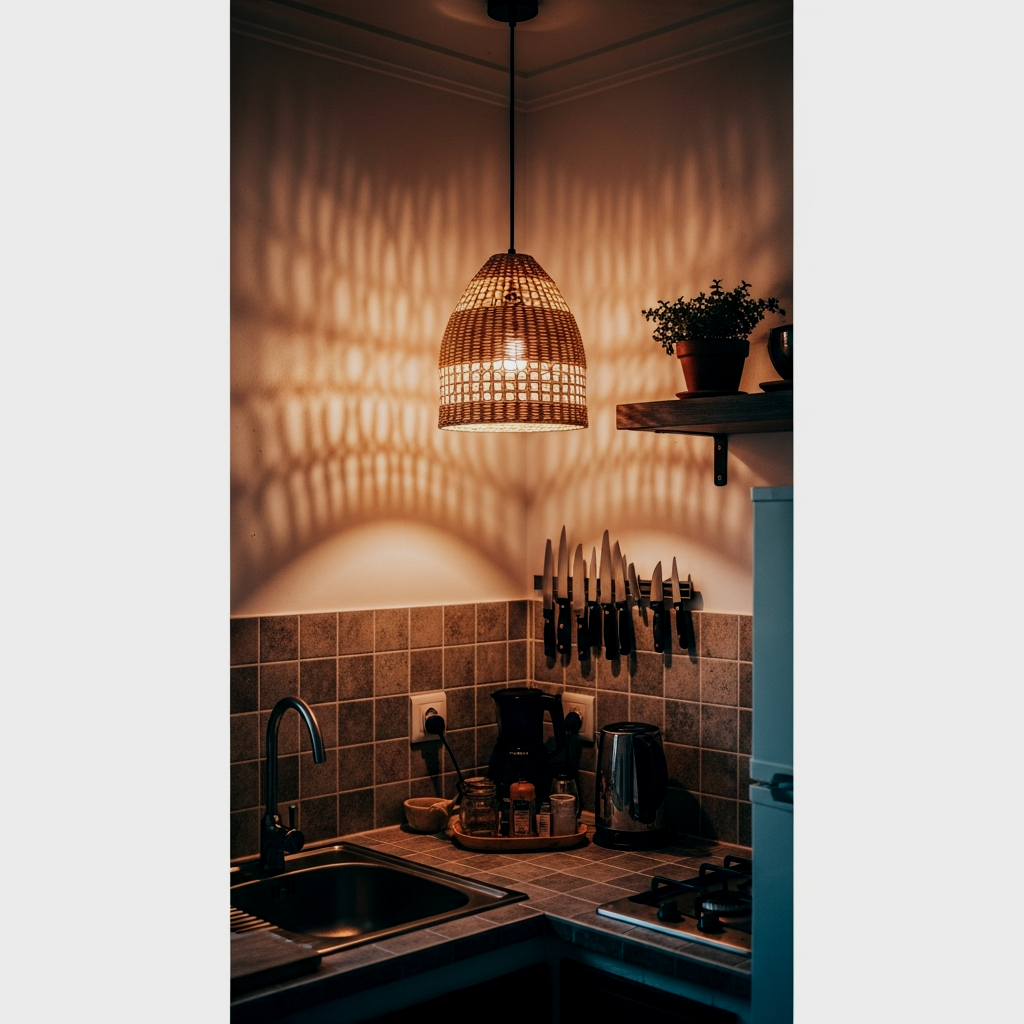
To bring a sense of organic warmth to your kitchen, consider a woven rattan or wicker pendant. These fixtures filter the light through their patterns, casting soft, beautiful shadows across the walls. This adds texture and a “handmade” feel that balances out the hard surfaces of a kitchen like granite or stainless steel. It’s one of those soft touches for a little kitchen that makes the space feel lived-in and loved.
The Articulating Sink Lamp
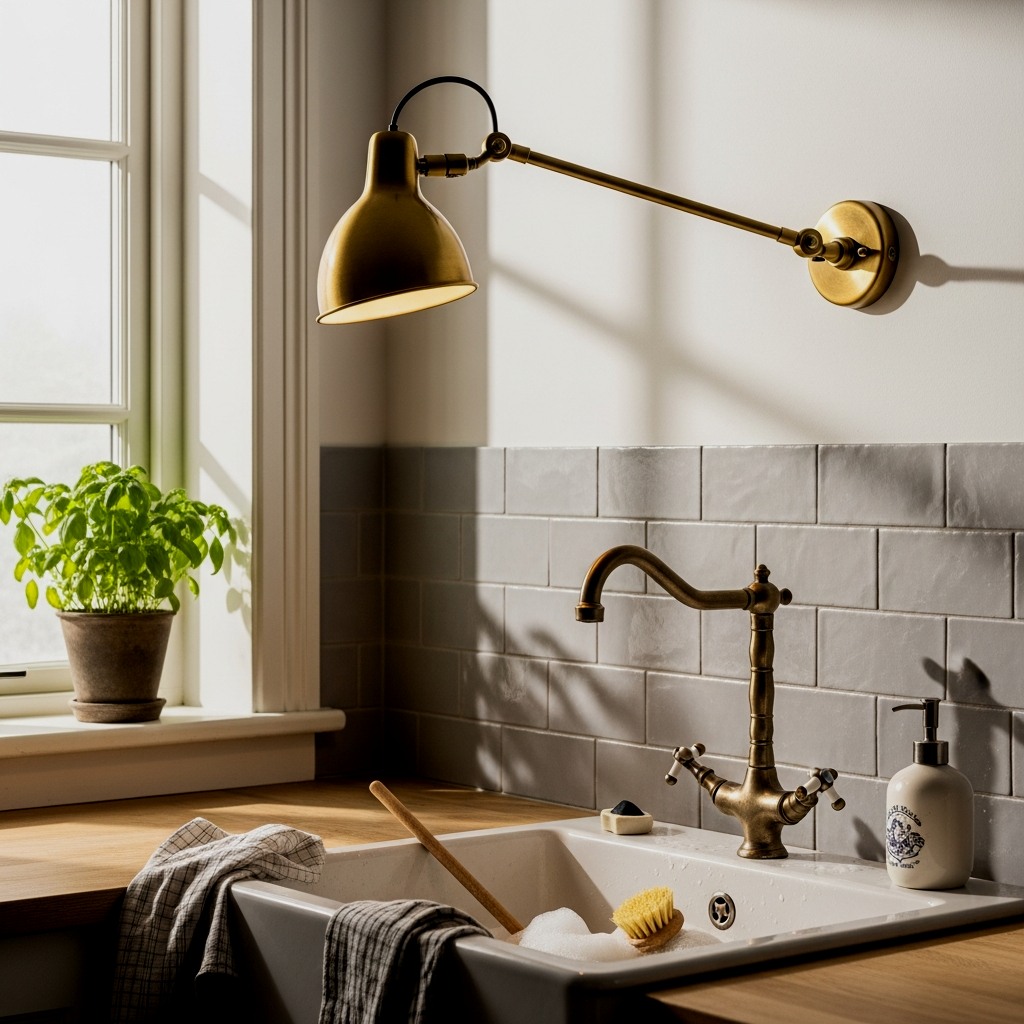
Washing dishes or prepping vegetables at the sink can feel like a chore in a dark corner. An articulating lamp—one that you can swing in and out—provides direct light exactly where you are working. It is highly practical and brings a bit of “chef’s kitchen” functionality to a small home. Plus, it looks charmingly industrious, like a little helper waiting to be of service.
When choosing an articulating lamp, ensure the switch is easily accessible. A switch located on the lamp head itself is often much more convenient than one on the cord when your hands are busy in the kitchen.
To get the perfect “Sunita-approved” glow, look at the CRI (Color Rendering Index) on the light bulb box. Aim for a CRI of 90 or higher. This ensures that the colors of your food and your decor look vibrant and true to life, rather than muddy or grey. It’s a tiny detail that professional designers use to make a room feel “expensive” and healthy.
Layered Morning Brilliance
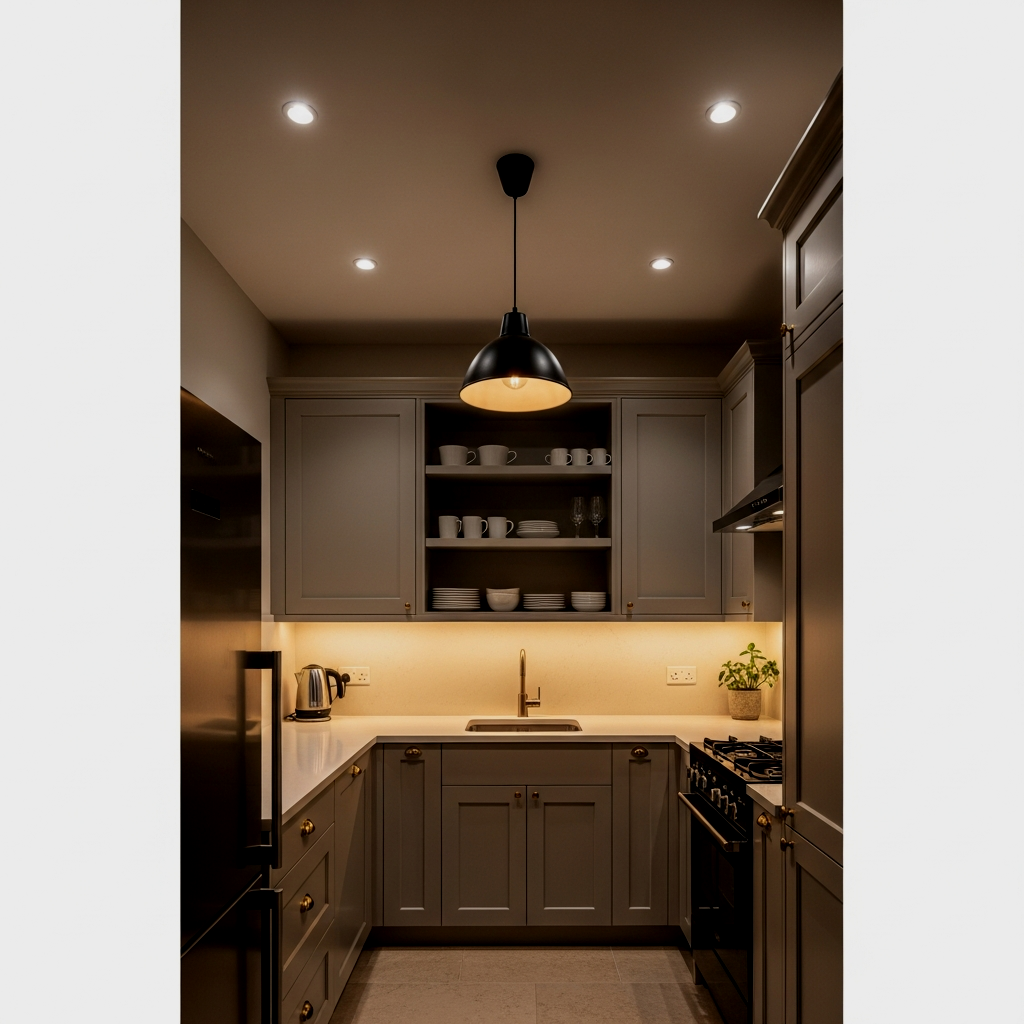
The most successful kitchens don’t rely on just one of these ideas; they use a mix. Imagine a morning where the sun is just coming through the window, your under-cabinet lights are casting a soft glow on your coffee prep, and a dimmable pendant is gently lighting the island. This “layered” approach allows you to adjust the light to your mood and the time of day. It’s about creating a space that holds you comfortably throughout all your daily transitions.
Always install dimmer switches where possible. Being able to drop the light level by just 20% in the evening can completely transform the atmosphere from “working kitchen” to “cozy dining room.”
Colorful Ceramic Focal Point
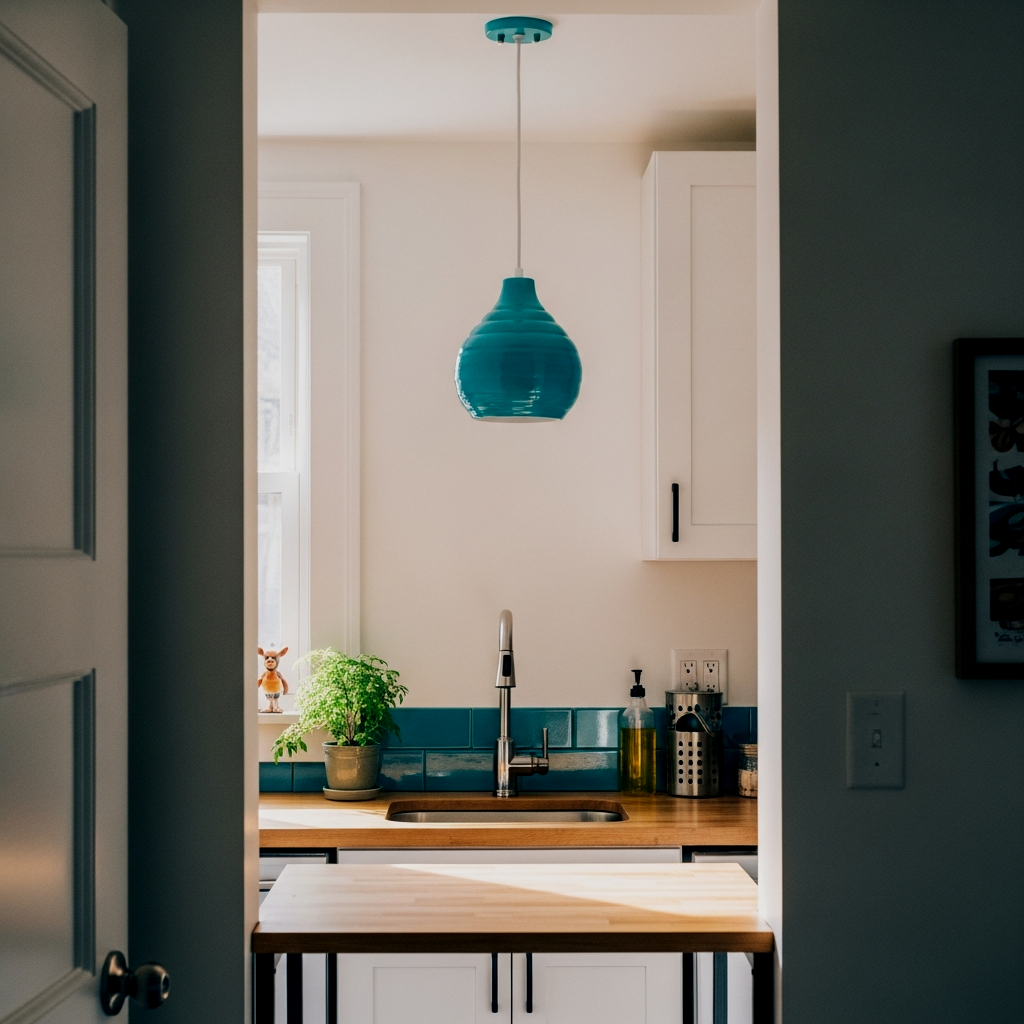
Finally, don’t be afraid to use lighting to add a splash of color. A ceramic pendant in a soft sage green or a dusty blue can serve as a beautiful focal point in a neutral kitchen. It’s a way to infuse personality without needing a lot of counter space for decor. Let your lighting be both a functional tool and a piece of art that makes you smile every time you walk into the room.
📏 Bright Mornings: Little Kitchen Lighting Ideas Quick-Win Checklist
- Check the Kelvin: Ensure all bulbs are between 2700K and 3000K for a warm, cozy feel.
- Clean Your Fixtures: Dust on bulbs and glass shades can reduce light output by 20%—a five-minute wipe-down works wonders.
- Add a Mirror: If your kitchen is very dark, a small mirror opposite a window can double the morning sun.
- Go Cordless: Use rechargeable LED pucks for under-cabinet areas if you aren’t ready for electrical work.
- Test at Night: Turn off all lights except your new accent piece to see if it creates the “mood” you’re looking for.
Creating a bright, welcoming kitchen is one of the kindest things you can do for yourself and your family. Whether you start with a single string of LED lights or a beautiful new pendant, remember to enjoy the journey. Each little change is a step toward a home that truly nurtures you. For even more inspiration on making your small space feel grand, do revisit our main guide, Heart of the Home: 20 Loving Little Kitchen Ideas to Maximize Your Space. You deserve a kitchen that shines as brightly as you do.
Frequently Asked Questions
What is the best light bulb temperature for a small kitchen?
I always recommend “Warm White” bulbs, which are usually labeled as 2700K to 3000K. This temperature mimics the soft glow of a sunset and makes the kitchen feel cozy and inviting rather than sterile or cold.
Can I add lighting without hiring an electrician?
Absolutely! There are many wonderful battery-operated or rechargeable LED puck lights and “plug-in” wall sconces available today. These allow you to add task and accent lighting without the need for expensive wiring changes.
How many pendants should I hang over a small kitchen island?
In a small space, “less is often more.” One larger, beautiful pendant often feels more intentional and less cluttered than two or three small ones. Trust your eye—if it feels crowded, it probably is.
Does lighting really make a kitchen look bigger?
Yes, it does! By illuminating the dark corners and the spaces under cabinets, you eliminate “dead zones” that the eye usually skips over. Lighting these areas makes the boundaries of the room feel more expansive.
How high should I hang a pendant over my counter?
A good rule of thumb is to hang the bottom of the fixture about 30 to 36 inches above the countertop. This height is usually enough to provide great light without blocking your view of the rest of the room.