12 Genuinely Life-Changing Ways to Master a Masculine Interior
I spent years convinced that “masculine design” was just a code word for “I have a giant black leather recliner and a TV too big for the wall.” No seriously, I thought it was synonymous with a lack of effort. Then I walked into a loft in Tribeca that used raw concrete, buttery cognac leather, and the perfect shade of charcoal, and I realized I’d been completely wrong. Masculine design isn’t about being “for men”—it’s about a specific kind of architectural confidence, a moodiness that feels grounded and intentional. After obsessive research and a few failed DIYs of my own, I’ve found the secret sauce. The difference is unreal once you stop focusing on “manly” cliches and start focusing on soul, grit, and high-end texture.
✨ Before You Start: 12 Genuinely Life-Changing Ways to Master a Masculine Interior (No Seriously, the Difference is Unreal) Mindset
Layering High-Contrast Textures
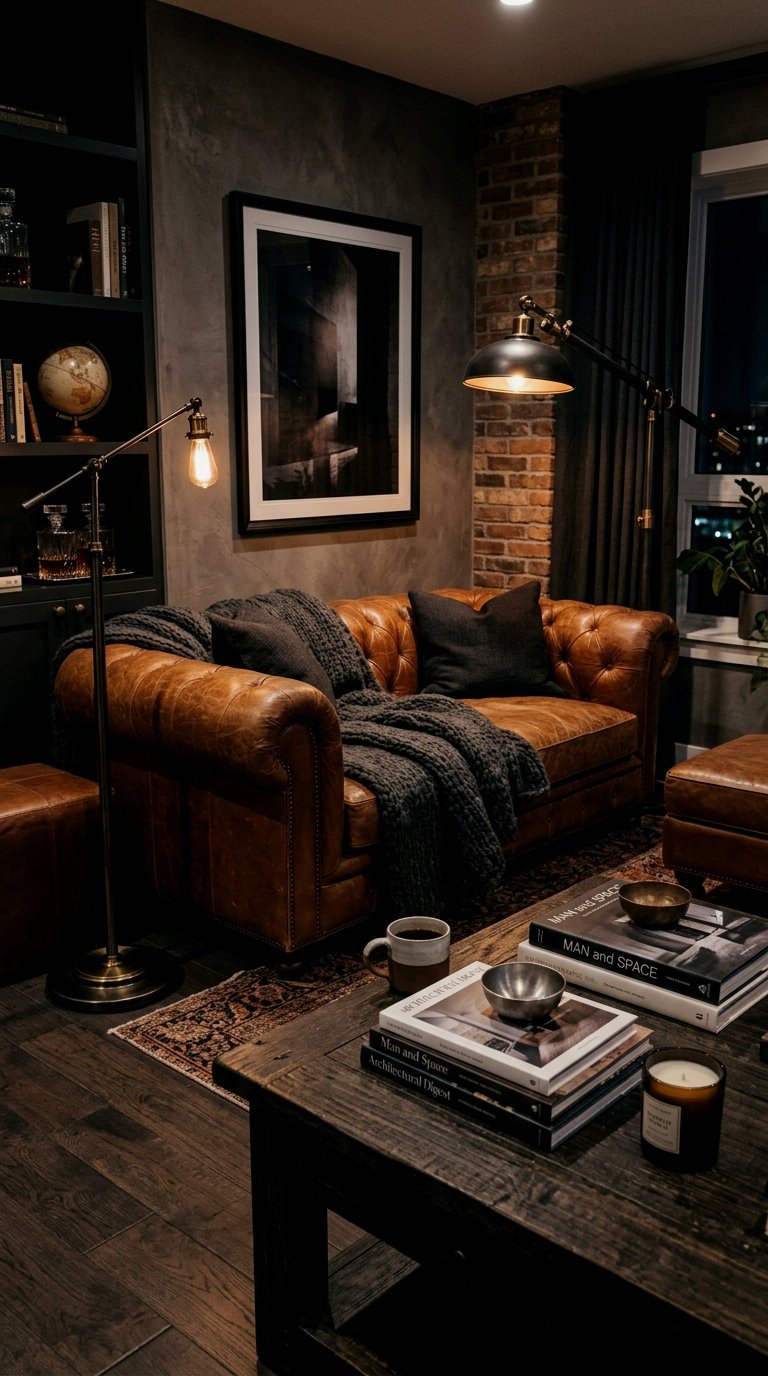
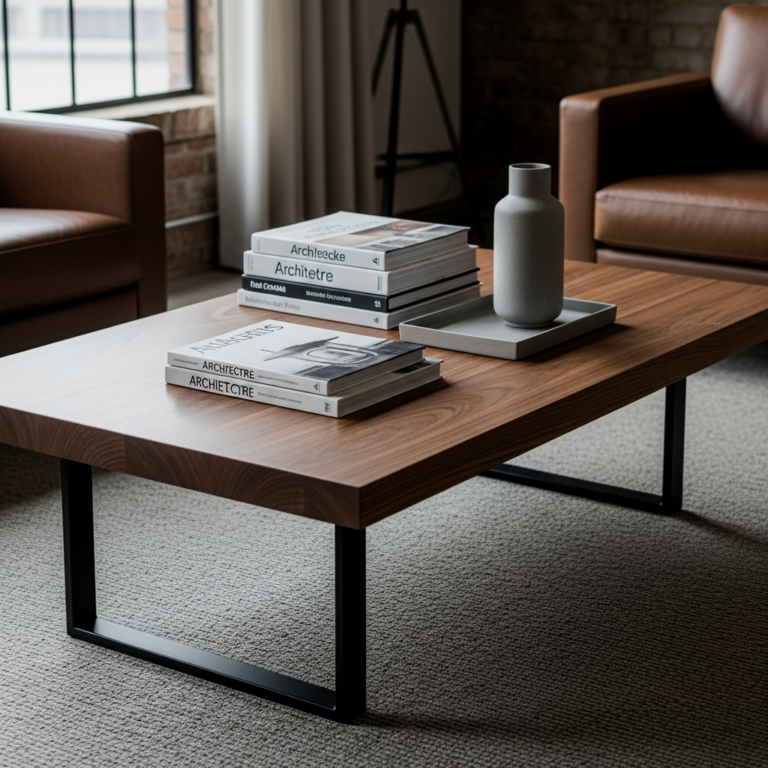
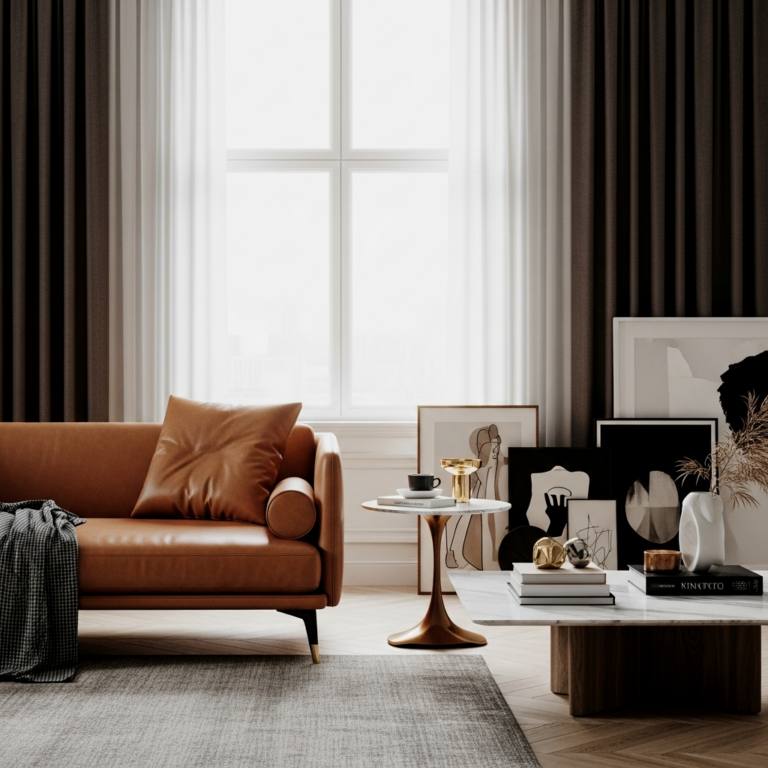
The biggest mistake I see is a room full of smooth, flat surfaces. Genuinely life-changing masculine design relies on the friction between materials. Think a plush, nubby boucle chair tucked next to a cold, honed marble side table. I’m obsessed with mixing the “soft” with the “industrial.” If you have a leather sofa (like the iconic West Elm Hamilton), don’t pair it with a leather ottoman. Throw on a heavy knit wool blanket and place it on a jute or sisal rug. That contrast is what makes a room feel expensive rather than just “decorated.”
Try the “Rough vs. Smooth” test. Every vignette in your room should have one rough texture (raw wood, cast iron) and one smooth texture (polished stone, velvet) to create visual tension.
Mastering the Dark Palette
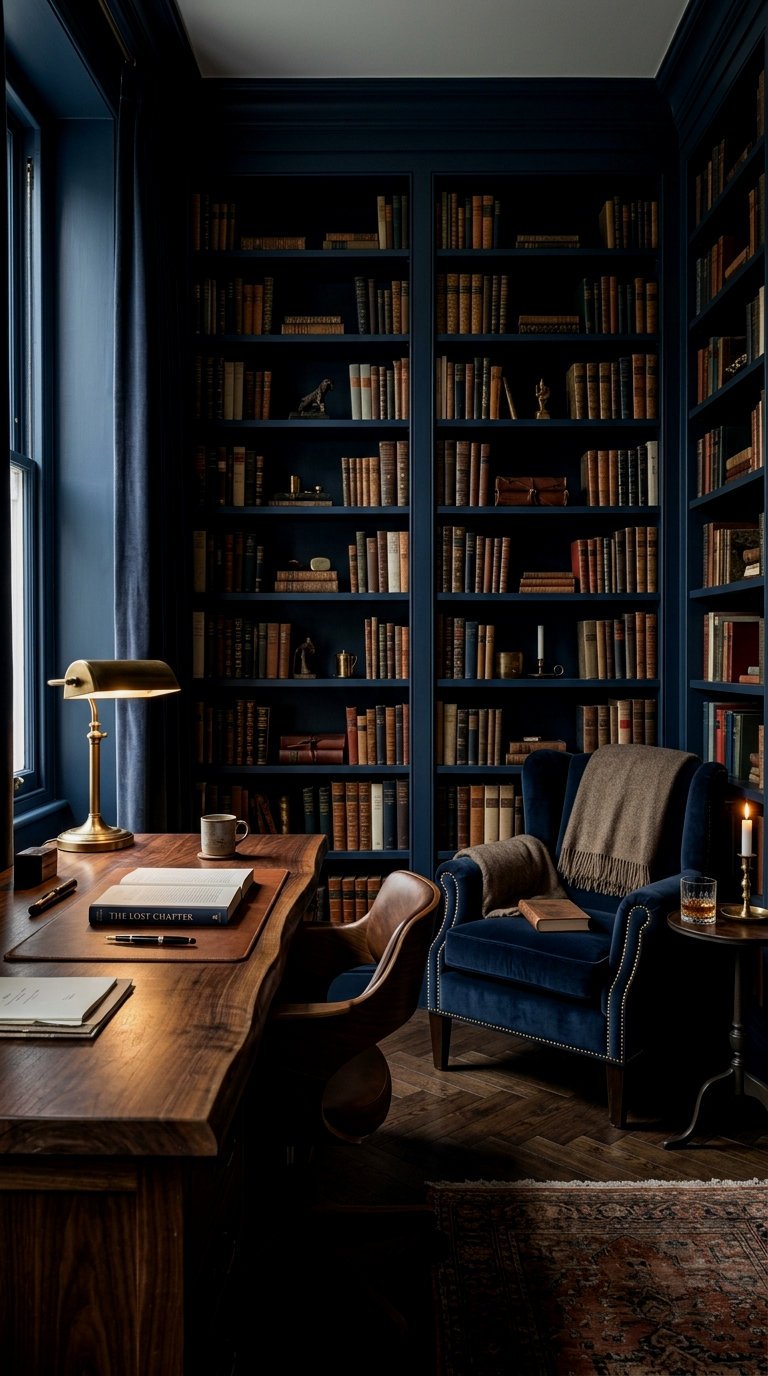
Trust me on this one: white walls are the enemy of a moody, masculine vibe. But “dark” doesn’t have to mean “cave.” It’s about choosing colors with complex undertones. I’m genuinely life-changing-ly obsessed with Farrow & Ball’s ‘Railings’—it’s a soft black with blue undertones that makes everything in front of it pop. If you’re nervous about going full dark, paint your baseboards and window trim the same color as the walls (color drenching). It creates a seamless, high-end look that feels incredibly sophisticated and cozy at the same time.
When using dark paint, always go for a “Dead Flat” or matte finish. It hides wall imperfections and gives that velvety, high-end designer look that glossy paints lack.
Industrial-Inspired Statement Lighting
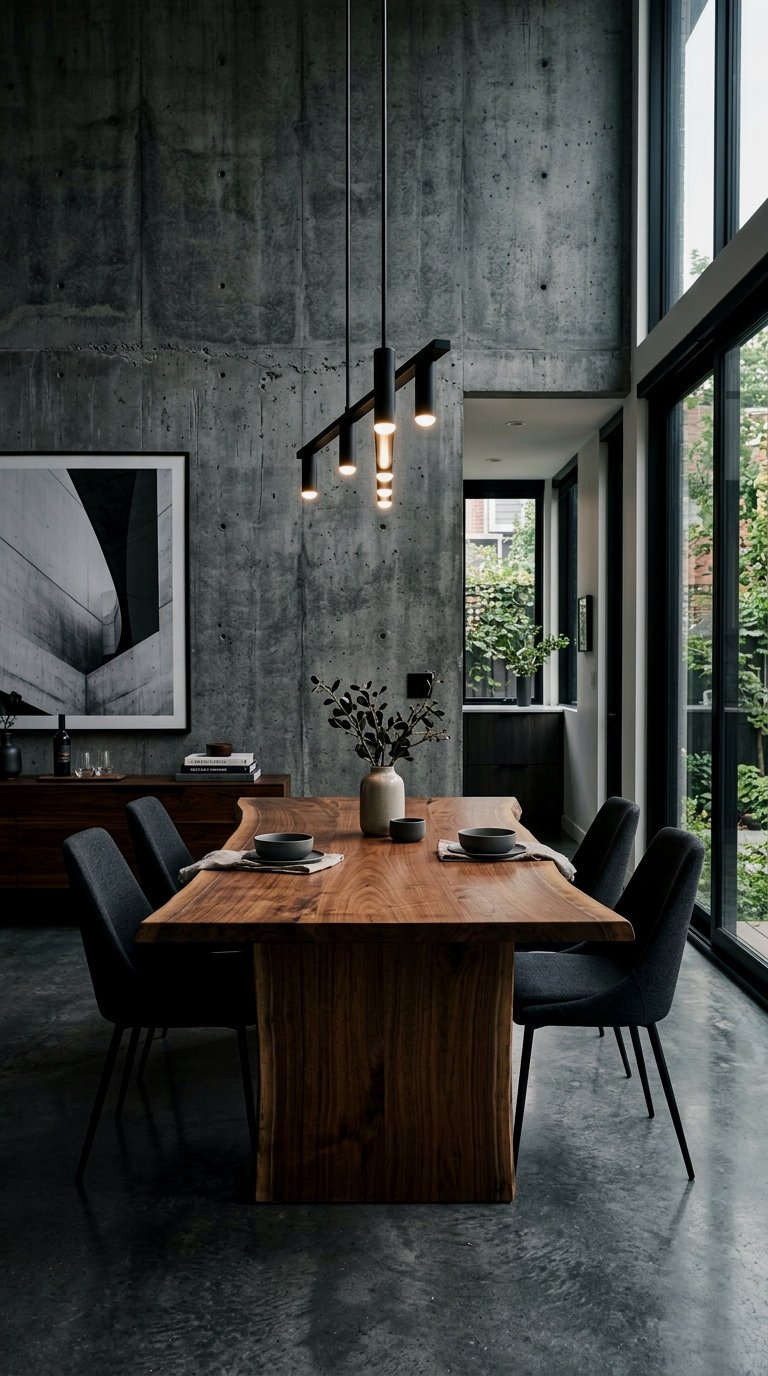
Lighting is the jewelry of the home, and in a masculine space, it needs to have weight. Forget dainty glass pendants. You want something that looks like it was salvaged from a 1920s factory but refined for a luxury penthouse. Look for materials like smoked glass, blackened steel, and solid brass. The best kept secret for this look? Large-scale articulating wall sconces. They add an architectural element to the walls that a simple floor lamp just can’t touch. Look at brands like Restoration Hardware or Visual Comfort for inspiration on scale; their fixtures are massive and command respect.
Install Philips Hue Edison-style smart bulbs. You get the vintage filament look with the ability to dim them to a warm 1% amber glow for ultimate movie-night vibes.
Follow the 70/30 Material Mix: Ensure 70% of your room consists of “hard” materials (wood, metal, stone) and 30% consists of “soft” materials (upholstery, rugs, drapes) to maintain that structured, masculine edge without it feeling cold.
The Power of Oversized Abstract Art
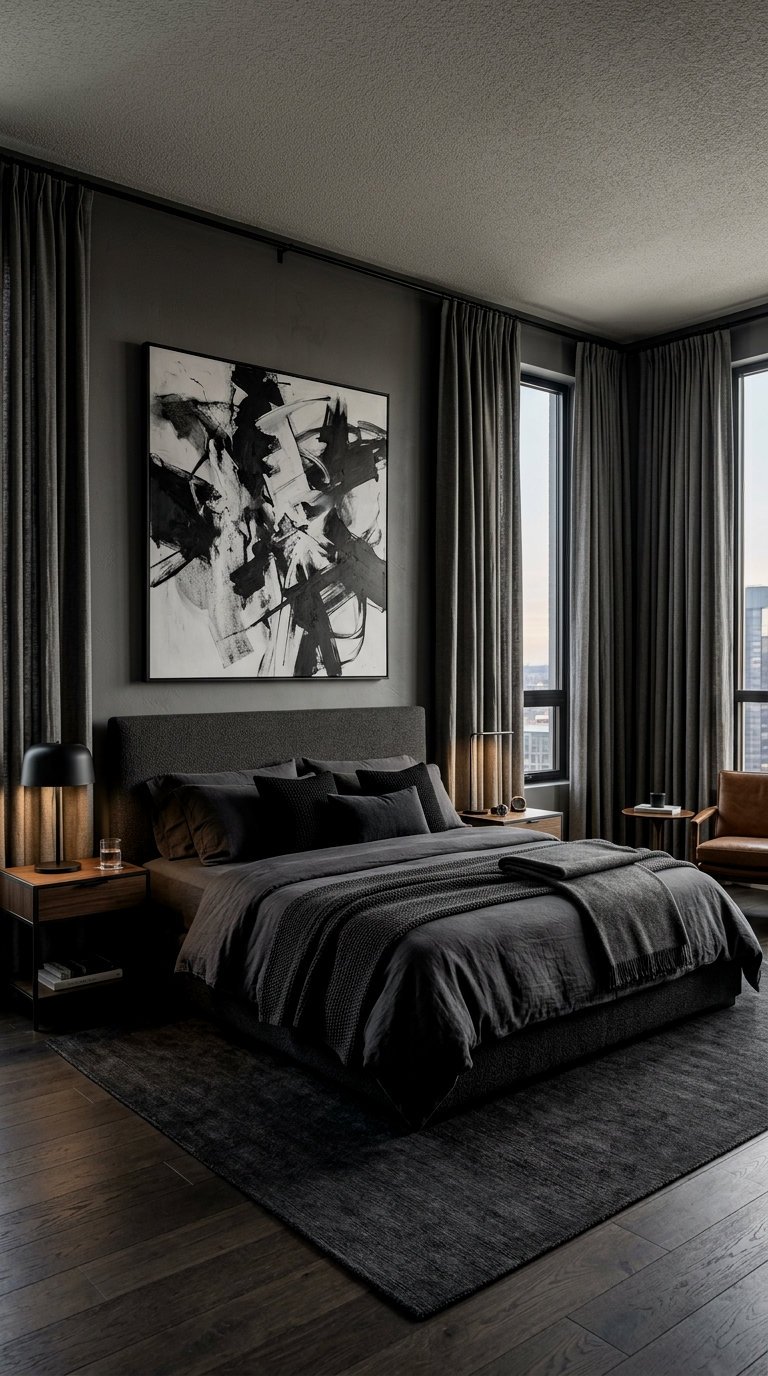
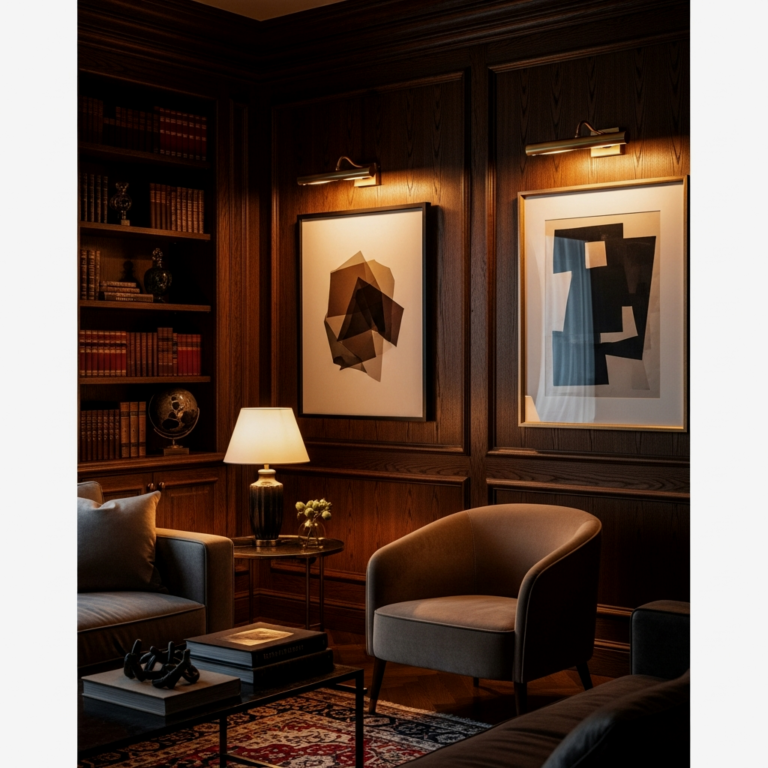
Nothing kills a masculine aesthetic faster than “small art syndrome.” A tiny frame on a big wall looks timid. To master this, you need scale. One massive, 60-inch abstract piece with bold, gestural brushstrokes in black, white, and ochre does more for a room than a gallery wall ever could. It creates a focal point that feels decisive. You don’t need to spend thousands either; you can buy a large canvas and DIY some minimalist texture art using joint compound and black acrylic paint. The key is the frame—a thin, black floating frame makes even a DIY look like a gallery find.
Creating a Curated Home Bar
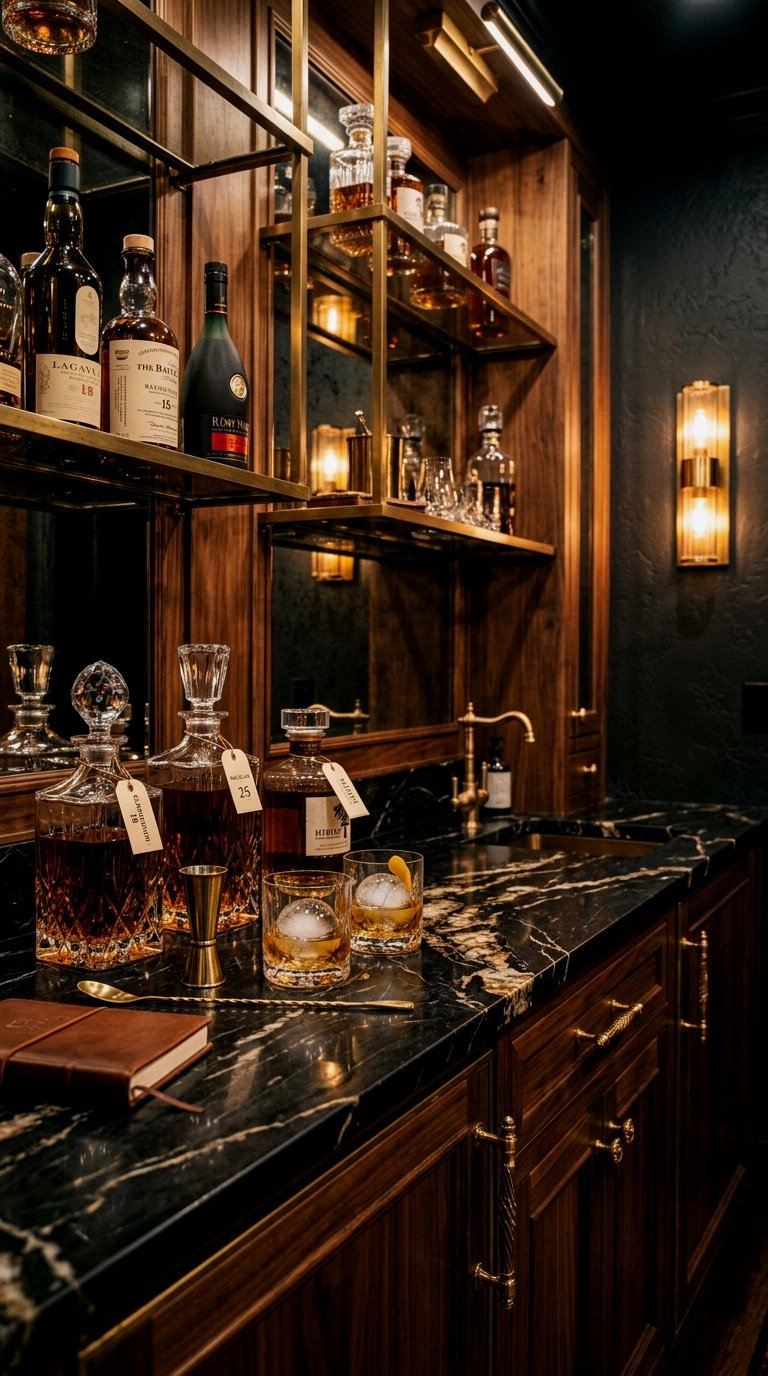
A masculine home needs a “ritual station,” and the home bar is the pinnacle of that. It’s not just about the booze; it’s about the display. Use a dark wood console or a marble-topped bar cart. The difference is unreal when you swap out plastic bottles for heavy crystal decanters. Group your items on a leather or slate tray to keep it looking organized rather than cluttered. Add a touch of “gentleman’s club” style with a small lamp (the brass Flowerpot VP9 is a personal favorite) right on the bar to highlight the glassware at night.
Utilizing Raw Architectural Materials
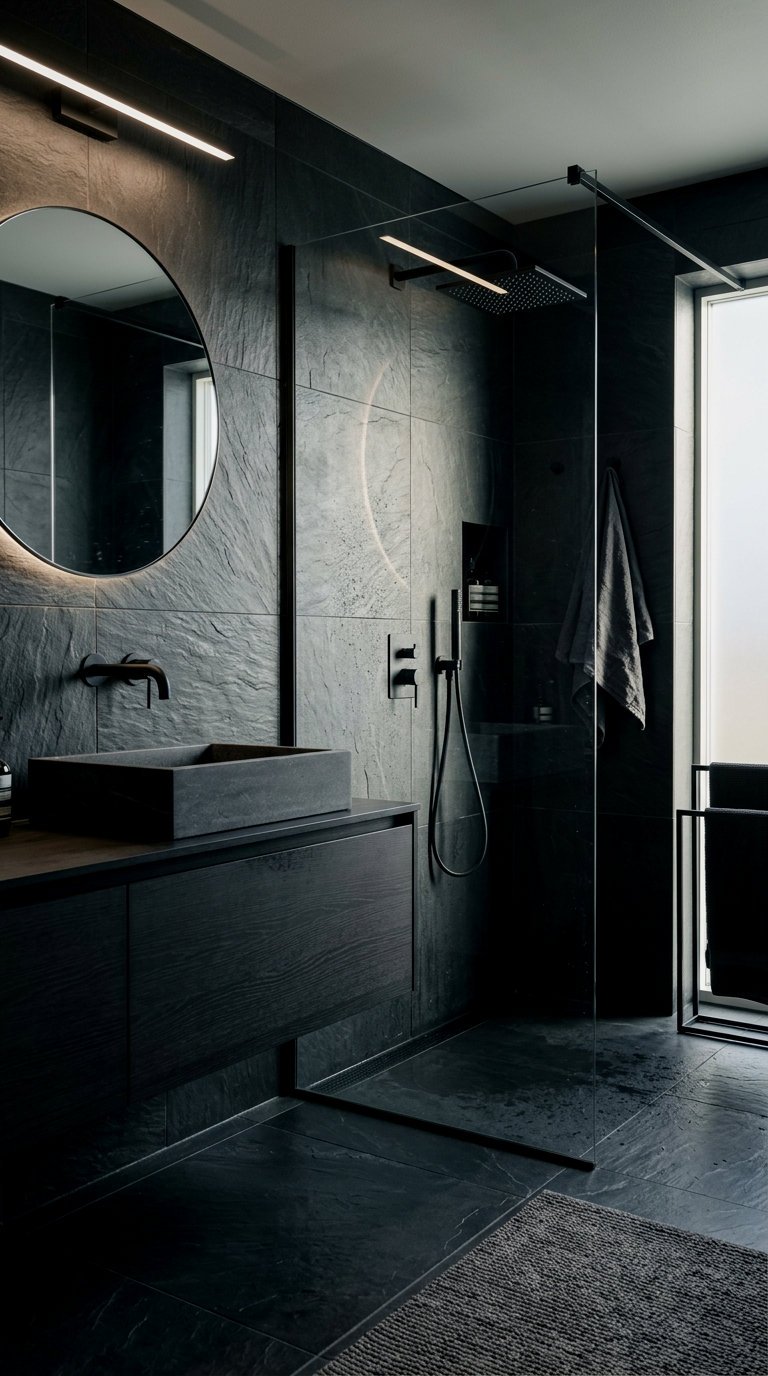
To get that high-end “architectural digest” feel, you need to bring in materials that feel like they’re part of the building’s bones. I’m talking about concrete, brick, and reclaimed wood. If you aren’t lucky enough to live in a converted warehouse, you can “fake” it with concrete-effect lime wash paint or a single accent wall of reclaimed wood planks (Stikwood is a great DIY-friendly brand for this). It adds an earthy, unrefined quality that balances out modern furniture perfectly.
Don’t go overboard with “industrial.” If you have a brick wall, keep your furniture sleek and modern. It’s the mix of raw and refined that feels masculine and expensive.
The Glass and Steel Partition
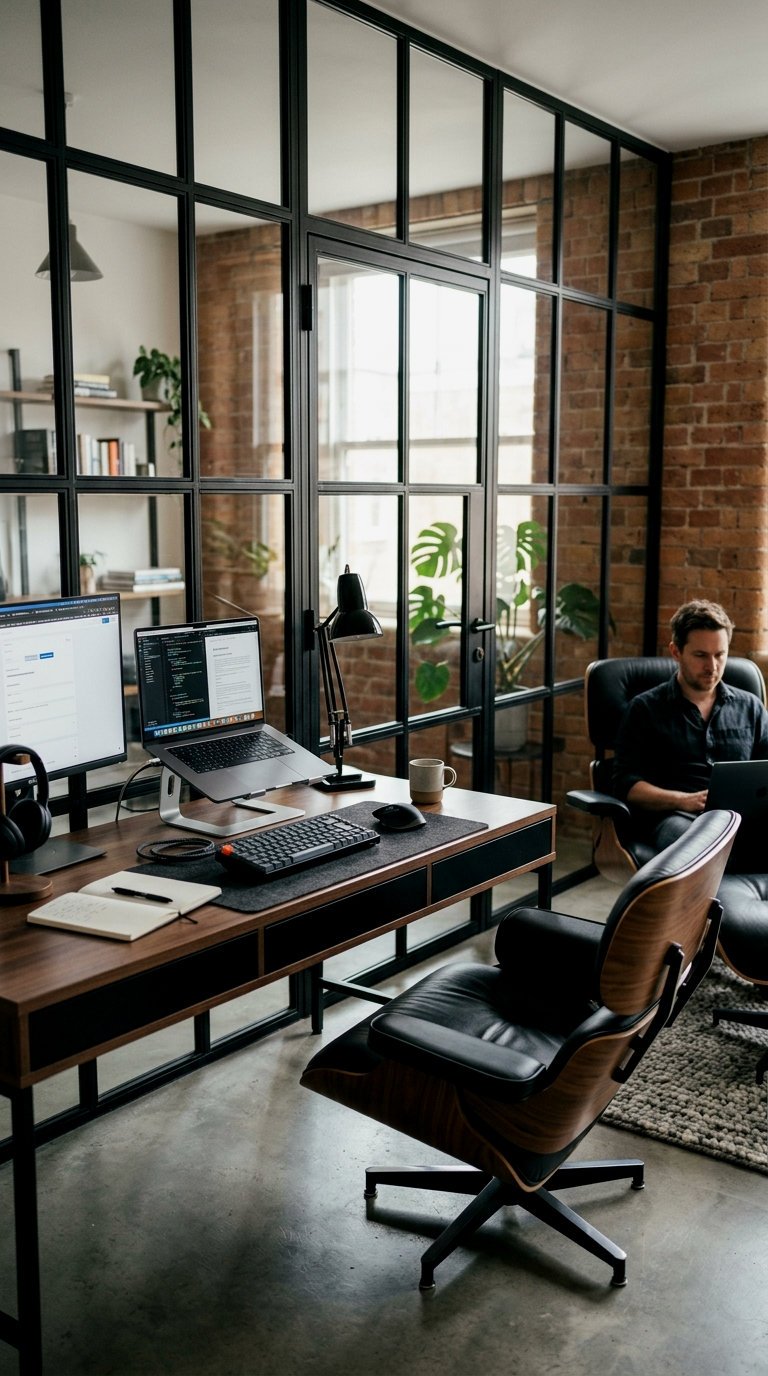
If you have an open-plan space, please stop using flimsy room dividers. A black-framed glass and steel partition (often called “Crittall style”) is a total game-changer. It defines “zones” in a room without blocking light, giving your home that sophisticated “London bachelor pad” energy. It’s an investment, but even a fixed panel next to a bed or a home office desk adds a level of structural integrity that standard drywall just can’t compete with. It feels permanent, solid, and undeniably cool.
The exact pieces that make these ideas work:
Integrating Moody Natural Elements
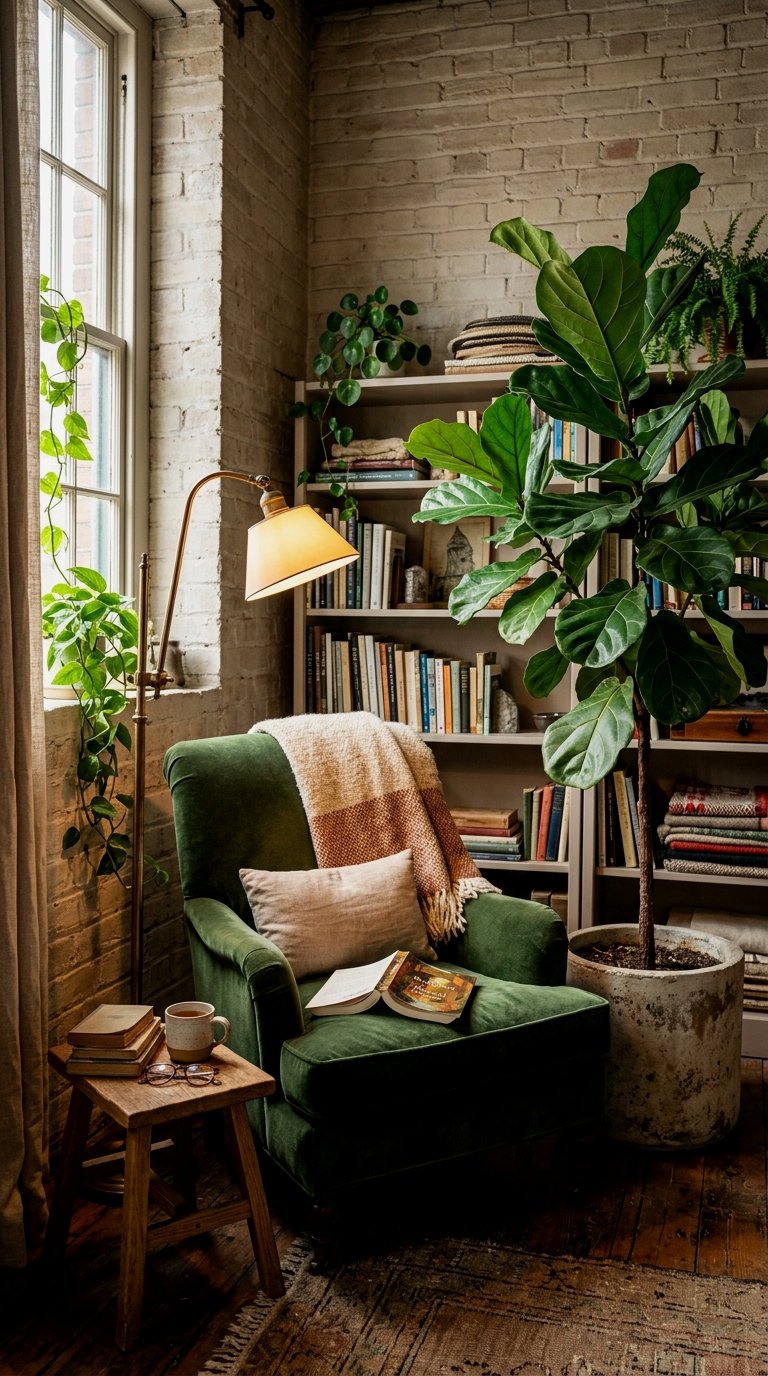
Masculine design can sometimes feel a bit “sterile” if you go too hard on the metal and stone. You need life, but not “potted fern in a wicker basket” life. Go for moody, sculptural natural elements. I’m talking about a large piece of driftwood on a sideboard, a bowl of dark river stones, or a massive floor plant with dark leaves like a Rubber Tree (Ficus Elastica). Avoid delicate flowers; if you want greenery, go for structural branches like Eucalyptus or Olive in a heavy ceramic vase. It adds an organic layer that feels grounded rather than fussy.
Upgrading to Knurled Metal Hardware
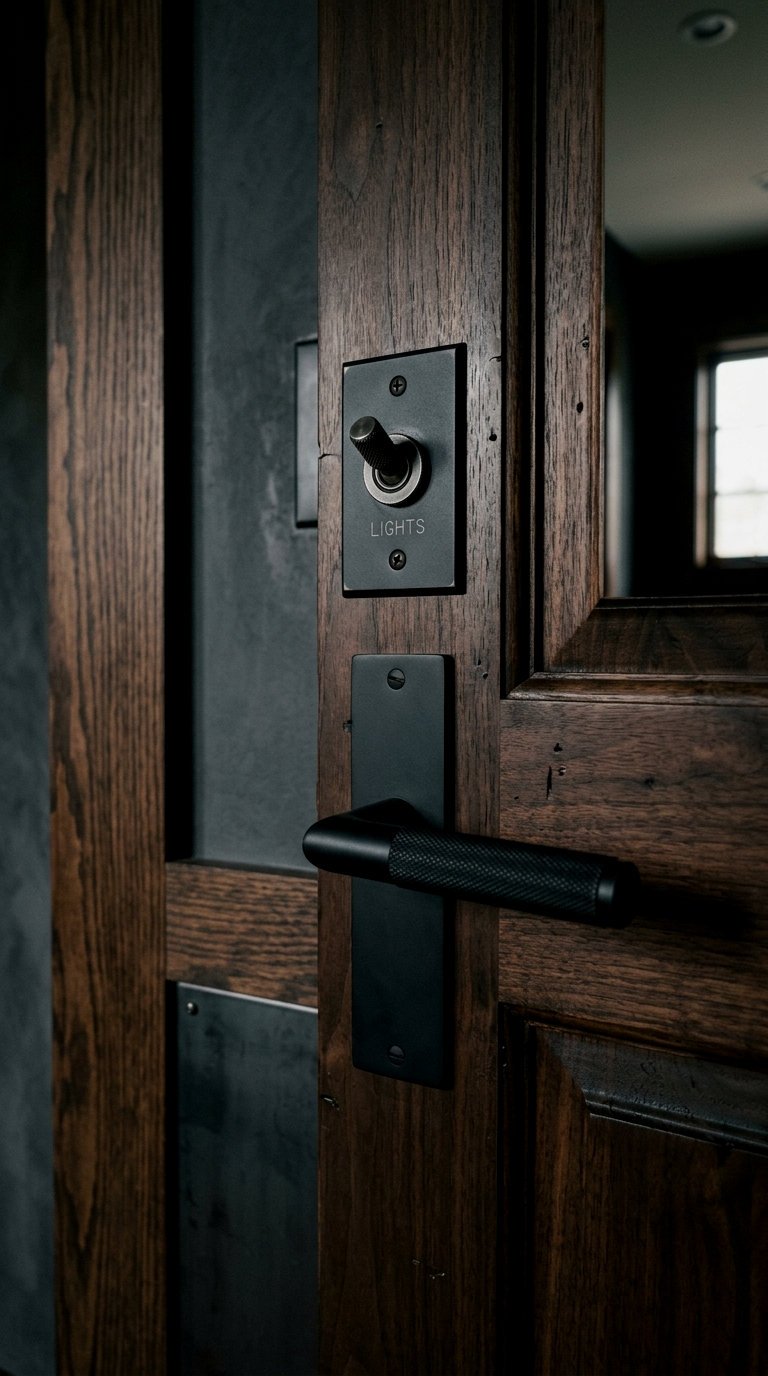
This is the best kept secret for making a “standard” home look custom. If you have basic kitchen cabinets or a generic dresser, swap the handles for knurled metal hardware. Knurling is that cross-hatch texture you find on high-end gym equipment or luxury watches. It feels incredibly satisfying to touch and looks intensely masculine. Buster + Punch is the gold standard for this, but you can find amazing alternatives on Etsy that provide that “industrial-chic” vibe for way less. Seriously, the difference in how your drawers feel when you pull them is unreal.
Match your hardware finish to your faucet and light fixtures. Consistency in metal finishes (like all blackened steel or all satin brass) is what gives a room that professional “designed” feel.
The Luxury Boutique Walk-in Closet
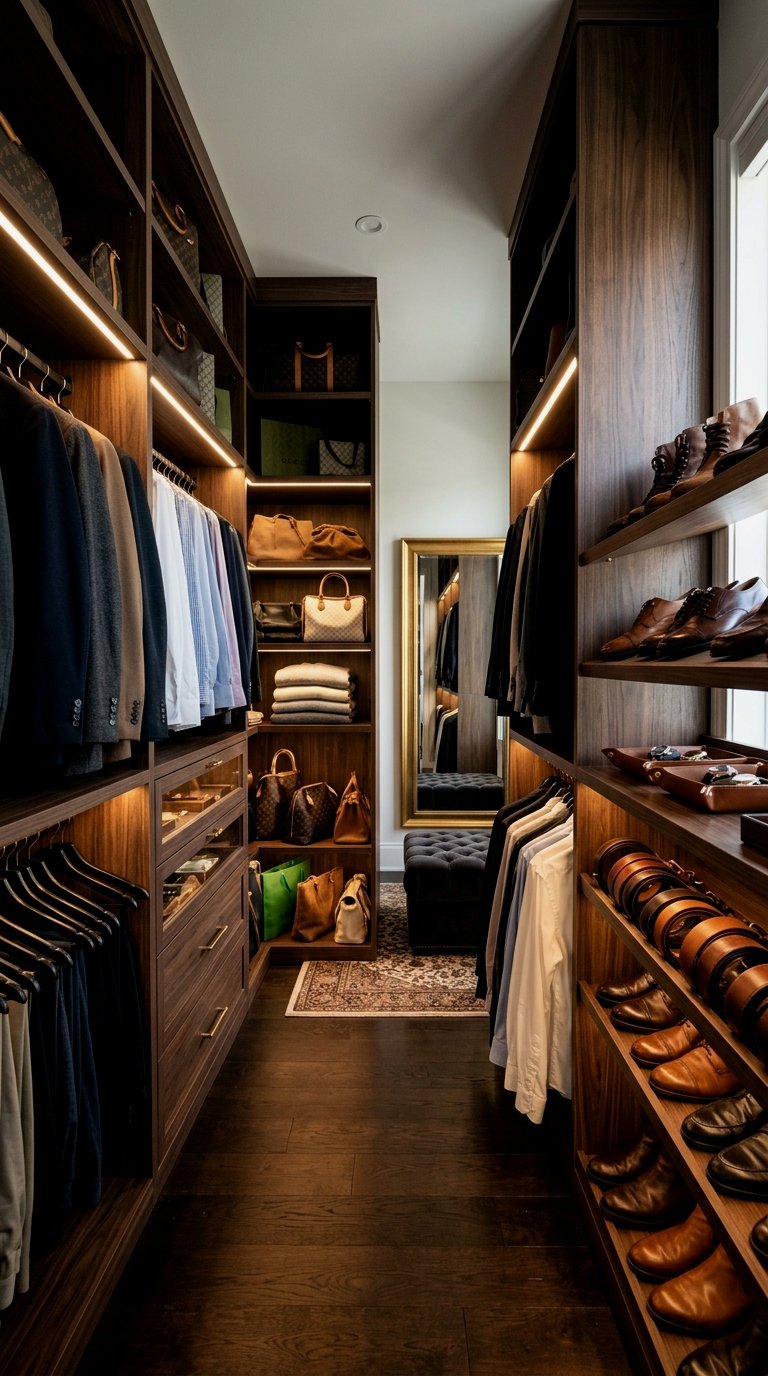
Why should the living room have all the fun? If you want to feel like a boss every morning, treat your closet like a high-end boutique. Use dark wood shelving, install LED strip lighting under the racks, and use matching hangers (no wire hangers, please!). I’m obsessed with the “open closet” look where your best suits and coats are treated like decor. If you’re on a budget, an IKEA Pax system with custom dark doors and those knurled handles we talked about will look like a $10,000 custom job for a tenth of the price.
Add a small leather stool or a marble-topped island in the center of your closet if space permits. It provides a spot to set out your watch or shoes and instantly elevates the “boutique” vibe.
Symmetry and Linear Furniture
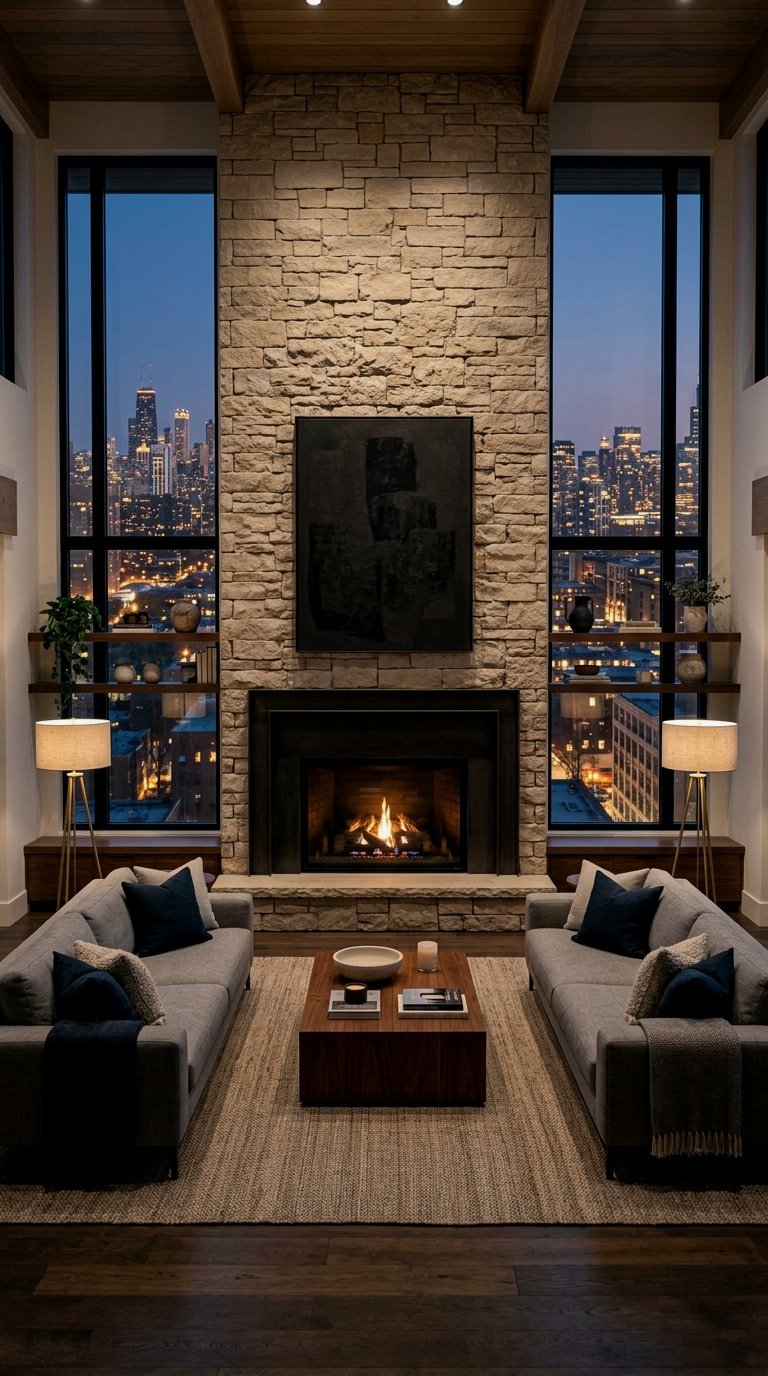
Masculine interiors thrive on order and symmetry. It’s about creating a sense of calm strength. Instead of a random assortment of chairs, use a pair of identical armchairs facing the sofa. Choose furniture with clean, linear silhouettes—think Mid-Century Modern or Bauhaus-inspired pieces with exposed frames. Avoid overly ornate “curvy” furniture. A low-profile, long sideboard (like the ones from Article) emphasizes the horizontal lines of the room, making the space feel wider and more expansive.
Use “doubling” to create symmetry. Two identical lamps on a console, or two identical pillows on a sofa, creates an instant sense of designer-led balance and intentionality.
Don’t forget the “fifth wall”—the ceiling! In a masculine room, painting the ceiling a deep shade (even one shade lighter than your dark walls) eliminates the jarring “white box” feel and makes the room feel incredibly high-end. Use a flat finish to avoid any glare from your industrial lighting.
📏 12 Genuinely Life-Changing Ways to Master a Masculine Interior (No Seriously, the Difference is Unreal) Quick-Win Checklist
- High Contrast: Pair soft textiles with hard surfaces like stone or metal.
- Dark Palette: Use a matte, dark paint (like charcoal or navy) for depth.
- Statement Scale: Opt for one large piece of art rather than a gallery wall.
- Tactile Hardware: Swap generic pulls for knurled or leather-wrapped handles.
- Signature Scent: Use woodsy, leather, or tobacco-scented candles to set the mood.
Defining the Masculine Entryway
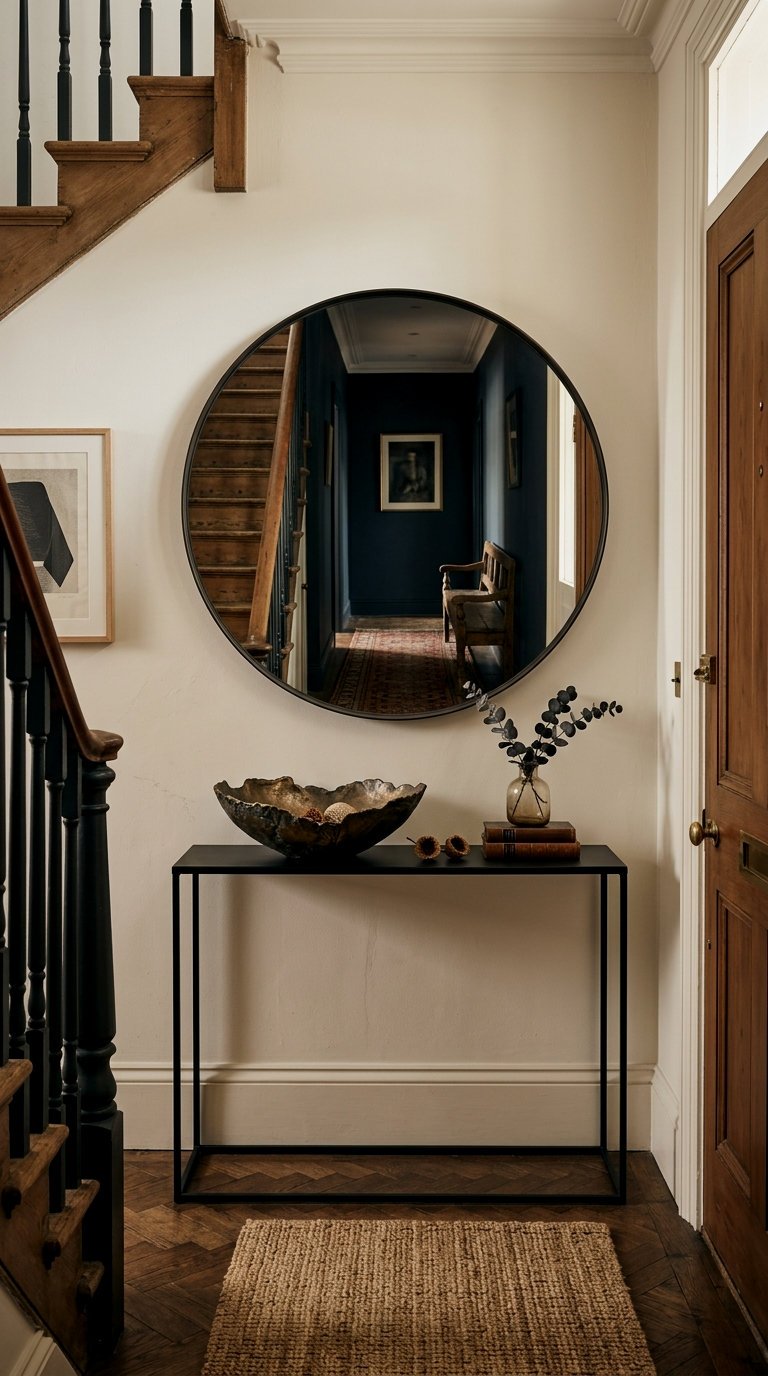
First impressions are everything, and a masculine entryway should feel like a handshake—firm and confident. Ditch the “home sweet home” mats. Instead, use a vintage Persian runner in deep reds or blacks. A heavy wood console table with a stack of large coffee table books (think architecture or photography) and a dedicated leather tray for keys is all you need. I’m a huge fan of adding a large, circular mirror with a thin black frame; it breaks up the linear “hardness” of the other furniture while still feeling incredibly modern and sharp.
Scent is the invisible layer of design. For a masculine entryway, use a reed diffuser with notes of Sandalwood or Oud. It’s the first thing people notice, and it solidifies the vibe instantly.
I hope these tips help you look at masculine design in a whole new light. It’s not about being cold or “tough”—it’s about creating a space that feels curated, intentional, and genuinely comfortable. When you start focusing on the quality of materials and the drama of scale, your home will transform into something that feels truly iconic. You’ve got this!
Frequently Asked Questions
What is the best paint color for a masculine living room?
Deep charcoals and navy blues are classic, but Farrow & Ball ‘Railings’ or Sherwin Williams ‘Iron Ore’ are top designer picks because they have rich, complex undertones that feel warmer and more sophisticated than a basic black.
How do I make a masculine room feel “cozy” rather than cold?
The secret is layering textiles. Mix hard elements like leather and steel with soft, high-pile textures like wool rugs, velvet cushions, and linen curtains. Adding warm lighting (bulbs in the 2700K range) also makes a huge difference.
Can I have a masculine interior in a small apartment?
Absolutely. Focus on “low-profile” furniture to keep sightlines open and use mirrors to bounce light. You can still use a dark palette, just ensure you have excellent artificial lighting to prevent it from feeling cramped.
What kind of art works best for a masculine vibe?
Large-scale abstract art, black and white photography, or architectural sketches are perfect. The key is scale—one large, impactful piece is always better than several small ones.
Is leather a requirement for masculine design?
Not at all! While leather is a staple, you can achieve a masculine look with heavy linens, wool, and even high-quality velvet. It’s more about the colors (saturated and deep) and the silhouettes (clean and structured) than any one specific material.