I used to think my tiny 8×10 urban patio was destined to be nothing more than a graveyard for half-dead succulents and a single, lonely folding chair. Every time I saw those sprawling outdoor kitchens in magazines—the ones with the full-sized wood-fired ovens and ten-foot islands—I felt a genuine pang of “space envy.” I spent years convinced that you needed an acre of land to actually cook outside without it feeling like a cramped camping trip. But then, I discovered that the secret isn’t more square footage; it’s smarter engineering and high-end materials that work twice as hard. Trust me on this one, the difference between a “grill in a corner” and a curated micro-kitchen is unreal.
✨ Before You Start: No Seriously, These 12 Small Outdoor Kitchen Ideas Are Genuinely Life-Changing for Tiny Patios Mindset
Maximizing Your Outdoor Culinary Footprint
The Floating Herb Garden Prep Station
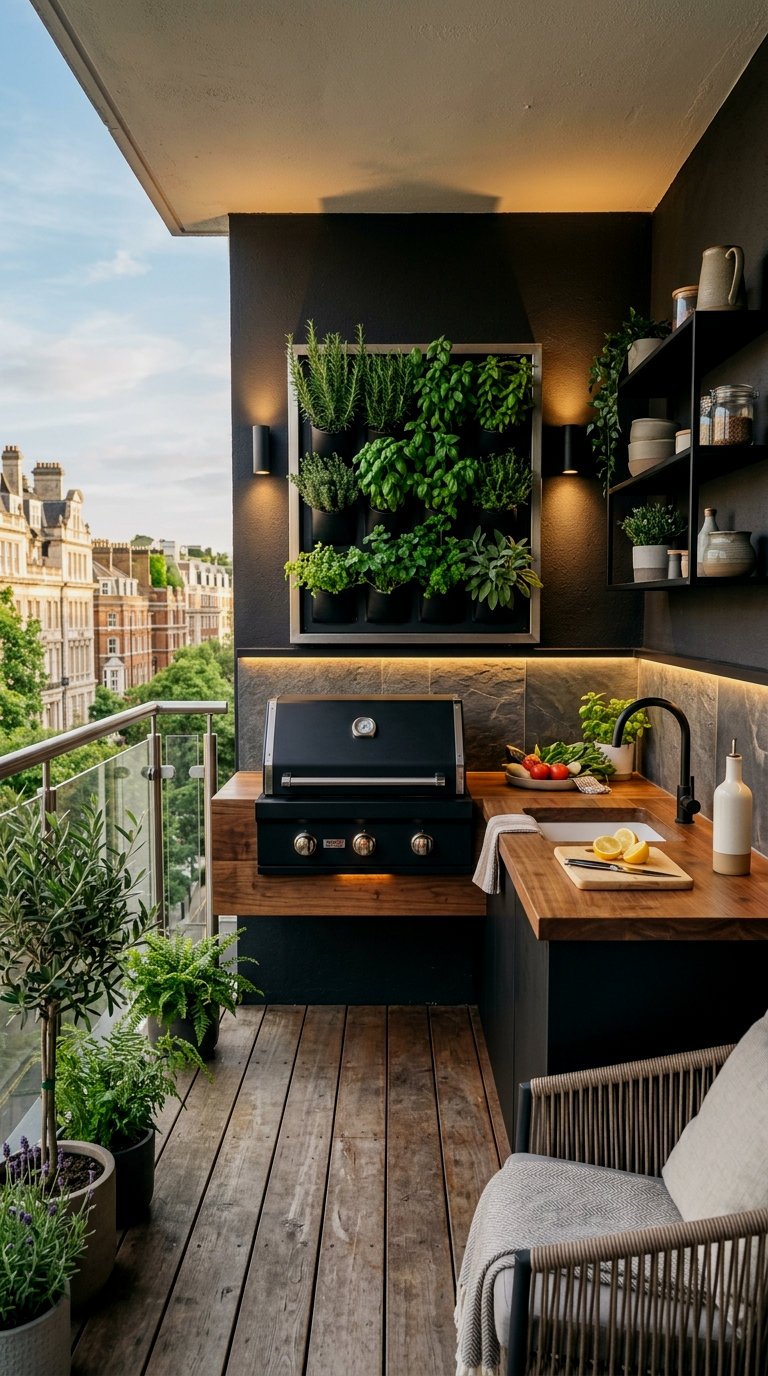
No seriously, why are we still wasting floor space on bulky potting benches? A floating prep station made of sustainably sourced teak is the best kept secret for tiny balconies. By mounting a sturdy, weather-treated ledge directly to your wall or railing, you create a dedicated zone for chopping and seasoning without the footprint. I’m obsessed with integrating a recessed trough at the back for fresh basil and rosemary. It’s genuinely life-changing to pluck your herbs exactly where you’re prepping your marinade. For a moody, high-end look, paint the wall behind it in Farrow & Ball ‘Studio Green’—the way the foliage pops against that deep pigment is unreal.
Install a magnetic knife strip made of walnut or bamboo to the underside of the floating shelf to keep your prep tools within reach but off the counter.
The Stealth Pull-Out Pizza Oven
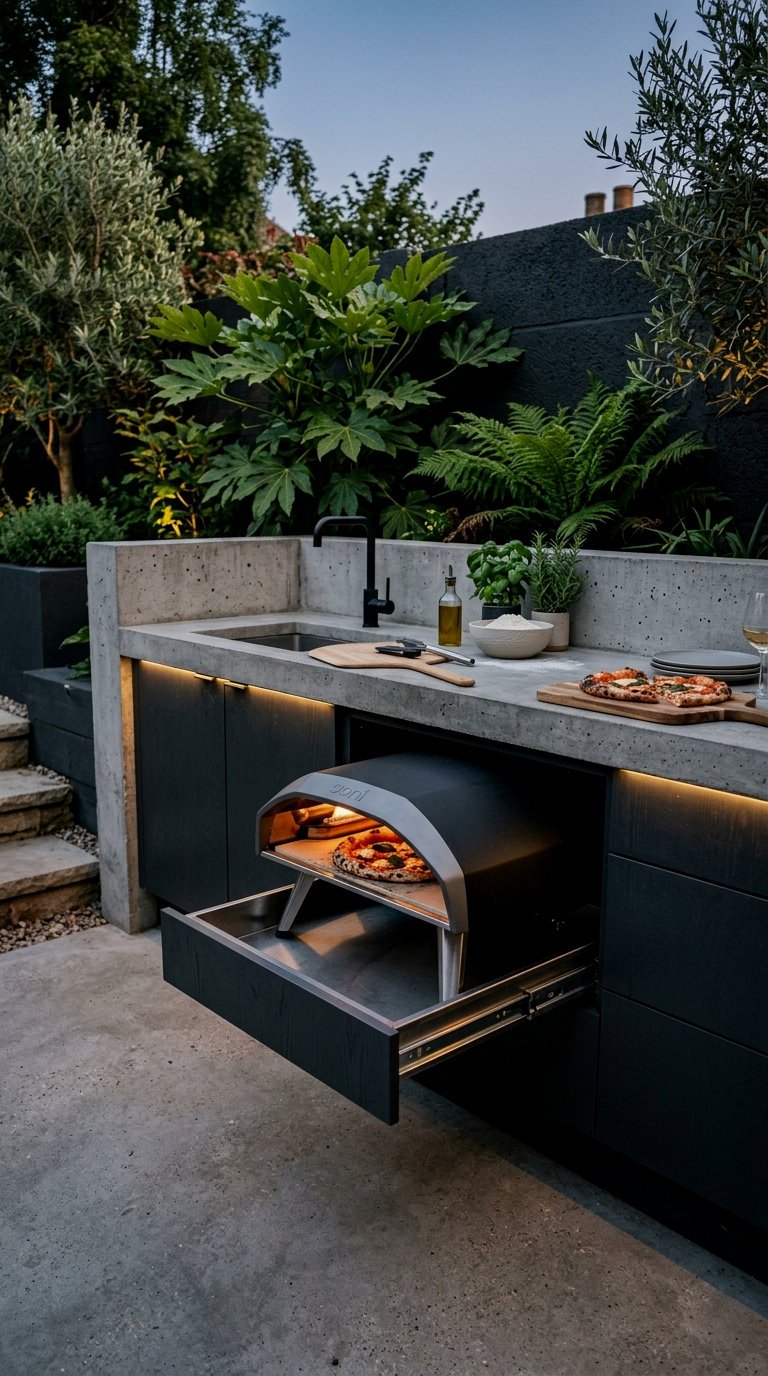
If you think a pizza oven is too “extra” for a small patio, let me introduce you to the stealth pull-out. By building a heavy-duty sliding drawer into a compact cabinetry unit, you can tuck your Ooni Karu 16 away when it’s not in use. It keeps the aesthetic clean and prevents the space from looking cluttered with appliances. When it’s pizza night, you simply slide it out, and the heat is safely directed away from the house. This setup works beautifully with a powder-coated aluminum cabinet base—it’s lightweight, rust-proof, and looks incredibly sleek in a matte charcoal finish.
Use a silicone heat-resistant mat underneath the oven on the pull-out tray to protect the finish and prevent the appliance from shifting during use.
The L-Shaped Corner Modular Island
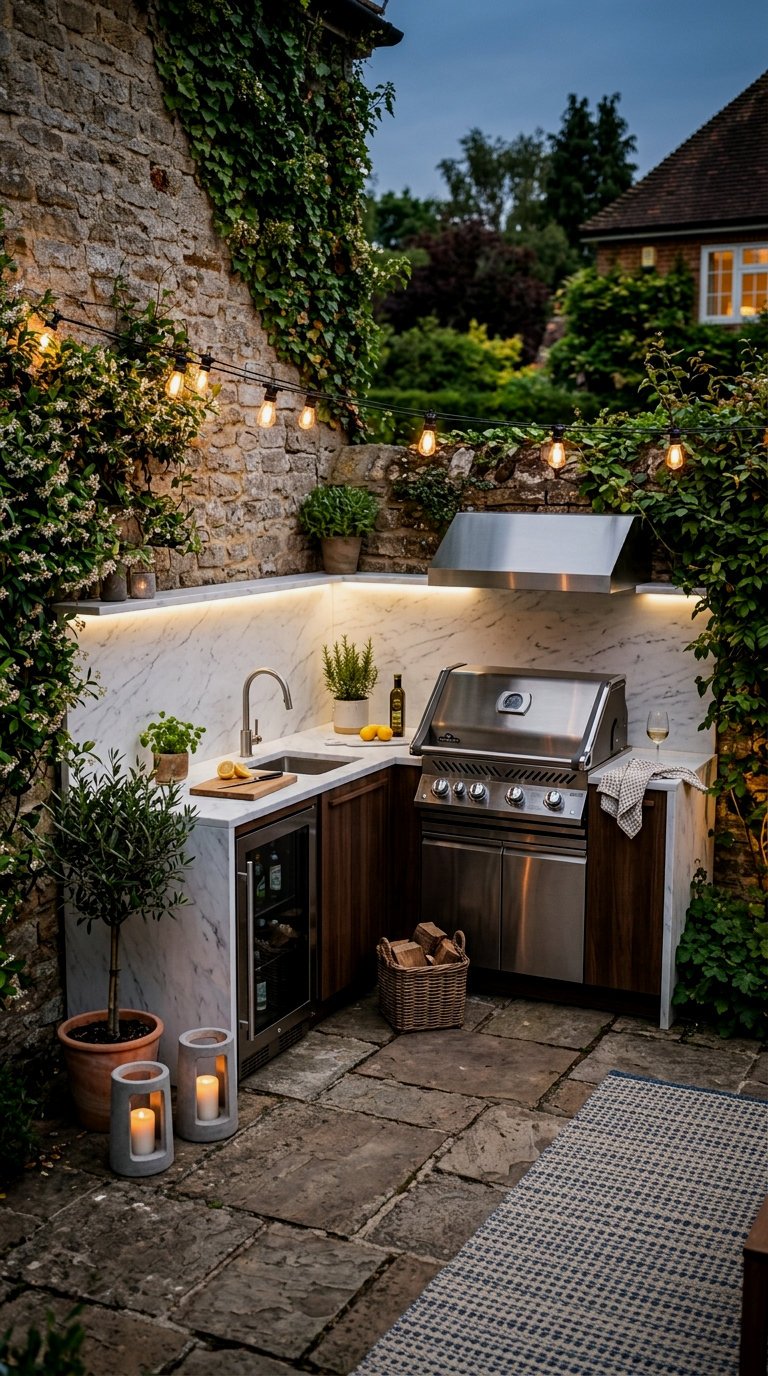
Corners are often the most wasted real estate on a patio, but an L-shaped modular island changes everything. By tucking the kitchen into the corner, you open up the center of the patio for movement. I recommend looking for modular units like those from West Elm or Pottery Barn’s outdoor collections that feature stone tops. They feel permanent and expensive, but because they are modular, you can move them if you ever decide to redesign. The “L” shape also naturally creates a “social side” where a friend can lean with a glass of wine while you’re at the grill.
The 60-30-10 Texture Rule: For a small outdoor kitchen, use 60% hard surfaces (stone/metal), 30% natural wood (teak/cedar), and 10% greenery to soften the industrial edges.
The Wall-Mounted Fold-Down Bistro Bar
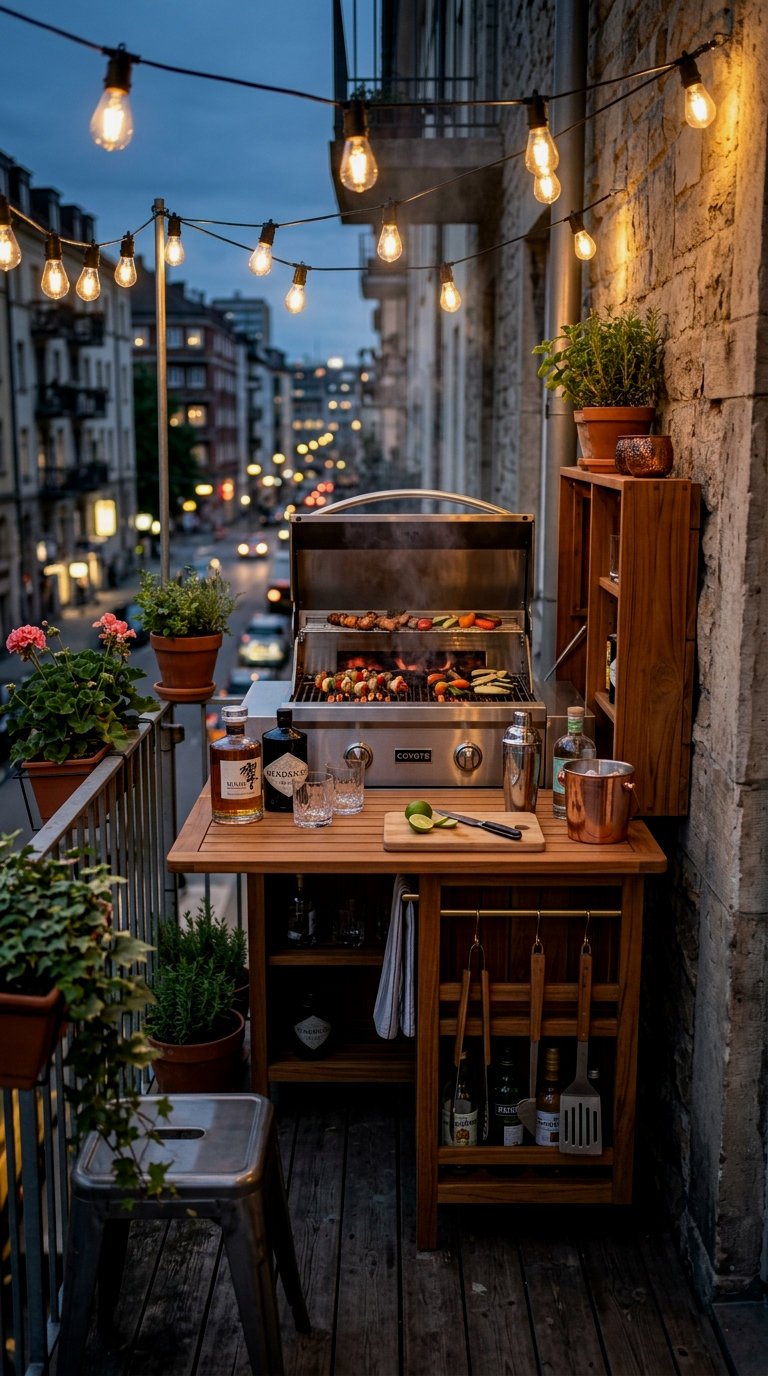
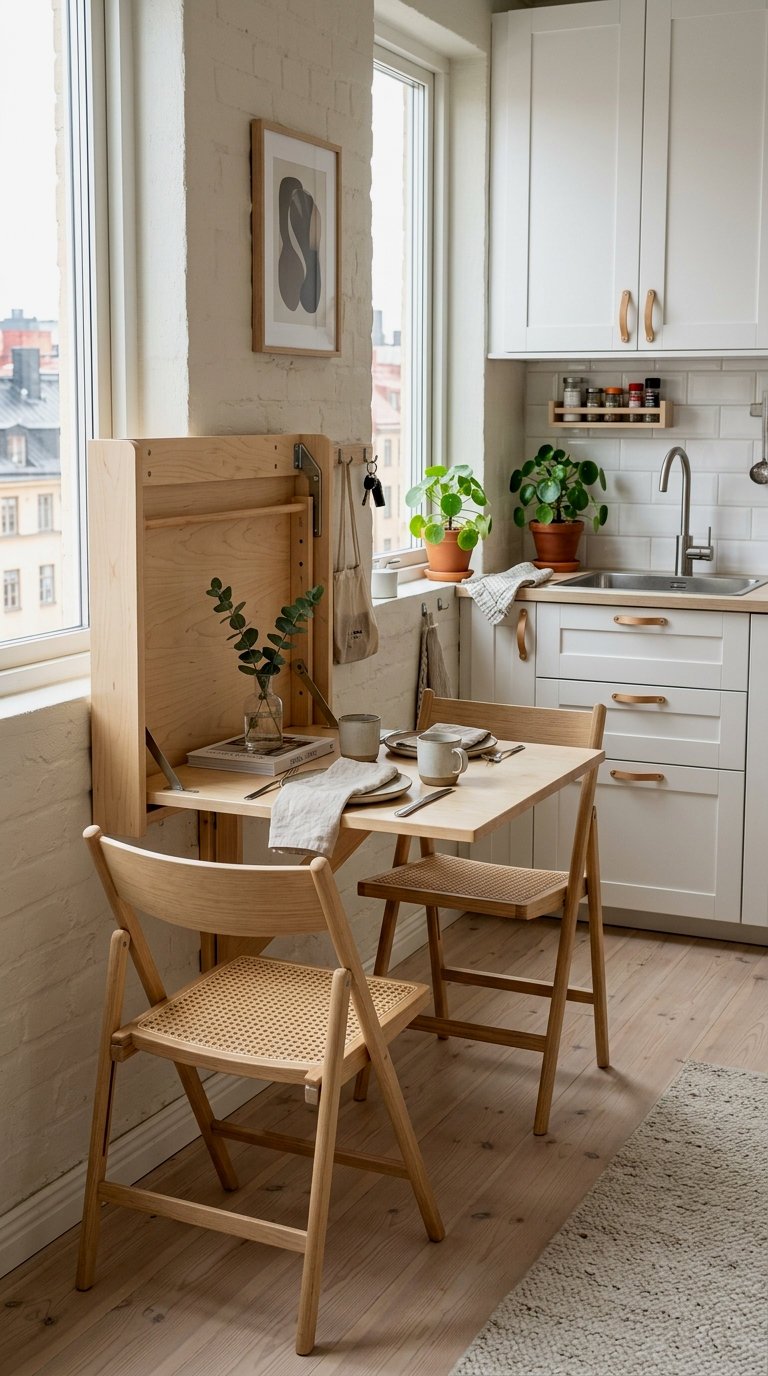
This is the ultimate solution for those “postage stamp” balconies. A wall-mounted bar that folds flat against the wall when you aren’t using it is the definition of smart design. When it’s down, it’s a perfect prep surface or a spot for two to eat; when it’s up, it’s like it was never there. For a premium feel, go for solid Ipe wood—it’s incredibly dense and stands up to the elements better than almost any other timber. Pair it with a couple of Tolix-style stools that stack easily in a corner when the bar is folded away. It’s the best kept secret for turning a walkway into a destination.
The Under-Counter Beverage Oasis
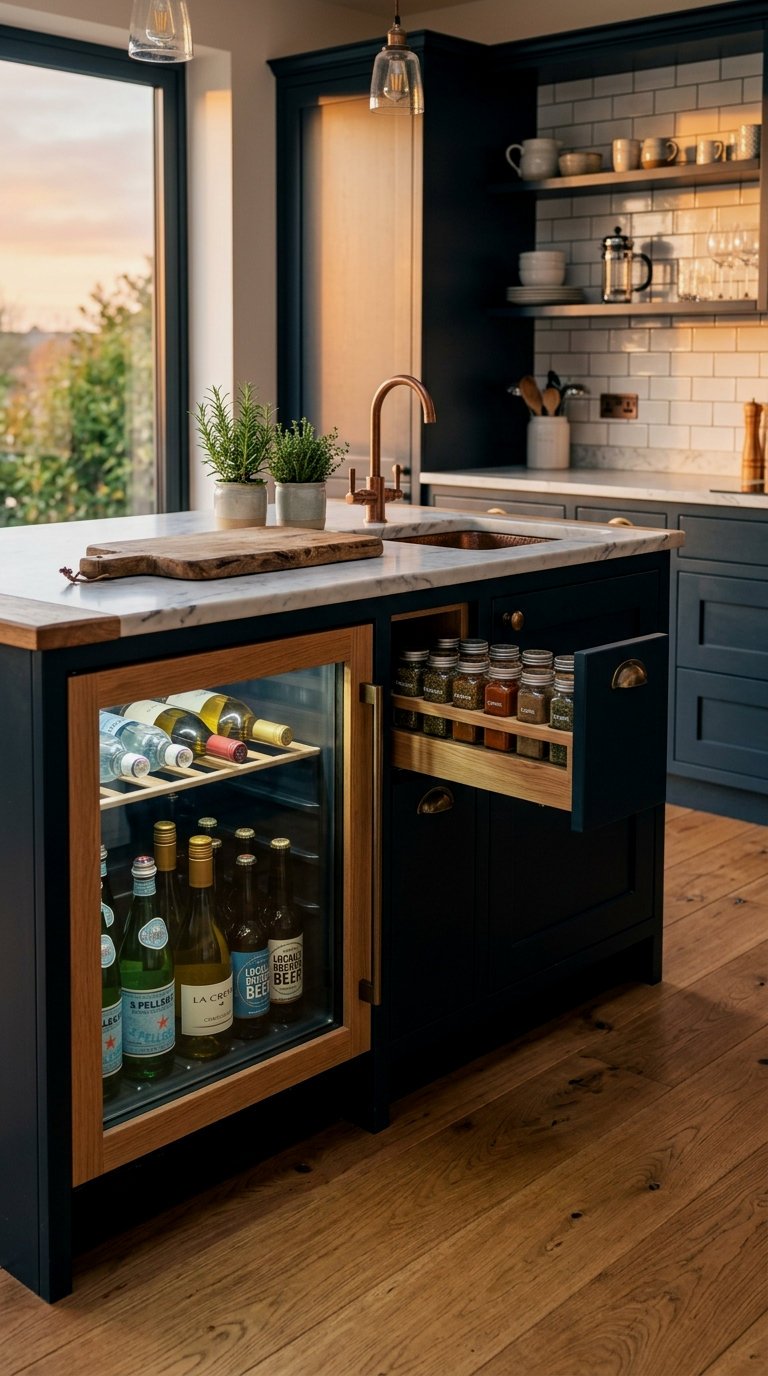
Nothing kills the vibe of a small outdoor kitchen like a bulky cooler taking up floor space. An integrated, under-counter beverage fridge is genuinely life-changing. It keeps the surface clear for cooking while ensuring cold drinks are always at hand. Look for an outdoor-rated model with a glass door so you can see your stock at a glance. It adds an immediate “luxury resort” feel to even the tiniest patio. If you can’t plumb a full sink, this fridge is your most important “second appliance” after the grill.
The Monolithic Black Steel Grill
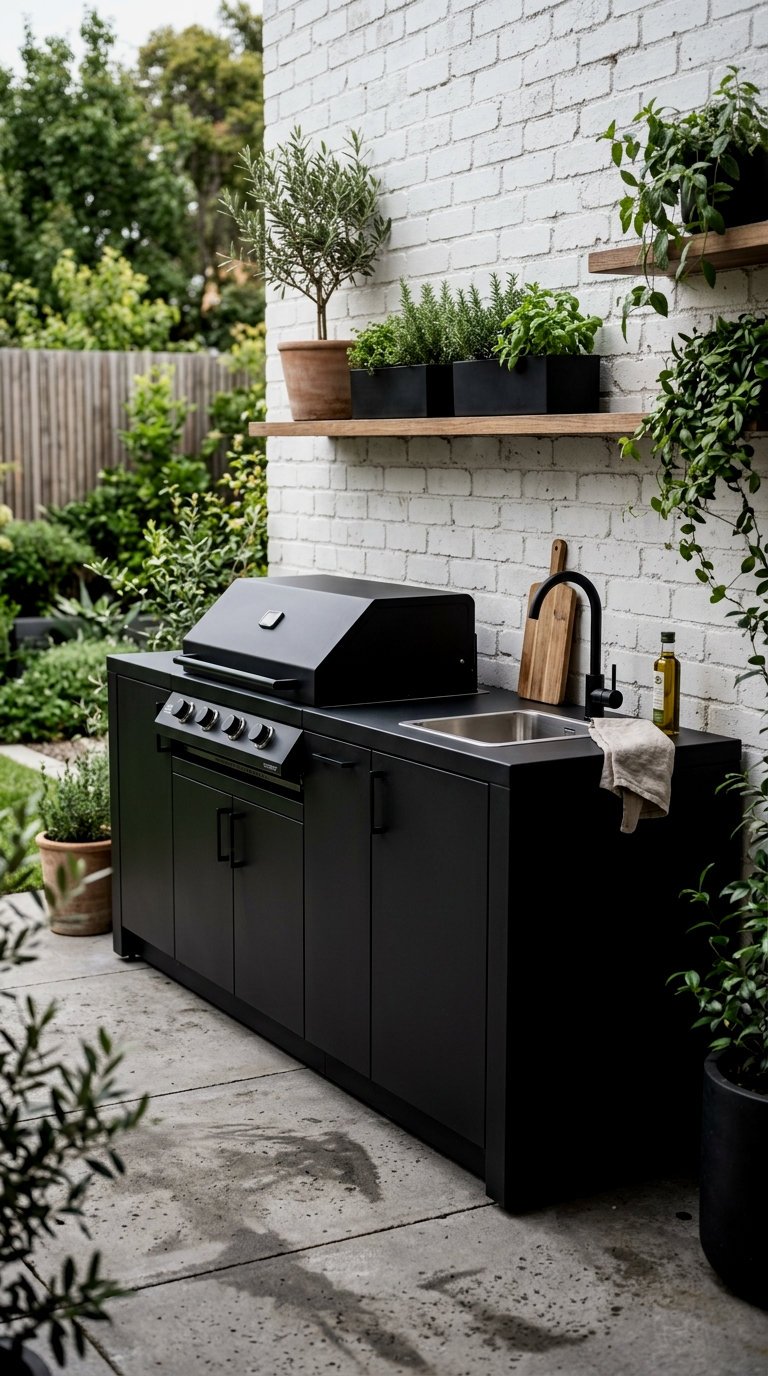
In a small space, visual clutter is the enemy. A traditional, bulky stainless steel grill can look like a giant silver elephant. Instead, go for a monolithic black steel design. Brands like Hestan or even the more minimalist Weber Summit series in black enamel create a much more sophisticated, streamlined silhouette. The black finish recedes into the shadows at night, making the space feel larger. No seriously, the difference is unreal when you match the grill to a dark accent wall painted in Farrow & Ball ‘Railings’—it creates a seamless, designer “chef’s kitchen” look.
To keep black steel looking fresh, wipe it down with a tiny amount of food-grade mineral oil after cleaning to give it a deep, matte luster and extra weather protection.
The Deluxe Rolling Marble Cart
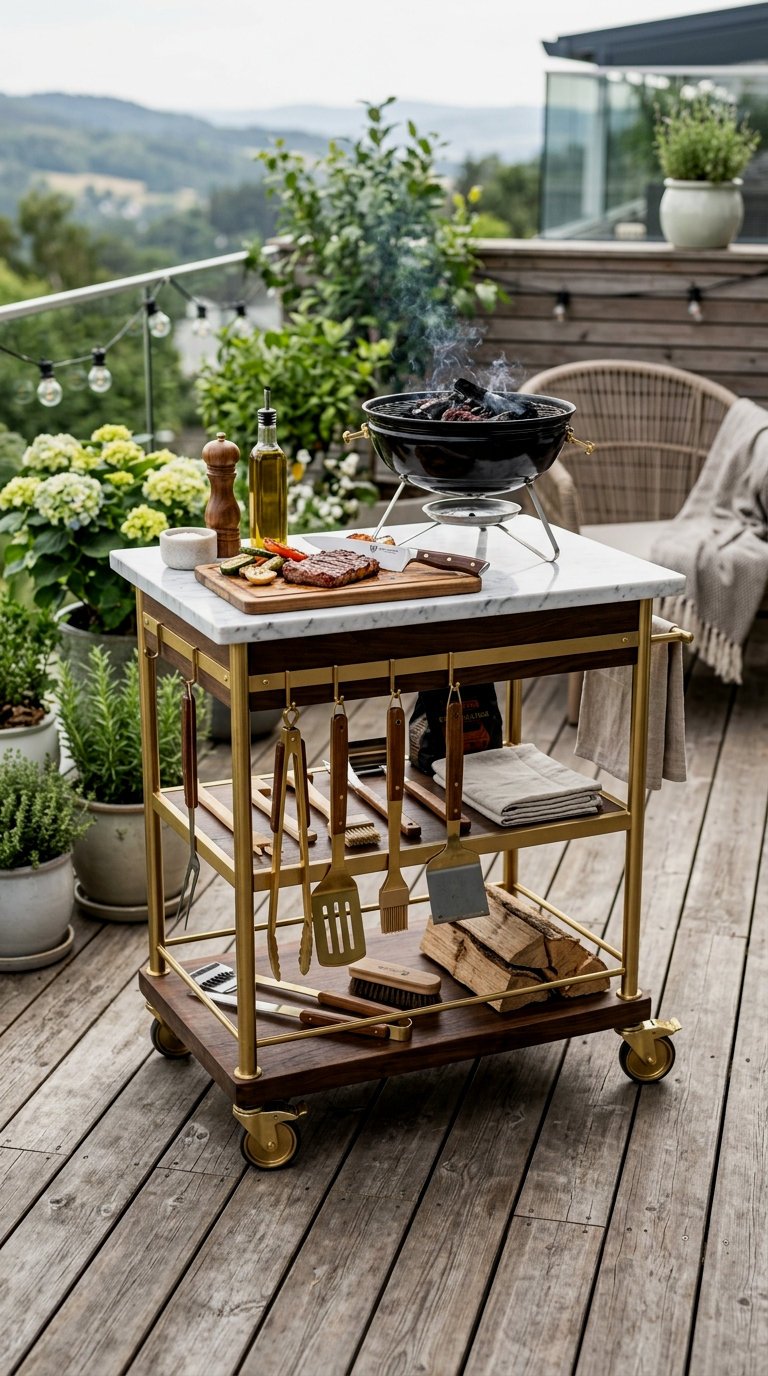
If you can’t commit to a built-in island, a deluxe rolling cart with a honed marble top is your best friend. Marble is the ultimate luxury material for dough prep—it stays cool and looks stunning. The “rolling” aspect means you can wheel it out for a party and wheel it back into a corner or even inside the house when you need the patio floor space. Look for a cart with solid brass hardware and towel bars. It’s functional jewelry for your patio. Trust me on this one, guests always gravitate toward the marble cart; it feels like a professional oyster bar or charcuterie station.
Seal your outdoor marble with a high-quality penetrative sealer twice a year. This prevents those pesky lemon juice or red wine stains from becoming permanent memories.
The exact pieces that make these ideas work:
The Vertical Tool Rack Canopy
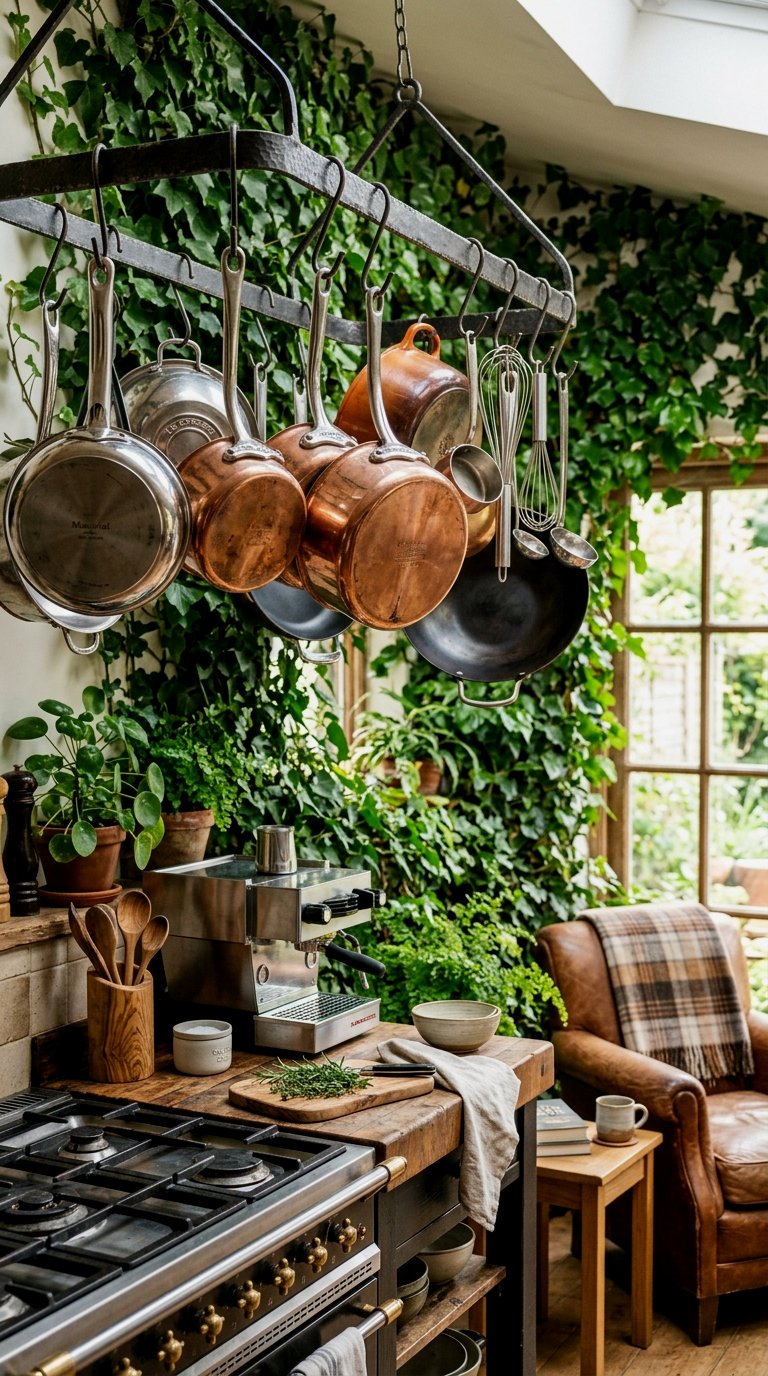
When you have zero counter space, your tools need to go “up and out.” A vertical tool rack canopy utilizes the space above your grill or prep area. Instead of digging through drawers, your tongs, spatulas, and cast-iron pans are hanging on sleek S-hooks. I love using a black grid-style rack—it looks industrial and intentional. It also doubles as a place to hang bistro lights or a clip-on fan for those humid summer evenings. It’s about reclaiming the air space that usually goes to waste.
Organize your tools by frequency of use. Put your go-to tongs in the center and the specialized pizza peel on the outer edges to streamline your workflow.
The Integrated Fire-Pit Dining Table
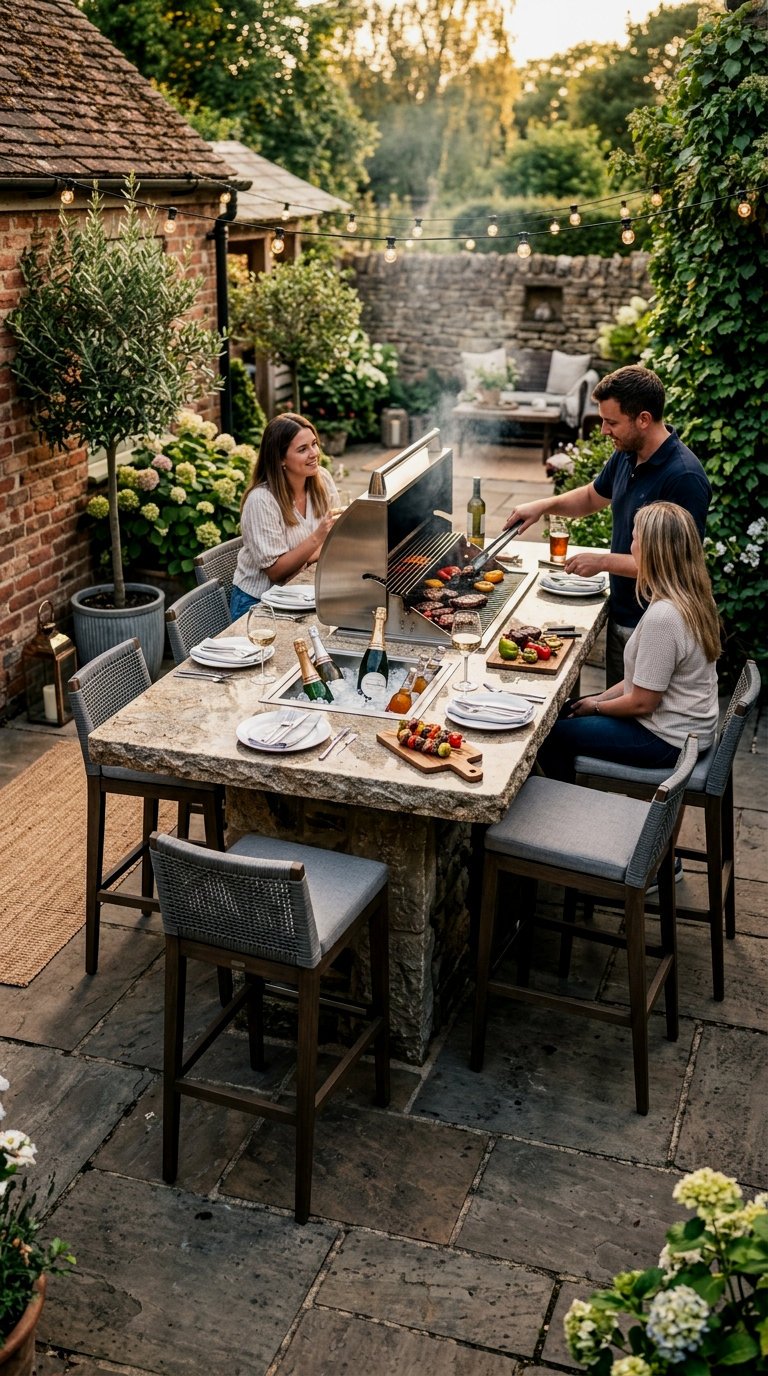
In a small patio, every piece of furniture must have at least two jobs. An integrated fire-pit dining table is the ultimate multitasker. During the day, it’s a wide, stone-topped surface perfect for setting down trays of food. In the evening, the center panel pops off to reveal a gas fire pit. Brands like Solostove or Outer make stunning versions that are clean-burning and safe for smaller decks. It combines the kitchen’s warmth with the dining room’s function. It’s genuinely life-changing for extending your patio season into the chilly autumn months.
The Micro-Kitchen with Stone Veneer
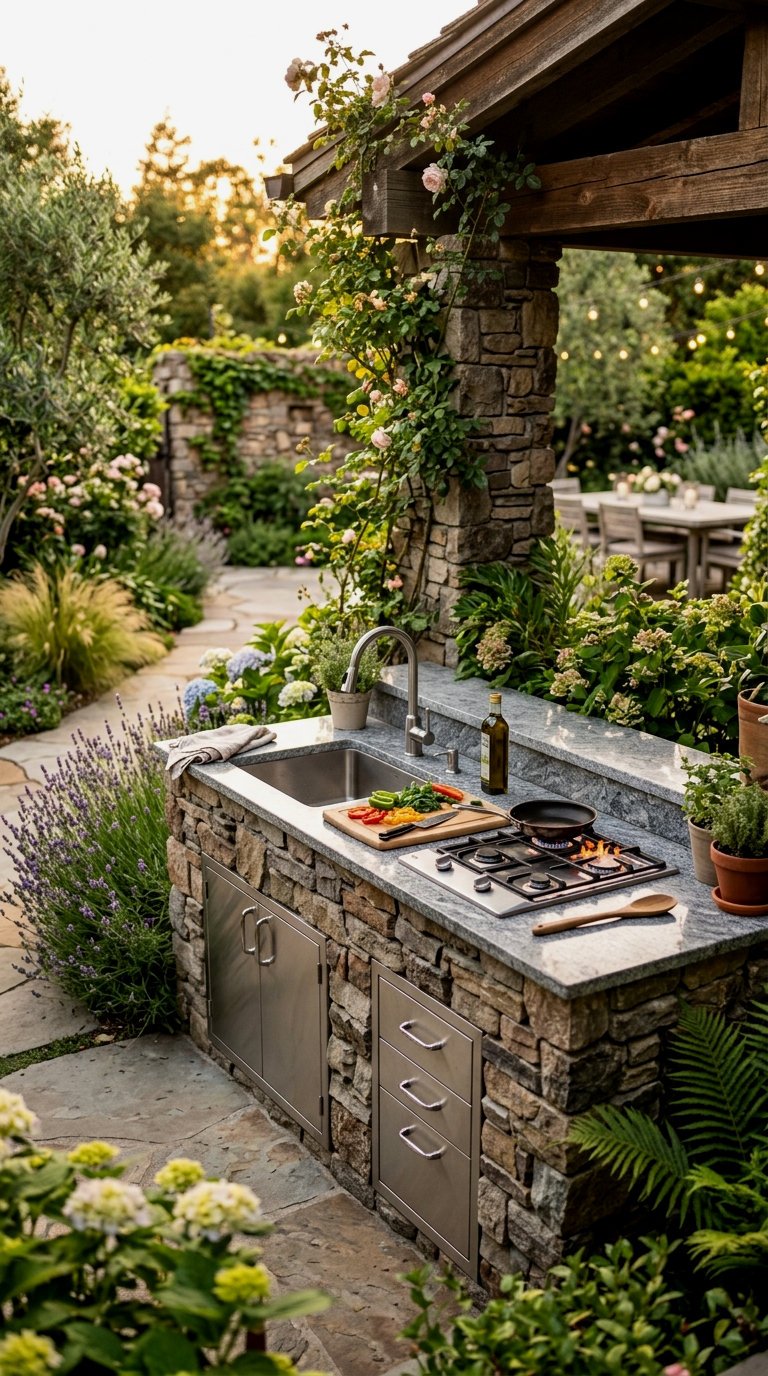
If you want that “built-in” look but don’t have the space for a full masonry project, stone veneer is your best kept secret. You can build a simple plywood frame, seal it, and apply thin, real-stone veneers (like slate or stacked quartz). It gives the kitchen a heavy, permanent feel without the massive weight or cost of solid stone blocks. Pair a grey slate veneer with a stainless steel sink for a modern, organic aesthetic. It makes the kitchen feel like a natural extension of the garden rather than something just “placed” on top of the patio.
Match the stone veneer to the existing foundation or exterior walls of your home to create a “cohesive architecture” look that makes the patio feel twice as big.
The Slat-Wall Prep Hidden Storage
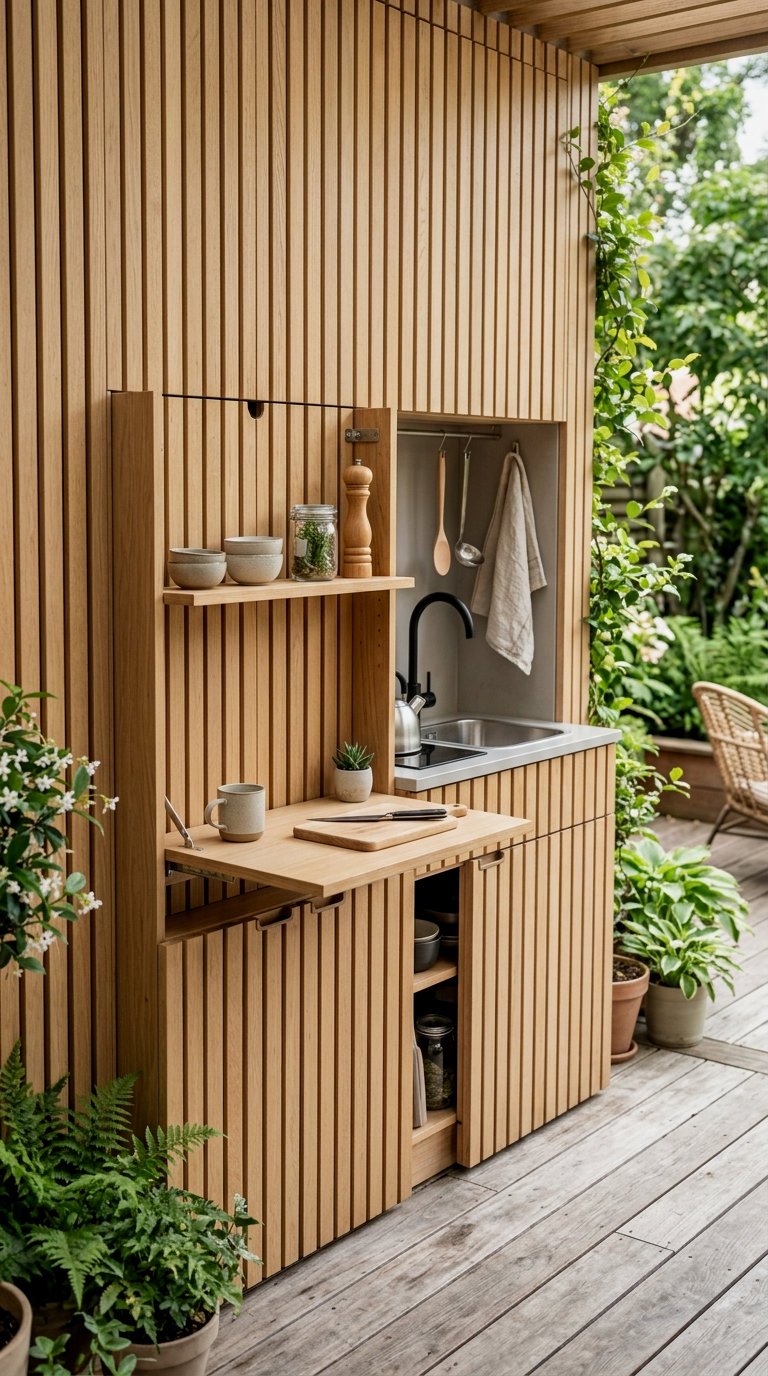
Obsessed is an understatement when it comes to cedar slat walls. They are the perfect backdrop for an outdoor kitchen. By using a slat-wall system, you can hide all your ugly necessities—propane tanks, trash bins, and plumbing—behind a beautiful, textured wood screen. You can even mount floating shelves directly onto the slats. It creates a warm, spa-like vibe that masks the “utility” side of cooking. It’s the perfect way to add privacy from neighbors while keeping your kitchen essentials organized and out of sight.
When designing a small kitchen, don’t forget the lighting! Use Philips Hue outdoor light strips tucked under the lip of your countertops or behind the cedar slats. Being able to change the glow to a warm amber at night makes the space feel expensive and incredibly cozy. Avoid harsh overhead floods at all costs!
📏 No Seriously, These 12 Small Outdoor Kitchen Ideas Are Genuinely Life-Changing for Tiny Patios Quick-Win Checklist
- Measure Your Clearances: Ensure you have at least 36 inches of “aisle” space to move comfortably.
- Check Your Power: Locate your nearest GFCI outlet before planning your beverage fridge or electric grill.
- Focus on Finish: Choose 304-grade stainless steel to ensure your fixtures don’t rust in the first season.
- Go Multi-Functional: Select a cart or table that can serve at least two purposes.
- Don’t Forget Shade: A simple, wall-mounted cantilever umbrella can save your prep area from the midday sun.
The Mirrored Backsplash Expansion
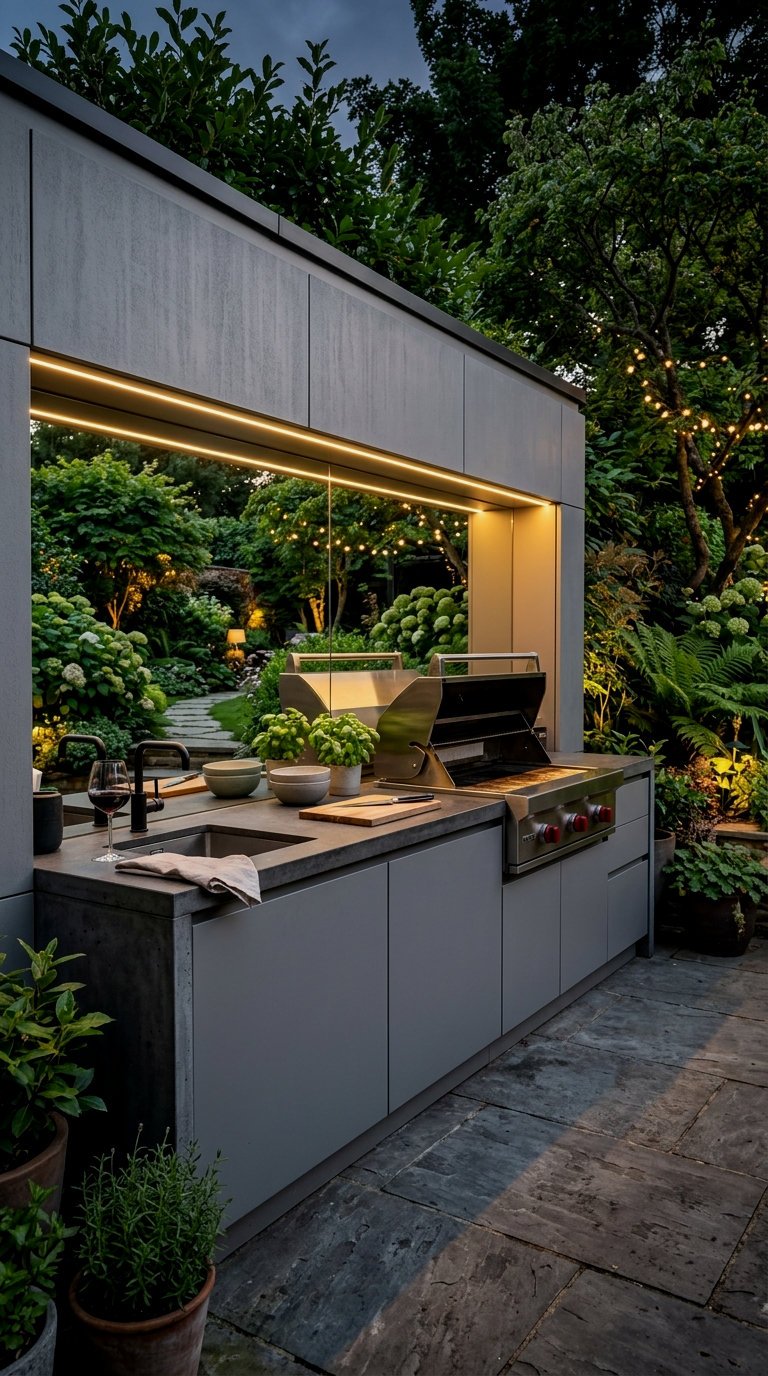
This is a classic interior design trick brought outdoors, and it’s genuinely life-changing. By installing a weather-treated, antiqued mirrored backsplash behind your prep counter, you instantly double the visual depth of your patio. It reflects the greenery of your plants and the flicker of your grill flames, making the entire area feel airy and expansive. I recommend using an antiqued or smoky finish rather than clear glass; it’s much more forgiving with fingerprints and creates a beautiful, vintage-luxe atmosphere. It’s the ultimate “designer secret” for making a tiny kitchen feel like a grand estate.
Angle your mirrored backsplash slightly downward (just a degree or two) to avoid reflecting the harsh midday sun directly into your eyes while you’re chopping vegetables.
Creating an outdoor kitchen on a tiny patio is all about letting go of the idea that bigger is better. When you focus on high-quality materials, vertical space, and clever multi-functional pieces, you end up with a space that feels curated and intentional rather than just “small.” Honestly, some of the most memorable meals I’ve ever hosted happened on a tiny balcony with nothing more than a rolling cart and a really great grill. You’ve got this—start small, choose pieces you truly love, and watch your tiny patio transform into your favorite “room” in the house!
Frequently Asked Questions
What is the most durable material for a small outdoor kitchen?
Stainless steel (specifically 304 grade) is the gold standard for durability because it resists rust and corrosion. However, for a warmer look, Teak and Ipe are incredible hardwoods that naturally resist rot and insects. For countertops, honed granite or concrete are the most “set it and forget it” options for weathering the elements.
Do I need a permit for a small outdoor kitchen on a patio?
Generally, if you aren’t adding permanent gas lines, plumbing, or major electrical circuits, you won’t need a permit for modular or “plug-and-play” setups. However, if you are planning a built-in structure with a gas line, always check with your local HOA or city building department first to avoid any expensive surprises.
How do I protect my small outdoor kitchen in the winter?
Investment-quality covers are non-negotiable. Look for covers made of heavy-duty, breathable polyester with UV protection. For the winter, shut off any water lines to prevent pipes from bursting, and if possible, move smaller items like rolling carts or portable pizza ovens into a garage or shed.
Can I have an outdoor kitchen on a wooden deck?
Yes, but safety is the priority! Use a grill mat or a non-combustible “hearth” (like a piece of bluestone or a metal tray) under your cooking appliances to protect the wood from grease and heat. Ensure your grill is at least 2-3 feet away from any wooden railings or house siding.
How can I make a small outdoor kitchen look expensive on a budget?
Focus on the “touchpoints.” You can buy a budget-friendly modular cabinet but swap the standard plastic handles for solid brass or matte black hardware. Add high-end lighting, like a few copper solar sconces, and keep a consistent color palette—sticking to two or three main materials makes everything look more expensive and cohesive.