Small Studio Apartment Ideas: The Ultimate Guide to Small Space Living
I remember staring at my first studio—a beige, 350-square-foot box—and genuinely wanting to cry. I was convinced that I had to choose between having a “real” bed and having a “real” sofa. I spent weeks tripping over my own coffee table, feeling like the walls were closing in. No seriously, the mistake we all make is thinking small means “miniature.” It’s actually the opposite. You don’t need a smaller life; you just need a smarter layout. Trust me on this one, square footage does not dictate your lifestyle, and a 500 sq ft studio apartment can feel like a palace with the right flow.
✨ Before You Start: The Ultimate Guide to Small Studio Apartment Ideas: Making Every Square Inch Count Mindset
Laying the Groundwork
The Foundational Rules of Studio Living
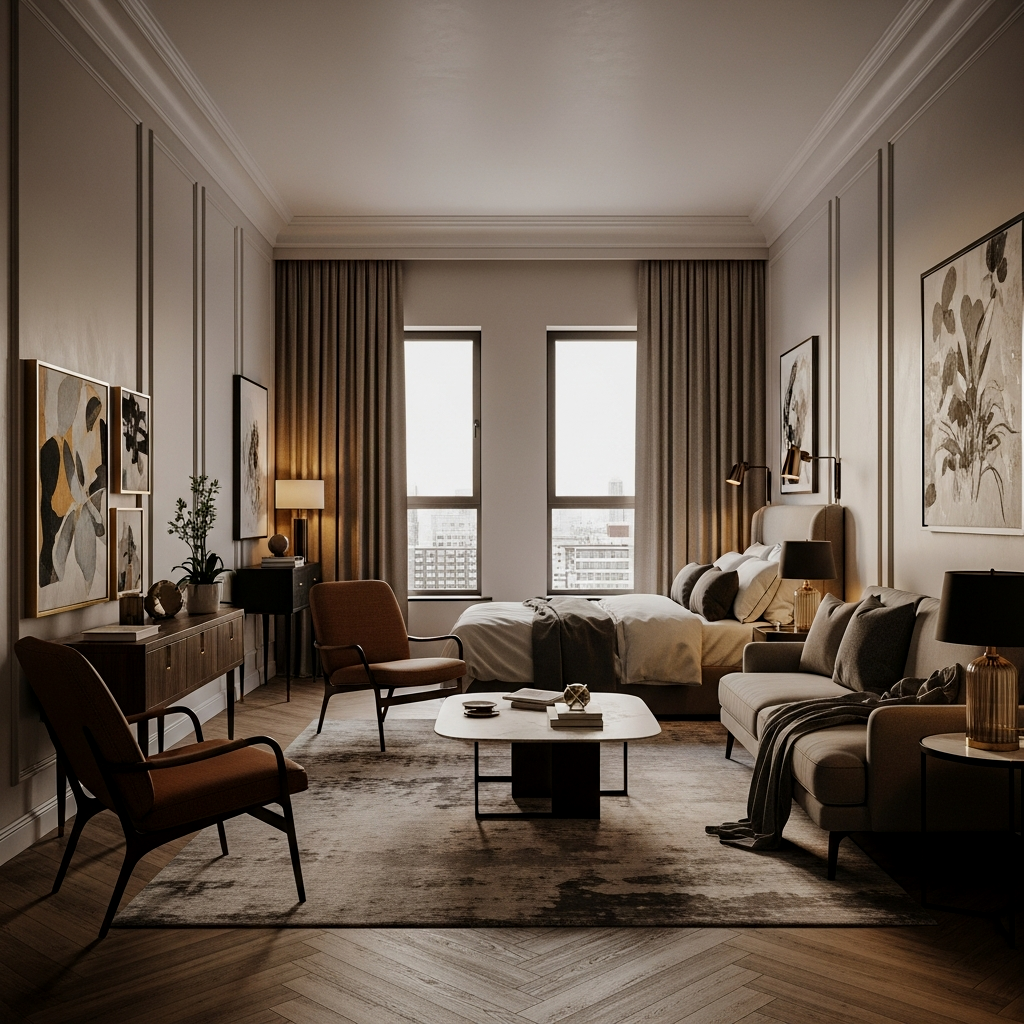
The first rule is to stop seeing your apartment as one big room. No seriously, you have to mentally (and physically) divide the space. Whether you’re working with 400 to 500 sq ft studio apartment ideas or something much smaller, the goal is to create “destination” spots. When you’re in bed, you shouldn’t feel like you’re in the kitchen. This mental separation is genuinely life-changing for your sanity.
Zoning Your Space: 400 to 500 Sq Ft Studio Apartment Ideas
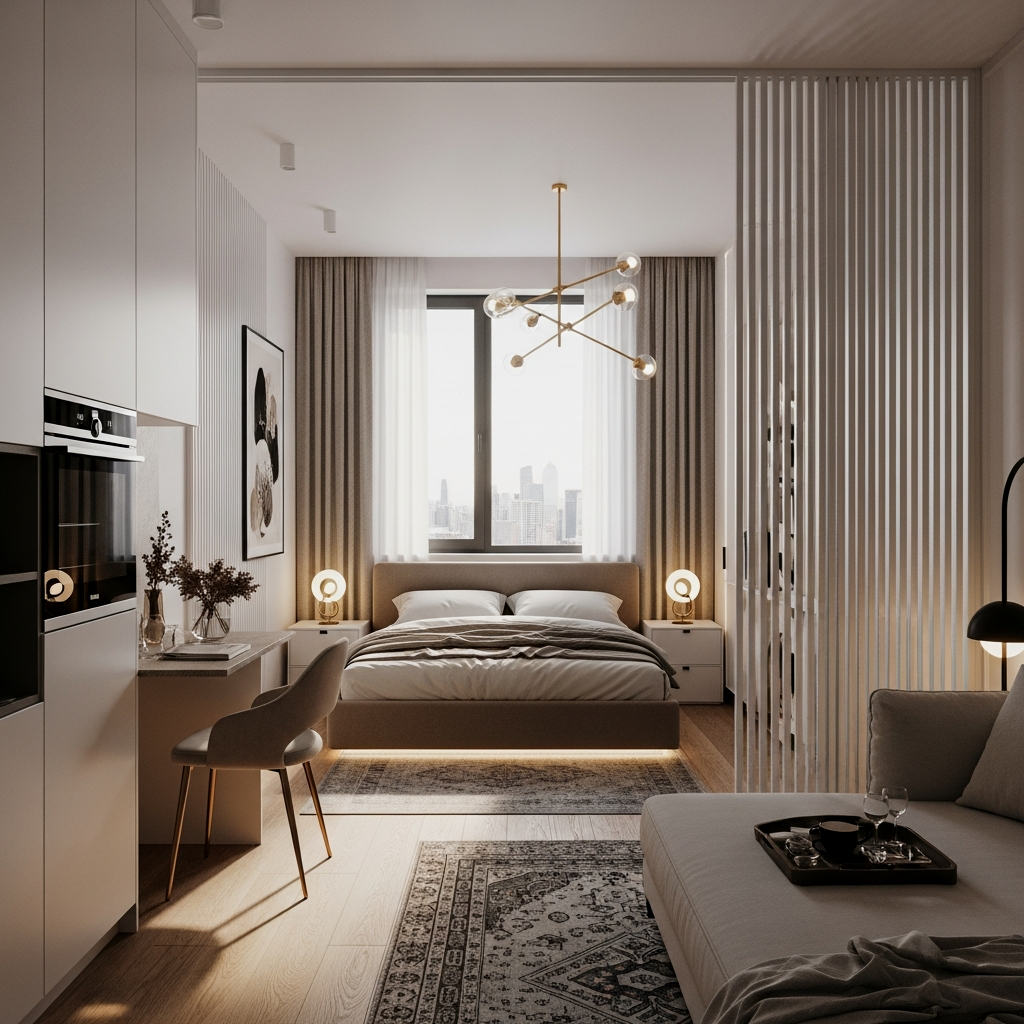
In a mid-sized studio, you have the luxury of actual floor space, but it’s the easiest place to get messy with your layout. Defining your “bedroom” versus your “living room” using rugs or open shelving is the best kept secret to making a larger studio feel like a one-bedroom. If you have the space, don’t be afraid to pull furniture away from the walls to create distinct corridors.
Want to explore this specific look further? I’ve done the full deep-dive so you don’t have to!
The Power of Verticality
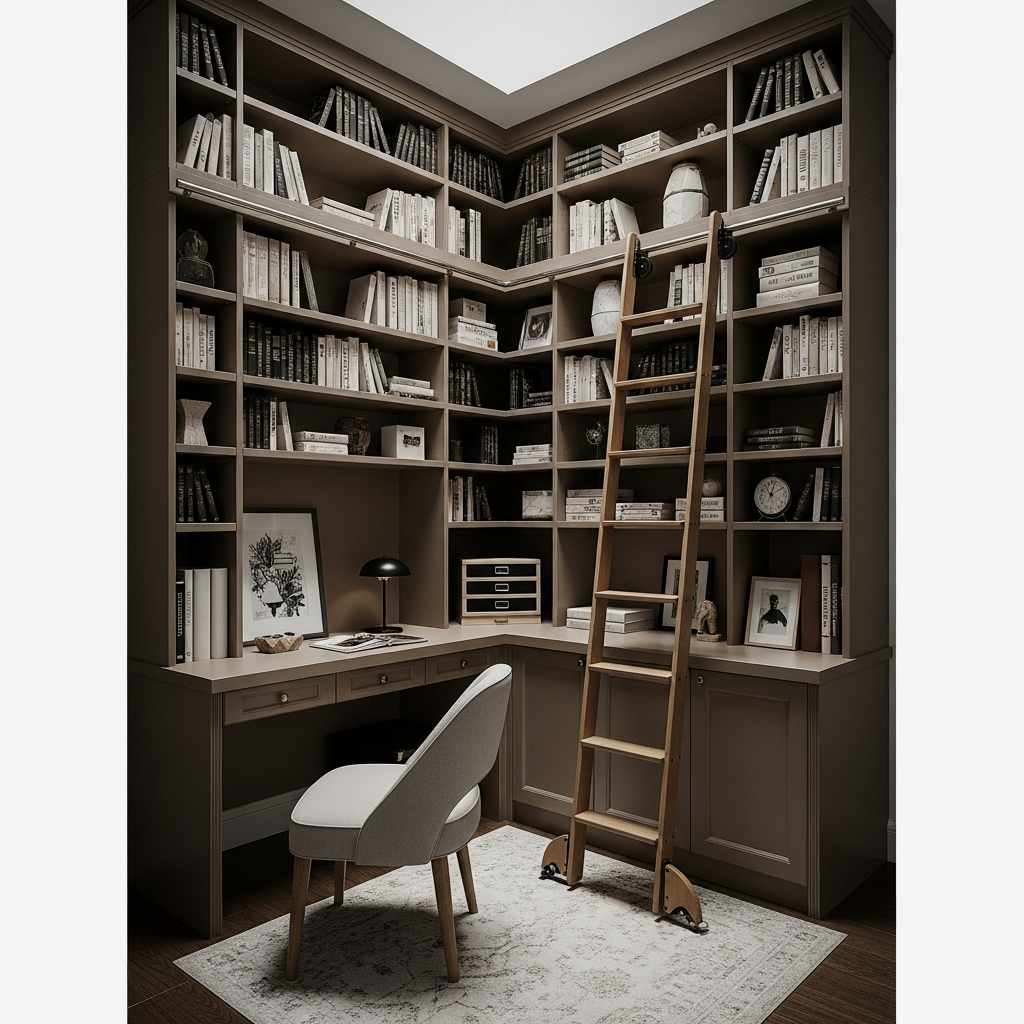
When you run out of floor space, look up! Most people leave the top three feet of their walls completely empty. I am obsessed with using high shelving for items you don’t use every day. It draws the eye upward, making the ceilings feel higher and the footprint feel less cluttered. It’s a classic trick for micro & tiny studio apartment ideas where every inch is a premium.
The 60-30-10 Rule: Use 60% of your space for functional living, 30% for negative space (empty walkways), and 10% for personality and decor. This prevents the “cluttered box” feeling.
Mirror Placement Magic
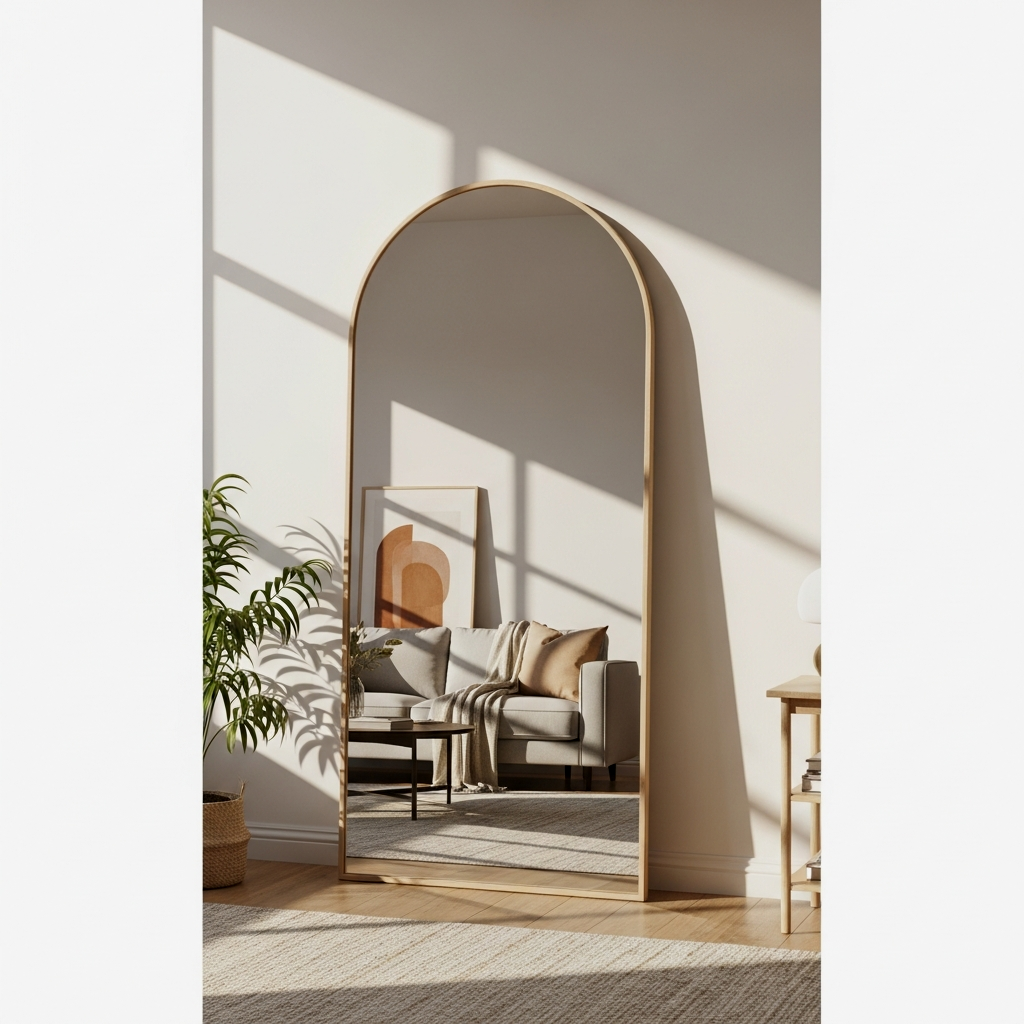
It’s the oldest trick in the book because it works. If you place a large floor mirror directly across from your largest window, the difference is unreal. It bounces the natural light into the darkest corners and creates the illusion of a second room. I’m not talking about a tiny wall mirror—go big or go home here. A massive leaning mirror is a studio’s best friend.
Angle your mirror slightly toward the most “open” part of your apartment to maximize the depth effect.
Structural Solutions
Creating a Sleeping Nook
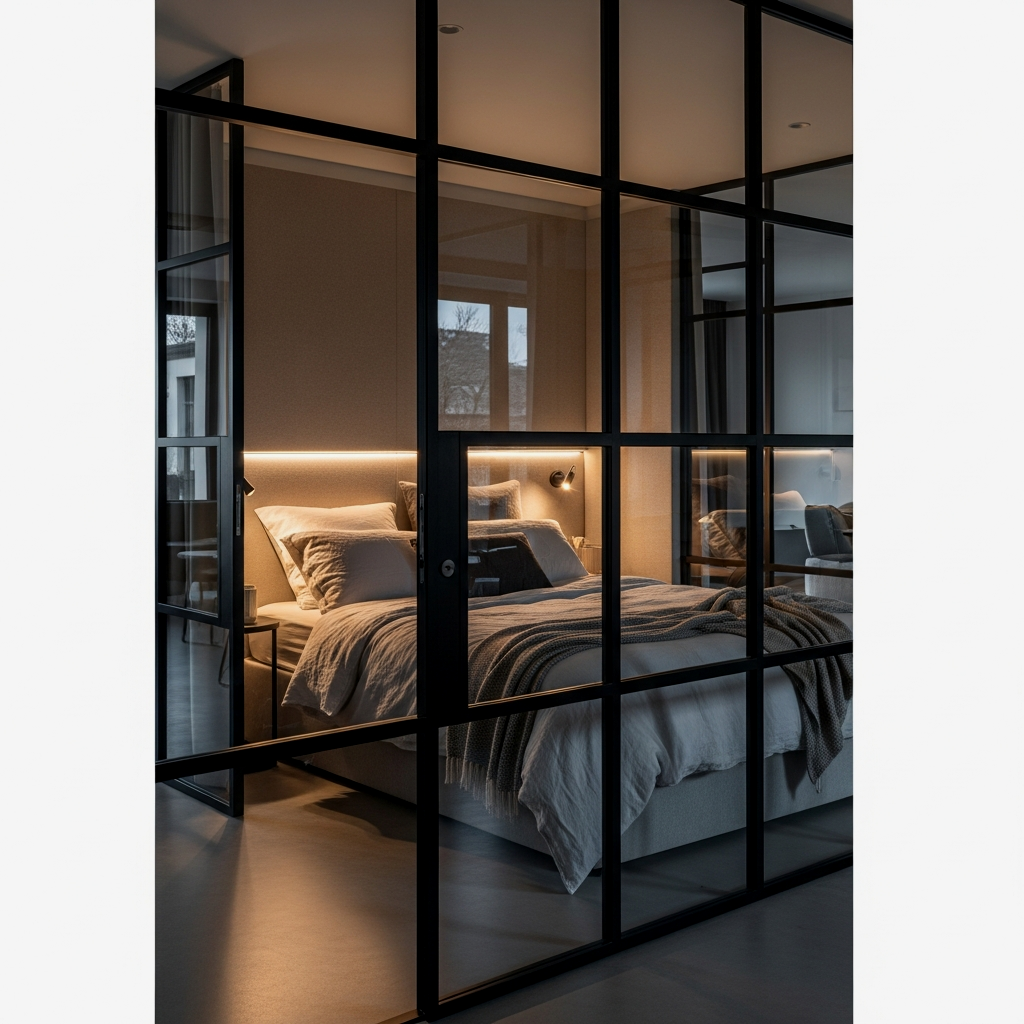
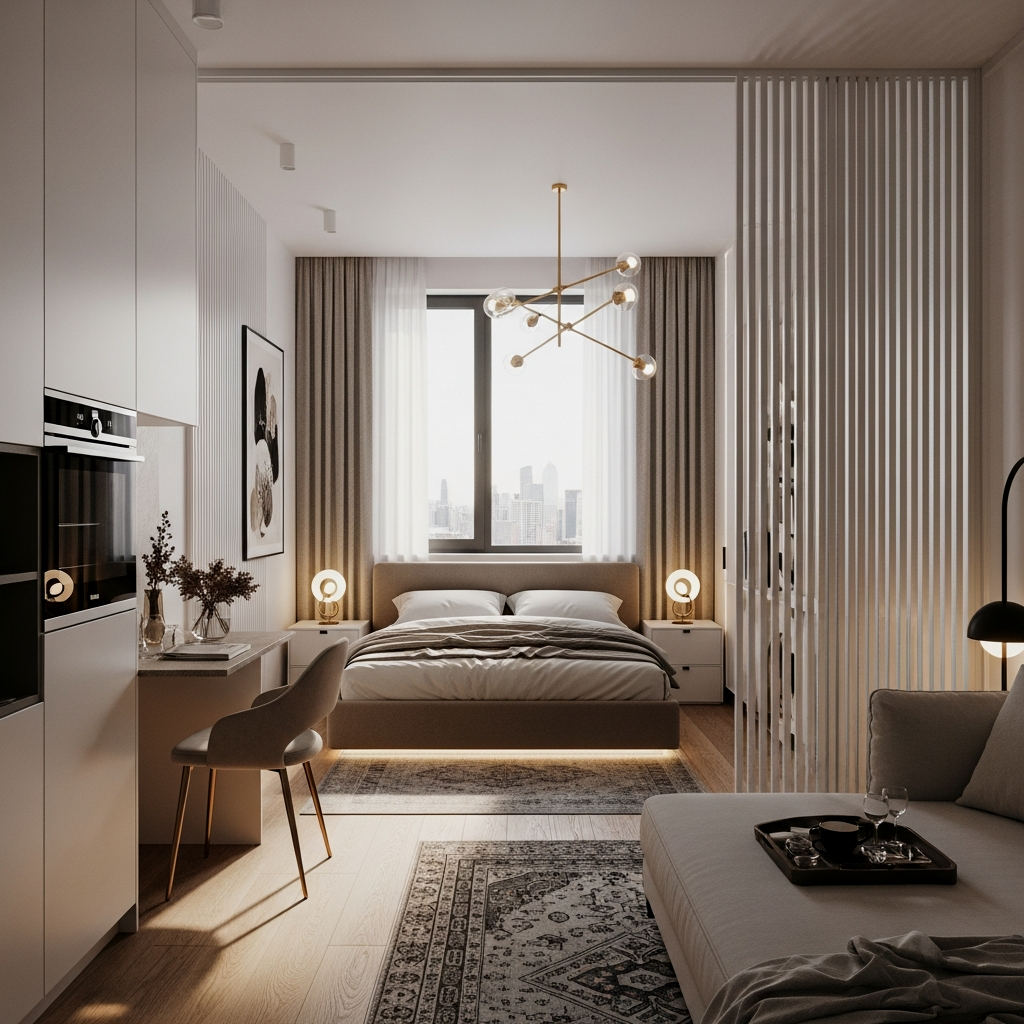
Even if you don’t have an alcove, you can create one. Use a tall bookshelf or a beautiful folding screen to carve out a sleeping area. There is something genuinely life-changing about not being able to see your “kitchen” while you’re trying to fall asleep. It makes the apartment feel like a multi-room home rather than a crash pad.
The Built-in Platform Bed
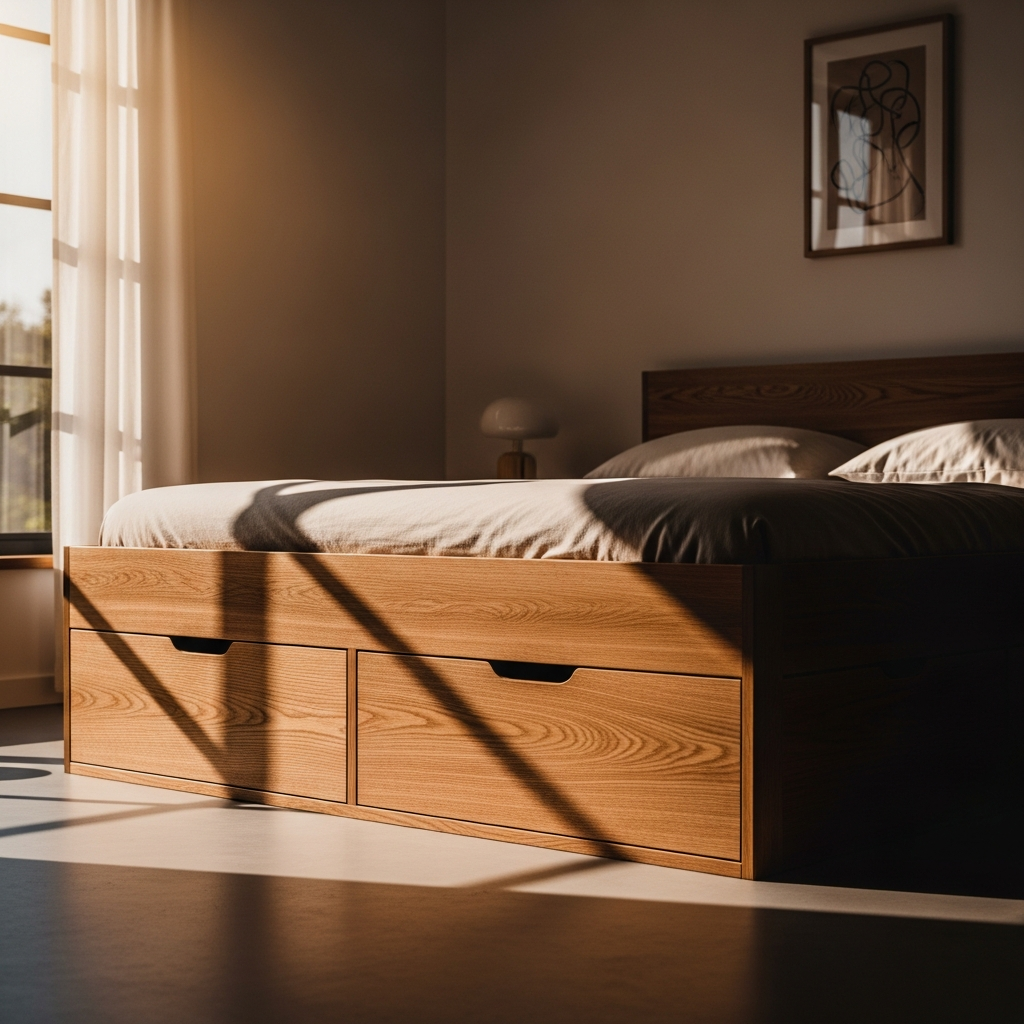
If you own your space or have a very cool landlord, a built-in platform bed with drawers underneath is the ultimate move. It eliminates the need for a bulky dresser and keeps your clothes tucked away. Even a high-quality DIY platform bed can provide a massive amount of storage for rental-friendly storage needs.
If using a platform bed, opt for hydraulic lift hardware—it makes reaching the center storage a breeze.
The Difference is Unreal: Floor-to-Ceiling Curtains
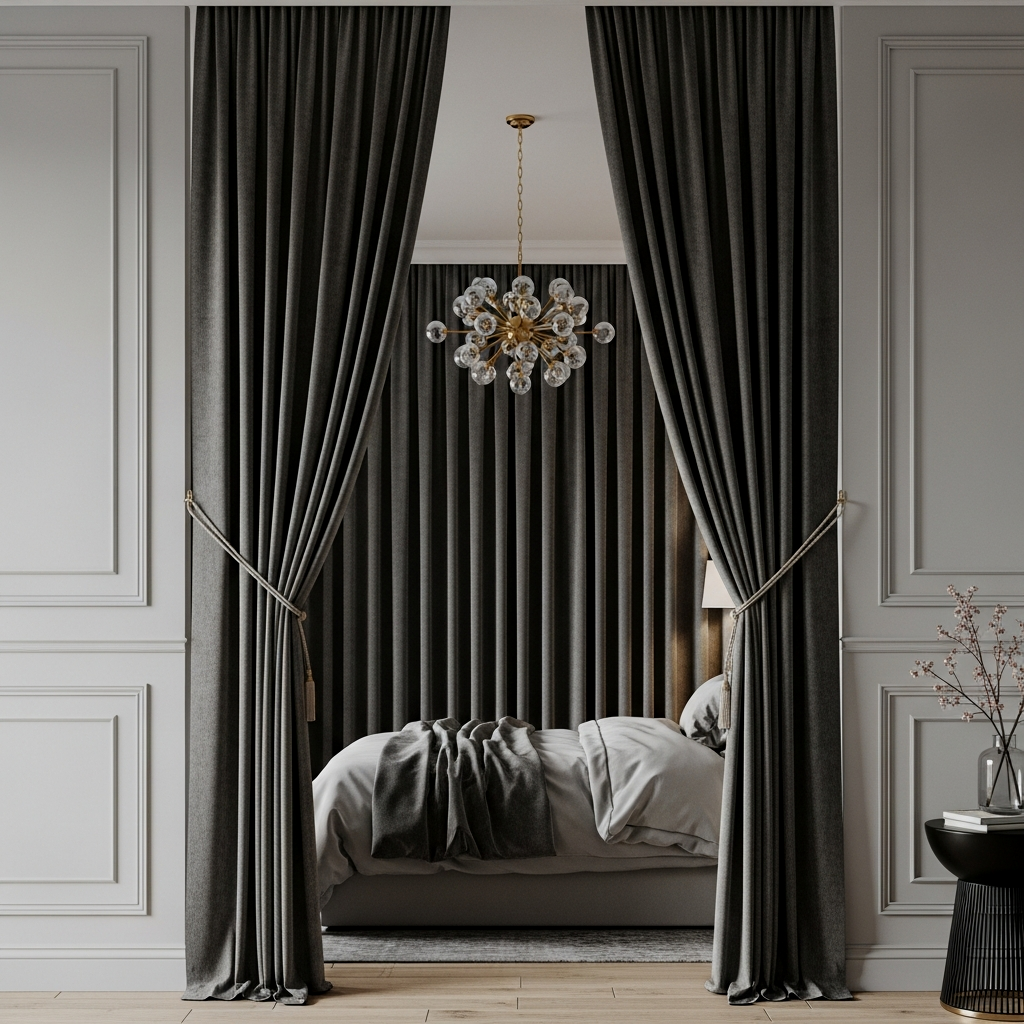
Stop hanging your curtains right at the window frame. Trust me on this one, hang them as close to the ceiling as possible and let them hit the floor. This vertical line tricks the brain into thinking the windows are massive and the ceilings are soaring. The difference is unreal—it turns a cramped studio into a high-end suite instantly.
The exact pieces that make these ideas work:
The Floating Living Room
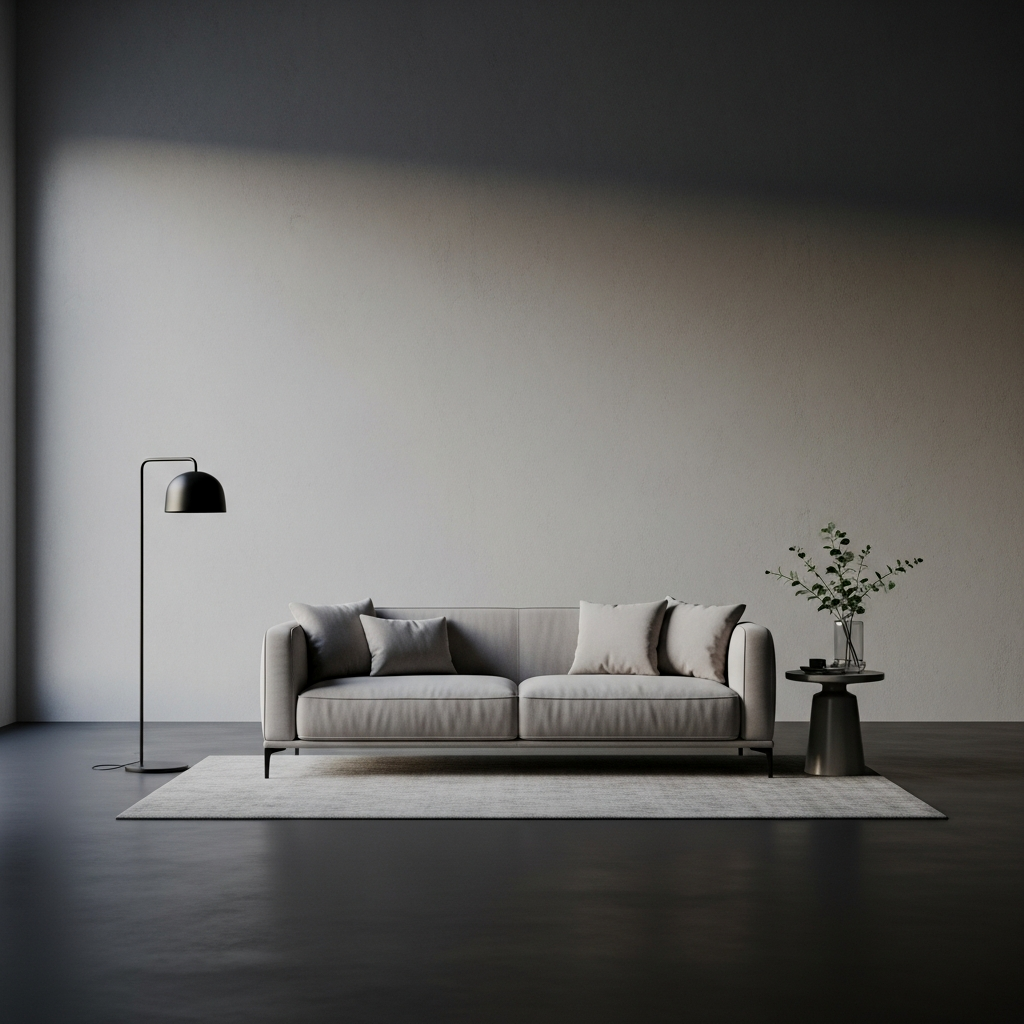
Instead of pushing your sofa against the wall, try “floating” it in the middle of the room. This works exceptionally well for zoning your space. By placing a slim console table behind the sofa, you create a distinct hallway or dining area, making the living space feel intentional and cozy.
Ensure there are at least 18-24 inches of clearance around the sofa to keep the “floating” effect from feeling cramped.
Furniture Secrets
Obsessed with Lucite: The Invisible Furniture Trick
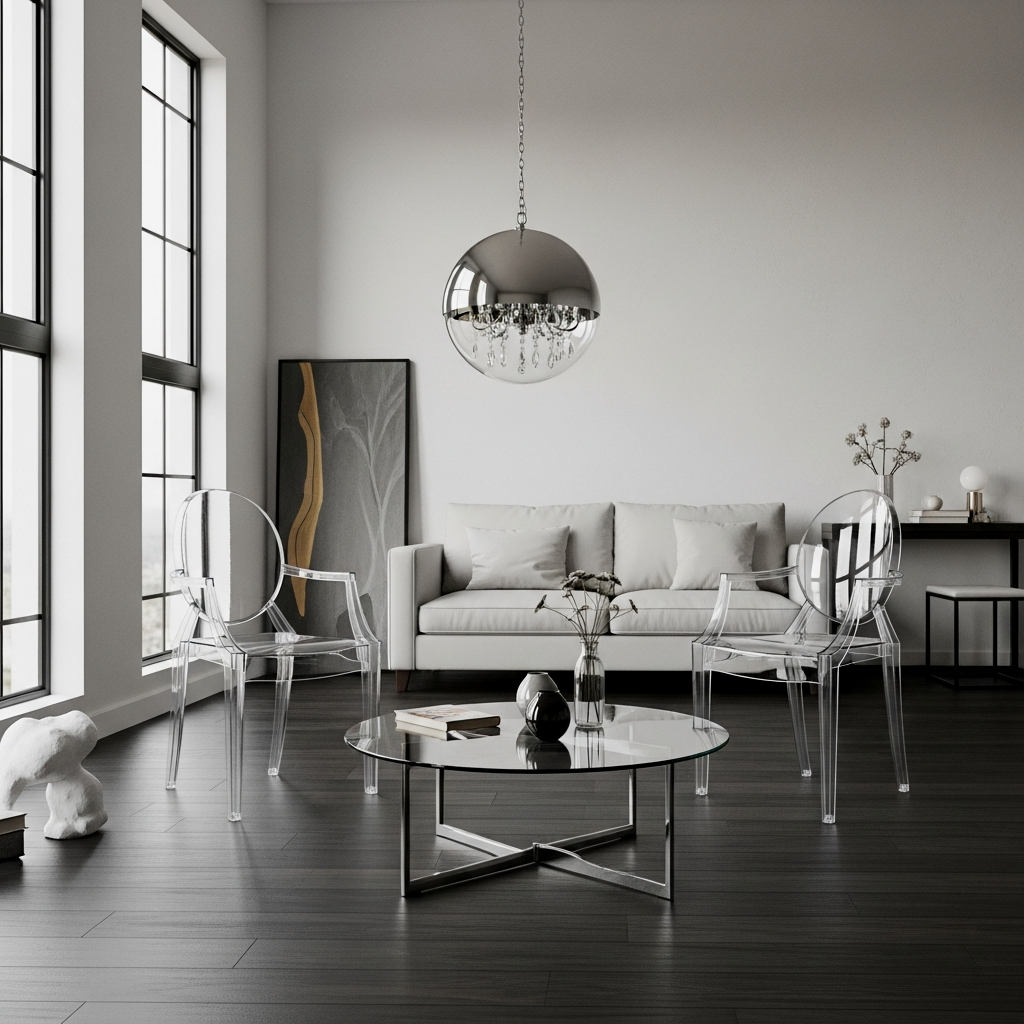
I am genuinely obsessed with acrylic or “Lucite” furniture. Because it’s clear, your eyes pass right through it, which means it provides the function of a coffee table or desk without the visual weight. It’s the best kept secret for keeping a small studio from looking like a storage unit. If you feel like your room is too full, swap your wooden desk for a clear one.
Furniture That Does Double Duty: Micro Studio Essentials
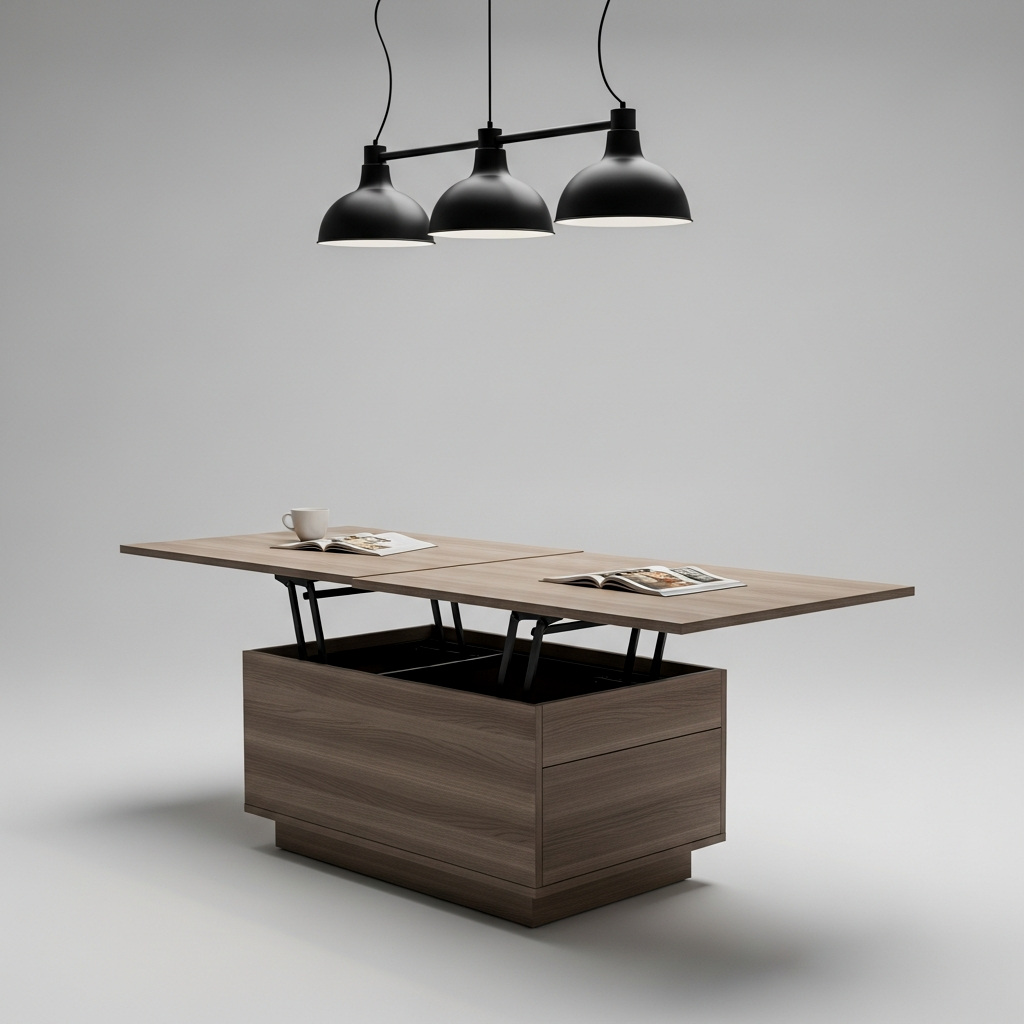
Every single piece of furniture in a small space needs to have at least two jobs. A coffee table that lifts up into a desk? Yes. An ottoman that stores extra blankets? Absolutely. This is the cornerstone of furniture that does double duty. If a piece only does one thing, it better be spectacular, or it shouldn’t be there.
Want to explore this specific look further? I’ve done the full deep-dive so you don’t have to!
Small Studio Apartment Ideas 300 sq ft: The High-End Aesthetic Guide
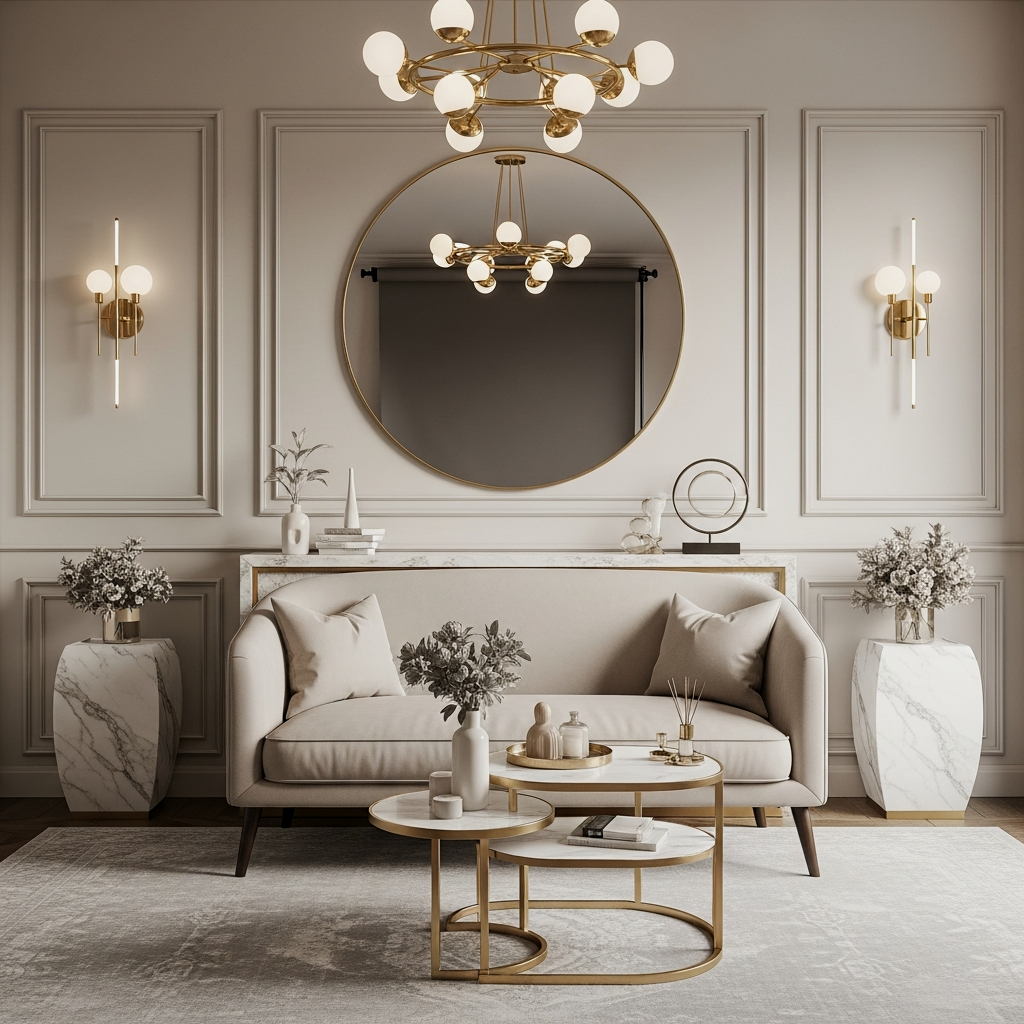
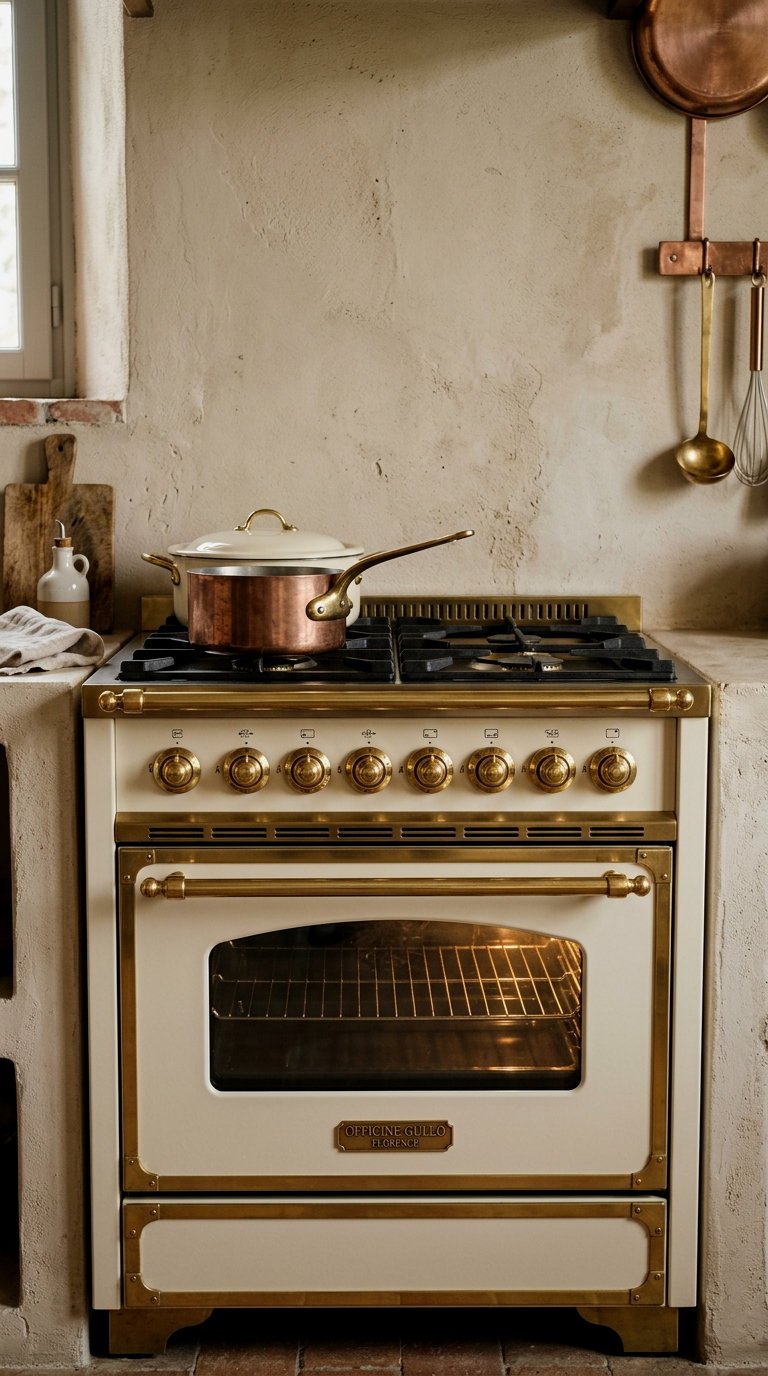
Living in 300 square feet doesn’t mean you can’t have a luxury aesthetic. The key here is quality over quantity. Focus on rich textures—velvet, marble, and brass—and keep your color palette tight. When you have less space, every item is under a microscope, so make those items count. A high-end look in a small footprint is all about the details.
Want to explore this specific look further? I’ve done the full deep-dive so you don’t have to!
Discover how to master the art of the micro-studio without losing your mind or your style!
Micro & Tiny Studio Apartment Ideas: Living Large in Under 300 Sq Ft
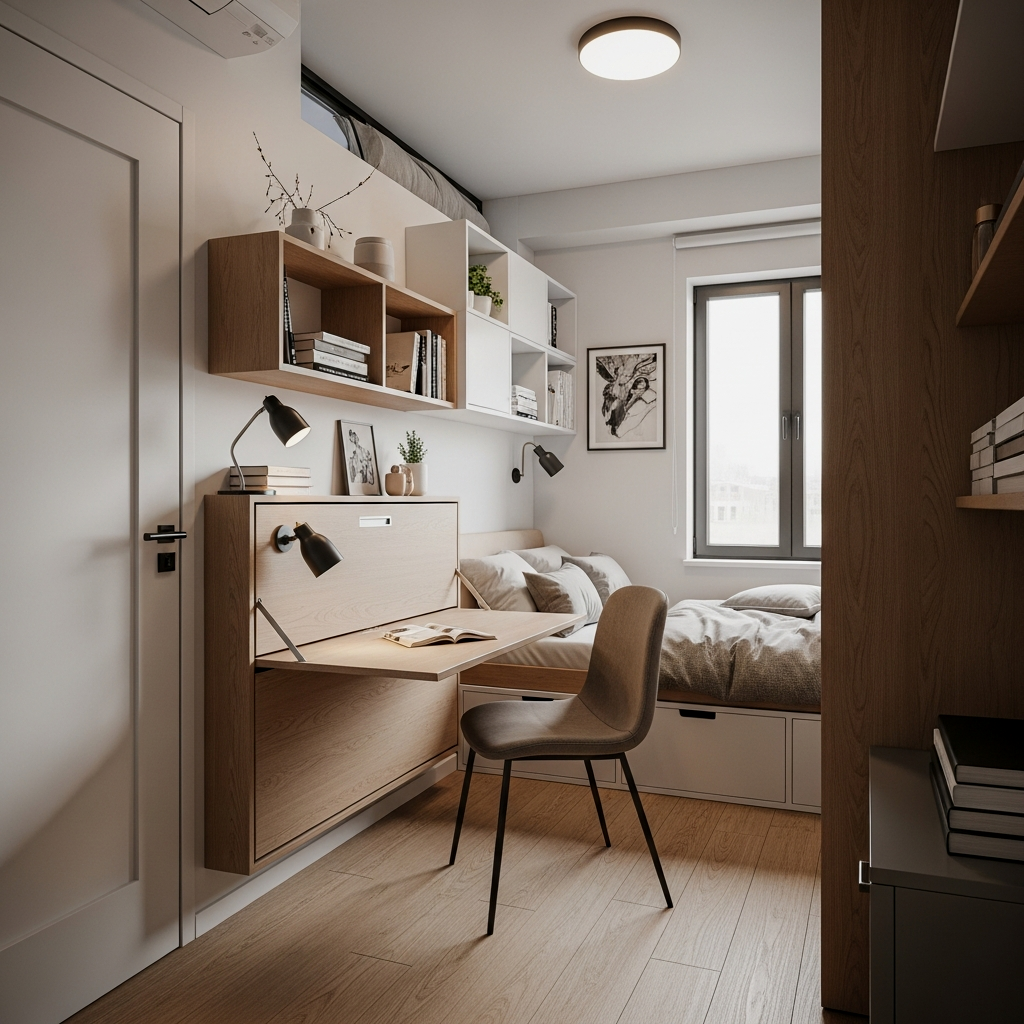
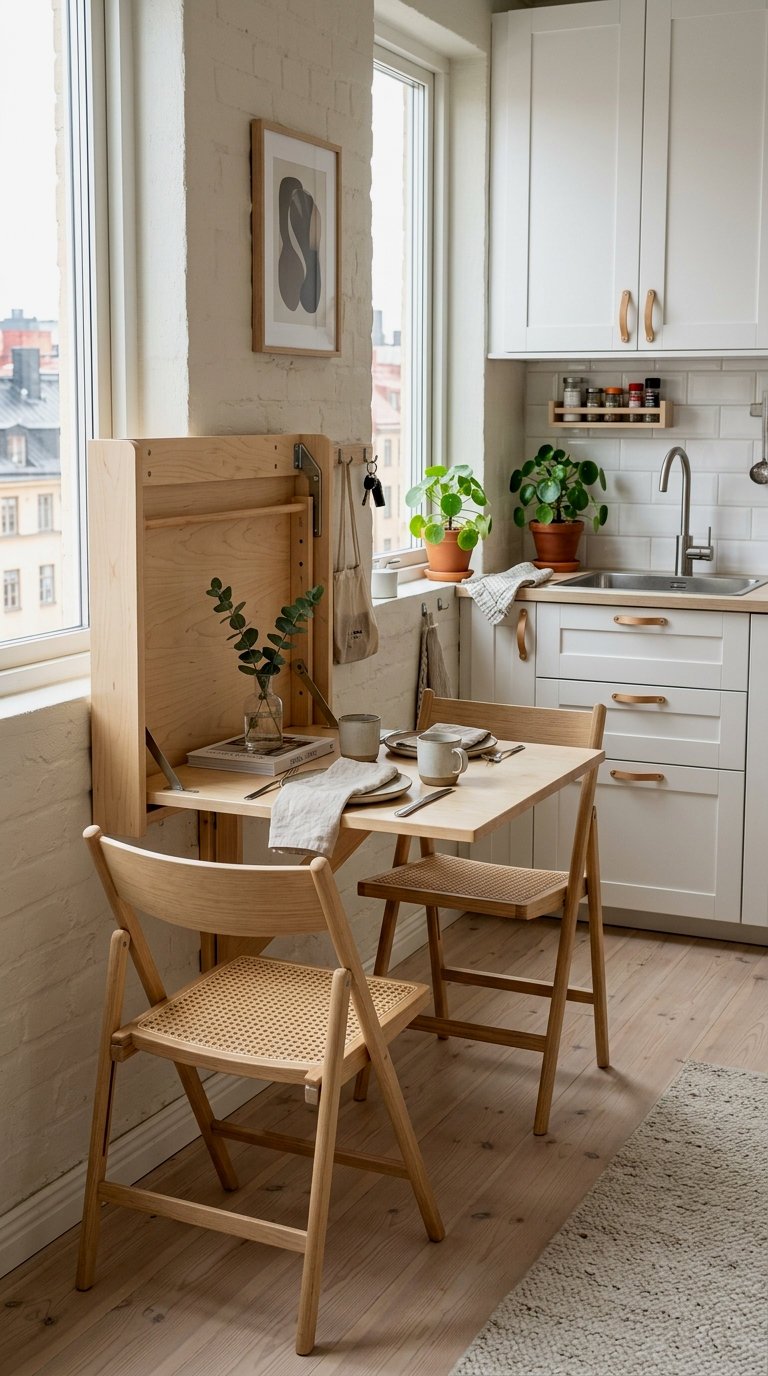
When you’re dealing with under 300 square feet, you have to get creative with transforming furniture. Murphy beds or wall-mounted folding desks are non-negotiable here. No seriously, the goal is to make the room change throughout the day. It’s a bedroom at night, a bright office during the day, and a lounge in the evening. It’s about flexibility, not sacrifice.
Want to explore this specific look further? I’ve done the full deep-dive so you don’t have to!
The Dining & Entryway Experience
Dining Solutions for One (or Four)
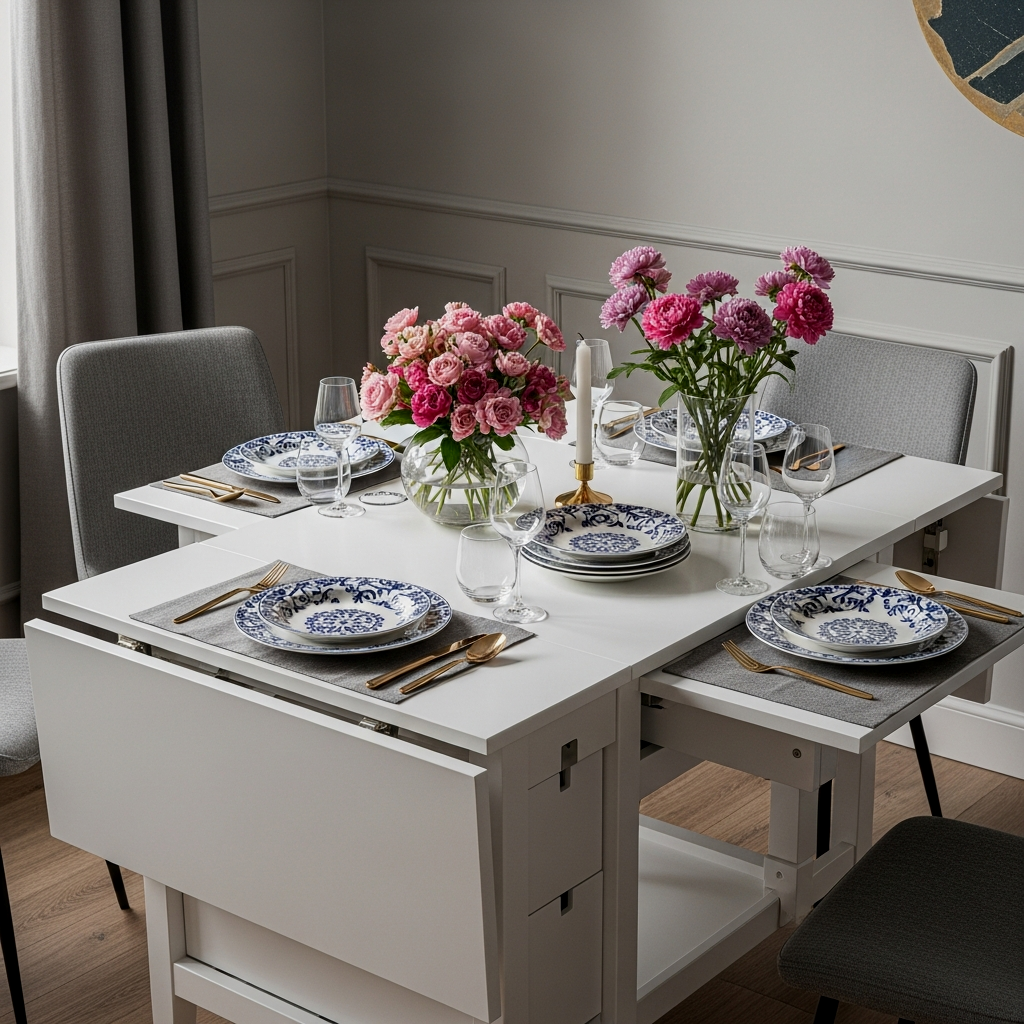
Just because you live in a studio doesn’t mean you can’t host a dinner party. A round bistro table is the best choice for small corners—it’s easier to navigate than a square one and can comfortably fit three or four people in a pinch. If space is really tight, look for a drop-leaf table that can live against a wall when not in use.
Use stackable dining chairs that can be tucked away in a closet when you aren’t hosting.
The Integrated Breakfast Bar
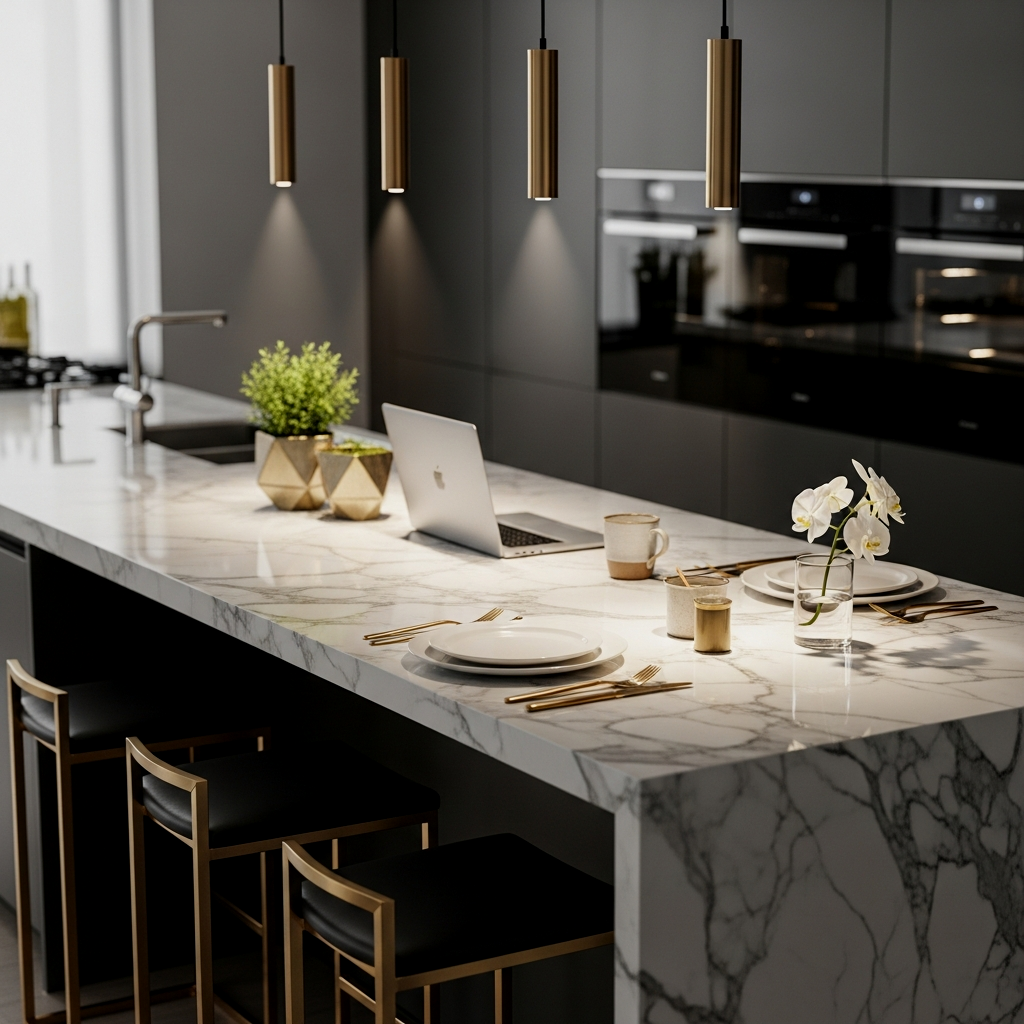
Many studios come with a small kitchen cutout. Instead of trying to cram a dining table nearby, turn that ledge into a breakfast bar with two chic stools. It saves so much floor space and provides a secondary surface for working or prepping meals. It’s the ultimate “micro-studio essential” for keeping the main area open.
Mini Studio Apartment Ideas: The Best Kept Secrets for Rental-Friendly Storage
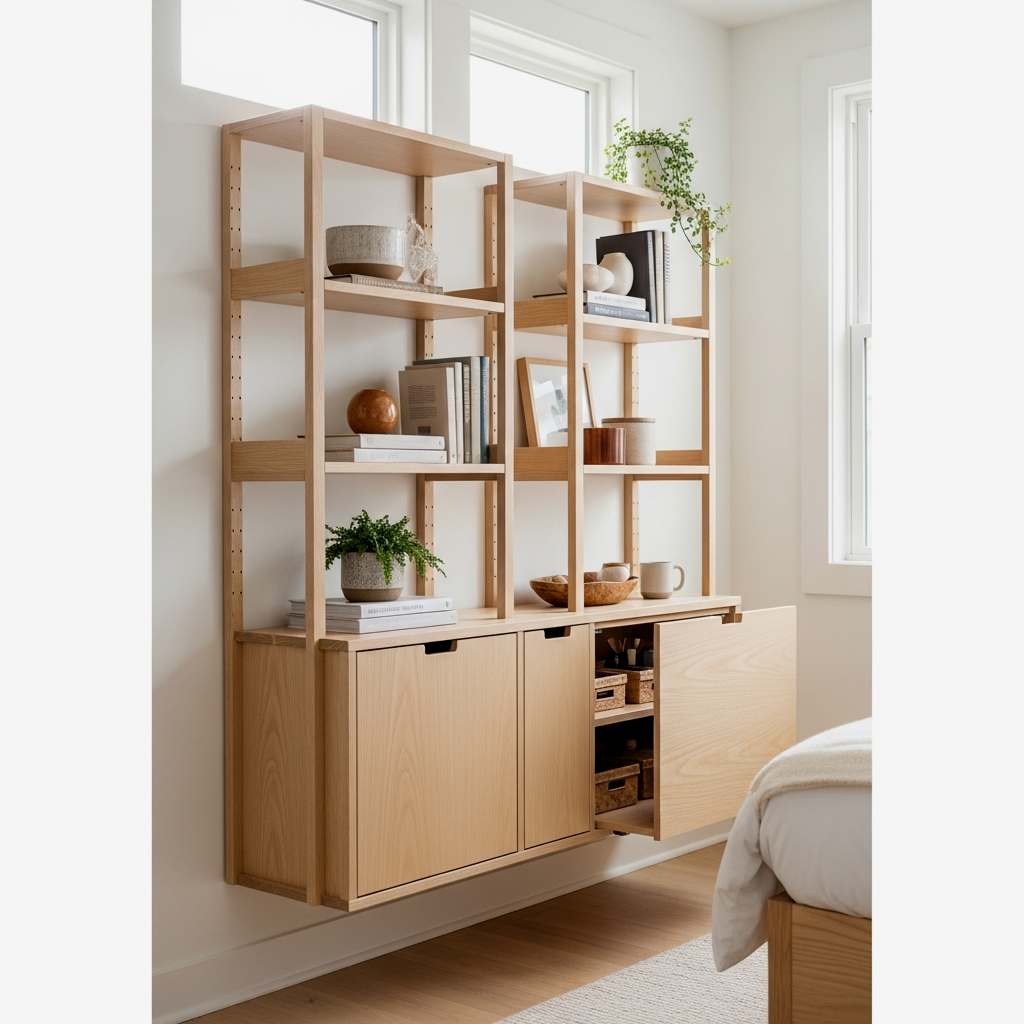
Renters often feel stuck because they can’t drill into walls, but there are so many secrets to finding storage. Use the “over-the-door” trick for everything from shoes to pantry items. Tension rods are also a lifesaver—place them inside cabinets to create extra tiers for plates or cleaning supplies. These mini studio apartment ideas prove you don’t need a drill to stay organized.
Want to explore this specific look further? I’ve done the full deep-dive so you don’t have to!
Over-the-Door Designer Storage
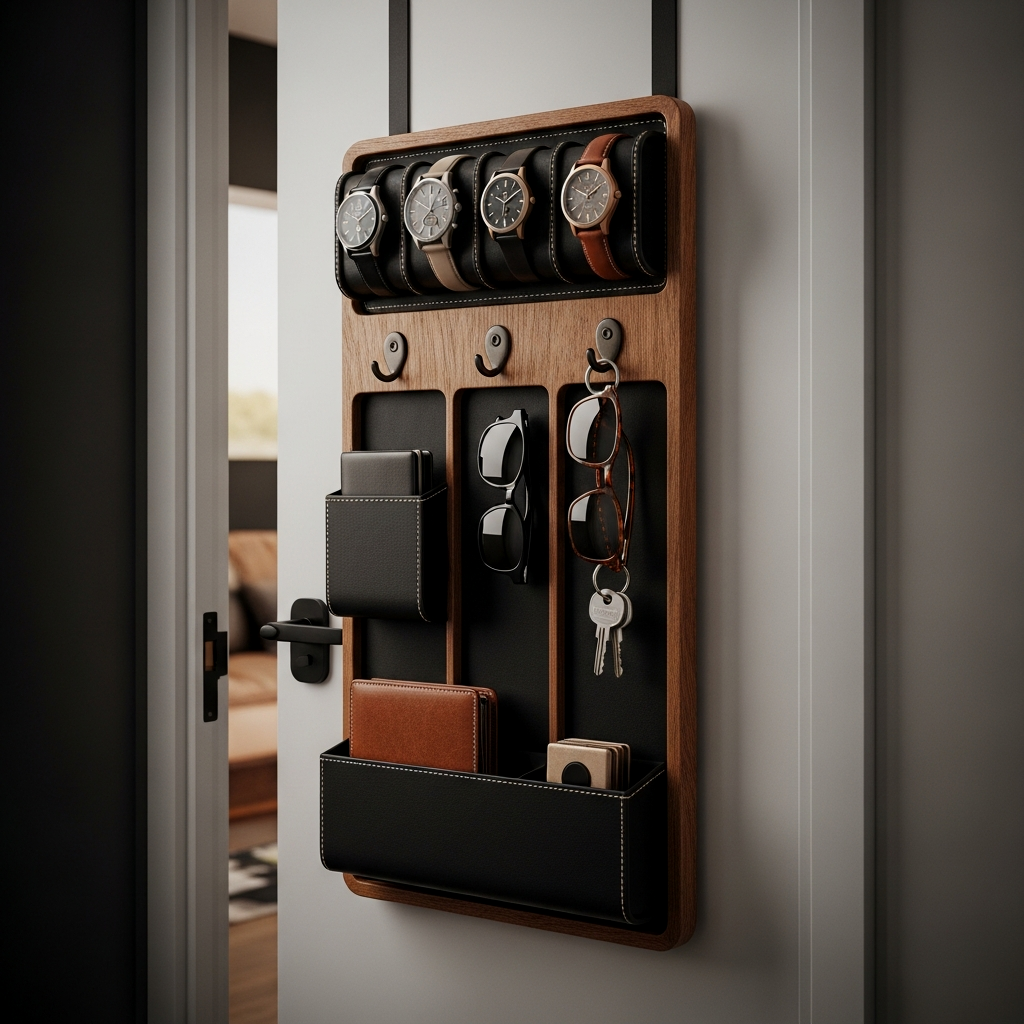
Forget the plastic pocket organizers. There are now beautiful, high-end over-the-door systems with metal baskets and hooks. Use them on your bathroom or closet door to reclaim that vertical space. It’s a small change, but the amount of clutter it removes from your limited countertops is genuinely life-changing.
The Command Center Foyer
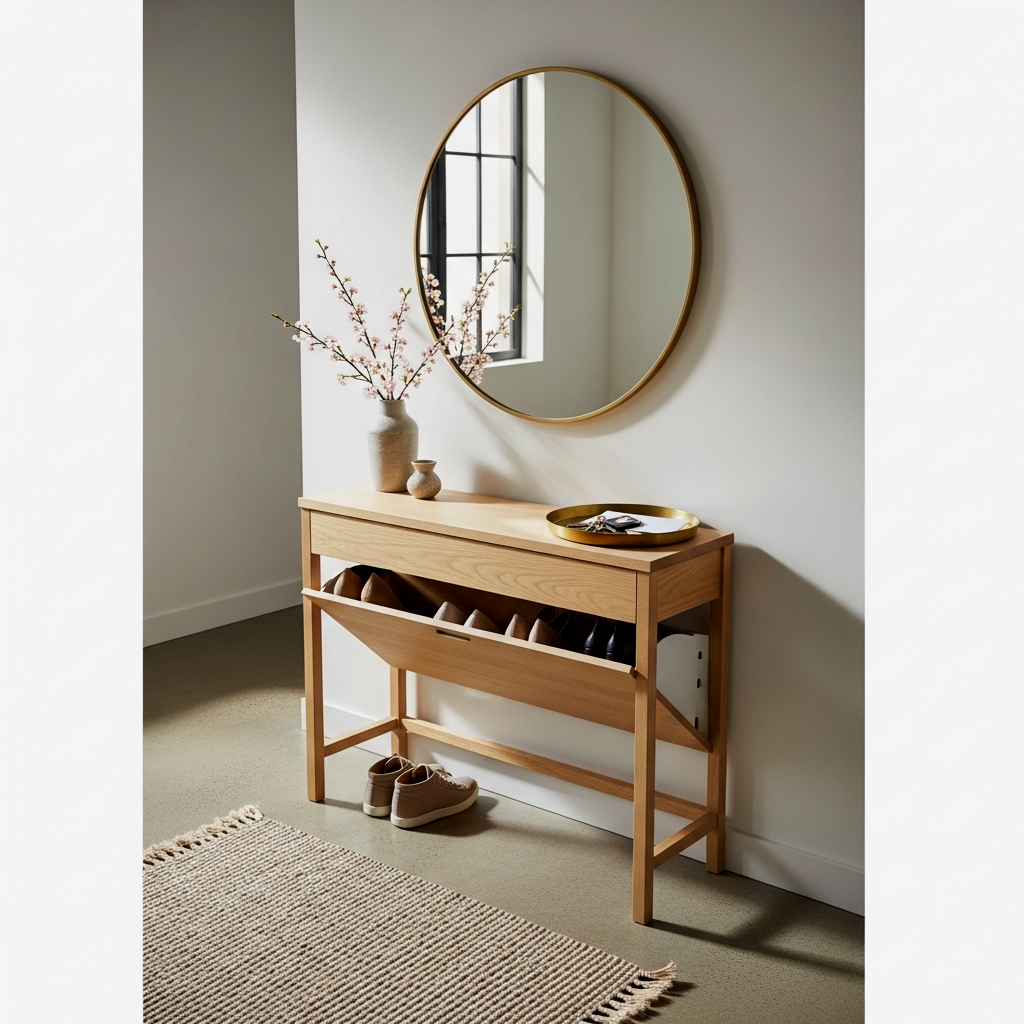
Even if your front door opens directly into your living room, you need a “foyer.” A small floating shelf, a few hooks for keys, and a mirror create a boundary. It tells your brain (and your guests) that they have entered the home. It prevents the “dumping ground” effect on your kitchen counter or sofa.
Add a small basket to your foyer shelf to catch mail and prevent paper clutter from spreading.
Visual Depth & Atmosphere
Layered Lighting: The Secret to Depth
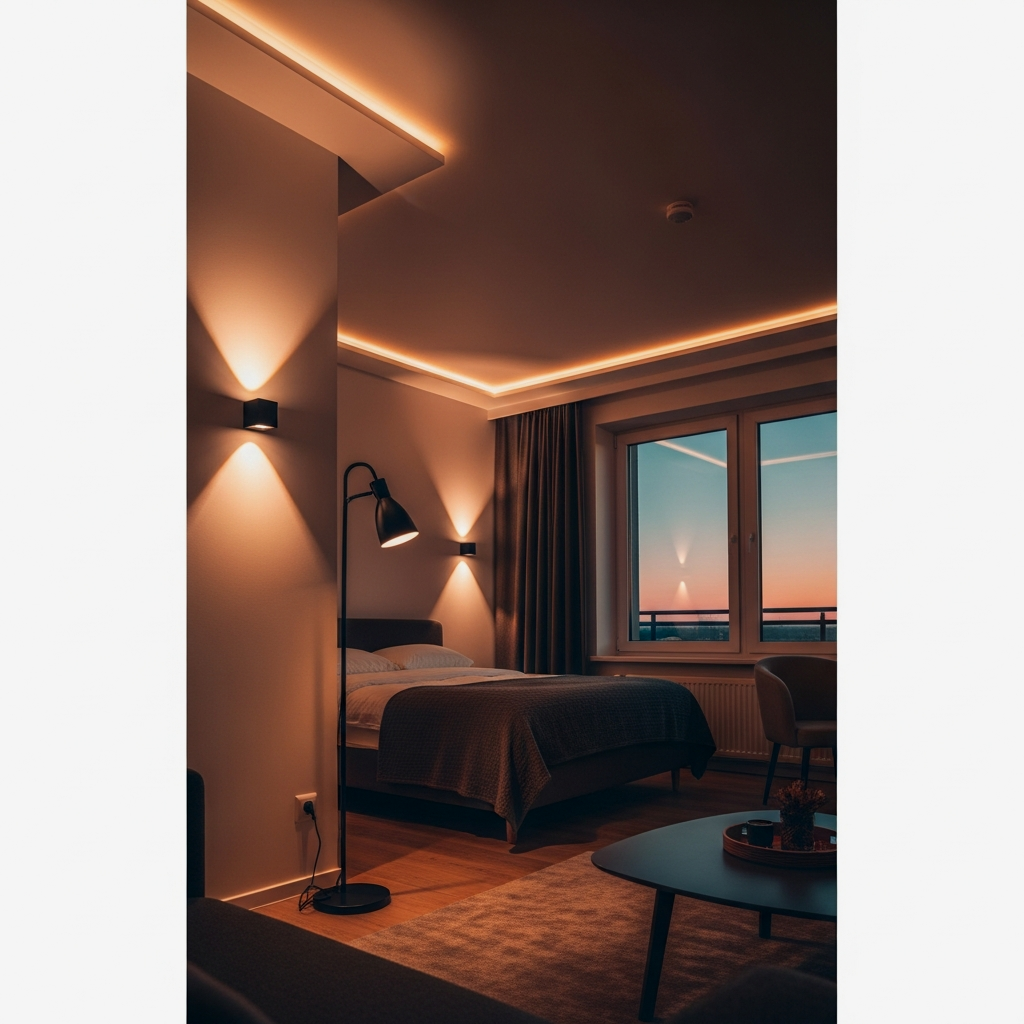
One overhead light is the fastest way to make a studio look like a dorm room. You need at least three sources of light: ambient (overhead), task (reading lamp), and accent (a warm glow in a corner). Layering your light creates shadows and highlights that make the room feel larger and more sophisticated.
Statement Lighting in Small Spaces
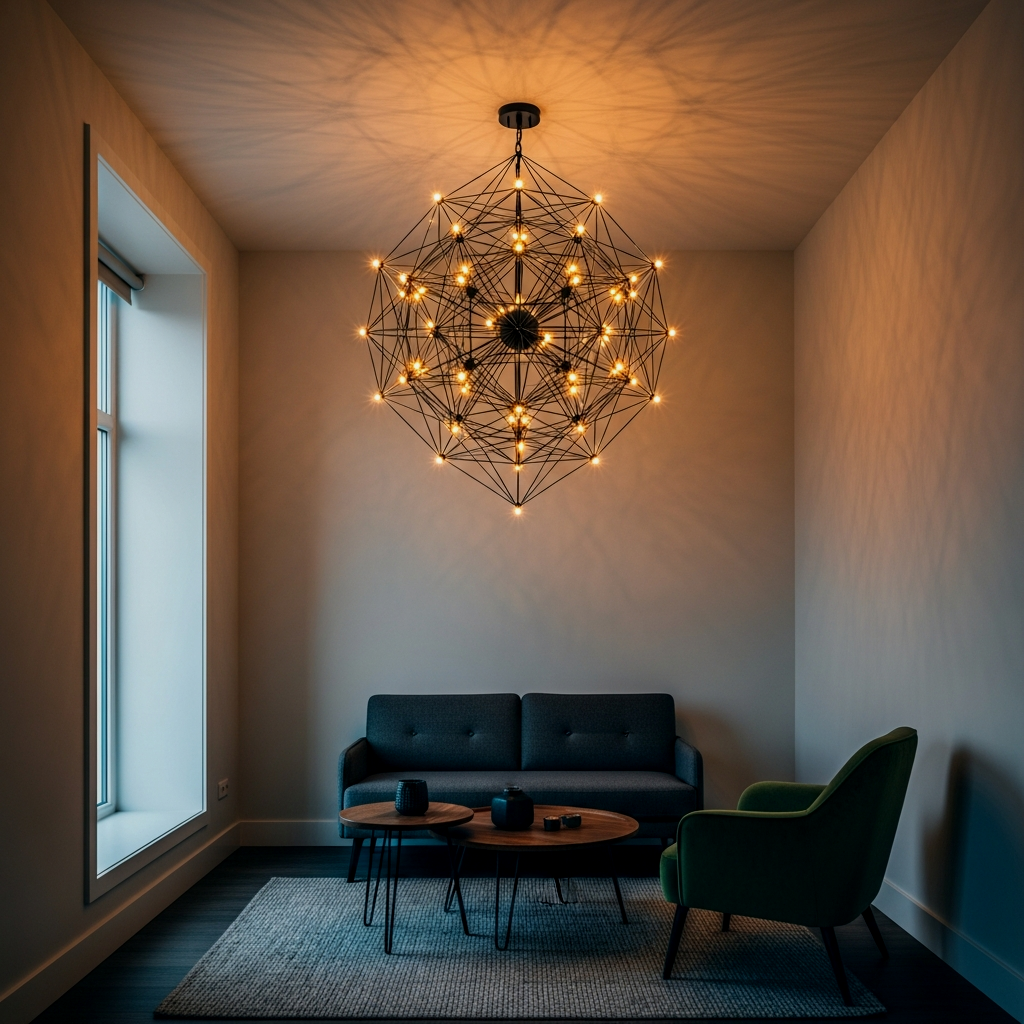
Don’t be afraid to go big with a chandelier or a large pendant lamp. A statement light fixture acts as an anchor for a specific zone, like your dining area or bed. It makes the space feel expensive and intentional. No seriously, a large, beautiful light fixture is the best kept secret for making a tiny apartment feel like a curated home.
Put every single light source on a dimmer—it allows you to change the entire mood of the apartment instantly.
Color Palettes that Expand
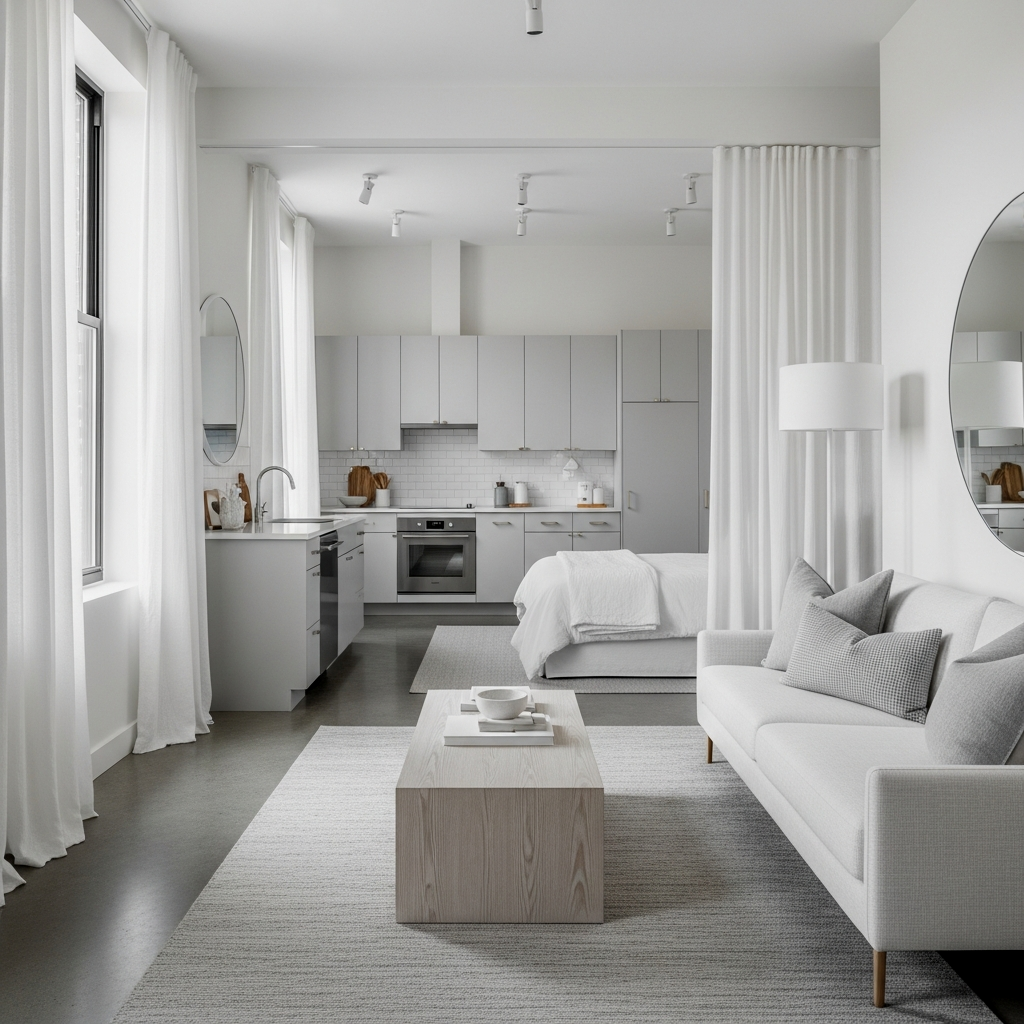
Light colors like soft whites, airy greys, and pale blues will always make a room feel more open. But here is the secret: using different shades of the same color creates a seamless look that doesn’t “break” the room. This monochromatic approach is perfect for high-end studio aesthetics.
The ‘Less is More’ Gallery Wall
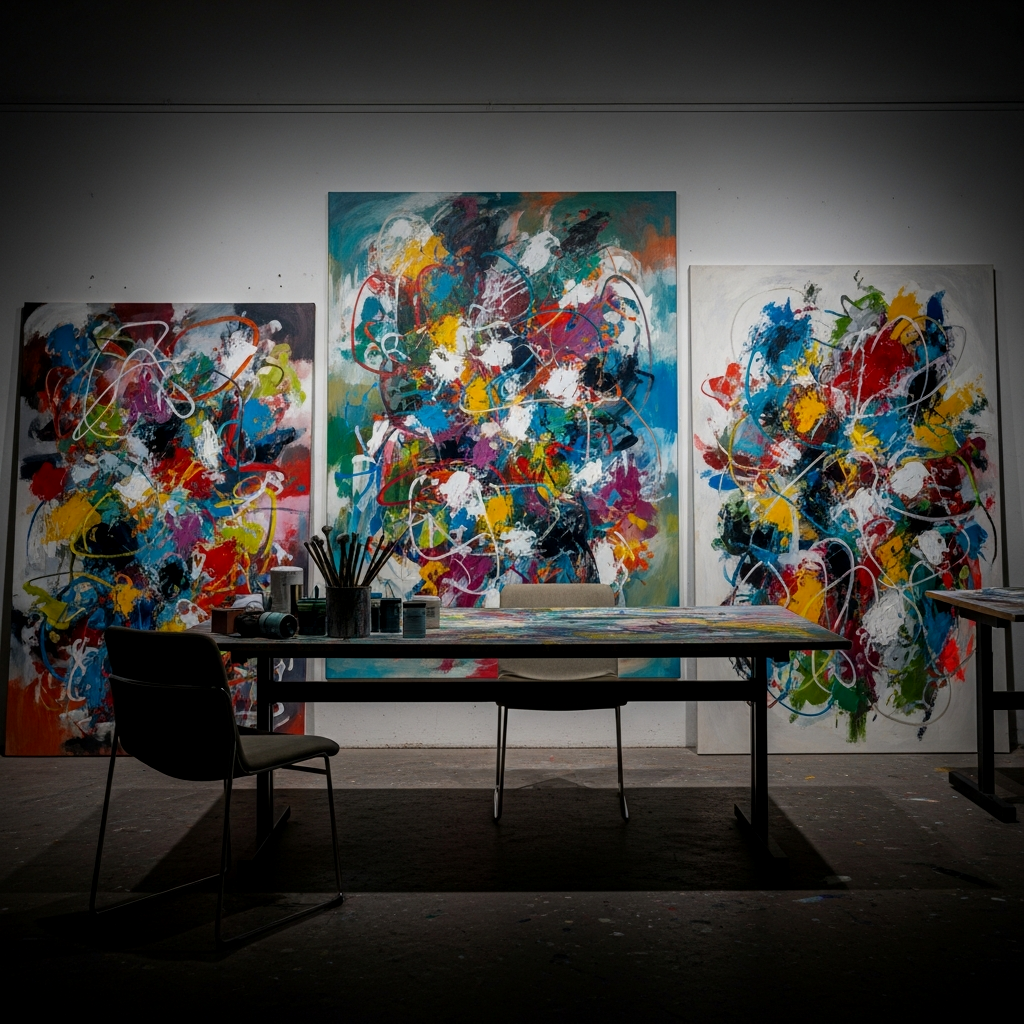
Instead of fifty tiny pictures, try three medium-sized frames or one massive piece of art. Too many small items can make the walls feel “noisy.” A few well-placed, larger pieces give the eye a place to rest and make the room feel more expansive and calm.
Use uniform frames and white matting to give your gallery wall a professional, airy feel.
Indoor Plants for Air and Scale
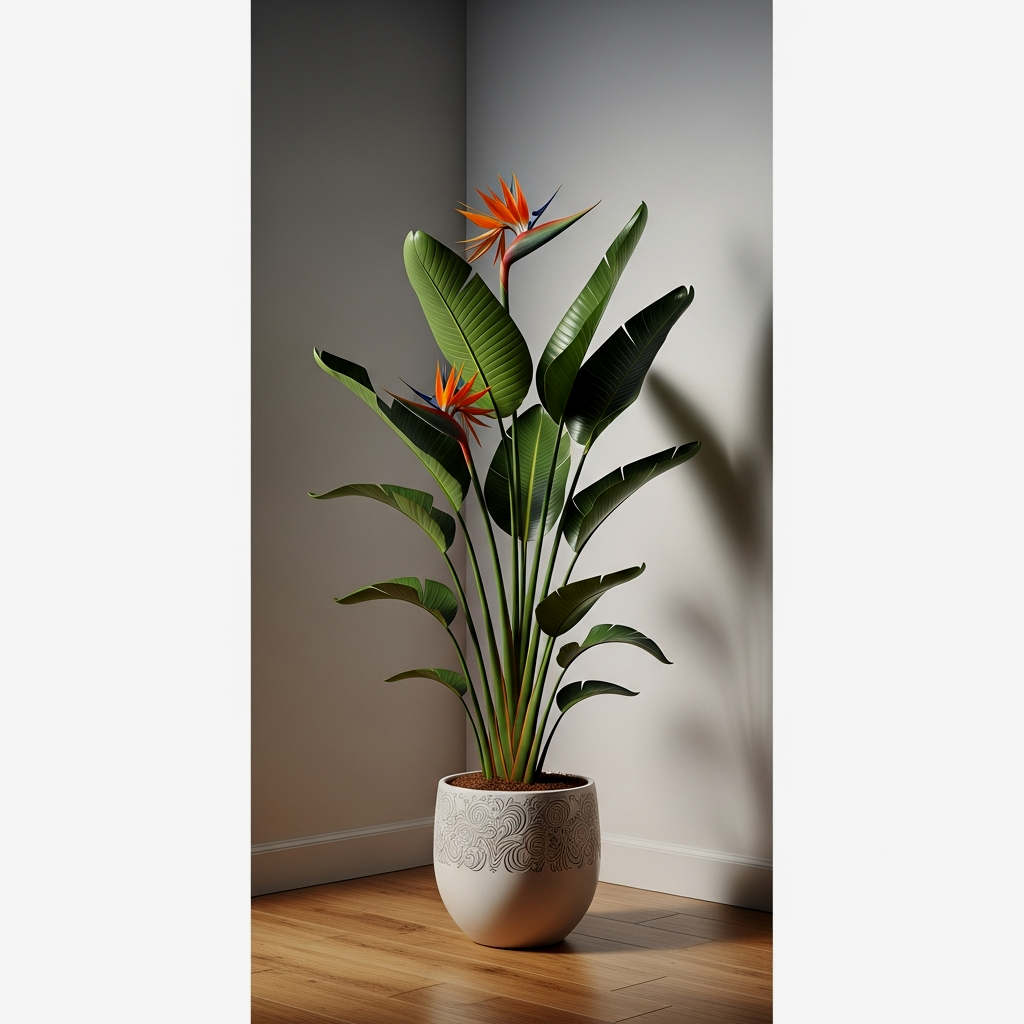
Plants aren’t just for decor; they add life and movement to a static room. A tall bird of paradise or a fiddle leaf fig can fill a corner and draw the eye upward, similar to the verticality rule. Plus, they literally clean the air, which is a major bonus in small, enclosed spaces.
Rugs as Room Dividers
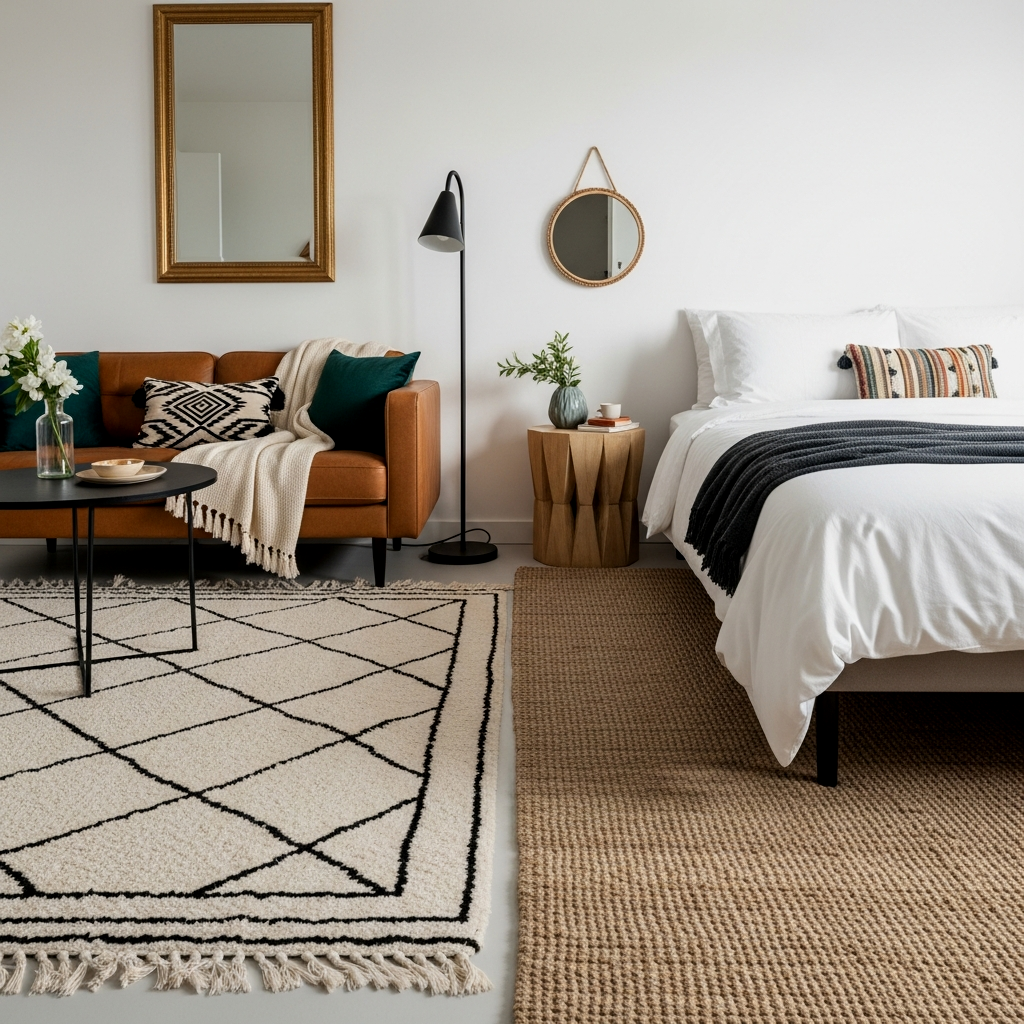
If you don’t want to use physical dividers like screens, rugs are your best friend. A rug under the bed and a different rug under the sofa create two distinct “islands” of living. Just make sure the rugs are large enough—all the furniture legs should at least touch the rug to feel grounded.
Multi-Functional Ottomans
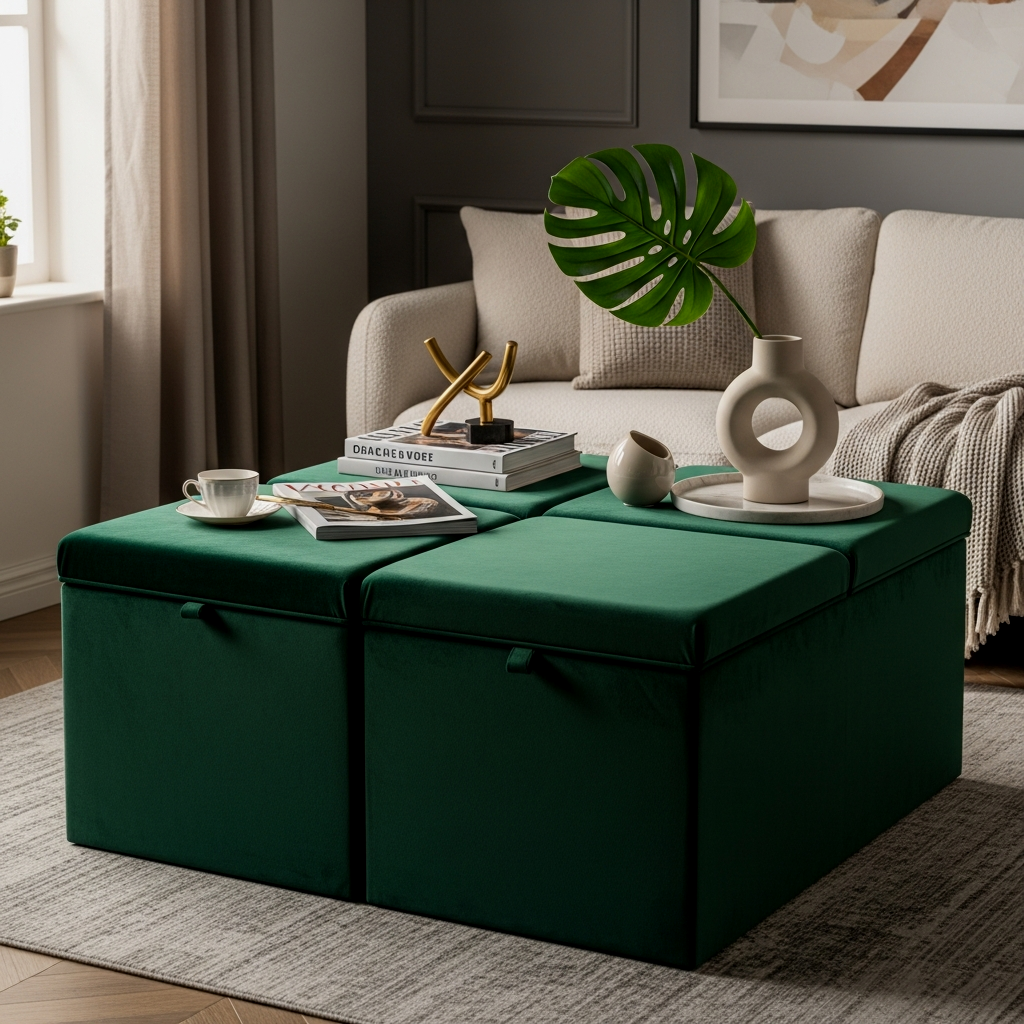
I am obsessed with ottomans that have lids. They serve as extra seating for guests, a footrest for you, and a secret hiding spot for the clutter you didn’t have time to clean up. In a micro-studio, these are genuinely life-changing pieces of double-duty furniture.
📏 The Ultimate Guide to Small Studio Apartment Ideas: Making Every Square Inch Count Quick-Win Checklist
- Measure Twice: Always check if a piece of furniture fits the “walking path” before buying.
- Lighting Check: Ensure you have at least three different light sources in the room.
- The Curtain Lift: Move your curtain rods up to the ceiling today.
- Audit Your Surfaces: Keep at least 40% of every flat surface empty to maintain flow.
- Define Your Zones: Use a rug or a shelf to separate your “bedroom” from your “living room.”
Scaling Your Decor: The Single Large Sofa
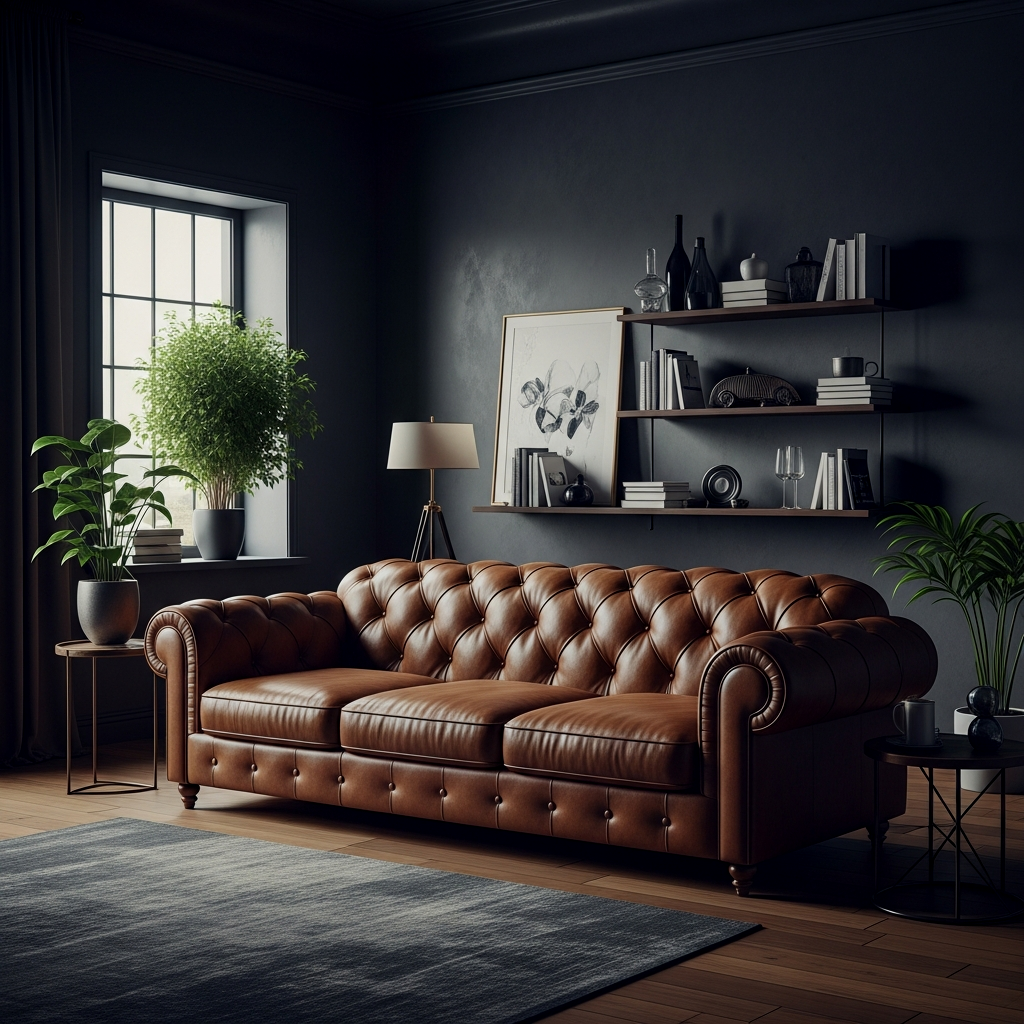
The biggest mistake in a studio is buying a “tiny” loveseat. It actually makes the room look smaller. Trust me on this one, one single large sofa that actually fits the wall makes the room feel much more grand and comfortable. It sounds counterintuitive, but scaling up your main pieces while keeping the rest of the room minimal is the ultimate secret to living large.
I genuinely hope these tips make you feel like your studio isn’t just a place to sleep, but a home you truly love. No seriously, you deserve a space that feels like you, regardless of how many square feet you have. If you’re feeling inspired, don’t stop here! Take a look at my deep-dives on 300 sq ft aesthetics or rental-friendly storage to keep that momentum going. You’ve got this!
Frequently Asked Questions
How do I separate my bed in a studio apartment?
You can use physical barriers like tall bookshelves, folding screens, or floor-to-ceiling curtains. Alternatively, use visual cues like a large area rug under the bed or painting the wall behind the bed a slightly different shade to create a distinct sleeping zone.
What is the best furniture for a 300 sq ft studio?
Prioritize multi-functional and “invisible” pieces. Lucite coffee tables, Murphy beds, and ottomans with hidden storage are essential. Focus on pieces that can be easily moved or folded away when not in use to maintain floor space.
Does dark paint make a small studio look smaller?
Not necessarily! While light colors are safer for an airy feel, a dark “moody” wall can actually create depth and make the corners of the room disappear. The key is to have excellent layered lighting so the space doesn’t feel like a cave.
How can I get more storage in a rental studio?
Focus on vertical and hidden spaces. Use over-the-door organizers, under-bed bins, and floating shelves (using command strips if drilling isn’t allowed). Tension rods inside cabinets and closets also add extra layers of storage without permanent changes.
Is a sofa or a bed more important in a studio?
In a studio, your bed is usually the largest piece of furniture, but your sofa defines the “living” area. If you can fit both by using a “sleeping nook” strategy, do it. If not, a high-quality daybed or a stylish sofa bed (clic-clac style) can serve both purposes beautifully.