15 Small Living Room Layouts with TV That Actually Flow
I’ve spent way too many nights staring at a living room that felt more like a cluttered obstacle course than a sanctuary. There is nothing—and no seriously, I mean nothing—more frustrating than trying to shove a giant TV and a cozy sofa into a tiny room only to realize you have to shimmy sideways just to get to the kitchen. We’ve all been there, trying to make “the black hole” (the TV) work without it sucking the soul out of your aesthetic. The truth is, most small rooms suffer from what I call “stadium seating syndrome,” where every piece of furniture is pinned against a wall, staring blankly at a screen. It’s cold, it’s cramped, and it’s a total vibe-killer.
When I was researching for my massive guide on 22 Small Living Room Ideas to Transform Your Tiny Space into a Sanctuary, I realized that layout is the one thing people get wrong 90% of the time. You can have the most beautiful velvet sofa in the world, but if the “path of travel” is blocked by a chunky coffee table, the room will always feel small. I’ve obsessed over these floor plans to find the ones that actually breathe. If you’re struggling to balance a media center with a room that feels high-end, trust me on this one: these layouts are going to be a total game-changer for your home.
✨ Before You Start: 15 Small Living Room Layouts with TV That Actually Flow Mindset
Smart Layouts for Narrow and Awkward Rooms
The Linear Narrow Flow: Parallel Furniture Placement
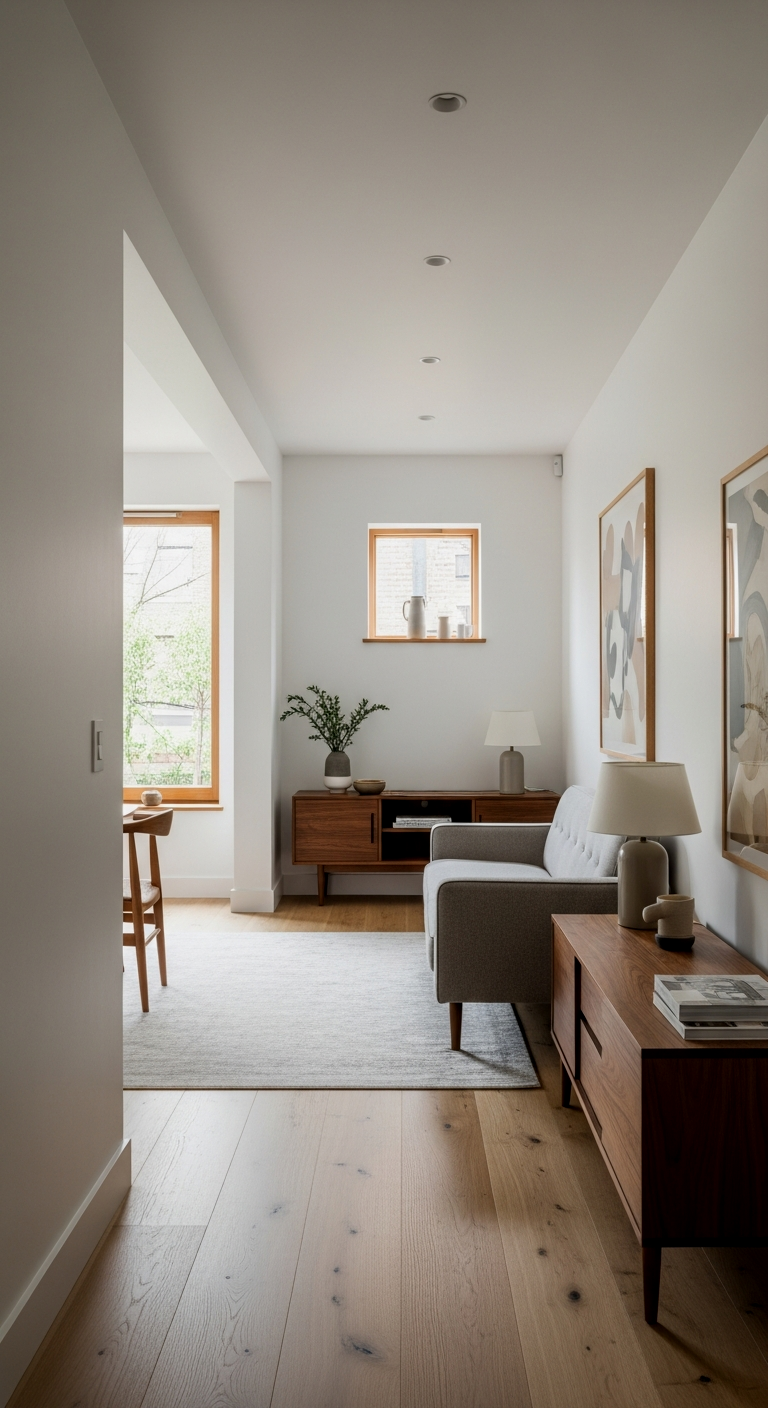
In a narrow, “bowling alley” style room, this is the one layout that saves your sanity. You place the TV and a slim media console on one long wall, and the sofa directly opposite. To make this flow, you must leave the “ends” of the room open. If you have a fireplace on a short wall, don’t try to compete with it—mount the TV on the long wall and use a swivel mount. The results speak for themselves: you get a clear walkway right down the middle, making the room feel twice as long rather than cramped.
The Strategic Corner TV Placement
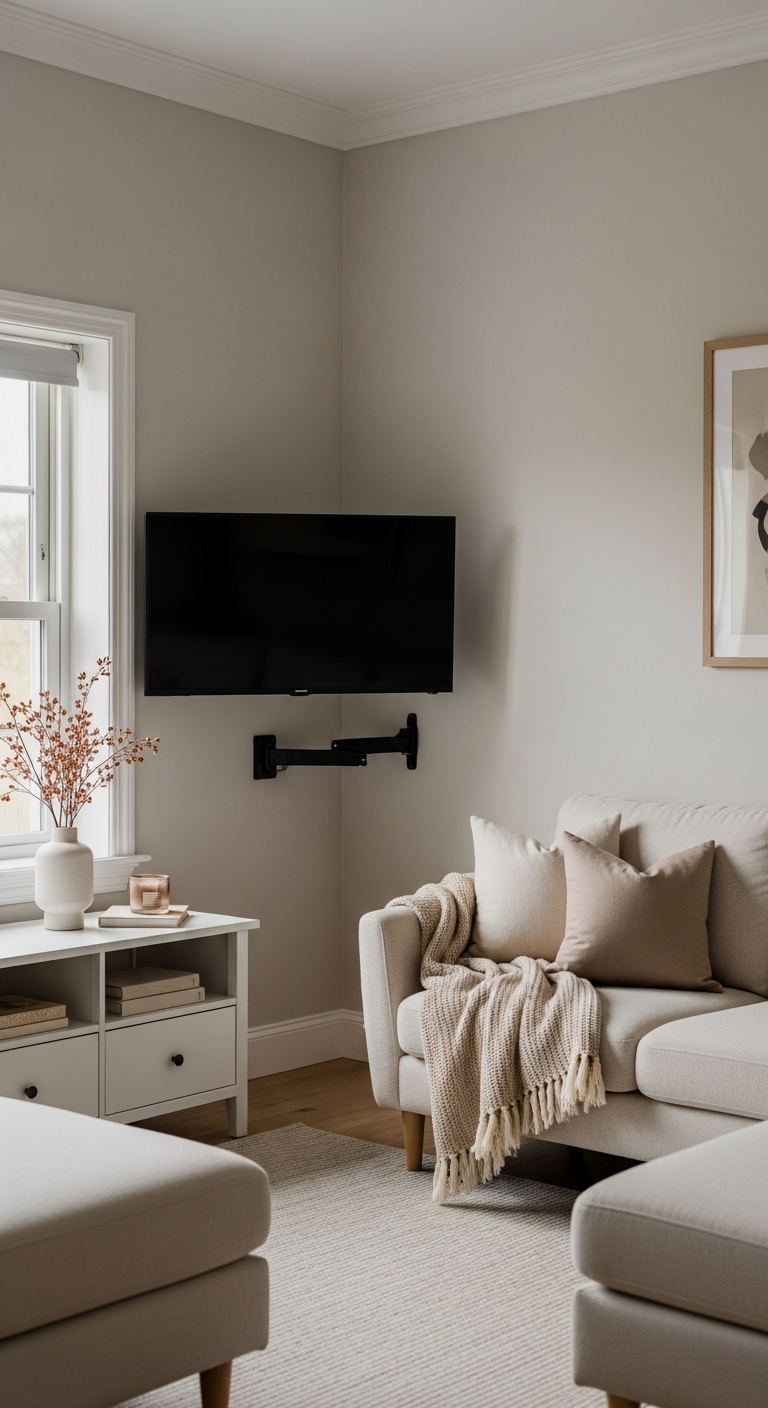
If your room has more windows than walls, this changed everything for me. Placing the TV in a corner at a 45-degree angle allows you to float your sofa in the center of the room or along the longest wall without blocking a view. Use a dedicated corner media unit or a tripod TV stand to minimize the footprint. This layout is genuinely life-changing because it opens up the primary focal point of the room to be a window or a piece of art, rather than just a black screen.
The Floating Sofa Trick for Open Concept Studios
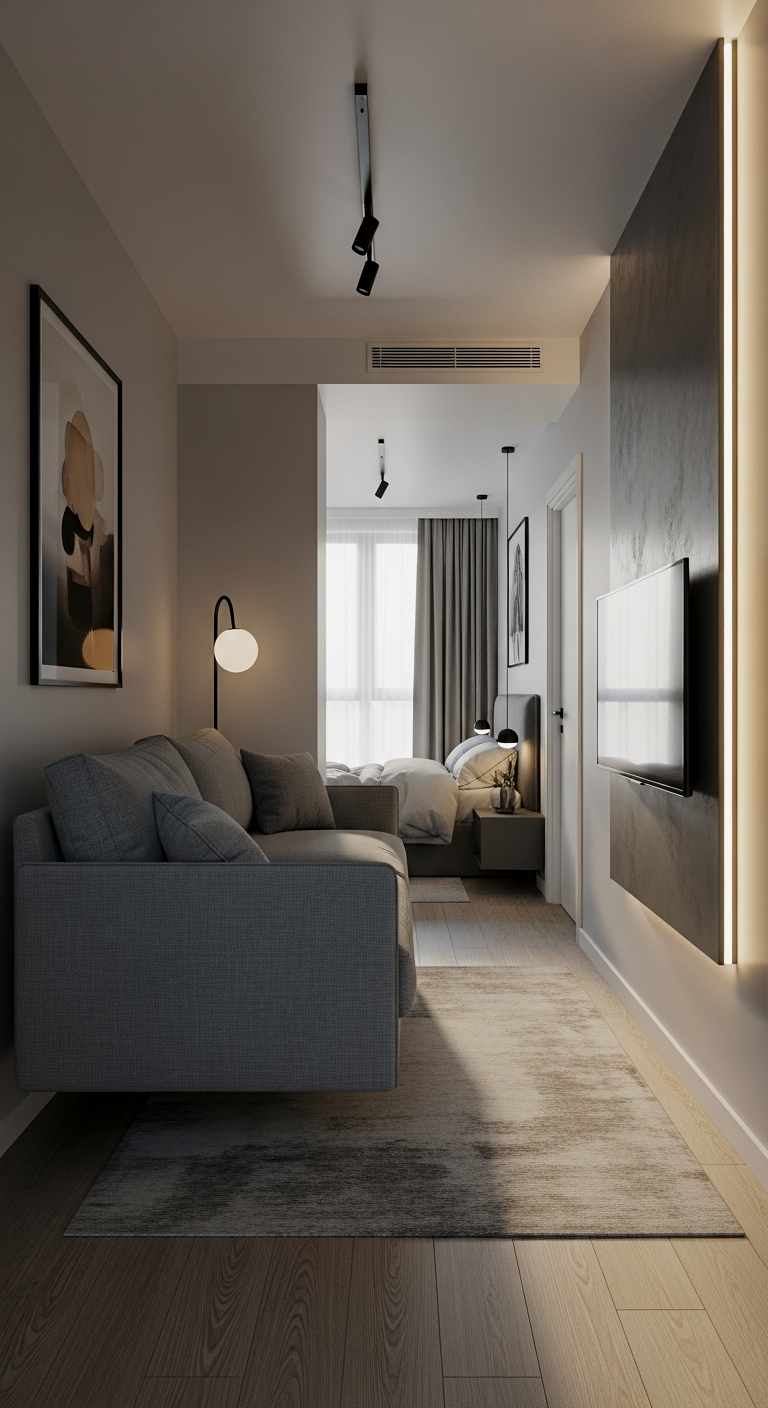
I was not prepared for how good this looks until I tried it in a studio apartment. Instead of pushing your sofa against the wall, pull it forward toward the TV by about three feet. This creates a “hallway” behind the sofa for walking through the room. By floating the sofa, you define the “living room” as a separate zone from your bed or kitchen. Trust me on this one, it makes a tiny studio feel like a structured, multi-room home.
Always ensure your media console is at least 25% wider than your TV. A TV that overhangs its base creates a top-heavy, “unstable” look that makes a small room feel chaotic.
The Frame TV Gallery Wall in a Square Room
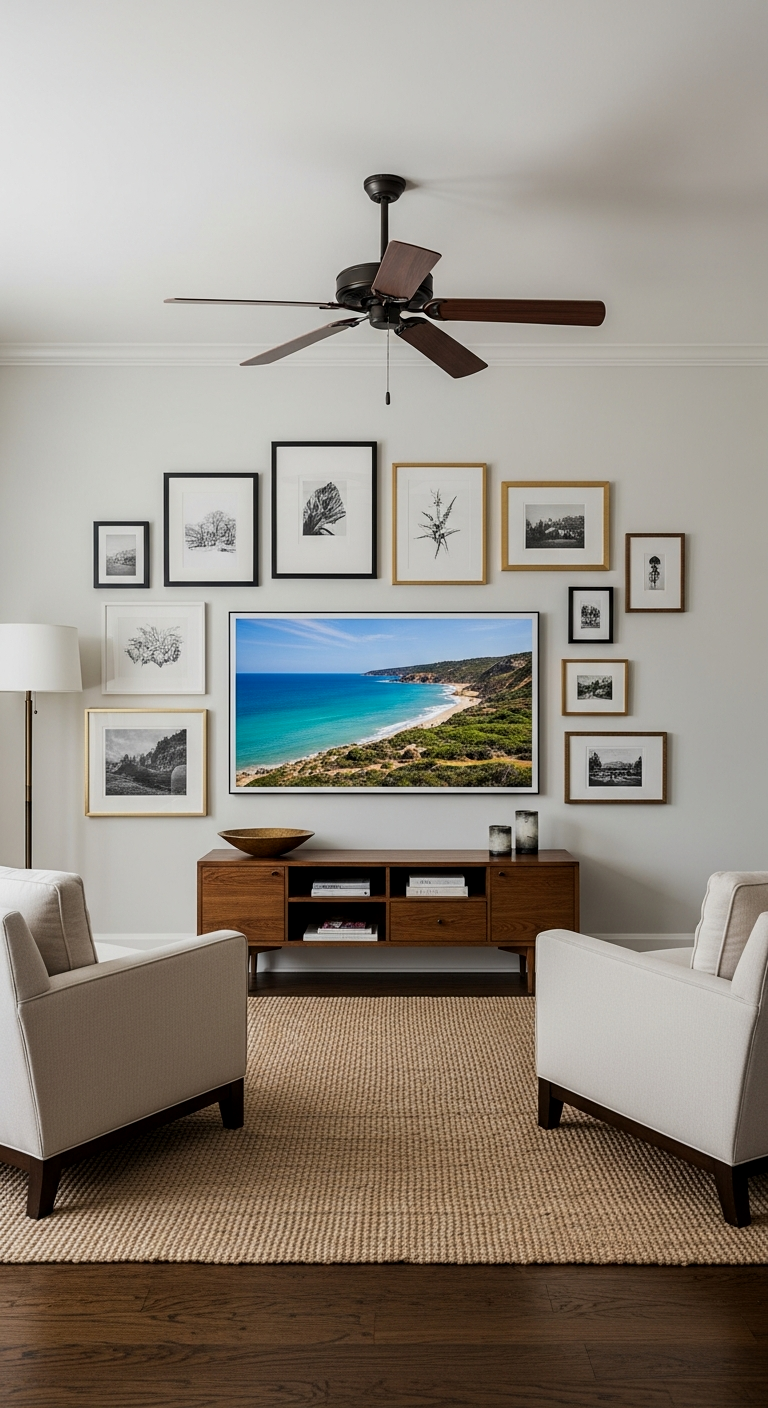
In a small square room, the TV often becomes the only thing you see. I cannot stress this enough: get a Frame-style TV that displays art when off. Surround it with a curated gallery wall of mismatched frames. Position the sofa on the opposite wall and two small ottomans underneath the TV console. When the TV is off, the “tech” disappears, and the room feels like a sophisticated library or lounge. The difference is unreal.
The Low-Profile Console for Narrow Rectangles
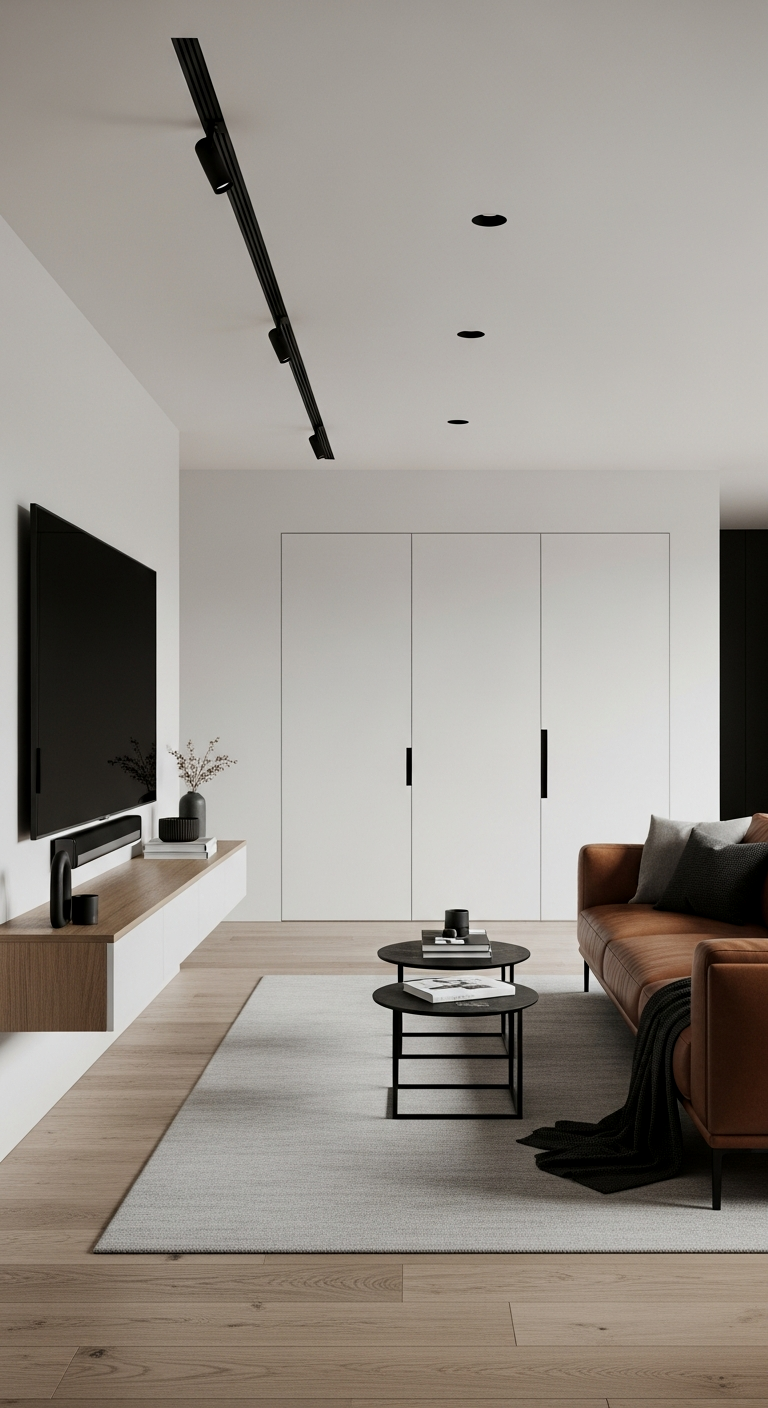
When you have a narrow rectangle, vertical height is your enemy. This alone is worth it: swap a standard media cabinet for an ultra-low-profile console (think 12-15 inches high). By keeping the TV lower to the ground, you leave more “white space” on the wall above it, which tricks the eye into thinking the ceilings are higher. It keeps the “path of travel” feeling open because the furniture doesn’t intrude into your eye line as you walk past.
The Diagonal Layout for Small Square Spaces
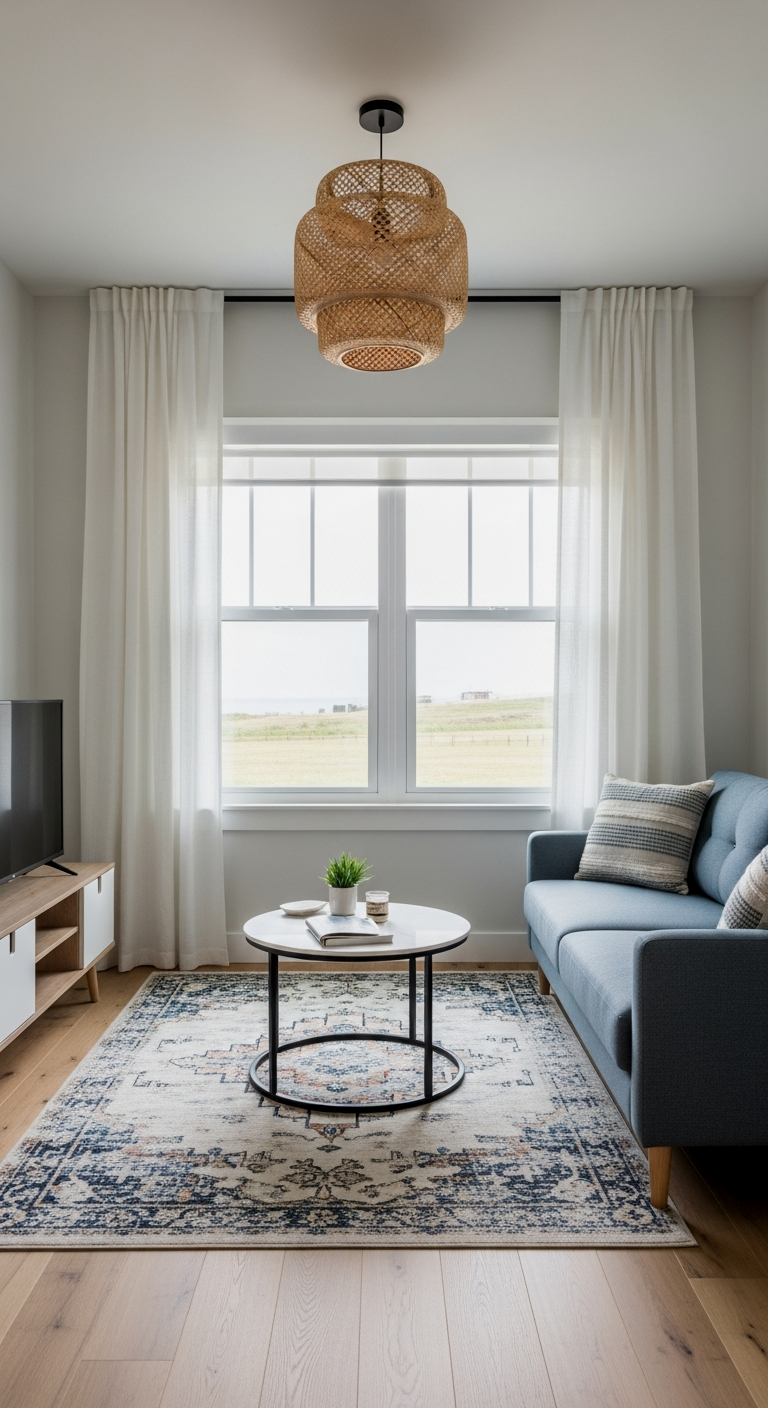
If your square room feels like a box you can’t escape, try the diagonal. Place the TV in one corner and the sofa in the opposite corner, angled toward it. This creates a longer “sight line” across the room (the hypotenuse of the square is longer than the sides!). You will not regret this if you’re dealing with a tiny 10×10 space; it creates “dead zones” behind the furniture perfect for floor lamps or tall plants, adding depth.
The Behind-the-Sofa Walkway Concept
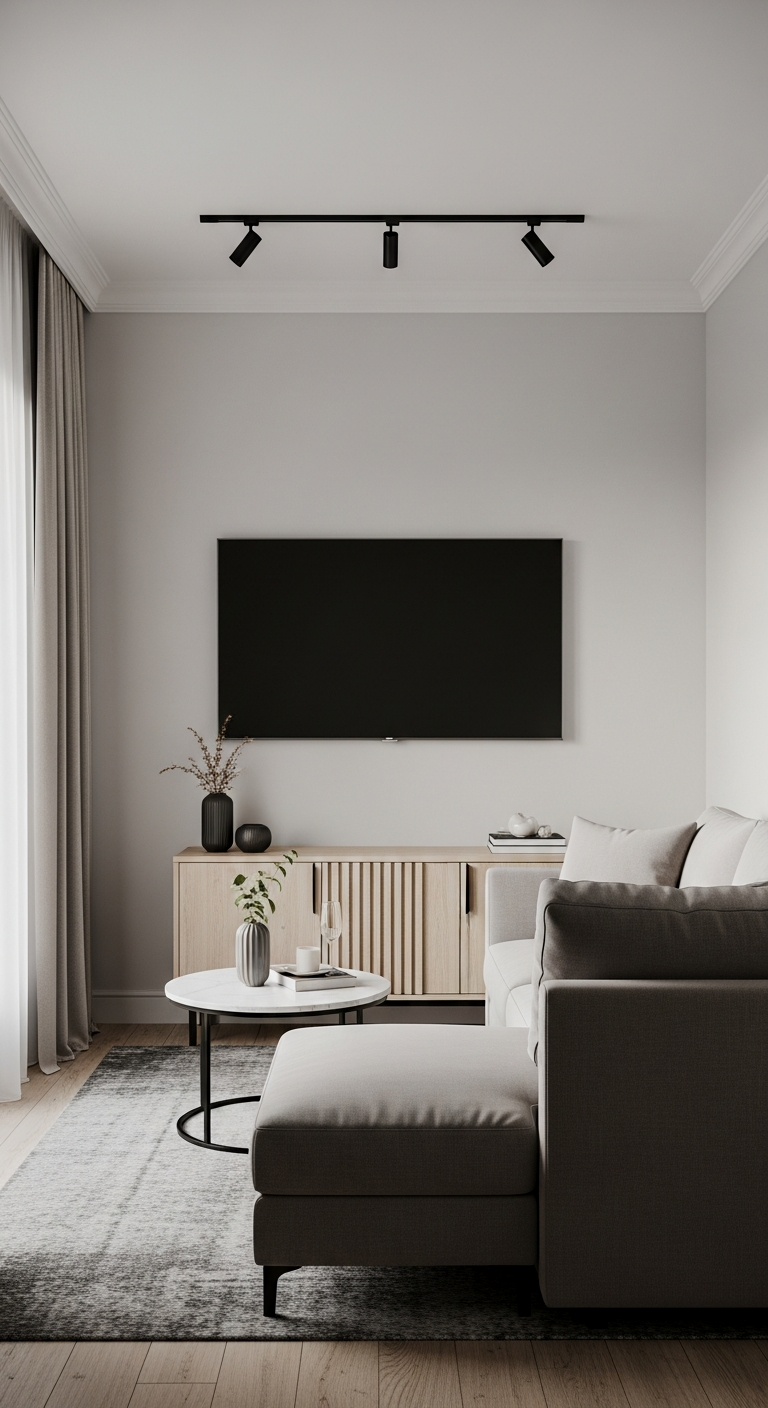
Once you try this you cannot go back to shoving sofas against the wall. In a room where the entry door is directly opposite the TV, float the sofa 3 feet away from the back wall. This allows people to enter the room and walk *behind* the viewers instead of cutting right in front of the TV. It creates a dedicated corridor and keeps the “conversation pit” intimate and undisturbed.
The exact pieces that make these ideas work:
Multi-Functional and Creative Layout Solutions
The Integrated Workspace and Media Wall
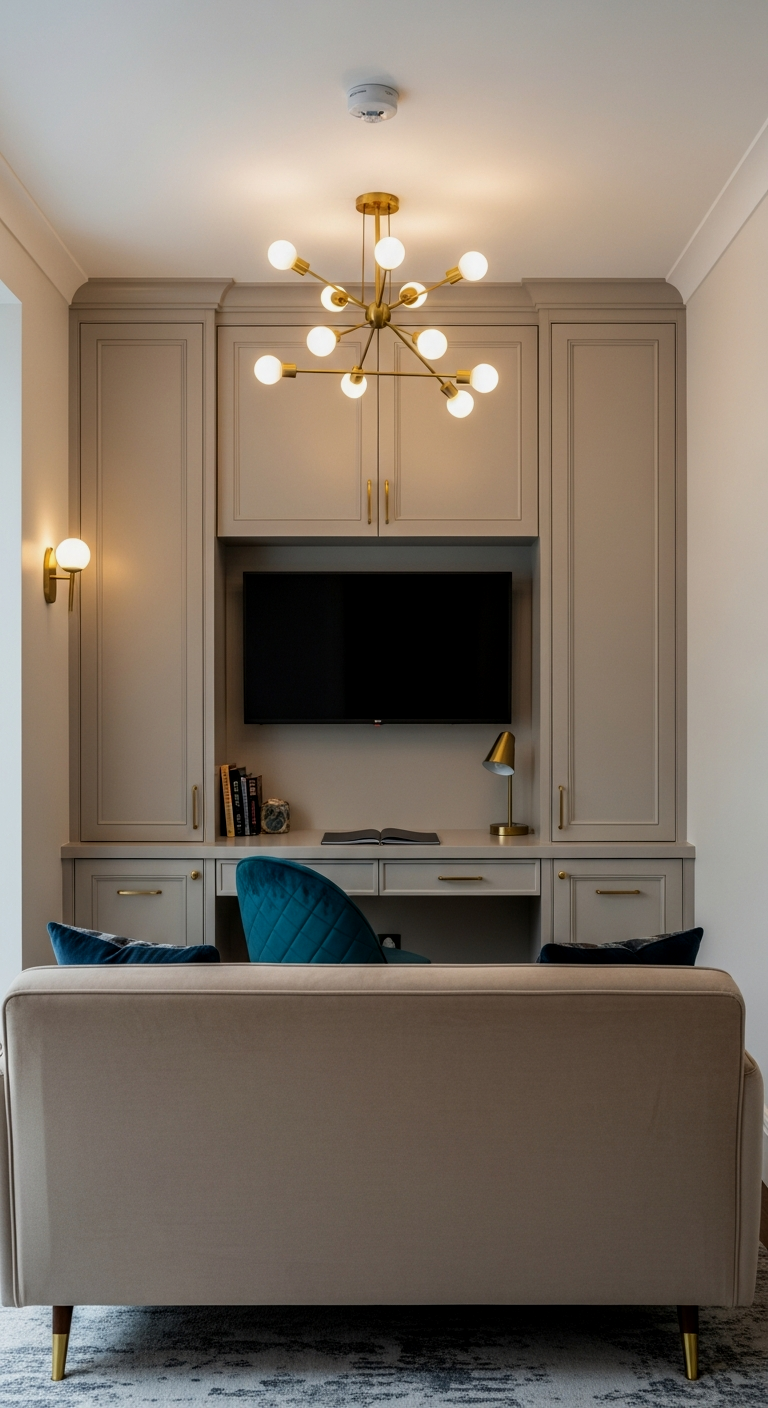
For those of us working from home in small spaces, this is the best kept secret. Use one long wall for a modular shelving unit. One section holds the TV, while a lower shelf extends out to become a desk. Use a stylish dining-style chair that can be pulled into the living area when guests come over. It streamlines two massive functions into one “zone,” leaving the rest of your floor space completely clear for movement.
The Window-Adjacent TV Layout
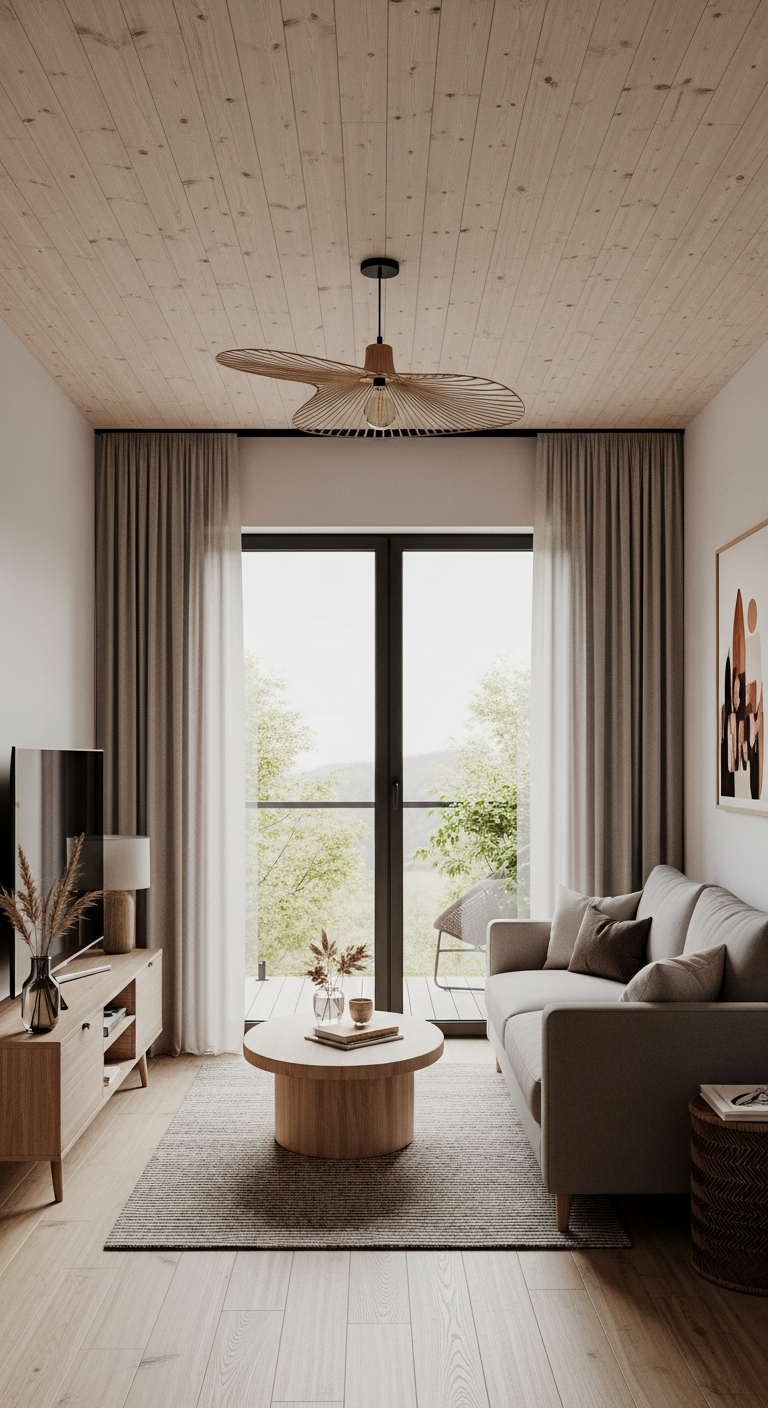
People are often afraid to put a TV near a window because of glare. But this is the one move that can actually save a cramped layout. Place the TV console perpendicular to the window. Use high-quality blackout linen curtains for movie days. By putting the TV near the light source rather than opposite it, you avoid that hideous reflection on the screen while keeping the center of the room open for a larger rug and more seating.
The Multi-Zonal Studio Flow
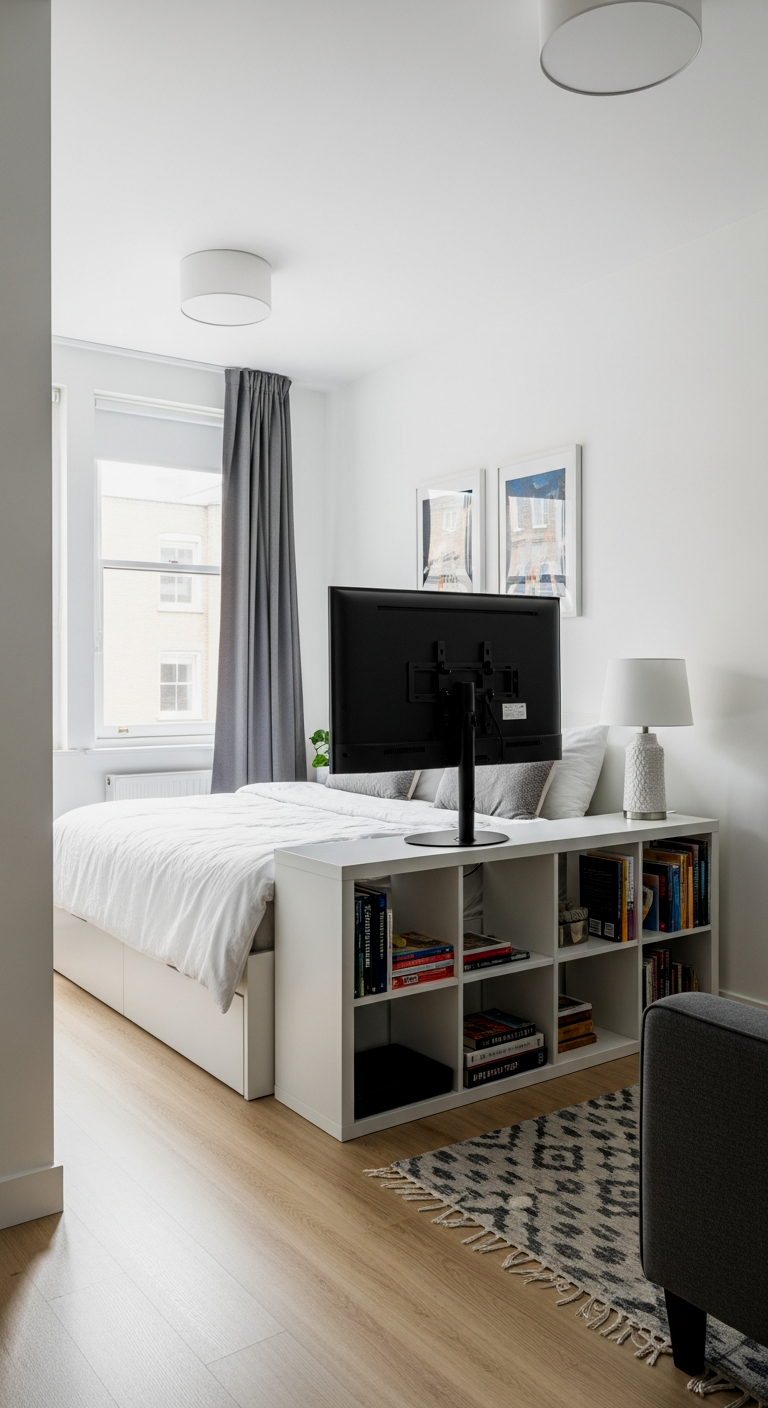
In a long studio, use the TV as the “divider.” I wish someone had told me sooner that you can use a rotating TV pole or a sturdy, low bookshelf to house the TV. Place it at the foot of your bed, facing the “living” area. This creates a physical boundary between your sleeping and living zones without blocking light. The results speak for themselves—you get a defined bedroom and a defined lounge in one open space.
The Minimalist ‘No Coffee Table’ Flow
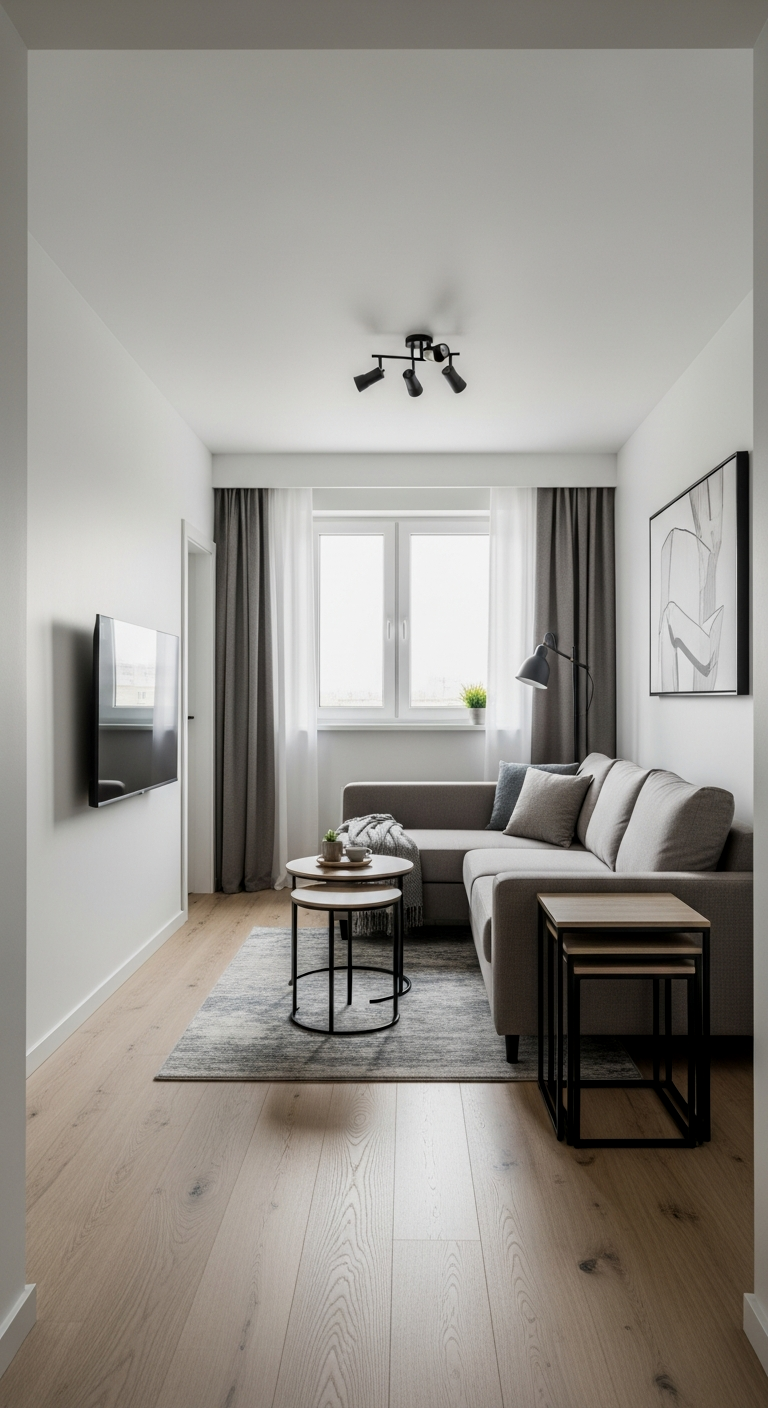
Do not sleep on this: sometimes the best layout involves removing the coffee table entirely. If your living room is narrow, a coffee table acts as a permanent roadblock. Instead, use a “C-table” that slides over the arm of the sofa and a few small nesting tables that can be tucked away. This opens up the entire central rug area, making the walk from the sofa to the TV console feel effortless and airy.
Ready to take the next step? Discover the ultimate sanctuary-building secrets for every inch of your small home.
The Alcove Media Nook
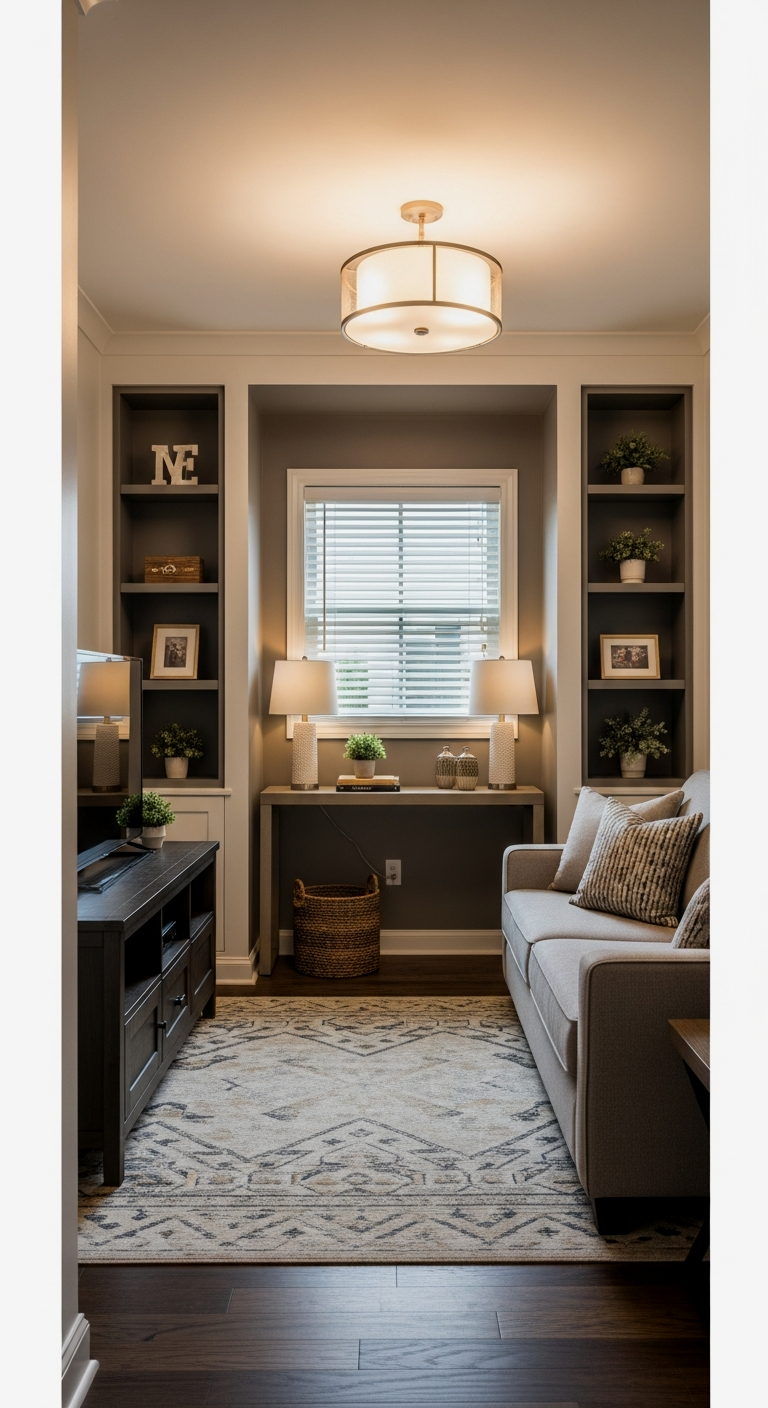
If you’re lucky enough to have a recessed nook or an old fireplace alcove, this is the best kept secret for a clean layout. Mount the TV inside the alcove on an articulating arm. This keeps the screen flush with the rest of the wall, preventing it from protruding into your walking space. It feels custom, built-in, and obsessed is an understatement for how much I love this clean, high-end look.
The Swivel Chair Flexibility Layout
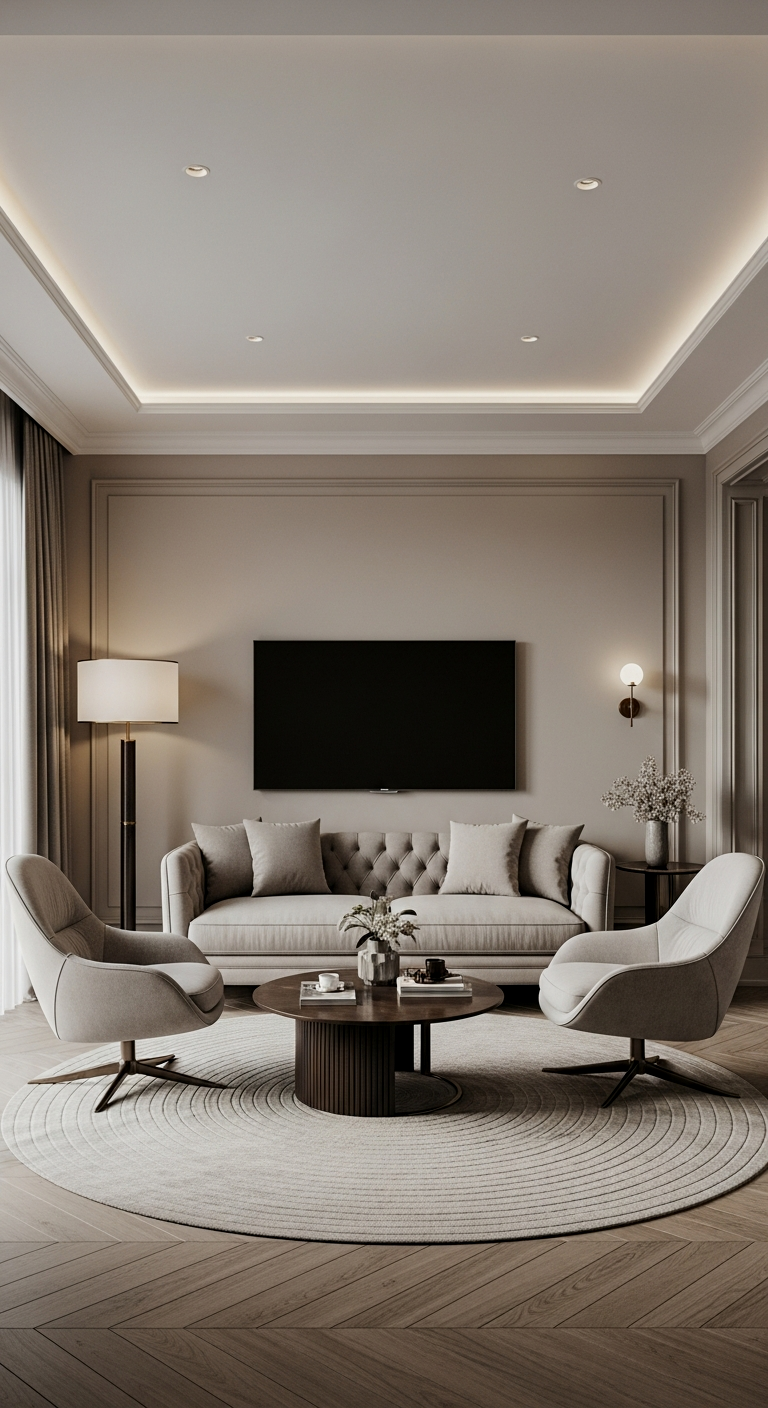
This layout is perfect for social butterflies. Place your sofa facing the TV, but add two swivel barrel chairs to the side. Trust me on this one, swivel chairs are the MVP of small layouts. They can face the TV for a Netflix binge, then rotate 180 degrees to face the sofa for a glass of wine and a chat. It keeps the flow dynamic and prevents the furniture from feeling “locked” in one direction.
The Entryway Corridor Layout
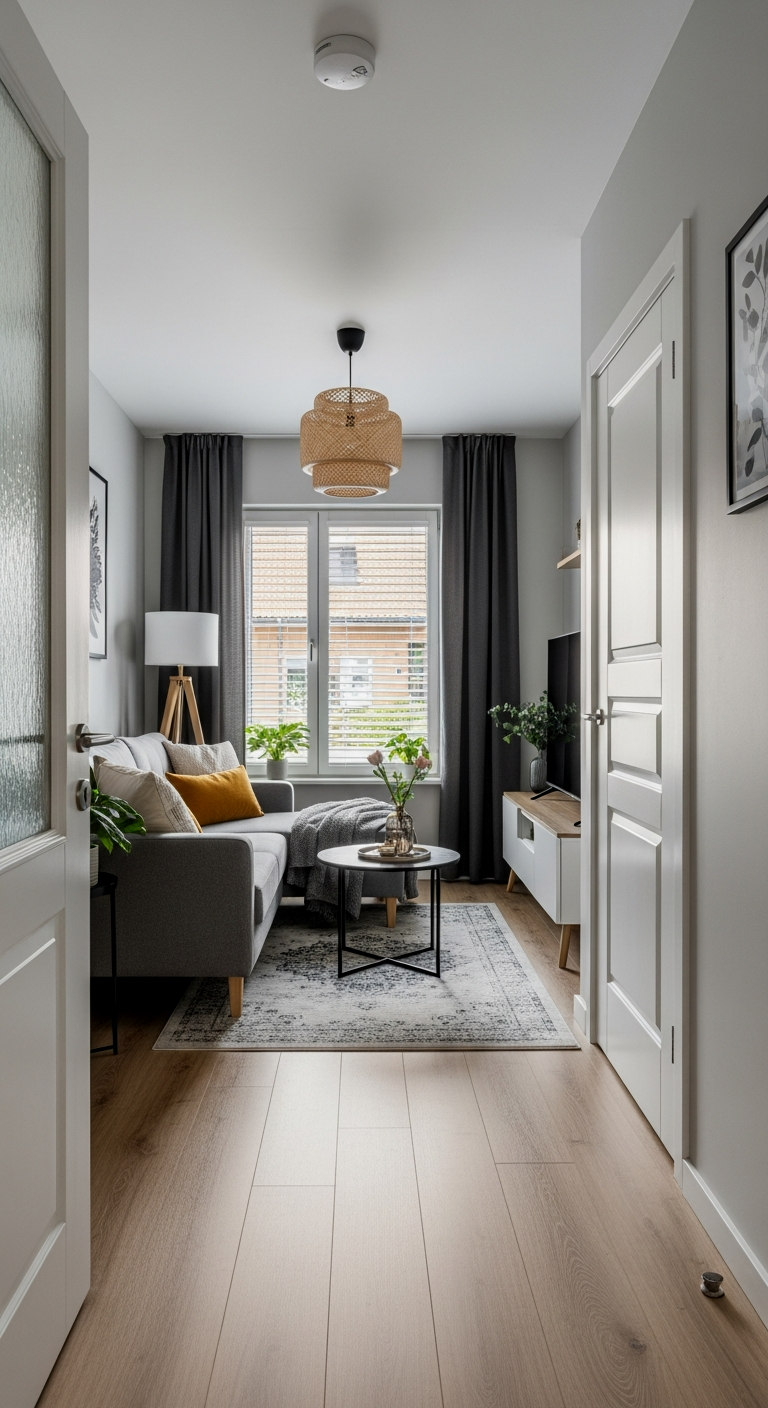
If your front door opens directly into the living room, I was not prepared for how good this looks: use the back of your sofa to create an “entryway.” Place the sofa with its back to the door (leave about 4 feet of space). Put a slim console table behind the sofa for keys and mail. The TV goes on the opposite wall. This creates a psychological “hallway” so you don’t feel like you’re stepping straight onto the rug when you walk inside.
📏 15 Small Living Room Layouts with TV That Actually Flow Quick-Win Checklist
- Measure the Walkway: Ensure at least 30 inches between the coffee table and the TV console.
- Check TV Height: The center of the screen should be at eye level when sitting (usually 42 inches).
- Scale the Rug: At least the front legs of all seating should sit on the rug to anchor the layout.
- Hide the Cords: Use cord covers or in-wall kits; visible wires clutter the visual flow instantly.
- Prioritize Lighting: Ensure you have a lamp in the “dark corner” opposite the TV to balance the glow.
The Mirrored Wall Expansion Layout
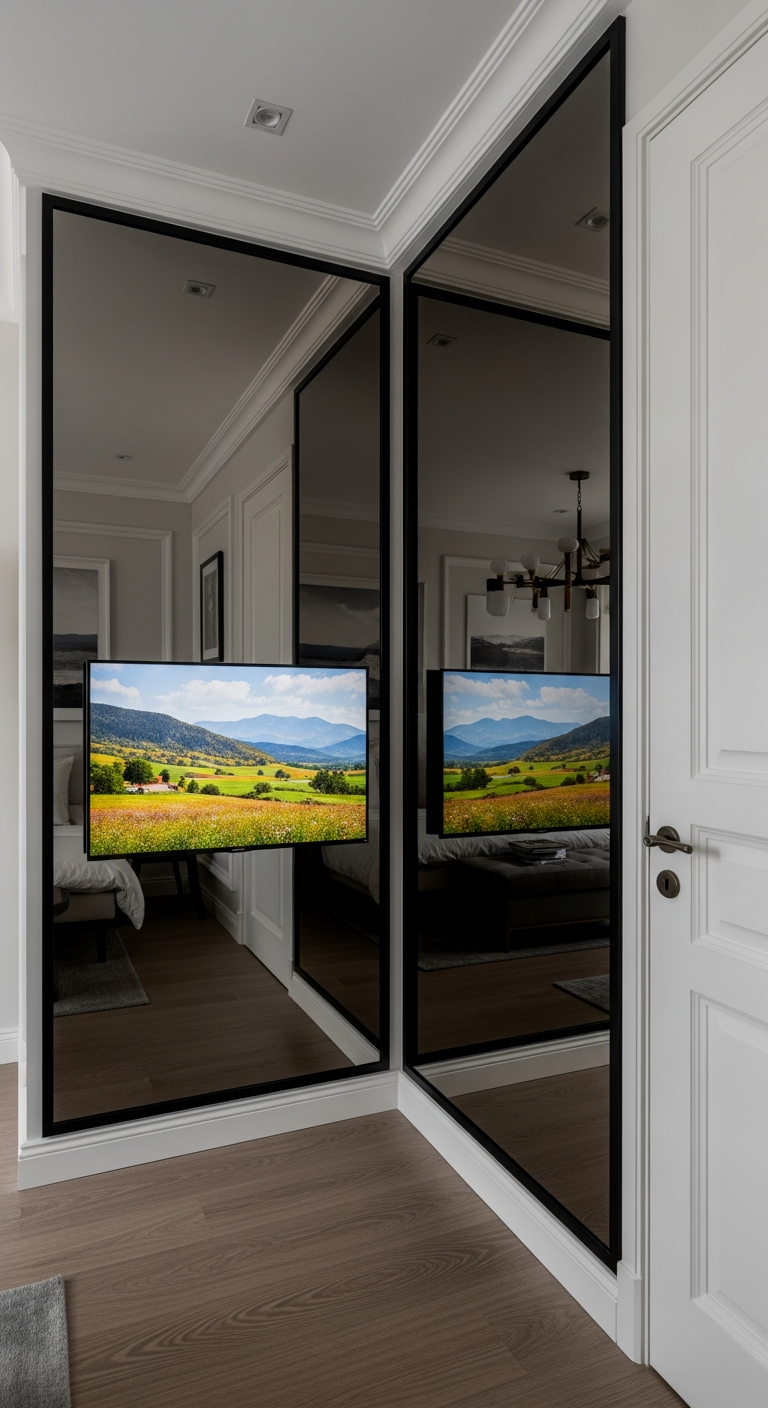
No seriously, mirrors are magic. In a tiny room, place a large floor mirror on the wall *behind* the TV or adjacent to it. This reflects the rest of the room and the “flow” you’ve created, making it feel like the space continues forever. When combined with a floating media console, the floor remains visible underneath, making the entire layout feel light as air. I cannot stress this enough: it’s the oldest trick in the book because it actually works.
Creating a living room that flows isn’t about having a huge house; it’s about being intentional with the inches you have. Whether you choose a floating sofa or a diagonal swap, remember that your home should work for you, not the other way around. If you’re ready to dive even deeper into making your small space feel like a high-end retreat, don’t forget to check out my full list of 22 Small Living Room Ideas to Transform Your Tiny Space into a Sanctuary. It’s got everything from rug sizing to color palettes that will help you finish the look!
FAQ: Small Living Room Layouts with TV
Where is the best place to put a TV in a small living room?
The best place is usually on the longest wall, centered with the sofa. However, if you have limited wall space, a corner placement using a swivel mount is a “best kept secret” for maintaining flow and saving floor space.
How do I arrange furniture in a small living room with a TV?
Start by identifying your “path of travel.” Ensure there is a clear 3-foot walkway from the entrance to other rooms. Use a rug to anchor your seating area and keep the TV at eye level to prevent the room from feeling top-heavy.
Can you put a TV in front of a window?
Yes, but it’s not ideal due to glare. If you must, use blackout curtains or place the TV at an angle. A better “pro move” is to place it perpendicular to the window to enjoy natural light without screen reflections.
How far should a sofa be from a TV in a small room?
Ideally, you want about 7 to 10 feet for a 50-60 inch TV. In very small rooms, try to maintain at least 6 feet to prevent eye strain and make the room feel less “squashed.”
How do I hide a TV in a small living room?
The Samsung Frame TV is the one for this—it looks like art. Alternatively, you can use a sliding barn door, a decorative screen, or build a gallery wall around the TV to help it blend into the decor.