22 Small Living Room Ideas That Feel Genuinely Life-Changing
I am going to say it: I am so tired of the “living room in a box” look that happens when we think a small space means we have to play it safe. I used to be the queen of buying tiny, spindly furniture that actually made my studio look like a cluttered dollhouse rather than a sophisticated home. It’s a common decorating trap, and honestly, it’s exhausting to feel like you’re constantly bumping into corners. I was not prepared for how good this looks once you finally break the rules and stop treating your living room like a storage unit with a TV.
✨ Before You Start: 22 Small Living Room Ideas Mindset
Maximizing Your Layout and Color Palette
Paint Colors for Small Living Rooms That Feel Genuinely Life-Changing
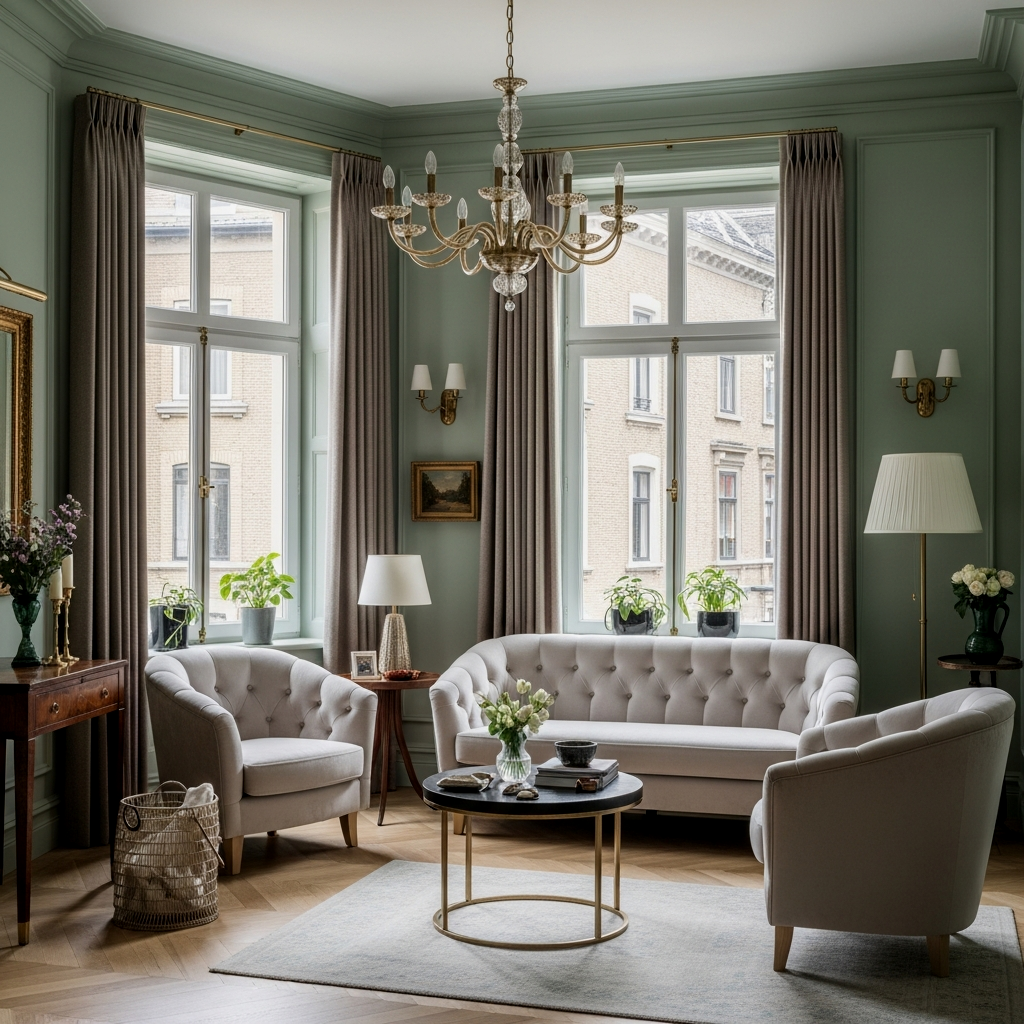
There is this huge misconception that you have to paint everything stark white to make a room feel bigger, but trust me on this one, white can sometimes feel cold and “unfinished” in a tight space. I’ve found that leanings into “greige” or even a moody, deep teal can actually blur the lines of where the walls end and the ceiling begins. This changed everything for me when I realized that color isn’t the enemy—flat, uninspired tones are. When you pick the right shade, the walls almost seem to recede into the background.
Want to explore this specific look further? I’ve done the full deep-dive so you don’t have to!
Small Living Room Layouts with TV That Actually Flow
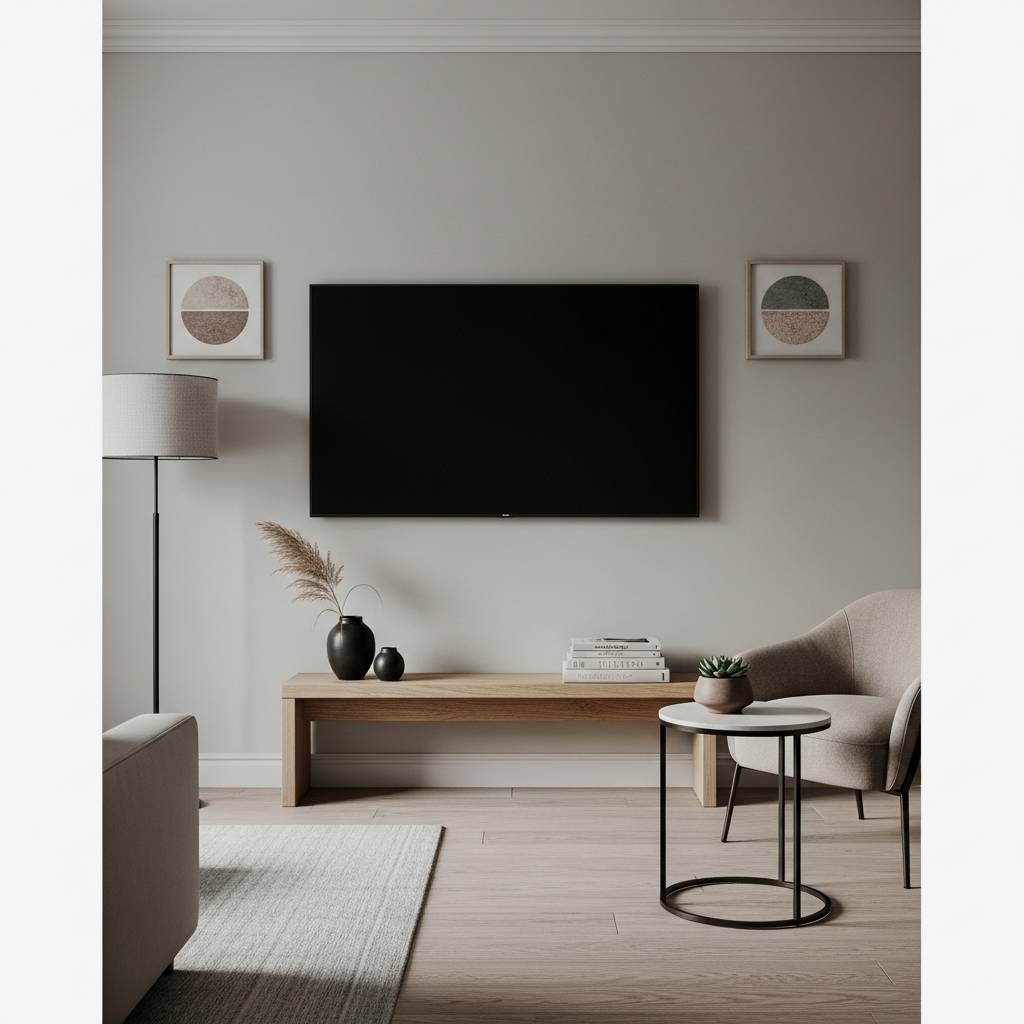
The TV is usually the giant elephant in the room that we try to ignore, but let’s be real, we all use it. Getting the flow right means you aren’t walking through the line of sight just to get to the kitchen. I am obsessed with corner placements or mounting the TV on an articulating arm so it doesn’t have to be the permanent focal point. If you’ve been struggling with where to put the sofa so it doesn’t block the door, you need to see how these layouts prioritize movement without sacrificing your Netflix marathons.
Want to explore this specific look further? I’ve done the full deep-dive so you don’t have to!
Multi-Functional Furniture That Doubles as Decor
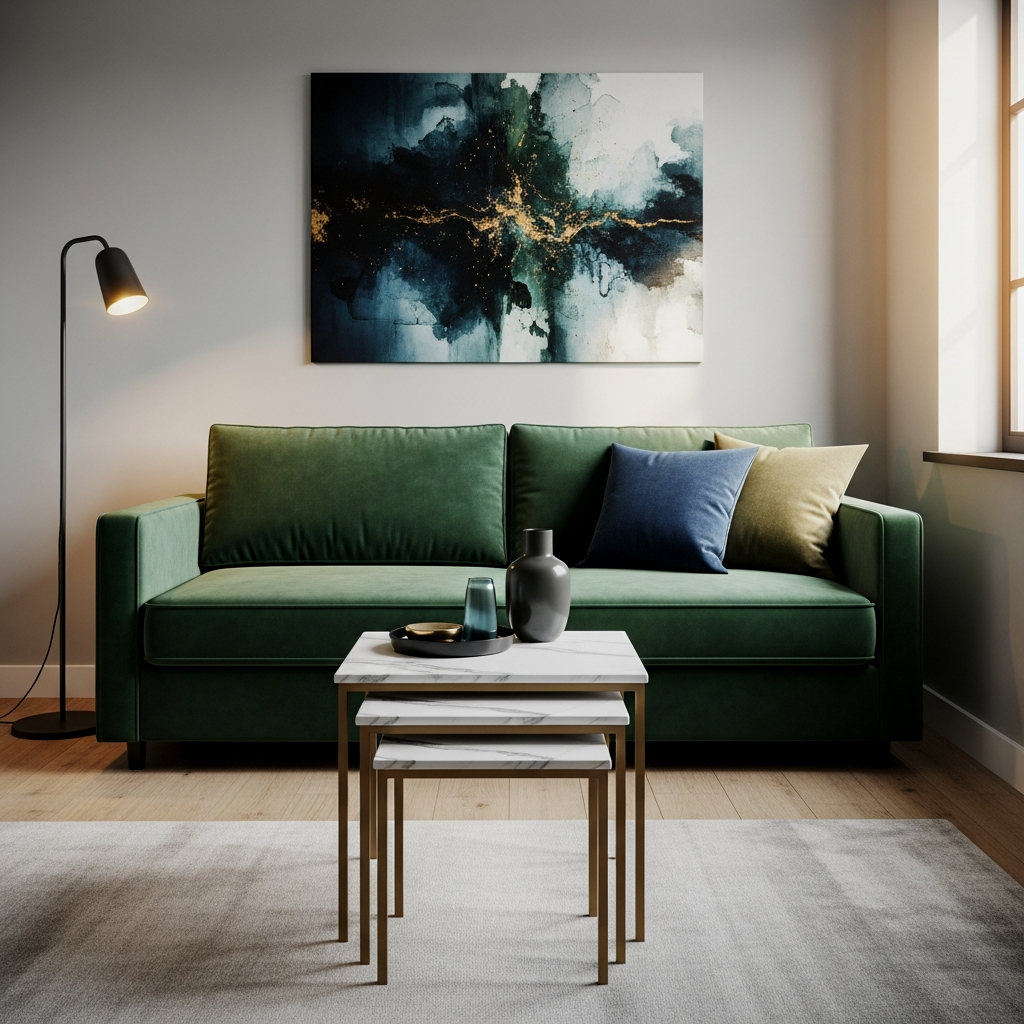
If a piece of furniture only does one thing, it’s working too hard for your limited square footage. I’m talking about ottomans that serve as coffee tables, footrests, and extra seating when the whole crew comes over. No seriously, look for sculptural wooden stools or upholstered benches that look like a piece of art but can be moved around in a heartbeat. It’s the best way to keep the room feeling flexible and curated rather than packed with “utility” items.
The “Leggy” Rule: In a small room, ensure at least half of your furniture has visible legs. Seeing the floor continue under the sofa or chair creates an optical illusion of more space.
Hidden Storage Ideas for Small Living Rooms to Hide the Chaos
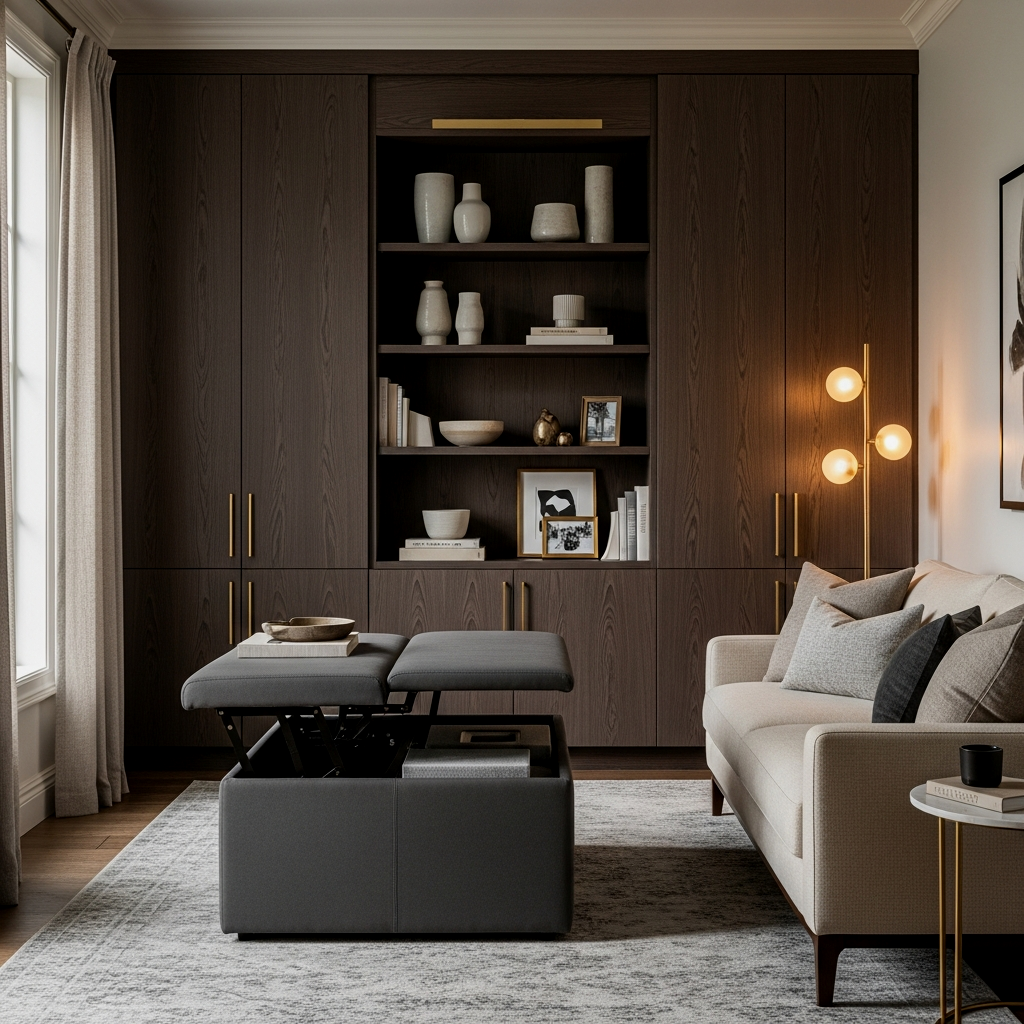
Chaos is the ultimate vibe-killer in a small space, and I cannot stress this enough: you need a place to put the remote, the cozy blankets, and those random tech cords. I’m a huge fan of using decorative boxes on shelves or choosing a sofa with a hidden lift-top. This alone is worth it for the peace of mind you get when you can “reset” your room in under five minutes. When the clutter is gone, the architecture of the room finally gets a chance to shine.
Want to explore this specific look further? I’ve done the full deep-dive so you don’t have to!
Lighting Tricks to Brighten Up a Cramped Living Room
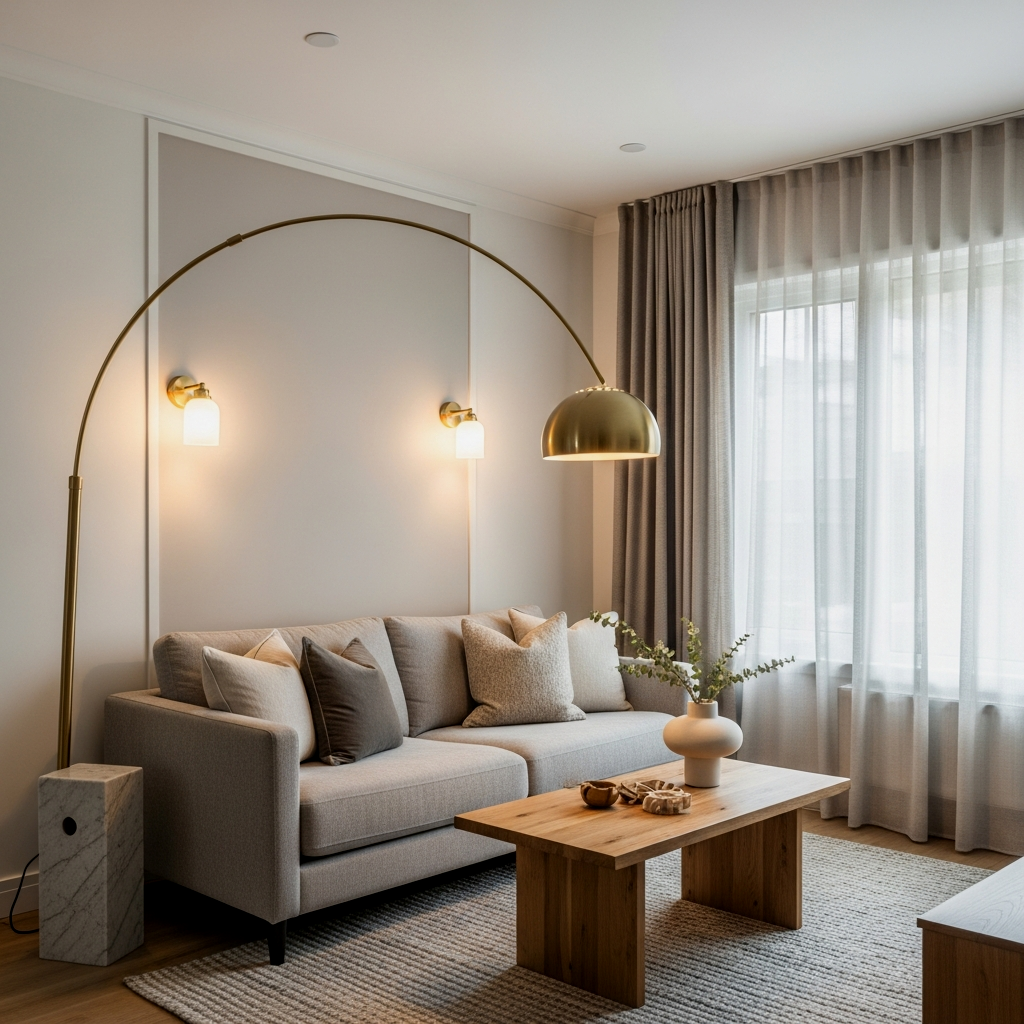
If you are still living with just one “boob light” on the ceiling, we need to talk. Lighting is the best kept secret to making a cramped room feel like a grand lounge. You want layers—sconces that bounce light off the walls, a floor lamp to illuminate a dark corner, and maybe some dimmable LED strips behind the TV. Once you try this you cannot go back to the harsh overhead glare that makes everything feel flat and small. It’s all about creating depth through shadows and highlights.
Want to explore this specific look further? I’ve done the full deep-dive so you don’t have to!
Floor-to-Ceiling Shelving to Maximize Vertical Space
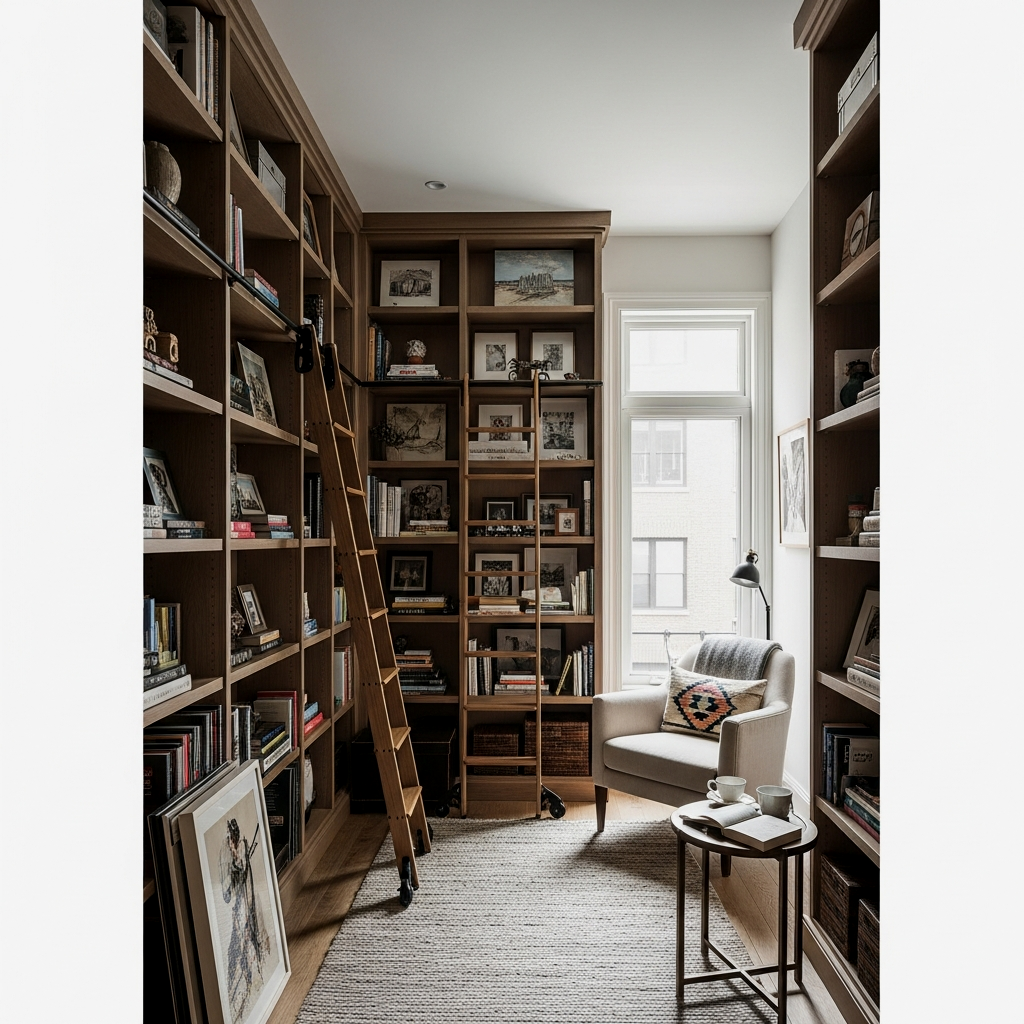
When you run out of floor space, the only way to go is up. I wish someone had told me sooner that a floor-to-ceiling bookshelf doesn’t actually make a room feel smaller; it makes the ceiling feel higher. By drawing the eye upward, you’re showcasing the full volume of the room. Plus, it gives you a massive “gallery” space to style with books, plants, and those vintage finds you’re obsessed with.
Using Oversized Mirrors to Create the Illusion of Depth
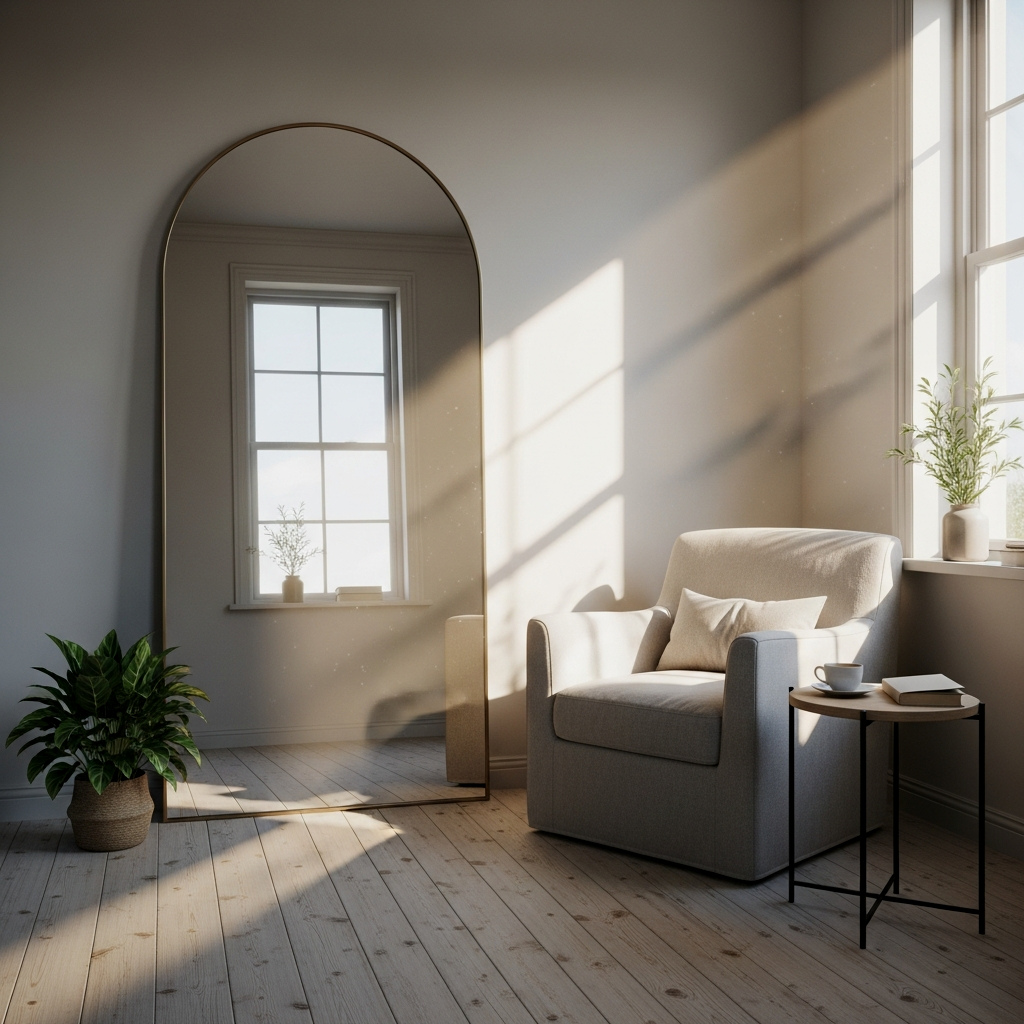
This is the one trick that works every single time without fail. A massive mirror placed opposite a window is like adding a second window to the room. It doubles the light and creates an “infinity” effect that can make a narrow room feel twice as wide. I love a large floor mirror leaning against a wall; it adds a bit of effortless, Parisian-cool energy while doing the heavy lifting of opening up the space. The results speak for themselves.
The exact pieces that make these ideas work:
Strategic Styling for Small Footprints
Rug Rules for Small Living Rooms That Change Everything
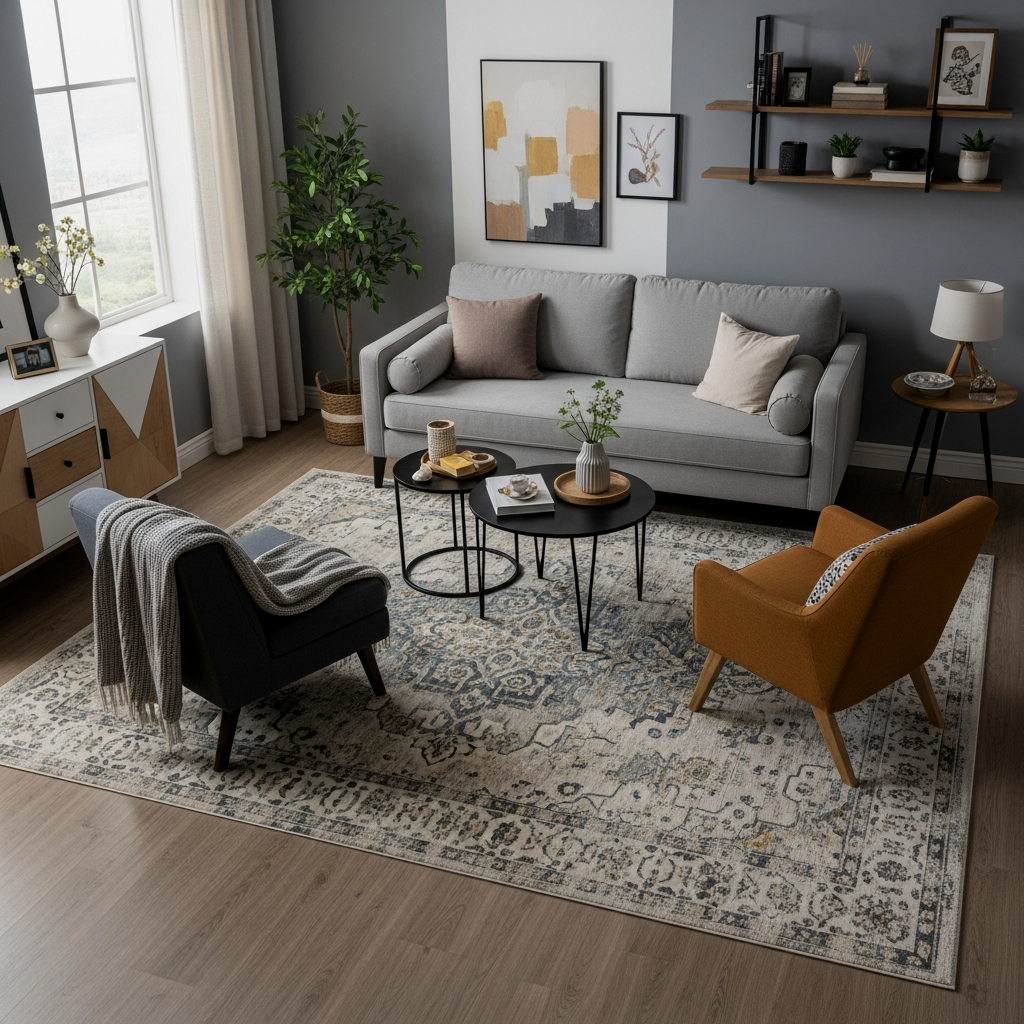
Nothing kills a room faster than a “postage stamp” rug. You know the ones—they’re too small, so they just float in the middle of the floor, making everything feel disconnected. The difference is unreal when you size up. You want a rug large enough that all the front legs of your furniture sit comfortably on it. It grounds the space and defines the “living” zone in an open-concept apartment. Do not sleep on this; a bigger rug actually makes the room feel more expansive.
Want to explore this specific look further? I’ve done the full deep-dive so you don’t have to!
Apartment-Friendly Small Living Room Hacks for Renters
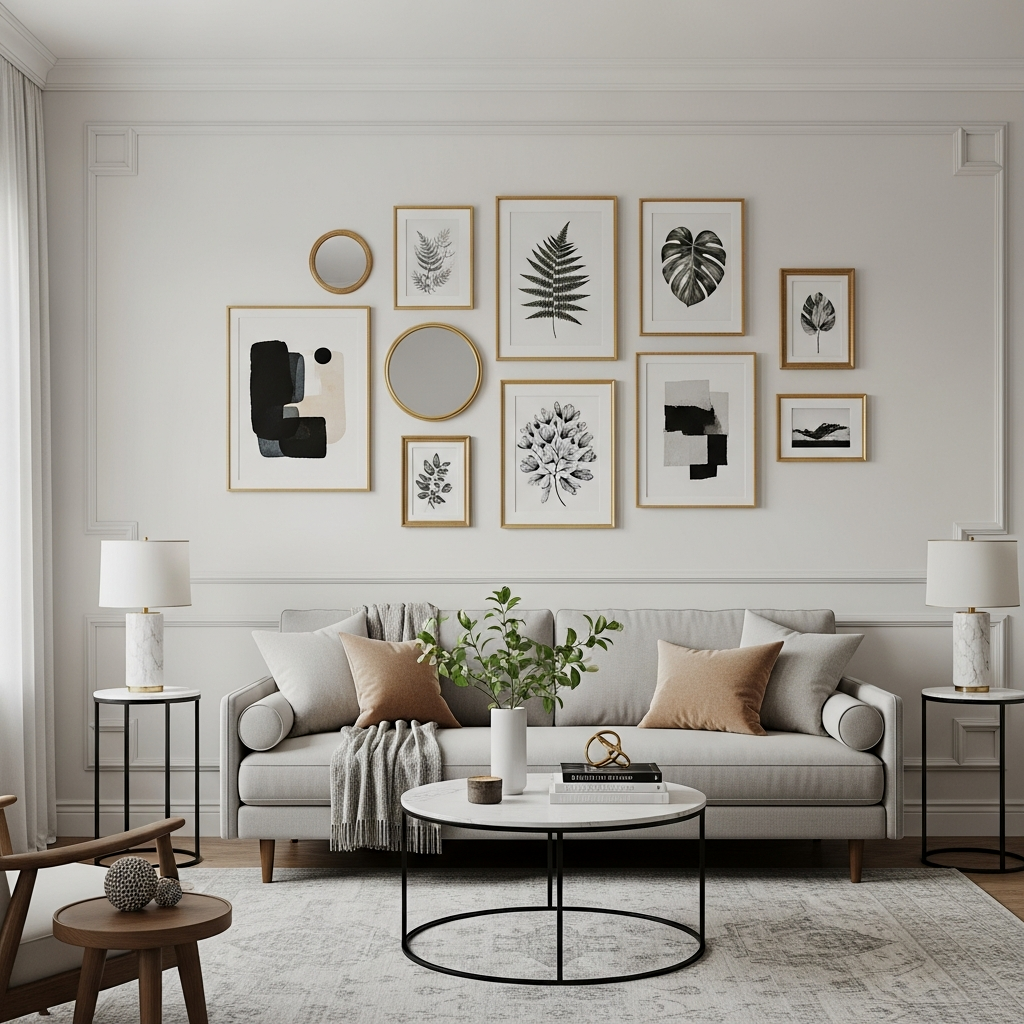
Renting is hard because you can’t exactly knock down walls to get more space. But you will not regret this: using peel-and-stick moldings or temporary wallpaper can change the entire architecture of a boring white box. I also love using tension rods for curtains to hang them high and wide—it makes the windows look massive without drilling a single hole. These are the little tweaks that make a temporary space feel like a “forever” home.
Want to explore this specific look further? I’ve done the full deep-dive so you don’t have to!
Sleek Built-in Window Seats for Extra Seating
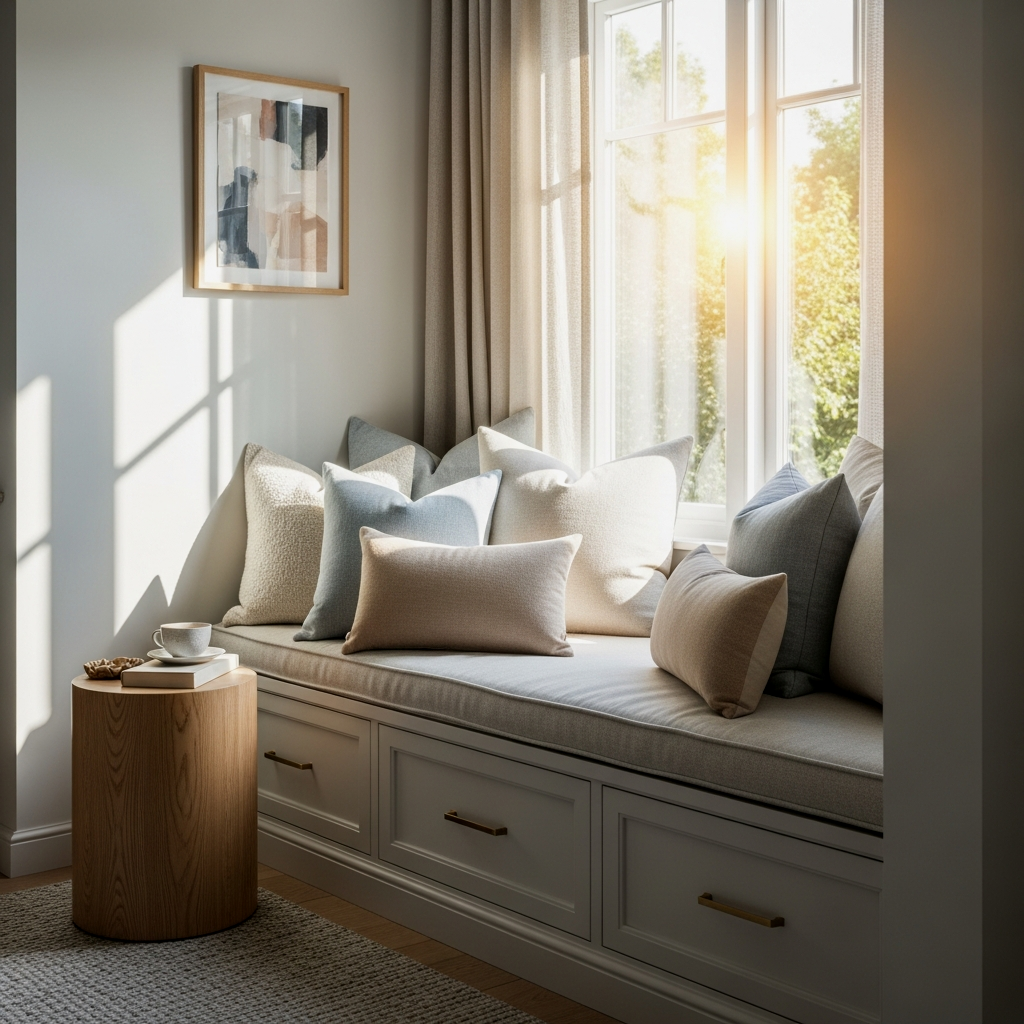
If you have a window, you have a potential seating area. Instead of a bulky armchair that blocks the pathway, a slim bench or a DIY window seat can provide a cozy reading spot without taking up valuable floor space. It’s such a clever way to use “dead space” under the glass. I love adding a few plush velvet pillows to make it feel like a high-end custom feature.
The Magic of Acrylic and Glass Furniture
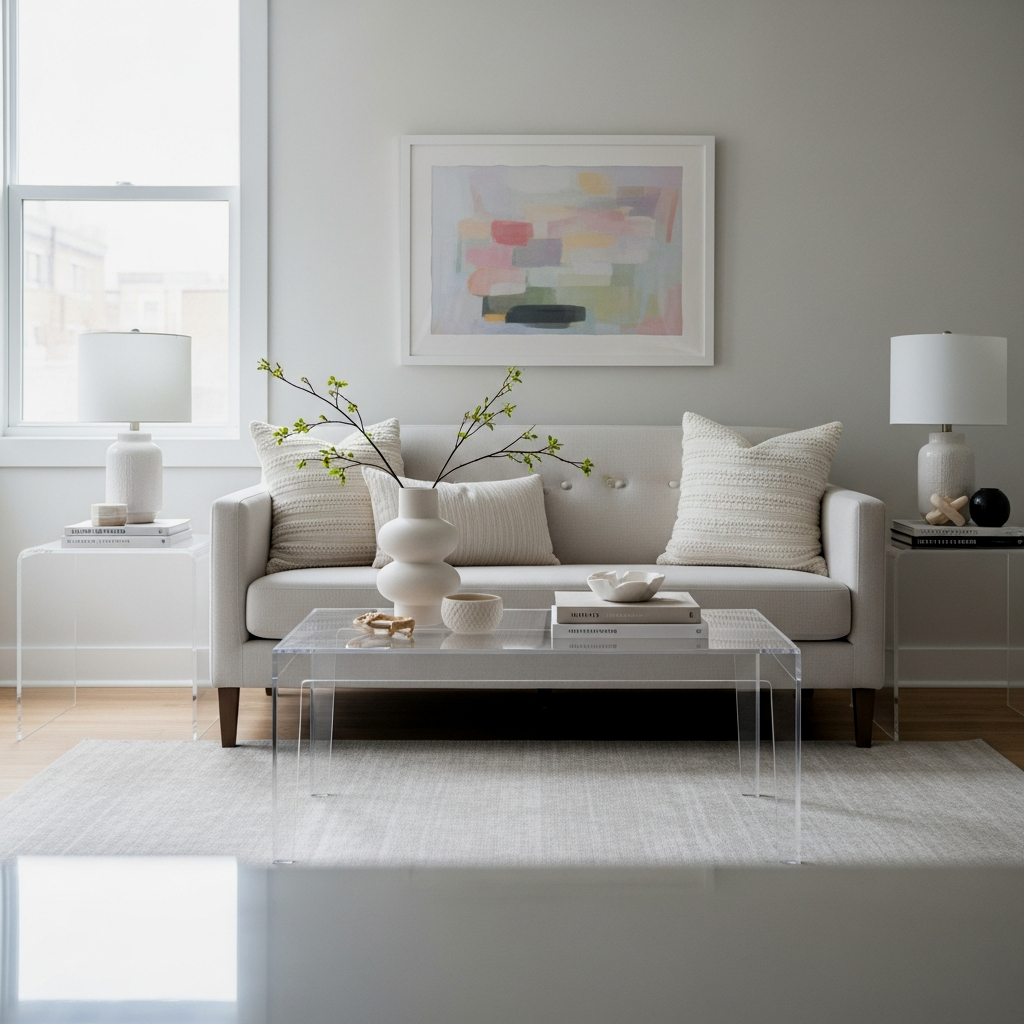
I call this “ghost furniture” because it provides a surface for your coffee or books without taking up any visual weight. In a tight room, being able to see the floor through your coffee table or side chair is a total game-changer. It keeps the room feeling airy and modern. I was not prepared for how much bigger my last apartment felt just by swapping my heavy wooden table for a sleek acrylic one.
Stop making the “small rug” mistake! Learn exactly how to choose the right size to make your living room look massive.
Cozy Nooks Created with Strategic Corner Seating
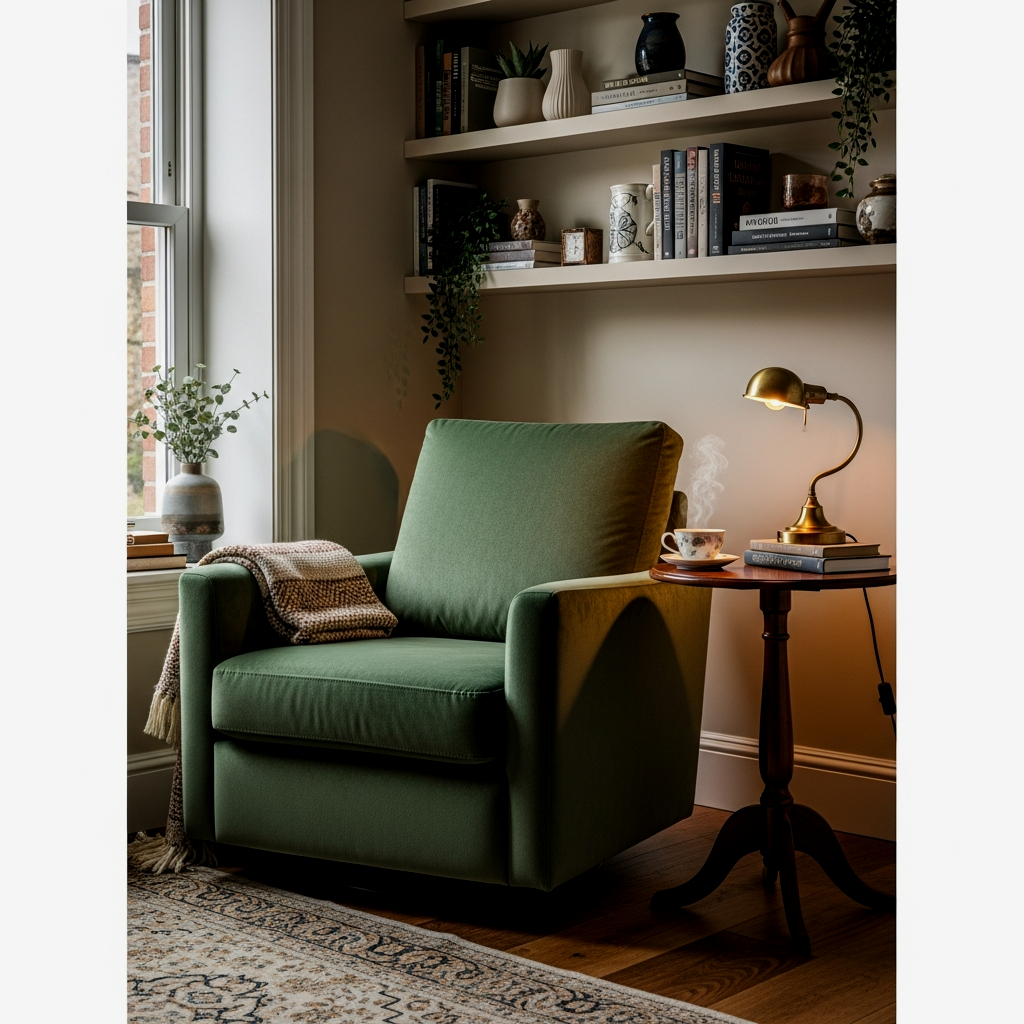
Corners are often forgotten, but they are the secret to adding more seating without the clutter. A small-scale swivel chair or a curved “bean” chair tucked into a corner creates a destination within the room. It makes the living room feel like it has multiple zones, even if it’s technically just one small square. It’s the perfect spot for a morning coffee.
Statement Wall Art to Draw the Eye Upwards
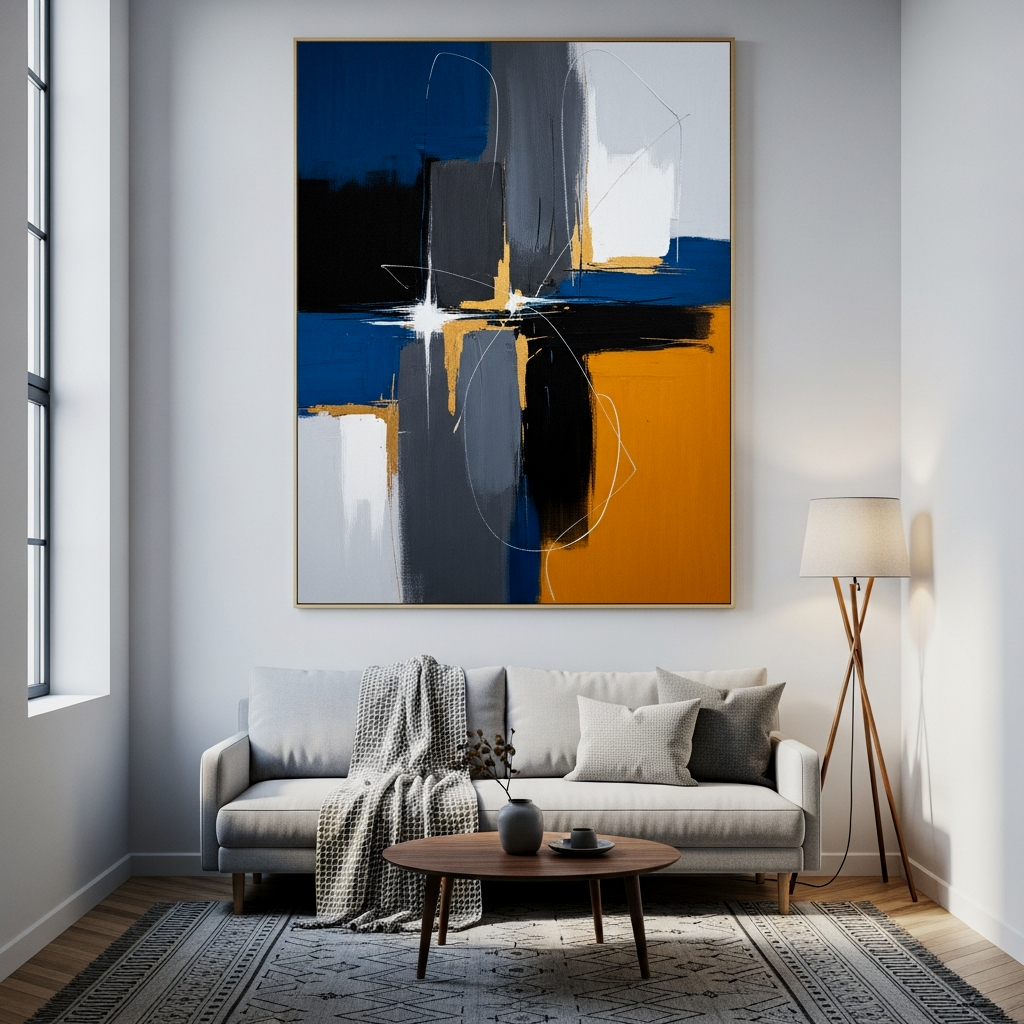
Instead of a “gallery wall” of fifty tiny frames that can look messy, go for one massive, bold piece of art. It creates a singular focal point that commands attention and makes the wall feel expansive. When you hang art a little higher than eye level, you’re encouraging people to look up, which subtly reminds them how much vertical space you actually have.
Minimalist Scandi Style for a Clutter-Free Vibe
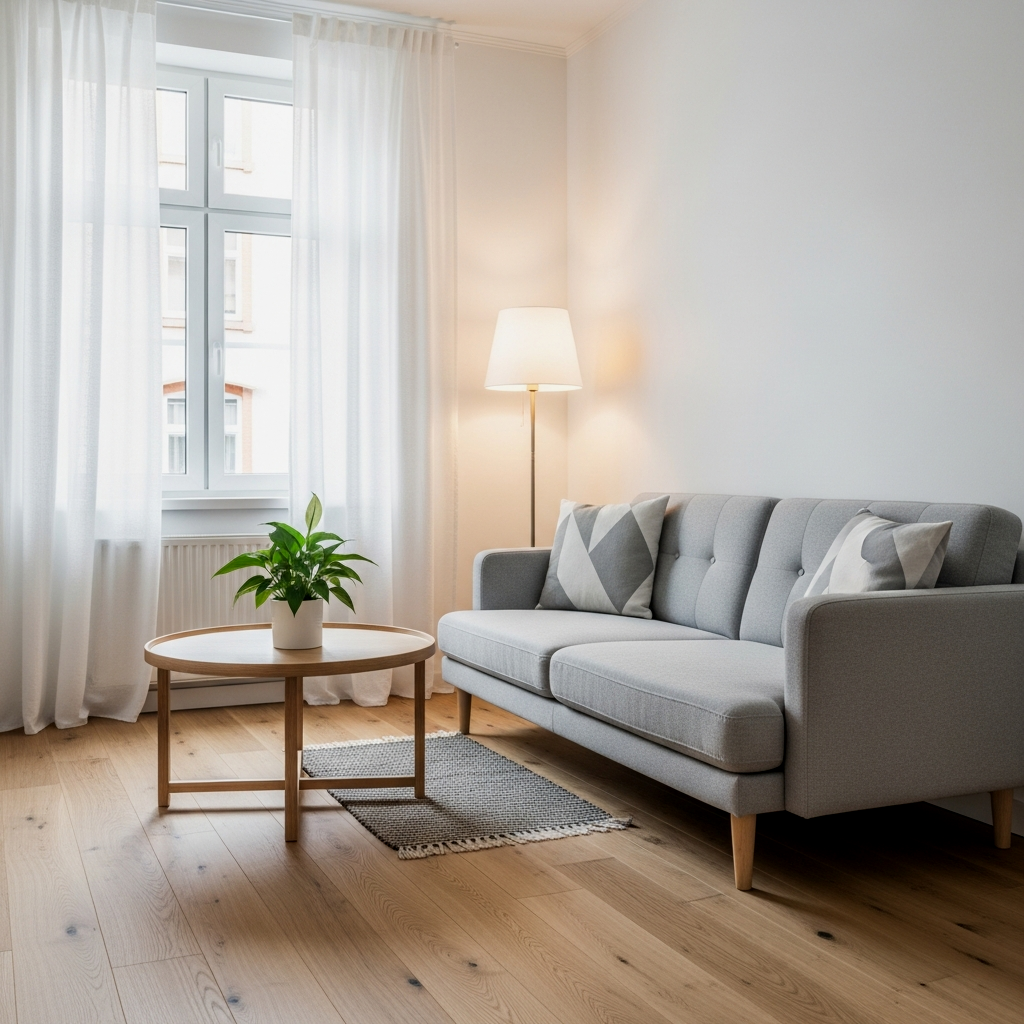
There is a reason the Scandinavian look is so popular for small homes. It’s all about clean lines, light woods, and only keeping what you truly love. By stripping back the “noise,” the room feels calmer and more intentional. It’s about quality over quantity, and in a small room, that is the golden rule you should live by.
Integrating Indoor Plants to Breath Life into Small Spaces
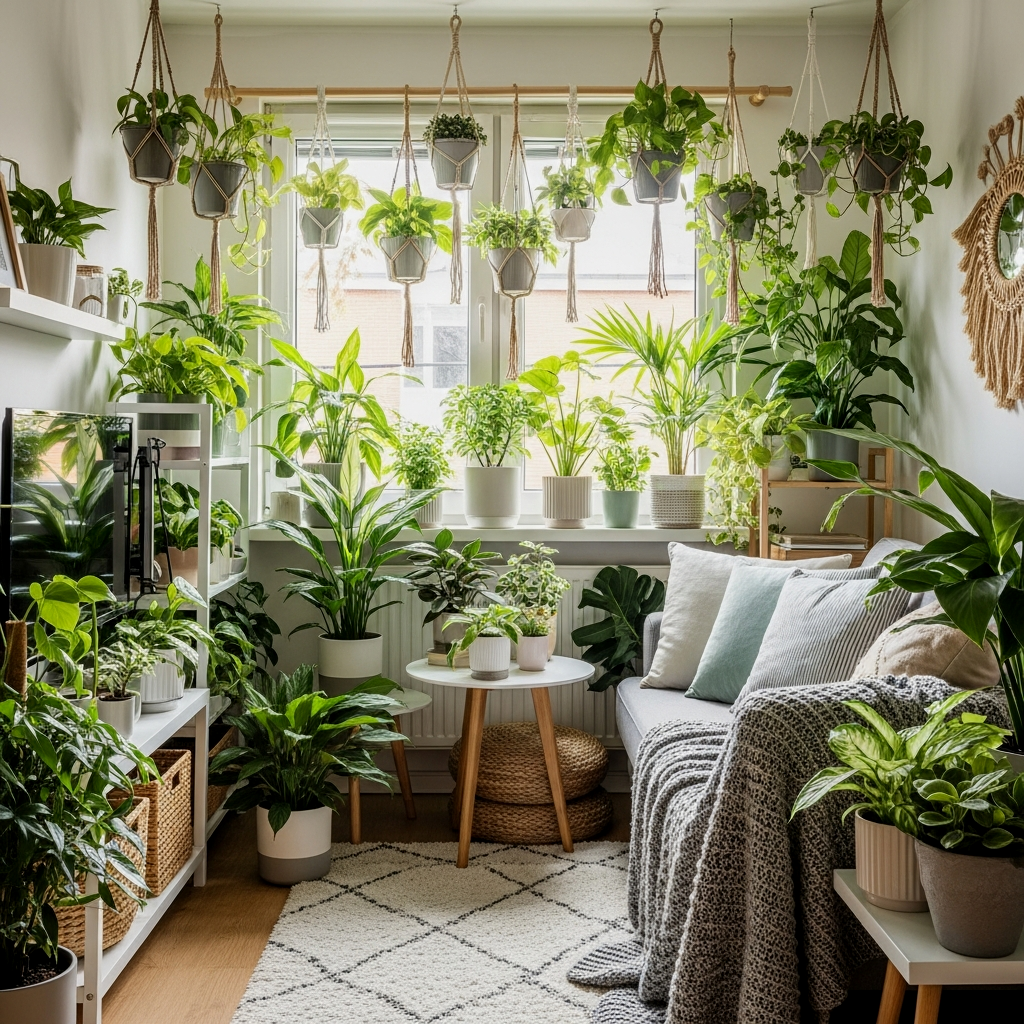
Plants are like the “jewelry” of a room, but they also add height and texture without being heavy furniture. A tall, skinny Fiddle Leaf Fig in a corner adds a pop of vibrant green and draws the eye to the ceiling. If you’re low on surface space, try hanging a Pothos from a ceiling hook—it’s a great way to add “living decor” without sacrificing a single inch of floor space.
Choosing Slim-Profile Sofas for Narrow Rooms
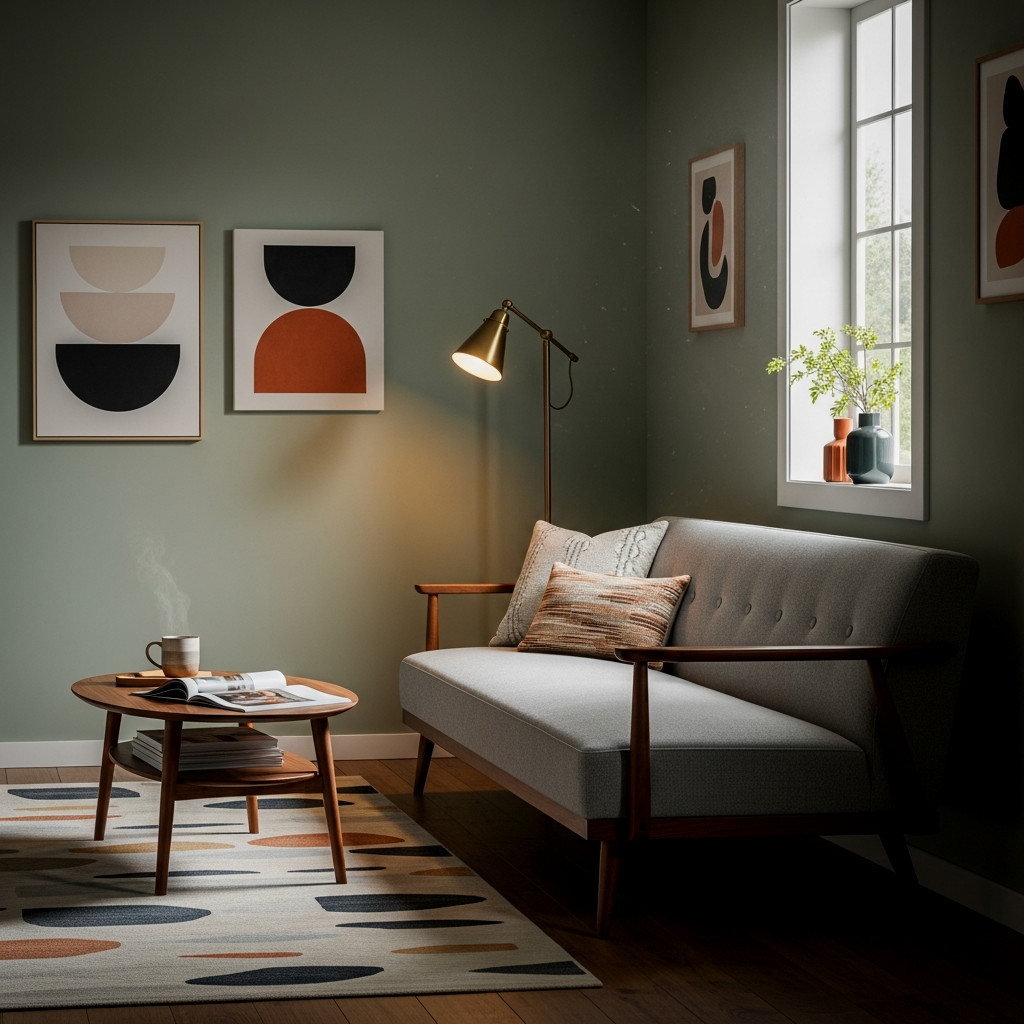
Big, puffy overstuffed sofas are the enemy of the small living room. You want something with “clean bones”—think track arms instead of rolled arms and a shallow depth. A slim-profile sofa still offers plenty of comfort but doesn’t eat up the entire walking path. It’s all about finding that balance between a cozy movie night and being able to actually walk through your house.
Floating Desks for a Hidden Home Office Corner
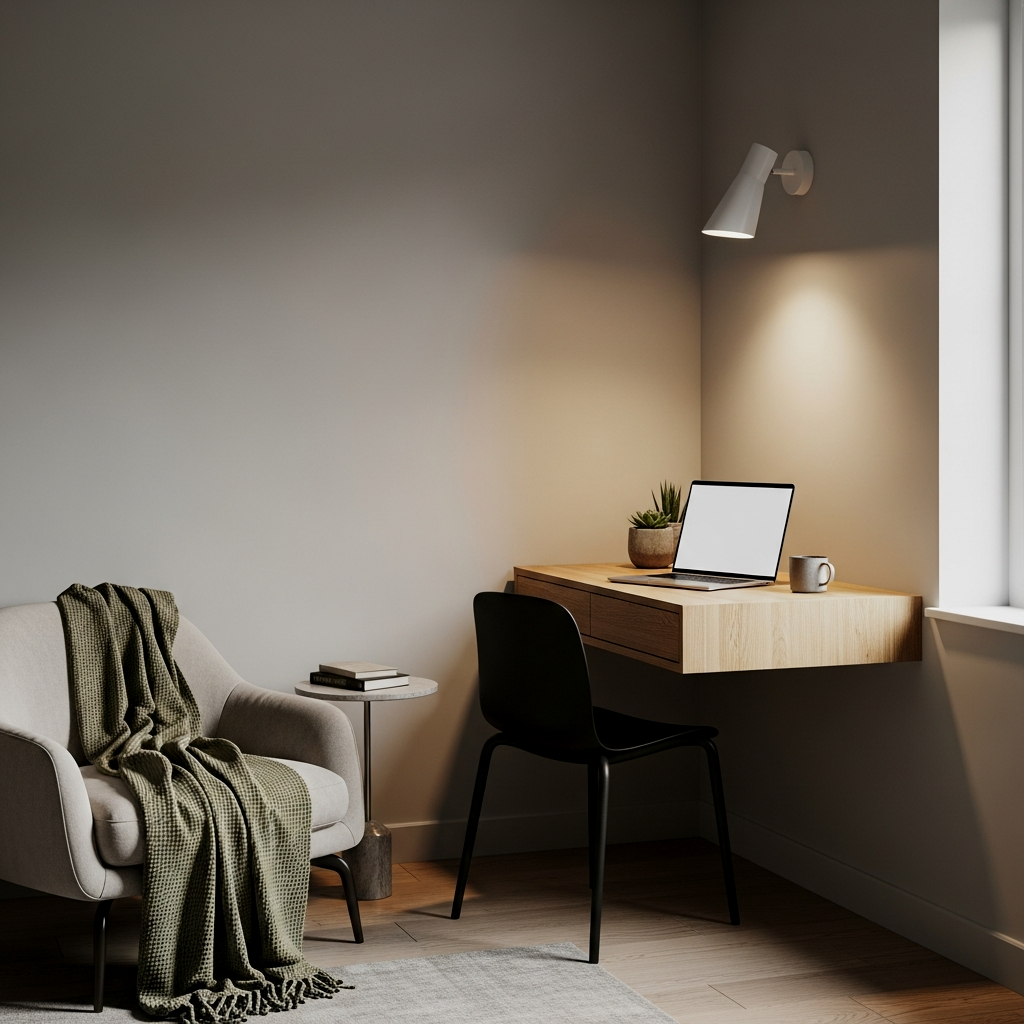
If your living room also has to be your office, a floating desk is the way to go. Since there are no legs, the floor remains visible, keeping the room open. You can even mount it at standing height or tuck a stool underneath when you’re done for the day. It’s a genius way to squeeze in a workspace without it taking over the “relaxing” vibe of the room.
Texture Layering to Add Depth Without Bulk
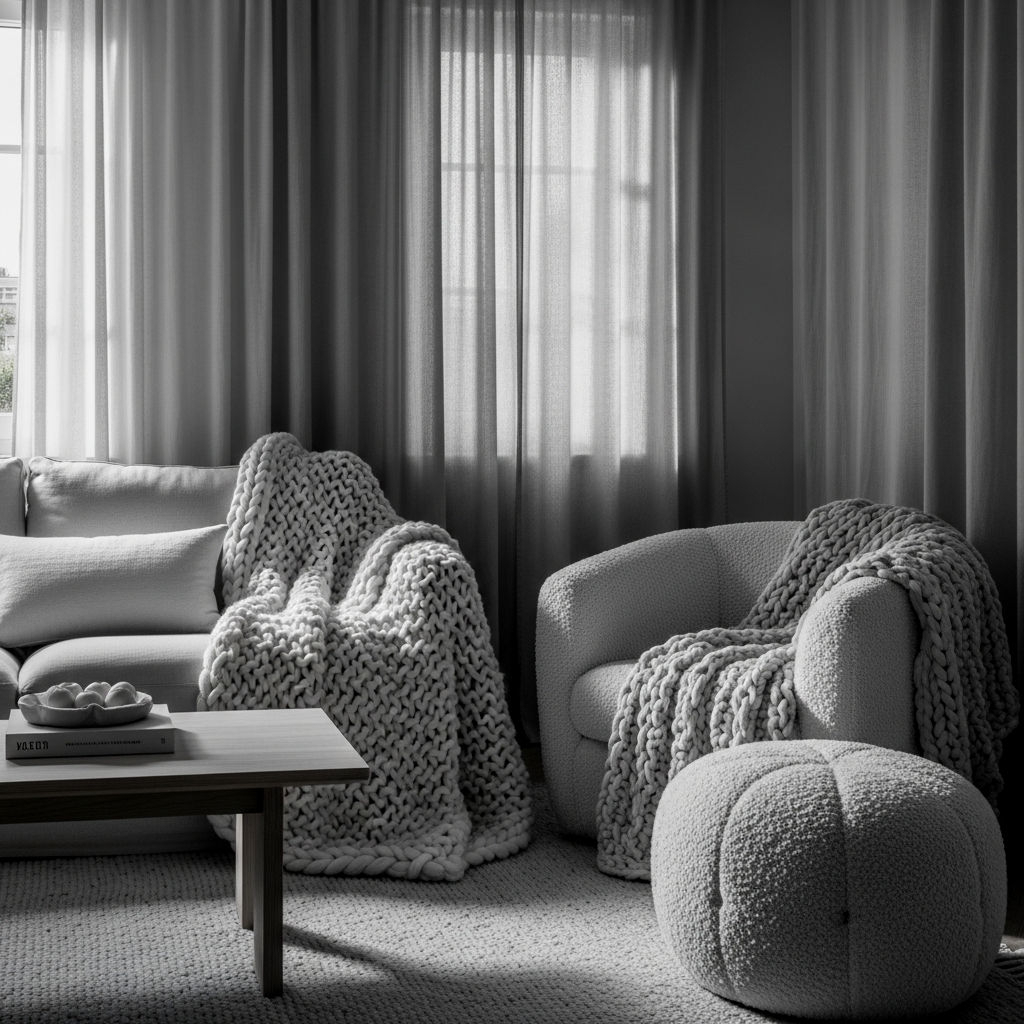
When you can’t add more furniture, add texture. A chunky knit throw, a jute rug, and some linen pillows add visual interest and “weight” to the design without physically crowding the room. This is how you make a small space feel high-end and designer-made. It’s all in the tactile details that make you want to curl up and stay a while.
Bold Accent Walls to Define Distinct Zones
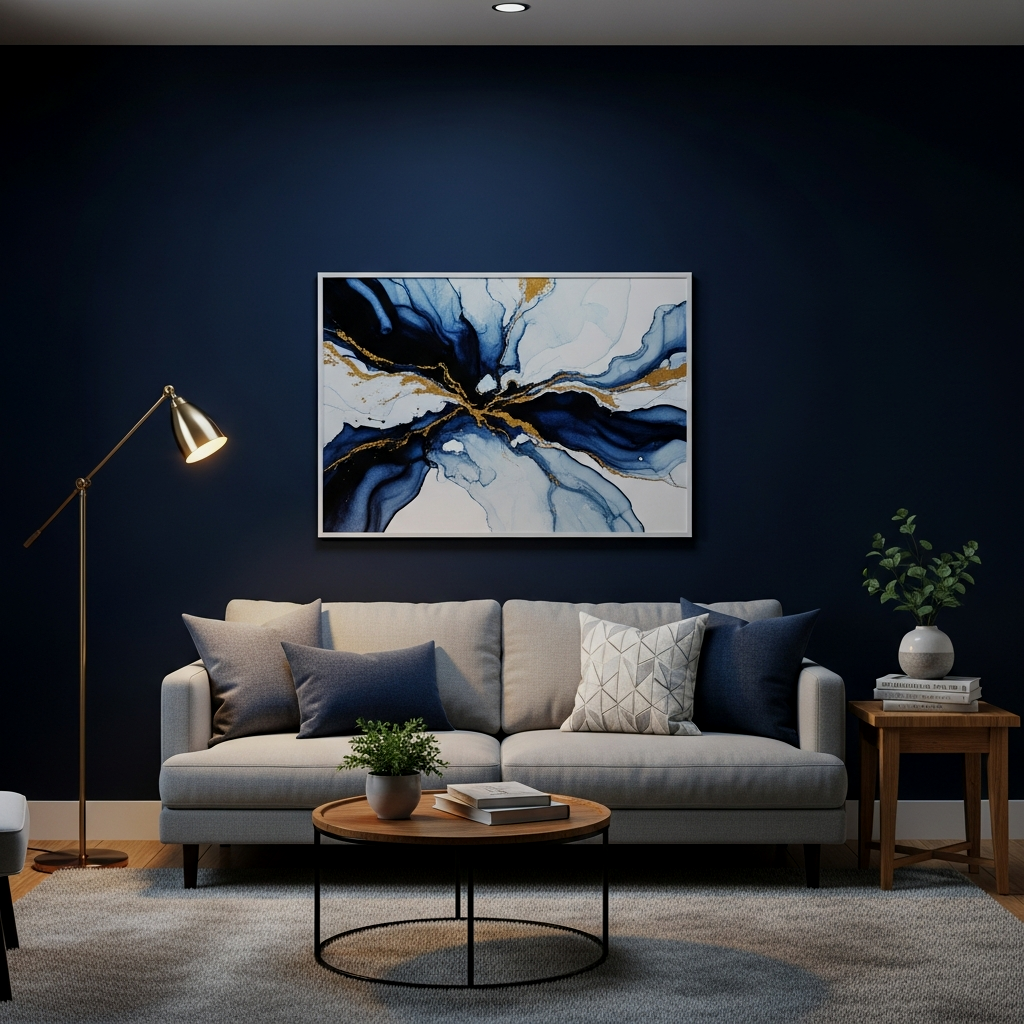
Don’t be afraid of a little drama! A dark or textured accent wall behind the sofa can create a “recessed” feeling, making that part of the room feel like a cozy alcove. It defines the sitting area perfectly, especially in an open studio. It’s a bold move, but the payoff is a room that feels architecturally interesting rather than just a box.
Under-Window Storage Benches for Tucking Away Essentials
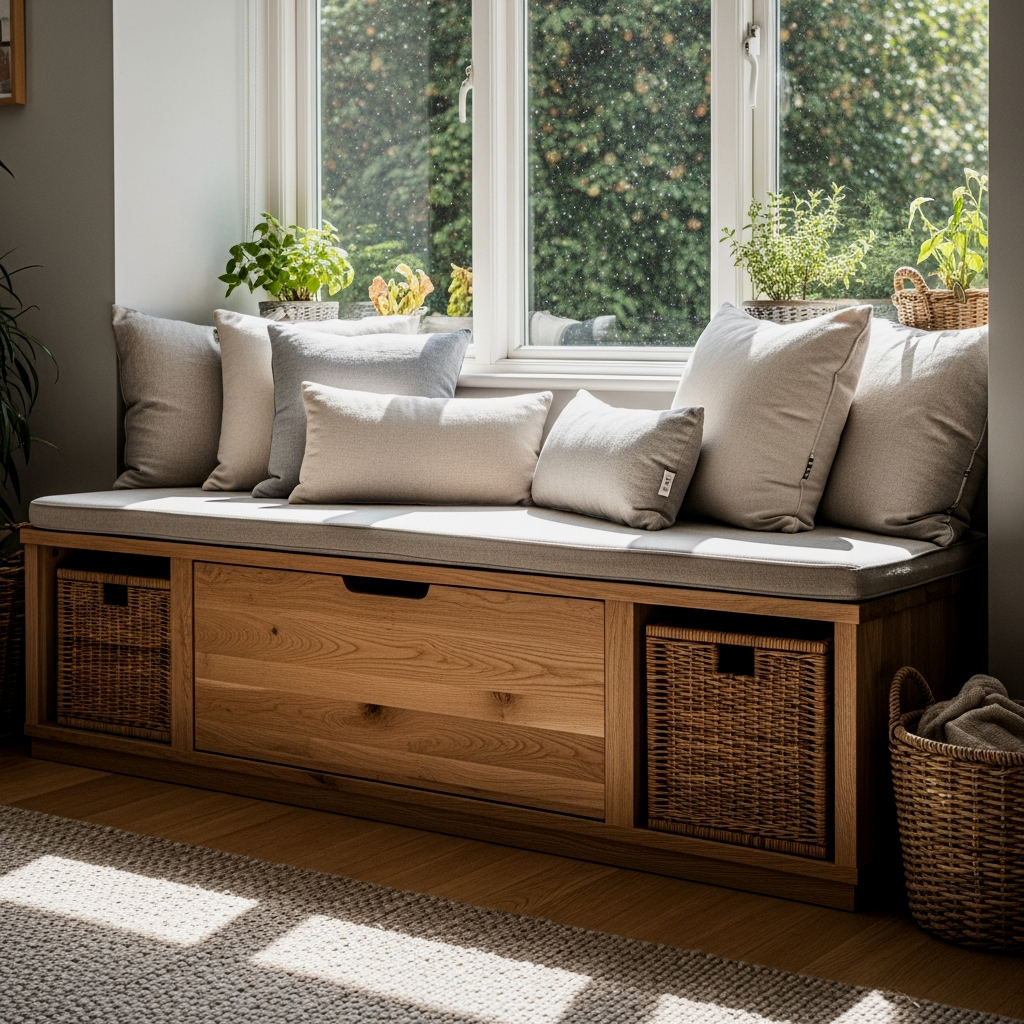
We often ignore the space right under the windowsill, but it’s the prime location for a low-profile storage bench. It can hold shoes, board games, or seasonal decor while providing a perch for your pets or extra guests. It’s a “found” storage opportunity that genuinely helps keep the rest of the room tidy.
Smart Partitioning with Sheer Curtains or Open Bookshelves
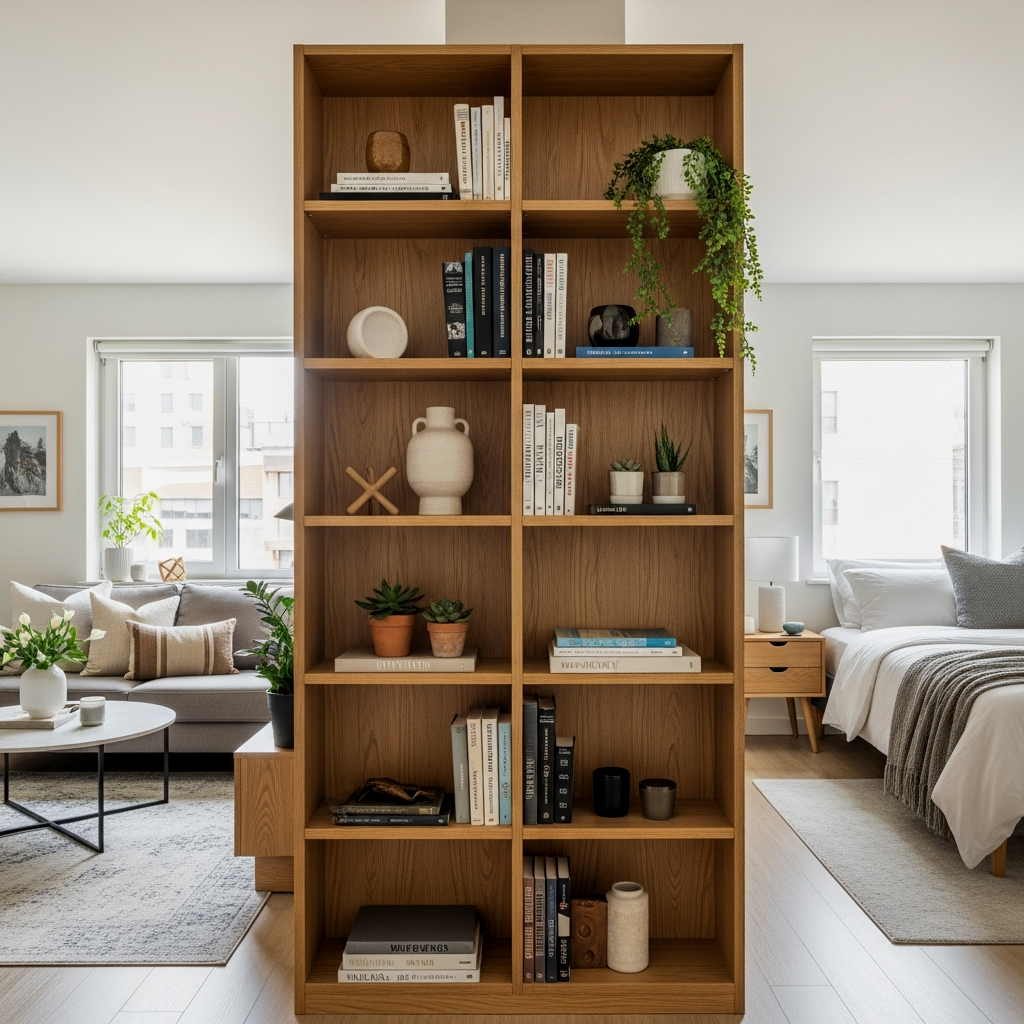
If you need to separate your living area from a dining nook or bedroom, don’t use a solid wall or a heavy room divider. Sheer curtains or an open-backed bookshelf allow light to pass through, so the room still feels like one large, continuous space while giving you the privacy and organization you need. It’s a soft, sophisticated way to create boundaries.
📏 22 Small Living Room Ideas Quick-Win Checklist
- Scale Art Up: Swap tiny frames for one large statement piece.
- Leggy Furniture: Ensure your sofa or chairs have visible legs to show more floor.
- Mirror Placement: Place a mirror opposite a window to double your light.
- Rug Size: Make sure the rug is large enough to tuck under the front furniture legs.
- Vertical Storage: Use the top 20% of your walls with high shelving.
Compact Sectionals Designed for Tight Corners
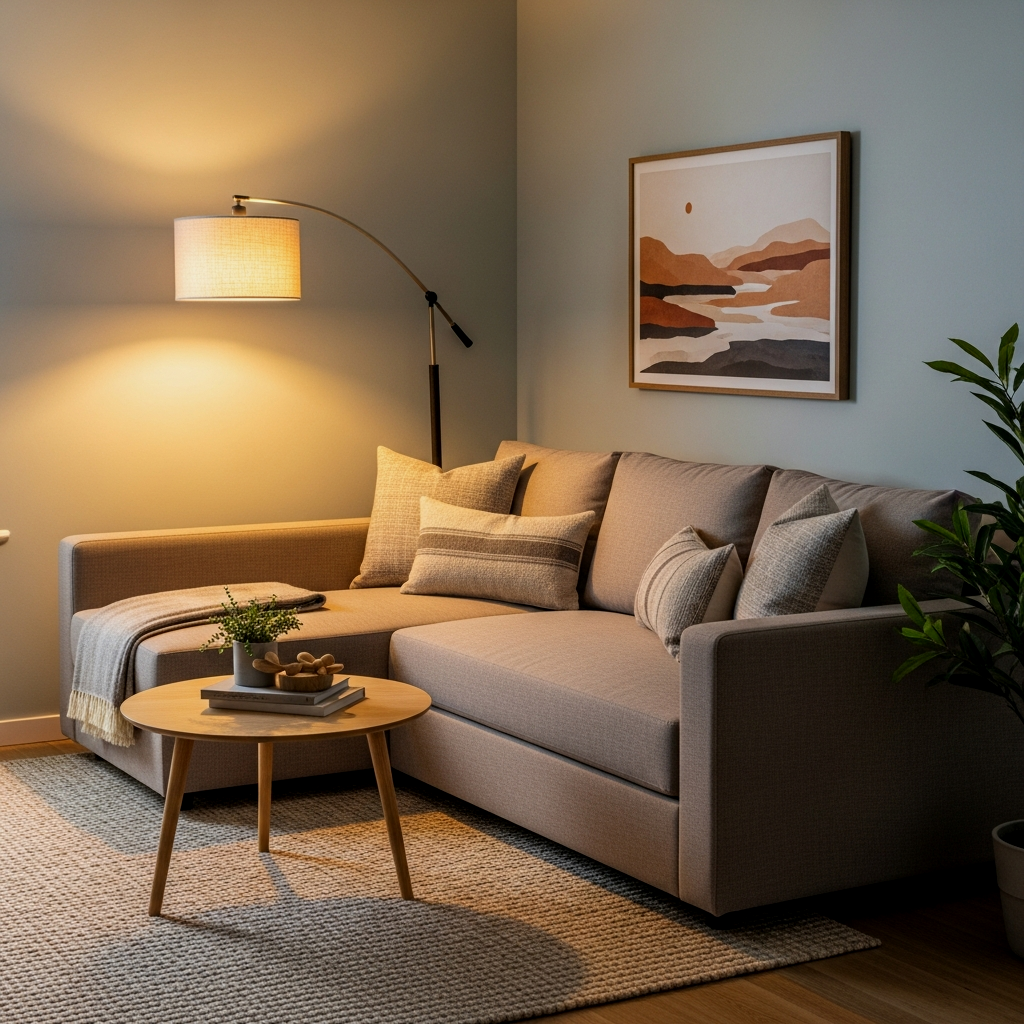
Whoever said you can’t have a sectional in a small room was totally wrong. A compact, L-shaped sectional can actually be more space-efficient than a sofa and two chairs because it utilizes the corner perfectly. It provides more “lounge” space for movie nights while keeping the center of the room open. Just make sure to measure twice—you want it to fit like a glove, not a straightjacket.
Start Small, Think Big
Making a small living room work is all about changing your perspective. You don’t have to sacrifice style just because you’re short on square footage! Whether you’re diving into a new paint color or finally upgrading to a rug that actually fits, these changes are going to make you love your home so much more. I hope you feel inspired to try at least one of these—honestly, the mirror trick alone will change your life. Don’t forget to check out my deep dives on rugs and lighting to really nail the look!
Small Living Room FAQ
What color makes a small living room look bigger?
While white is classic, soft “cool” tones like light blues, greens, or even certain greiges can make walls feel like they are receding, creating a sense of more space.
Should I use a large or small rug in a small room?
Always go large! A small rug breaks up the floor and makes the room look choppy. A large rug that fits under your furniture legs unifies the space and makes it feel grander.
How do I arrange a small living room with a TV?
Try to avoid making the TV the only focal point. Consider corner mounts, placing it on a slim console, or using an articulating wall mount to keep the layout flexible.
Can I put a sectional in a small living room?
Yes! A compact sectional is often better than multiple pieces of furniture because it fits into a corner and leaves the center of the room open for movement.
How do I add storage without cluttering the room?
Look for “hidden” storage options like ottomans with lids, coffee tables with drawers, or floor-to-ceiling shelving that uses vertical space instead of floor space.