I genuinely spent three years of my life maneuvering around a clunky, oversized bathroom vanity that basically acted as a roadblock between me and my morning routine. No seriously, why were traditional vanities designed like heavy, floor-hogging boxes? It wasn’t until I started researching small bathroom storage ideas that I realized the vanity is usually the biggest offender in a cramped space. The difference is unreal when you swap a chunky floor unit for something that actually breathes.
✨ Before You Start: Dreamy Small Bathroom Vanity Ideas That Save Major Space Mindset
Maximizing Flow with the Right Profile
Floating White Oak Vanity for Airy Floors
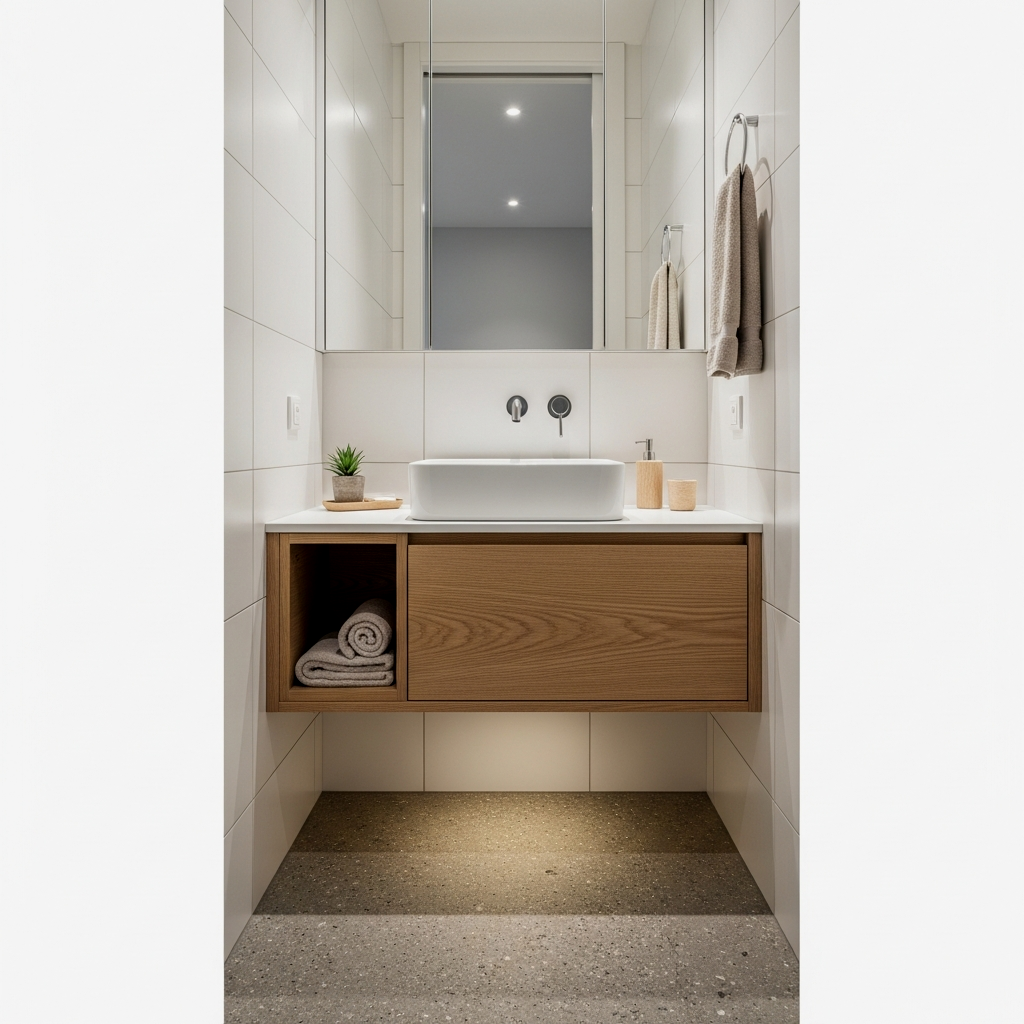
I am obsessed with the way white oak brings warmth without that “heavy wood” feel. A floating white oak vanity is genuinely life-changing for a tiny ensuite because it keeps the floor visual continuous. When the tiles run all the way to the wall, your brain doesn’t register the vanity as a “block” in the room, making everything feel light and airy.
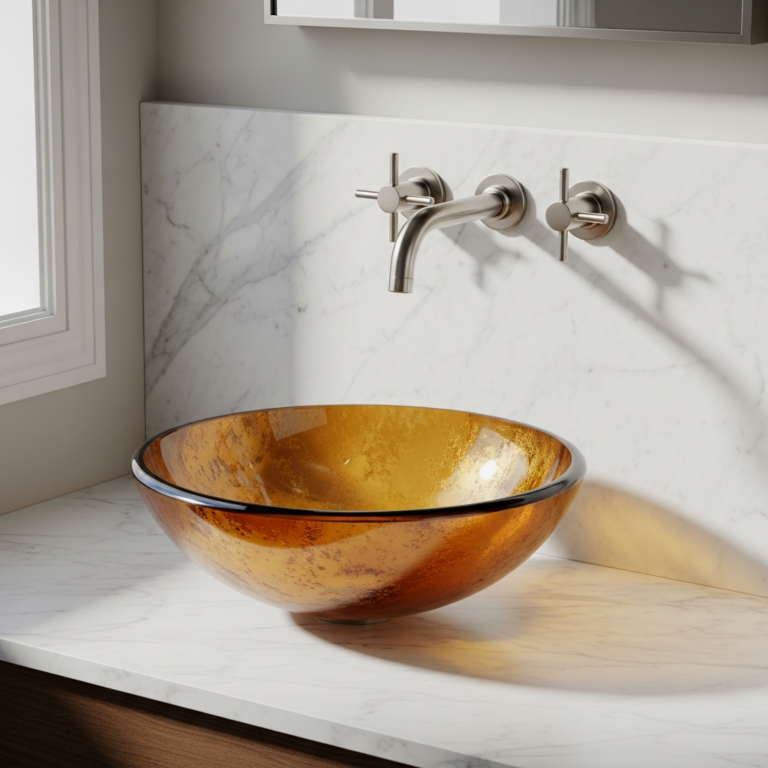
To make this look even sleeker, use a wall-mounted faucet. It frees up 3-4 inches of counter space behind the sink, which is a total game-changer for narrow units.
Minimalist Console Sink for Ultra-Tight Spots
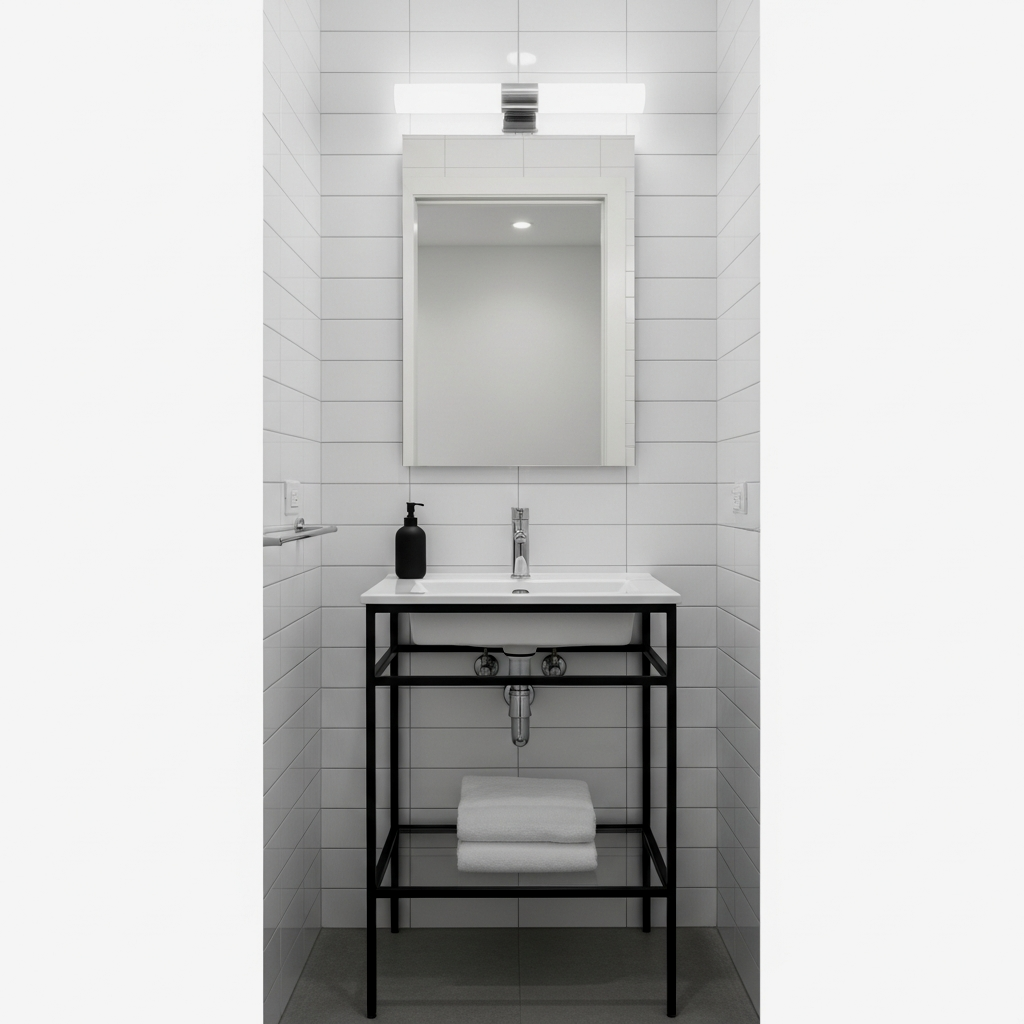
If you have a bathroom that is more of a “closet with a toilet,” a console sink is your best friend. These usually consist of a ceramic basin sitting on a slender metal frame. They offer zero hidden storage, but they provide the most physical space to move your legs. Trust me on this one: if the room is narrow, a console sink is the only way to avoid bruised hips.
Custom Narrow-Depth Marble Vanity for Slim Layouts
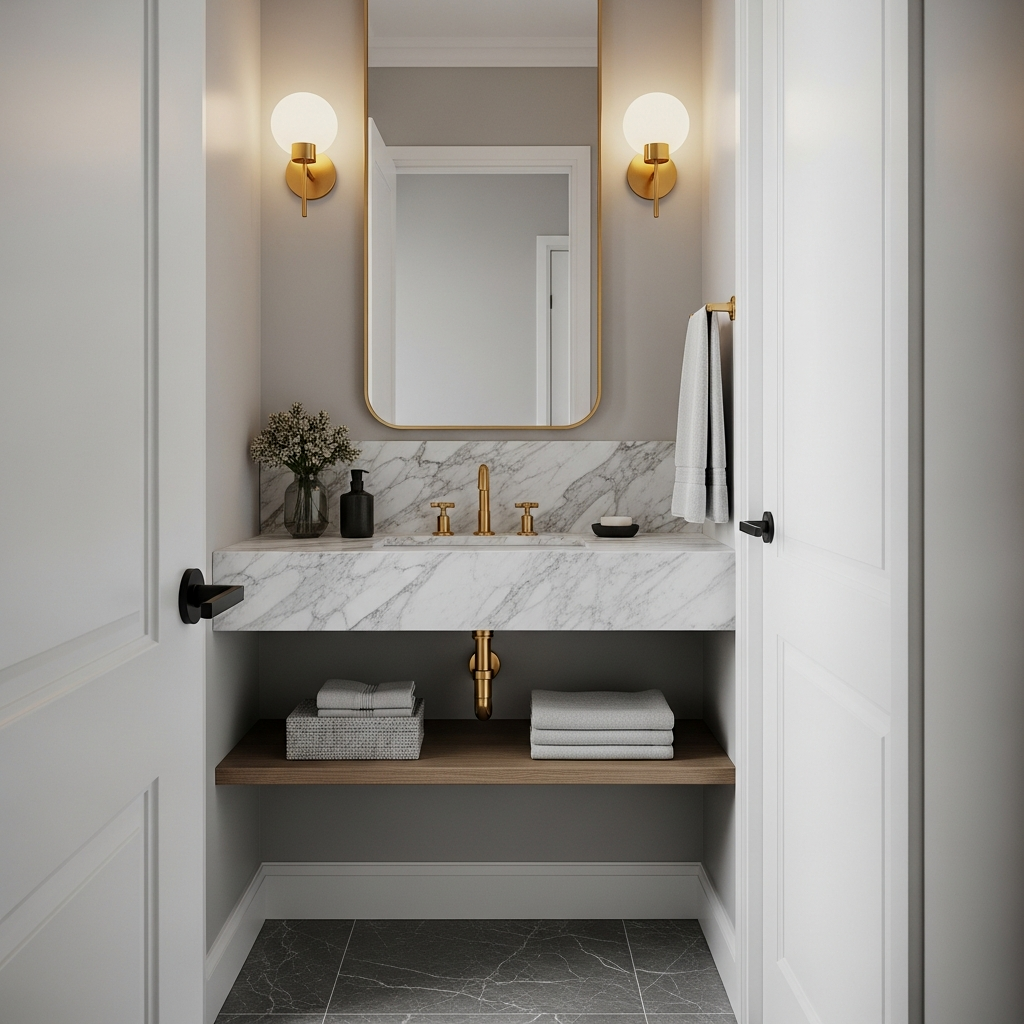
Here is the best kept secret in the design world: you don’t have to use standard “off-the-shelf” depths. For awkward, long layouts, a custom narrow-depth vanity (think 12 to 15 inches deep) paired with a vessel sink can fit where nothing else will. Using marble adds that high-end weight, so it doesn’t feel like a “tiny” compromise, but a deliberate luxury choice.
If you go narrow-depth, choose a semi-recessed sink. The basin can overhang the front slightly, giving you a full-sized washing experience on a slim cabinet.
Follow the 70/30 rule for small surfaces: keep 70% of the vanity top clear and use the remaining 30% for high-impact items like a single textured soap dispenser and one small green branch.
Space-Saving Corner Vanity with Vintage Charm
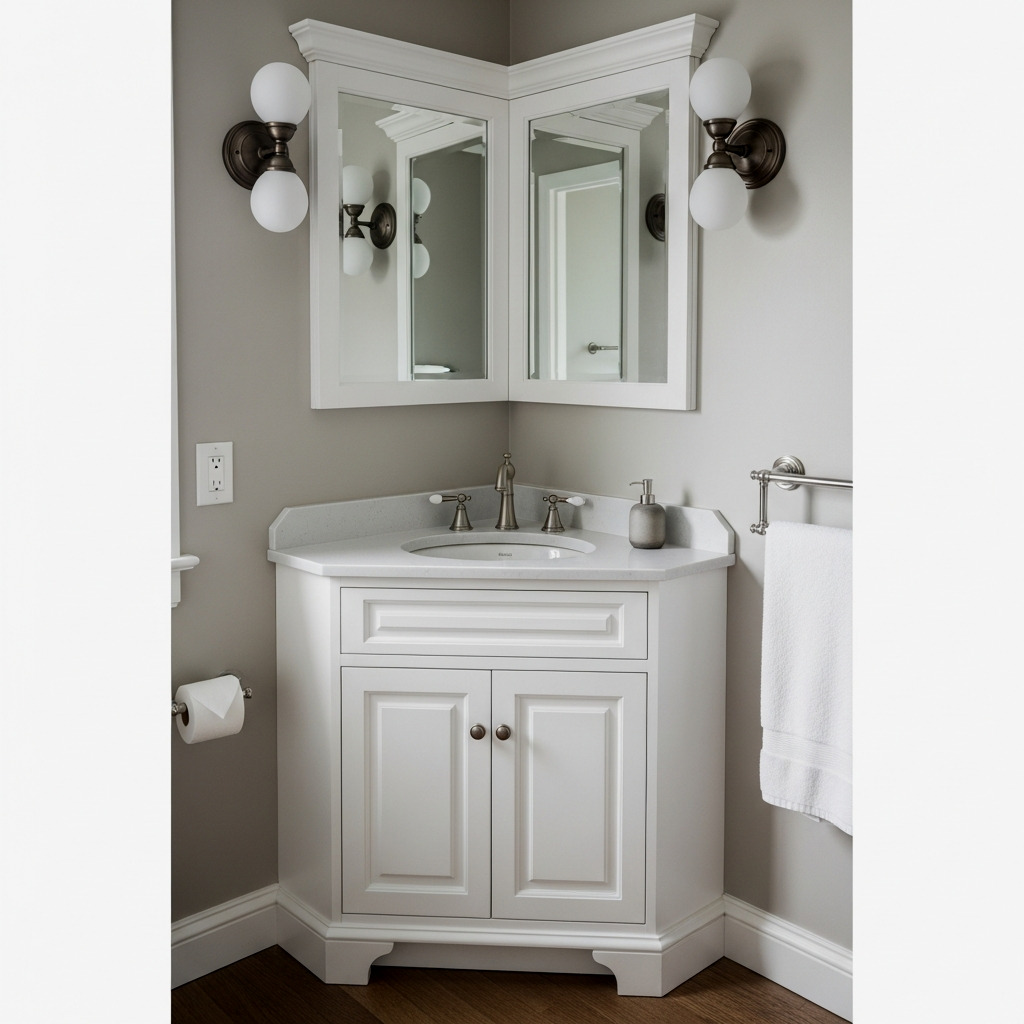
Corner vanities are often overlooked, but they utilize the absolute “deadest” space in a room. A vintage-style wooden corner unit with a porcelain top can tuck right into the junction of two walls, opening up the entire center of the bathroom floor. It’s a classic move that feels incredibly cozy and intentional.
Sleek Floating Teak Vanity with Hidden Storage
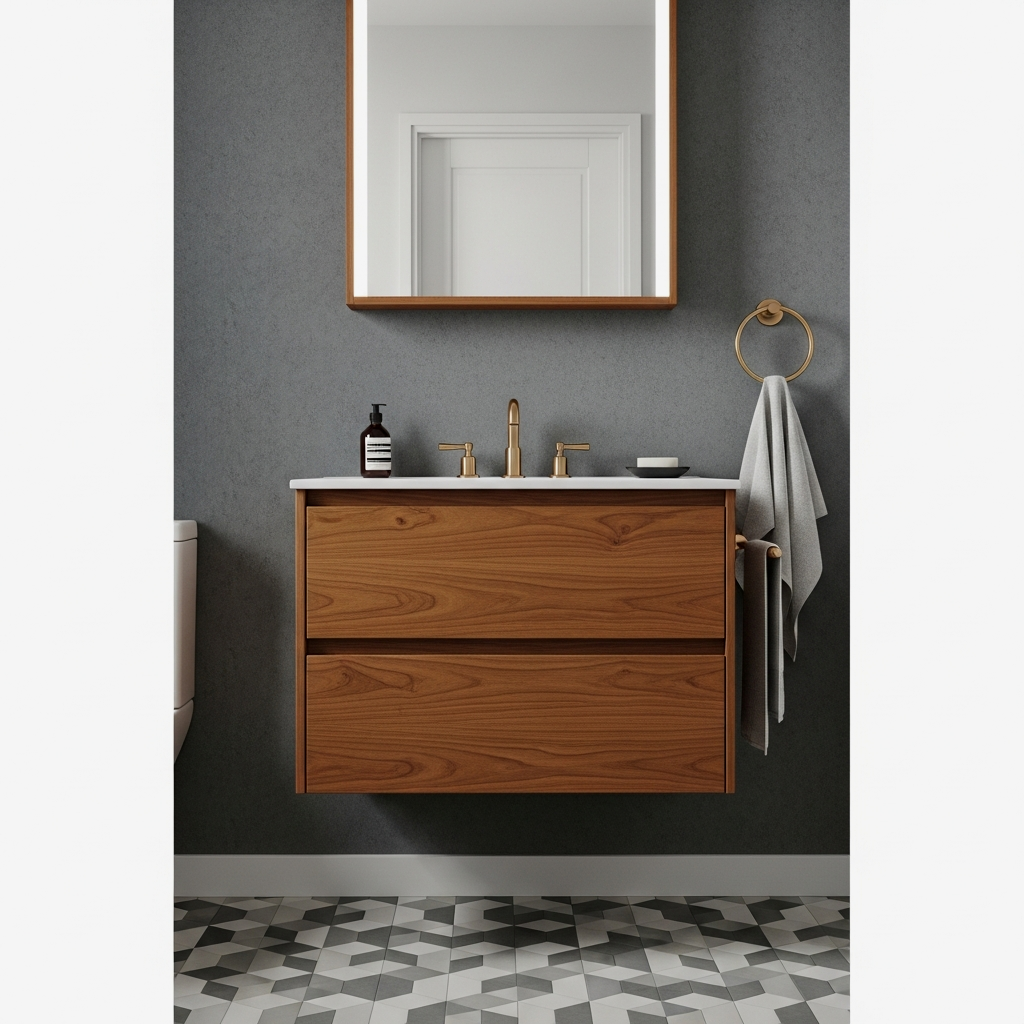
For those of us who still need to hide our skincare mountain, floating teak vanities with deep drawers are the answer. Teak is naturally water-resistant and looks incredibly sophisticated. To keep the inside from becoming a disaster zone, you’ll want to look into small bathroom organization ideas specifically for deep vanity drawers.
Since you lose the floor space, mount a magnetic strip inside the drawer for tweezers and bobby pins to keep things tidy without taking up horizontal room.
Industrial Frame Console Sink with Open Shelving
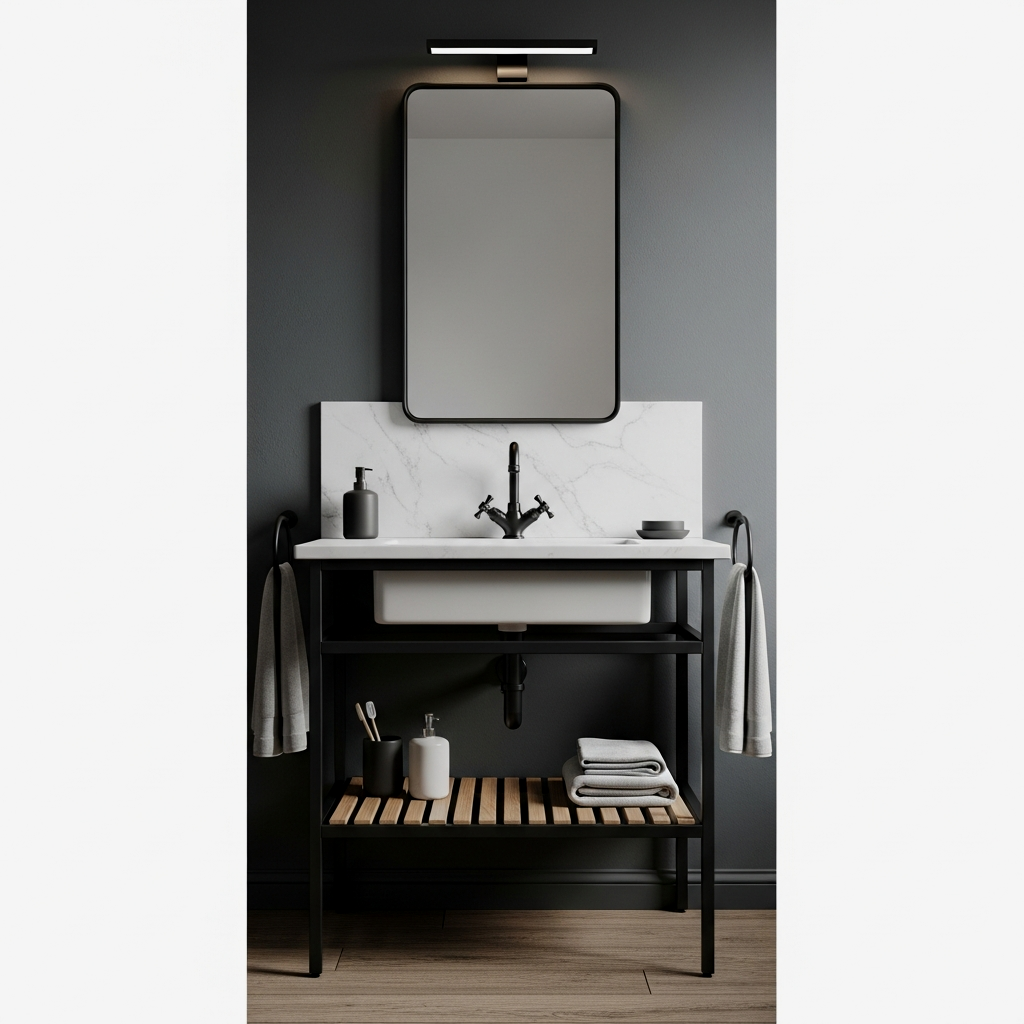
I love the “loft” vibe of a matte black industrial frame. By having an open shelf at the bottom, you gain a spot for folded towels while keeping the visual weight low. Since everything is visible, you’ll want to check out some small bathroom towel storage ideas to make sure your rolled linens look like a spa display rather than a laundry pile.
Bespoke Shallow-Depth Shaker Vanity in Sage Green
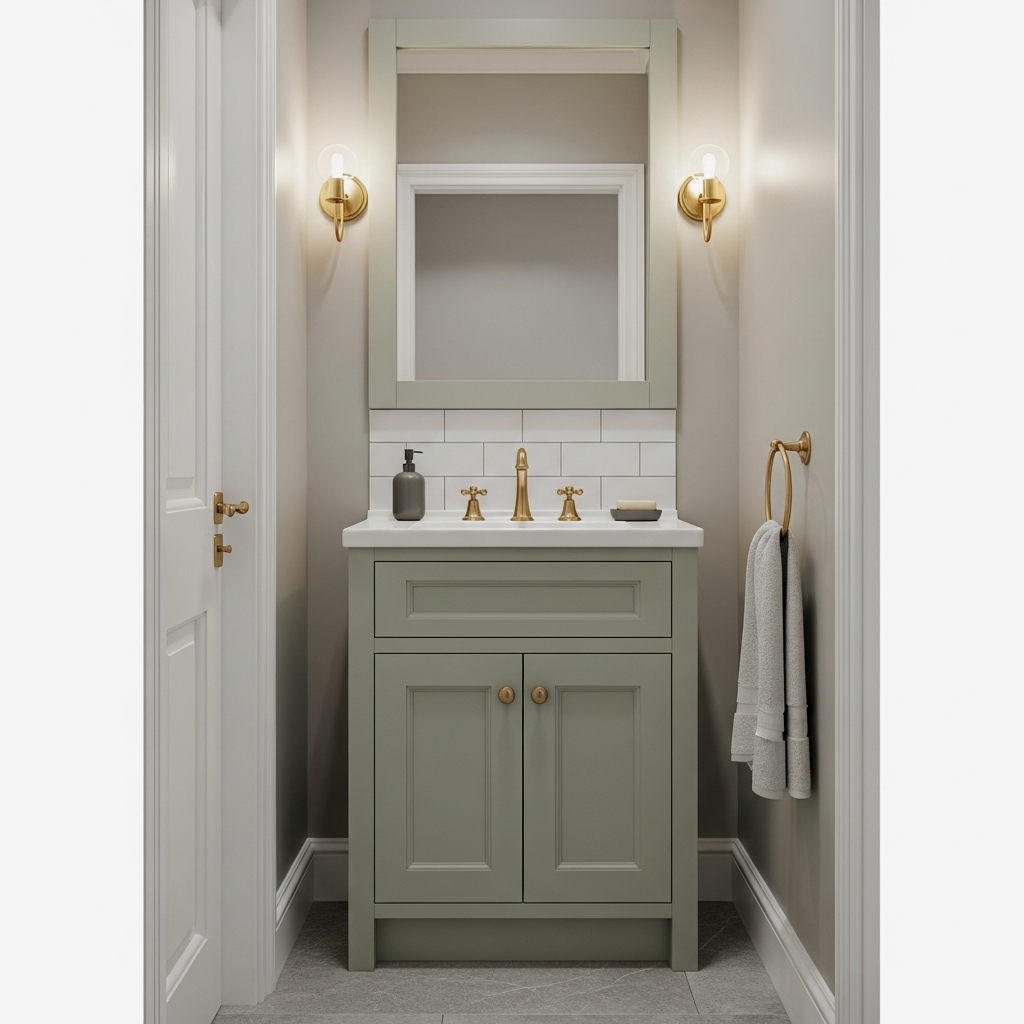
Sage green is having a massive moment, and it looks stunning on a bespoke Shaker-style unit. By keeping the depth shallow (around 16 inches), you can navigate the bathroom without bumping into corners. The Shaker paneling adds just enough detail to feel custom and high-end without overwhelming the small footprint.
Paint your baseboard the same color as the vanity. It creates a seamless transition that tricks the eye into seeing more continuity and space.
The exact pieces that make these ideas work:
Creative Shapes and Smart Details
Curved Edge Floating Vanity for Soft Flow
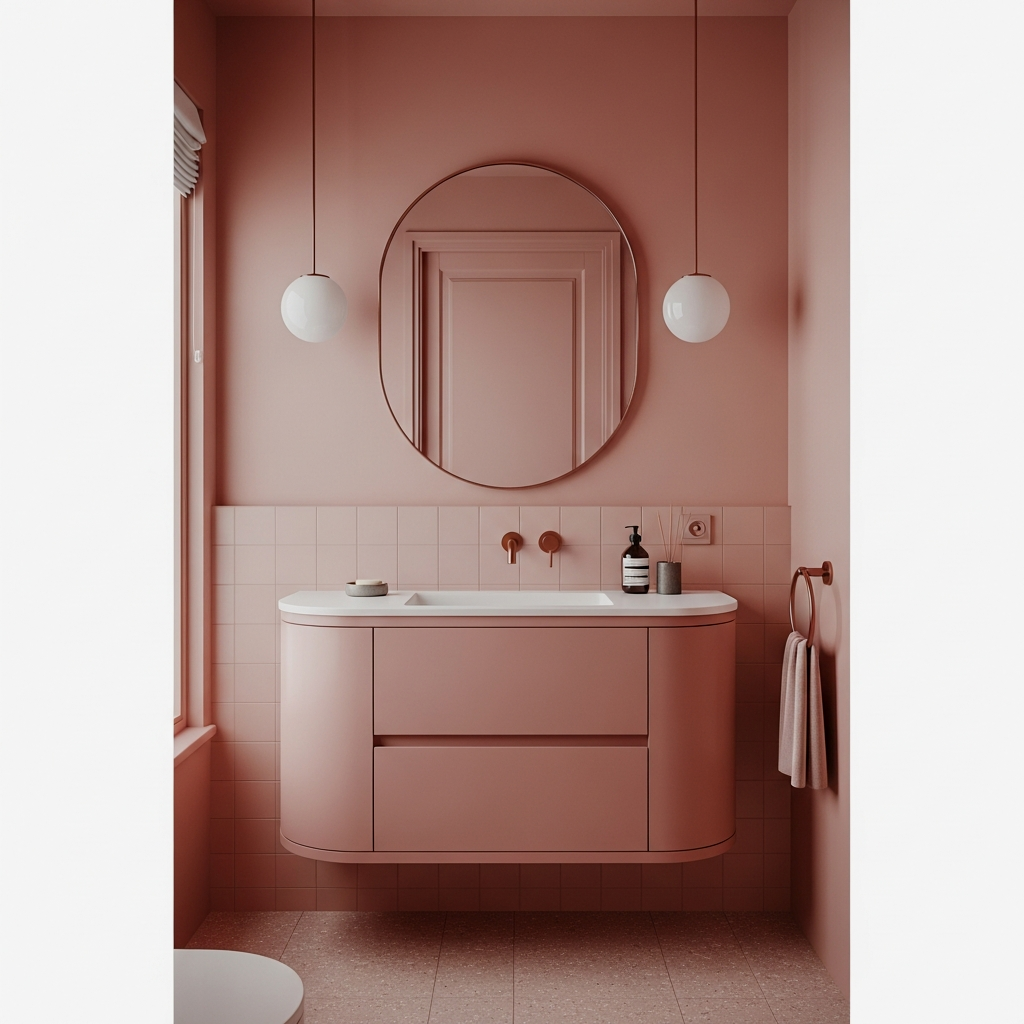
When space is tight, sharp corners are the enemy of your shins. A curved edge floating vanity is a brilliant solution—it physically rounds off the path of travel. It also softens the aesthetic of a bathroom, making it feel less like a utility room and more like a curated sanctuary. No seriously, the “flow” change is instant.
Ultra-Compact Wall-Mounted Stone Block Sink
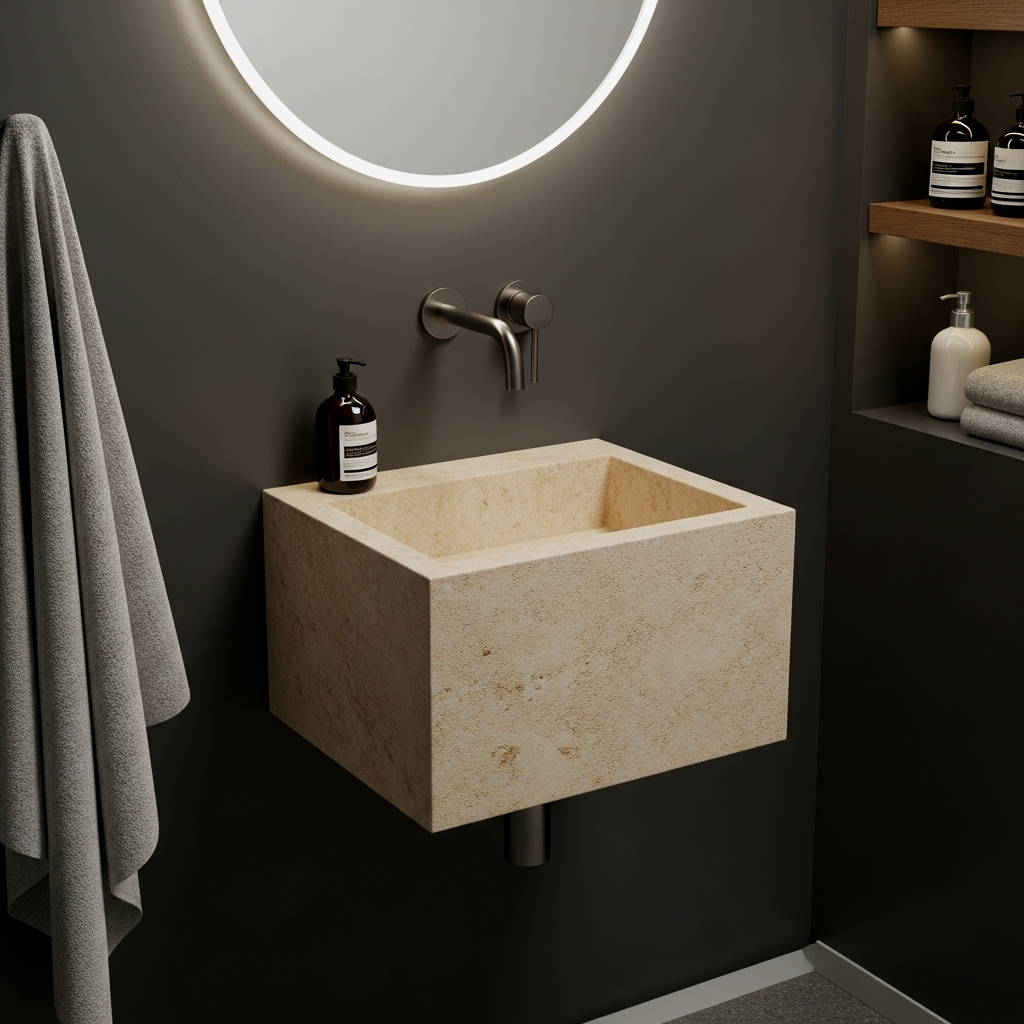
Sometimes you don’t even need a “vanity” in the traditional sense. A solid stone block sink mounted directly to the wall is the ultimate minimalist flex. It takes up the absolute minimum amount of space while providing a massive amount of style. It’s perfect for half-baths where you only need soap and a hand towel.
With a stone block sink, choose a bottle trap (the plumbing piece underneath) in a finish that matches your faucet. Since it’s exposed, make it part of the jewelry!
Mid-Century Modern Vanity with Slender Tapered Legs
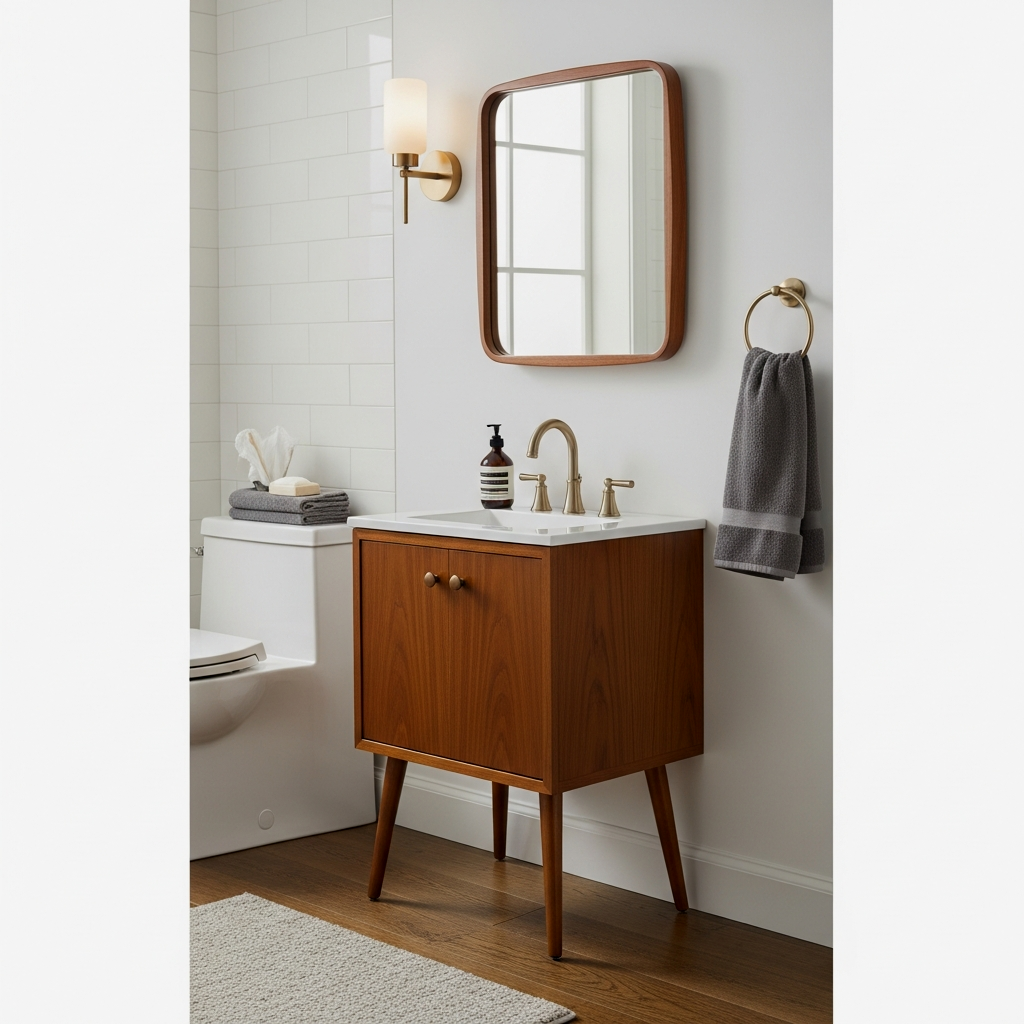
If you aren’t ready to go fully floating, a Mid-Century Modern unit with slender tapered legs is the next best thing. It gives you the storage of a floor cabinet but with enough “legroom” underneath to keep the floor visible. This is great if you want to pair it with some small bathroom shelf ideas above the toilet for a cohesive, retro look.
Floating Matte Black Vanity with Integrated Towel Bar
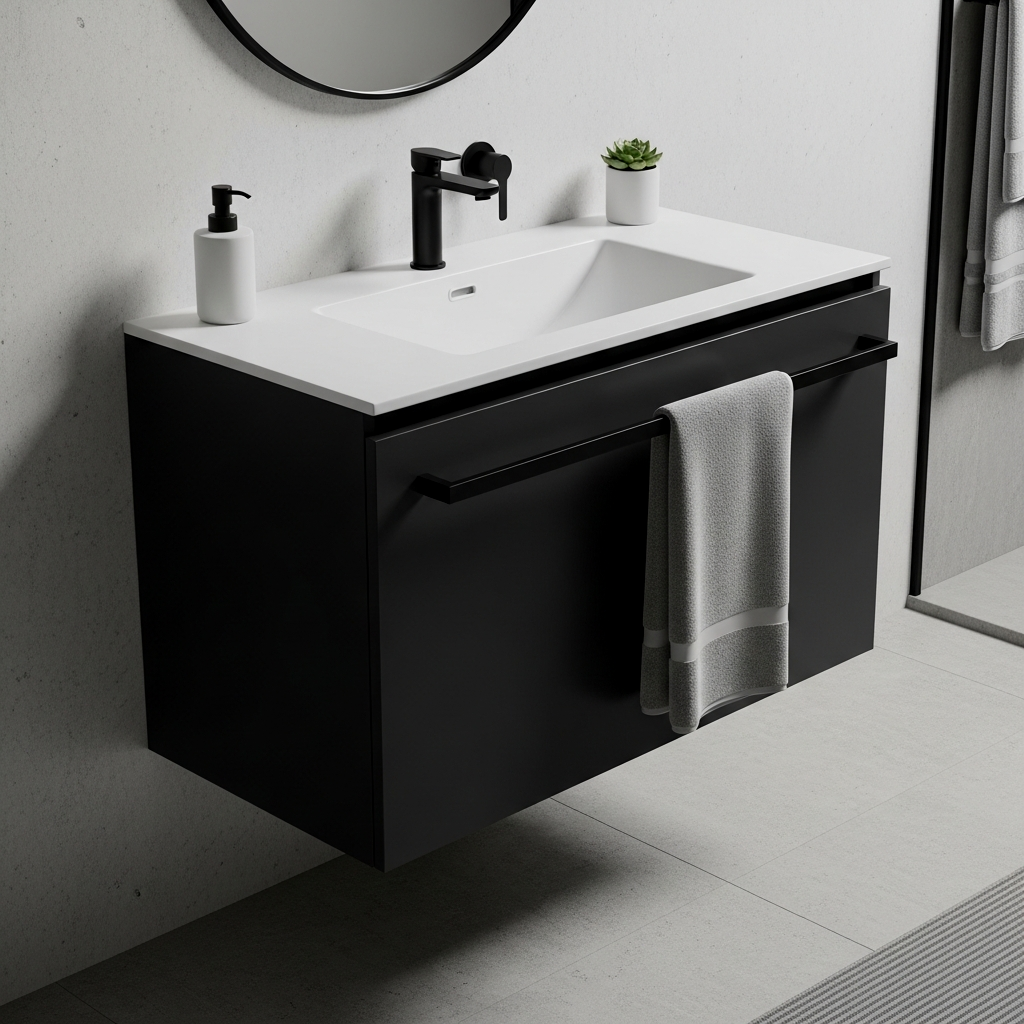
I love a piece of furniture that pulls double duty. Some floating vanities come with a matte black metal bar integrated into the frame. This saves you from having to mount a towel ring on the wall, which can sometimes make a small space feel “cluttered” with too many attachments. It keeps the lines incredibly clean.
Use a “hand towel” that is slightly oversized and high-texture (like waffle knit) to hang on the integrated bar; it adds a layer of softness to the matte black metal.
When installing a wall-mounted vanity, have your plumber move the drain lines higher into the wall before the tiling starts. This allows you to have a completely clear space underneath without the “P-trap” pipe showing, which is the secret to that high-end, floating “hotel” look.
Terrazzo Top Floating Vanity with Minimalist Hardware
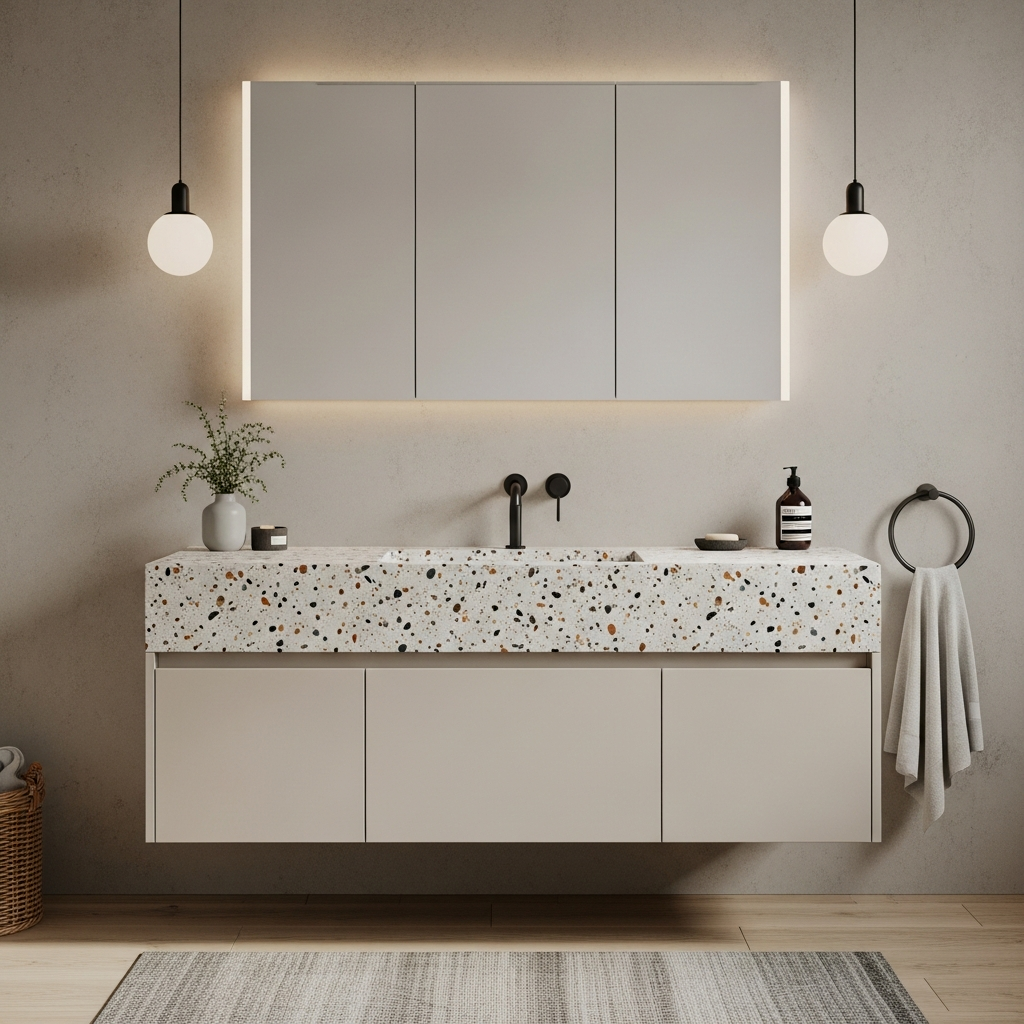
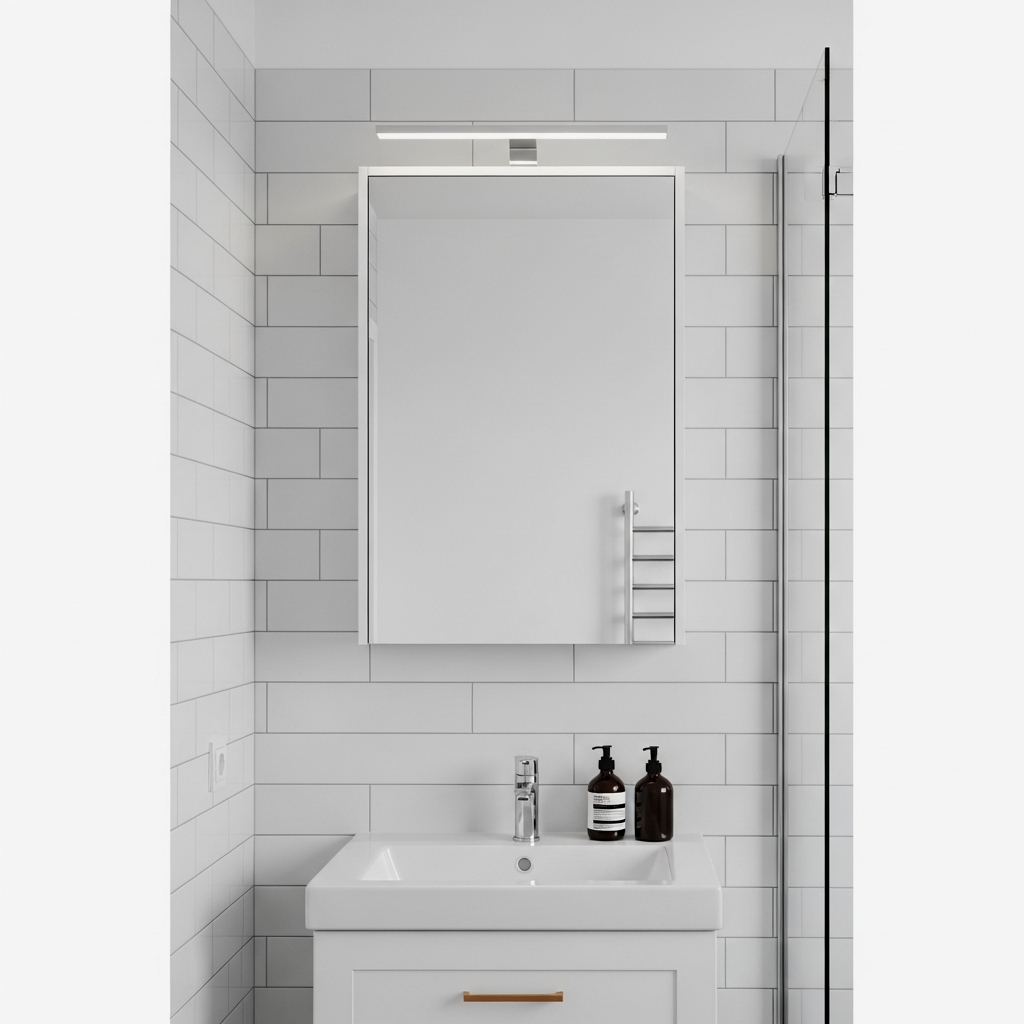
Terrazzo is such a fun way to add personality without clutter. Because the pattern itself is the star, you can keep the rest of the vanity extremely simple. A floating white cabinet with a terrazzo top and tiny brass finger pulls feels modern, fresh, and surprisingly spacious.
Reclaimed Wood Corner Vanity for Rustic Efficiency
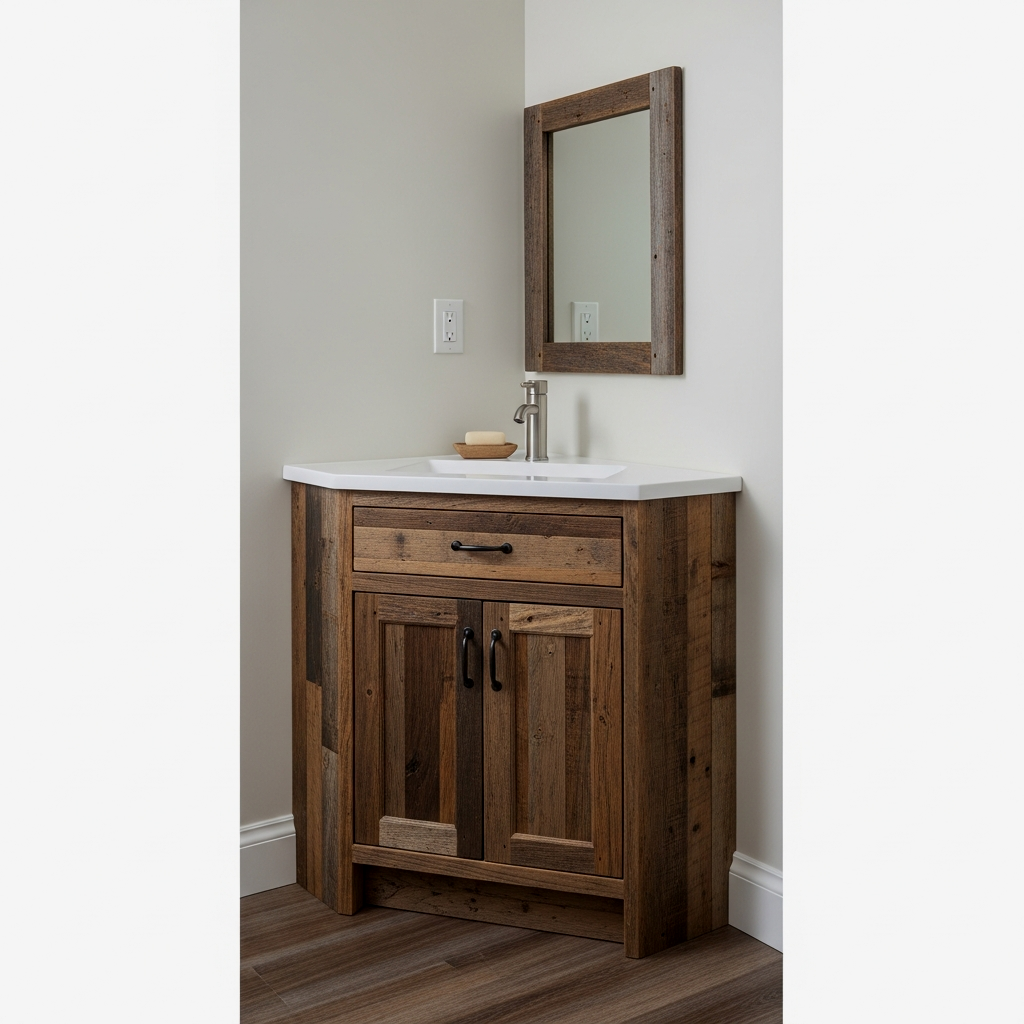
For a farmhouse or rustic feel, reclaimed wood is unbeatable. A corner unit made from old barn wood provides so much soul. Because wood is such a warm material, it prevents a small, white-tiled bathroom from feeling too “sterile.” It’s efficiency with a whole lot of heart.
Slim Profile Walnut Console with Marble Basin
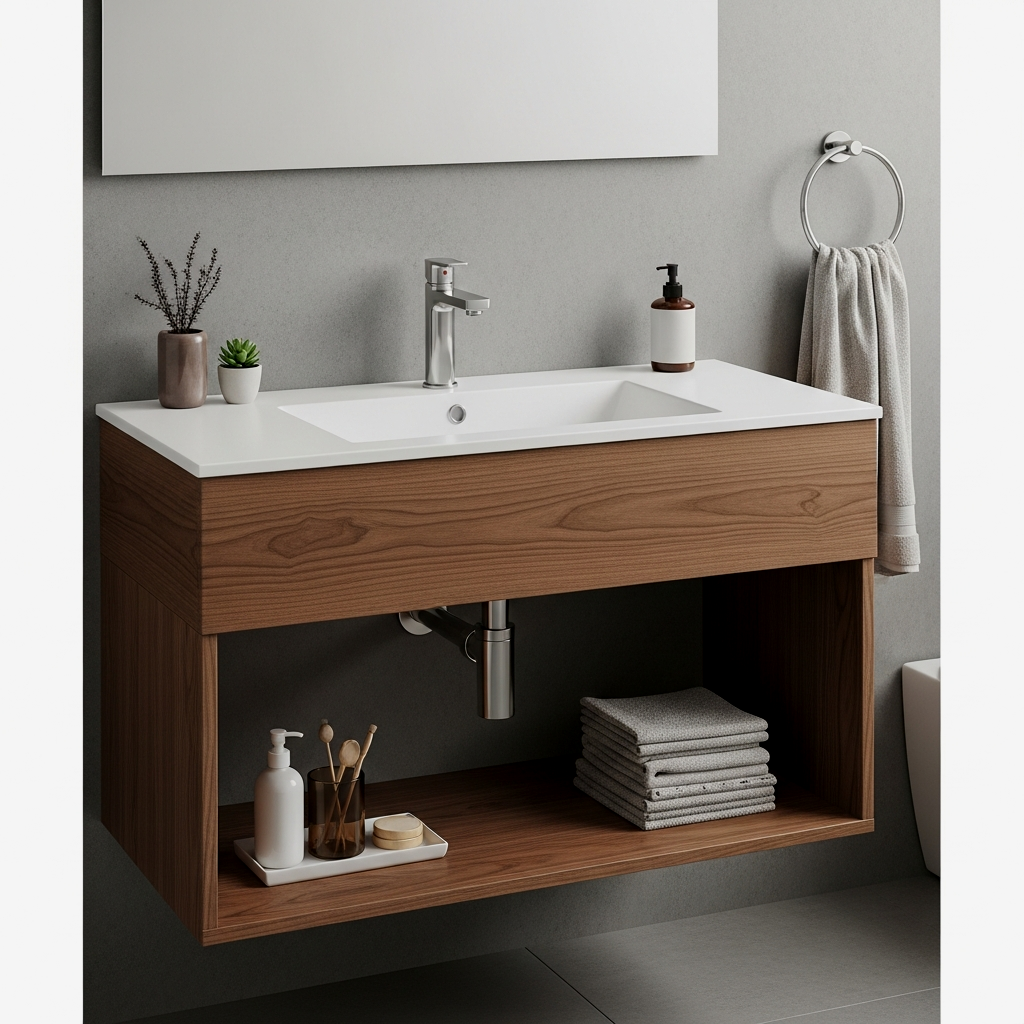
Walnut and marble is a match made in heaven. A slim-profile console with thin walnut legs and a thick marble basin looks like a piece of high-end furniture. It’s the perfect way to make a guest bathroom feel expensive while only taking up about 18 inches of wall space. The contrast in textures is genuinely life-changing for the room’s vibe.
If you have a slim console, place a small woven basket on the floor underneath for extra toilet paper. It hides the utility while adding a natural texture.
📏 Dreamy Small Bathroom Vanity Ideas That Save Major Space Quick-Win Checklist
- Measure the door swing: Ensure the vanity depth doesn’t block the door from opening 90 degrees.
- Wall reinforcement: Confirm your wall has proper blocking (studs) to hold a heavy floating unit.
- Plumbing height: Check if your existing pipes need to be moved up to be hidden by the vanity.
- Scale the mirror: Choose a mirror that is at least 2 inches narrower than the vanity for balance.
- Faucet reach: Ensure the spout reach aligns with the center of your chosen basin.
Modern White Floating Vanity with Under-Cabinet Lighting
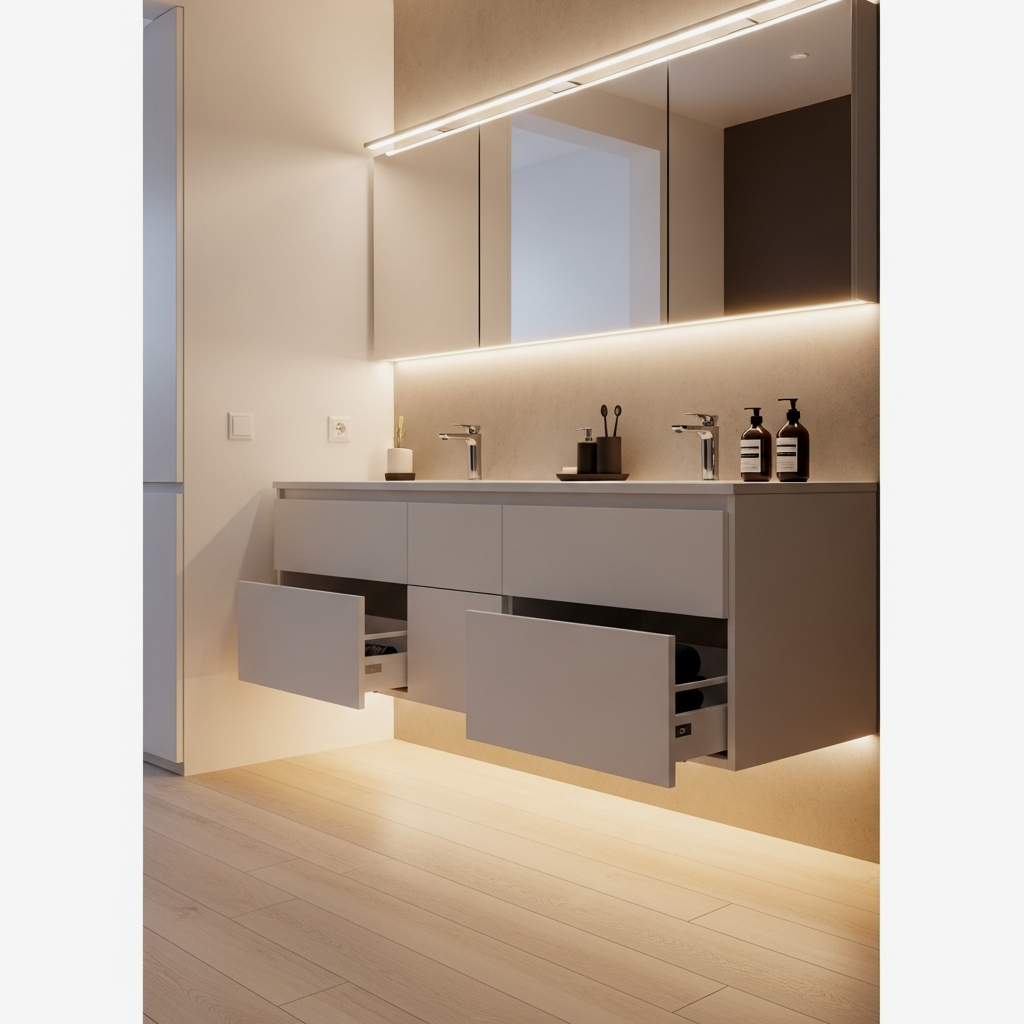
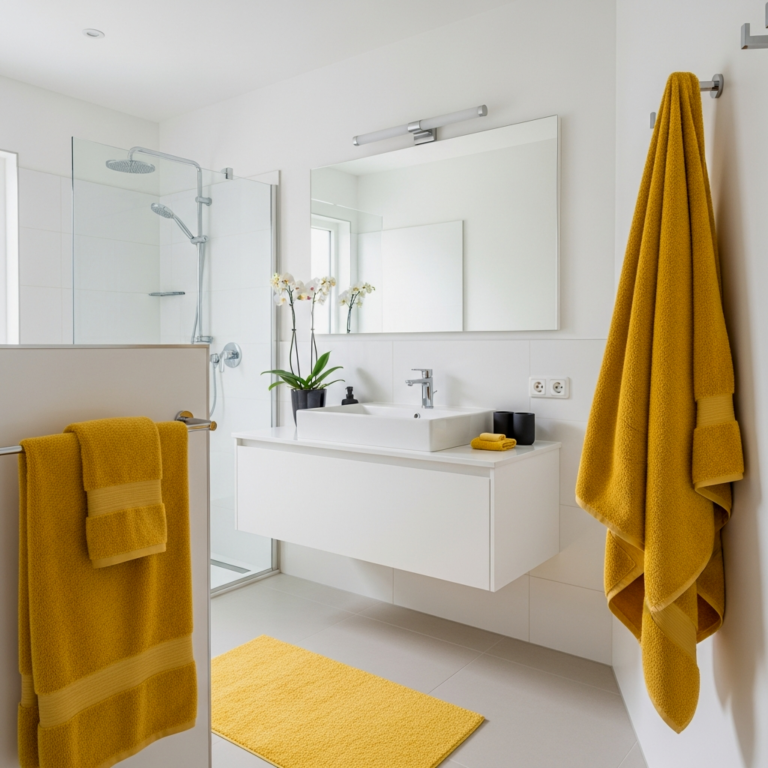
Finally, we have the ultimate space-widener: lighting. A modern white floating vanity with a simple LED strip tucked underneath creates a “glow” on the floor. This eliminates shadows under the vanity, which makes the floor area seem to extend forever. It’s a simple trick that makes the entire bathroom feel like a high-end spa, even if it’s technically the size of a postage stamp.
Reclaiming your bathroom from a bulky vanity is one of the most satisfying home wins you can have. Once you see how much floor space you actually have, you’ll never go back to a standard box cabinet again! If you’re looking for more ways to make your tiny sanctuary work for you, don’t forget to check out Small Bathroom Storage Ideas: The Ultimate Guide to Reclaiming Your Space. It has everything you need to round out the rest of the room. You’ve got this!
Frequently Asked Questions
Can any bathroom handle a floating vanity?
Technically yes, but you must ensure the wall is structurally sound. Floating vanities require “blocking” (horizontal wood supports between the studs) to bear the weight of the unit and the sink, especially if you choose a heavy material like stone or marble.
What is the minimum depth for a functional bathroom vanity?
While standard vanities are 21 inches deep, you can find “small space” units that are 16 to 18 inches. For ultra-tight spots, you can even find 12-inch deep vanities, though you will likely need a vessel sink or a semi-recessed basin to have enough room to actually wash your hands.
How high should a floating vanity be mounted?
The standard height for a vanity (from floor to the top of the counter) is between 32 and 36 inches. For floating units, 34 inches is usually the “sweet spot” to ensure it looks balanced and is comfortable for most adults to use without hunching over.
Do console sinks provide any storage at all?
Console sinks generally provide zero hidden storage. However, many models feature a lower shelf or a cross-bar. You can maximize this by using decorative baskets for towels or toiletries, or by pairing the sink with a high-quality medicine cabinet for your smaller items.
Is white oak a good choice for a bathroom vanity?
Yes! White oak is a dense hardwood that handles moisture well, especially when sealed correctly. Its light, neutral tone is perfect for making small spaces feel larger, and it provides a beautiful organic texture that balances out cold tile surfaces.