Little Kitchen Layout Ideas: Finding Your Flow with Sunita
I remember the days when my kitchen felt less like a sanctuary and more like a hurdle course. I would find myself constantly bruising my hip on the corner of a poorly placed island or doing a frantic, awkward dance just to get the milk out of the fridge while someone else was at the sink. It felt as though the room was fighting me, resisting the very meals I tried to pour my love into. We often think a small kitchen is a burden, but I’ve learned that the size isn’t the problem—it’s the rhythm. When the flow is off, even the most beautiful room feels heavy.
Finding your flow is about more than just where the cabinets go; it’s about how you move through your morning tea or your evening prep. It’s about creating a space that holds you rather than restricts you. If you’ve been feeling a bit squeezed, take a deep breath. We are going to look at your space with fresh, patient eyes. This journey is part of the larger Heart of the Home: 20 Loving Little Kitchen Ideas to Maximize Your Space, where we explore how to make every inch of your kitchen feel like a warm embrace.
✨ Before You Start: Finding Your Flow: Little Kitchen Layout Ideas Mindset
Honoring the Work Triangle
In the world of kitchen design, we often speak of the “work triangle”—the relationship between your sink, your stove, and your refrigerator. Think of these as the three anchors of your daily life. When these three are placed too far apart, you’ll find yourself exhausted; too close, and you’ll feel cramped. In a little kitchen, the goal is to keep this triangle tight but unobstructed. Imagine a gentle, invisible thread connecting these three points. You want to be able to move between them in a few easy steps, without having to dodge a trash can or a misplaced chair. It is perfectly fine to make mistakes as you plan this out; simply use some painter’s tape on the floor to visualize your movements before committing to a change.
When we look at specific shapes like the Galley or L-shaped layouts, we find a unique kind of wisdom. These shapes can actually feel quite expansive if we treat them with care. A narrow galley kitchen isn’t a “hallway”; it is a focused, efficient cockpit where everything is within arm’s reach. An L-shaped layout is an invitation for openness, allowing the kitchen to breathe into the rest of the home. I encourage you to walk through your space right now. Notice where your feet want to go and where they get stuck. That “sticking point” is exactly where we will start our healing work.
The Golden Triangle in a Small Footprint
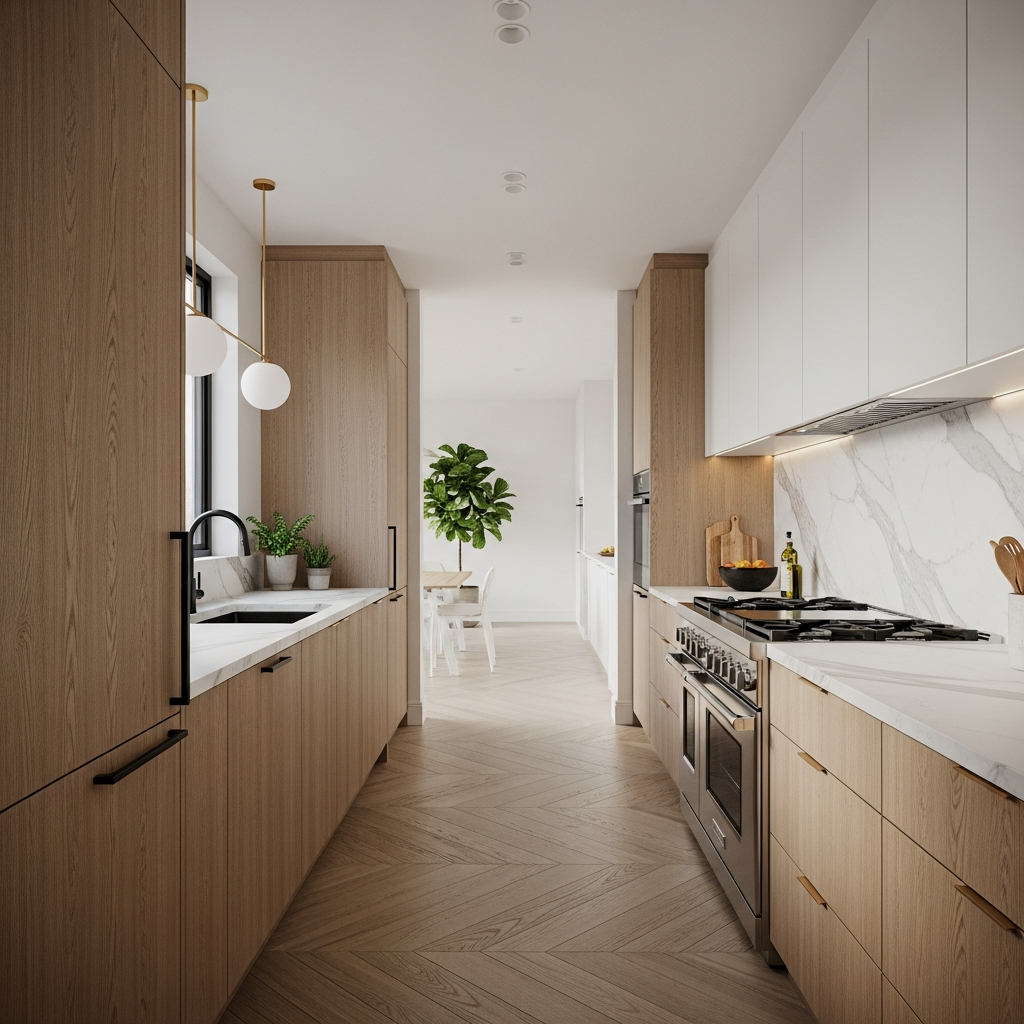
In a small home, the golden triangle needs to be scaled down with grace. You don’t need a massive distance between your prep area and your stove. In fact, having the sink just a step or two away from the cooktop makes draining pasta or rinsing vegetables a seamless, quiet joy. The key here is ensuring that the lines of the triangle remain clear. Even in a tiny footprint, if you can pivot from the sink to the stove without moving your feet, you’ve found a layout that serves you.
If your triangle is interrupted by a doorway, try using a sliding pocket door to reclaim that ‘swing space’ and keep the flow uninterrupted.
Galley Kitchen Symmetry and Flow
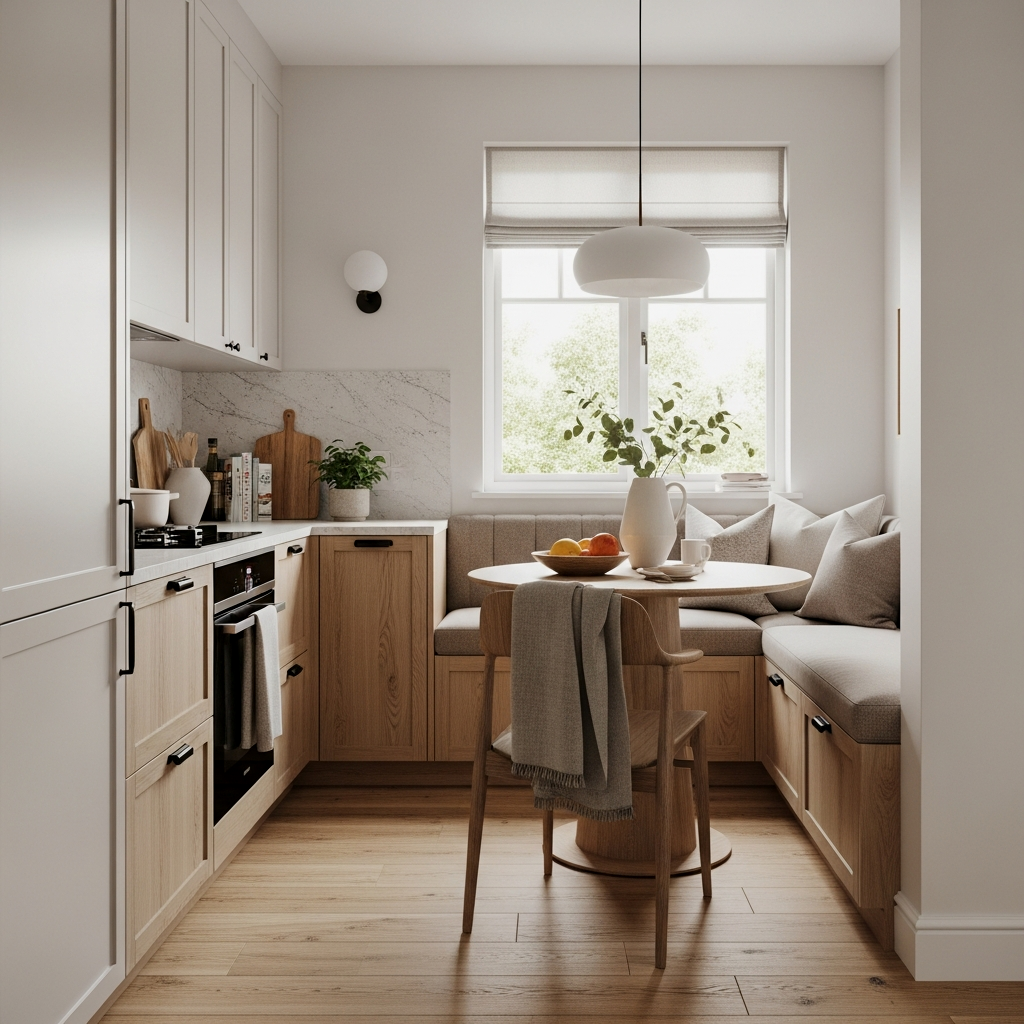
The galley kitchen is a classic for a reason. It uses two parallel walls to create a dedicated path for the cook. To keep this from feeling like a tunnel, I always suggest keeping the tall elements—like the pantry or the fridge—on one side, while keeping the other side slightly more open with lower cabinets. This balance prevents the walls from “closing in” on you. When you pair this layout with Little Kitchen Storage Ideas for a Peaceful Home, you can tuck away the clutter that often makes narrow spaces feel smaller than they really are.
The L-Shaped Layout for Openness
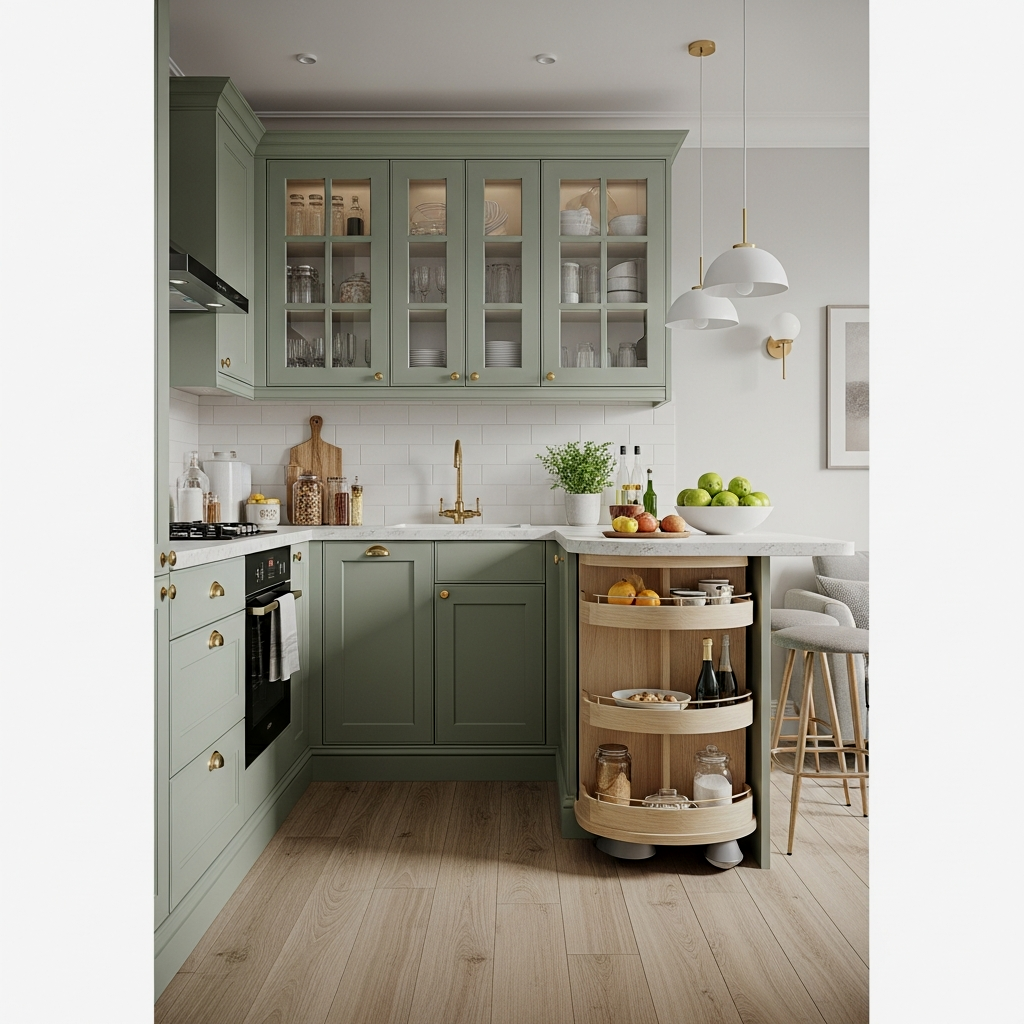
An L-shaped layout is a wonderful way to open up a corner and invite light into the room. By hugging two walls, you leave the center of the kitchen open, which provides a sense of freedom and movement. This layout is particularly helpful if you have a small dining table or a mobile cart that needs a home. It allows the kitchen to transition naturally into a living or dining area, making the whole floor plan feel more cohesive. Remember to use A Place for Everything: Little Kitchen Organization Ideas to ensure your L-shaped counters don’t become a “catch-all” for mail and keys.
The ‘Clear Path’ Rule: Always maintain at least 36 inches of walkway space between your counters or appliances. This ensures that two people can pass each other without the ‘kitchen dance’ of apologies.
Optimizing the Sink-to-Stove Transition
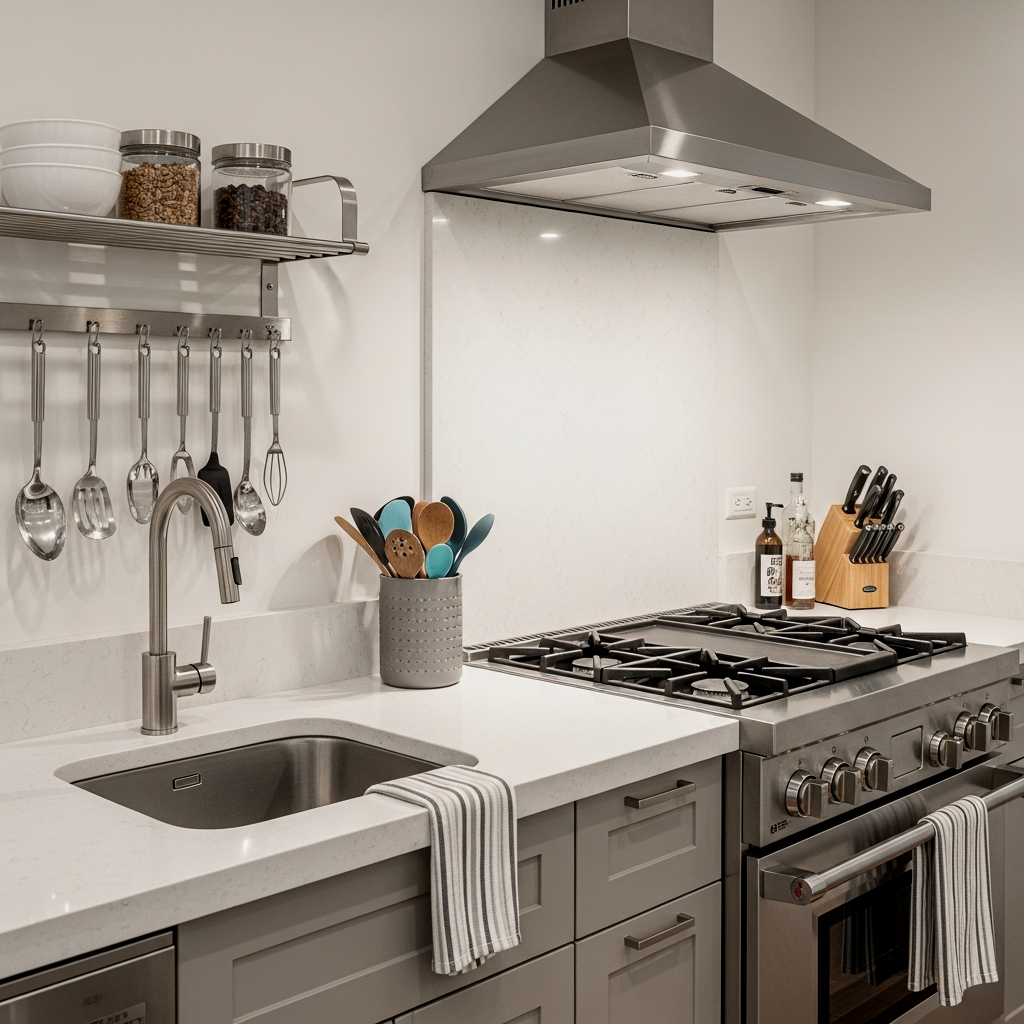
Much of our kitchen time is spent moving between the sink and the stove. To make this transition fluid, try to keep a dedicated stretch of countertop between them. This is your primary “landing zone.” Whether you are chopping onions or setting down a hot pot, this space acts as the bridge of your kitchen. A little patience in planning this gap—aiming for at least 24 to 36 inches—will save you so much frustration during those busy weeknight dinners.
Install a wall-mounted pot filler over your stove to eliminate the need to carry heavy, water-filled pots from the sink—a true luxury for the flow of a small space.
Integrated Fridge Placement for Movement
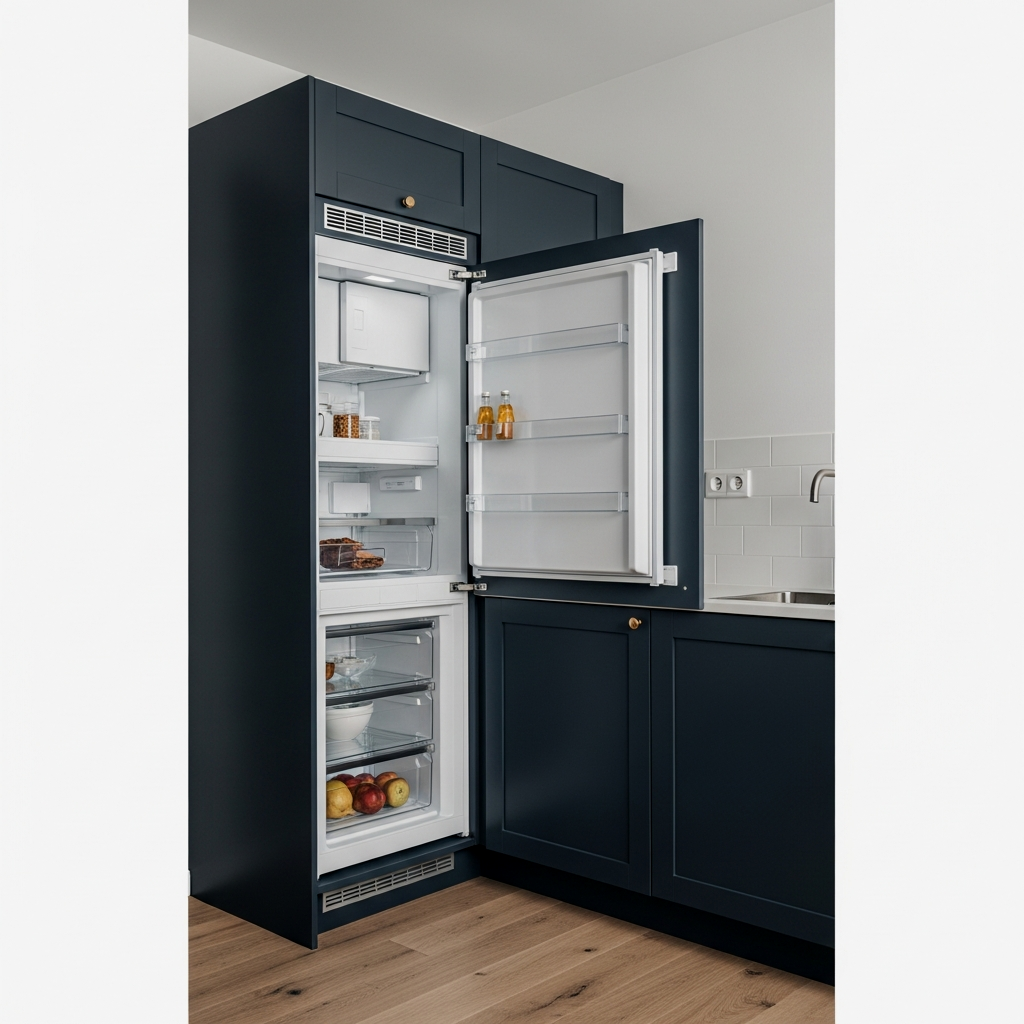
The refrigerator is often the largest “obstacle” in a little kitchen. If possible, tucking it into a corner or at the very end of a cabinet run prevents it from breaking up the visual flow of your countertops. Integrated fridges that sit flush with your cabinetry can make a world of difference. When the fridge doesn’t stick out into your walkway, the whole room feels lighter and more intentional. It’s these small wins that truly celebrate the beauty of a well-planned home.
The Airy Single-Wall Layout
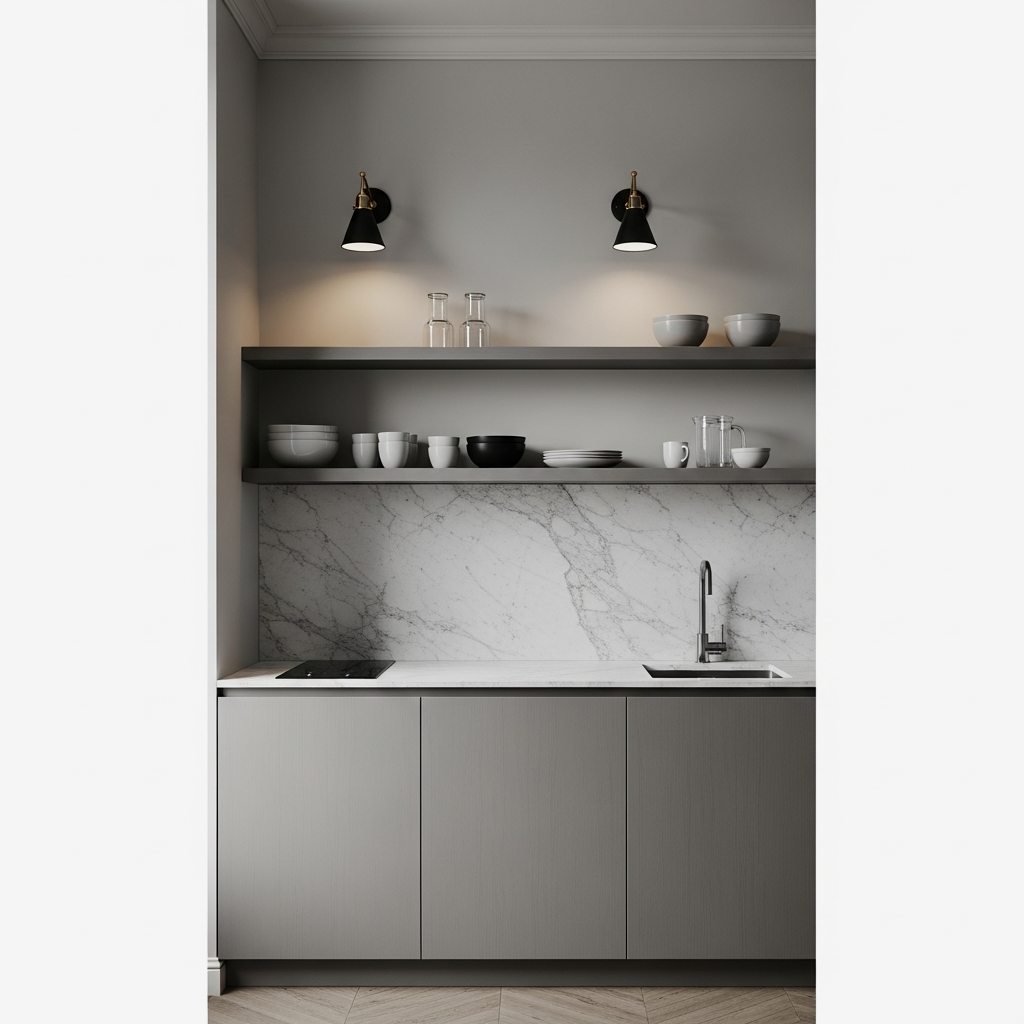
For the truly tiny spaces, a single-wall layout can be a breath of fresh air. By lining everything up along one wall, you maximize the floor space in the rest of the room. This layout works beautifully in studio apartments or open-concept cottages. The secret here is to use vertical space wisely. High cabinets can store the items you only use once a year, while the “flow” remains strictly linear and uncomplicated. Trust the process of simplicity; sometimes less really is more.
In a single-wall layout, use a mobile butcher block island that can be tucked away when not in use to provide extra prep space only when you need it.
Navigating the Kitchen Work Zone
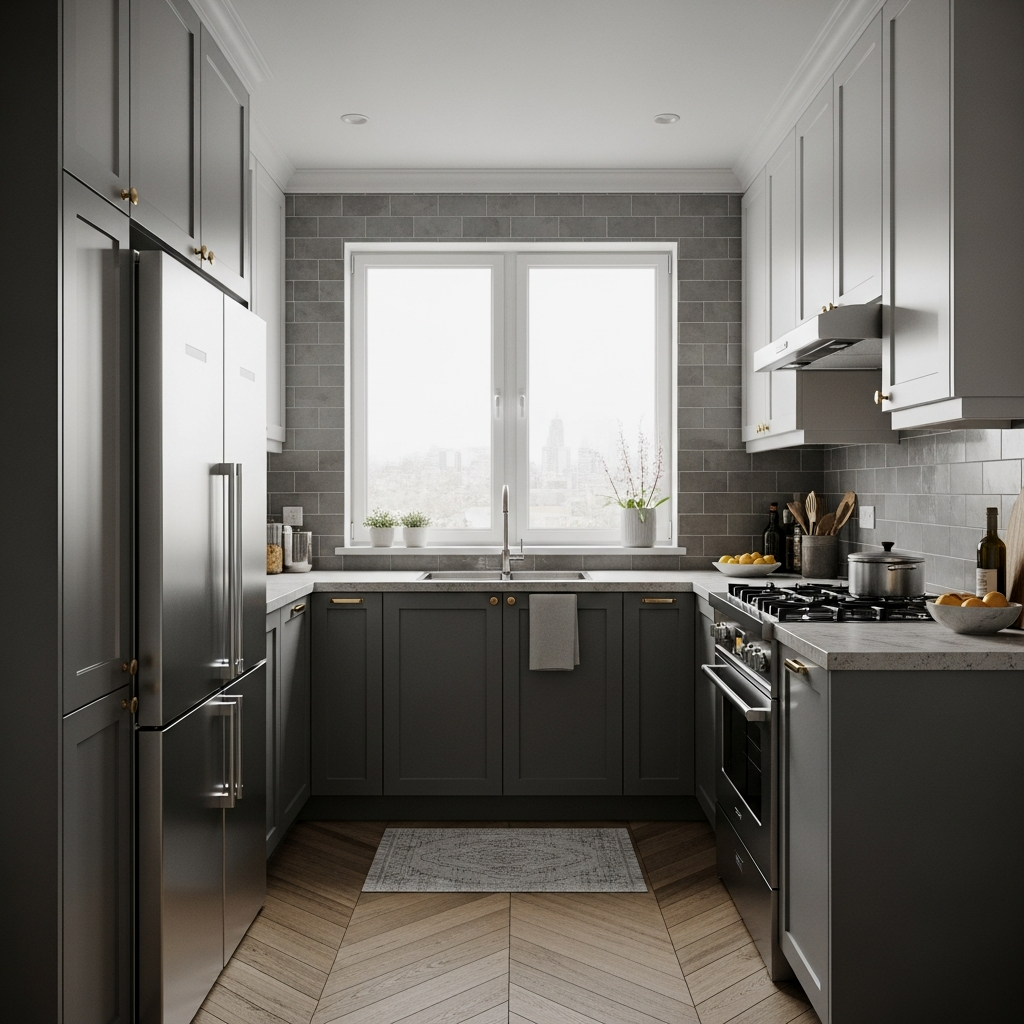
Beyond the triangle, think about your “zones.” You might have a baking zone, a coffee zone, or a cleaning zone. Flow is achieved when these zones don’t overlap in a chaotic way. For example, keeping your coffee mugs near the kettle or espresso machine means you aren’t crossing the entire kitchen just to start your morning. When things are where they logically should be, your mind can rest. A little patience in organizing these clusters will make your kitchen feel much larger than its square footage suggests.
The exact pieces that make these ideas work:
Expanding Vistas in a Narrow Galley
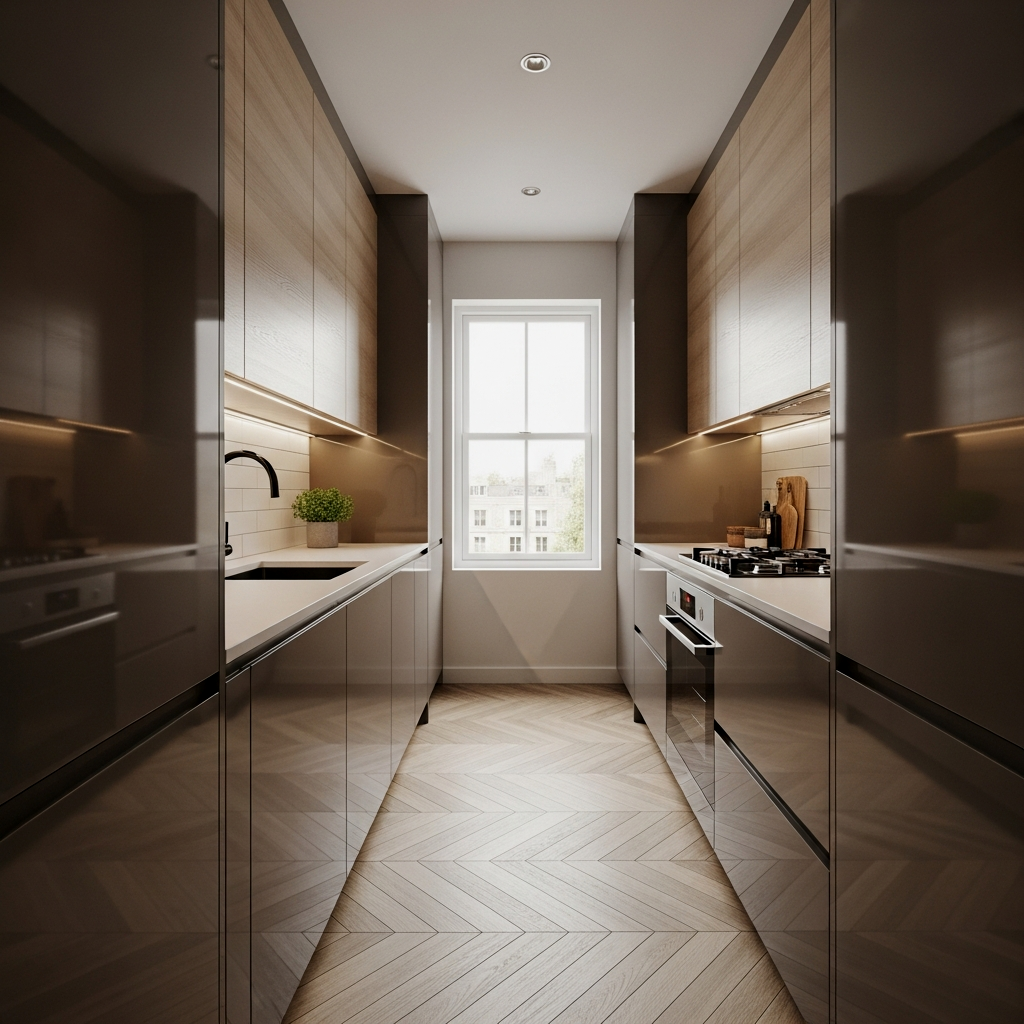
To keep a galley kitchen from feeling like a chore to walk through, focus on the view at the end of the “aisle.” If there is a window, keep it clear and bright. If it’s a wall, perhaps hang a piece of art that adds depth. By drawing the eye toward the end of the room, you create a sense of length rather than confinement. It’s perfectly fine to keep the counters clear of heavy appliances to maintain those long, clean lines that suggest a much bigger space.
Choose handle-less cabinets or recessed pulls in a narrow galley to prevent catching your clothes on knobs as you move through the space.
Corner Solutions for Fluid Motion
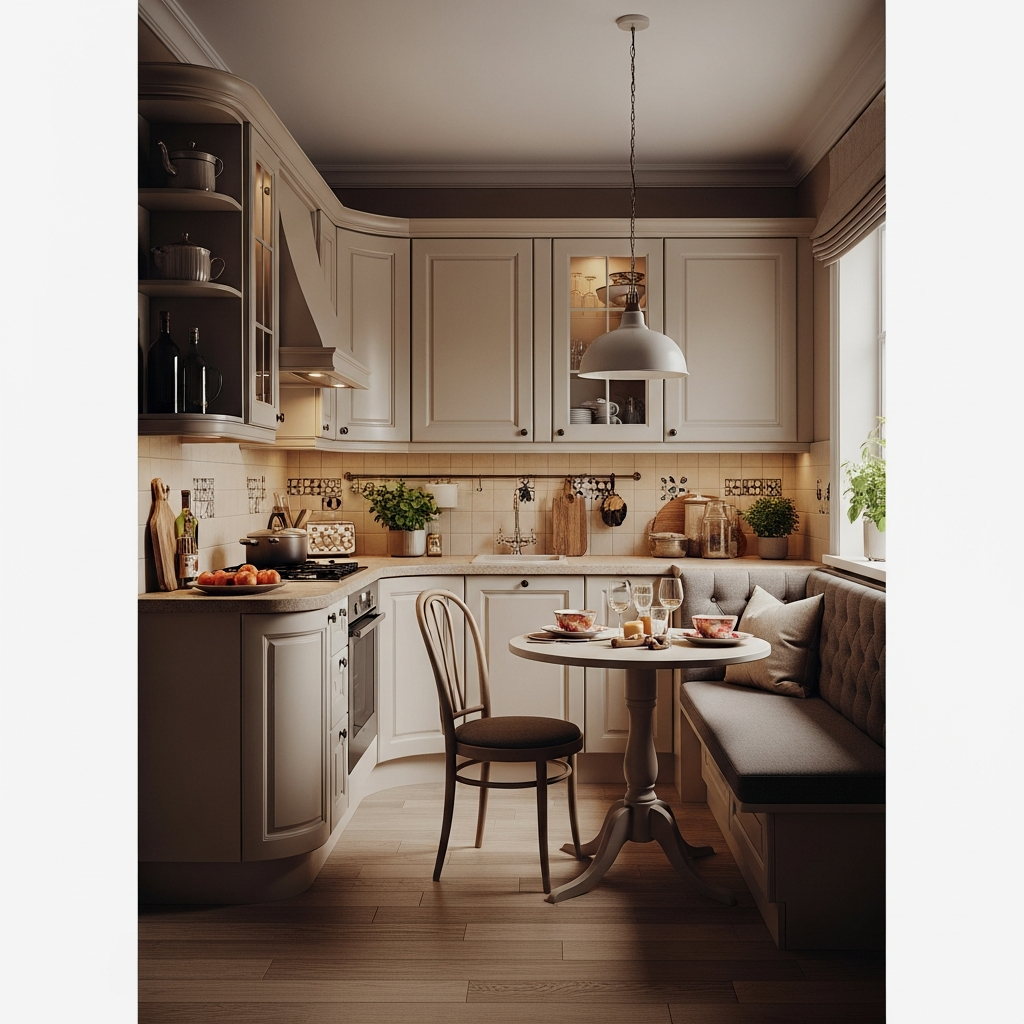
Corners are often where the flow of a kitchen goes to die. We’ve all struggled with those “blind” cabinets where Tupperware goes to be forgotten. To keep your movement fluid, invest in corner solutions like kidney-shaped pull-outs or “magic corners.” These allow you to bring the contents of the cabinet to you, rather than you having to crawl on the floor to find a pot lid. When your storage works with your body, the kitchen feels like a partner in your daily chores.
If a corner cabinet is truly unreachable, consider closing it off entirely and using the space in the adjacent room—sometimes a clean wall is better than a frustrating cupboard.
Eliminating Sticking Points with Slim Appliances
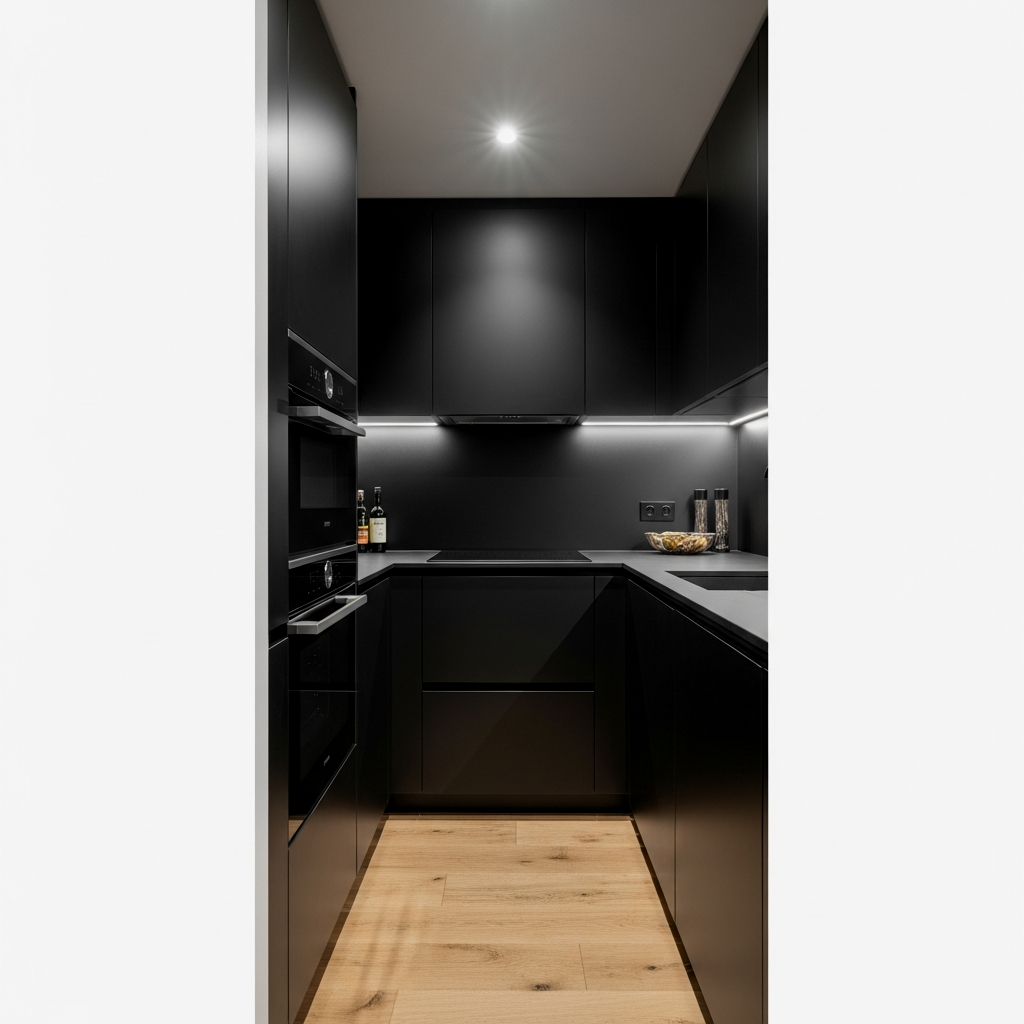
Modern appliances now come in “apartment sizes” that are incredibly sophisticated. A 24-inch range or a slim dishwasher can give you back six inches of floor space—and in a little kitchen, six inches is a mile. By choosing appliances that fit the scale of your room, you eliminate the “sticking points” where doors might collide or walkways might narrow. It’s a wonderful way to honor the physical reality of your space while still enjoying all the modern comforts.
The Expansive Feel of Minimalist Layouts
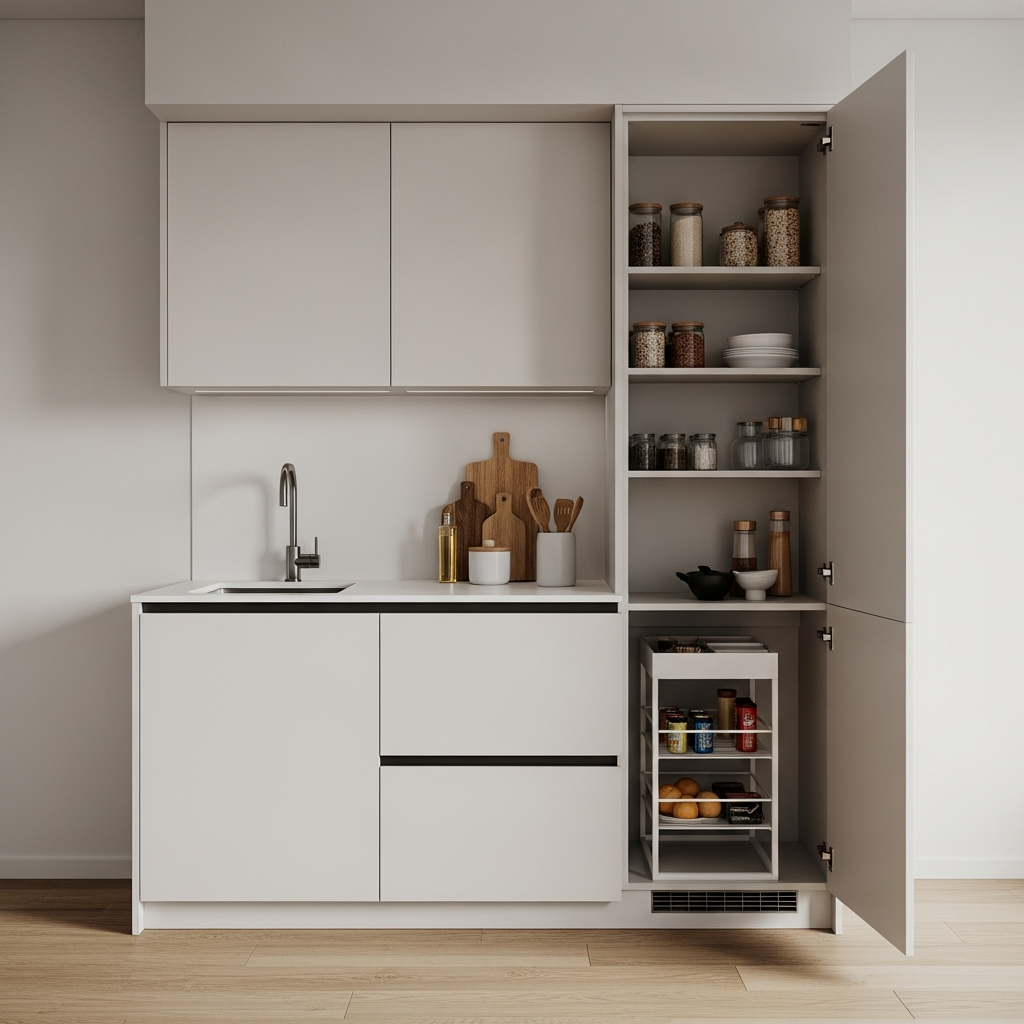
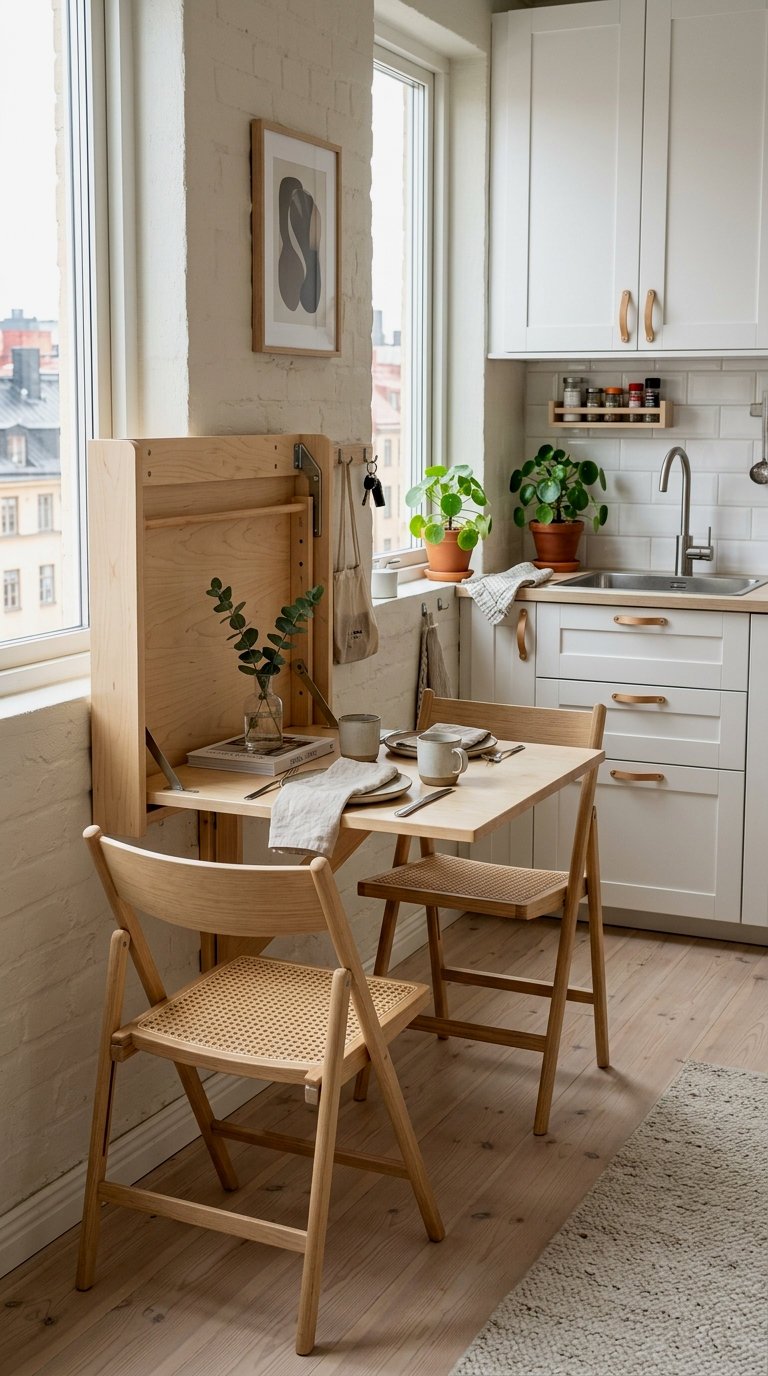
Minimalism isn’t about having nothing; it’s about having enough. In a kitchen layout, this means choosing a few high-quality surfaces and keeping them as clear as possible. A minimalist layout focuses on the flow of light and air. When you choose Furniture That Serves Two Masters, like a small bistro table that doubles as a prep station, you reduce the “visual noise” in the room. This clarity of layout creates a peaceful environment where you can truly focus on the process of cooking.
Use open shelving for your daily-use plates and bowls. It keeps the layout ‘breathable’ and saves you the motion of opening and closing doors constantly.
If you are struggling with a bulky refrigerator, consider ‘recessing’ it into the wall studs. Even gaining three inches by pushing it back slightly can make a kitchen feel twice as wide. Pair this with a cabinet-depth model for a truly custom, high-end look that prioritizes your movement.
📏 Finding Your Flow: Little Kitchen Layout Ideas Quick-Win Checklist
- Check Door Swings: Ensure the fridge, oven, and dishwasher can all open without hitting one another.
- Measure the Walkway: Aim for at least 36 inches of clear floor space throughout the main path.
- Define the Landing: Make sure there is counter space immediately next to both the stove and the fridge.
- Light the Path: Ensure your layout doesn’t block natural light from windows or glass doors.
- Test the Pivot: Stand at your sink and see if you can reach your primary prep area with a single step.
The Heart of the Home Connection
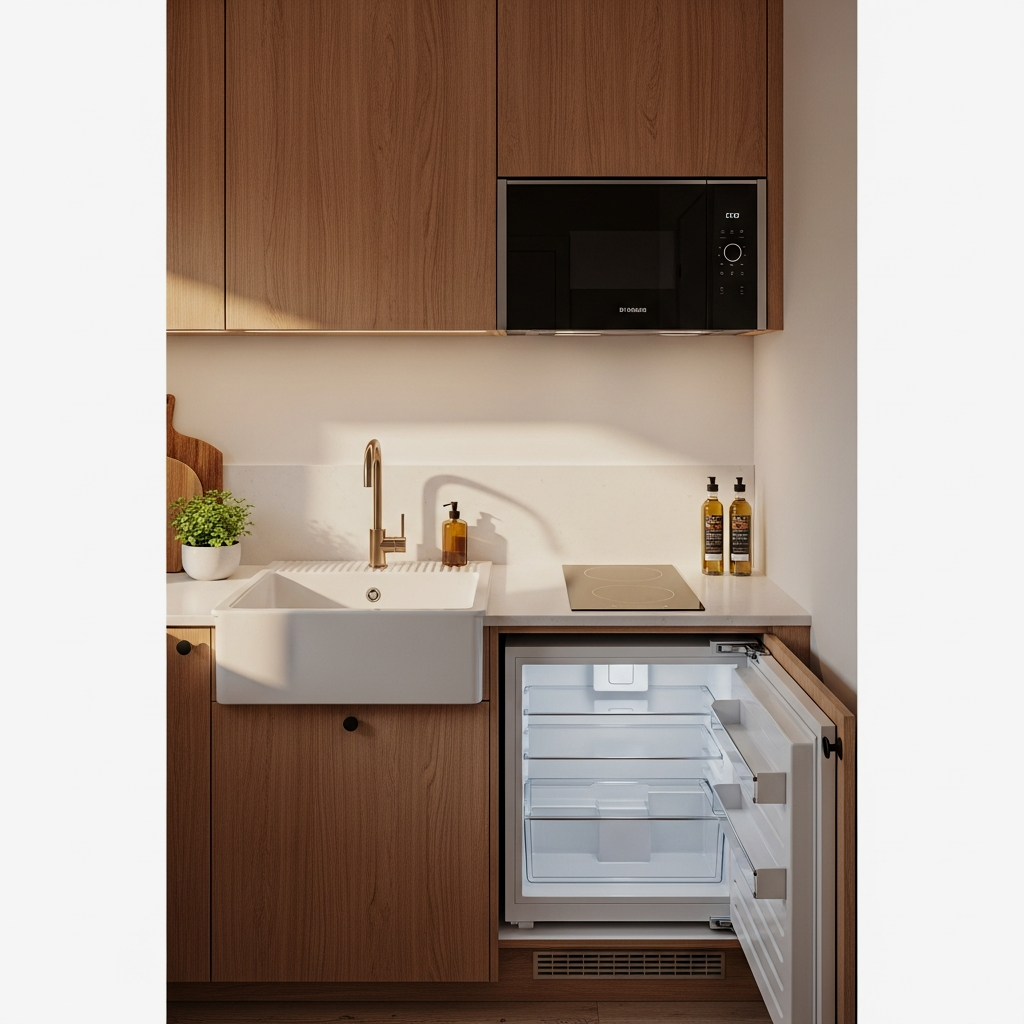
Ultimately, the layout of your kitchen should serve the heart of your home. It’s not just about efficiency; it’s about how the space feels when you are sharing a laugh with a loved one or teaching a child how to crack an egg. A good layout facilitates these moments by removing the physical friction of a cramped space. When you focus on flow, you are actually focusing on the quality of the time spent within those four walls. Enjoy the journey of discovering what works for you, and remember that your home is a living thing that can grow and change alongside you.
Think about the view from the kitchen into the rest of the house. A layout that allows the cook to see guests or family creates a more connected, loving atmosphere.
Creating flow in a small kitchen is an act of love for yourself and your family. It takes a little patience and a bit of planning, but the result is a space that holds you in comfort every single day. If you’re looking for more ways to pour warmth into your space, be sure to explore our full guide, Heart of the Home: 20 Loving Little Kitchen Ideas to Maximize Your Space. It has everything you need to turn your little kitchen into a true sanctuary. Trust the process, take your time, and enjoy every small win along the way.
Frequently Asked Questions
What is the most efficient layout for a very small kitchen?
The galley layout is often considered the most efficient for small footprints because it minimizes the steps between the sink, stove, and fridge while providing two full walls of storage and prep space.
How much space do I need for a kitchen walkway?
Ideally, you should aim for at least 36 inches for a single-cook kitchen. If you often have two people working together, 42 to 48 inches will feel much more comfortable and prevent you from bumping into each other.
Can I have a kitchen island in a small layout?
Yes, but I recommend a mobile island or a slim butcher block on wheels. This allows you to have extra prep space when you need it and move it against a wall to clear the “flow” when you are done.
What should I do if my fridge blocks the walkway when open?
Consider switching to a French-door style refrigerator. Because the doors are half the width of a standard single door, they require much less “swing space” and keep the walkway clearer when you are grabbing ingredients.
How do I handle a kitchen that is also a thoroughfare to the backyard?
In this case, a single-wall or L-shaped layout is best. These keep the “work zone” tucked to one side, allowing the traffic flow to move past the kitchen without interrupting the cook.