Dark Masculine Bedroom: The Secret to Using Moody Hues in Tiny Spaces
I am officially over the “paint it white to make it look bigger” advice. There, I said it. We’ve been told for decades that small spaces need to be bright and airy, but honestly, in a tiny bedroom, all that white paint often does is highlight the cramped corners and lack of architectural interest. If you’re working with a small footprint and want a vibe that feels sophisticated, moody, and intentional, the “light and bright” rule is your enemy. You don’t want a room that feels like a hospital closet; you want a room that feels like a private, high-end sanctuary. In our foundational guide on Small Masculine Bedrooms: How to Nail the Look Without It Feeling Like a Cave, we touched on why depth matters, but today we are going deep into the dark side to master the art of the moody nocturnal retreat.
✨ Before You Start: Dark Masculine Bedroom: The Secret to Using Moody Hues in Tiny Spaces Mindset
Mastering Color Drenching in Charcoal
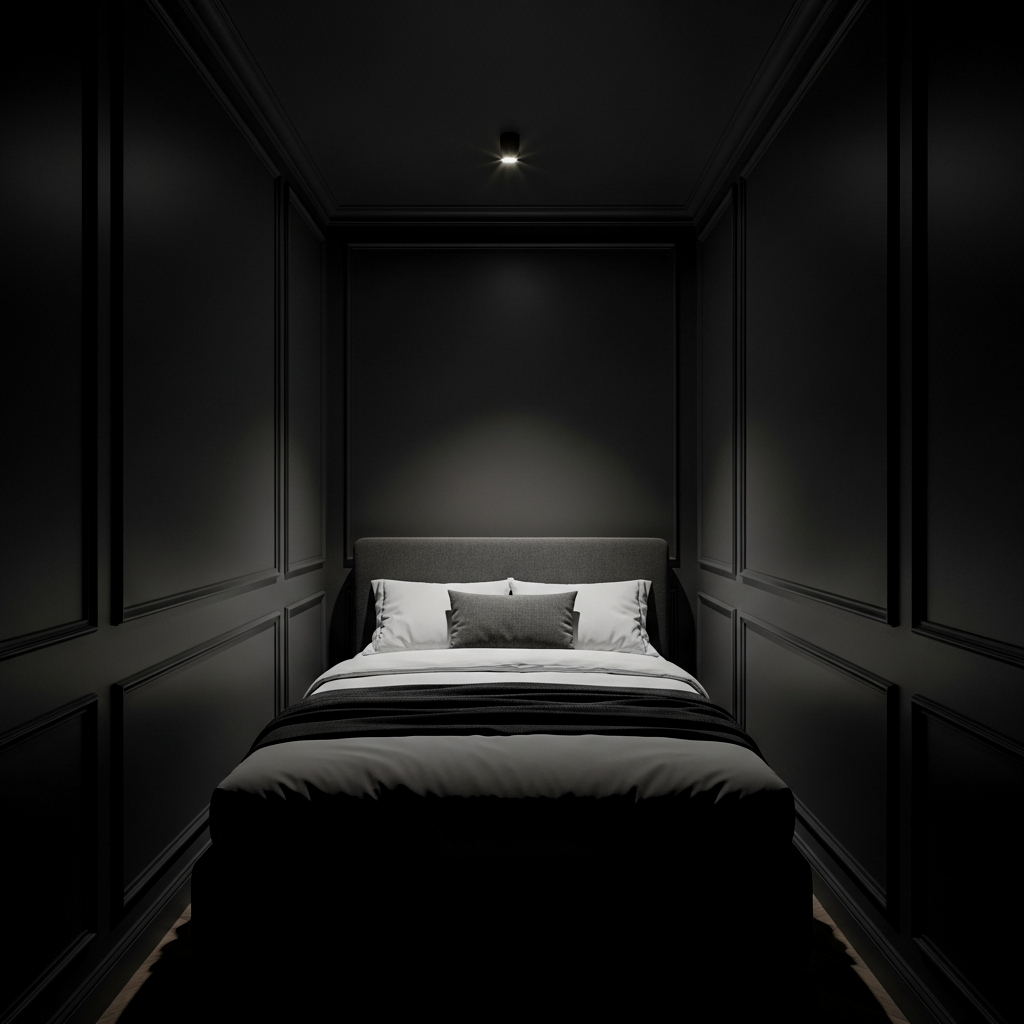
If you want to kill the “shoebox” feeling instantly, you have to master color drenching. This is the technique where you paint the walls, the trim, and yes—the ceiling—the exact same shade of deep charcoal. By removing the contrast between the walls and the ceiling, you’re essentially erasing the visual lines that tell your brain where the room ends. **This is the one** technique that actually makes a ceiling feel infinitely tall rather than closing it in.
The Life-Changing Velvet Charcoal Texture
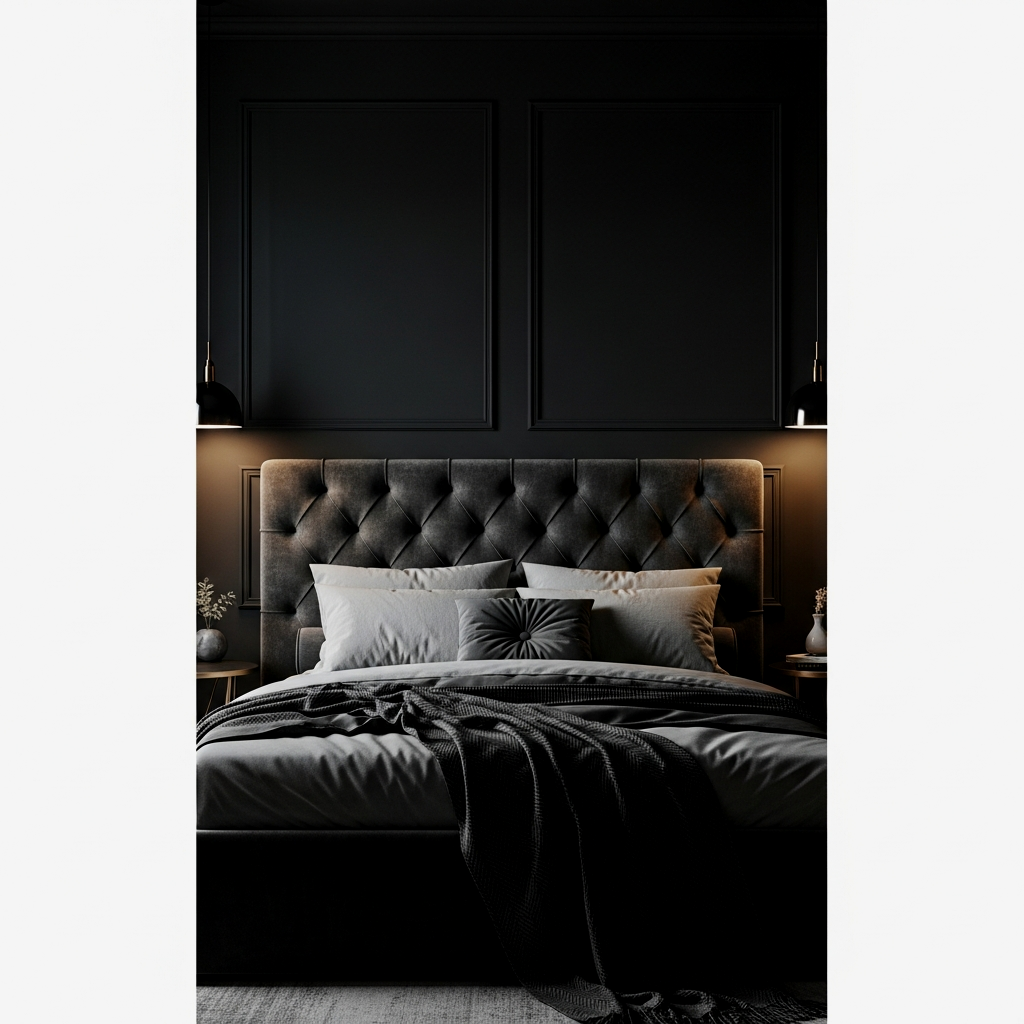
In a dark, masculine space, flat paint is only half the battle. You need something for the light to catch onto. Introducing a velvet charcoal headboard or heavy velvet drapery is **genuinely life-changing**. The way velvet absorbs and reflects light simultaneously creates a sense of luxury that a standard cotton fabric just can’t touch. It adds a weight and “expensive” feel to the room that makes the small footprint feel like a choice, not a limitation.
Satin Finish for Strategic Light Bounce
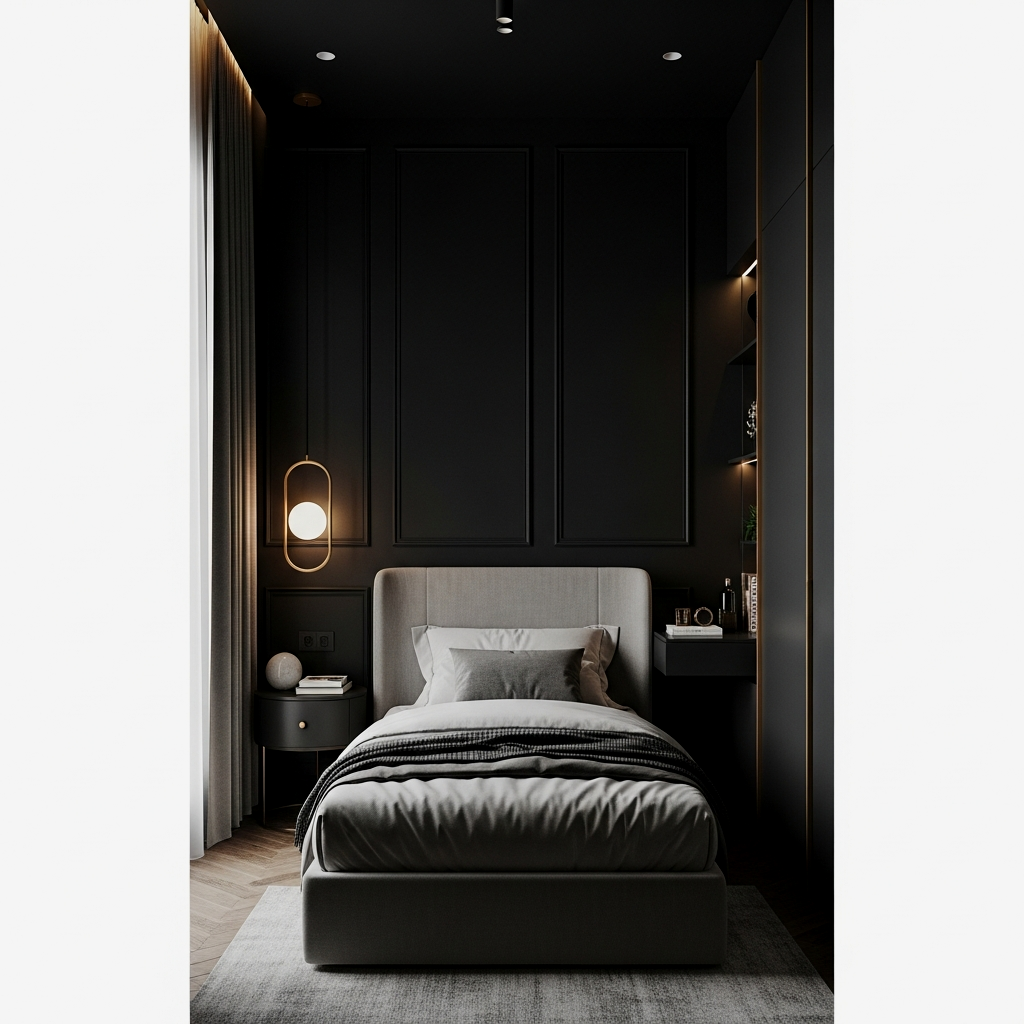
Most people run toward matte paint for dark rooms because they want that chalky, modern look. But **trust me on this one**: in a tiny room, you need a little bit of a secret weapon. Using a satin finish on your trim or even a subtle eggshell on the walls allows the little bit of light you do have to bounce around the space. It’s not shiny, but it has a glow that prevents the room from feeling “dead.”
The 80/20 Saturation Rule: Keep 80% of the room in your chosen deep hue (walls, bedding, large furniture) and use the remaining 20% for high-contrast textures like warm wood, brass, or cognac leather to provide “eye-rest” points.
The Seamless Nocturnal Cocoon
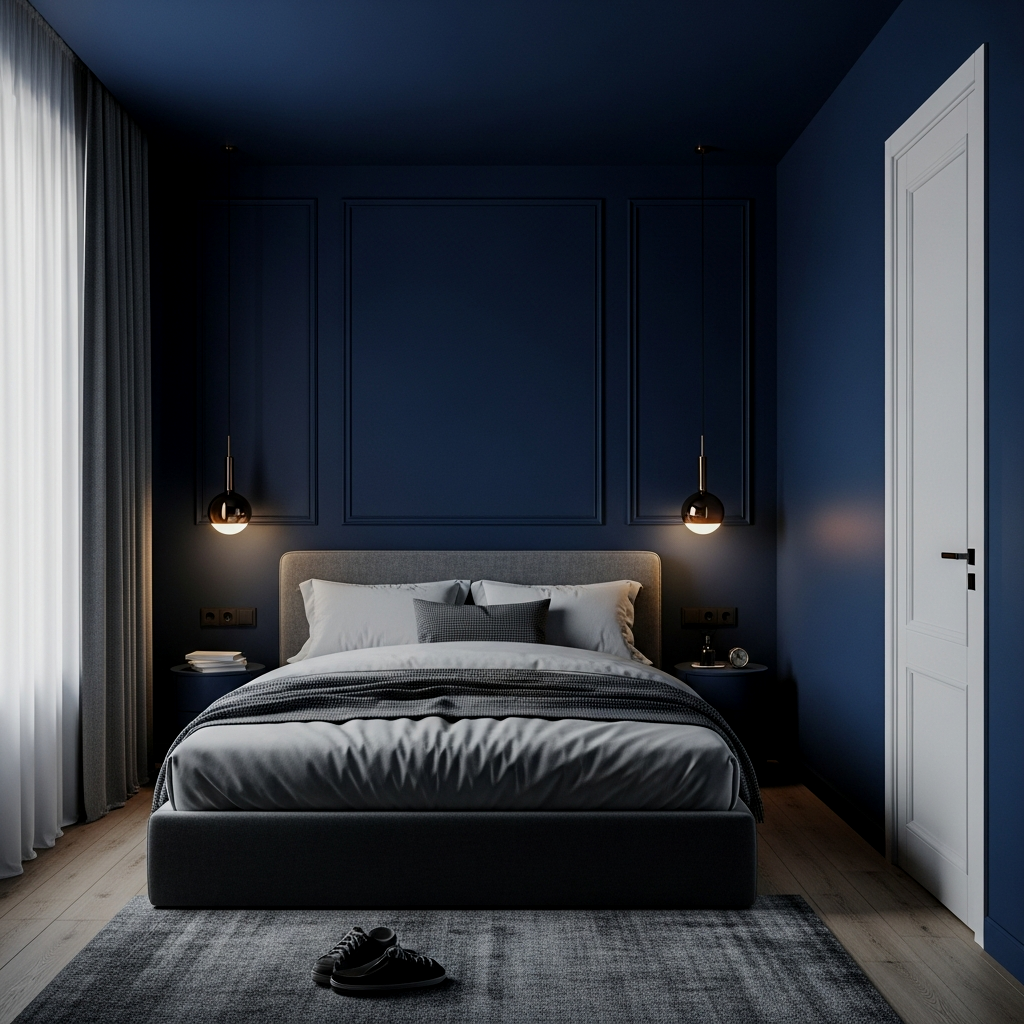
When you wrap the entire room in a dark hue, you create what I like to call a nocturnal cocoon. This isn’t just about aesthetics; it’s about the vibe. **I was not prepared for how good this looks** when you even paint the doors and the heater covers to match the walls. It creates a seamless flow that feels incredibly intentional and high-design, making the furniture look like it’s floating in a sophisticated void.
Matte vs Satin Depth Play
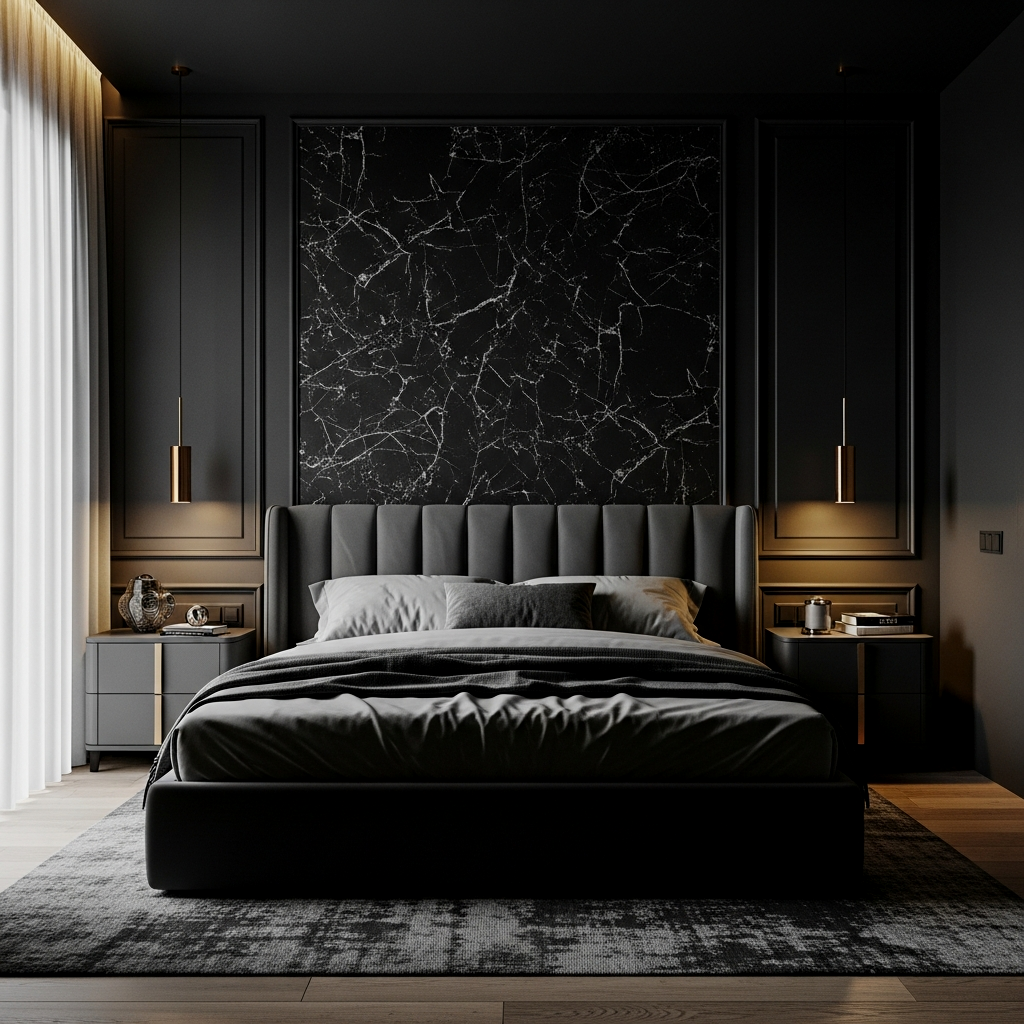
If you really want to get advanced, play with finishes of the same color. **The difference is unreal** when you paint the walls in a flat matte charcoal and the crown molding in a high-gloss or satin charcoal. It’s the same color, but the way the light hits the gloss vs. the matte creates a “shadow” effect that mimics expensive architectural detailing. It adds layers of depth without adding any physical clutter to your small room.
Erasing Boundaries with Midnight Hues
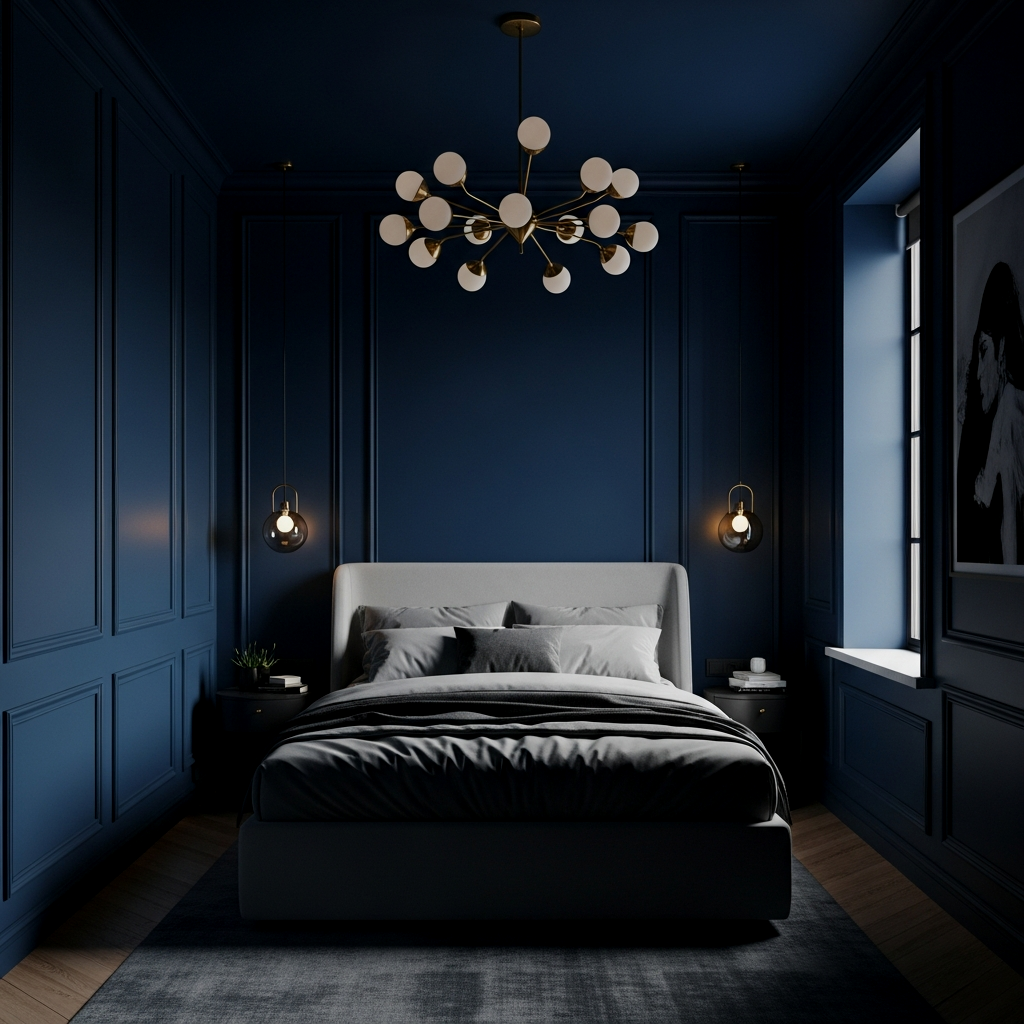
Dark colors like midnight blue or off-black actually recede from the eye. It sounds counterintuitive, but **this changed everything for me** when I realized that dark walls don’t “close in”—they disappear. By erasing the boundaries of the room with a midnight palette, you’re creating an optical illusion of endless space. It’s much more effective than a pale blue that just sits on the surface of the wall.
The Sophisticated Graphite Retreat
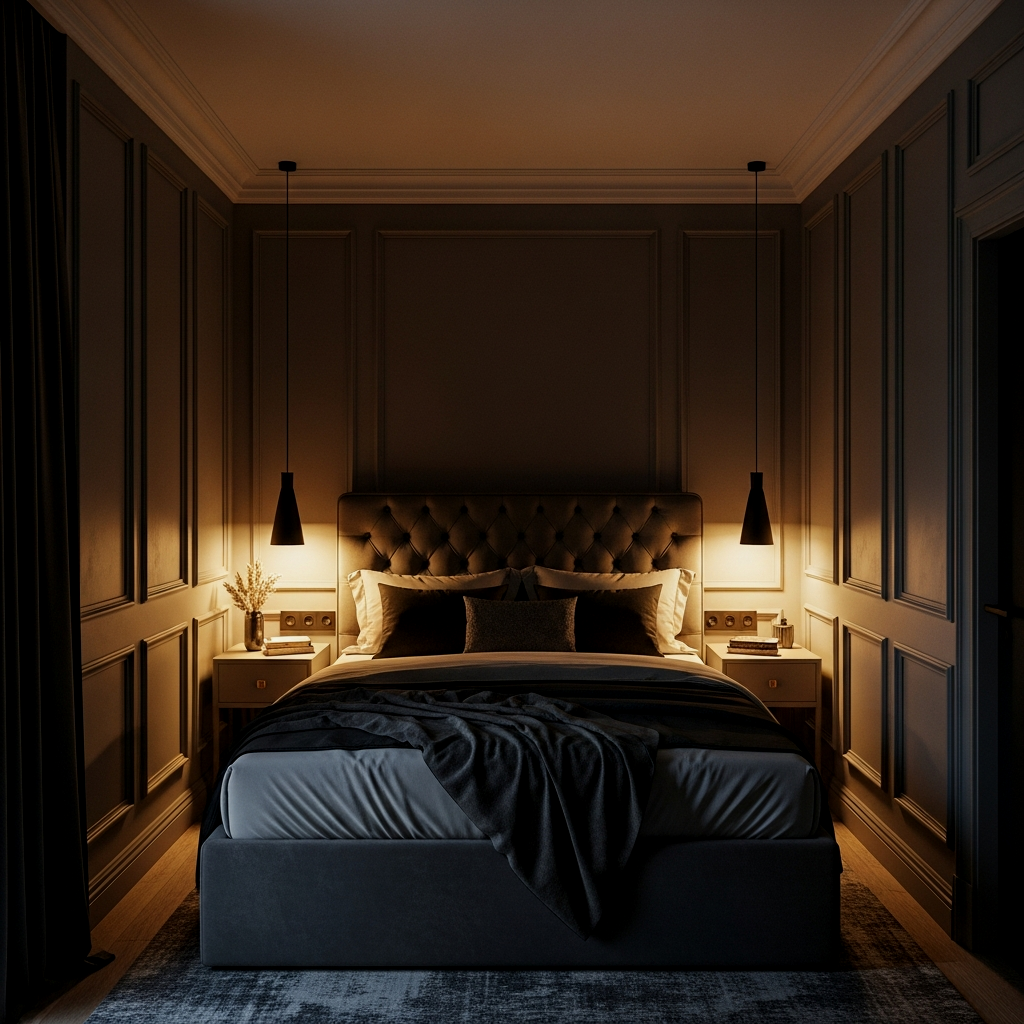
Graphite is that perfect middle ground—it’s warmer than pure black but moodier than standard grey. Creating a graphite retreat means leaning into tonal layering. Think graphite walls, a slightly lighter grey wool throw, and charcoal sheets. **Once you try this you cannot go back** to boring white linens. The monochromatic layering makes the bed feel like a massive, plush cloud of comfort.
The exact pieces that make these ideas work:
Modern Color Drenching in Forest Green
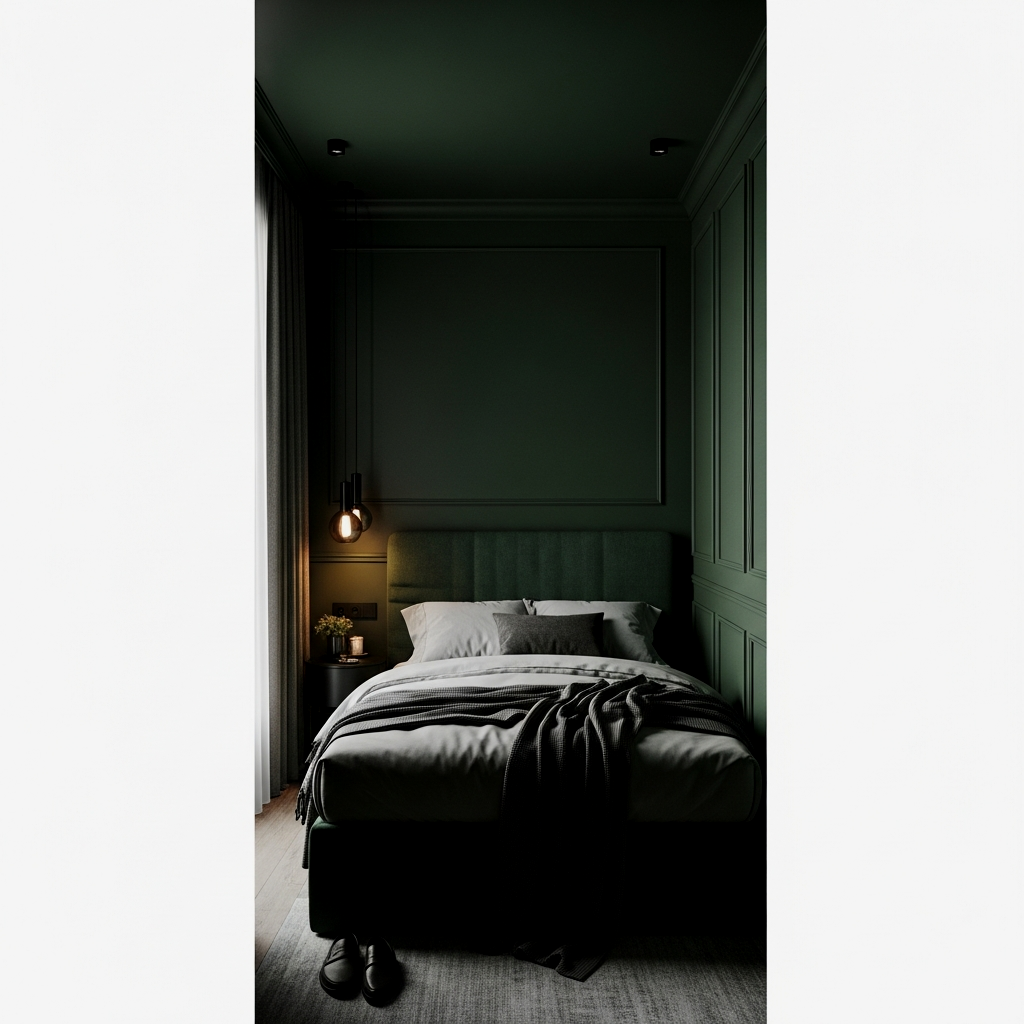
While charcoal is the classic choice, **I cannot stress this enough**: deep forest green is the new neutral for masculine spaces. It feels organic and grounded. When you drench a small room in forest green, it feels less like a room and more like a hidden glen. It’s sophisticated, slightly academic, and pairs beautifully with dark wood furniture and gold accents.
Tactile Luxury in Dark Tiny Spaces
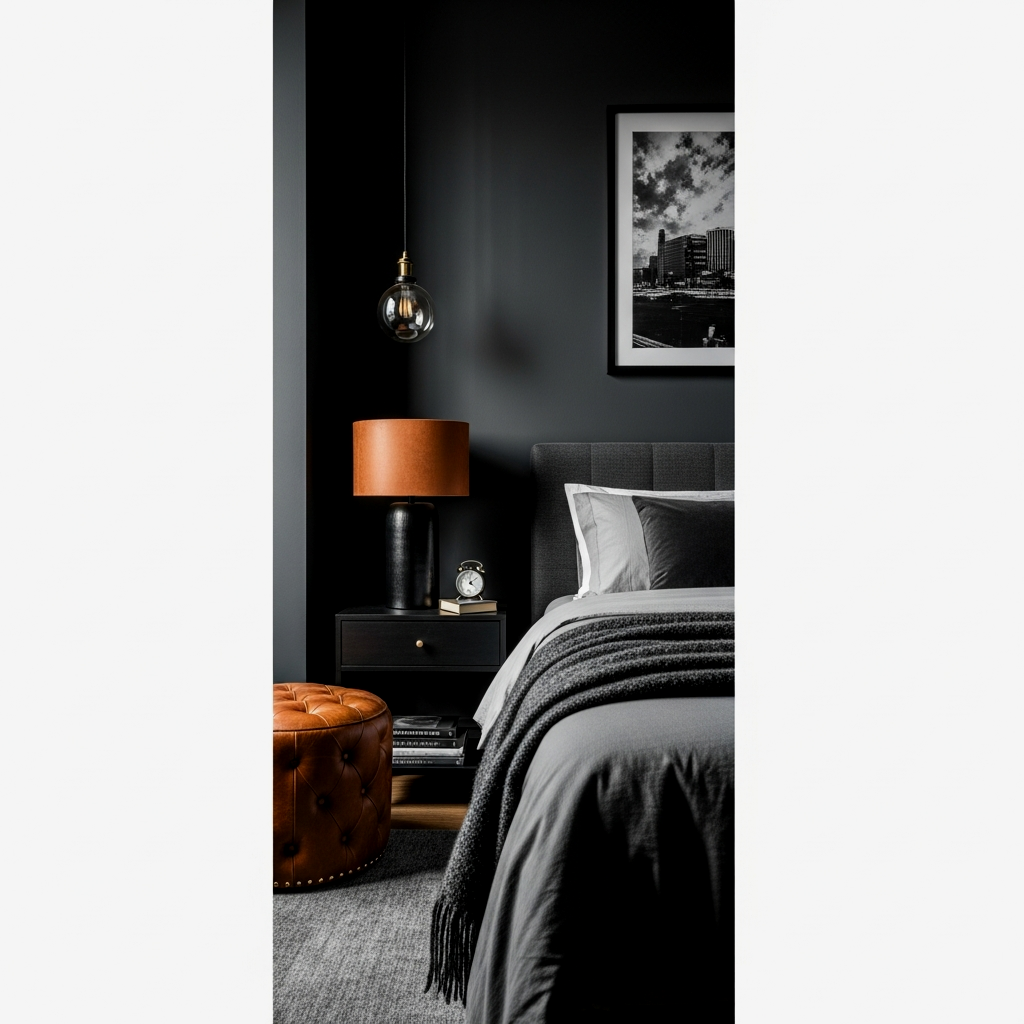
Because your eyes aren’t jumping around a room full of bright colors, they start to focus on the details. **Do not sleep on this**: the texture of your rug and your pillows matters ten times more in a dark room. You want materials that invite touch—think a heavy knit throw or a shearling accent chair. These tactile elements provide the “warmth” that prevents a dark room from feeling cold or uninviting.
Reflective Accents in Moody Hues
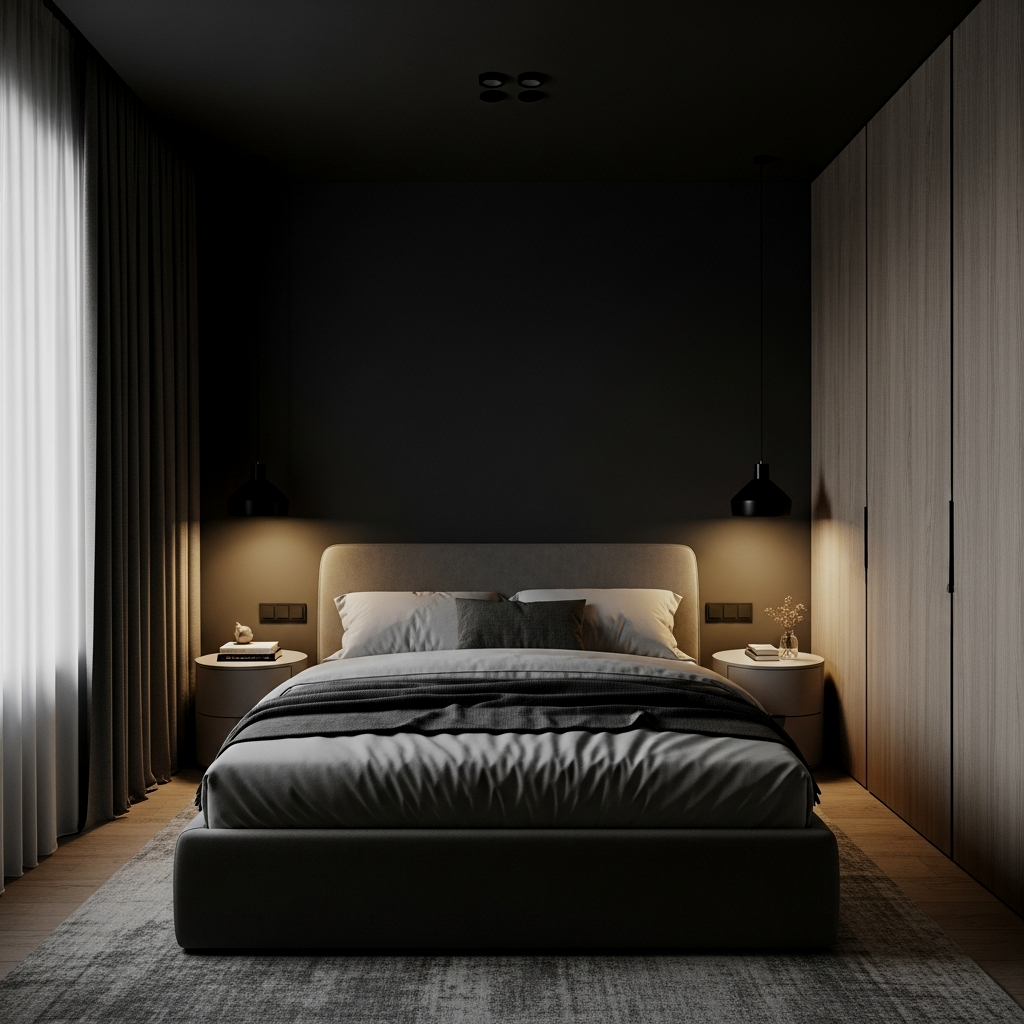
In a dark space, every metallic accent becomes a focal point. **The results speak for themselves** when you pair graphite walls with a single, large gold-framed mirror or a set of brass lamps. The reflection acts as a “window” into another part of the room, adding perceived square footage while the metallic finish provides a necessary pop of brightness against the moody backdrop.
The Ultimate Monochrome Night Vibe
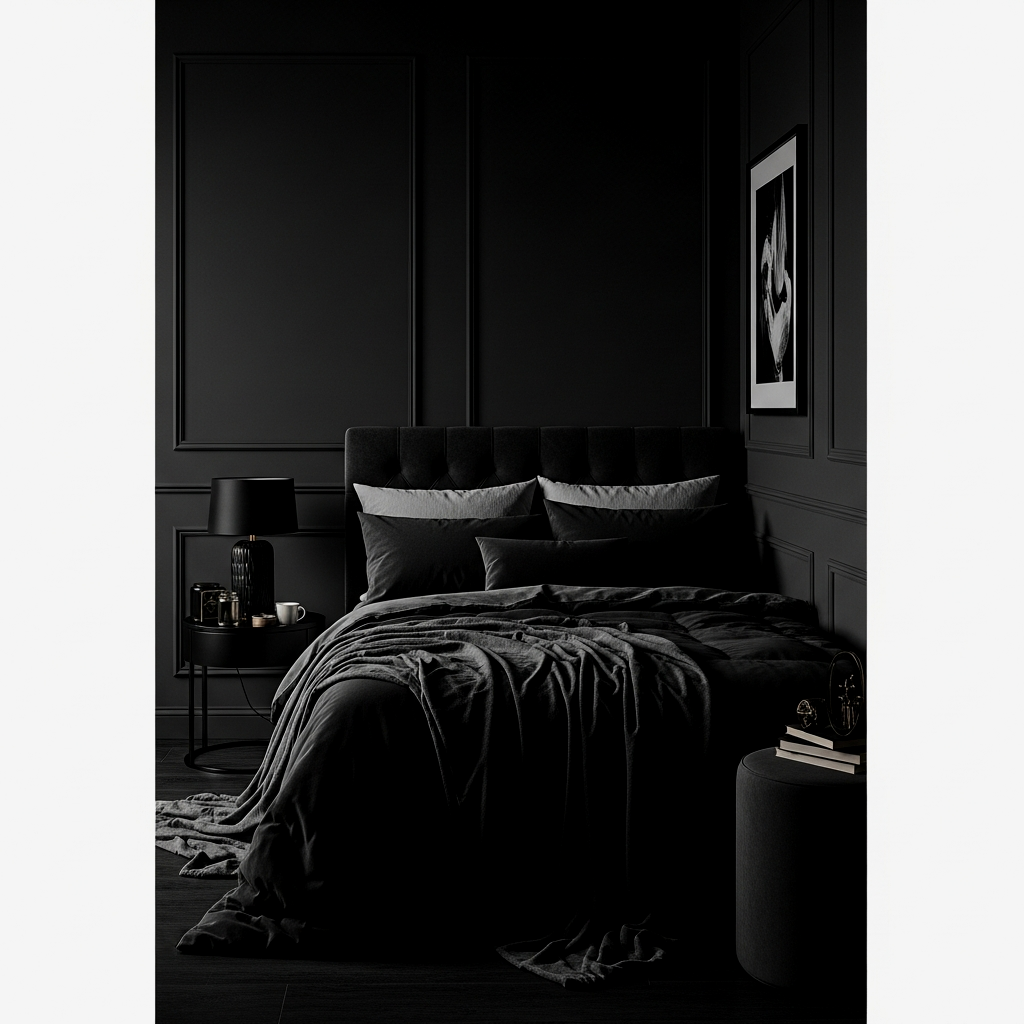
For the guy who really wants that “city penthouse at night” feeling, the monochrome look is **best kept secret** for small bedrooms. By keeping every single item—the rug, the bed frame, the lamp, the walls—within three shades of the same dark color, you create a space that is incredibly calming. There is zero visual noise. It’s the ultimate way to signal to your brain that it’s time to switch off and relax.
To get the perfect “color drenched” look without the room feeling heavy, use Farrow & Ball’s “Railings” or Sherwin Williams’ “Iron Ore.” These are “soft” blacks that contain blue or green undertones. They feel much more expensive and layered than a standard jet black, which can sometimes look flat like a teenager’s bedroom. Also, always paint your light switch covers the same color as the wall—it makes a massive difference!
📏 Dark Masculine Bedroom: The Secret to Using Moody Hues in Tiny Spaces Quick-Win Checklist
- Paint the Ceiling: Use the same color as the walls to eliminate the “lid” effect.
- Switch to Warm Bulbs: Cool light looks harsh against dark paint; 2700K is the sweet spot.
- Add a Large Mirror: Bounce what little light you have to create depth.
- Texture Check: Ensure you have at least three different textures (e.g., leather, wool, velvet).
- Hide the Clutter: Dark rooms show dust and clutter more easily; keep surfaces clear.
Architectural Lighting in Dark Small Rooms
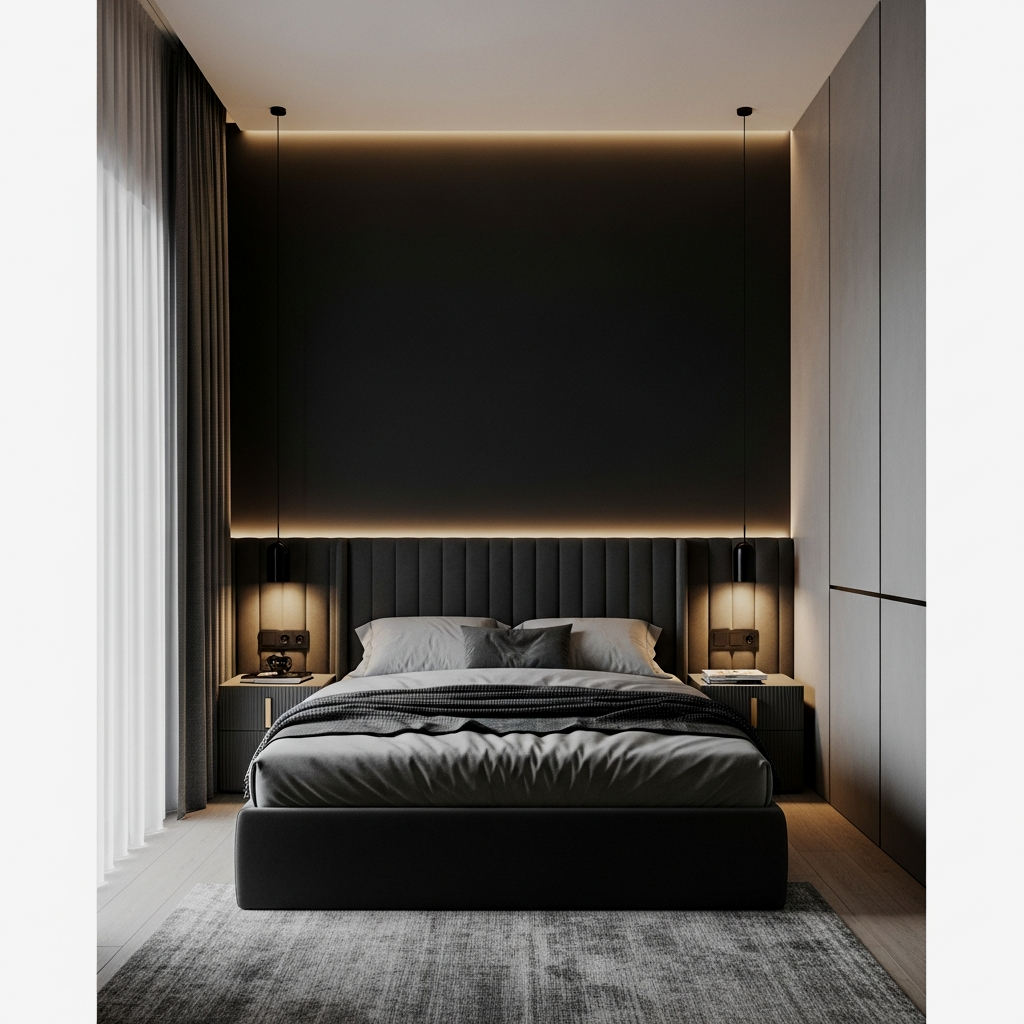
**No seriously**, stop relying on the big overhead light. In a moody bedroom, architectural lighting is what makes the space feel high-end. Use LED strips behind a headboard or under a bed frame to create a soft “wash” of light. **This alone is worth it** because it highlights the floor and walls without being blinding, maintaining that nocturnal, sophisticated vibe while ensuring you can actually see where you’re walking. **I wish someone had told me sooner** that the shadows are just as important as the light itself in a dark design.
Designing a dark, masculine bedroom in a small space isn’t about hiding the size of the room—it’s about celebrating it. By leaning into these deep hues and mastering the art of color drenching, you turn a “cramped” space into an intentional, cozy, and incredibly stylish sanctuary. **You will not regret this** move toward the dark side. For more on the fundamentals of this aesthetic, definitely check out our deeper look at Small Masculine Bedrooms: How to Nail the Look Without It Feeling Like a Cave. You’ve got this!
FAQ: Dark Masculine Bedrooms in Small Spaces
Will dark colors make my small bedroom feel like a cave?
Only if you lack lighting! If you use multiple light sources (lamps, sconces, and LED strips), the dark color actually makes the walls recede, which can make the space feel larger and more sophisticated.
Do I really have to paint the ceiling the same dark color?
Yes! This is the secret to color drenching. When the ceiling is white and the walls are dark, you create a harsh “line” that highlights how small the room is. A matching ceiling erases that line.
What is the best dark paint color for a masculine bedroom?
Charcoal greys, deep navy blues, and forest greens are the top choices. Look for “near-blacks” with cool undertones for a modern, clean look.
Should I use matte or satin paint for dark walls?
Matte is great for hiding wall imperfections and looking high-end, but a satin finish on trim helps bounce light around a small room. A mix of both is the pro way to do it.
How do I keep a dark room from feeling depressing?
Texture and warmth! Use warm-toned woods, metallic accents like brass or gold, and soft fabrics like velvet and wool to make the space feel cozy and luxurious rather than cold.