The Rug Size Guide: Avoiding the “Floating Island” Look
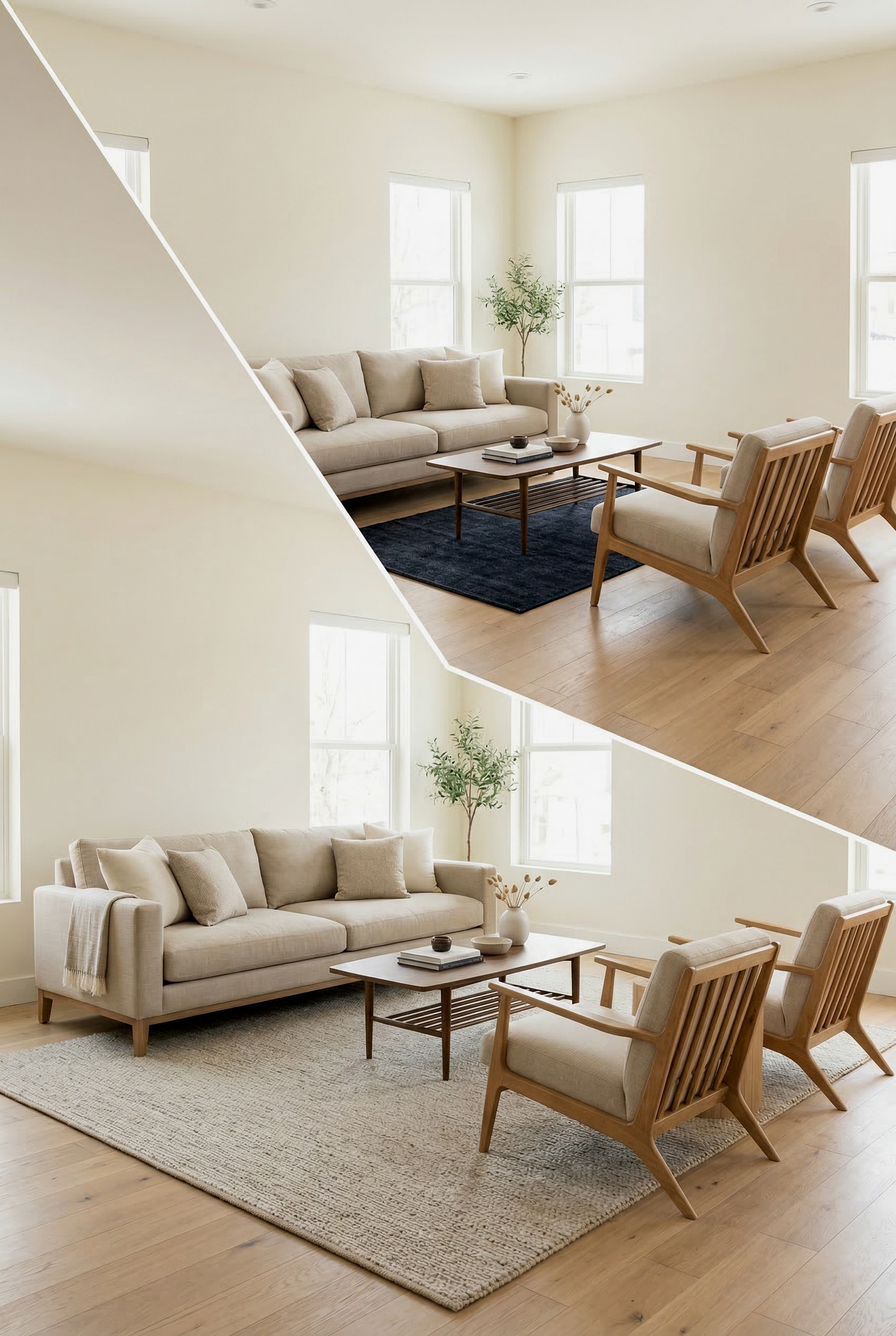
We’ve all seen it. You walk into a beautifully decorated living room, but something just feels… off. The space feels cramped, disconnected, and a bit chaotic. You look down, and there it is: a tiny 5×7 rug floating awkwardly in the center of the room, with the furniture pushed back against the walls like middle schoolers at a dance.
This is the dreaded “Floating Island” look.
Choosing the wrong rug can actually shrink your room by half visually. But when you get it right? The walls seem to push back, the furniture feels grounded, and the whole space looks bespoke and expensive. In this rug size guide, we are breaking down the exact dimensions and rules for every room in your house so you can expand your space effortlessly.
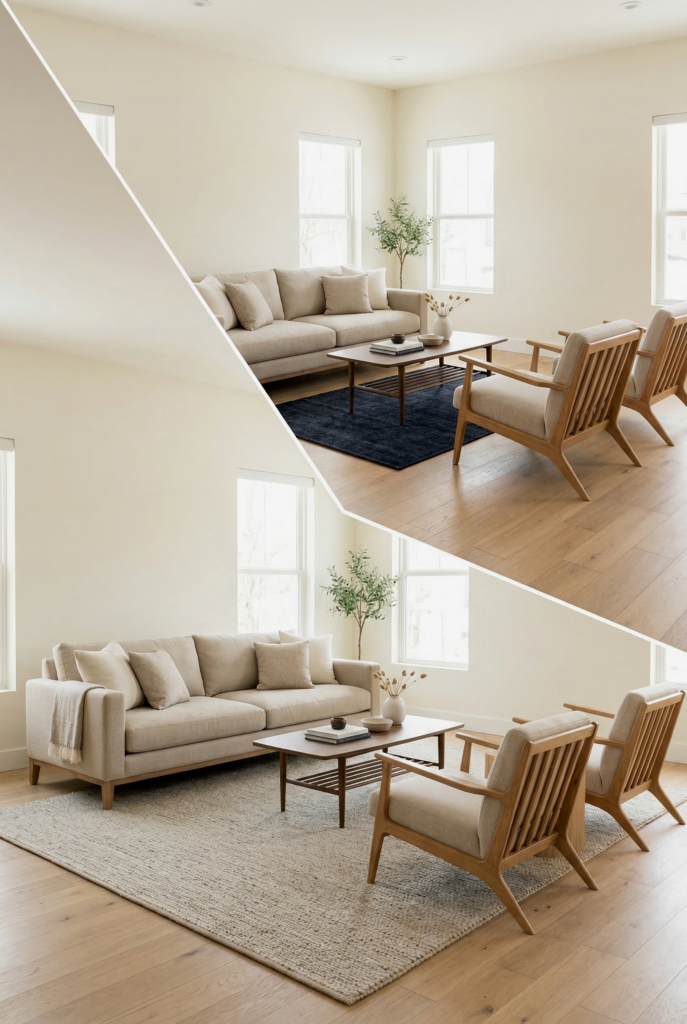
📌 What You’ll Learn In This Guide
Stop guessing and start measuring. Here is exactly what we are covering to fix your floor plan:
- The Living Room: Why you must use the “Front Legs Rule.”
- The Dining Room: The exact math formula for pull-out chair clearance.
- The Bedroom: Where to place your rug for the softest morning landing.
- The Layering Hack: How to get a massive, expensive look on a tiny budget.
Living Room Rug Size: The Front Legs Rule
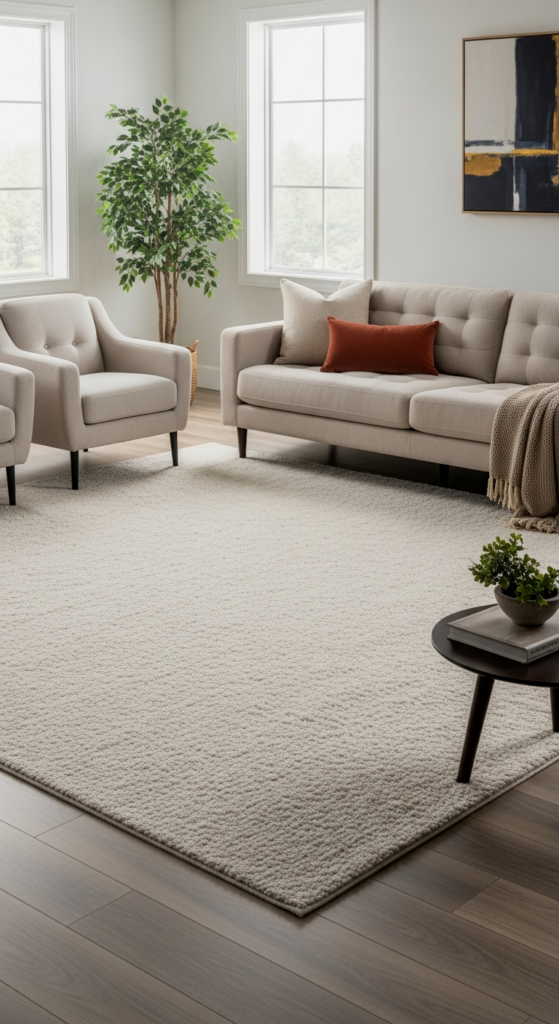
When it comes to living room rug size, bigger is almost always better. The biggest mistake people make is buying a rug just large enough to fit under the coffee table. This chops the room up and makes your sofa look detached from the rest of the seating area.
The golden rule here is “The Front Legs Rule.” At a minimum, the front legs of your sofa and any accent chairs should rest comfortably on the rug. If you have the budget and space, all four legs of the furniture sitting on a massive rug is the ultimate luxury look.
📏 Living Room Cheatsheet
To pull off the perfect aesthetic, stick to these standard pairings:
- Standard Sofa (74″-84″): Minimum 8×10 rug.
- Large Sectional: Minimum 9×12 or 10×14 rug.
- Apartment Loveseat: Minimum 6×9 rug (ensure front legs hit!).
Dining Room Rug Rules: Give Your Chairs Room to Breathe
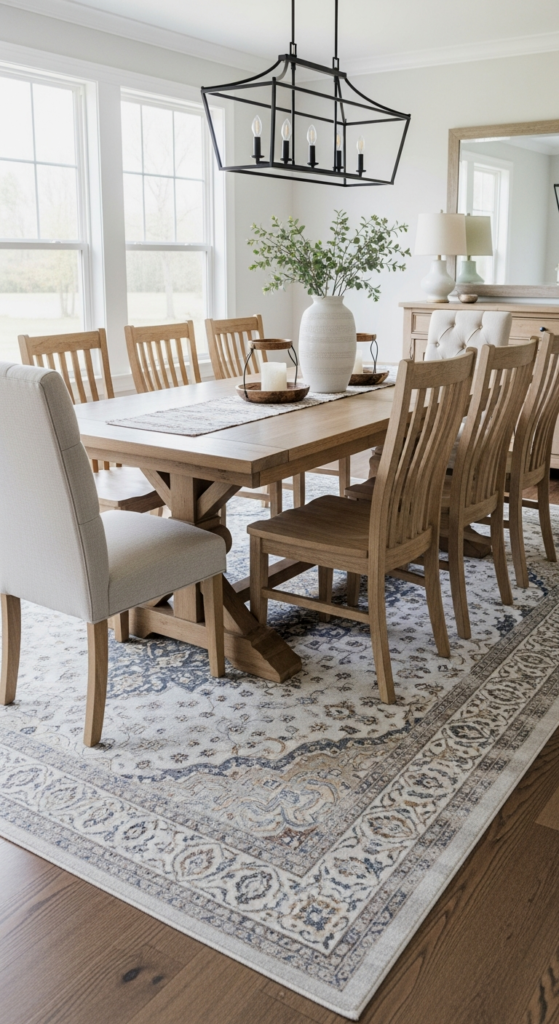
The dining room is where most sizing disasters happen. The dining room rug rules are strict for a very practical reason: you don’t want your chairs catching on the edge of the rug every time someone sits down or stands up.
Your rug must be large enough to accommodate the table and the chairs when they are fully pulled out. If half the chair falls off the rug when your guest sits down, the rug is too small.
🧮 The Dining Room Formula
Table Width/Length + 48 Inches = Your Rug Size
Why? You need a minimum of 24 inches of extra rug extending out from all sides of the table so chairs can slide back smoothly.
Looking to upgrade your dining space further? Check out our guide on Choosing the Perfect Statement Lighting for Low Ceilings to complete the room’s aesthetic.
Bedroom Rug Placement: Soft Landings Only
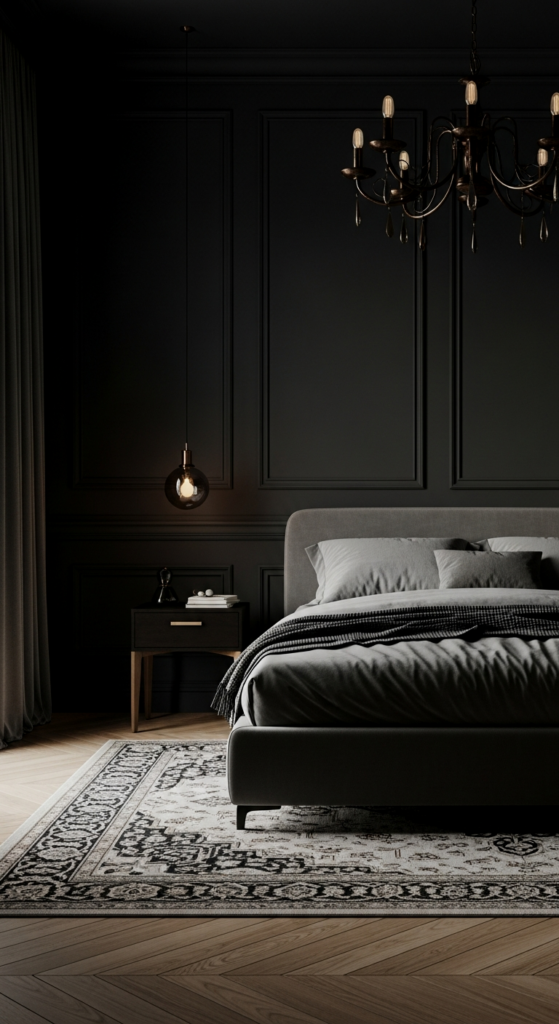
Your bedroom should be a sanctuary, and stepping onto cold hardwood or tile at 6:00 AM ruins the vibe. Proper bedroom rug placement is about creating a soft perimeter around the areas where you actually walk.
Do not push the rug all the way up to the headboard or nightstands. That beautiful pattern will just get hidden under the bed! Instead, place the rug perpendicularly under the bottom two-thirds of the bed. It should extend generously out the sides and past the footboard.
🛏️ Bed to Rug Size Guide
- Queen Bed: Use an 8×10 rug. Place the top edge of the rug right in front of your nightstands. This gives you roughly 2.5 feet of soft landing on each side.
- King Bed: Use a 9×12 rug. This ensures the proportions are correct and the bed doesn’t swallow the rug entirely.
- Twin Beds (Kids/Guest): A 5×8 placed horizontally between two twin beds creates a cozy shared center space.
Layering Rugs Guide: The Aesthetic Upgrade
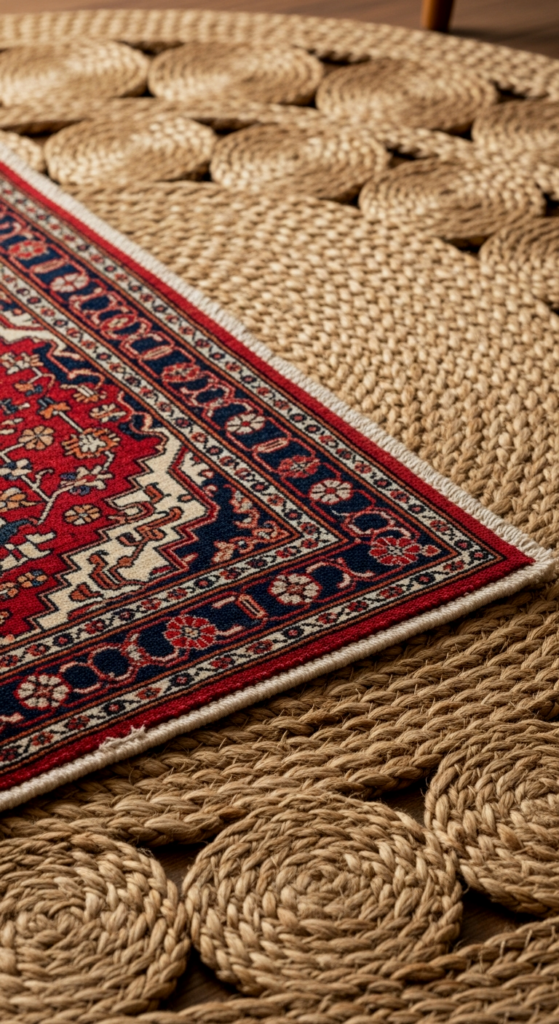
Big rugs are expensive. If you have a massive living room, a 10×14 high-quality vintage Persian rug might break the budget. Enter the layering rugs guide. This is an interior designer secret that solves the size problem while adding incredible texture to your space.
Buy a large, inexpensive, neutral base rug to fulfill the sizing requirements, and layer a smaller, high-impact aesthetic rug on top!
🛒 Layering Formula: Shop The Look
Here is our favorite fail-proof combination to get the high-end look on a budget:
- The Base (Size over everything): Chunky Natural Jute Rug (9×12) – Provides the footprint.
- The Top Layer (Personality): Vintage Wash Medallion Rug (5×8 or 6×9) – Anchors the coffee table.
Hallway Runner Dimensions: The Finishing Touch
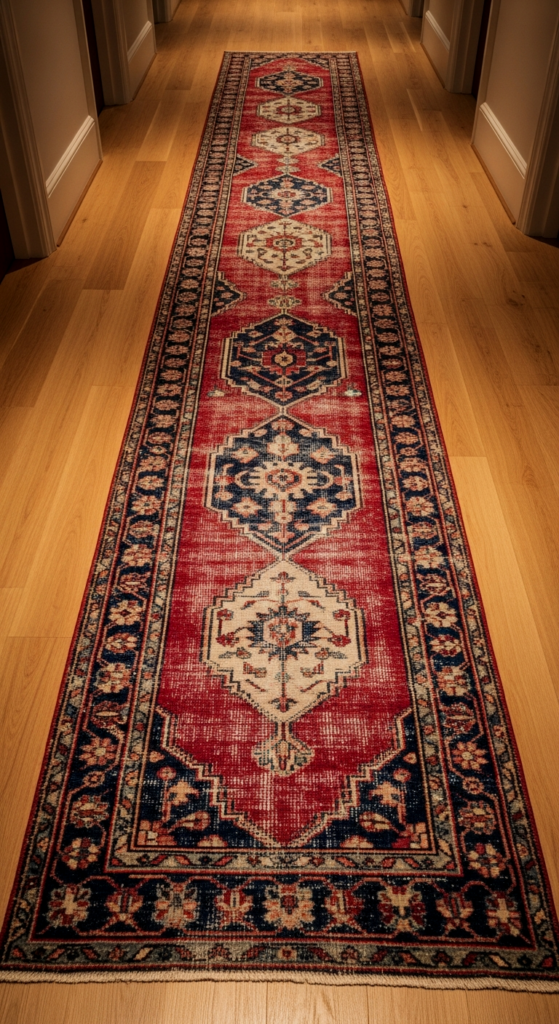
Don’t forget the transitional spaces! A hallway can look like a bowling alley if left bare. The trick with hallway runner dimensions is ensuring the rug isn’t so wide that it touches the baseboards, and isn’t so short that it looks like a bath mat lost in transit.
Leave about 4 to 6 inches of floor showing on all sides of the runner. If you have a particularly long hallway, do not try to stretch a single short runner; either buy an extra-long custom cut, or use two matching standard runners with a small gap in between to break up the space beautifully.
Stop settling for the floating island. Grab your tape measure, use these guidelines, and give your rooms the foundation they deserve!
Can an area rug be too big for a room?
Yes! While bigger is usually better, your rug shouldn’t touch the baseboards. A good rule of thumb is to leave at least 12 to 18 inches of bare floor between the edge of the rug and the walls to frame the room properly.
How do I size a rug for an open-concept space?
In open-concept homes, use rugs to create distinct “zones.” Size one rug for the living area using the Front Legs Rule, and a separate rug for the dining space using the Dining Room Formula. The rugs don’t have to match, but they should share a cohesive color palette or texture.
Do my nightstands need to sit on the bedroom rug?
Not necessarily. The most popular and aesthetically pleasing method is to place the top edge of the rug right in front of the nightstands. This ensures the softest part of the rug is exactly where your feet land when getting out of bed, rather than being hidden under furniture.
Is it okay to put an area rug over wall-to-wall carpet?
Absolutely. Layering an area rug over carpet is a great way to define a space or cover up builder-grade flooring. Just make sure the area rug has a different texture than the base carpet (like a vintage Persian over a low-pile carpet, or a thick shag over a tight loop) so it looks intentional.
How do I stop my rugs from looking wrinkled or slipping?
Always use a high-quality rug pad. Not only do they prevent the “floating island” from physically drifting across your floors, but they also add plushness and protect the rug fibers from breaking down over time.