12 Brilliant Small Kitchen Pantry Ideas
Having a dedicated, walk-in pantry is the ultimate real estate dream. But if you live in an apartment, a historic home, or a house with a tiny kitchen footprint, you likely have absolutely zero built-in food storage.
When your cabinets are already overflowing with pots and plates, where do the groceries go? You have to get creative and build a pantry out of thin air. From clever furniture hacks to utilizing the dead space inside your walls, here are 12 structural small kitchen pantry ideas that will instantly give you the storage you desperately need.
1. The Freestanding Armoire
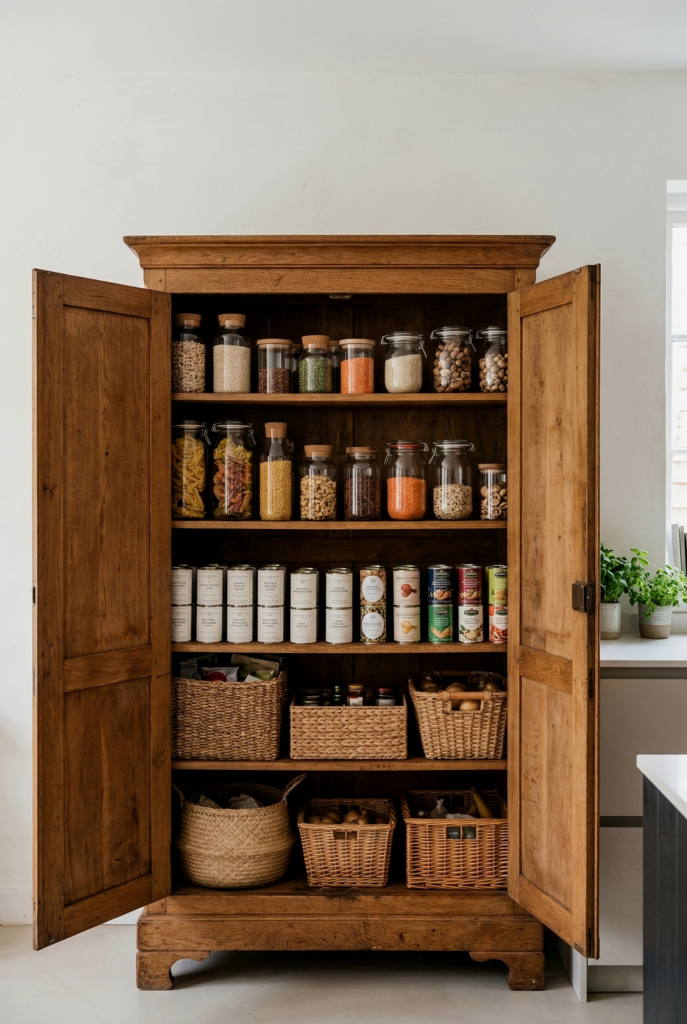
If you have a blank wall in your kitchen or an adjacent dining room, a freestanding armoire or wardrobe is the most elegant solution. You can purchase a beautiful vintage piece or a modern cabinet and dedicate the entire interior to dry goods. Because it has solid doors, you can hide mismatched cereal boxes and bright snack packaging completely out of sight.
A large piece of furniture can feel heavy in a small space. To maintain a light, airy Japandi aesthetic, choose an armoire made of light-toned woods (like white oak or ash) or paint it the exact same color as your walls so it seamlessly blends in.
2. Between-the-Studs Hidden Wall Pantry
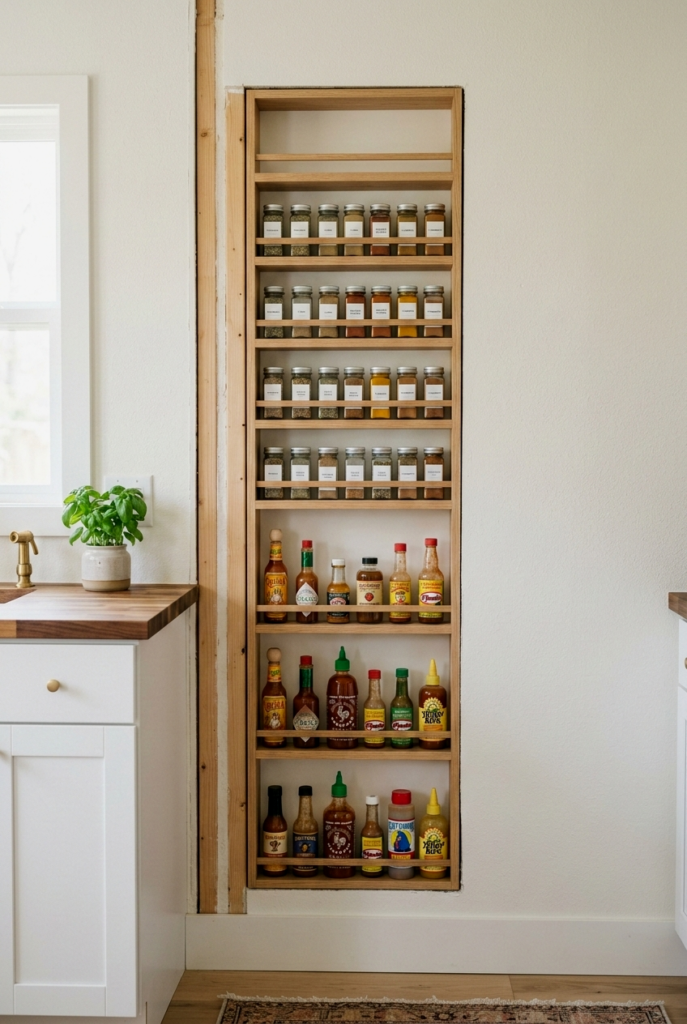
This is the ultimate hack for tiny kitchens with literally zero floor space. The drywall in your kitchen hides about 3.5 inches of hollow space between the wooden studs. By carefully cutting out a section of drywall between two studs, you can recess a shallow, custom-built shelving unit directly into the wall. It’s the perfect depth for a massive spice collection, hot sauces, and canned goods, and it protrudes zero inches into your walkway!
🛠️ How to Plan a Between-the-Studs Pantry
- Use a high-quality magnetic stud finder to locate the vertical studs in your chosen wall (they are usually 16 inches apart).
- Use an electronic wall scanner to ensure there is no live electrical wiring or plumbing pipes running through that specific bay.
- Cut a small pilot hole to visually inspect the cavity before committing to cutting the full rectangle.
- Frame the opening with simple trim and slide in your custom 3.5-inch deep shelving box!
3. The Slim Pull-Out Rolling Cart
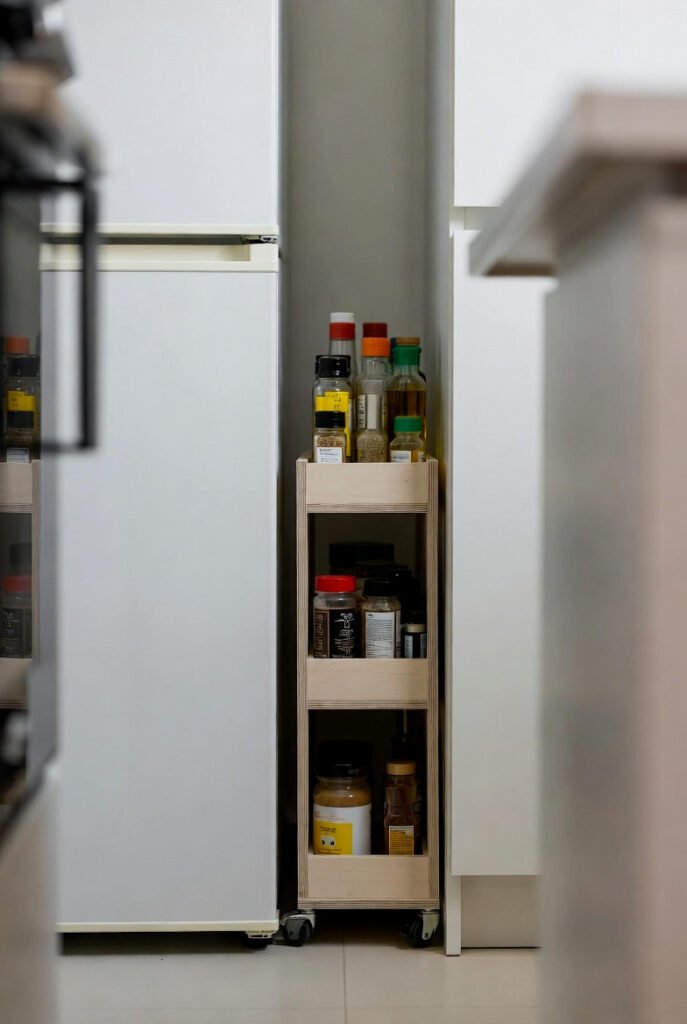
Do you have a three-to-five-inch gap between your refrigerator and the wall, or between your stove and the lower cabinets? Do not let that gap go to waste. A slim pull-out rolling cart is specifically designed to slide into these dead zones. Pull it out by the handle to reveal a hidden, multi-tier pantry for your cooking oils, vinegars, and spices.
Minimum 5 to 6 inches
Spice jars, foil rolls, cooking spray, and hot sauces.
4. Repurposed Open Bookshelves
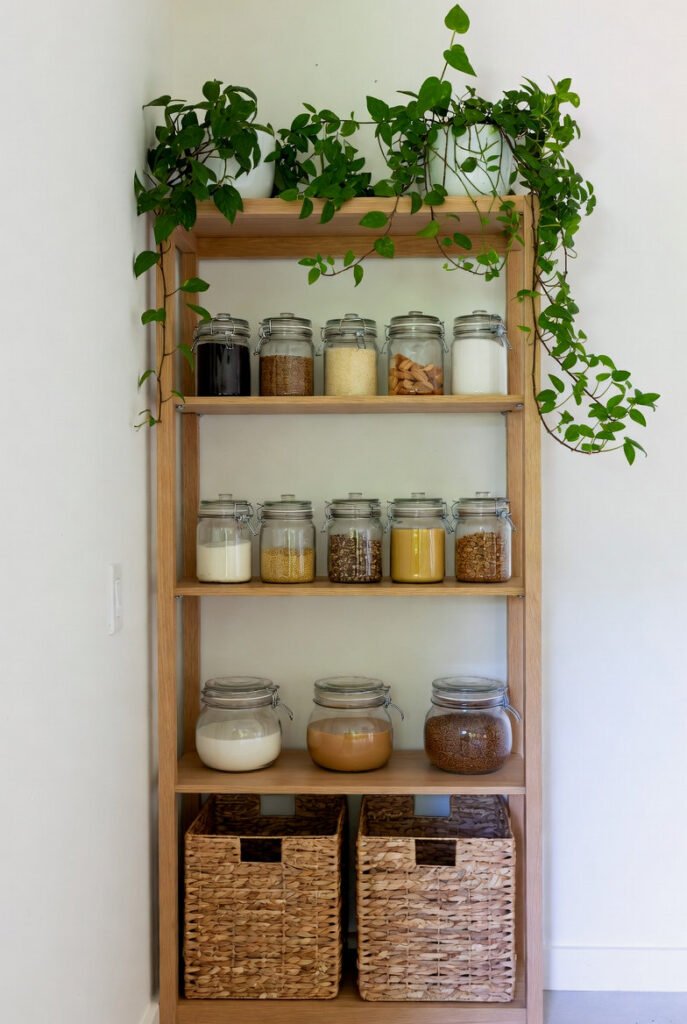
Who says a pantry has to be behind closed doors? If you have an empty corner or a short blank wall, anchor a narrow, stylish wooden bookshelf to it. When styled intentionally with matching woven baskets on the bottom shelves and beautiful glass decanting jars on the top, it acts as both highly functional food storage and a gorgeous focal point for your home.
5. The Glass-Door Dining Hutch
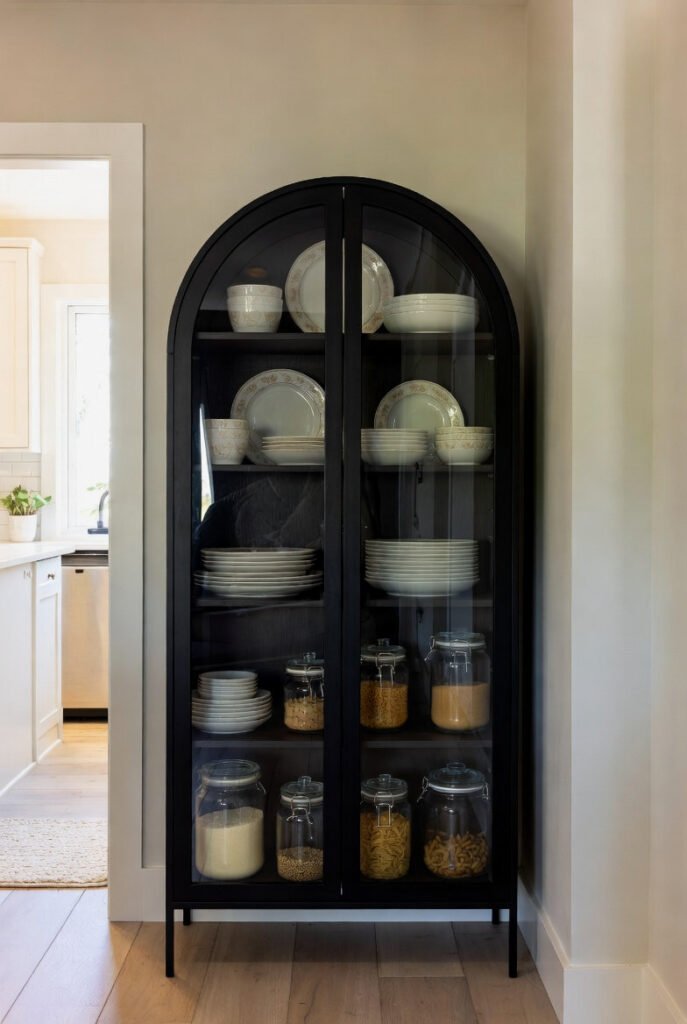
If your tiny kitchen connects to a dining area or living space, bridge the gap with a glass-door hutch. These pieces are meant to be seen! You can display your aesthetic dinnerware and cookbooks on the top shelves, and use the solid lower cabinets or drawers as your heavy-duty, hidden pantry for bulky boxes and appliances.
Get the exact look with these space-saving, high-aesthetic storage pieces:
6. Converting a Hallway Coat Closet
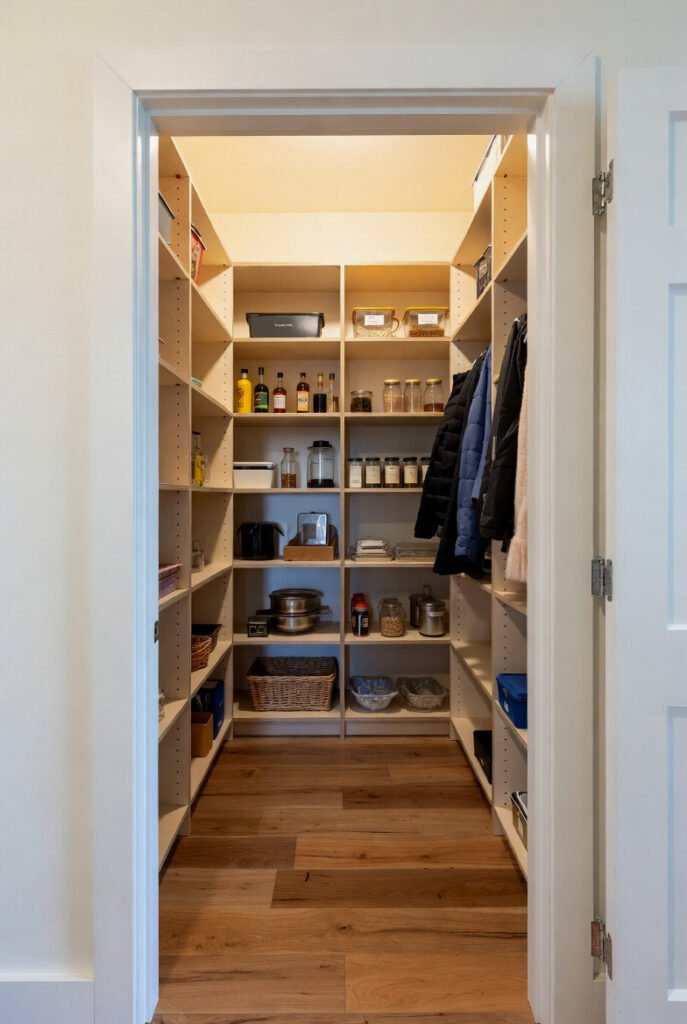
Look immediately outside your kitchen layout. Is there a coat closet or utility closet in the hallway nearby? Relocate those winter coats to the bedroom, remove the clothing rod, and install heavy-duty, wrap-around wooden shelving. Instantly, you have a massive walk-in pantry just steps away from your stove.
7. Above-the-Door Floating Shelves
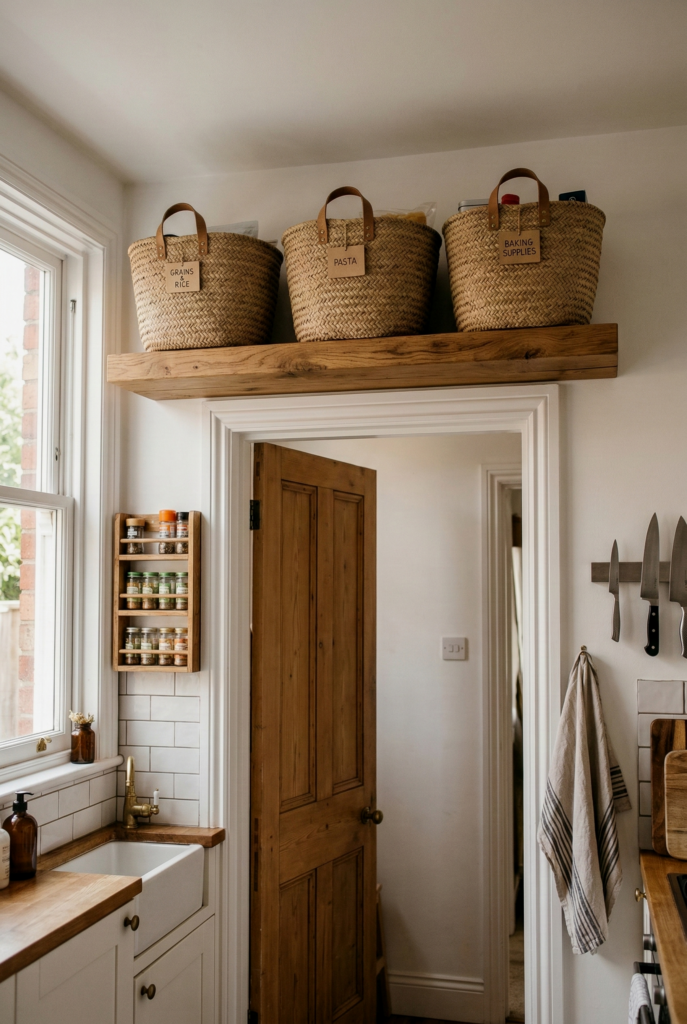
When horizontal floor space is gone, you must look up to the ceiling. The 12 to 18 inches of wall space directly above your kitchen doorway is completely dead, unused real estate. Install a deep, heavy-duty floating shelf right above the door frame. Use it to hold beautiful, matching woven baskets filled with backstock pantry items (like extra paper towels or bulk dry goods) that you only need to access occasionally with a step stool.
Once you build your pantry, you have to keep it tidy. Discover how to organize your shelves and decant your dry goods.
Read the 15 Small Kitchen Organization Ideas Here8. The Staircase Undercroft
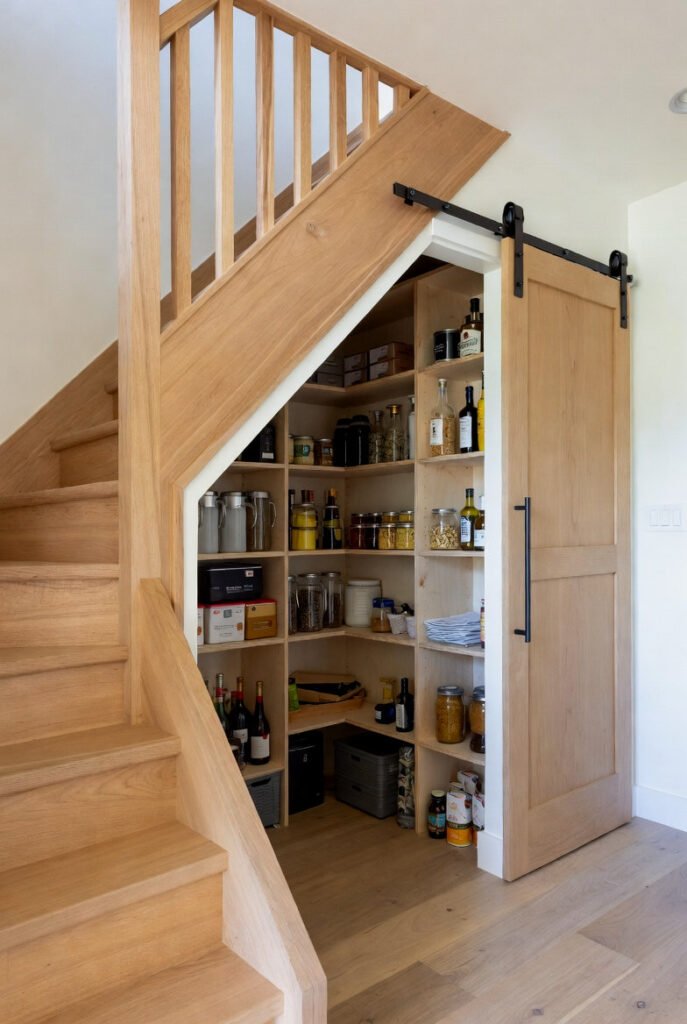
If your tiny kitchen shares a wall with a staircase, you might be sitting on a hidden goldmine of square footage. The slanted, awkward area under the stairs (the undercroft) is usually left hollow by builders. By knocking out the drywall and framing it out, you can create a brilliant, deep, built-in pantry tucked completely out of the way.
9. The Rolling Industrial Baker’s Rack
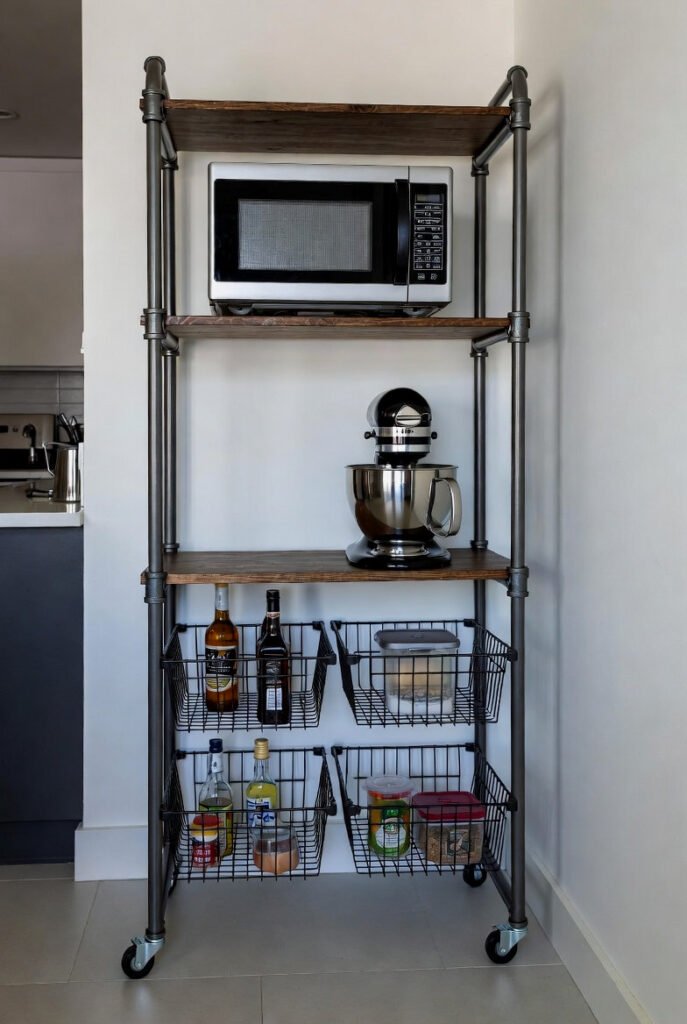
For renters who cannot permanently alter their walls, a rolling industrial baker’s rack is a lifesaver. These metal and wood shelving units are incredibly sturdy and provide a cool, open-concept vibe. They usually feature a solid counter-height shelf (perfect for housing your microwave or heavy stand mixer) with multiple shelves above and below for wire baskets full of pantry staples.
10. Pegboard Wall Pantry
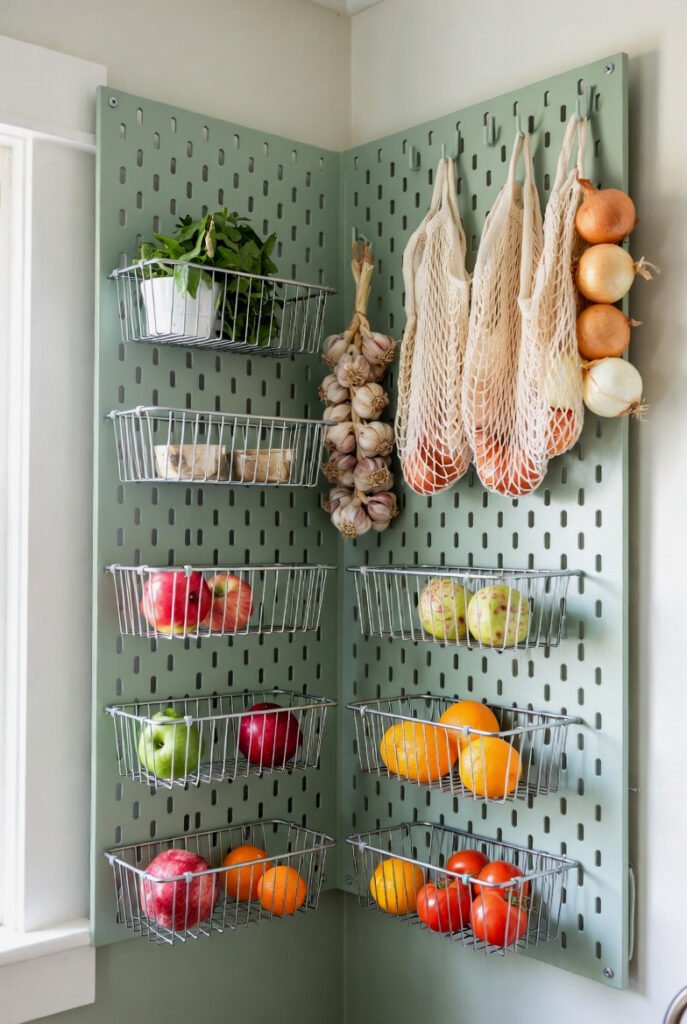
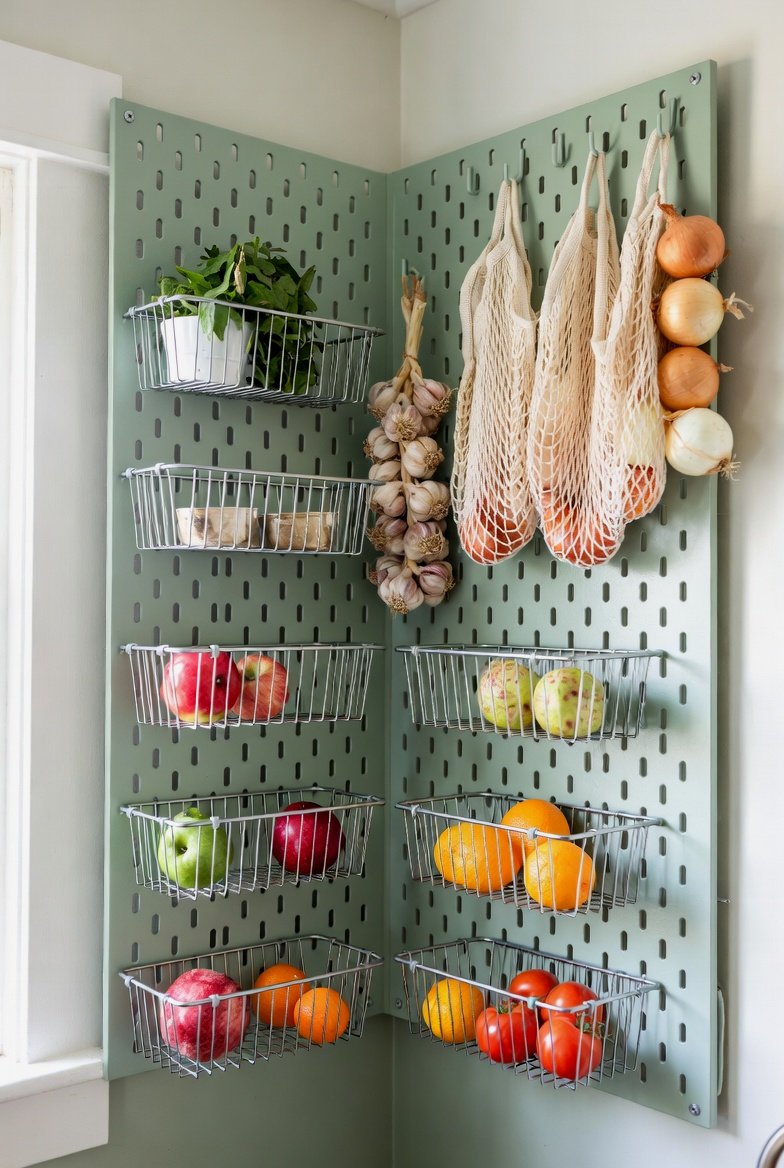
Take a cue from classic culinary kitchens and install a floor-to-ceiling pegboard on a blank wall. It’s an incredibly efficient, customizable way to create storage with virtually zero depth. Add wire baskets to the pegs to hold fresh produce like onions, potatoes, and garlic, or use shelves to hold small spice jars.
11. Retrofitting Base Cabinets with Pull-Outs
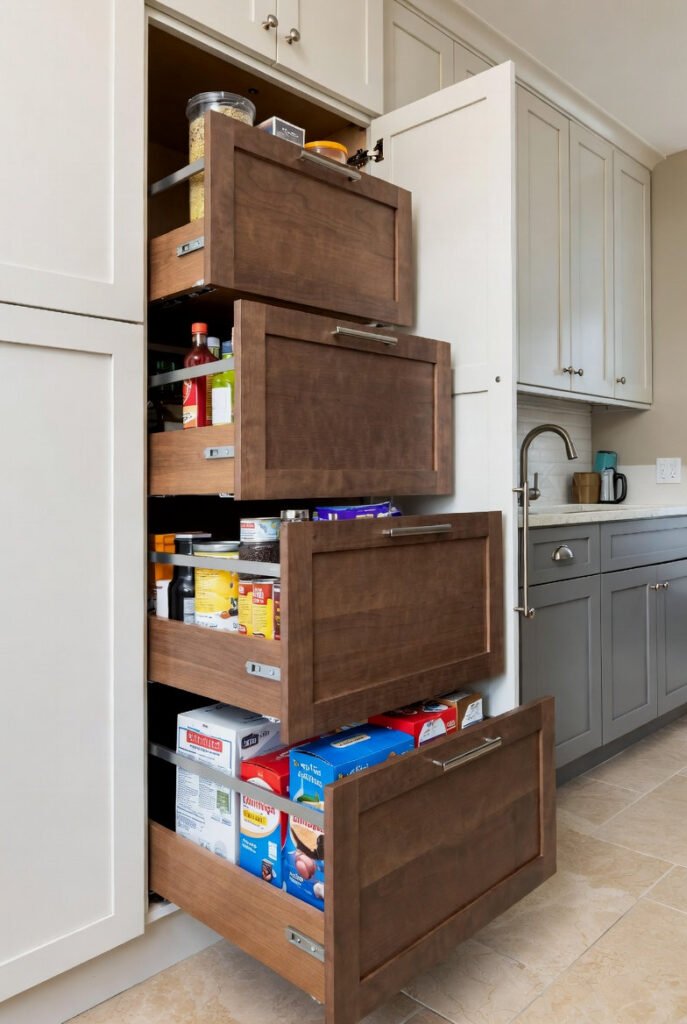
Sometimes you don’t need a new piece of furniture; you just need your current cabinets to work harder. Standard lower base cabinets are essentially deep, dark caves where boxes get lost. By retrofitting your existing base cabinets with heavy-duty sliding drawers, you instantly transform a useless cabinet into a highly functional, accessible pull-out pantry where nothing gets lost in the back.
12. Floor-to-Ceiling Corner Shelving
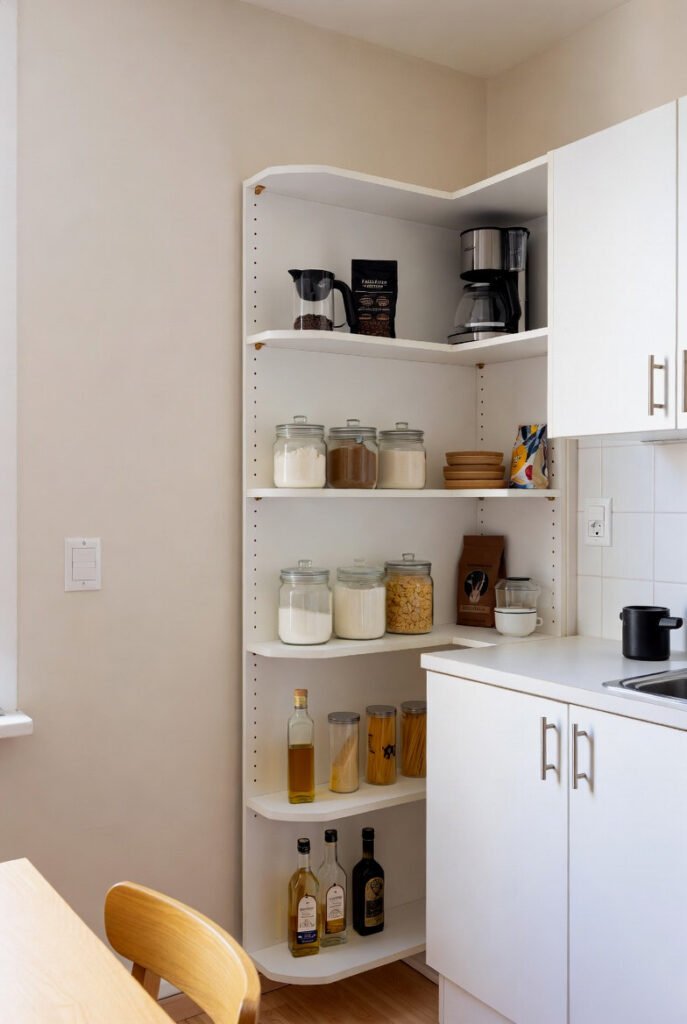
Do you have an awkward, tight corner where two walkways meet? Standard square furniture won’t fit there, but custom corner shelving will. By installing triangular floating shelves from the floor all the way to the ceiling, you capture a massive amount of vertical storage space while keeping the physical footprint minimal so traffic can still flow easily.
How do you add a pantry when you have no space?
If you have absolutely no floor space, you have to use your vertical and hidden spaces. The best methods are installing a slim rolling cart between your appliances, cutting a “between-the-studs” shelving unit into the drywall, or adding heavy-duty floating shelves directly above your door frames.
Can I use a bookcase as a pantry?
Absolutely! A bookcase makes a beautiful, budget-friendly open pantry. The key to making it look intentional (rather than messy) is decanting your dry goods into matching glass jars and using large, opaque woven baskets on the bottom shelves to hide brightly colored boxes and snack bags.
What is the minimum depth for a functional pantry shelf?
Pantry shelves do not need to be deep; in fact, shallow shelves are often better because food doesn’t get lost in the back. A shelf that is only 4 to 6 inches deep is perfect for spices, cans, and small jars. A shelf that is 10 to 12 inches deep is ideal for cereal boxes and larger decanting containers.