I’m tired of seeing guys trying to run a business or manage a career from a dining room chair with a laptop balanced on a pile of mail. It’s a recipe for burnout and mediocre work. I’ve been there—thinking I could just “grind it out” anywhere—but the truth is, your environment dictates your output. If your space is a mess, your workflow will be too. A solid workspace isn’t about fluff or expensive knick-knacks; it’s about building a machine that helps you do your best work without the stress of a cluttered, uninspired environment. It’s time to stop overthinking the “decor” and start focusing on the performance of your domain.
✨ Before You Start: The Masculine Home Office: A No-Nonsense Guide to Building a Productive Workspace Mindset
The Core Essentials of a Productive Domain
The Foundation: Building for Maximum Output
Your home office needs to be more than just a room with a computer; it needs to be a dedicated environment for deep focus. To do it right the first time, you have to prioritize the layout and the quality of your primary tools. Think of your office as a command center. Every element, from the texture of the desk to the angle of the light, should serve a single purpose: keeping you in the zone. Keep it simple and focus on high-quality materials that can withstand years of daily use.
Position your desk facing the door or a window. Never sit with your back to the entrance; it’s a subconscious distraction that breaks focus.
The Masculine Desk: Choosing the Right Foundation for Your Work
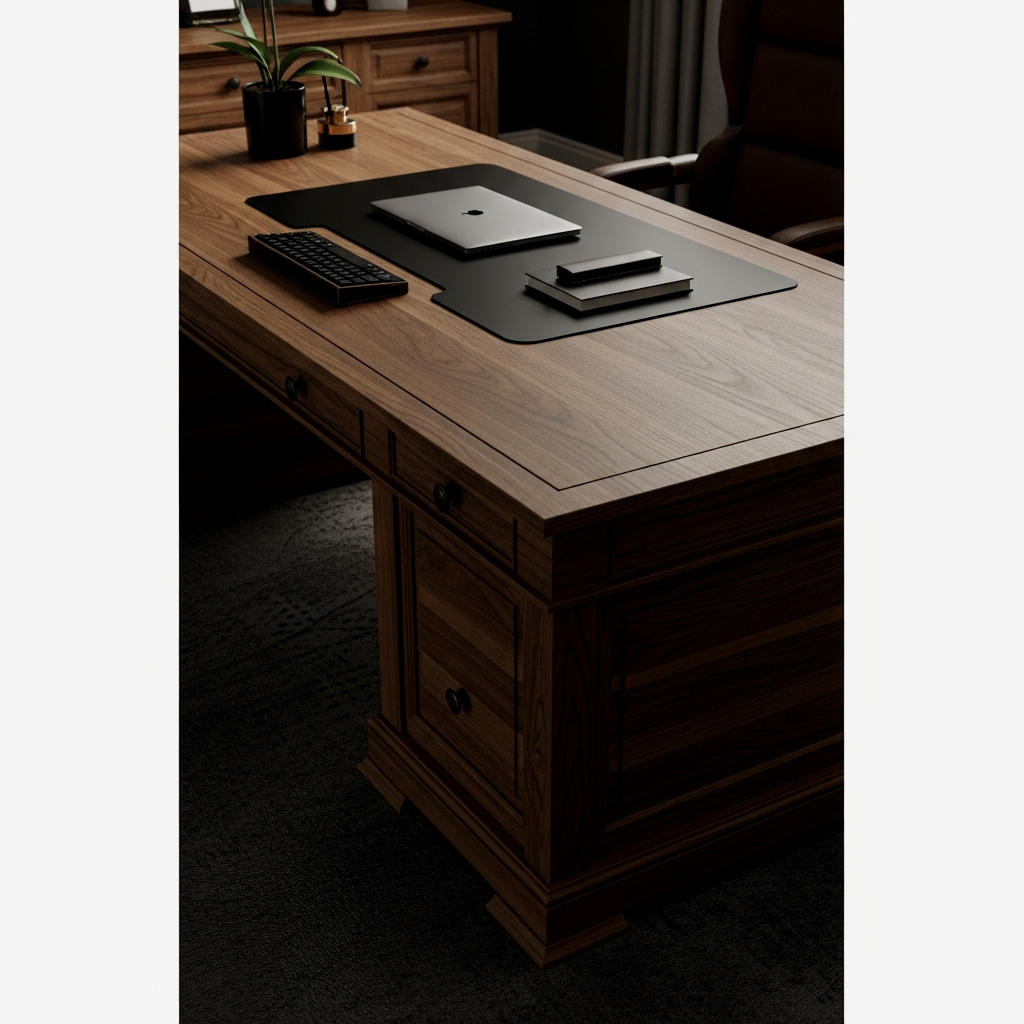
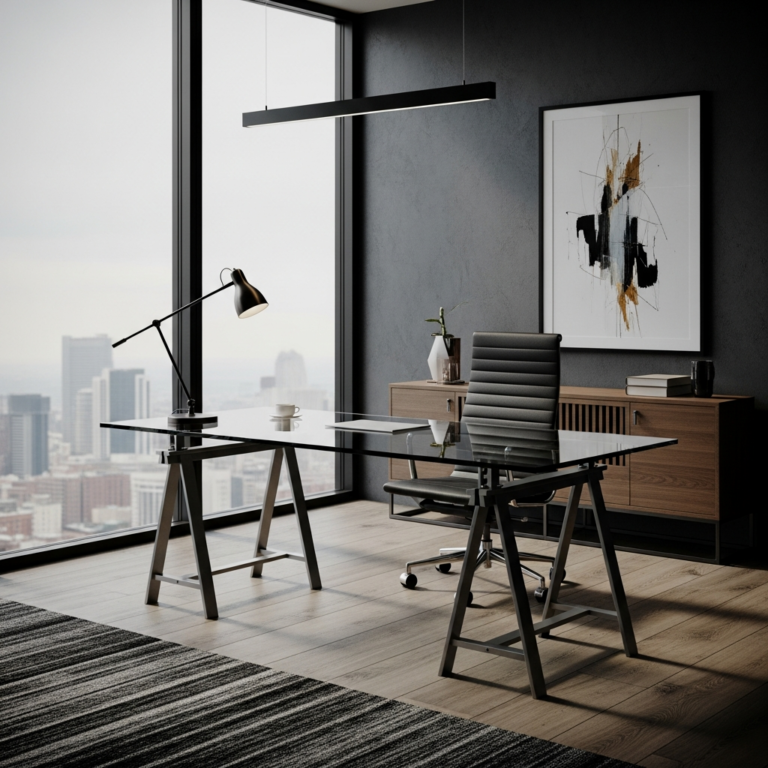
The desk is the heart of the operation. If you’re working on a flimsy flat-pack surface that wobbles every time you type, you’re doing yourself a disservice. A solid choice is a heavy, expansive surface that provides enough room for your monitors and your gear without feeling cramped. Whether you prefer a standing desk or a traditional executive setup, the material matters. You want something that feels substantial under your hands, like solid wood or high-grade laminate that mimics the texture of natural grain.
Want to explore this specific look further? I’ve done the full deep-dive so you don’t have to!
Walnut Wood Tones: Texture and Authority
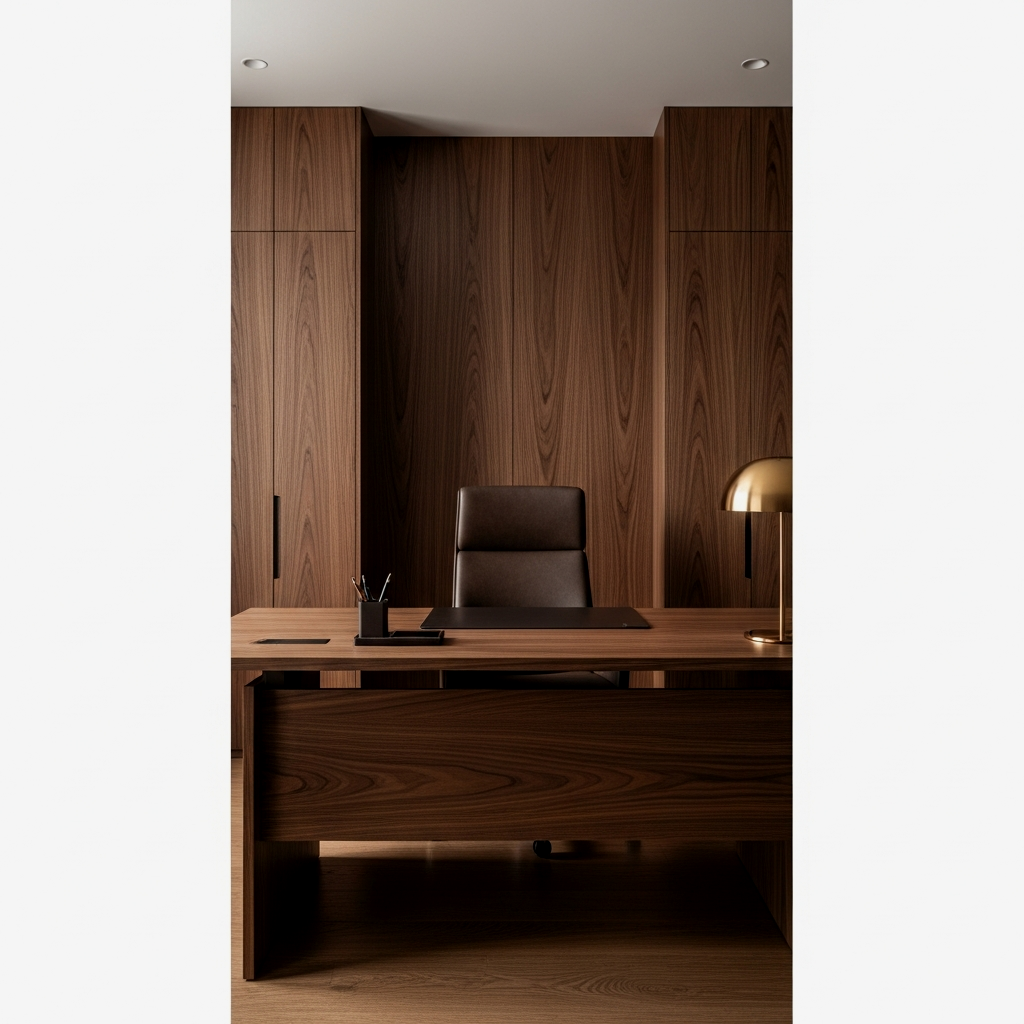
Walnut is a game changer for a masculine office. It’s dark, rich, and carries a sense of authority that lighter woods sometimes lack. The deep brown tones provide a perfect backdrop for matte black technology and leather accessories. It’s a timeless choice that doesn’t overthink it—it just looks good and feels expensive without being flashy. Using walnut for your desk or shelving instantly anchors the room and gives it a professional, established vibe.
Balance dark wood like walnut with neutral walls and metallic accents to prevent the room from feeling like a cave.
Oak Finishes: The Modern Professional Aesthetic
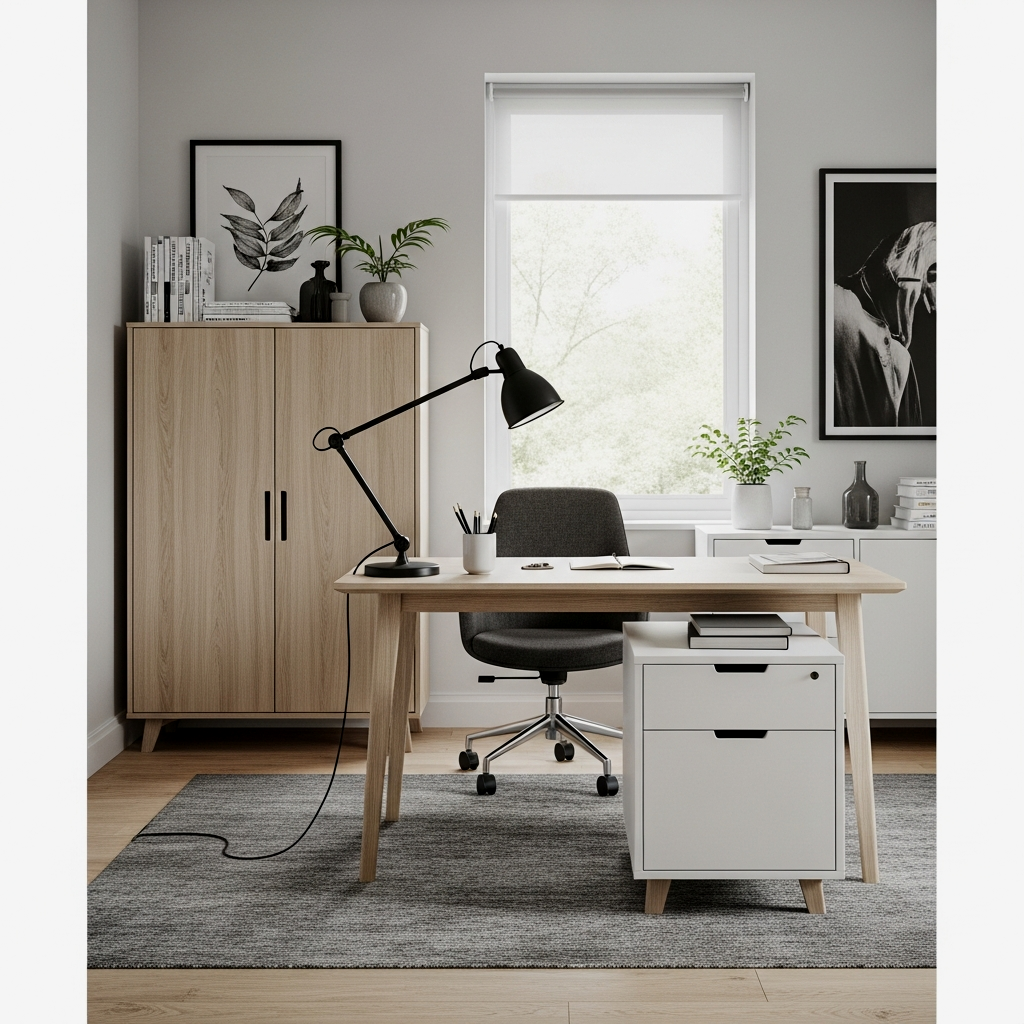
If walnut is traditional and authoritative, oak is its modern, energetic cousin. White oak finishes bring a clean, architectural look to a workspace. It’s a solid choice for smaller rooms where you want to maintain a sense of space without sacrificing the durability of real wood. Oak has a prominent grain that adds necessary texture to a minimalist setup, keeping the environment from feeling too sterile or cold. It pairs exceptionally well with charcoal greys and navy blues.
Executive Seating: Finding a High-Performance Office Chair
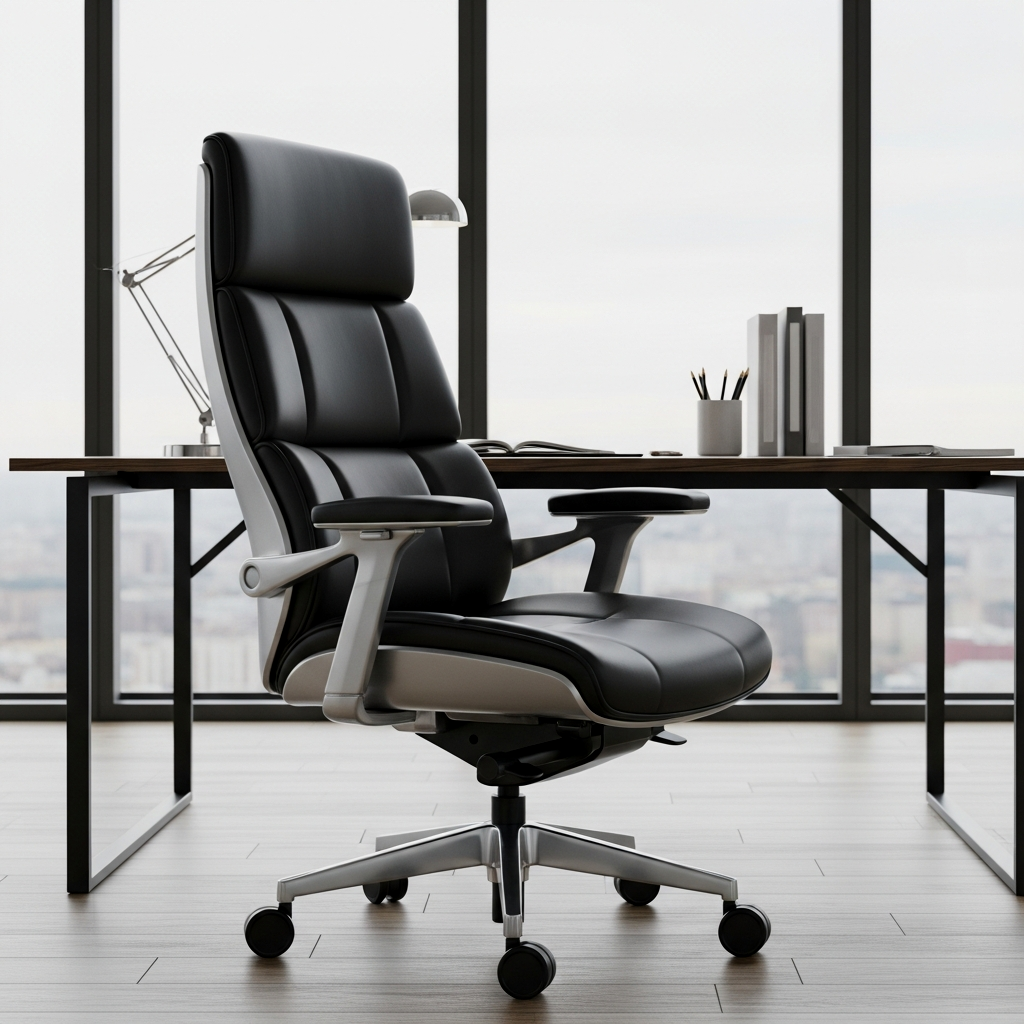
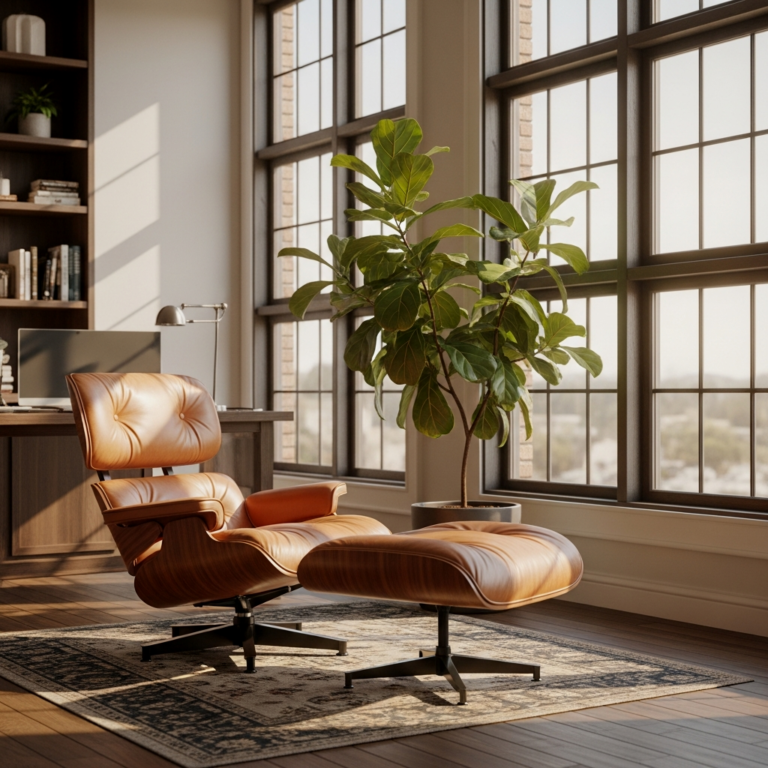
Don’t overthink the chair—just buy the best one you can afford. This is the one piece of equipment where “budget” usually means “back pain.” A high-performance chair should offer lumbar support, adjustable armrests, and breathable materials. Whether you go for a classic leather executive chair or a modern ergonomic mesh design, the goal is to be able to sit for four hours and forget the chair is even there. This is a primary tool for a no-stress workflow.
Matte Black Accents: Definition and Contrast
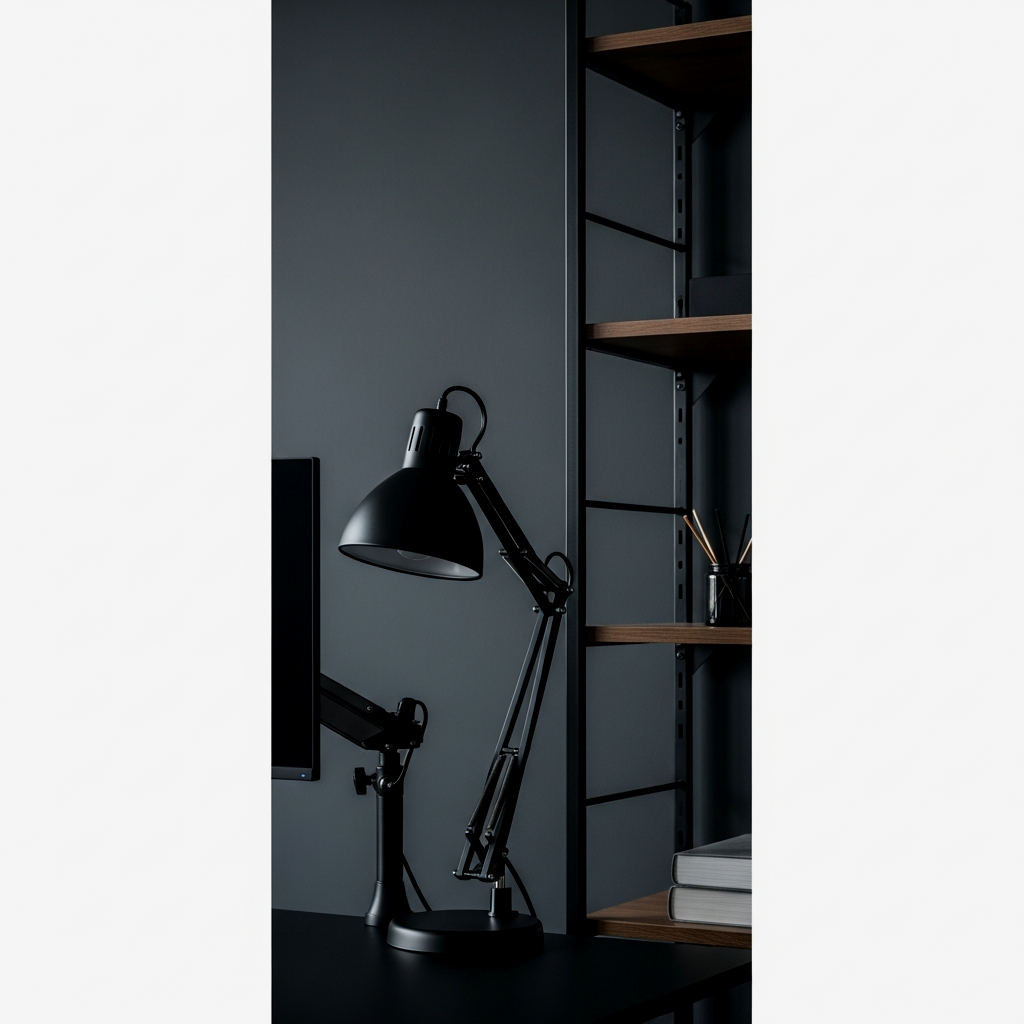
Matte black is the “uniform” of the modern masculine office. It provides sharp definition and contrast against wood grains. Use matte black for your desk lamp, monitor arms, drawer pulls, and even your stapler. It’s a straightforward way to unify a bunch of different tools into a cohesive aesthetic. Unlike chrome or shiny finishes, matte black doesn’t show fingerprints as easily and stays looking clean with minimal effort.
When using matte black, ensure you have multiple light sources. Flat black absorbs light, so you’ll need extra illumination to keep the workspace functional.
Home Office Lighting: Setting the Mood for Focused Work

Lighting is often the most neglected part of a home office, but it’s critical for performance. You need a mix of task lighting (a solid desk lamp) and ambient lighting to reduce eye strain. Avoid harsh overhead fluorescent bulbs that make the place feel like a cubicle. Instead, opt for warm-toned LEDs that keep the mood focused but relaxed. Proper lighting allows you to work longer hours without the mental fatigue that comes from squinting at a screen in a dark room.
The exact pieces that make these ideas work:
Refining the Workspace
Small Masculine Office Ideas: Maximizing Performance in Tight Spaces
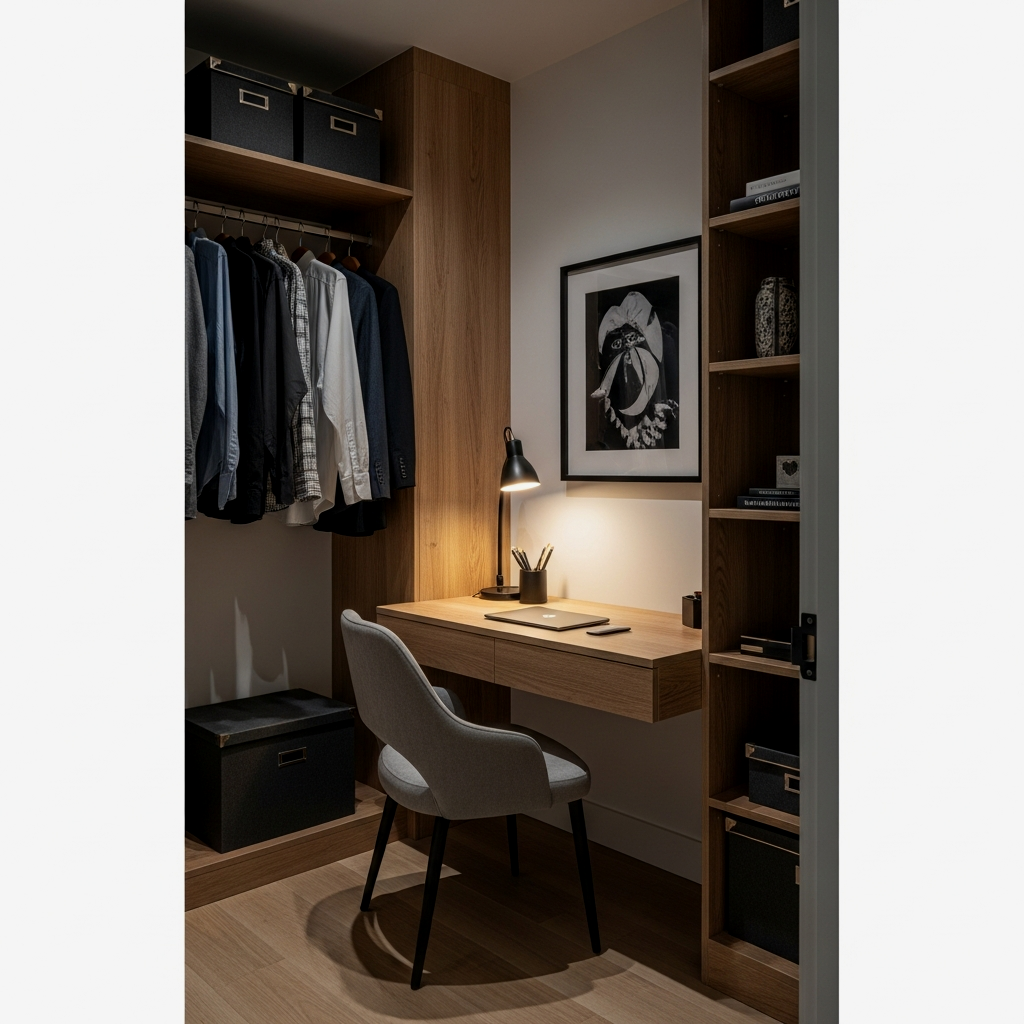
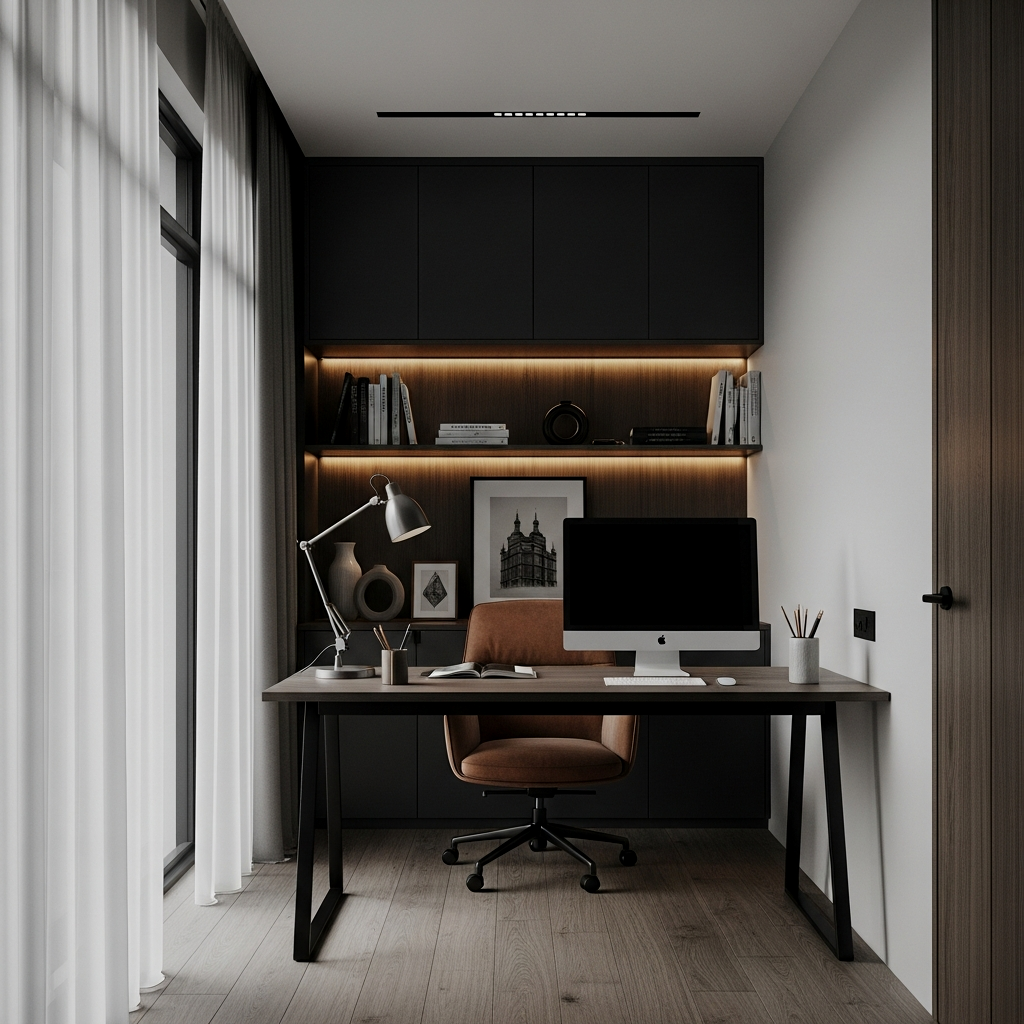
You don’t need a sprawling corner suite to be productive. If you’re working with a small spare room or a nook in the bedroom, the key is precision. Every inch has to earn its keep. Focus on a “less is more” approach by selecting a streamlined desk and utilizing vertical space for storage. A small space can actually be a game changer for focus because it forces you to eliminate distractions and keep only what is essential for the job at hand.
Want to explore this specific look further? I’ve done the full deep-dive so you don’t have to!
Office Organization: Storage Solutions for the Modern Professional
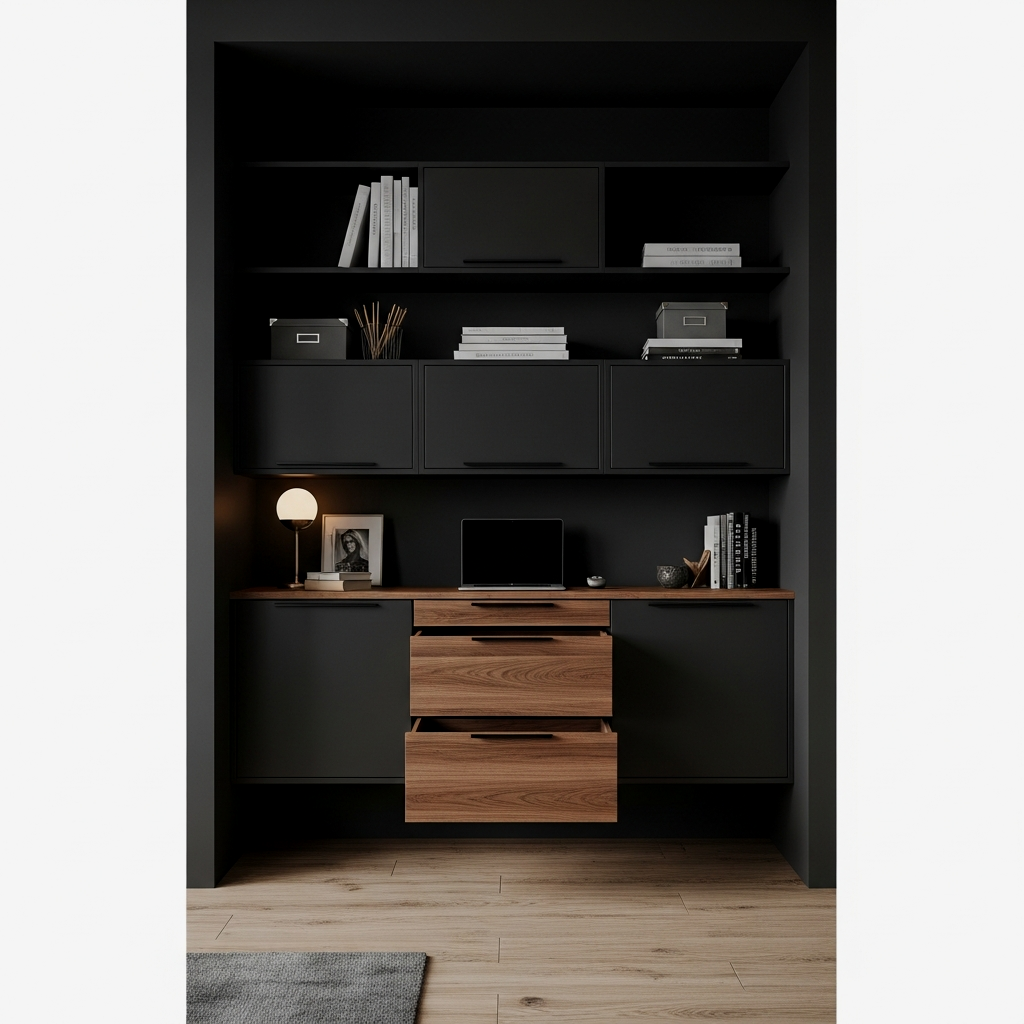
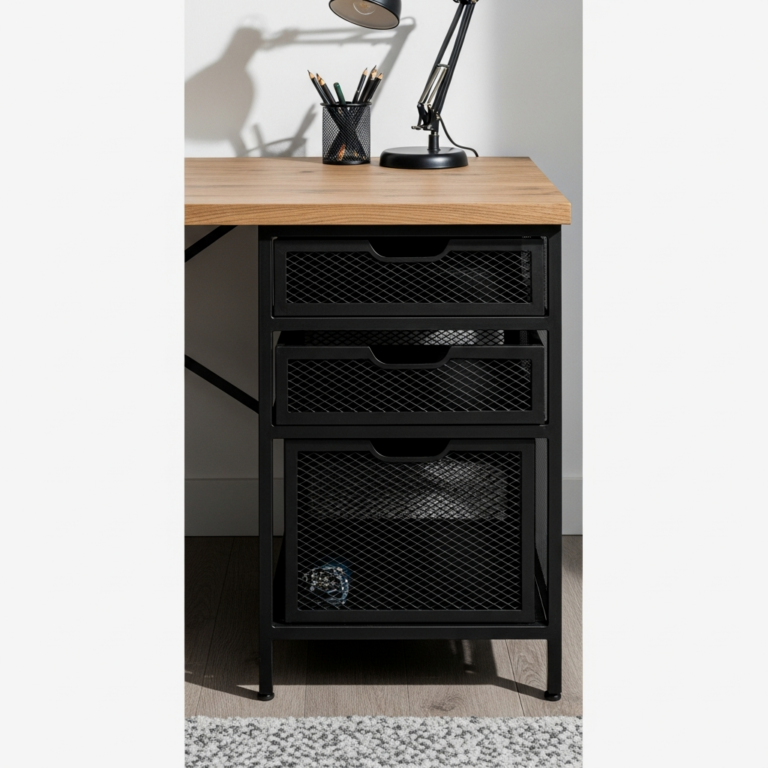
Clutter is the enemy of a no-stress workflow. If you’re digging through piles of papers to find a pen, you’re losing momentum. A professional organization system uses a mix of closed storage (cabinets) to hide the mess and open storage (shelves) for the things you use daily. Use uniform bins and trays to categorize your gear. When everything has a designated home, cleaning up at the end of the day takes two minutes, ensuring you start the next morning with a clean slate.
Masculine Office Decor: The Clean Aesthetic Guide
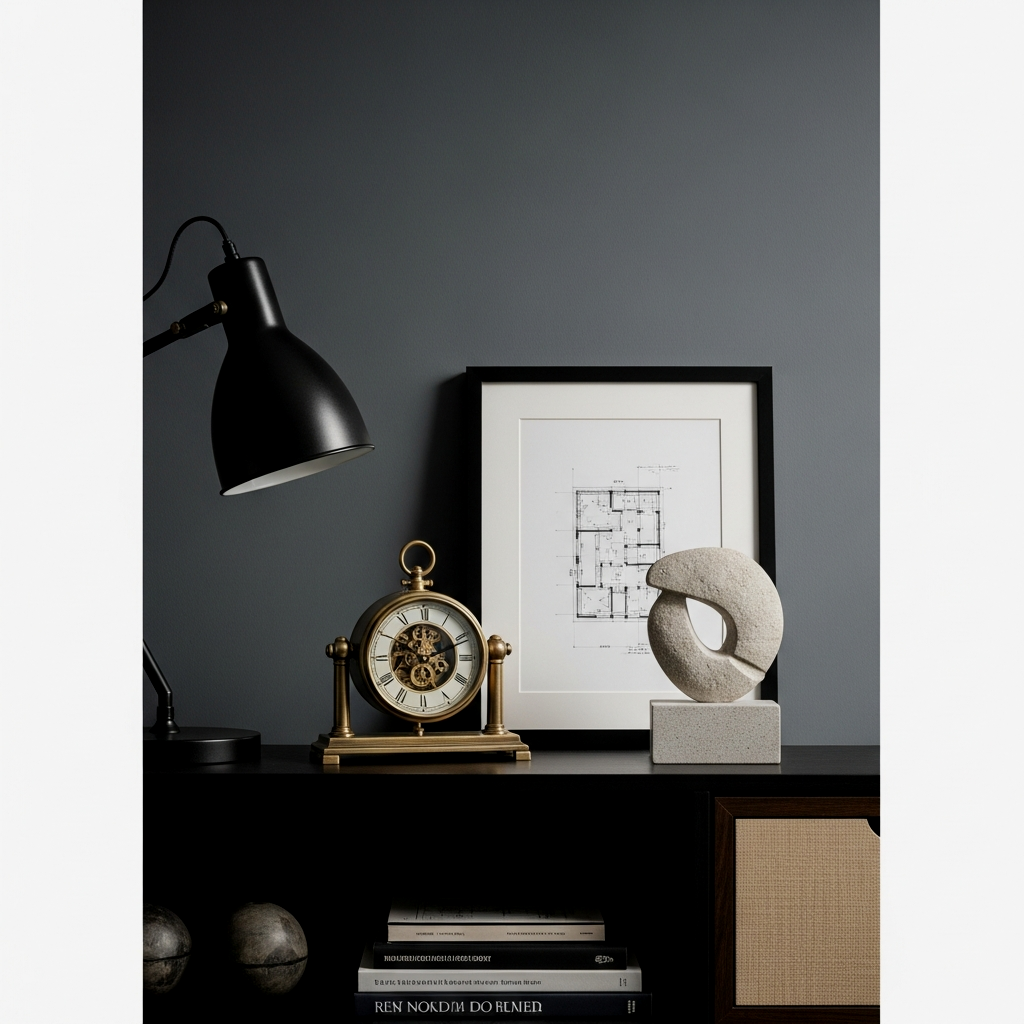
Decor in a masculine office should be intentional, not decorative. One or two pieces of high-quality art or a single architectural plant can make the room feel complete without cluttering your vision. Think about things that inspire you—maybe a framed map or a vintage patent print. Avoid the urge to fill every shelf. The “clean aesthetic” is about letting the materials like the wood and the leather do the talking. If it doesn’t have a purpose or a strong personal connection, leave it out.
Want to explore this specific look further? I’ve done the full deep-dive so you don’t have to!
Leather Accents: Tactile Luxury and Longevity
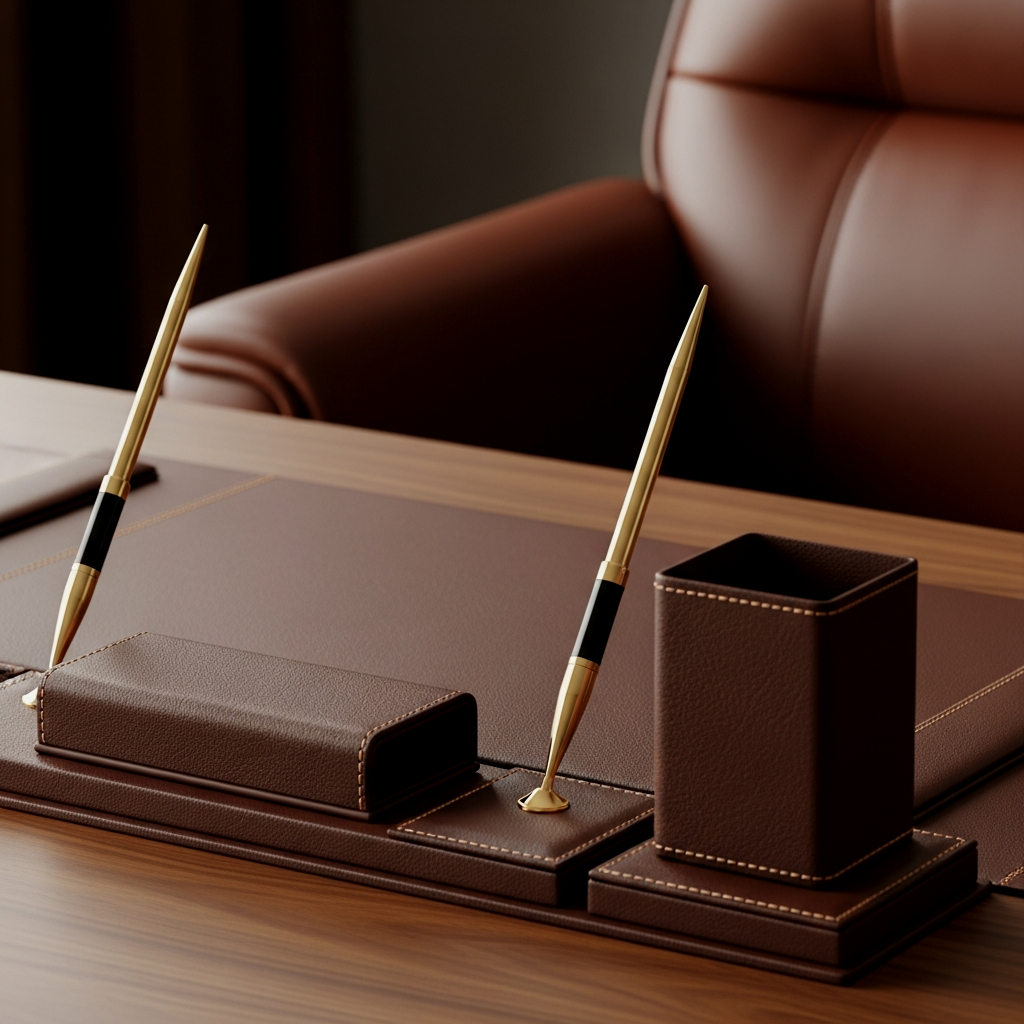
Leather is the ultimate “buy once, cry once” material. A leather desk mat is a solid choice because it protects your desk while providing a smooth, warm surface for your arms. It ages beautifully, developing a patina that tells a story of your work over the years. Beyond aesthetics, leather provides a high-end tactile experience that makes the simple act of sitting at your desk feel more like an event. It adds a layer of “tactile luxury” that reinforces the professional nature of the space.
Use a dedicated leather conditioner once every six months on your desk mat and chair to prevent cracking and keep the material supple.
Your desk is the anchor of your entire office. Learn how to choose a surface that balances size, durability, and style.
Advanced Setup and Logistics
Strategic Layouts: Designing for Deep Focus
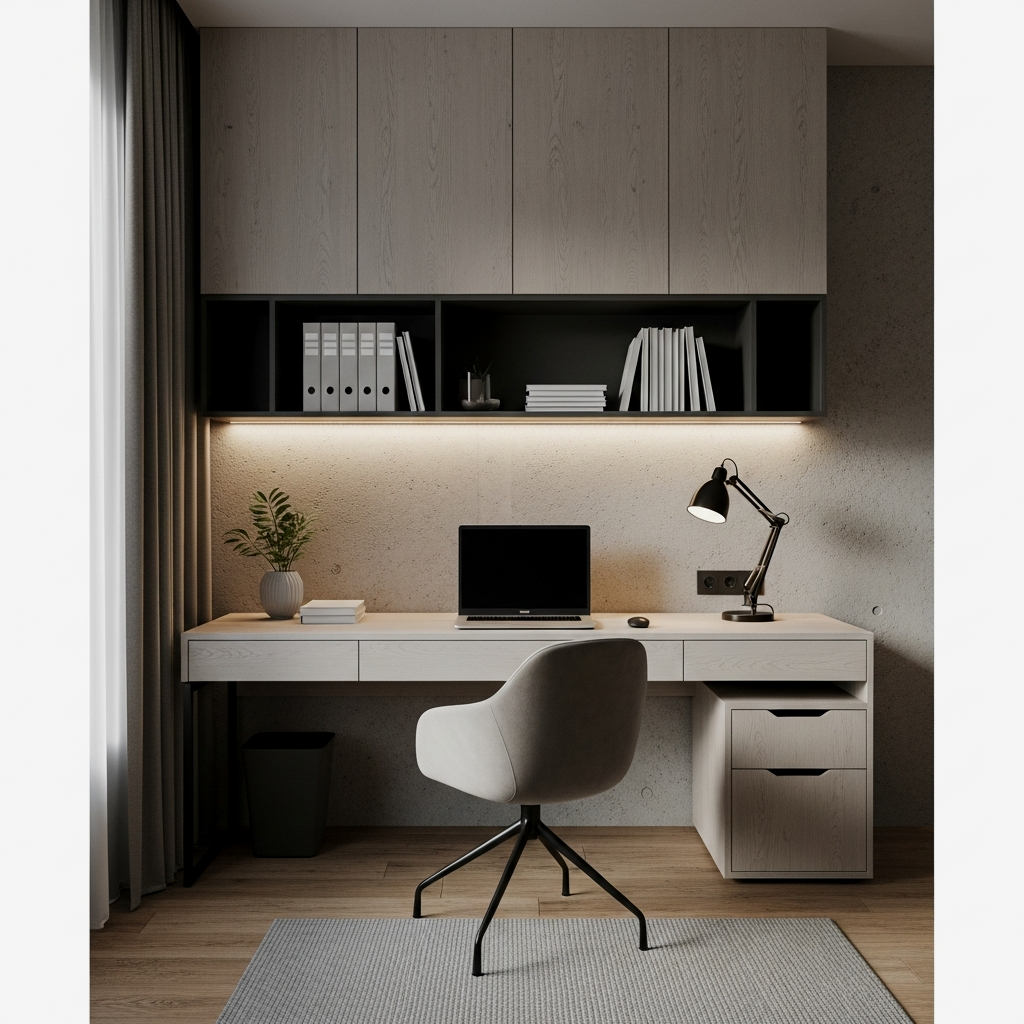
Layout is about more than where the furniture fits; it’s about how you move within the space. Keep your most-used items within arm’s reach. If you frequently need to reference physical files, place that storage to your left or right. If your work is 100% digital, keep the desk surface clear for just your peripherals. A strategic layout minimizes the physical “friction” of doing your job, allowing you to stay in a state of flow longer.
Cable Management: Creating a No-Stress Workflow
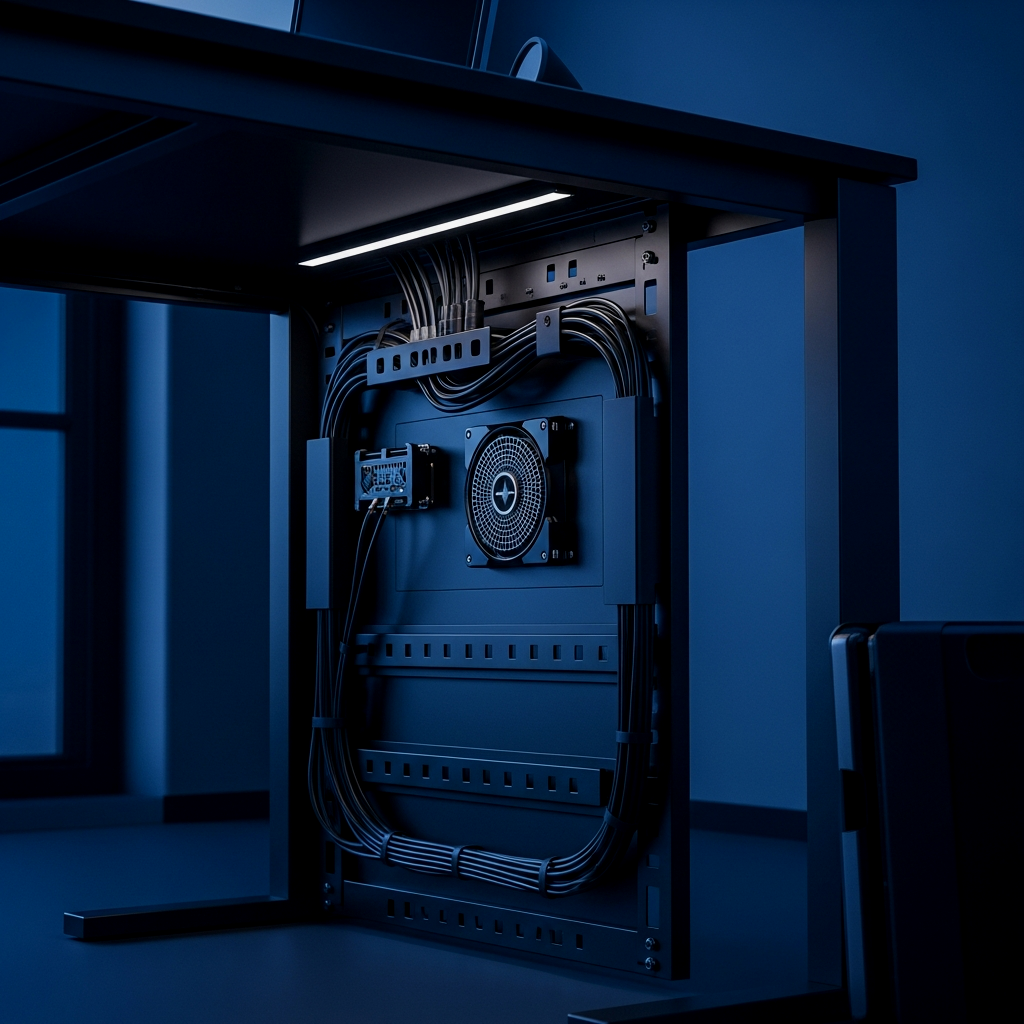
Nothing kills the vibe of a clean, masculine office faster than a “spaghetti” pile of wires hanging off the back of the desk. Cable management is a non-negotiable step for a professional look. Use under-desk trays, cable sleeves, and adhesive clips to hide every single wire. When the wires are gone, the clean lines of your oak or walnut desk can finally shine. It’s a small detail that has a massive impact on the visual calm of the room.
Vertical Storage: Utilizing Every Square Inch
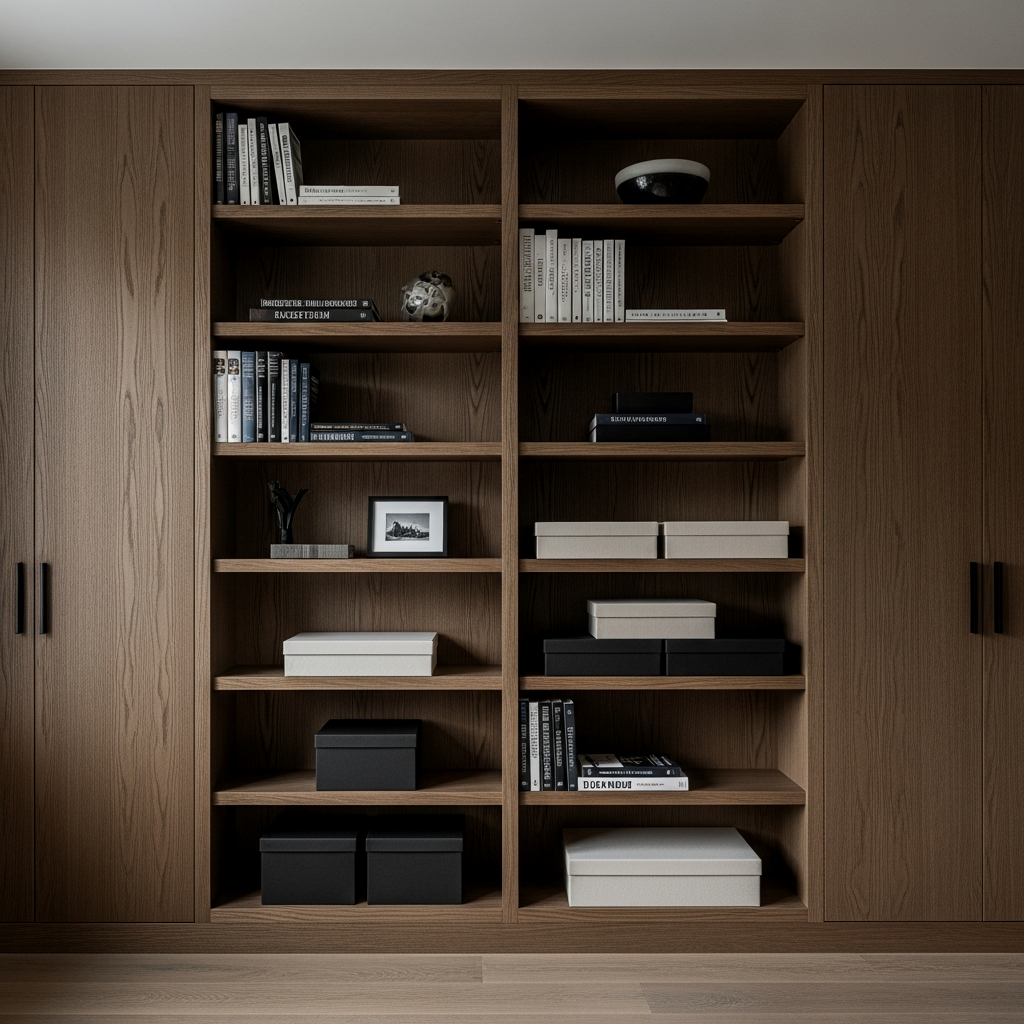
If your floor space is limited, look up. Floating shelves in a matching wood tone are a great way to store books, reference materials, or a few curated pieces of decor without taking up precious square footage. Vertical storage keeps your “tools of the trade” visible but out of the way. It also helps draw the eye upward, making a standard-sized room feel taller and more expansive.
When installing shelves, align them with the top of your monitor or a window frame to create a clean horizontal line that feels intentional.
The Command Center: Dual Monitor Setups for Efficiency
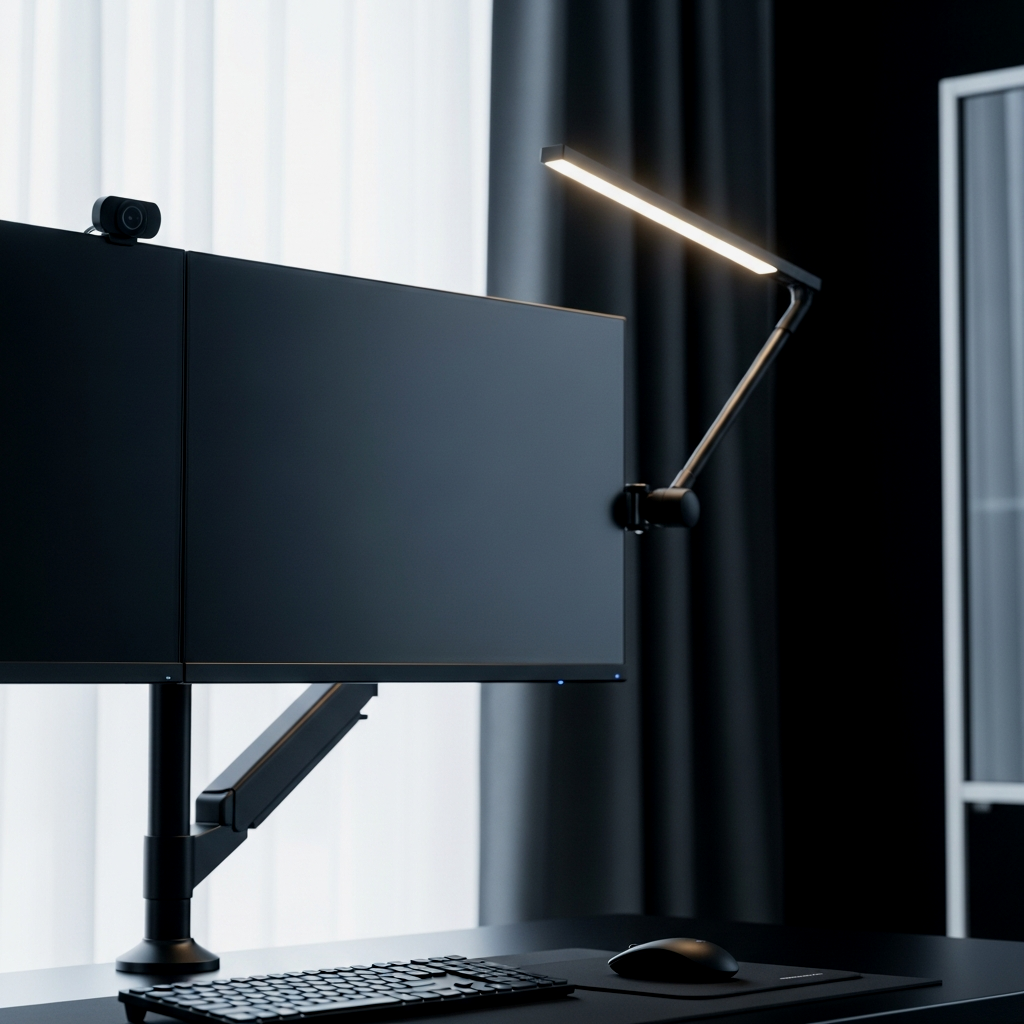
For most of us, one screen isn’t enough. A dual monitor setup mounted on an adjustable matte black arm is a game changer for productivity. It frees up desk space and allows you to keep your neck at a neutral angle. Ensure your monitors are the same size and height to maintain symmetry. This isn’t just about more screen real estate; it’s about creating an efficient workspace where you don’t have to toggle between tabs constantly.
Acoustic Quality: Incorporating Sound-Dampening Materials
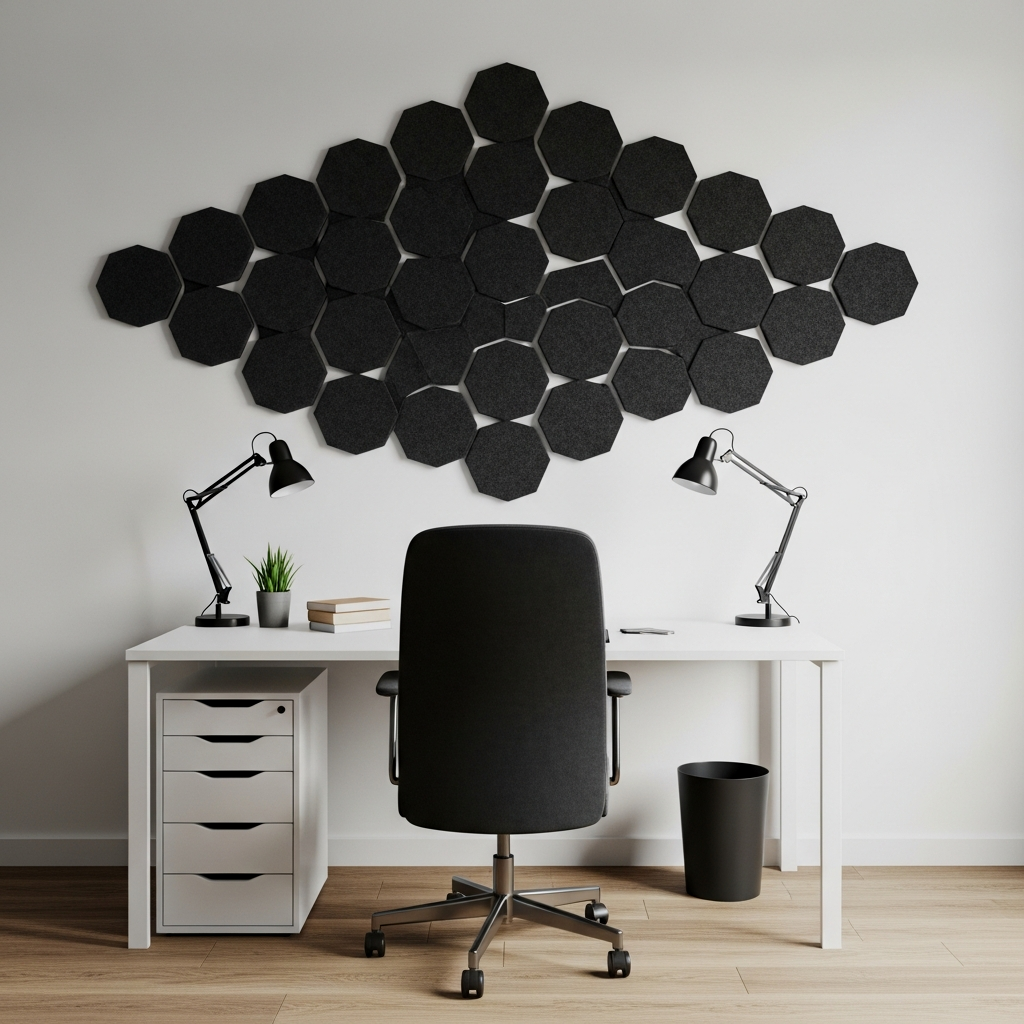
If your office has hardwood floors and bare walls, your Zoom calls probably sound like you’re in a cave. Acoustic quality matters. A heavy area rug not only adds a layer of texture and comfort but also dampens sound. You can also add felt wall panels or even heavy curtains to absorb echoes. It makes the environment feel more “solid” and private, which is essential for focused work sessions and professional calls.
Natural Light Integration: Boosting Mood and Energy
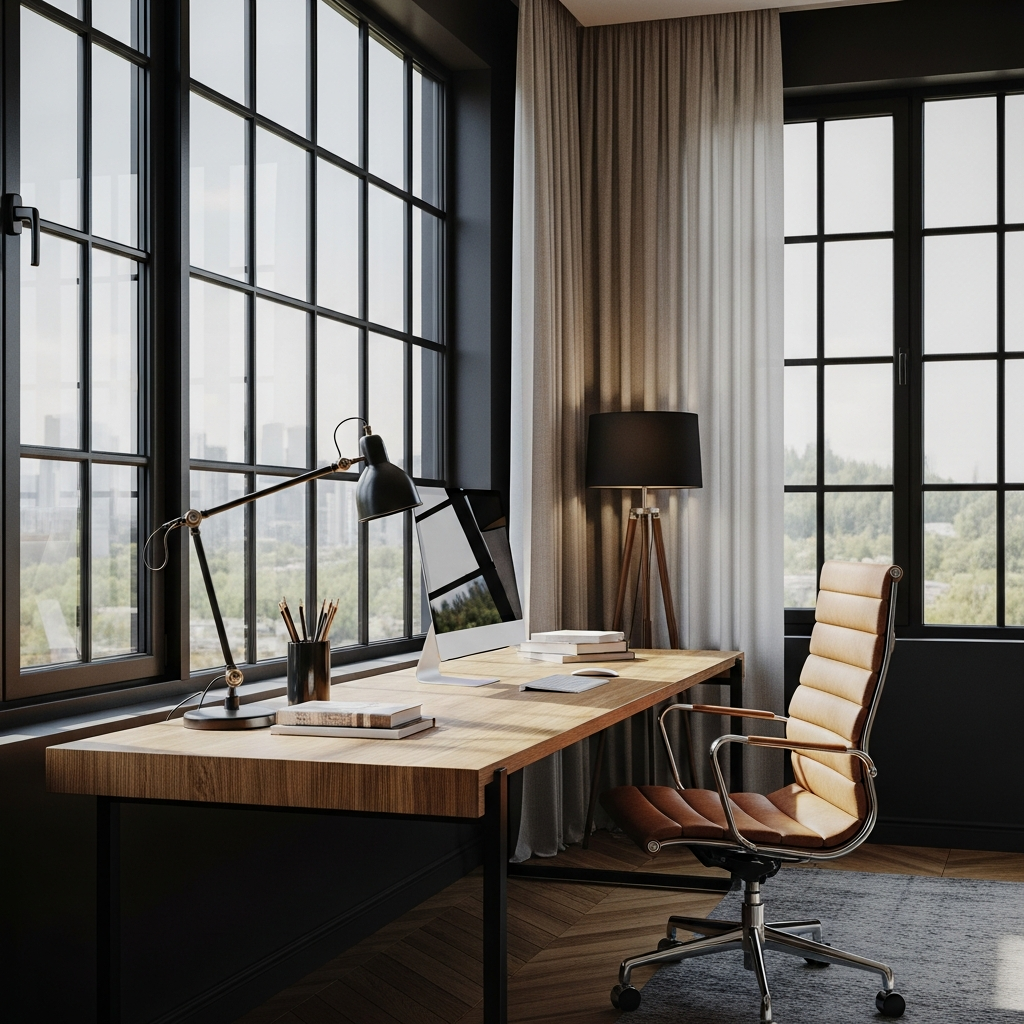
Natural light is the best tool you have for staying energized during the afternoon slump. Position your desk so the light hits from the side to avoid glare on your screen. If you have a view, take advantage of it. Looking at something in the distance every 20 minutes is a proven way to reduce eye fatigue. It connects your workspace to the outside world, keeping the “domain” from feeling like a prison.
The Hardware Palette: Metals and Stones
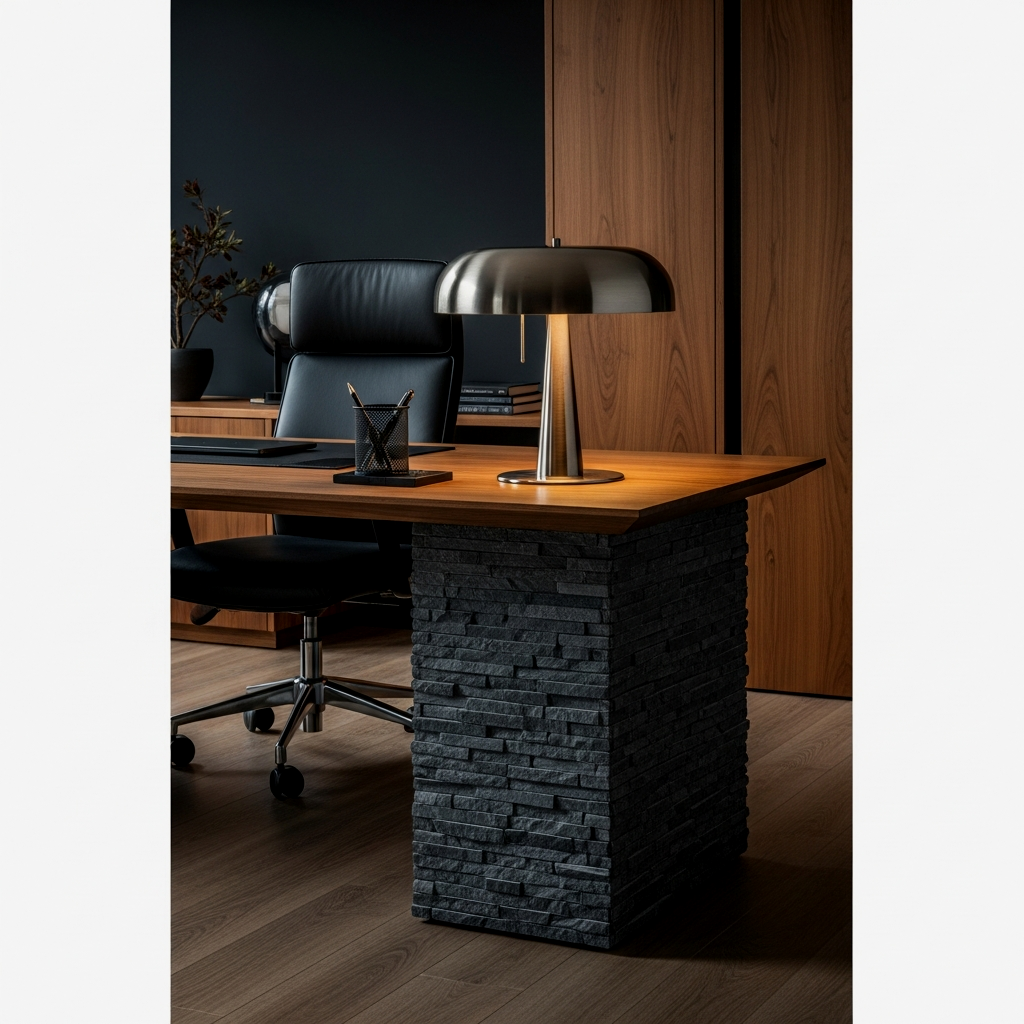
Beyond wood, consider the hardware. Solid brass, brushed steel, or even marble coasters add a heavy, masculine feel to the setup. These materials offer a cold, hard contrast to the warmth of wood and leather. Small details like a stone tray for your keys and watch or a metal pen cup reinforce the idea that this is a space built with permanence in mind. Avoid plastic whenever possible.
Minimalist Hardware: The Power of Less
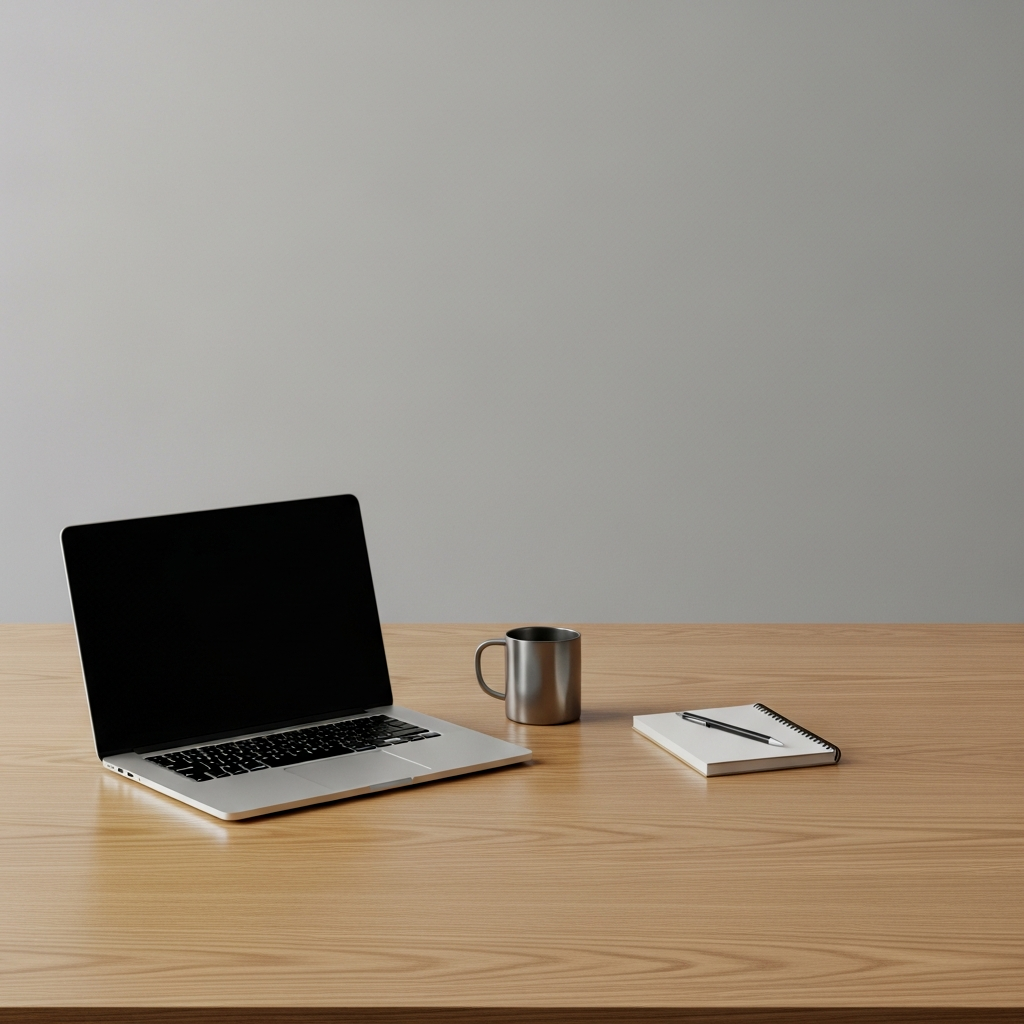
When it comes to drawer pulls or cabinet handles, keep them minimalist. Flat bars or simple knobs in matte black or brushed nickel are the way to go. You want the hardware to disappear into the design, not stand out as a decorative feature. This “power of less” approach ensures that the focus remains on the overall aesthetic and functionality of the room rather than individual shiny objects.
If your desk came with cheap plastic handles, swap them out for heavy metal ones. It’s a $20 upgrade that makes the whole piece feel custom.
📏 The Masculine Home Office: A No-Nonsense Guide to Building a Productive Workspace Quick-Win Checklist
- Desk Surface: Solid wood (Walnut or Oak) with at least 50 inches of width.
- Chair: Ergonomic support with adjustable height and tilt.
- Cables: 100% hidden using under-desk trays and clips.
- Lighting: Dedicated task lamp plus ambient warm light.
- Clutter: No more than three non-essential items on the desk surface.
Defining Your Domain: The Impact of Physical Environment
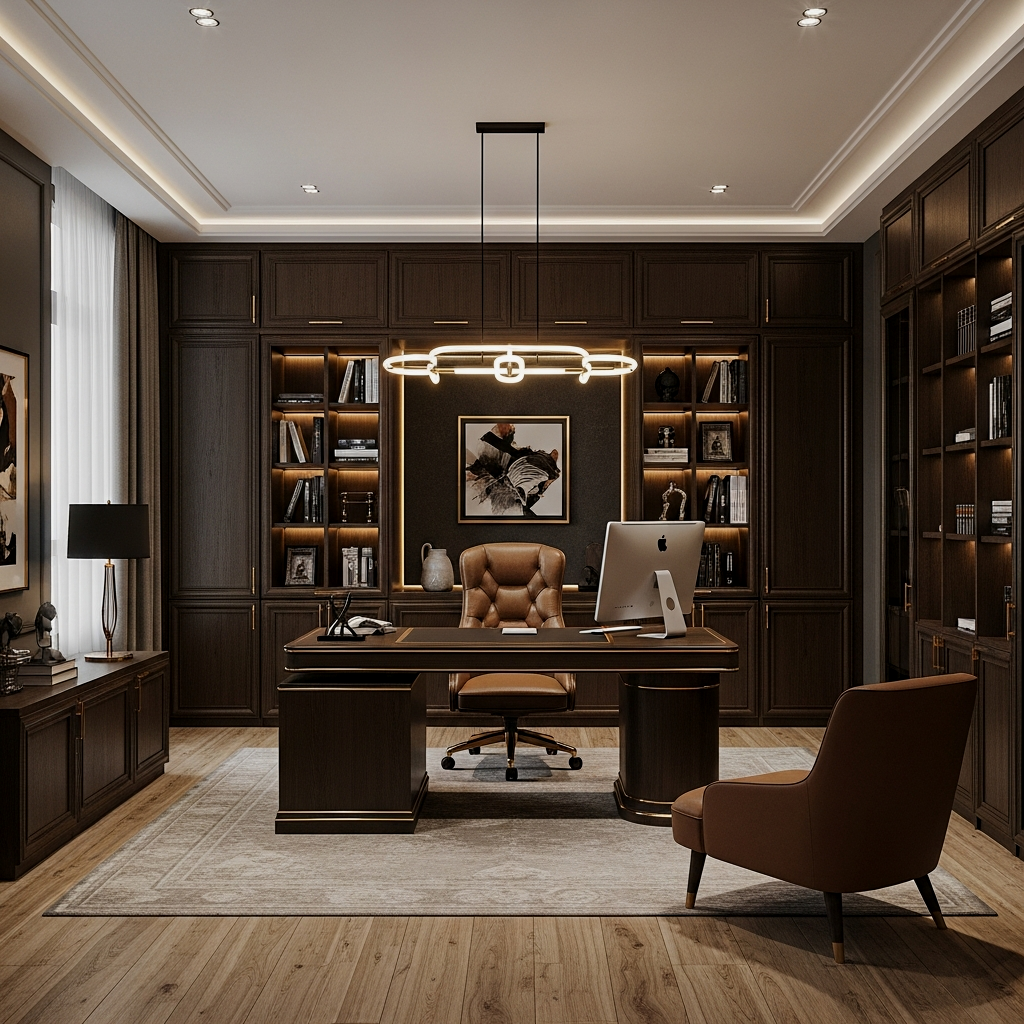
At the end of the day, your office is a reflection of your professional standards. When you walk into a room that is organized, well-lit, and built with quality materials, you mentally switch into “performance mode.” Defining your domain isn’t about vanity; it’s about respecting your time and your work enough to give it the proper setting. Build it right the first time, and it will serve you for years to come.
Creating a high-performance masculine home office doesn’t have to be a source of stress. By focusing on the fundamentals—solid wood, ergonomic seating, and smart organization—you build a space that works as hard as you do. Take the time to explore the deeper guides on lighting and seating to ensure every piece of your workspace is a solid choice. Your future productivity depends on it.
What is the best wood for a masculine office desk?
Walnut is the top choice for an authoritative, traditional look, while White Oak offers a cleaner, more modern aesthetic. Both are durable, solid choices that last for decades.
How do I make a small office feel more masculine?
Focus on high-quality materials like leather and matte black hardware. Use vertical storage to keep the floor clear and stick to a minimalist “less is more” philosophy to avoid clutter.
Why is cable management important for productivity?
Visible cables create visual noise, which can lead to subconscious stress and distraction. A clean, wire-free desk allows for better focus and a more professional environment.
Should I choose a leather or mesh office chair?
Leather offers a classic executive look and tactile luxury, while mesh provides better breathability for long hours. Choose based on your local climate and personal comfort needs, but always prioritize ergonomic support.
What is the best lighting setup for a home office?
A mix of natural light from the side, a dedicated task lamp for your desk, and warm ambient light to fill the room. Avoid harsh overhead lights to reduce eye strain and fatigue.