There’s something about a masculine desk that instantly changes how a space feels, and honestly, it’s rarely about going over the top or trying too hard. It’s more subtle than that. It’s the weight of the materials, the balance between clean lines and lived-in texture, and the kind of quiet confidence that comes from a setup that actually works for you. I’ve seen so many people chase the look without really understanding why certain desks feel elevated while others just feel… empty.
What you’ll notice as you go through this is that a masculine desk isn’t just one specific style. It’s a mix of intentional choices, like pairing wood with metal for that grounded, industrial feel, or keeping things minimal so the space stays sharp and distraction-free. And the difference really comes down to the details most people overlook, from texture to layout to how everything ages over time.
By the end, you’ll start to see exactly what makes a desk feel masculine in a way that’s natural, not forced, and you’ll pick up on the small shifts that make a huge difference without needing a full redesign.
A desk isn’t just a flat surface for your laptop; it’s the anchor of the entire room. If the desk is flimsy, the whole office feels temporary. I’ve learned the hard way that you need something with real visual weight—something that says you’re here to work, not just passing through. Choosing the right centerpiece is the first step in The Masculine Home Office: A No-Nonsense Productivity Guide, and if you get this wrong, the rest of the room won’t save you.
✨ Before You Start: The Centerpiece: How to Choose the Perfect Masculine Desk Mindset
The Power of the Solid Foundation
When we talk about a masculine desk, we’re talking about presence. You want a piece that feels permanent, like it was built into the house itself. This is where the “Executive Plinth” style comes in—desks that ditch the four skinny legs for solid, heavy bases. It changes the way you sit and the way you work.
The Executive Plinth: Solid Walnut Monolith
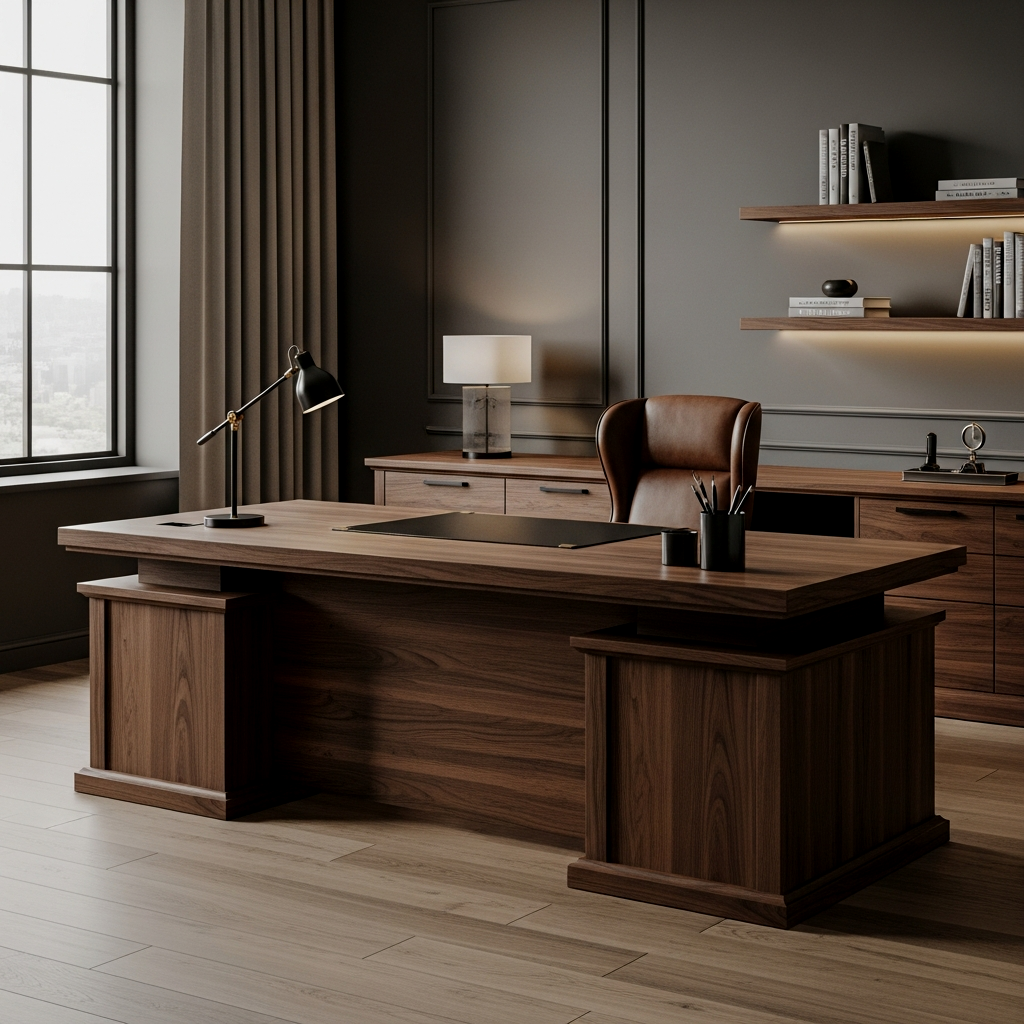
There is nothing quite like solid walnut. It’s dense, dark, and has a grain pattern that adds character without being loud. A monolith-style desk—where the sides are just as thick as the top—creates a solid block of wood that acts as the room’s gravitational center. It’s a solid choice for anyone who wants a clean, minimalist look that still feels powerful. Don’t overthink the finish; a matte oil rub is usually enough to let the wood speak for itself.
Since these desks are incredibly heavy, place them on a low-pile rug to protect your flooring and keep the desk from shifting over time.
The Executive Plinth: Stone and Oak Gravity
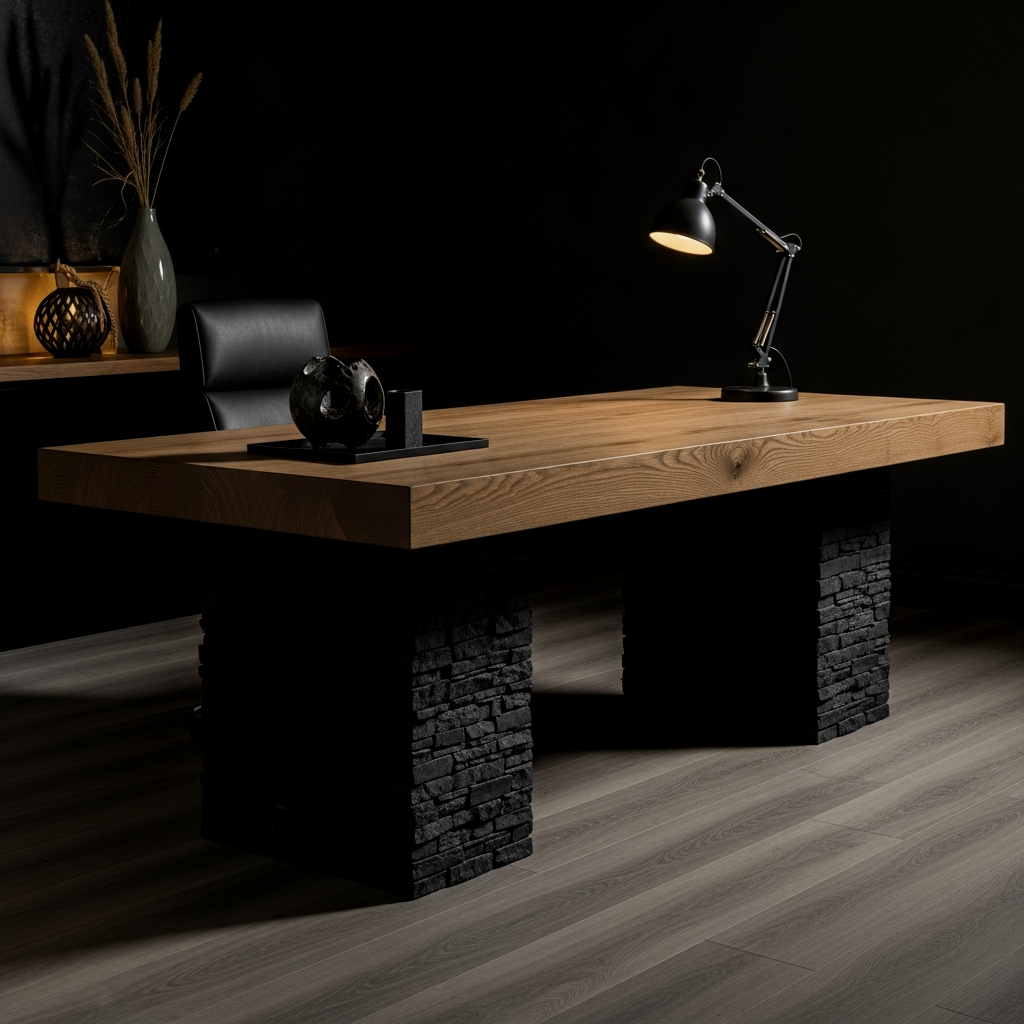
Mixing materials is a great way to show you know what you’re doing with interior design. Pairing a thick white oak top with stone slab legs—like slate or honed marble—gives the desk an architectural feel. It’s cold, hard, and permanent. This setup works exceptionally well if you’re trying to establish executive presence with professional masculine office decor. The oak keeps it from feeling like a tomb, while the stone provides the “anchor” effect every office needs.
Industrial Metal and Wood Mixes: The I-Beam Aesthetic
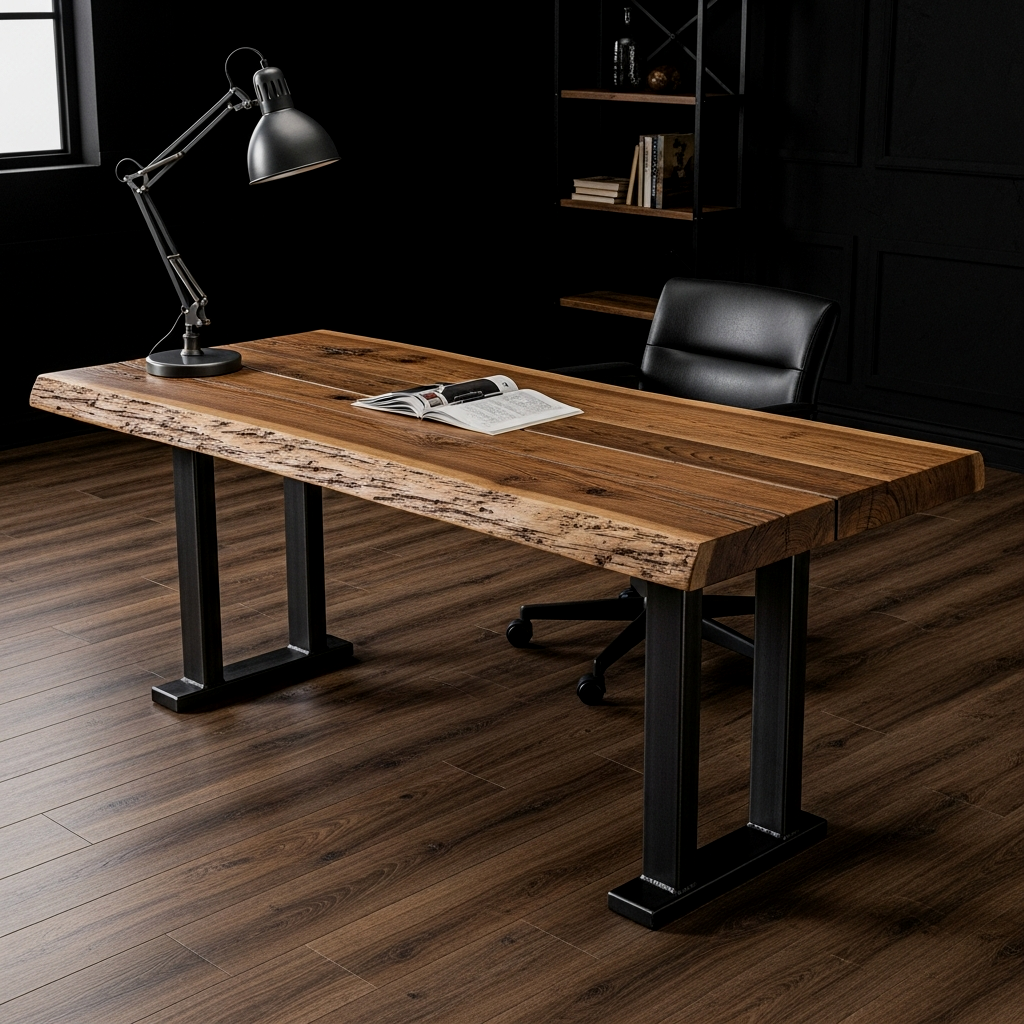
For those who want a masculine home office with a bit of an edge, the I-beam look is a game changer. Using actual structural steel components for the base paired with a reclaimed wood top creates an immediate sense of strength. It’s straightforward and practical. The contrast in materials—the cold steel and the warm, lived-in wood—is genuinely life-changing for the room’s energy. It shifts the vibe from “corporate office” to “workshop of a leader.”
Follow the 70/30 rule for materials: 70% natural wood or stone and 30% metal accents. This ensures the desk feels high-end and intentional rather than just a collection of scrap parts.
Industrial Metal and Wood Mixes: Riveted Steel and Leather
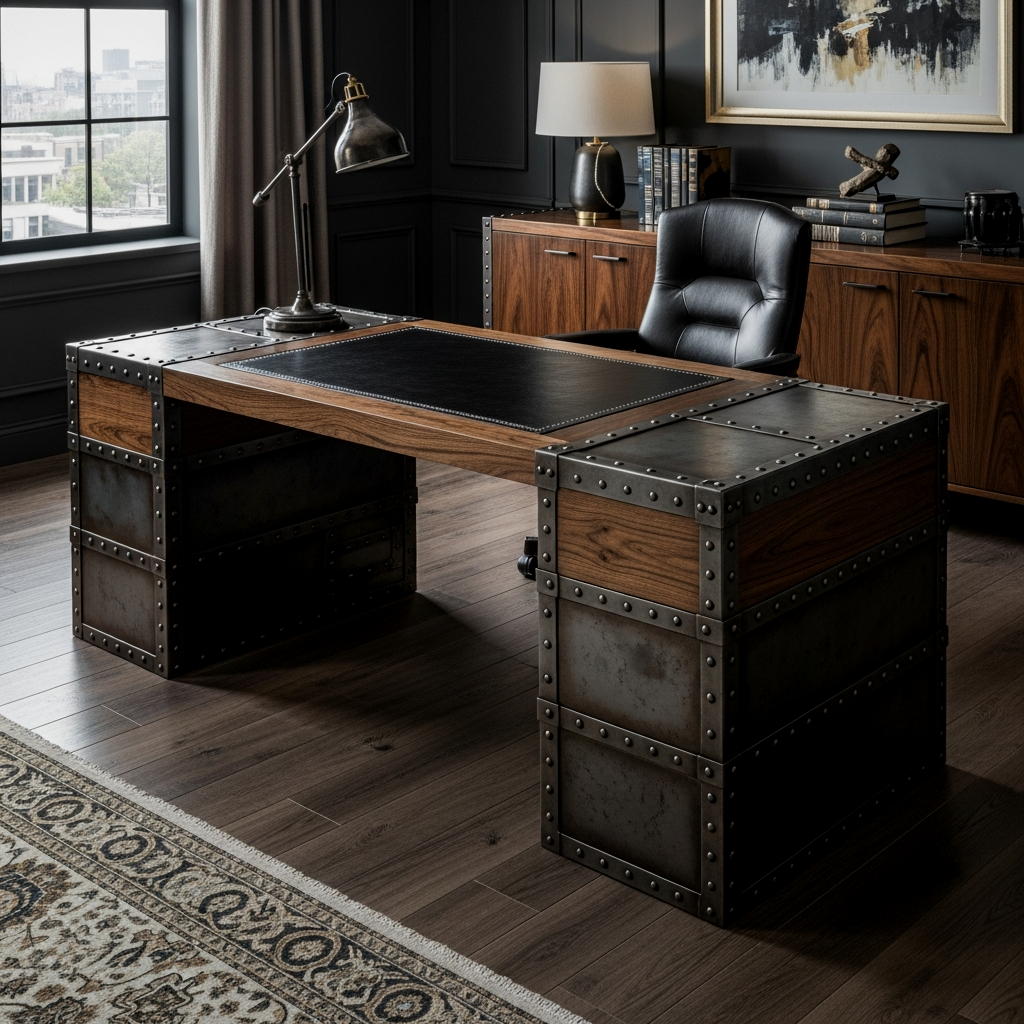
If you want something with more texture, look for a desk that incorporates riveted metal plates and a leather writing surface. The leather isn’t just for show; it’s a functional addition that provides a better surface for writing and mouse movement than cold metal or hard wood. This is the kind of piece you’d find in a high-stakes environment. Keep it simple by pairing it with minimal accessories—the desk itself is doing the heavy lifting here.
Modern Functionality Meets Classic Style
A desk can look like it belongs in the 1920s, but it needs to handle the technology of the 2020s. Nobody wants to see a mess of wires hanging off a beautiful mahogany surface. The goal is to find a piece that balances heritage aesthetics with the reality of modern hardware.
Hidden Tech Integration: The Stealth Mahogany Classic
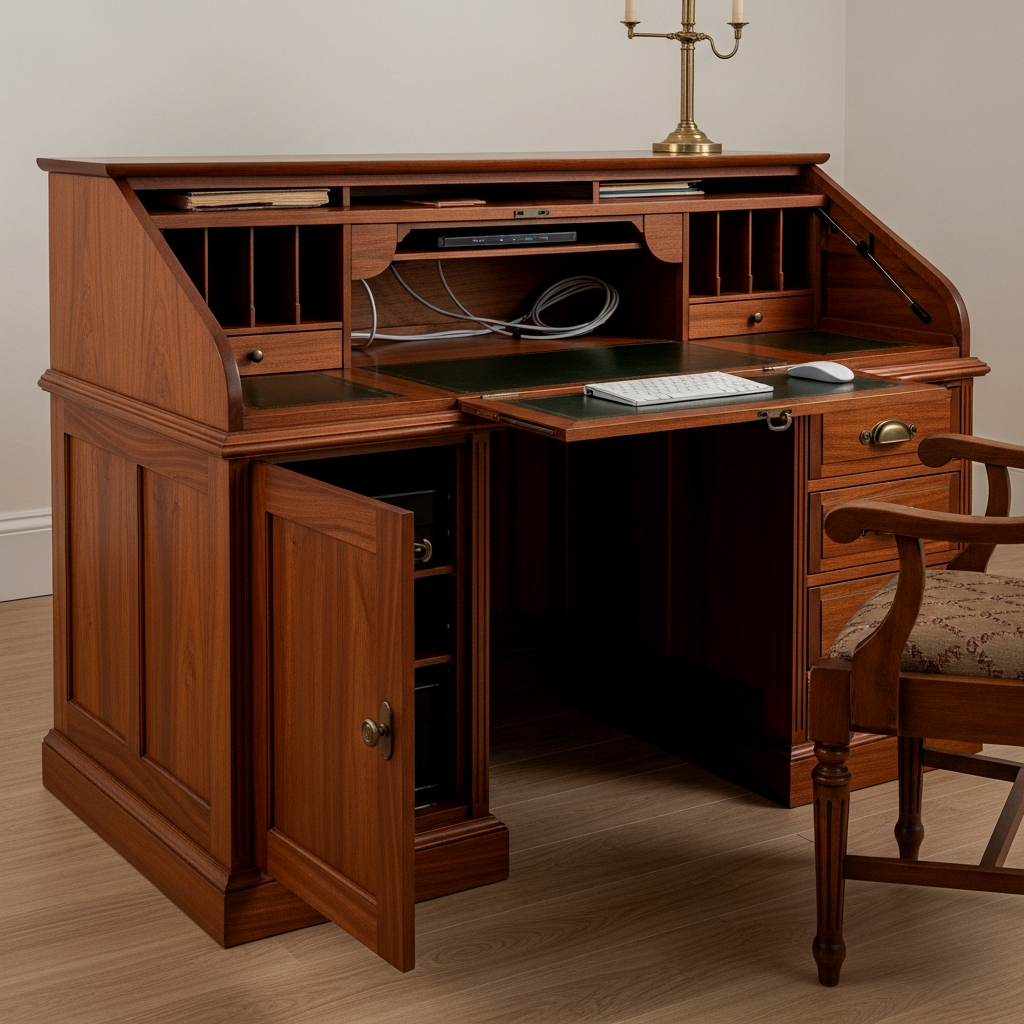
This is how you find a desk that looks 100 years old but handles a triple-monitor setup perfectly. Look for classic mahogany executive desks that have been updated with internal cable raceways and hidden flip-top power ports. It allows you to maintain a traditional, heavy aesthetic without the “cable waterfall” hanging off the back. It’s about keeping the workspace clean so you can focus on the task at hand.
If the desk doesn’t have built-in ports, use a hole saw to add a discrete grommet lined with leather or brass to match the hardware.
Hidden Tech Integration: The Modernist Command Center
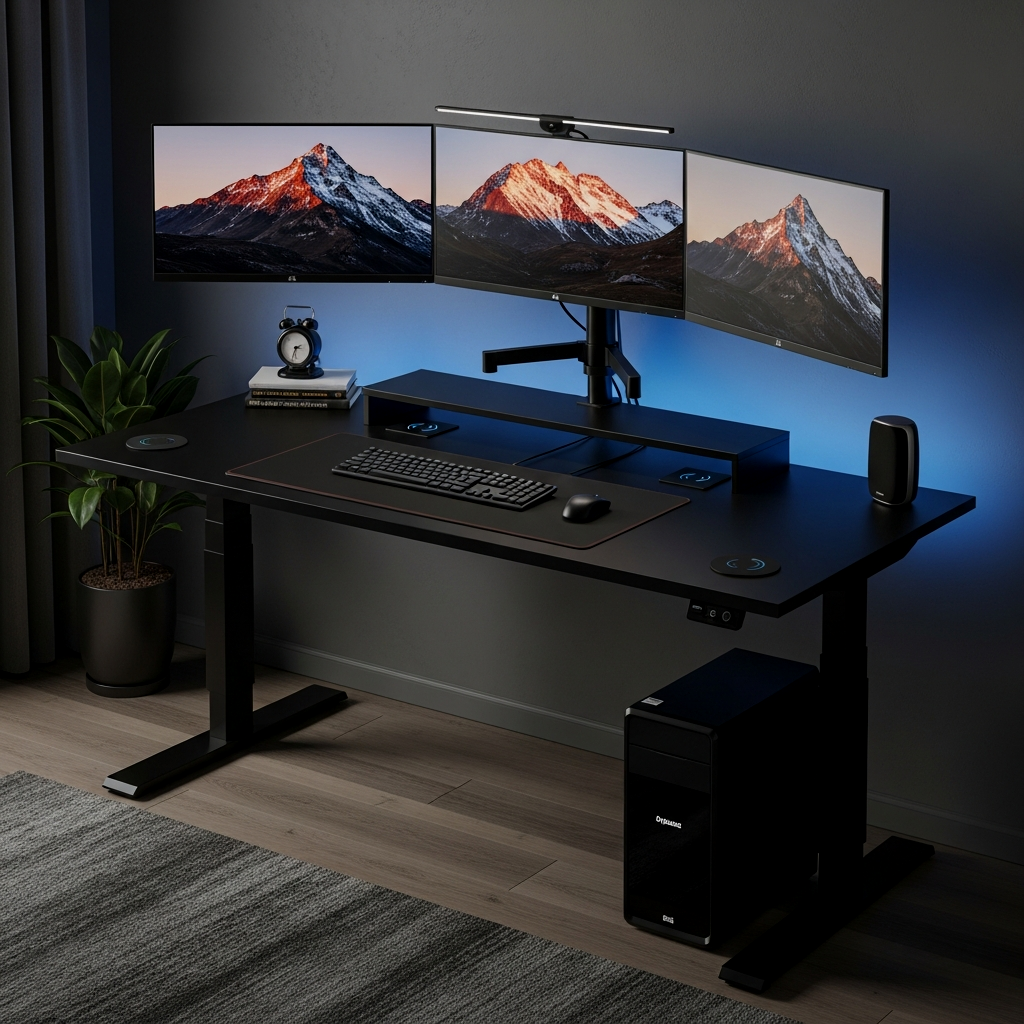
For the guy who needs multiple screens and high-end peripherals, a modernist command center is the way to go. These usually feature a floating top and a pedestal base that hides a full PC tower and all its associated wiring. When looking for fresh masculine home office ideas, this is the one that solves the most problems at once. You get the clean lines of modern design without sacrificing the power of a desktop setup.
The Executive Plinth: Concrete and Ebony Wood
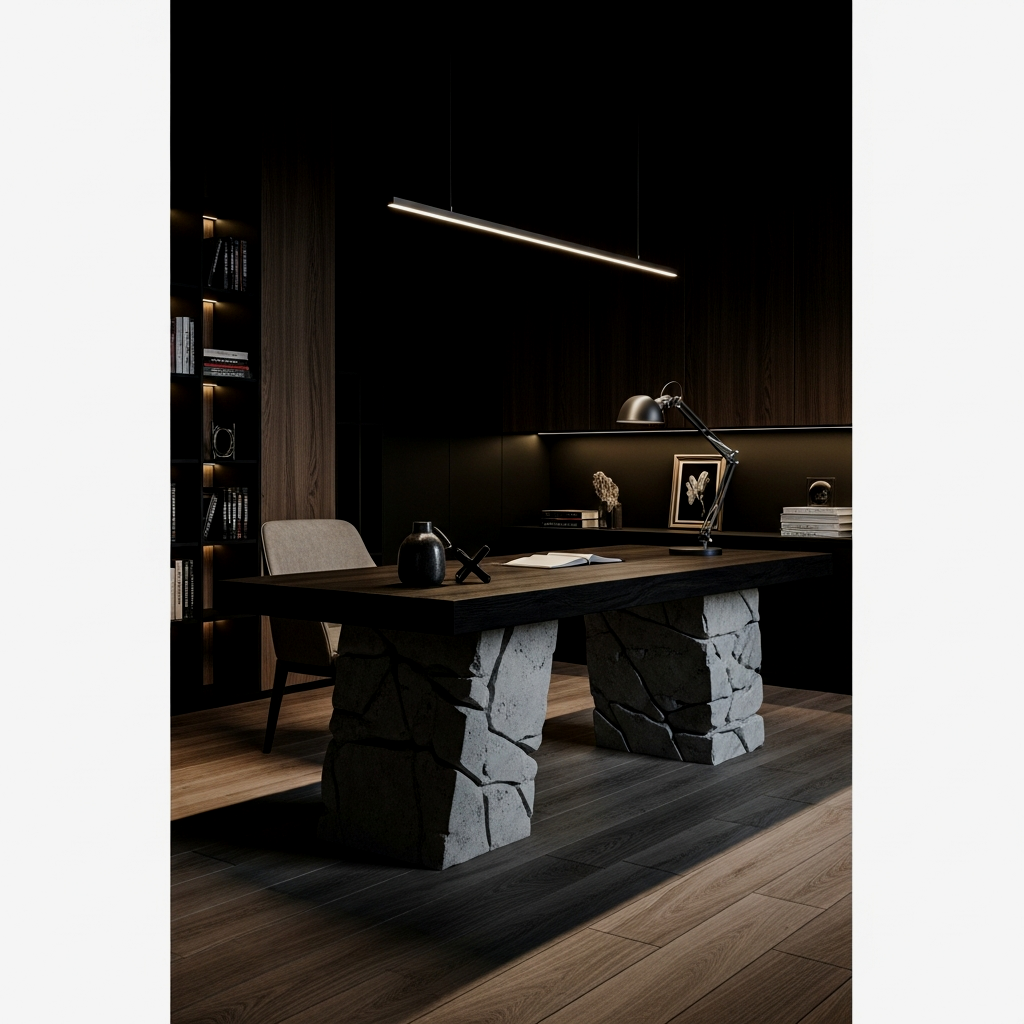
Concrete isn’t just for sidewalks. A cast concrete base paired with an ebony wood top creates a dark, moody, and incredibly stable workspace. The weight of the concrete ensures the desk won’t budge, while the ebony provides a sophisticated, smooth surface. It’s a bold move that works well in rooms with plenty of natural light to balance the dark tones. Keep the accessories silver or chrome to play off the gray of the concrete.
The exact pieces that make these ideas work:
Industrial Metal and Wood Mixes: Mesh and Maple
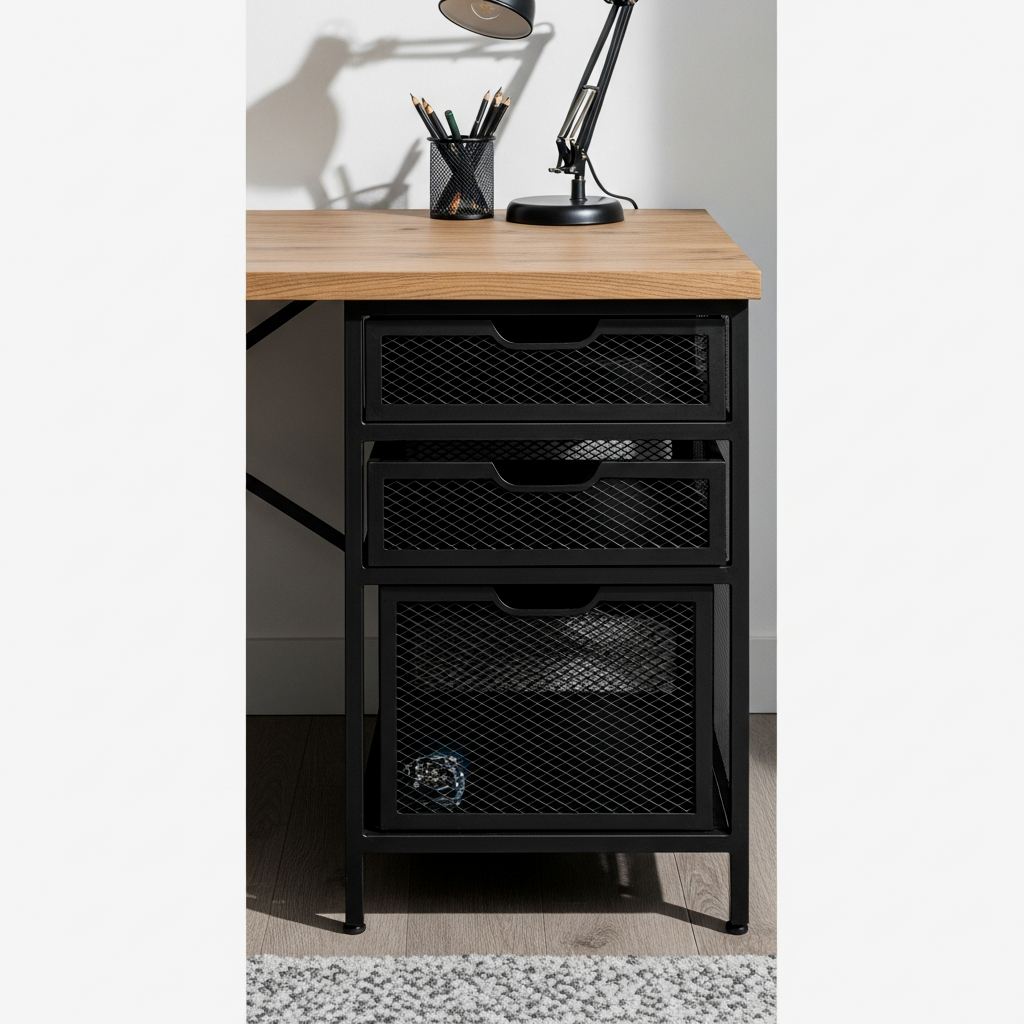
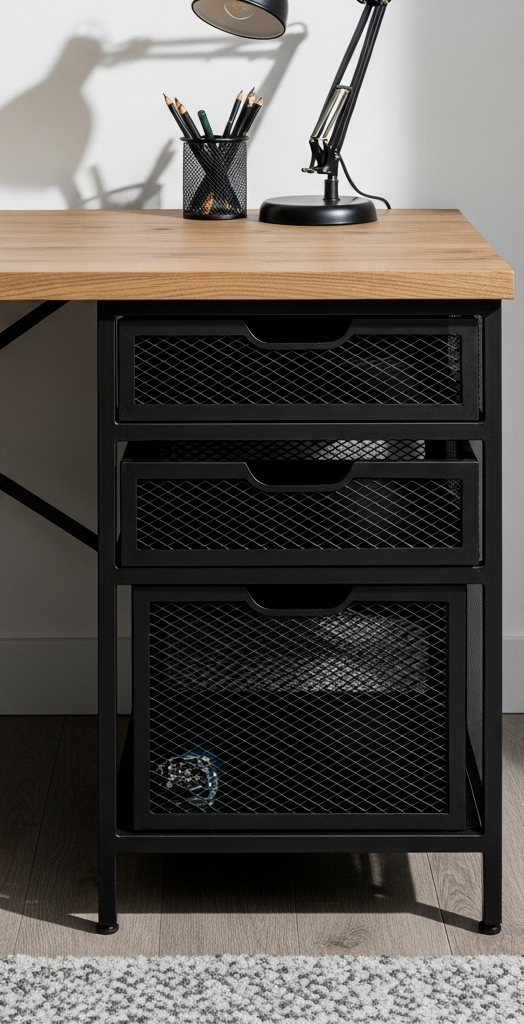
If a solid monolith feels too heavy for your space, consider a mesh and maple mix. The perforated metal panels on the base provide a masculine, industrial feel without closing off the room visually. Maple is a lighter wood, but when paired with black metal mesh, it takes on a rugged quality. It’s a smart way to get that “anchor” feel without making a small office feel like a closet. No stress, just good design.
Use the mesh panels to magnetically mount power strips or external hard drives to keep them off the floor and out of sight.
Hidden Tech Integration: The Heritage Roll-Top Hybrid
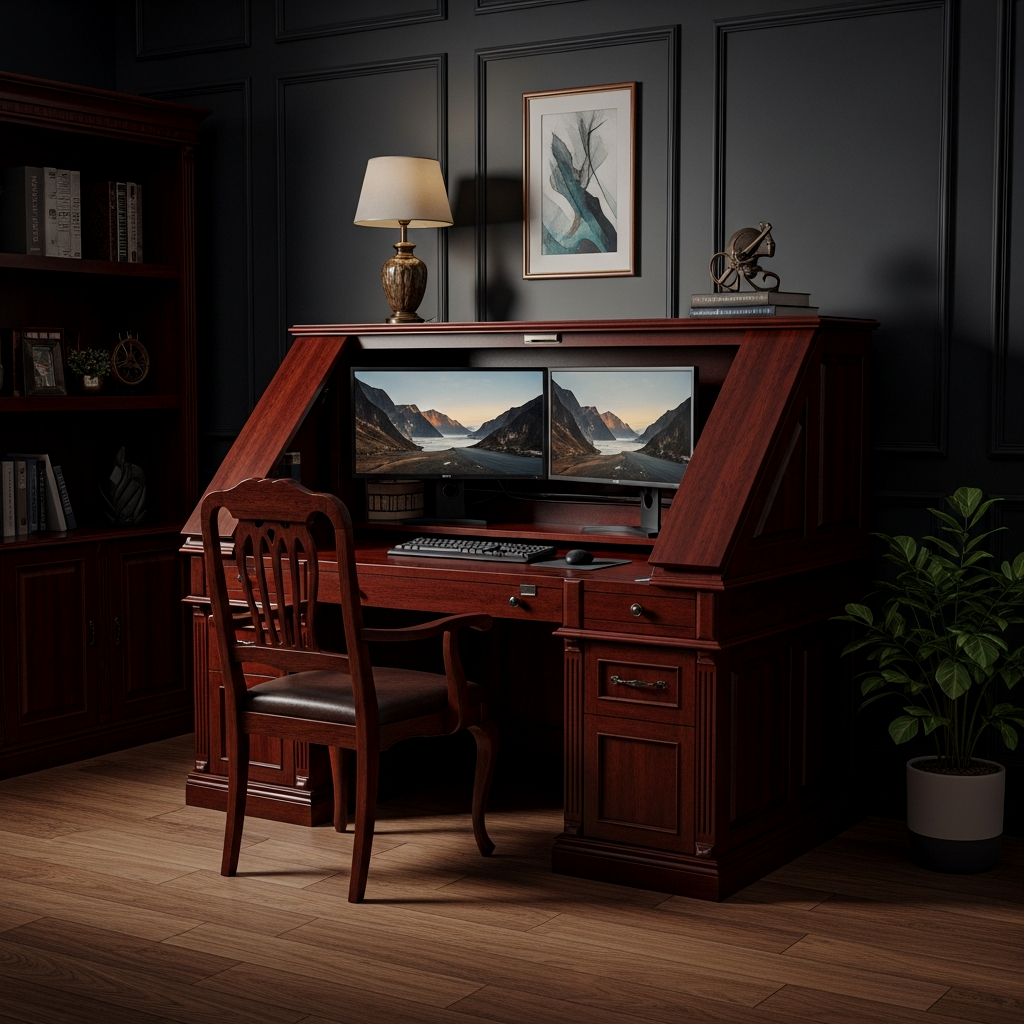
The roll-top desk is a classic for a reason: when you’re done for the day, you just pull the top down and the work disappears. Modern versions of these desks are built with laptop drawers and charging stations hidden inside the tambours. It’s a perfect mix of old-school craftsmanship and new-school utility. It’s a great way to “shut off” the brain at the end of a long day.
When choosing a desk with dark wood like walnut or ebony, ensure your desk lighting has a warm color temperature (around 2700K to 3000K). This brings out the depth of the wood grain without making it look “muddy” or flat like cool white office lights do.
📏 The Centerpiece: How to Choose the Perfect Masculine Desk Quick-Win Checklist
- Check the Depth: Ensure it’s at least 30 inches deep if you use a monitor stand.
- Leg Clearance: Make sure there is enough room for your chair arms to tuck under the top.
- Cable Routing: Look for pre-drilled holes or internal channels.
- Surface Durability: Solid wood or stone is better than veneer for heavy daily use.
- Visual Weight: Does the desk look strong enough to support the room’s design?
The Centerpiece: Sculptural Carbon Fiber and Wood
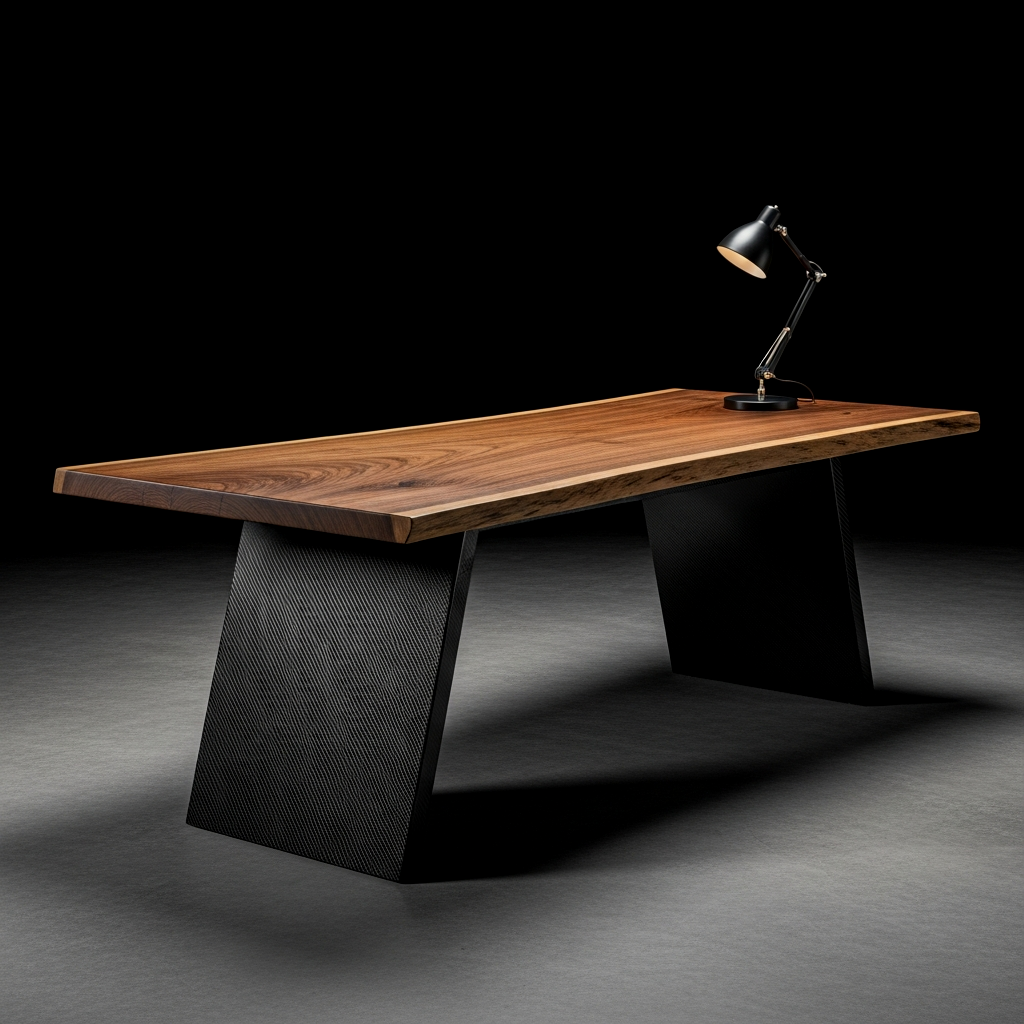
For the modern leader who wants something unique, sculptural carbon fiber mixed with wood is the ultimate statement. Carbon fiber is incredibly strong and light, allowing for dramatic, sweeping desk legs that wouldn’t be possible with wood or steel alone. When topped with a thick slab of live-edge timber, the result is a desk that looks like a piece of art but functions like a tank. It’s a high-end choice that tells anyone walking into the room that you value innovation and quality.
To keep carbon fiber looking pristine, use a microfiber cloth and a dedicated interior detailer—treat it like you would the dash of a luxury car.
Choosing the right desk is about more than just finding a place to put your keyboard. It’s about setting the tone for your workday. Whether you go with a solid walnut monolith or an industrial steel beast, make sure it’s a piece that you’ll be happy to sit behind for years to come. Remember, the desk is just the start. To see how all these pieces come together—from lighting to layouts—check out The Masculine Home Office: A No-Nonsense Productivity Guide. It has everything you need to finish the job right.
FAQ
How big should a masculine executive desk be?
For a room with presence, aim for at least 60 inches in width and 30 inches in depth. Anything smaller tends to look like a student desk, which loses the “anchor” effect you’re going for.
Is solid wood better than metal for a desk?
Neither is “better,” but they offer different vibes. Wood is warmer and feels more traditional/heritage. Metal is sharper and more modern. A mix of both is usually the best way to get a balanced, masculine look.
How do I hide cables on a desk without built-in management?
Use an under-desk cable tray or J-channel raceways. You can also use adhesive cable clips along the legs to keep cords tight against the frame so they stay invisible from a standing position.
What is the best wood for a dark masculine office?
Walnut and Ebony are the top choices. They have a natural depth and weight that looks high-end without needing heavy stains that can hide the natural beauty of the wood grain.
Where should I place the desk in the room?
If possible, use the “Power Position”—facing the door with your back to a solid wall or bookshelf. It creates a sense of command and makes the desk the true focal point of the space.