12 Gentle Ways to Create a Coastal Cottage Bedroom
I remember the first time I tried to design a “coastal” bedroom. I was so eager for that seaside serenity that I rushed out and bought everything with an anchor on it. Within a week, the room didn’t feel like a sanctuary; it felt like a kitschy gift shop on a crowded boardwalk. It was cold, loud, and utterly failed to provide the rest I craved. It took me years of slowing down and listening to the rhythms of the home to realize that a true coastal cottage bedroom isn’t a theme you buy—it’s a feeling of being held by the tide. It’s the difference between a plastic seashell and a piece of seaglass worn smooth by decades of ocean whispers. If your space feels a bit restless right now, please take a deep breath. We are going to soften those edges together.
✨ Before You Start: 12 Gentle Ways to Create a Coastal Cottage Bedroom That Truly Holds You Mindset
Foundations of a Restful Coastal Retreat
Layering Soft, Sun-Washed Linens
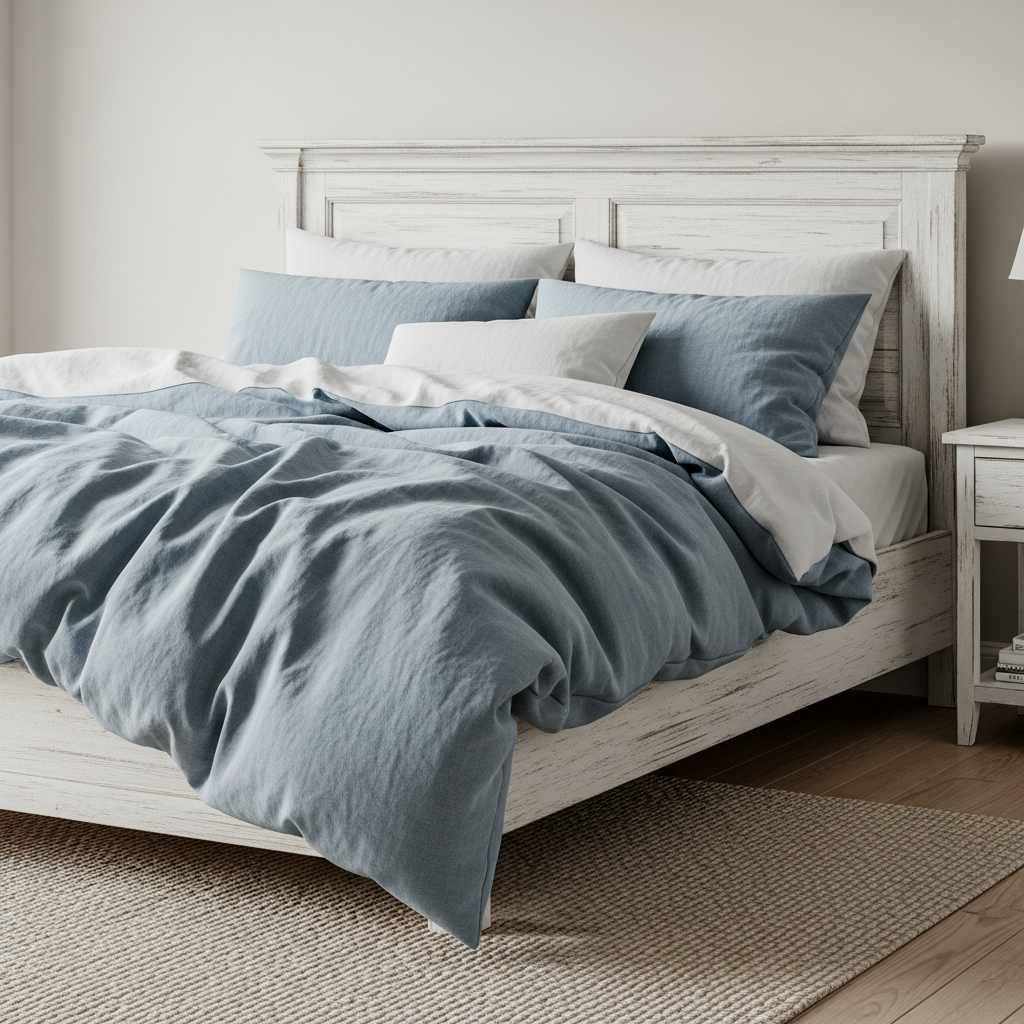
The bed is the heart of your sanctuary, and it should feel like a cloud that has spent the afternoon drying in the salt air. To achieve this, move away from stiff, high-thread-count cottons that feel cold. Instead, look toward Belgian flax linens. I personally love the Cultiver Linen Sheet Set in a soft cedar or natural white. Linen has a natural weight and breathability that regulates your temperature, and its characteristic wrinkles are a reminder that it’s perfectly fine to let go of perfection. Layer a heavy knit throw, perhaps the Bearaby Cotton Napper, at the foot of the bed to add a sense of security and “groundedness.”
To get that effortless cottage look, iron only the top four inches of your flat sheet and your pillowcase flanges. Leave the rest of the linen naturally rumpled to provide that inviting, lived-in texture.
Incorporating Weathered Driftwood Accents

There is a specific wisdom in wood that has been tumbled by the sea. It loses its sharp edges and takes on a silver-grey patina that feels ancient and calm. Bringing these textures into your bedroom—perhaps through a pair of Serena & Lily Shoreline Driftwood Table Lamps or a simple salvaged branch placed atop a dresser—introduces an organic element that manufactured furniture simply cannot replicate. These accents serve as a visual bridge between the wild outdoors and your cozy interior, reminding you to trust the process of time.
If you find your own driftwood on a beach stroll, soak it in a solution of one part bleach to ten parts water for 24 hours, then let it sun-dry for a week. This ensures it’s clean and bug-free before it enters your sanctuary.
A Palette of Sea-Foam and Sand
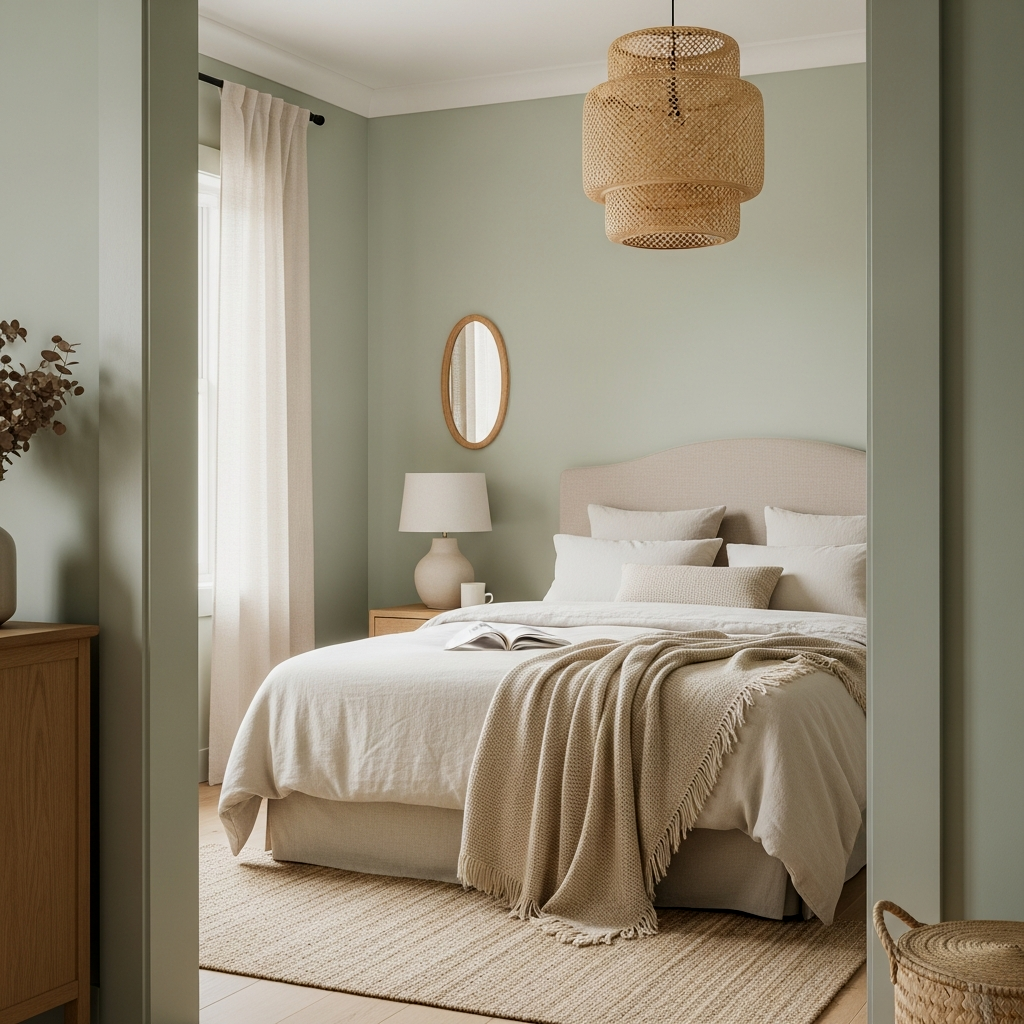
When choosing paint colors, we want to avoid “nautical blue” which can feel quite stark and energetic. Instead, we look for colors that have a heavy dose of grey or green in them—colors that shift with the light. Farrow & Ball’s ‘Skylight’ is a personal favorite; it looks like the sky just before a summer rain. Pair this with a warm, sandy neutral like Benjamin Moore’s ‘Pale Oak’ on the trim. These tones don’t demand your attention; they gently recede, allowing your mind to rest. Remember, a little patience goes a long way when testing swatches—watch them at 10:00 AM and again at 8:00 PM before you decide.
Follow the 80/20 Texture Rule: Keep 80% of your room in tonal, neutral shades (whites, creams, sands) and use the remaining 20% to introduce “weathered” textures like rattan, driftwood, and chunky knits. This prevents the room from feeling busy while ensuring it remains deeply tactile.
Harnessing Mist-Filtered Morning Light

Light in a coastal cottage should never be harsh or direct. It should feel as though it’s been filtered through a morning mist. To achieve this, avoid heavy blackout curtains that cut you off from the world. Instead, use a layered approach. A simple off-white cellular shade can provide privacy, while a sheer overlay softens the sun’s rays. The goal is to create a soft glow that wakes you up gently, rather than a jarring spotlight. If your room is naturally dark, a well-placed floor mirror, like the Anthropologie Gleam Mirror, can help bounce that precious morning light into the corners of the space.
Position your bed so you can see the sky from your pillow, but place a tall floor plant or a soft armchair between the window and the bed to “break” the light and create a dappled shadow effect on your sheets.
The Tactile Comfort of Woven Rattan
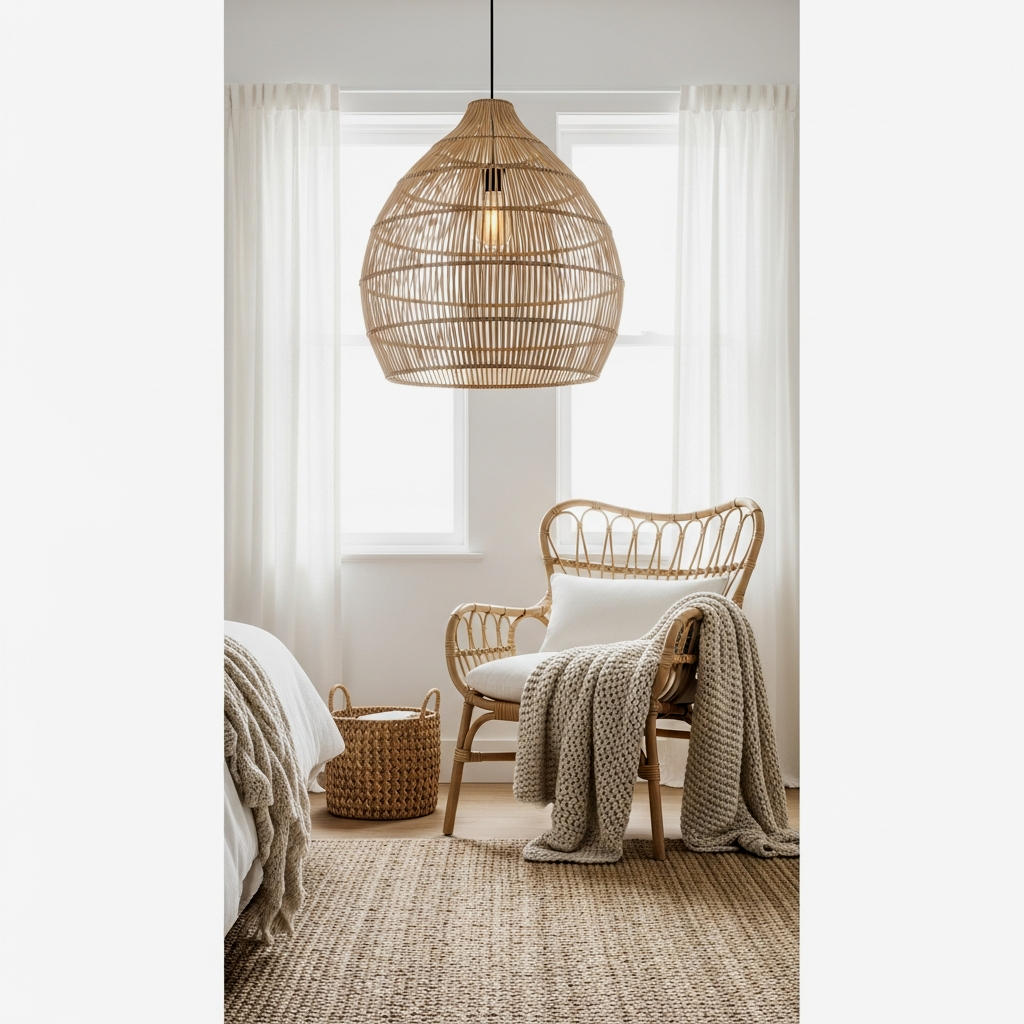
Rattan and wicker are essential for a coastal cottage because they introduce a rhythmic, handmade quality to the room. I love the look of a Pottery Barn Sausalito Rattan Nightstand next to a bed. The intricate weave provides a visual “hum” that feels cozy and grounded. It’s a material that breathes, and like the linens, it only gets better as it ages and develops a slight honey-toned amber hue. It reminds us that we are part of nature, not separate from it.
Curation of Vintage Nautical Heirlooms
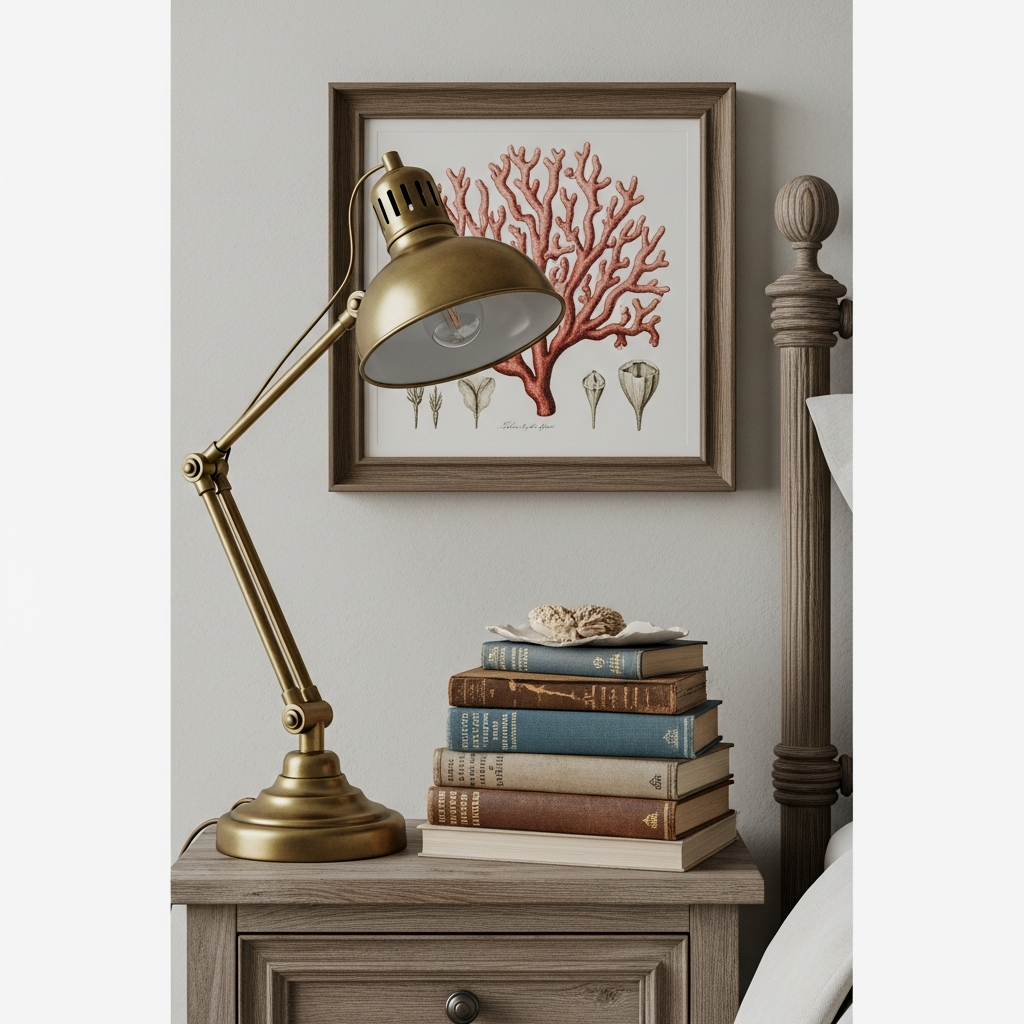
Avoid the “bag of shells” you see in big-box stores. Instead, look for items with a history. A vintage brass telescope, an old ship’s chronometer, or a framed nautical chart of a place that holds a special memory for you. These heirlooms provide a sense of continuity and depth. When you surround yourself with things that have endured the passage of time, it becomes easier to trust your own journey. Place these items on a stack of linen-bound books to give them a place of honor without making the room feel like a museum.
When styling vintage brass, don’t polish it to a high shine. Let the patina remain in the crevices; this “age” is what provides the warmth and soul that a brand-new item lacks.
Flowing, Breezy Window Treatments

The movement of air is just as important as the furniture. Choose window treatments that catch the slightest breeze and dance. West Elm’s European Flax Linen Curtains in ‘White’ or ‘Oatmeal’ are perfect for this. Hang them high and wide—at least 6 inches above the window frame and 10 inches past the sides—to make the windows feel expansive. When the wind blows and the linen ripples, it mimics the movement of the tide, creating a rhythmic visual that is incredibly soothing to the nervous system.
The exact pieces that make these ideas work:
Nurturing Greenery and Coastal Flora
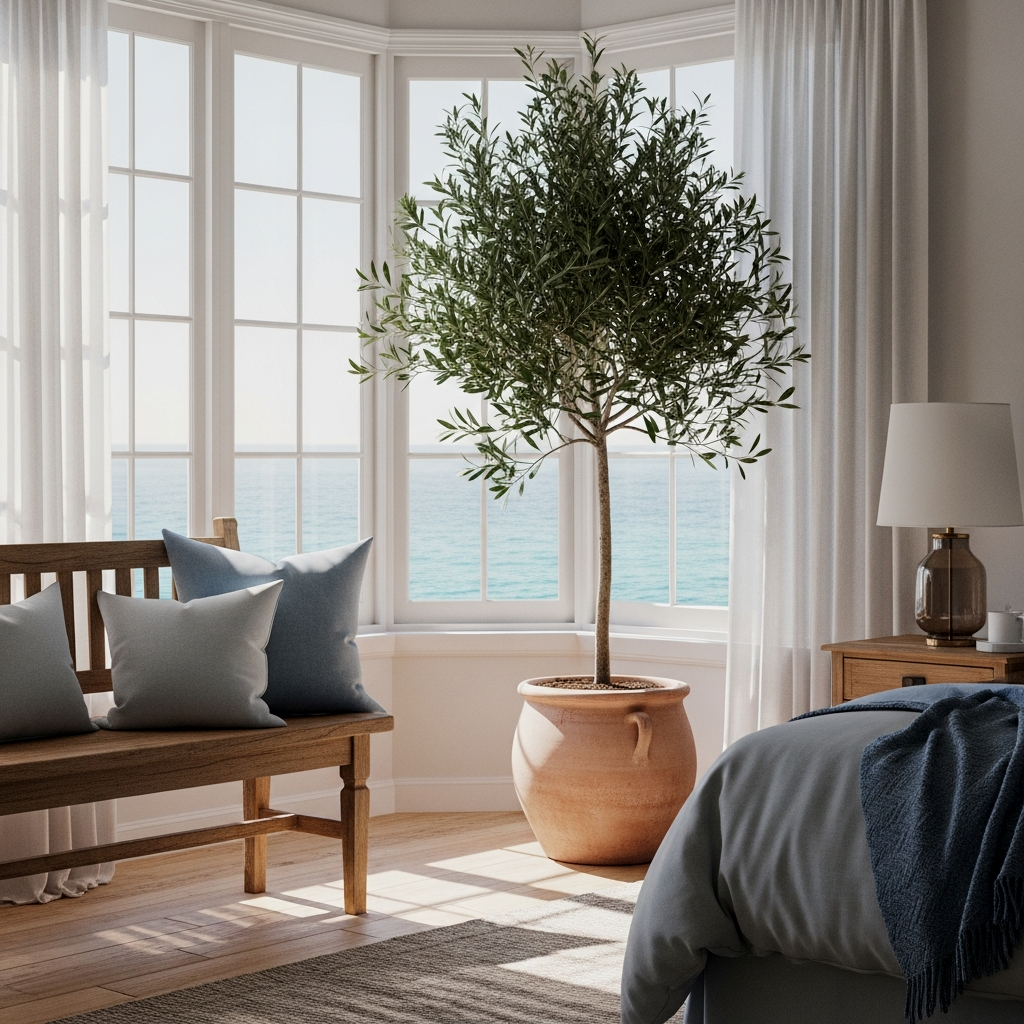
A room without a living thing can feel stagnant. For a coastal cottage, you want plants that feel slightly wild and architectural. A Potted Olive Tree (even a high-quality faux one from Afloral if your light is low) brings in a silvery green that complements sea-foam walls beautifully. Alternatively, a simple glass jar filled with dried sea oats or pampas grass adds height and a soft, feathery texture that whispers as you walk by. These plants remind us to stay rooted even when the winds of life feel a bit gusty.
Top your indoor plant soil with small, smooth white river stones or crushed oyster shells. It hides the dirt and adds another layer of coastal texture to your greenery.
Artisan Hand-Painted Ceramics
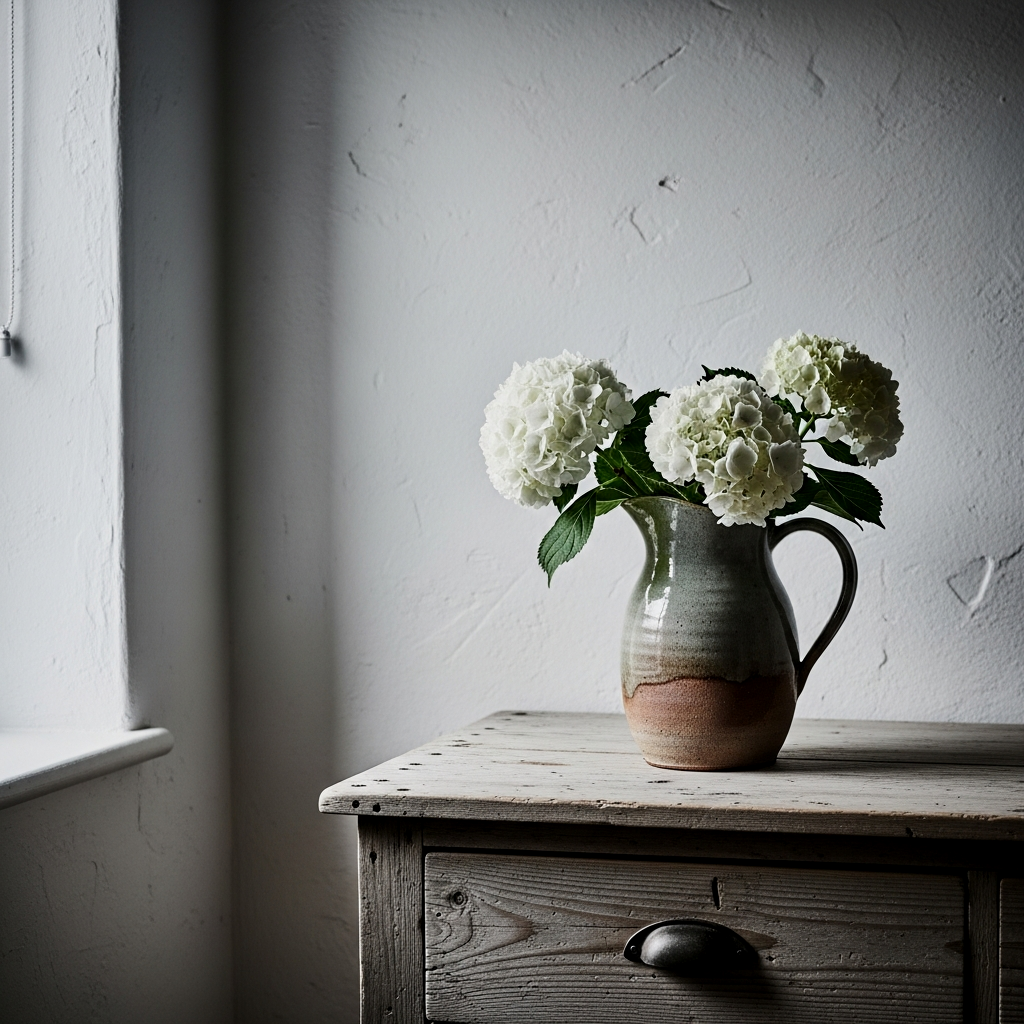
There is a special comfort in holding a cup or seeing a vase that shows the marks of a maker’s hands. Look for ceramics with “reactive glazes”—these are glazes that create variegated colors during firing, much like the changing colors of the ocean. Farmhouse Pottery makes wonderful hand-thrown crocks that feel substantial and honest. Use a small ceramic bowl on your nightstand for your jewelry; the soft “clink” of metal on stoneware is a much gentler sound than metal on a glass tabletop.
Mix one or two “glossy” glazed ceramic pieces with several “matte” or unglazed terracotta pieces. This contrast mimics the look of wet sand versus dry dunes and adds sophisticated visual interest.
A Secluded Window Nook for Reflection
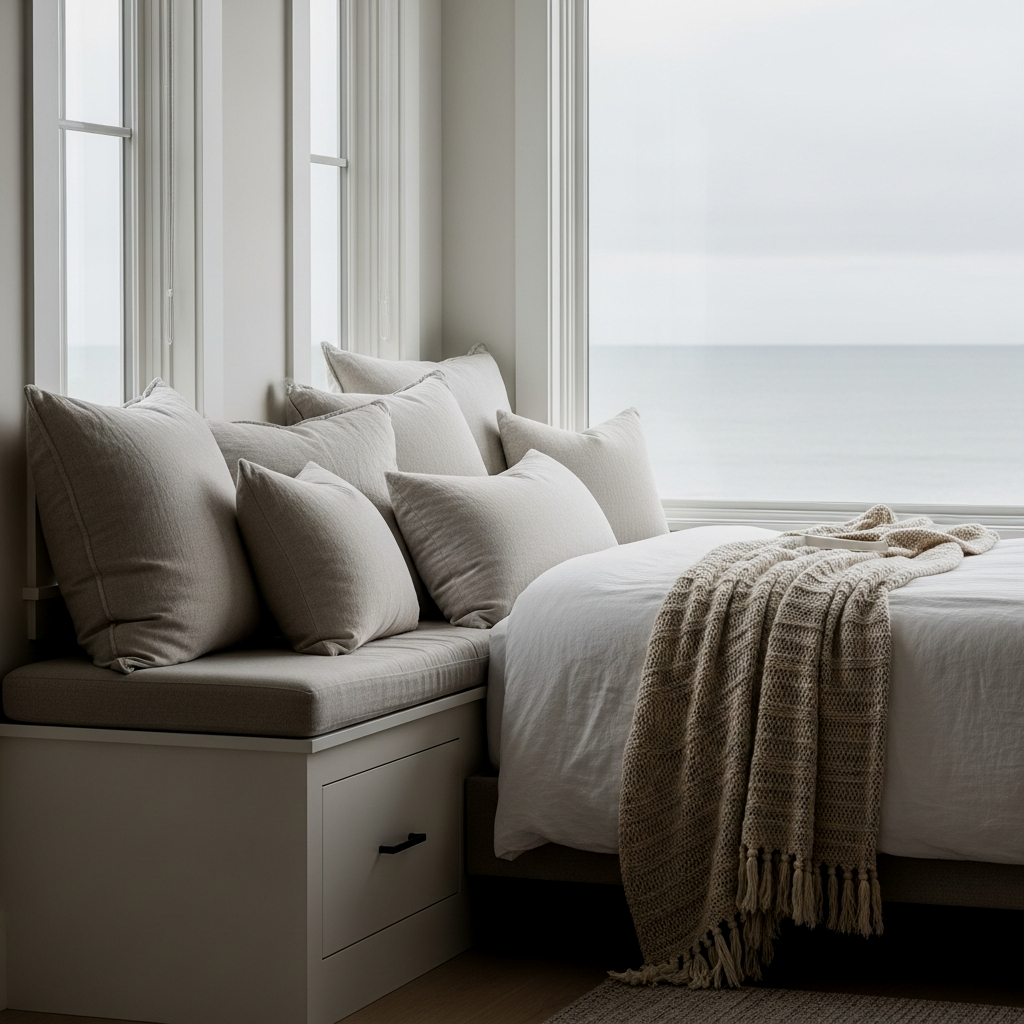
If space allows, create a small area dedicated to doing absolutely nothing. A comfortable armchair, like the Serena & Lily Inverness Chair, tucked into a corner by the window, invites you to sit and watch the clouds. This is your “window nook,” a place for reflection and transition between the busy day and a restful night. Add a small wooden stool to hold a cup of tea, and suddenly, the room isn’t just a place to sleep; it’s a space that holds you through all your moods.
Soft Underfoot: Layering Sisal and Wool
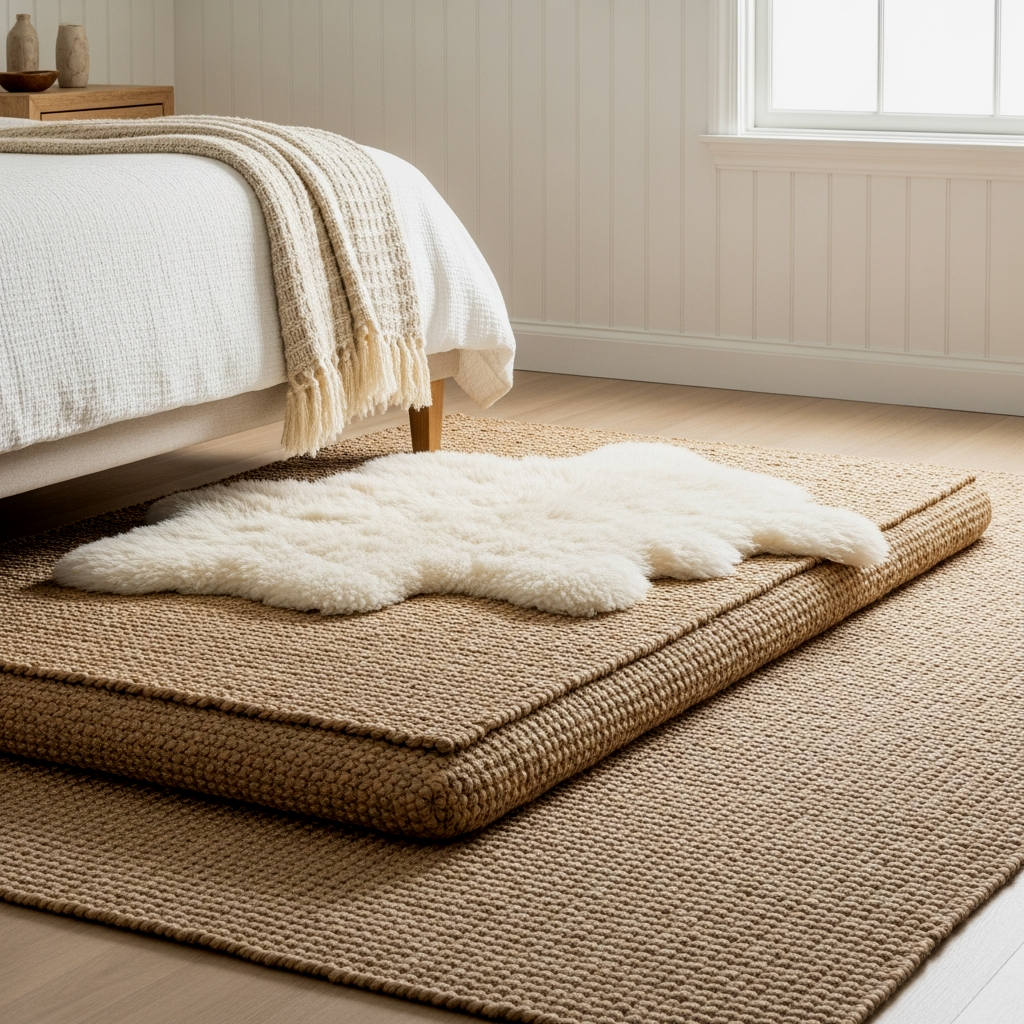
The feeling of your feet hitting the floor in the morning sets the tone for your day. I am a firm believer in the “layered rug” approach. Start with a large, durable Annie Selke Sisal or Jute rug to provide that organic, coastal foundation. Then, layer a smaller, incredibly soft wool rug—perhaps something with a subtle Moroccan pattern or a simple cream shag—directly under the bed where your feet land. It’s the perfect metaphor for the coast: the ruggedness of the sand meeting the soft, white foam of the waves.
To keep layered rugs from sliding, use a thin “rug-to-rug” tape between the sisal and the wool. It prevents tripping hazards while maintaining that beautiful, tiered look.
If your room feels a bit too “cold” with all the blues and whites, try painting the ceiling in a very pale, warm pink like Farrow & Ball ‘Setting Plaster’. It mimics the glow of a sunset and reflects a healthy, warm light onto your skin, making the entire room feel like it’s giving you a warm embrace.
📏 12 Gentle Ways to Create a Coastal Cottage Bedroom That Truly Holds You Quick-Win Checklist
- Swap Synthetic Sheets: Invest in one set of 100% linen or hemp sheets in a neutral tone.
- Texture Check: Add at least one woven element, like a rattan basket or a seagrass tray.
- Color Softening: Replace one “bright” blue item with a “dusty” or “muted” version of the same color.
- Lighting Audit: Swap cool-toned LED bulbs for “Warm White” (2700K) to create a sunset glow.
- The Natural Element: Bring in one piece of found nature, like a stone, shell, or piece of wood.
The Gentle Scent of Salt and Driftwood
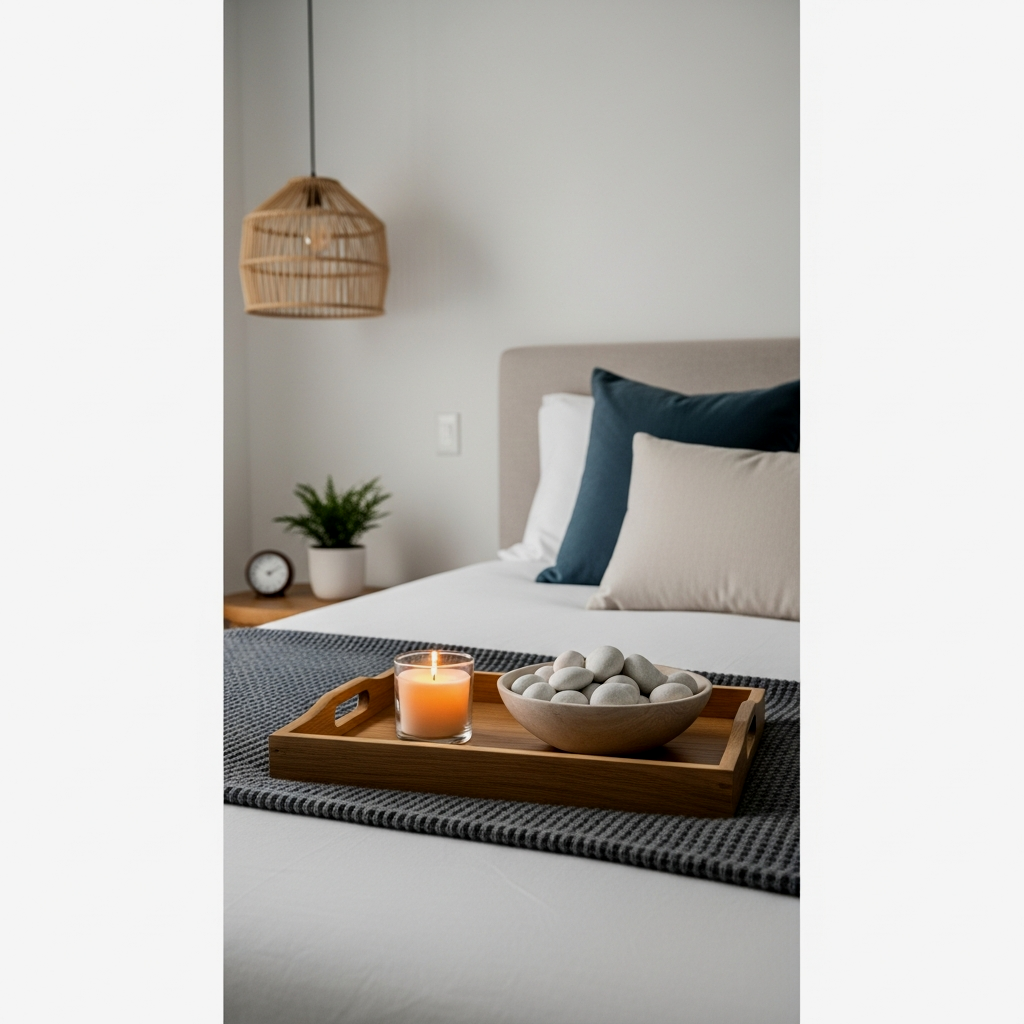
Finally, we must consider the invisible. A coastal cottage is as much about the scent of the air as it is the colors on the wall. Avoid synthetic, “ocean breeze” sprays that smell like chemicals. Instead, look for candles or diffusers that use essential oils to mimic real coastal scents. The Diptyque Cyprès (Cypress) candle or Jo Malone’s Wood Sage & Sea Salt are masterclasses in subtle, earthy coastal fragrance. It’s the final layer that tells your brain: “You are home. You are safe. You can let go now.”
Creating a space that holds you doesn’t happen overnight, and that is perfectly fine. It is a slow, beautiful dance between you and your home. Celebrate the small wins—the way the light hits your new linen duvet or the scent of a fresh candle. Enjoy the journey of turning your bedroom into a seaside sanctuary. You deserve a place that feels as steady and welcoming as the tide coming home to the shore.
Frequently Asked Questions
How do I prevent a coastal room from feeling cold in winter?
The key is to swap your lightweight linens for heavier textures. Bring in a chunky wool knit throw, add a few velvet pillows in a sandy “taupe” color, and ensure your lighting is in the warm 2700K range to mimic the warmth of a fireplace.
Can I use dark wood in a coastal cottage bedroom?
Absolutely. While light woods are common, a dark mahogany or walnut chest can provide a beautiful “anchor” to the room. Just ensure you balance it with plenty of white linens and light-reflecting surfaces so the room doesn’t feel heavy.
What is the best white paint for a coastal vibe?
I always recommend whites with a slight warm undertone to avoid a “hospital” feel. Benjamin Moore’s ‘White Dove’ or Sherwin Williams’ ‘Alabaster’ are excellent choices that feel soft and creamy rather than stark.
How do I display seashells without it looking cluttered?
Instead of scattering them everywhere, group them together in a single, high-quality vessel. A large glass hurricane or a beautiful wooden dough bowl filled with your finds creates a focused point of interest rather than visual noise.
Are linen sheets hard to maintain?
Not at all! In fact, linen is much more durable than cotton. The trick is to avoid over-drying them. Take them out of the dryer while they are still just a tiny bit damp and lay them on the bed. They will air-dry smooth and feel incredibly soft.