Small Bathroom Color Ideas: Low-Stress Palettes for Minimalists
The “safe” all-white bathroom is a trap. I’ve seen it a thousand times: someone wants a clean look, so they pick white tiles, white walls, and a white vanity. Two weeks later, the room feels like a sterile hospital wing. The problem isn’t that you’re a minimalist; it’s that you’re afraid of making a mistake you can’t undo. Most people think “adding color” means painting the walls a neon lime green or committing to a purple bathtub. It’s not that serious. You can introduce color in a way that’s high-impact but low-risk.
✨ Before You Start: Small Bathroom Color Ideas for People Afraid to Commit to Color Mindset
Smart Ways to Add Color Without the Stress
Muted Mint Textiles
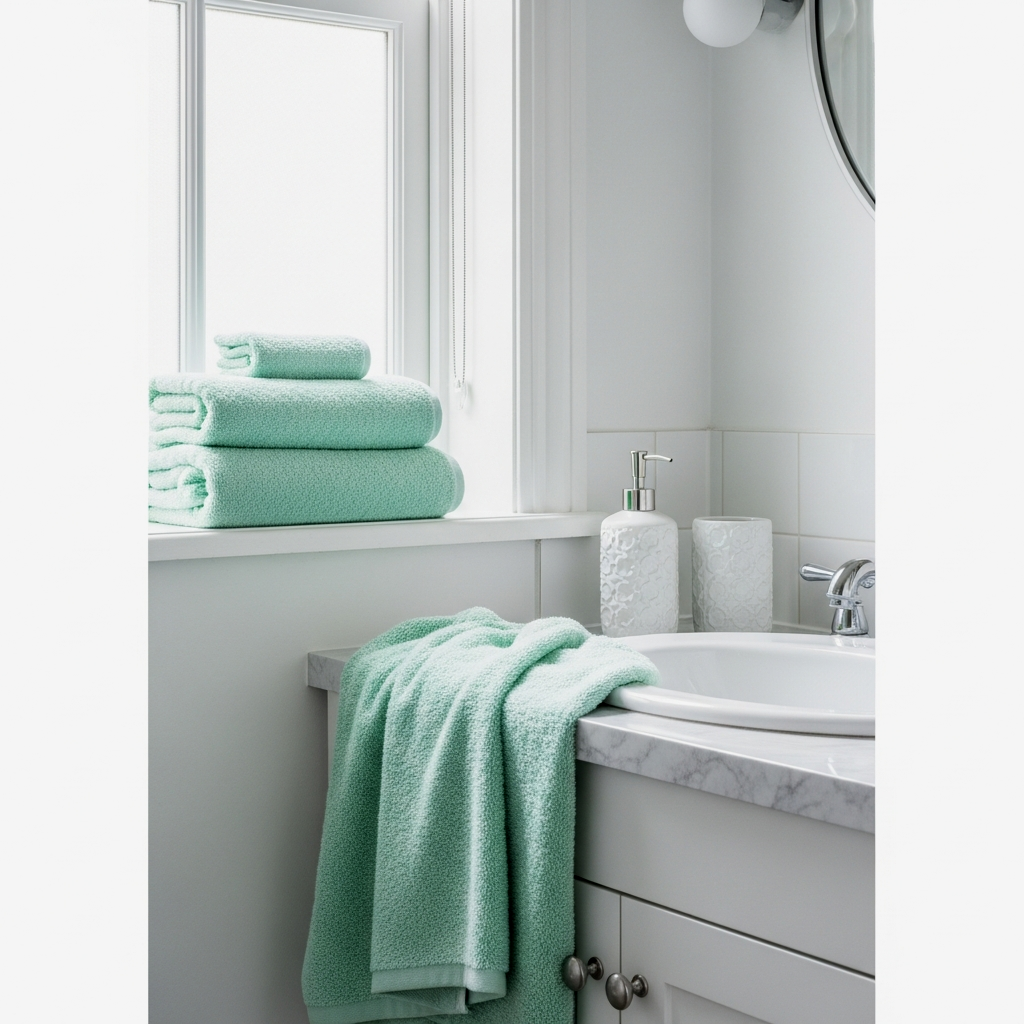
If you aren’t ready to pick up a paintbrush, start with the linens. Muted mint is essentially a neutral with a personality. It’s calm, clean, and doesn’t demand too much attention. Look for high-quality waffle-knit towels or a linen shower curtain in this shade. It breaks up a white backdrop without making the room feel smaller. Brands like Parachute or Brooklinen offer solid choices in “Willow” or “Sage” that fit this vibe perfectly.
To keep the look cohesive, stick to one shade of mint across all textiles rather than mixing different green tones which can look cluttered.
Subtle Sage Vanity
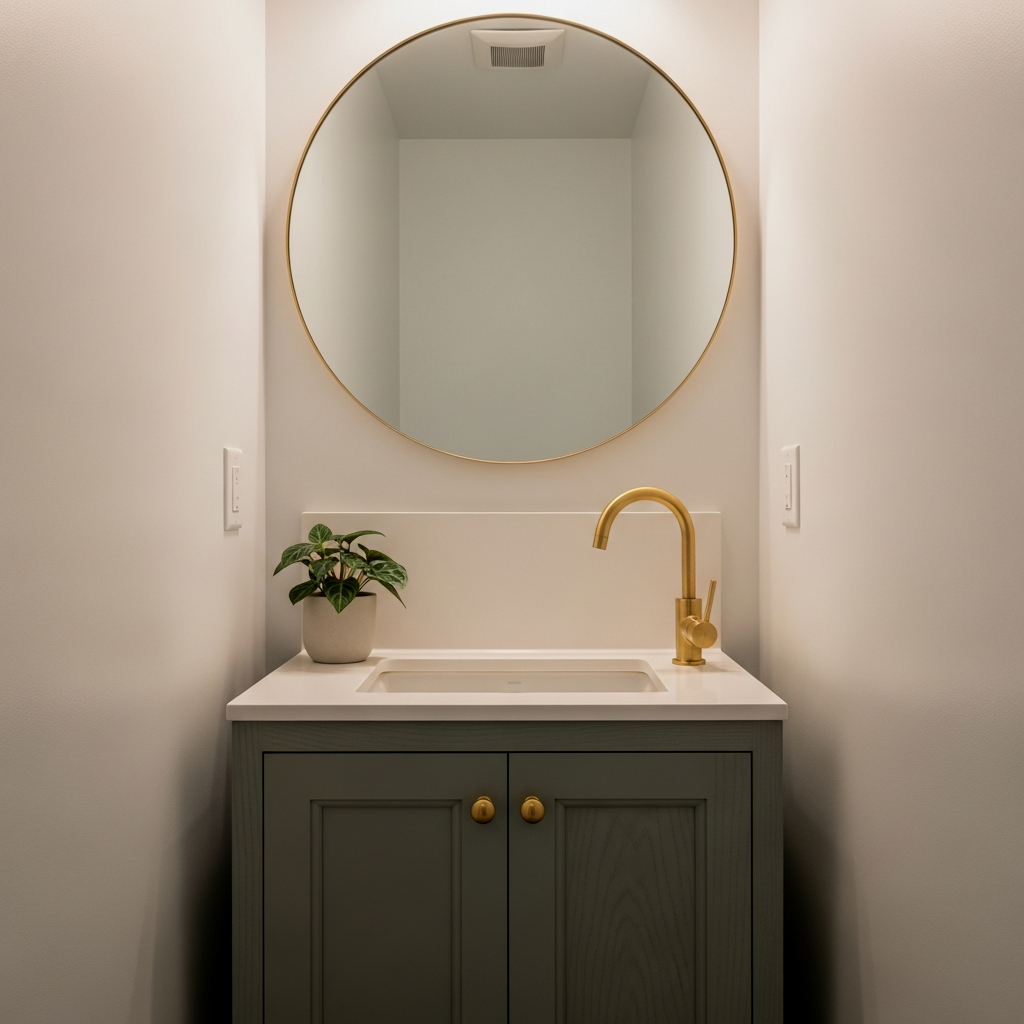
The vanity is the workhorse of the bathroom, and it’s also the best place to introduce a solid block of color. Painting a small vanity in a soft sage green like Sherwin-Williams ‘Sea Salt’ or ‘Saybrook Sage’ is a game changer. It provides a focal point that feels grounded. It’s a sophisticated look that pairs well with white subway tile and natural wood accents. It’s much less intimidating than painting four walls.
Terracotta Grout Accents
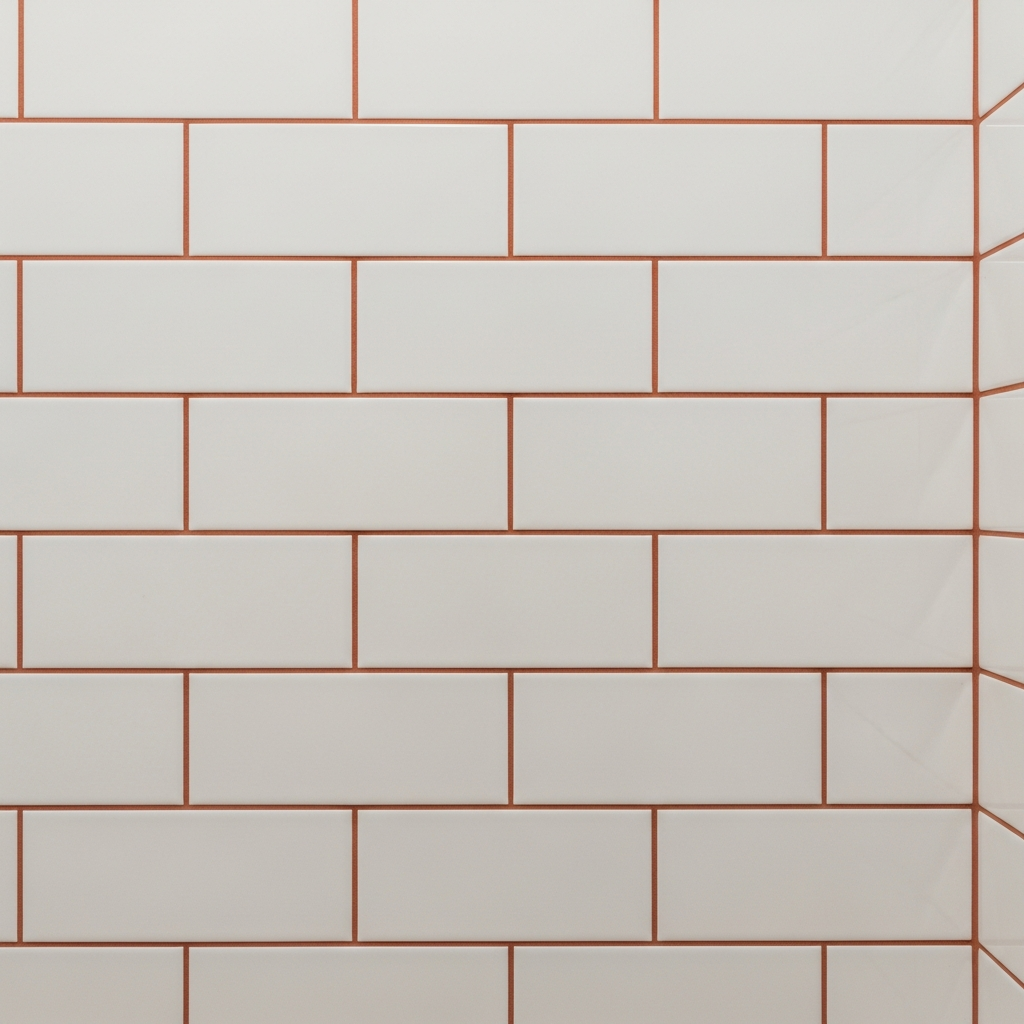
White grout turns grey and dingy over time anyway, so why not be intentional? If you’re installing new tile, using a terracotta or warm tan grout is a subtle way to bring in earthy tones. It creates a grid pattern that defines the space and adds warmth. Mapei offers a “Terra Cotta” grout color that looks incredible with simple white ceramic tiles. It’s a permanent choice, but because it’s just the lines, it never feels overwhelming.
Follow the 60-30-10 rule: 60% neutral (white or light grey), 30% secondary color (your vanity or rug), and 10% accent color (hardware or art). This ensures the room feels balanced, not chaotic.
Dusty Rose Mirror Frame
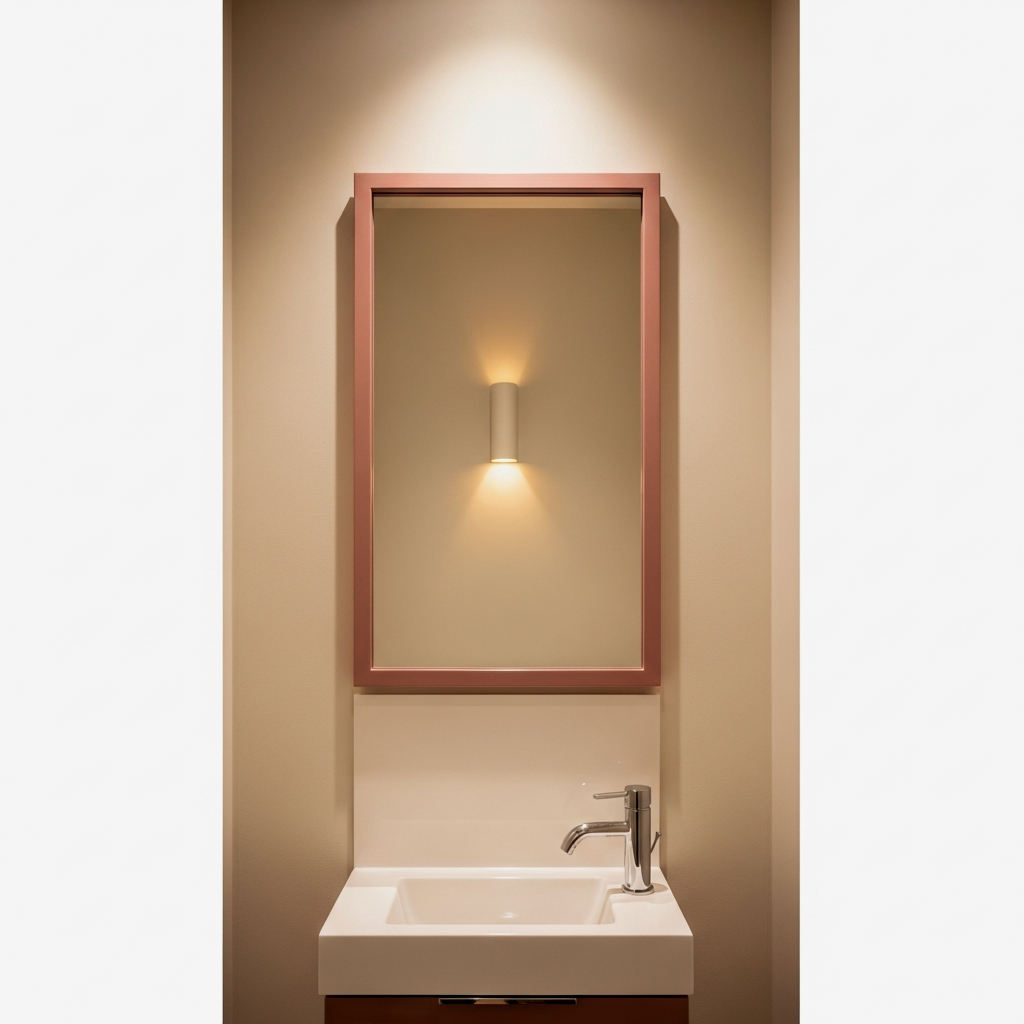
Forget the bubblegum pink of the past. A dusty rose mirror frame—think Farrow & Ball ‘Setting Plaster’—adds an unexpected layer of warmth. It’s a “nude” tone that mimics the look of natural plaster. This color is particularly flattering for skin tones when you’re looking in the mirror. You can easily find a simple wood frame and spray paint it yourself for a quick, low-stress upgrade.
Use a matte finish paint for the frame to keep it looking sophisticated and modern rather than shiny and plastic-like.
Lush Botanical Greens
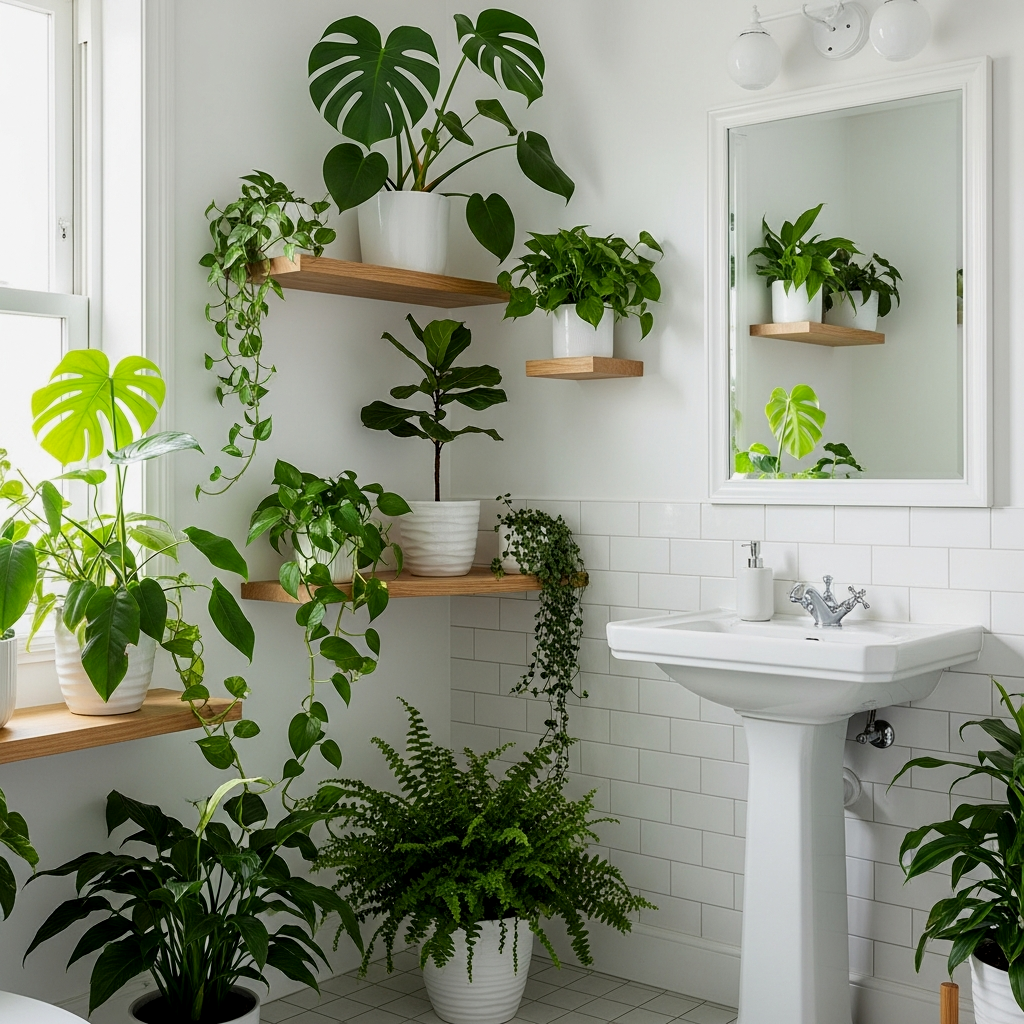
Plants are nature’s version of color, and they are impossible to get wrong. A Pothos or a Snake Plant in a small bathroom adds a vibrant, living green that breathes life into the space. If your bathroom is windowless, go for high-end silk plants or a preserved moss wall frame. The organic texture of the leaves provides a visual break from the hard surfaces of the tub and toilet.
Warm Copper Fixtures
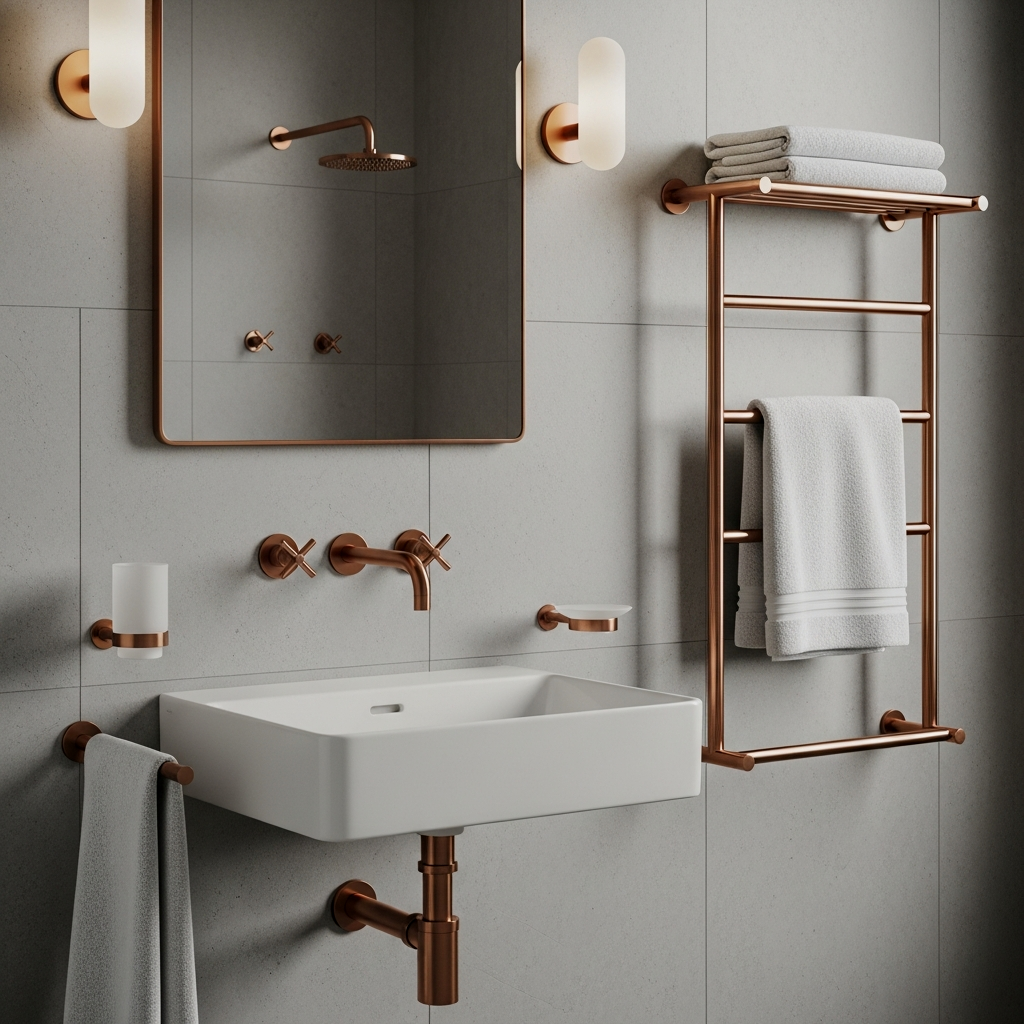
Most people default to chrome or brushed nickel because it’s the standard. But swapping out your faucet and cabinet pulls for warm copper or “Champagne Bronze” (a Delta Faucets specialty) adds a metallic “color” that feels expensive. Copper has a natural warmth that balances out cold white porcelain. It’s a functional way to introduce a new hue without even touching a paintbrush.
Match your copper fixtures with a copper-framed mirror or soap dispenser to spread the warmth throughout the small room.
Pale Sky Blue Ceiling
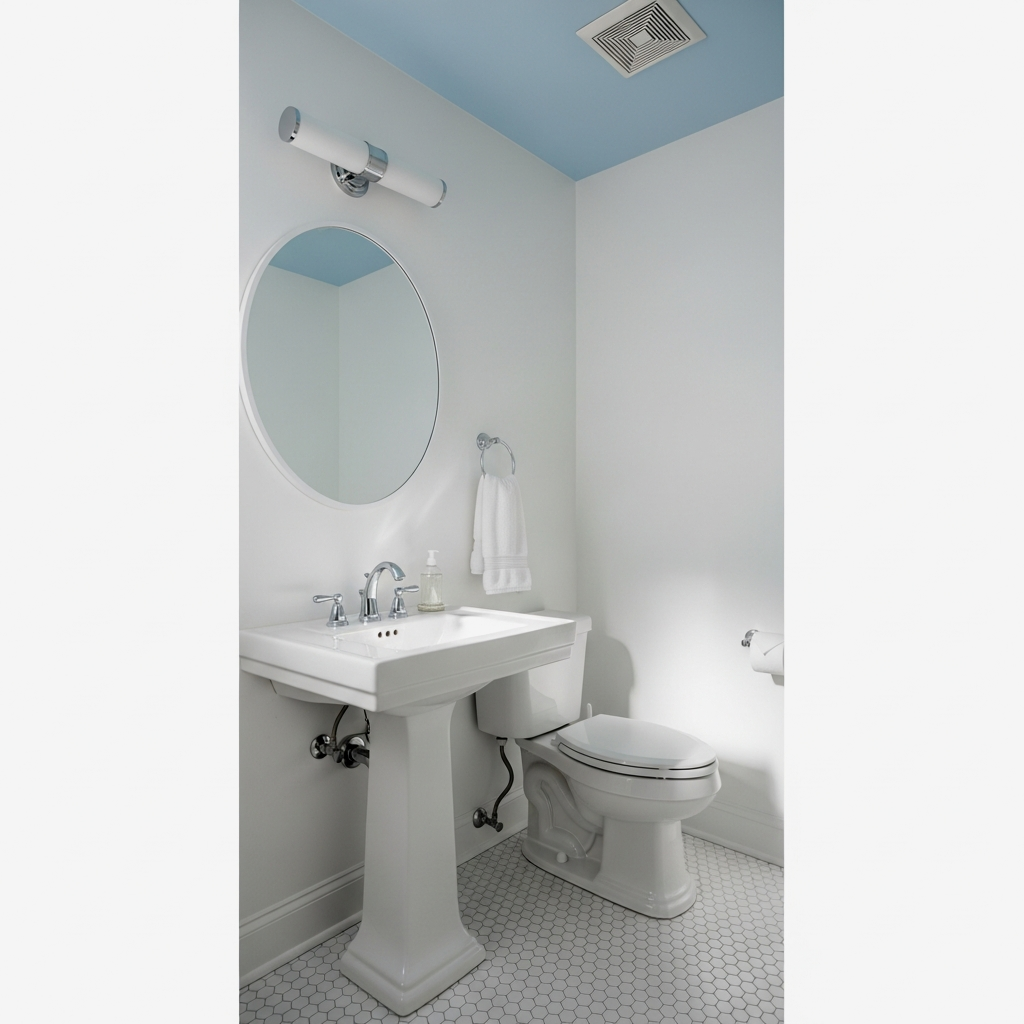
Painting the ceiling is an old designer trick. A very pale, airy blue like Benjamin Moore ‘Palladian Blue’ or ‘Breath of Fresh Air’ can actually make a small bathroom feel taller. It mimics the sky, creating an open feeling. Since it’s above your eye level, it doesn’t feel like the color is closing in on you. It’s a subtle “blink and you’ll miss it” detail that adds immense depth.
The exact pieces that make these ideas work:
Colorful Kilim Rug
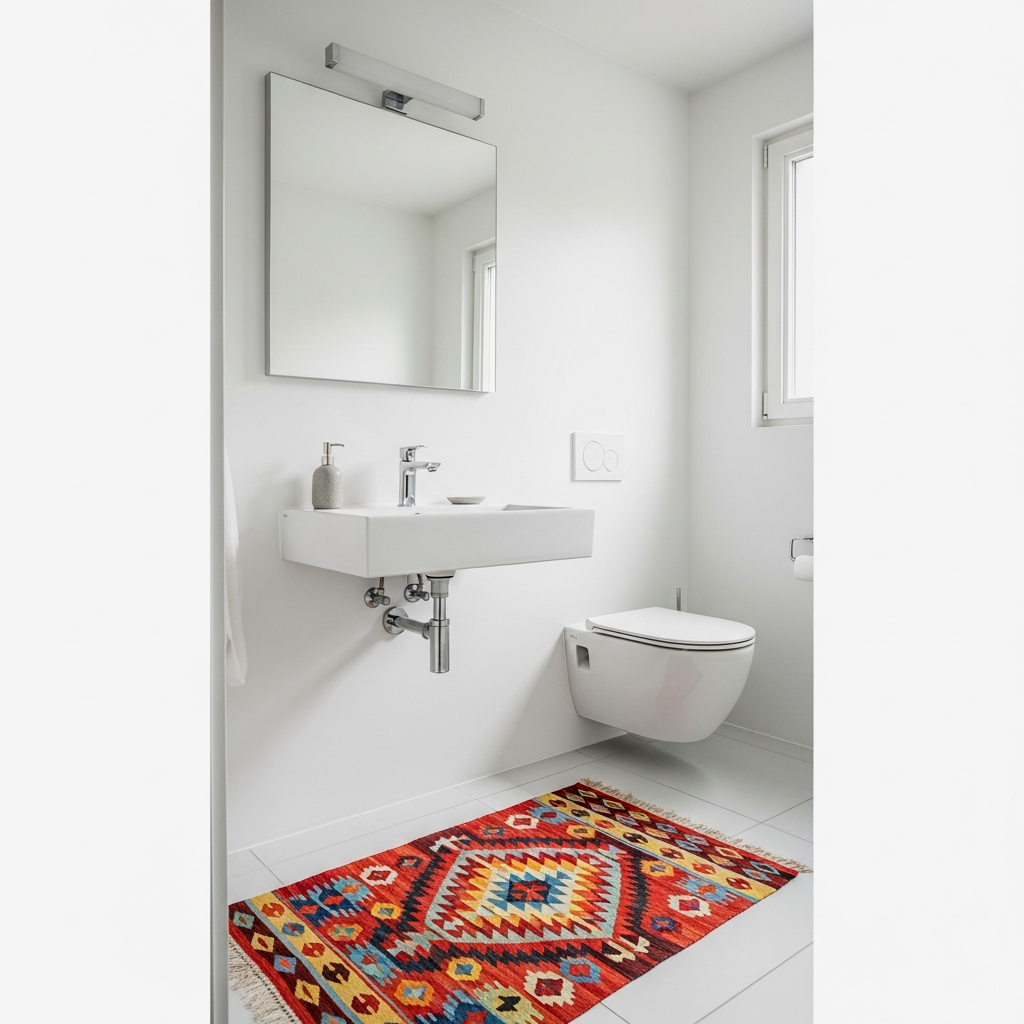
Standard plush bath mats are boring. Swap yours for a small Kilim rug or a vintage-style flatweave. These rugs usually feature a mix of colors—faded reds, deep blues, and ochre—that are muted by the weave. Because the colors are broken up by a pattern, they aren’t as aggressive as a solid block of color. Look at Revival Rugs or Etsy for hand-knotted options that add a global, curated feel to a cramped room.
Always use a high-quality non-slip rug pad underneath a Kilim rug in the bathroom to prevent sliding and ensure it dries properly.
Deep Navy Accessories
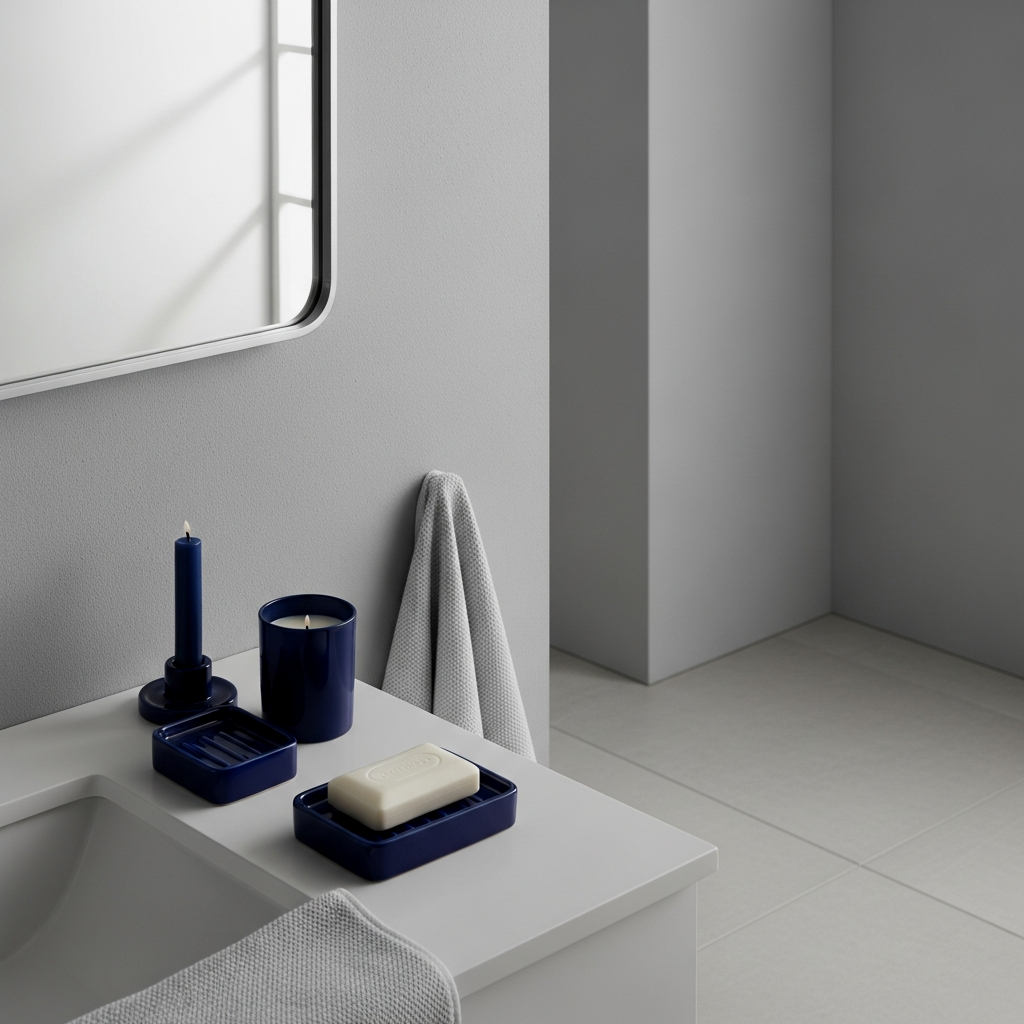
Navy is the most comfortable “dark” color for people who are afraid of color. It reads as a classic neutral but provides a sharp contrast against white tile. Think about a navy soap dispenser, a navy trash can, or a navy-bordered shower curtain. Benjamin Moore ‘Hale Navy’ is the gold standard for this. It’s a sophisticated, masculine choice that never goes out of style.
Soft Peach Bath Mat
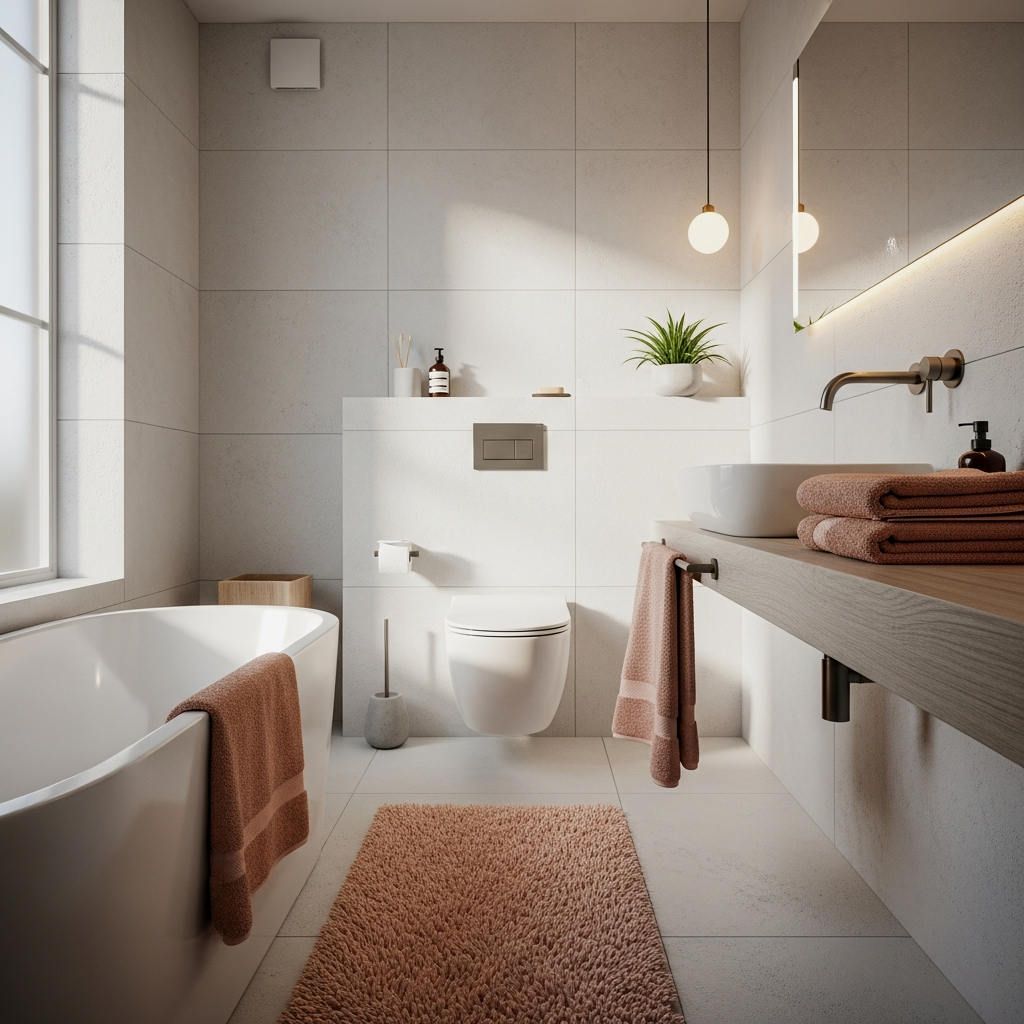
If your bathroom feels a bit cold or “blue” due to fluorescent lighting, a soft peach bath mat is the antidote. It brings in a warm, sunny undertone without being overtly orange. Brands like Quiet Town make incredible heavy-duty mats that look more like art than something you step on. It’s a cheerful addition that’s easy to swap out if you decide you want a different vibe next season.
Check your bathroom lighting temperature before buying peach; under very cool bulbs, peach can look muddy, so aim for 3000K warm white bulbs.
Removable Floral Wallpaper Accent
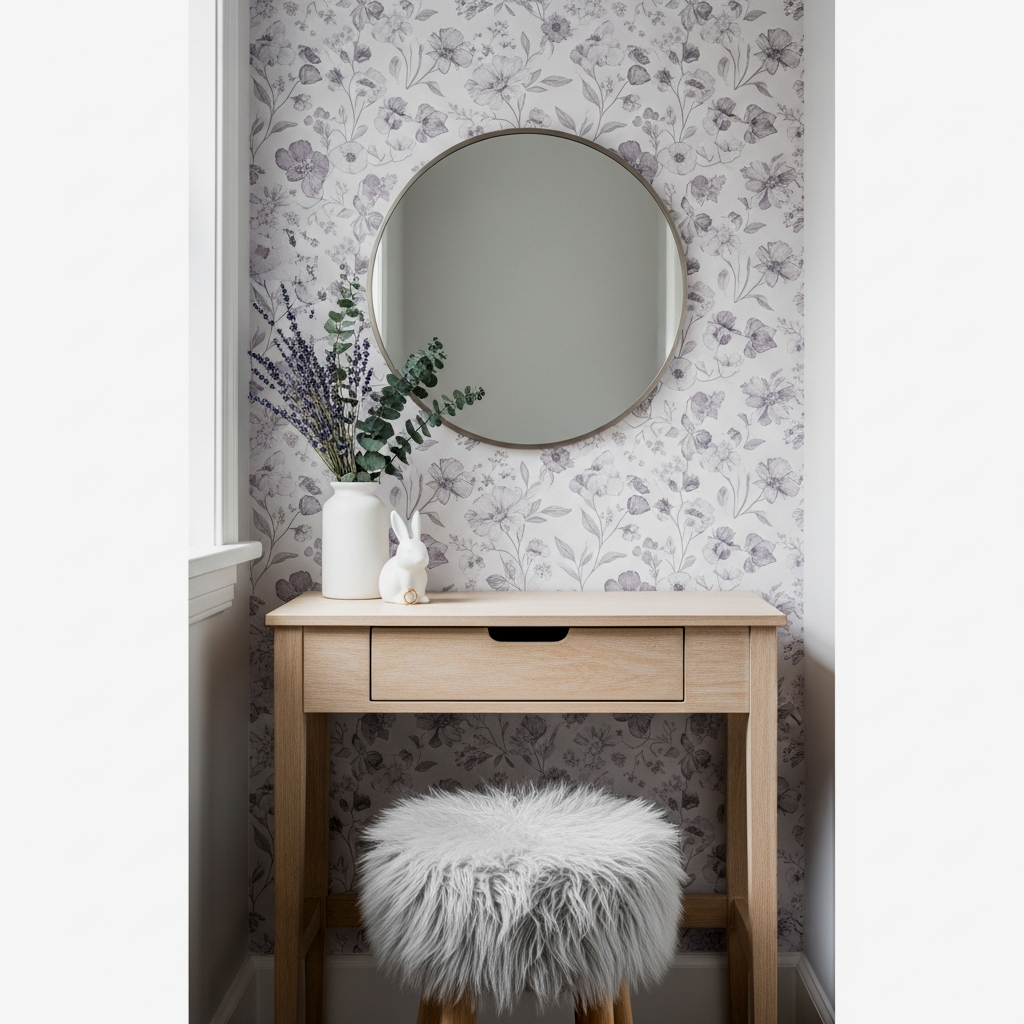
Commitment issues? Peel-and-stick wallpaper is your best friend. Choose a pattern with a white background and small-scale botanical or floral prints in muted tones. Rifle Paper Co. has some great options through York Wallcoverings. By only doing one wall—maybe the one behind the vanity—you add a massive amount of personality. If you move or get bored, it peels off in minutes with no damage.
When using peel-and-stick wallpaper in a bathroom, run a tiny bead of clear silicone caulk along the top edge and corners. This prevents steam from getting behind the adhesive and causing it to peel prematurely.
Amber Glass Details
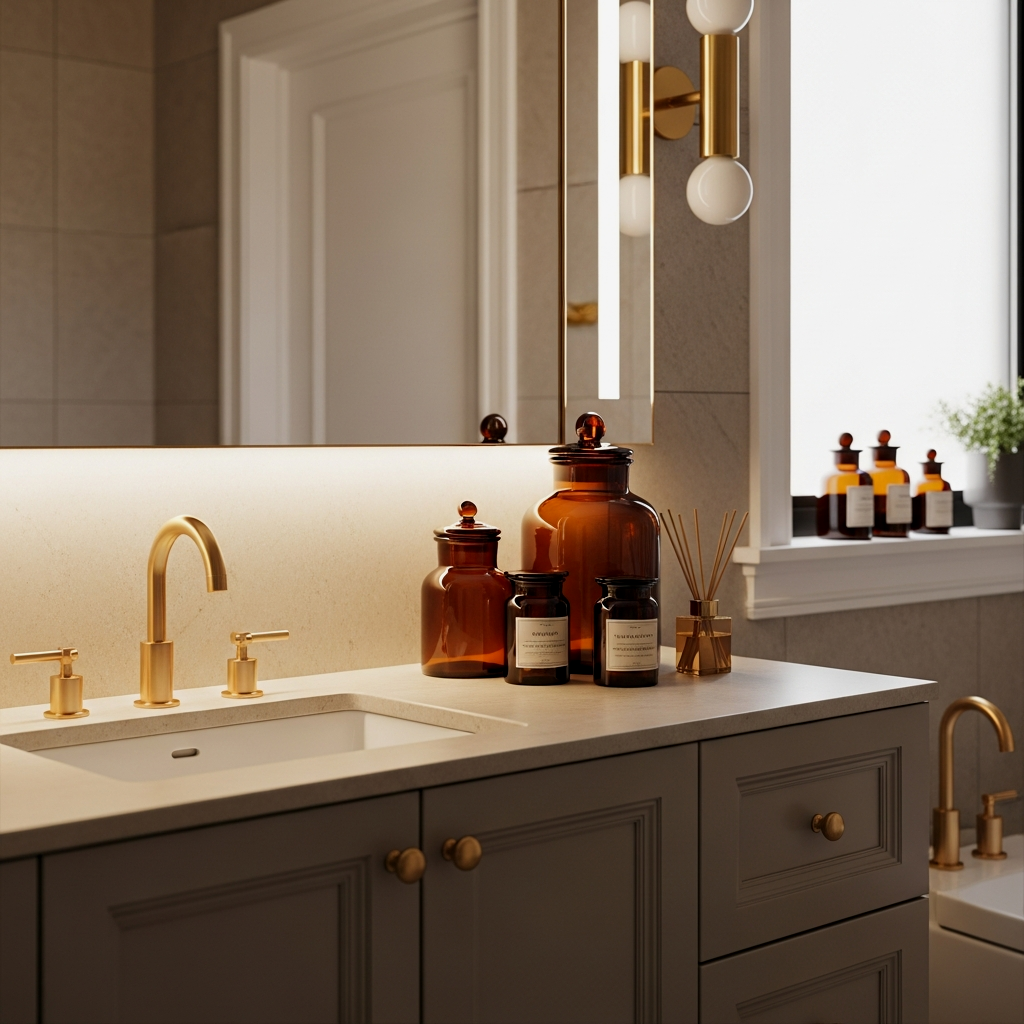
Sometimes the color you need comes from the smallest details. Amber glass apothecary jars or soap dispensers add a warm, golden glow to your countertop. They look great next to a candle or a small wooden tray. It’s a very low-cost way to move away from the “all-white and plastic” look. Plus, amber glass is a timeless material that fits both modern and traditional styles.
Refill your amber glass bottles with bulk soap to keep the aesthetic clean and reduce visual clutter from branded plastic packaging.
Sandstone Textured Walls
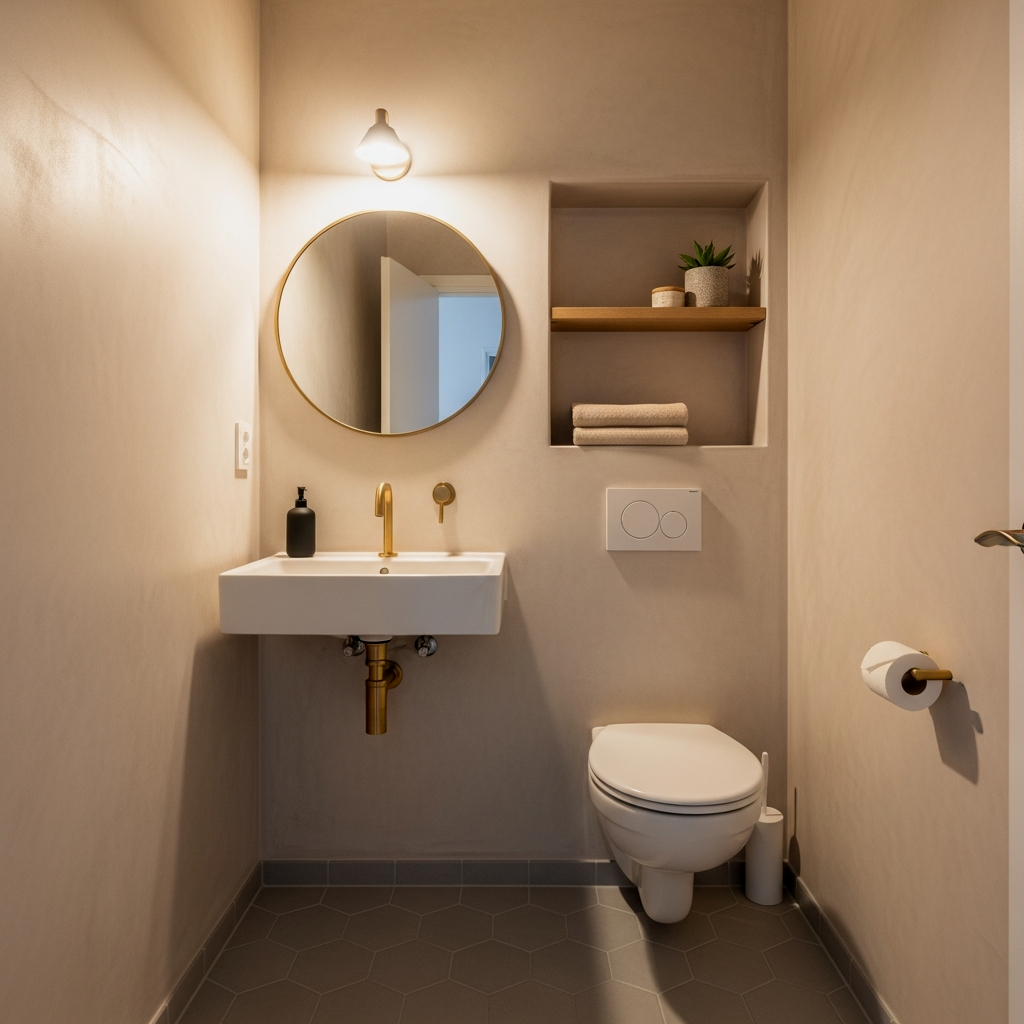
Texture is color’s sophisticated cousin. Instead of a flat paint, consider a limewash finish in a sandstone shade like Portola Paints ‘Saint Sauveur’. It gives the walls a mottled, stony appearance that changes as the light hits it. It’s technically a neutral color, but the depth and movement it provides make it feel much more intentional than a standard eggshell white. It’s a solid choice for creating a spa-like atmosphere.
Pale Yellow Hand Towels
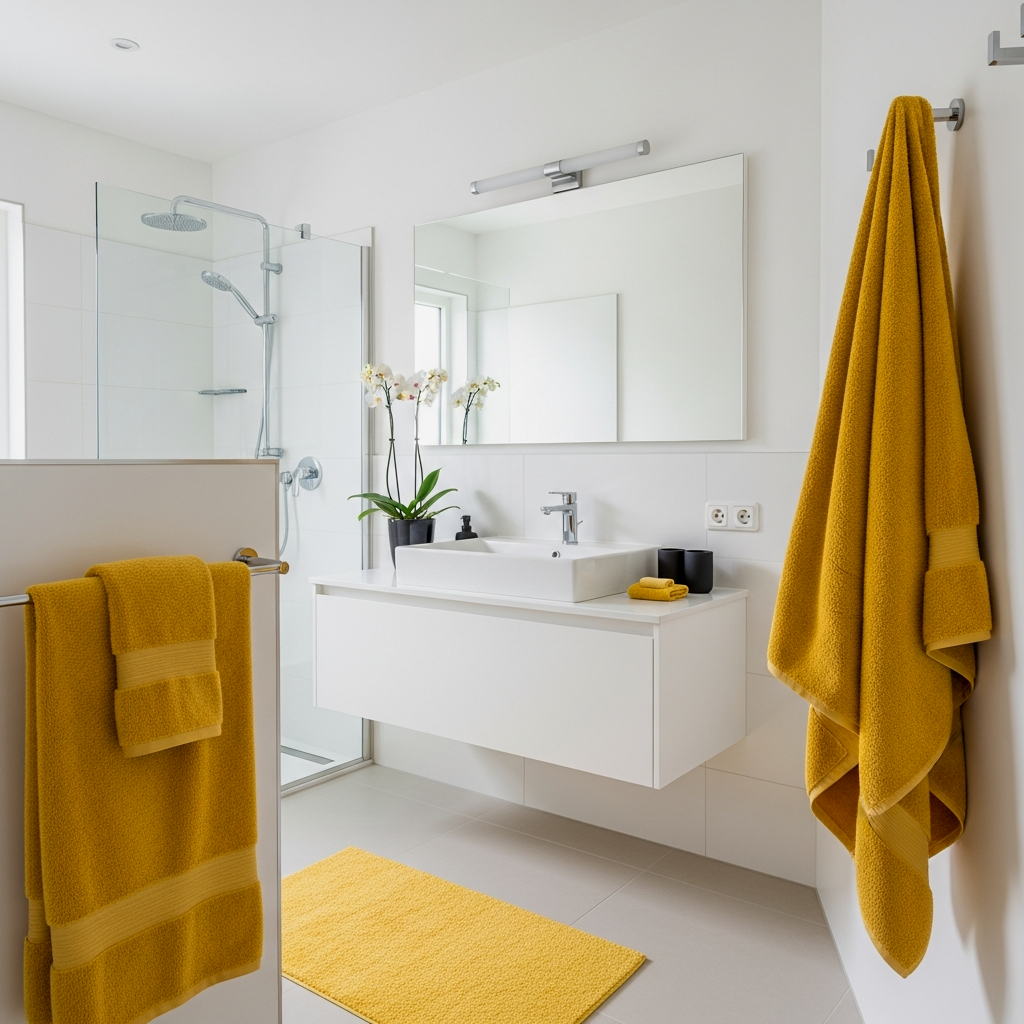
Yellow is a bold move, but in a “pale” or “butter” shade, it’s remarkably calming. A set of pale yellow hand towels hanging on a hook adds a tiny burst of sunshine. It works exceptionally well in bathrooms that don’t get much natural light. It’s a “no-stress” way to test if you like warm tones in your space without doing anything permanent.
📏 Small Bathroom Color Ideas for People Afraid to Commit to Color Quick-Win Checklist
- Test the Light: Always look at paint samples or fabric swatches in the morning and at night.
- Swap Hardware: Replace one cabinet knob with a copper or brass version to see if you like the warmth.
- Go Muted: If you find a color you like, go two shades lighter or grayer for the final choice.
- Focus on One Area: Don’t try to add color to the towels, the vanity, AND the walls all at once.
- Check Your Bulbs: Ensure your light bulbs are 3000K (Warm White) for the best color rendition.
Framed Abstract Art
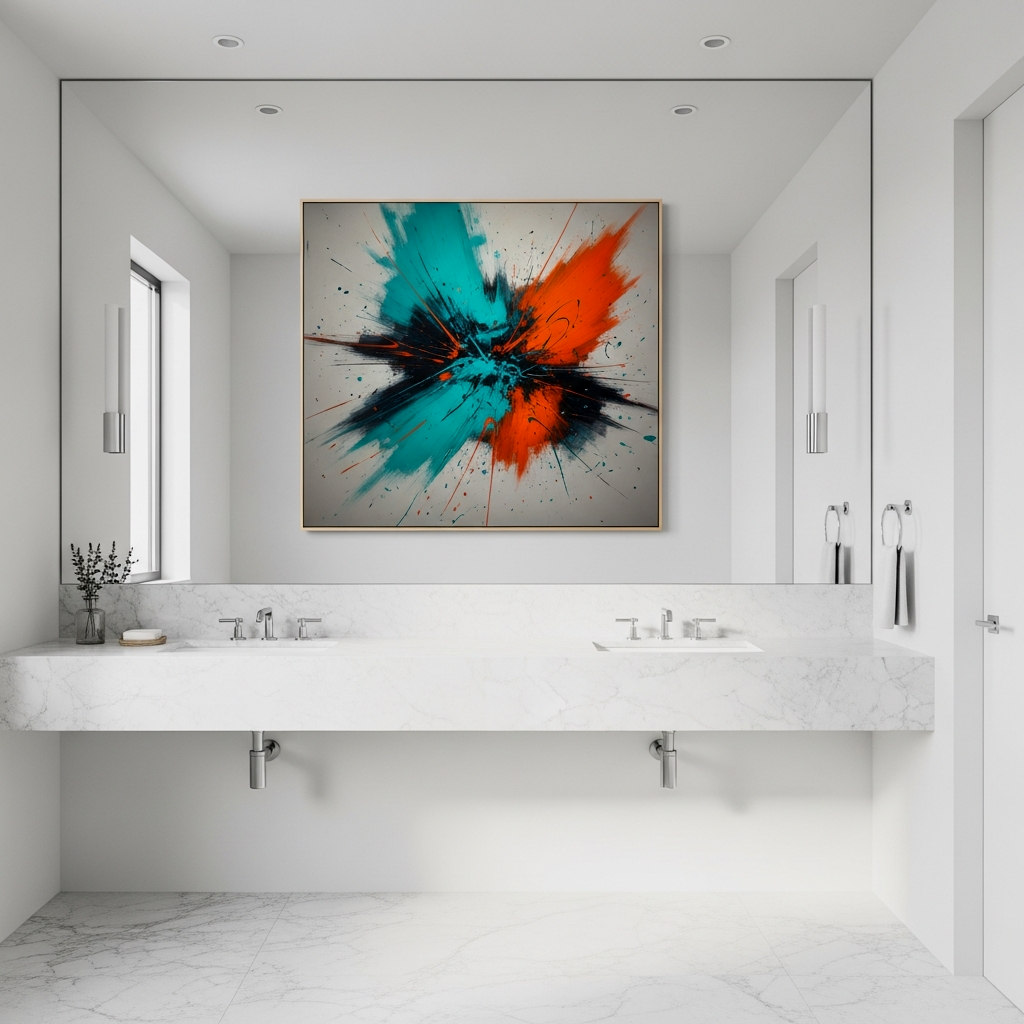
The easiest way to see if you like a color is to put it in a frame. A piece of abstract art with splashes of navy, terracotta, or forest green can act as your color palette for the whole room. It’s a localized experiment. If the colors in the art make you happy, you can then pull those shades into your towels or accessories. It’s the ultimate “do it right the first time” strategy for people who want a curated look without the gamble.
Make sure any art in the bathroom is properly sealed behind glass to prevent moisture damage to the paper or canvas.
Adding color to a small bathroom doesn’t have to be a high-stakes drama. By focusing on swappable textiles, functional hardware, and muted paint tones, you can create a space that feels personal and polished. Keep it simple, don’t overthink it, and remember that even a small change—like a new set of towels or an amber glass jar—can be a total game changer. You’ve got this.
Frequently Asked Questions
Won’t dark colors make my small bathroom look even smaller?
Not necessarily. While light colors make a room feel airy, dark colors like navy or charcoal create depth and can actually make the walls “recede.” If you use dark colors strategically—like on a single vanity or through accessories—it adds sophistication without feeling claustrophobic.
What is the safest color to start with if I’m truly terrified?
Sage green is arguably the safest “entry-level” color. It’s widely considered a “new neutral” because it’s inspired by nature and pairs effortlessly with whites, woods, and blacks. It’s calming and almost impossible to mess up.
Do I have to match my towels to my rug exactly?
No, and you probably shouldn’t. It’s better to stay within the same “family” of colors. For example, if you have a sage green vanity, you could use cream towels and a rug that has small flecks of olive or forest green. This looks more curated and less like a showroom set.
Is peel-and-stick wallpaper really safe for bathrooms with showers?
Yes, as long as you have decent ventilation (like a fan or a window). Modern high-quality brands are designed to handle moderate humidity. Just ensure the wall is perfectly clean and dry before you apply it to get the best seal.
How do I know if a paint color is “muted” enough?
Look at the paint swatch. If the color looks like something you’d find in a bag of Skittles, it’s too bright. Look for colors that appear “dusty” or “muddy” on the card. These will look much more natural and high-end when applied to a large surface.