11 Rug Rules for Small Living Rooms That Change Everything
I’m going to be real with you—nothing kills the vibe of a tiny apartment faster than a “postage stamp” rug. You know the one: that dinky 5×7 floating in the middle of the floor like a lost island, making everything look cramped and accidental. I spent years making this exact mistake because I thought a big rug would “swallow” the room. I was wrong. No seriously, the scale of your rug is the literal foundation of your home’s energy. As we talked about in my deep dive on 22 Small Living Room Ideas to Transform Your Tiny Space into a Sanctuary, your floor is basically your fifth wall, and how you treat it determines if your room feels like a cozy retreat or a cluttered closet.
✨ Before You Start: 11 Rug Rules for Small Living Rooms That Change Everything Mindset
Rule 1: The ‘All Legs On’ Absolute
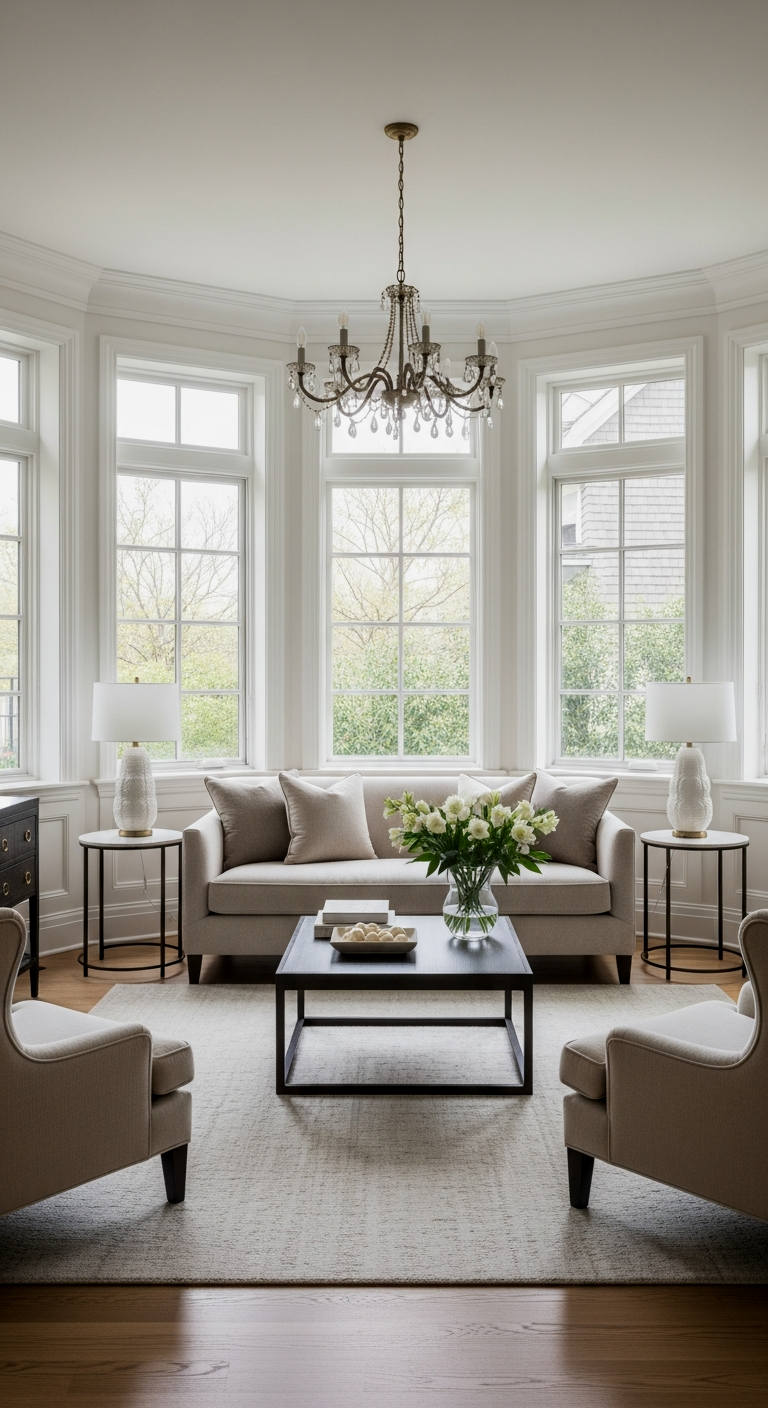
If you take away nothing else from this list, let it be this: in a small room, your rug needs to be big enough for every single leg of your furniture to sit comfortably on the pile. I cannot stress this enough. When your sofa and chairs are all “grounded” on the same surface, it creates a unified zone that feels intentional and expansive. I was not prepared for how good a correctly sized rug looks until I tried it—this alone is worth the investment because it instantly eliminates that choppy, fragmented feeling that plagues small spaces.
Rule 2: Master the Layered Texture
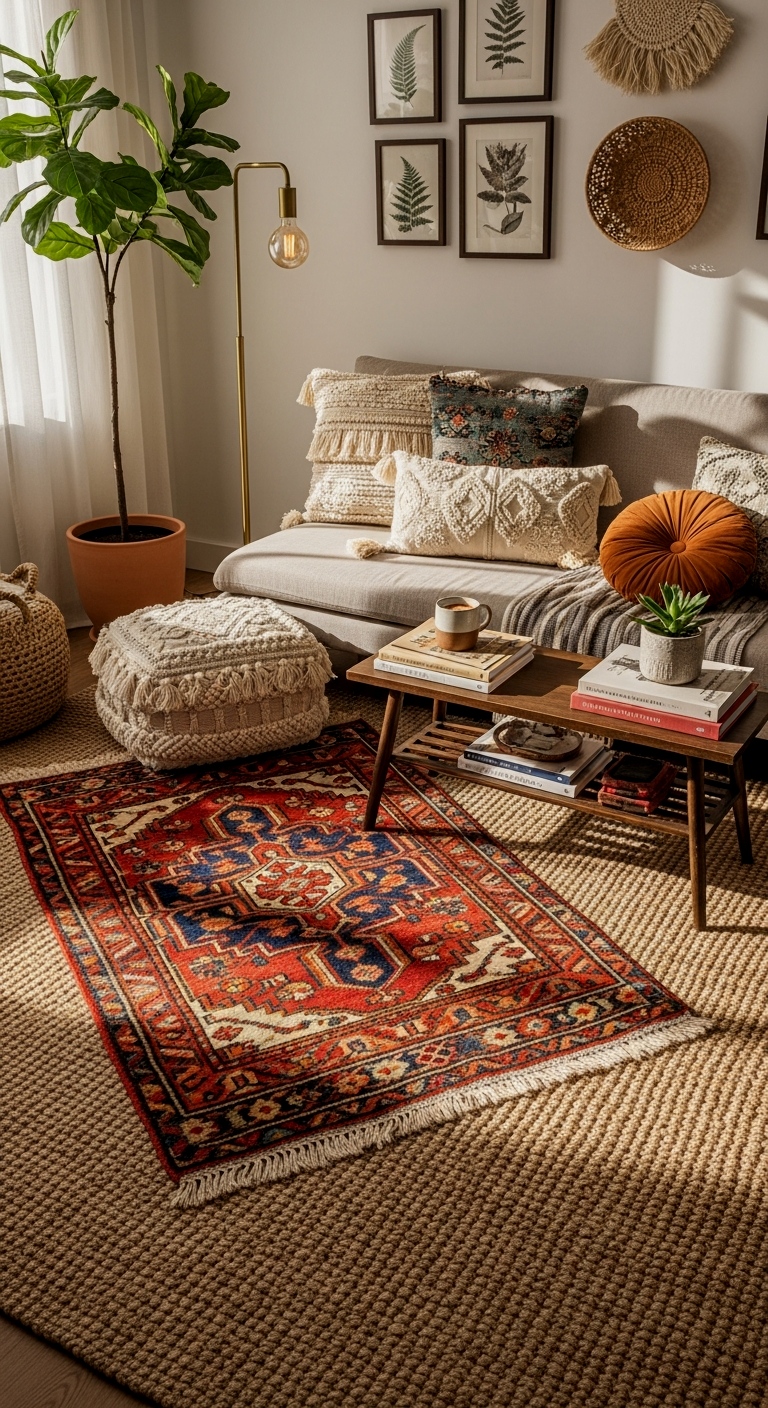
I am completely obsessed with the “layered look” for small spaces. The trick is to start with a large, budget-friendly jute or sisal rug that covers almost the entire floor, and then layer a smaller, more expensive vintage Turkish or Persian rug on top. This gives you all that gorgeous character and color without the eye-watering price tag of a 9×12 antique. It adds so much dimension without making the room feel heavy.
Rule 3: Prioritize Low-Pile for Visual Air
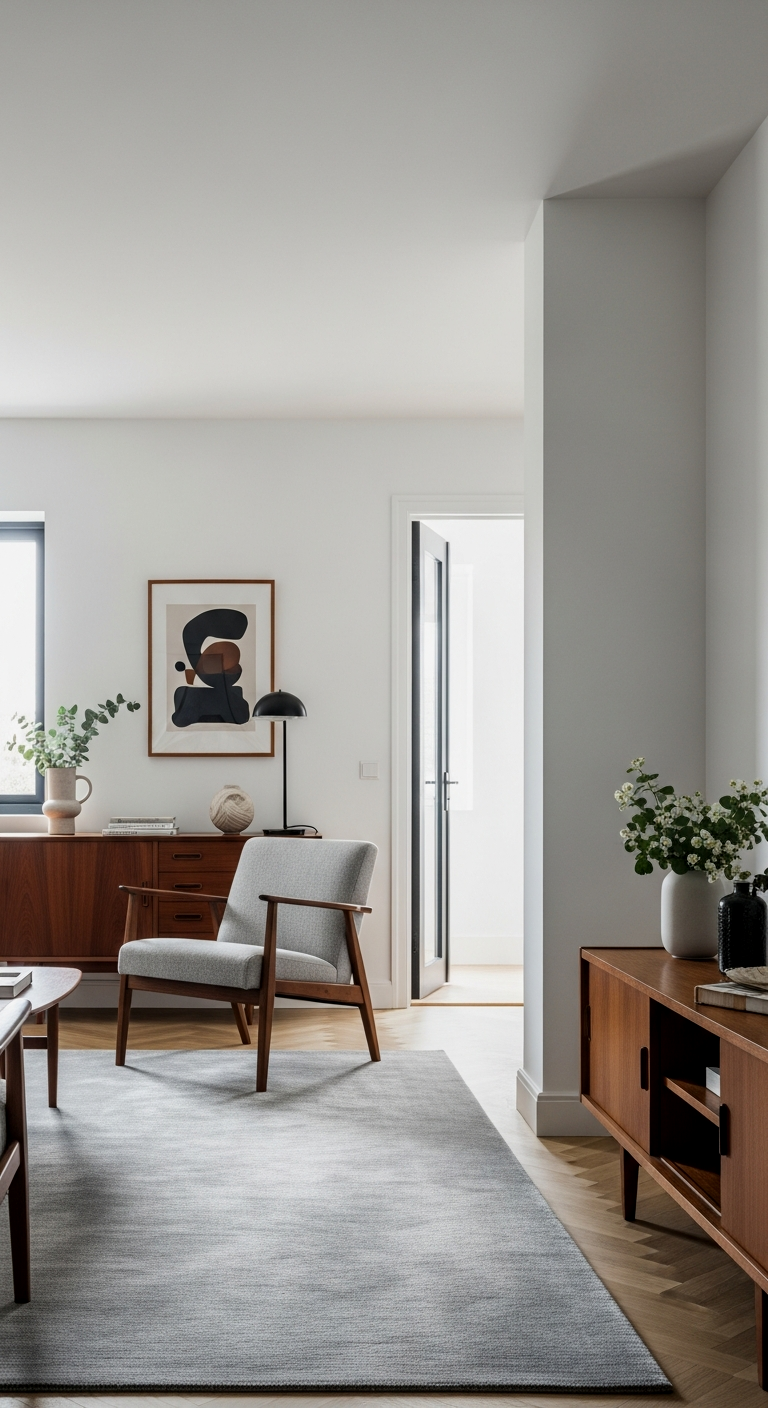
When you’re dealing with limited square footage, “visual weight” is everything. A thick, shaggy rug can actually make a room feel smaller because it literally takes up more physical space in your eye’s line of sight. Choosing a low-pile or flatweave rug keeps the floor looking “airy” and allows light to bounce around more effectively. This changed everything for me when I was trying to brighten up my dark, tiny studio apartment.
Always leave 6 to 10 inches of bare floor between the edge of your rug and the walls to ensure the room doesn’t look like it has poorly installed wall-to-wall carpeting.
Rule 4: The Transformative Power of Scale
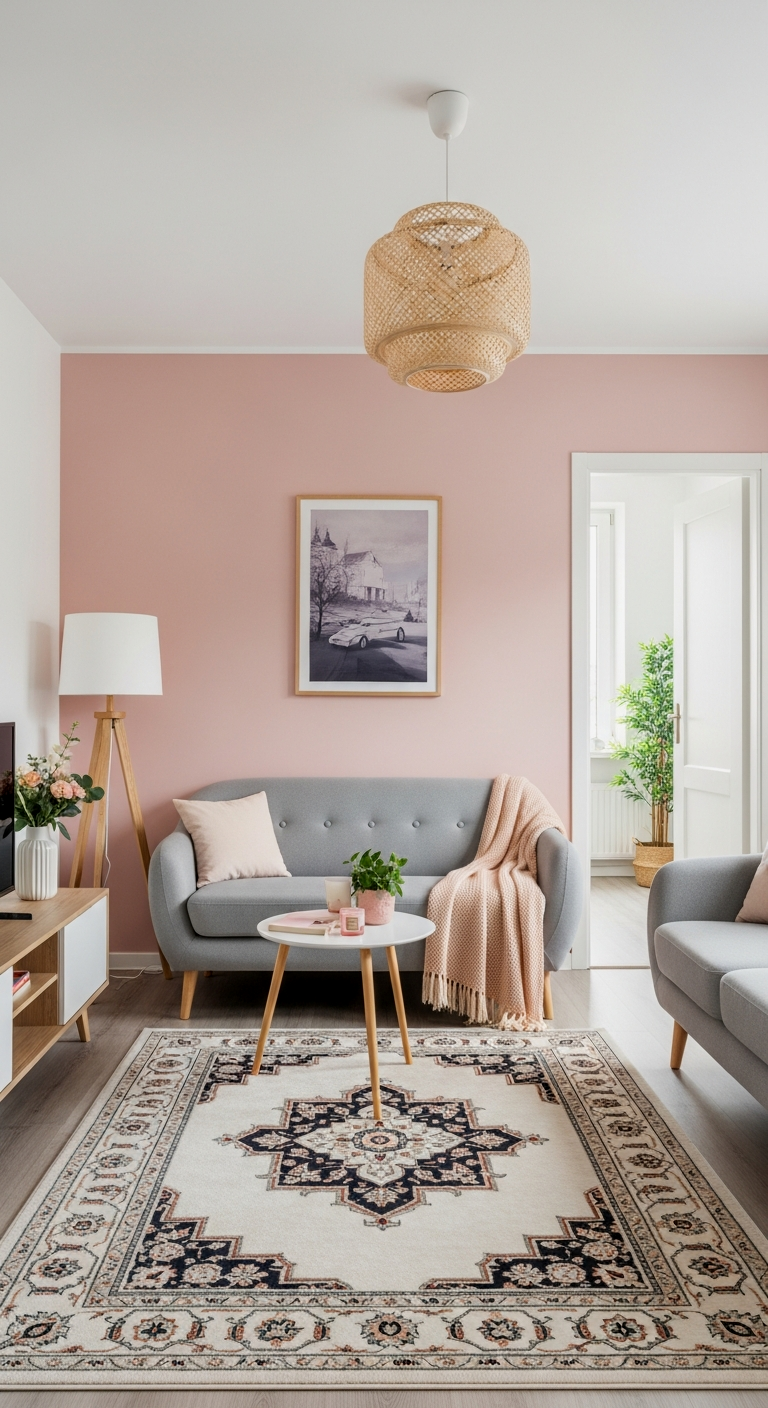
Most people default to a 5×7 rug for a small living room, but trust me on this one: go for the 8×10. It sounds counterintuitive, but a larger rug actually makes the floor plan feel more generous. The results speak for themselves; as soon as that rug extends past the edges of your sofa, the room feels like it has doubled in size. Genuinely life-changing.
Rule 5: Strategic High-Pile Comfort
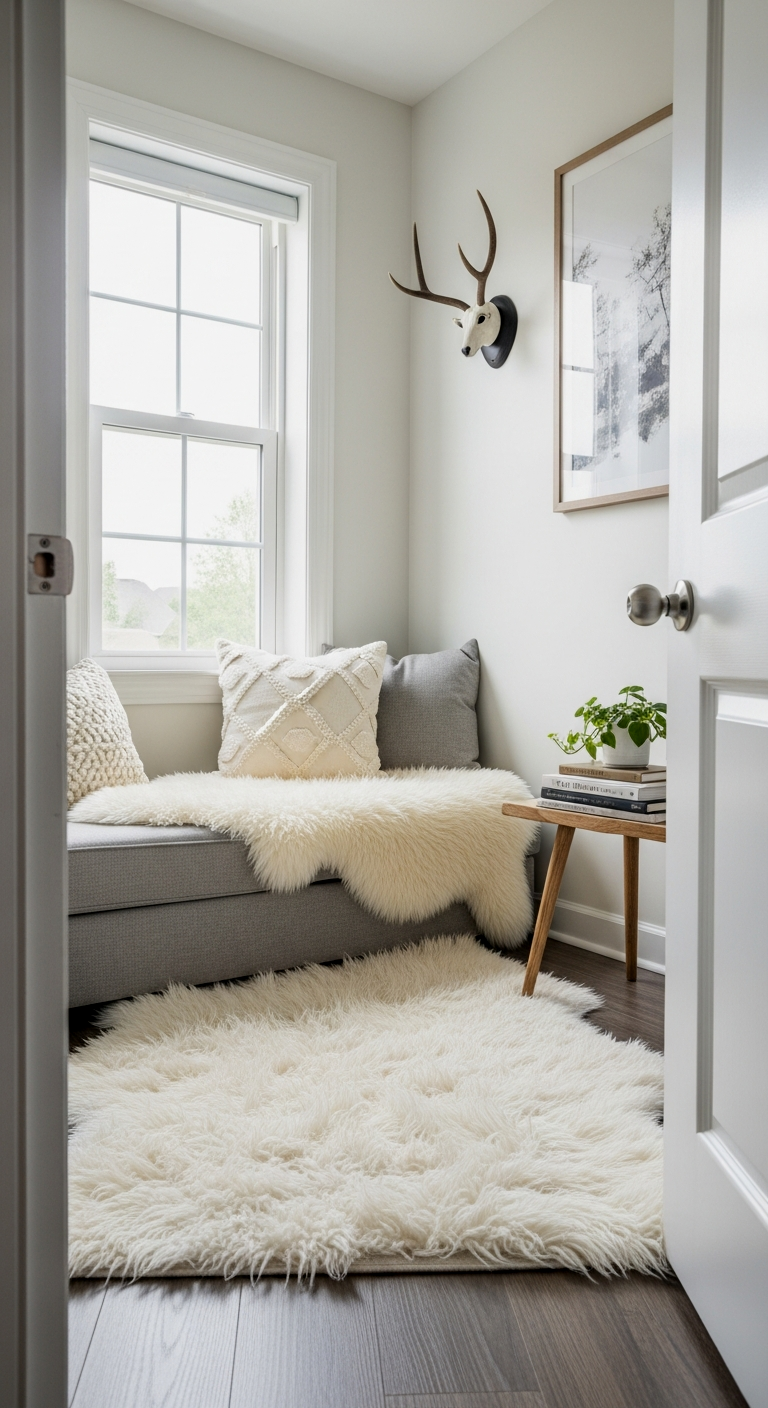
Wait, didn’t I just say low-pile? Hear me out. If you absolutely crave that cozy, sink-in feeling, use high-pile rugs strategically. A small, plush sheepskin layered near a reading nook can give you that comfort without overwhelming the entire floor. It’s about balance—use the low-pile for the “base” and high-pile for the “moment.”
Rule 6: Define Your Sanctuary Zones
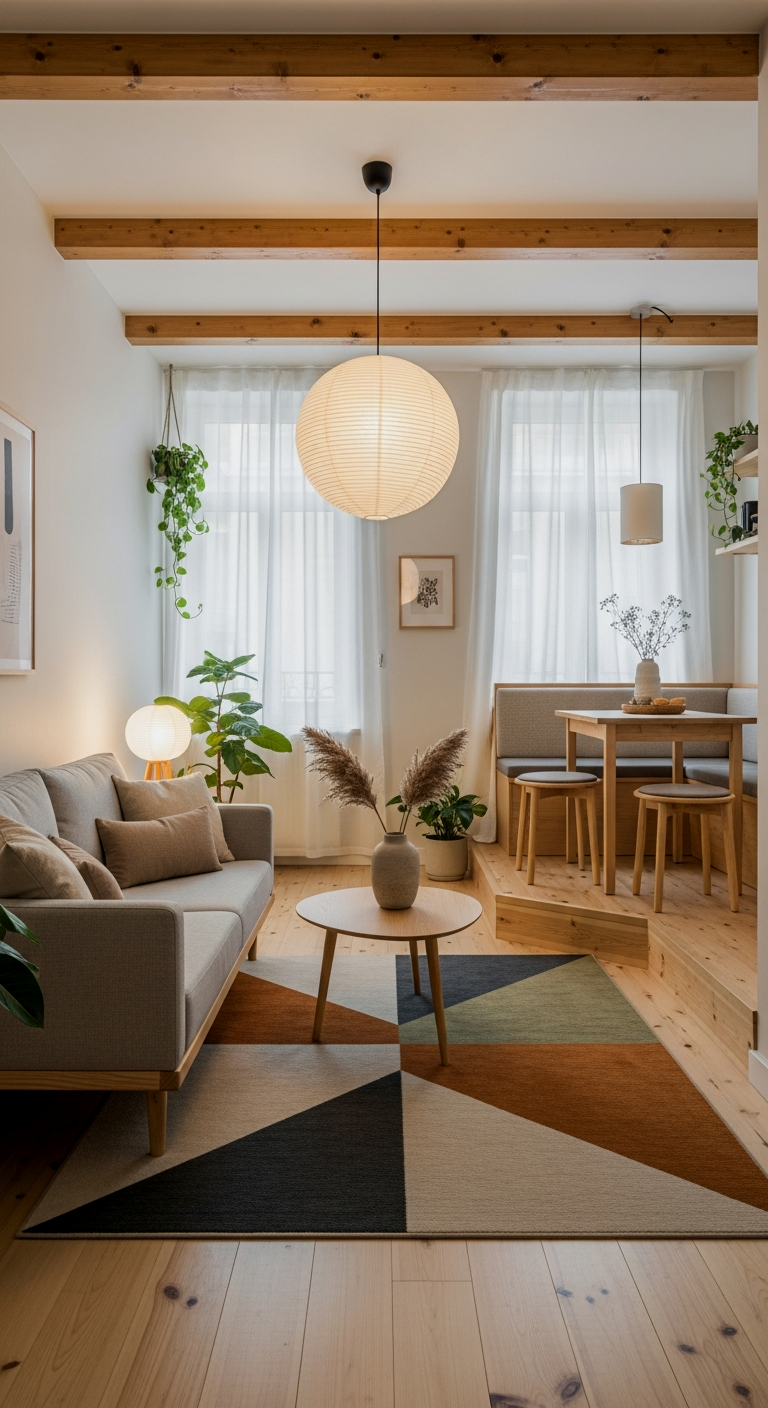
In an open-concept tiny home, rugs are your best friends for “zoning.” Use a rug to separate your “living room” from your “dining area” or “home office.” Once you try this you cannot go back to having one big, confusing space. It creates a sense of order and peace that is essential for a sanctuary vibe.
Rule 7: The Front Legs Compromise
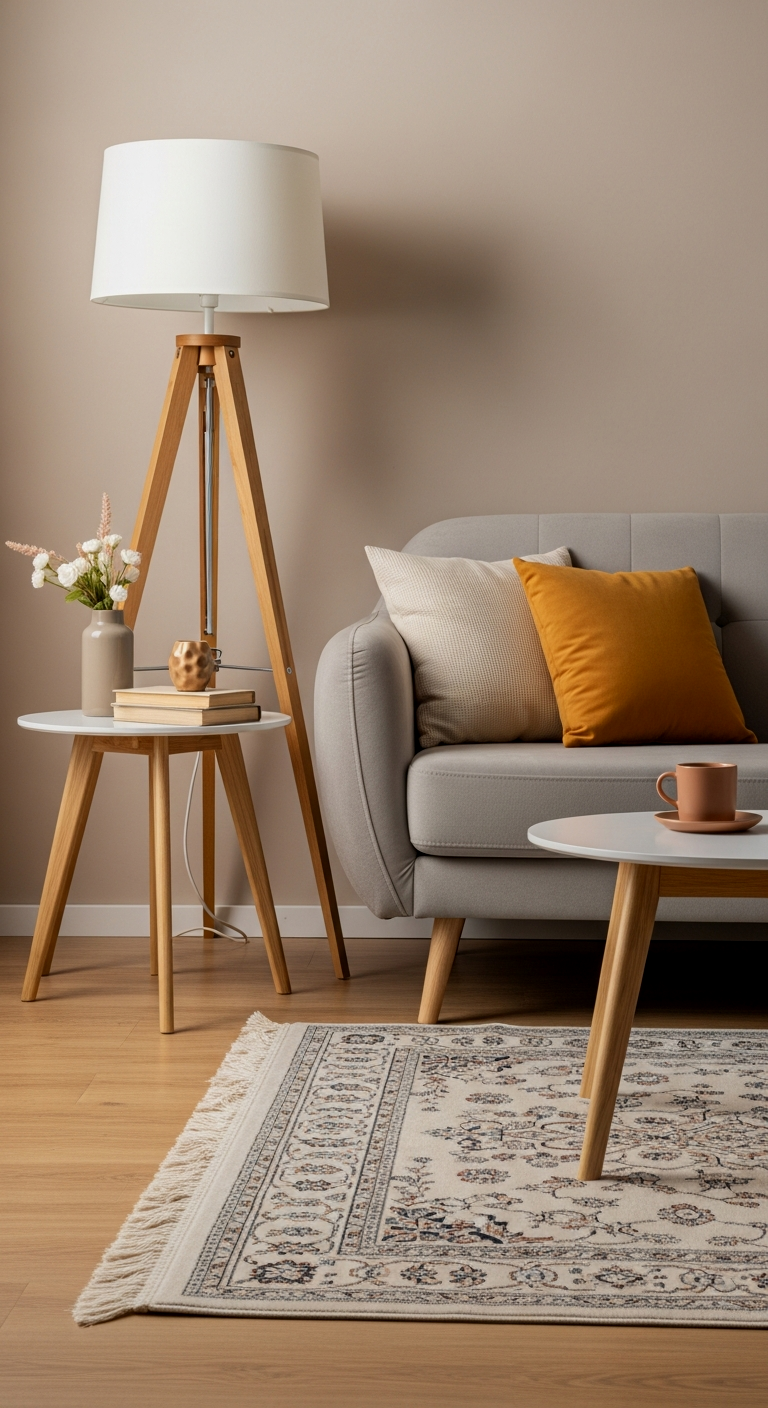
If you absolutely cannot fit a rug that handles “all legs on,” the next best thing is the front-legs-only rule. Ensure at least the front two legs of every seating piece are firmly on the rug. This anchors the furniture to the rug and prevents that “floating furniture” look that makes rooms feel unsettled. I wish someone had told me sooner that this was a totally acceptable “cheat code” for weirdly shaped rooms.
The exact pieces that make these ideas work:
Rule 8: Neutral Jute as a Grounding Force
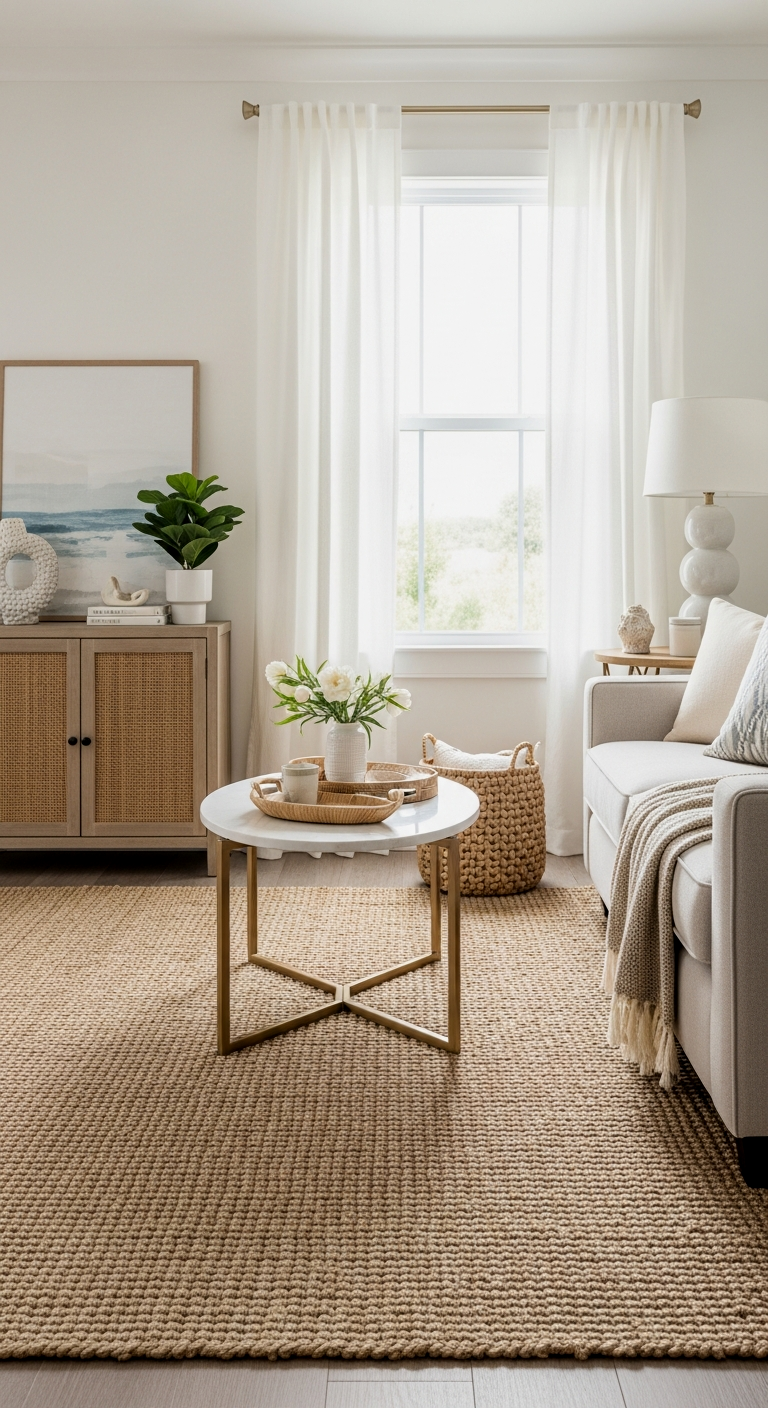
Jute is the MVP of small space design. It’s durable, relatively thin, and provides a neutral, organic texture that goes with literally everything. Using a large jute rug as your base is the best kept secret for making a room feel grounded and expensive without actually spending a fortune. It brings an earthy warmth that balances out modern furniture perfectly.
Rule 9: Use Patterns to Move the Eye
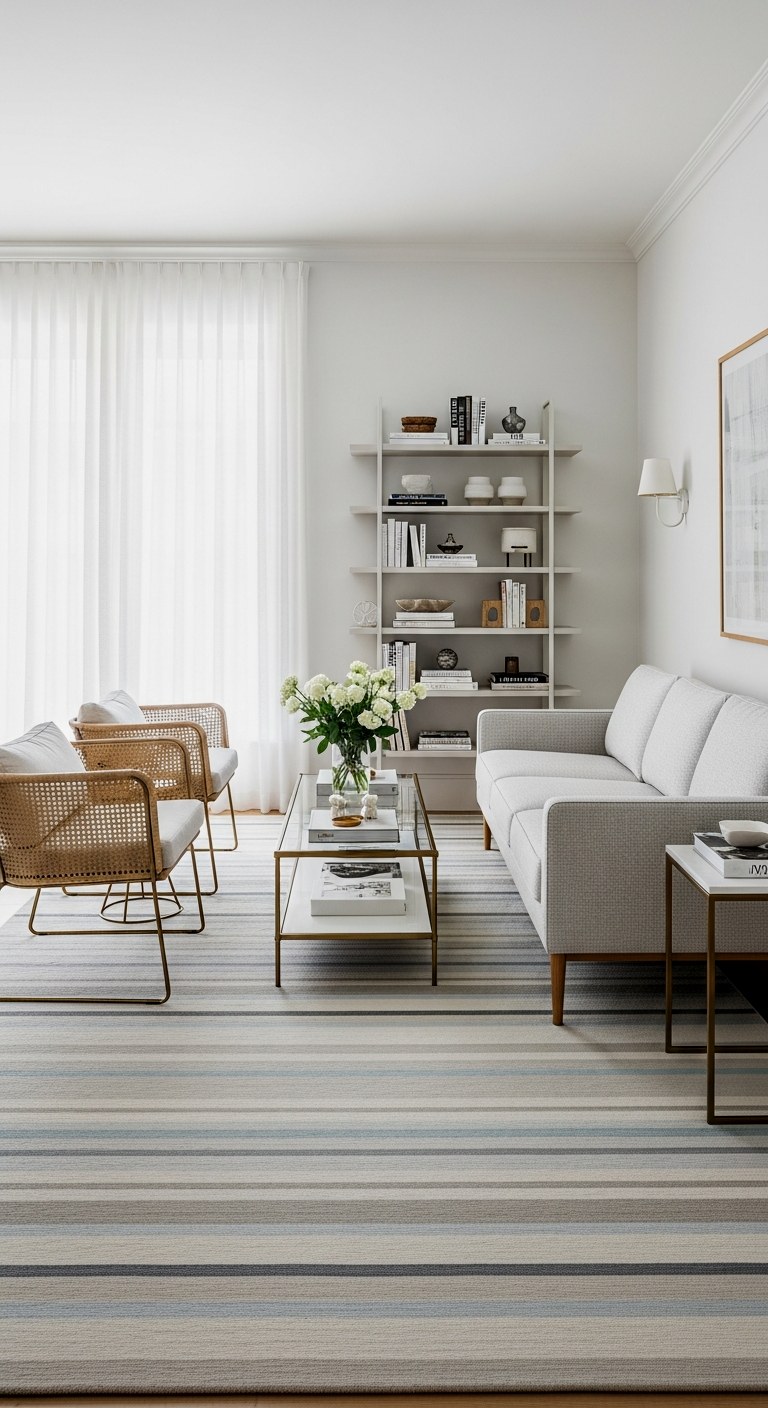
Don’t be afraid of patterns! In a small room, a subtle, repetitive pattern can actually draw the eye across the space, creating the illusion of more width or length. I’m particularly obsessed with soft stripes or herringbone weaves—they act like “arrows” for your eyes, directing the flow of the room.
Rule 10: Organic Shapes for Flow
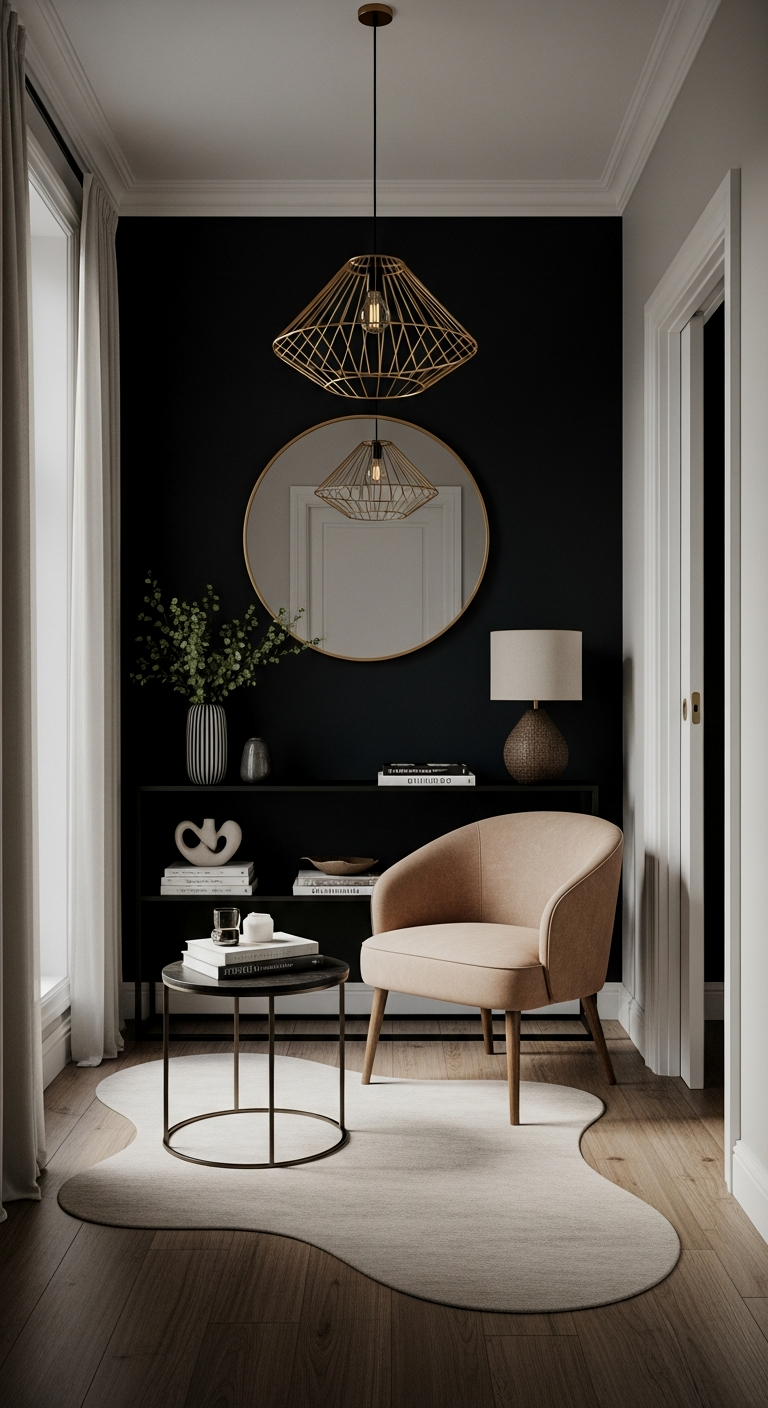
If your room is a literal box and feels a bit stiff, do not sleep on round or organic-shaped rugs. A round rug can break up the harsh lines of a rectangular room and make the traffic flow feel much more natural. It’s a total game-changer for those awkward corner layouts where a square rug just won’t fit.
Rule 11: Light Colors for Maximum Expansion
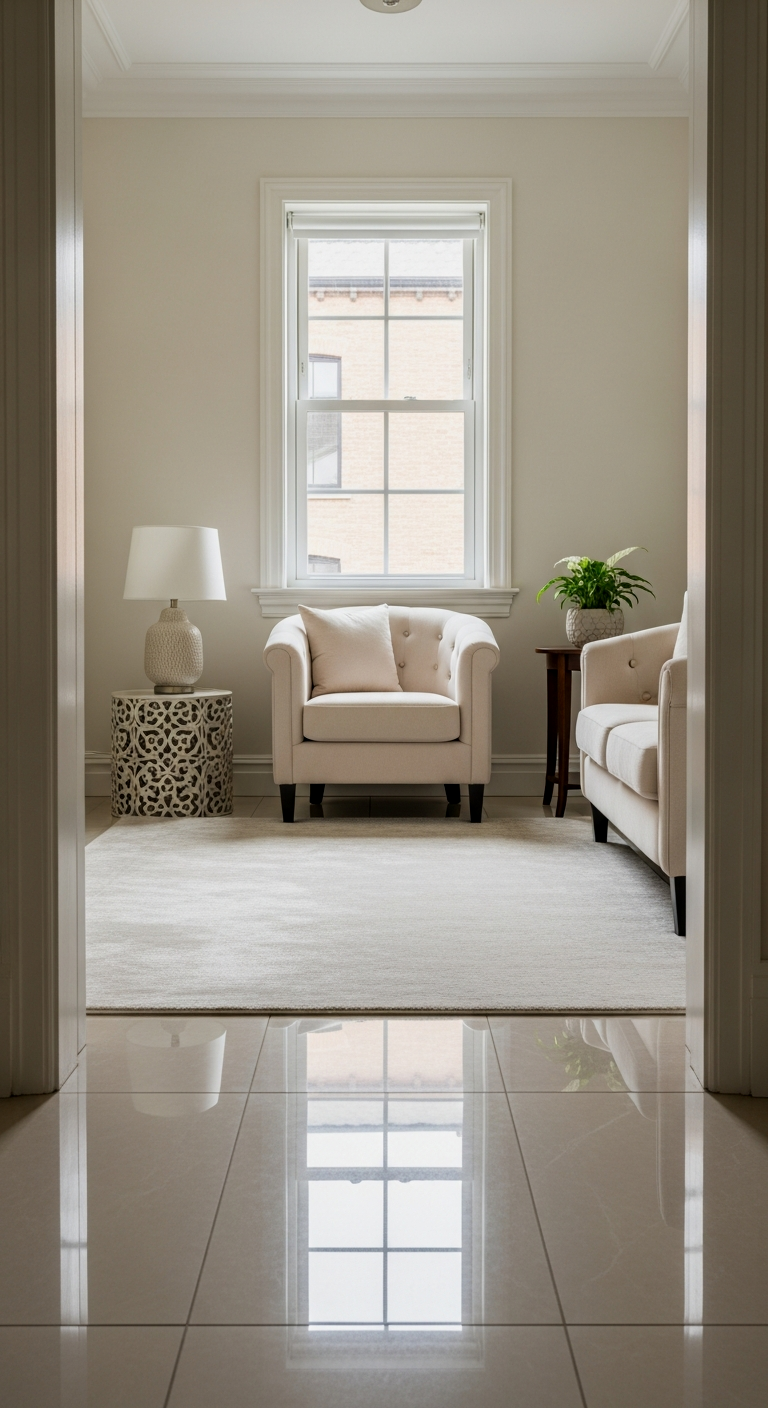
This is the one: if you want the room to feel as big as humanly possible, go light. Creams, pale greys, and soft beiges reflect the most light and keep the “floor plane” feeling open and airy. The difference is unreal when you swap a dark, heavy rug for a light, breezy one. You will not regret this, especially if your living room lacks natural light.
Ready to see how the perfect rug fits into the bigger picture? Check out our master guide for tiny spaces!
📏 11 Rug Rules for Small Living Rooms That Change Everything Quick-Win Checklist
- Measure Twice: Ensure your rug is at least 6-8 inches wider than your sofa on both sides.
- Leg Check: Aim for all furniture legs on the rug for a unified look.
- Layering Base: Use a natural fiber like jute for a durable, affordable bottom layer.
- Pile Height: Choose 1/4 inch pile or less to keep the room feeling spacious.
- Color Choice: Opt for light-reflecting neutrals to expand the visual boundaries.
Common Questions About Small Living Room Rugs
[rank_math_question_answer]
{“question”:”What is the best rug size for a small living room?”,”answer”:”Generally, an 8×10 rug is the sweet spot. It allows for all furniture legs to sit on the rug, which creates a cohesive and larger-looking space compared to a standard 5×7.”}
{“question”:”Can I use a dark rug in a small room?”,”answer”:”Yes, but keep the walls and furniture lighter. A dark rug can anchor a room, but in very small spaces, a light-colored rug is usually better for creating an airy feel.”}
{“question”:”Is layering rugs okay in a tiny space?”,”answer”:”Absolutely! Layering a smaller decorative rug over a larger jute rug is a great way to add style and texture without the high cost of a massive patterned rug.”}
{“question”:”Should a rug be centered in a small room?”,”answer”:”Not necessarily. It should be centered to the furniture arrangement (like the sofa and coffee table) rather than the walls of the room itself.”}
{“question”:”How do I stop rugs from sliding on hardwood?”,”answer”:”Always use a high-quality rug pad. For small rooms, a thin, felt-and-rubber pad is best to add grip without adding too much height.”}
[/rank_math_question_answer]
Designing a small space is all about making bold choices that serve your comfort, and honestly, the rug is where it all begins. Don’t be afraid to go bigger than you think you need—I promise you’ll love how much more “finished” your home feels. For more inspiration on making the most of every square inch, don’t miss my full list of 22 Small Living Room Ideas to Transform Your Tiny Space into a Sanctuary. Happy decorating, friend!