10 Small Kitchen Island Ideas That Double Your Prep Space
In a small kitchen, counter space is the ultimate currency. If you are constantly shuffling cutting boards to make room for the toaster, you need an island.
But wait—you think your kitchen is “too small” for one? Think again. An island doesn’t have to be a massive built-in block of cabinetry. It can be mobile, narrow, or even temporary.
Here is our lookbook of 10 genius small kitchen island ideas that squeeze extra function into even the tightest layouts.
The Island Function Finder
What is your primary goal?
1. The Rolling Island Cart
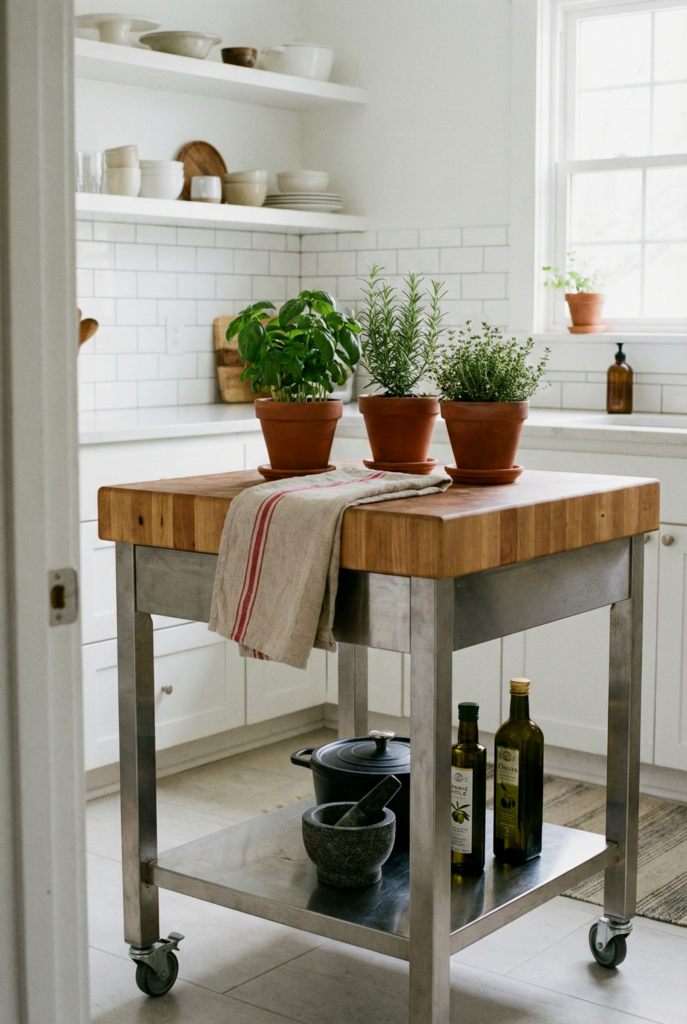
Flexibility is king. A rolling cart (with locking casters) is the gold standard for small kitchens. Pull it into the center when you’re chopping vegetables, and push it against the wall when you have guests. Look for one with a butcher block top for maximum utility.
Our favorites for durability and style:
2. The Dresser Island Hack
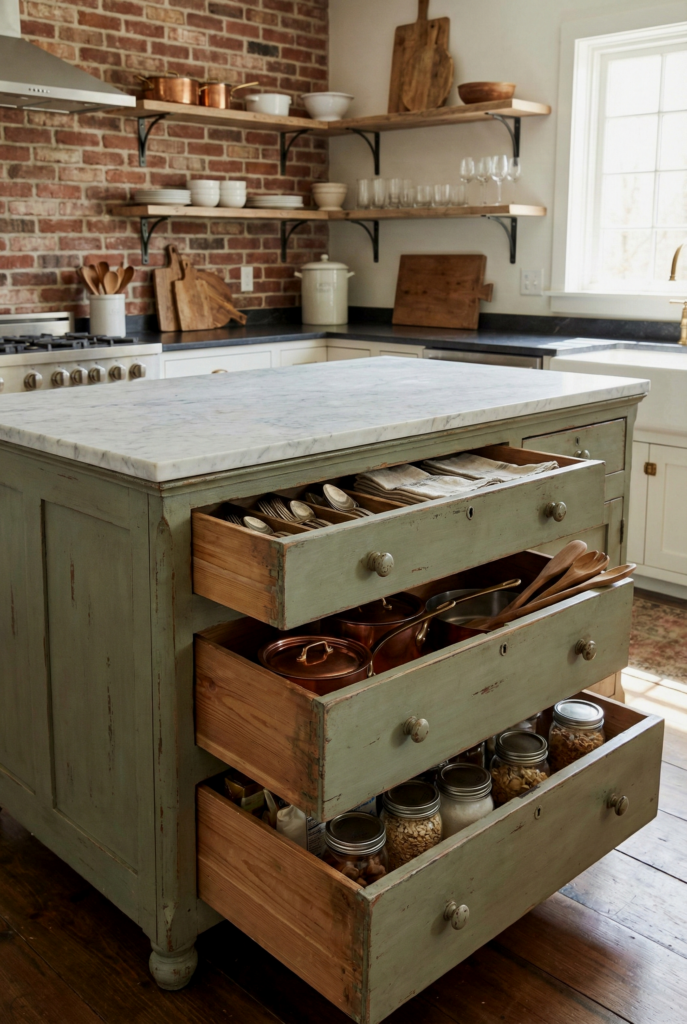
Want something with character? Go vintage. An old dresser is the perfect height for an island (approx. 34-36 inches). The deep drawers provide massive storage for pots and pans. Just add a new countertop (or seal the wood well) and finish the back with beadboard if it’s unfinished.
3. The Hidden Trash Island
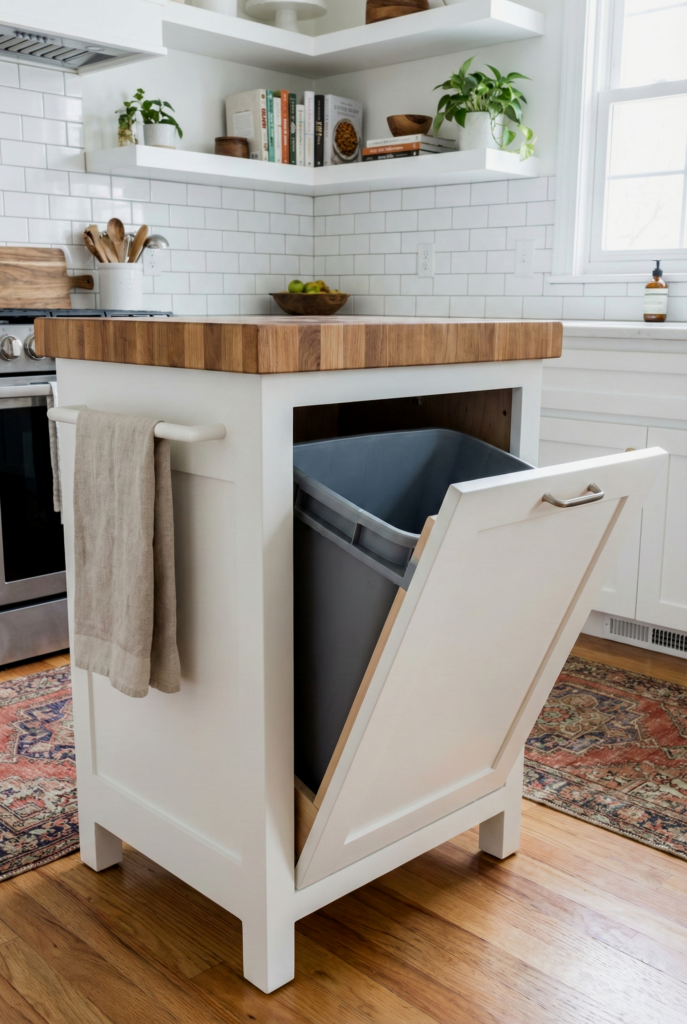
In a small kitchen, the trash can is often tripping you up. A small island with a “tilt-out” cabinet door conceals the bin completely. This frees up floor space and gives you a new work surface on top.
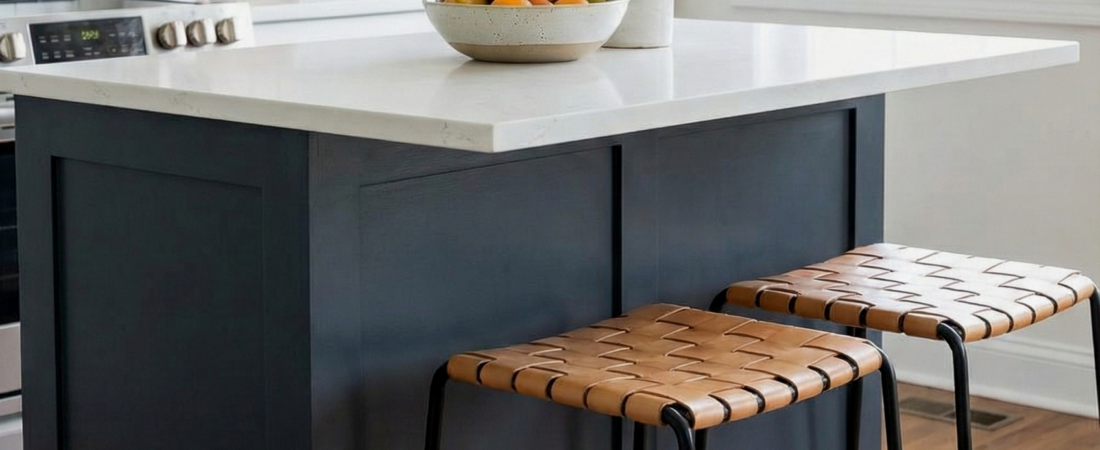
4. The Breakfast Bar Island
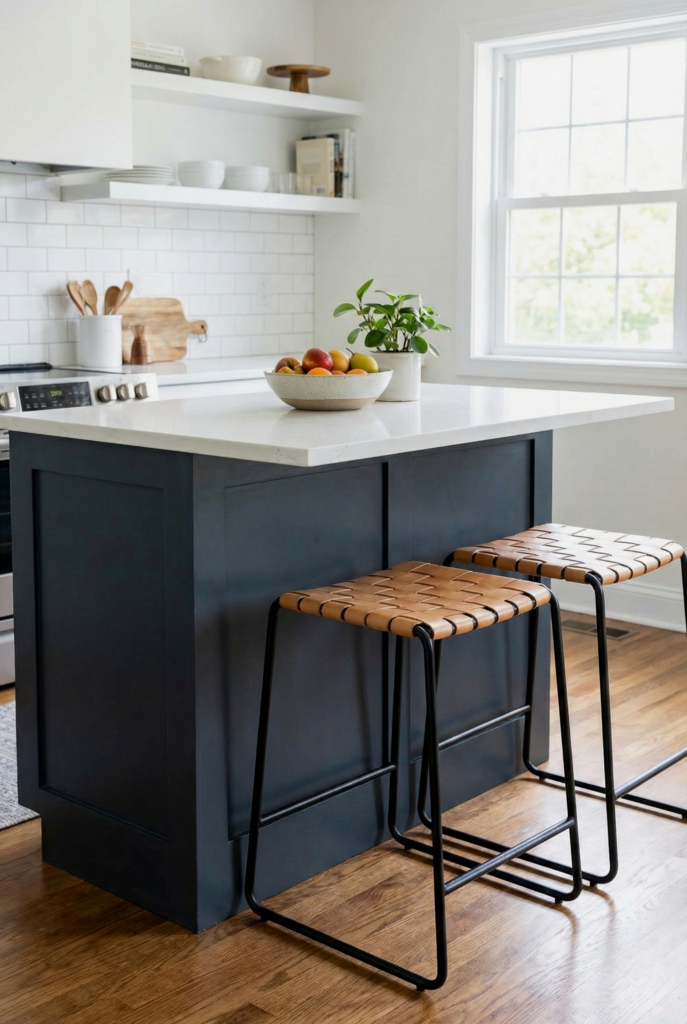
If you don’t have room for a dining table, make your island do double duty. To sit comfortably, you need an overhang of at least 12 inches. This allows your knees to tuck under. Without the overhang, you’ll be leaning awkwardly away from your plate.
5. The Skinny Console Island
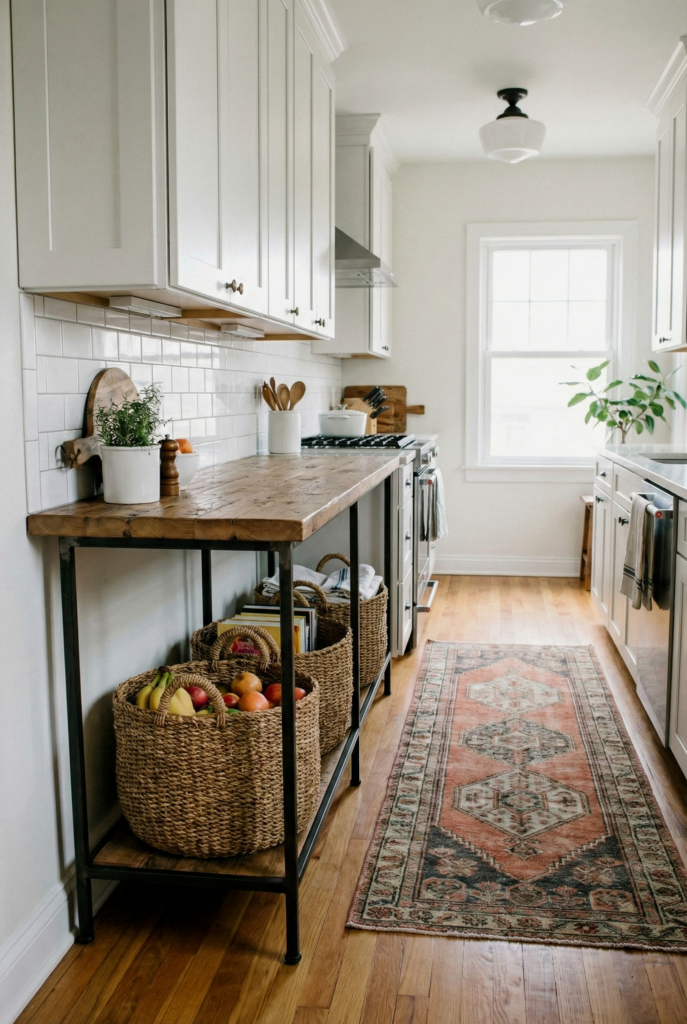
Have a galley kitchen? You might think you can’t have an island, but a “Skinny Island” works wonders. A repurposed console table (usually only 12-15 inches deep) fits in narrow corridors while still providing a landing pad for groceries or a coffee station.
To avoid a traffic jam, you generally need 36 inches of walking space between the island and your cabinets. In a pinch, you can squeeze it to 30-32 inches, but check that your dishwasher and oven doors can still open fully!
6. The Drop-Leaf Island
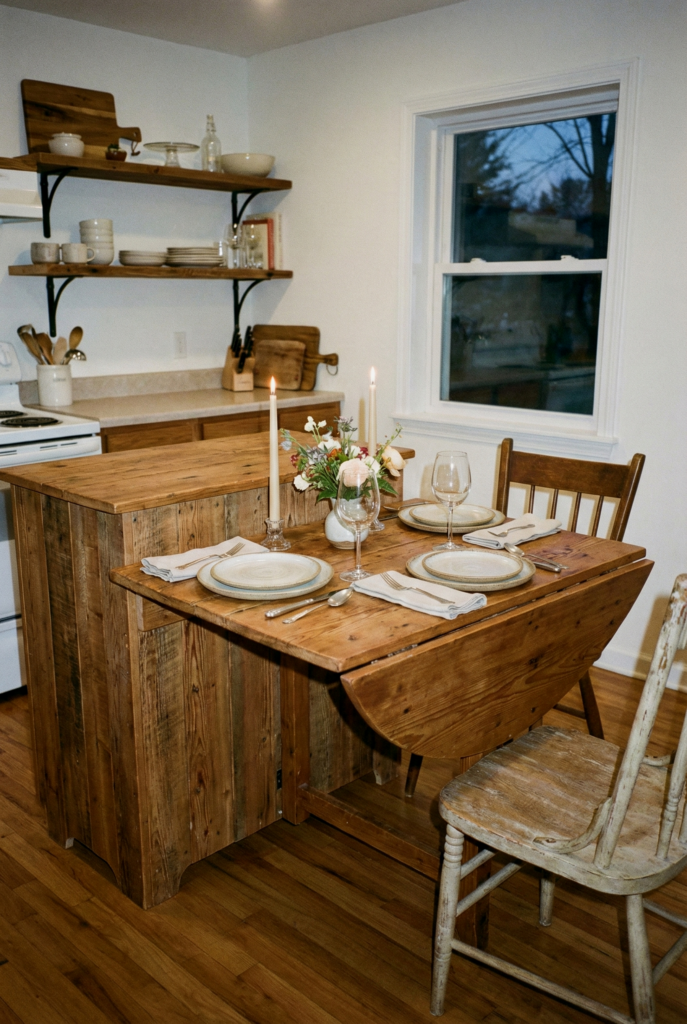
The Transformer of kitchen furniture. A drop-leaf island stays compact for daily life but expands its wings when you need to serve a buffet or seat extra guests. It’s the ultimate space-saver.
7. The IKEA Kallax Hack
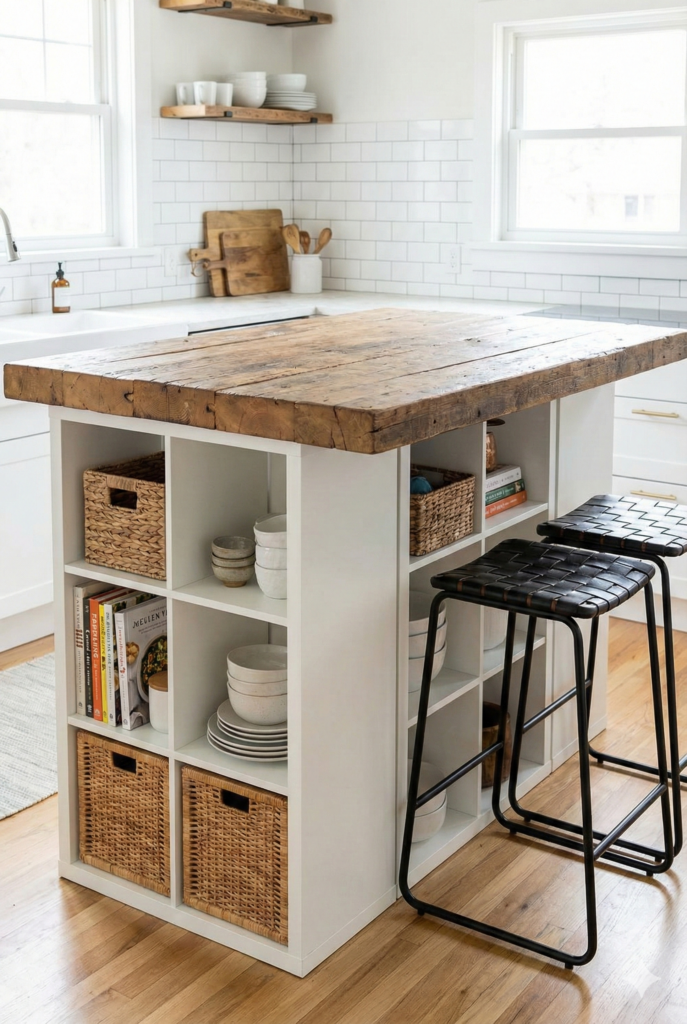
The IKEA Kallax (the cube shelf) is a DIY favorite. Lay a 2×2 or 2×4 unit on its side, add caster wheels to the bottom, and glue a wooden board on top. Boom—a custom island with cubby storage for under $100.
- IKEA Kallax (2×2)
- IKEA Rill Wheels (4x)
- Butcher Block Top
- Liquid Nails
- Assemble shelf unit normally.
- Glue butcher block to top (clamp it!).
- Screw wheels into bottom corners.
- Let dry 24h & roll away!
Do NOT skip the Liquid Nails. Standard wood glue isn’t strong enough to bond the smooth IKEA finish to the wood block. You need heavy-duty adhesive.
8. The Butcher Block Table
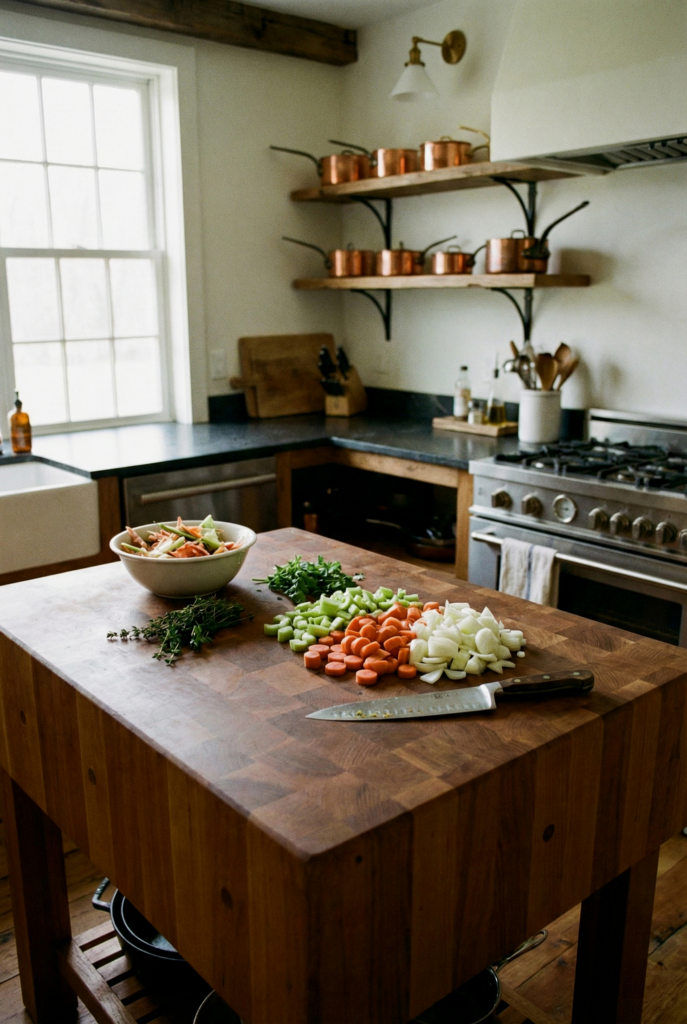
If you are a serious cook, prioritize the surface. A dedicated butcher block table (often with open legs) looks like a professional chef’s station. The open base keeps the visual weight light, making the kitchen feel less crowded.
9. The Open Shelf Island
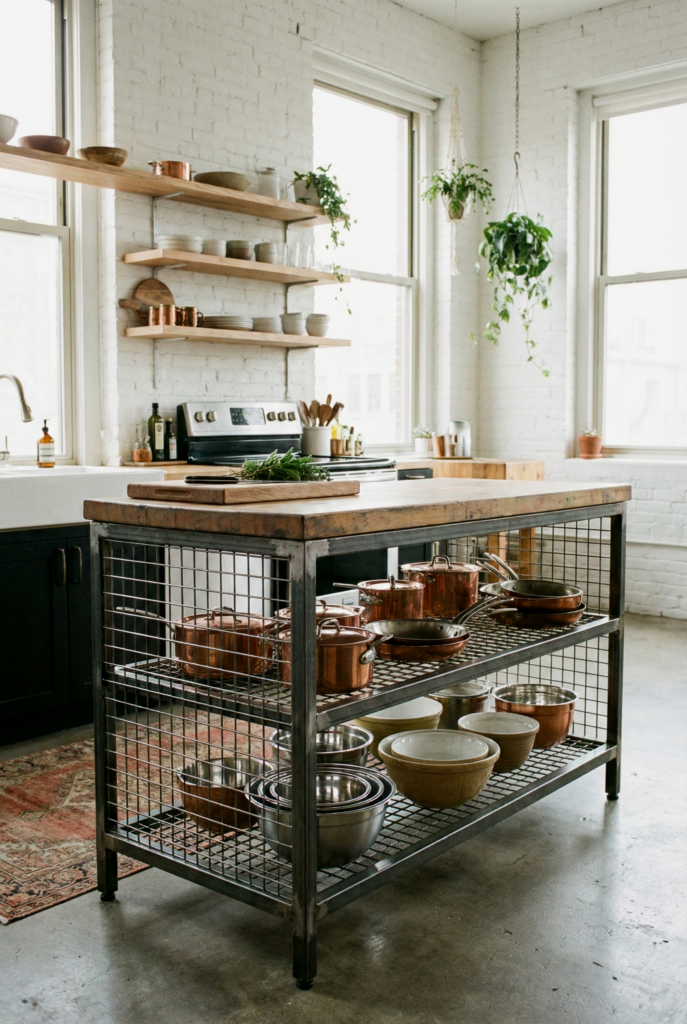
Solid cabinetry can make a small room feel heavy. An industrial-style island with open wire or wood shelves keeps the sightlines clear. It allows light to pass through, making the kitchen feel airier. Use the shelves for beautiful mixing bowls or copper pots.
10. The Two-Tier Island
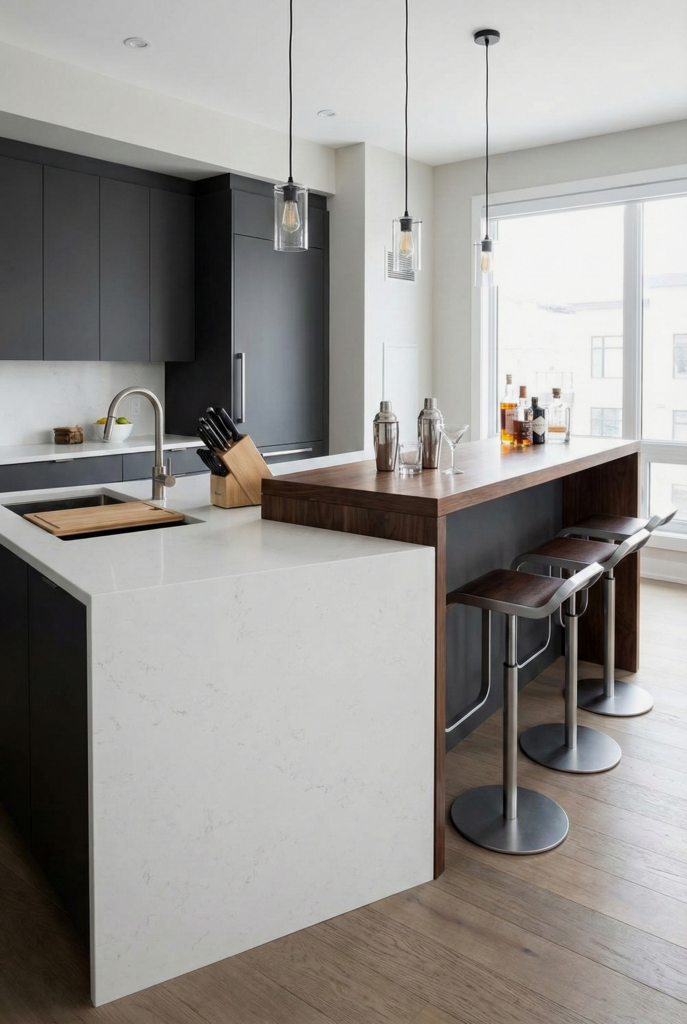
Can’t decide between a workspace and a bar? Get both. A two-tier island features a lower level (36″) for chopping and a raised level (42″) for blocking the view of the dirty dishes while guests sit and sip wine.
1. How much space do I need around a kitchen island?
The standard rule is 36 to 42 inches of clearance on all sides. This allows people to walk past while drawer or oven doors are open.
2. Is a mobile island safe?
Yes, provided you choose one with locking casters. Look for heavy-duty industrial wheels (rubber is better than plastic) that lock firmly in place so the island doesn’t roll away while you’re chopping.
3. What is the standard height for a kitchen island?
Standard counter height is 36 inches. If you want to use it as a bar, you can raise a portion to 42 inches. If you are repurposing a table or desk, be careful—they are usually only 30 inches high, which is too low for comfortable prep work without adding height.
4. Can I put an island in a rental kitchen?
Absolutely. Just stick to freestanding or mobile options (Styles #1, #5, #7). Do not screw anything into the floor or existing cabinetry. A heavy piece of furniture will stay in place by its own weight.