15 Japandi Bathroom Ideas: The Ultimate Scandi-Japanese Hybrid
“Japandi” isn’t just a buzzword; it’s a feeling. It’s the perfect marriage of two of the world’s most calming design philosophies: Scandinavian functionality (Hygee) and Japanese rustic minimalism (Wabi-Sabi).
The result? A bathroom that feels less like a utility room and more like a private sanctuary. It’s warm but clean. Textured but uncluttered.
Whether you are planning a full renovation or just swapping out accessories, here is our lookbook of 15 ways to bring the Japandi vibe into your bathroom.
(Warmth & Comfort)
(Minimalism & Rustic)
(The Perfect Balance)
1. The Classic Japandi (Light Oak & White)
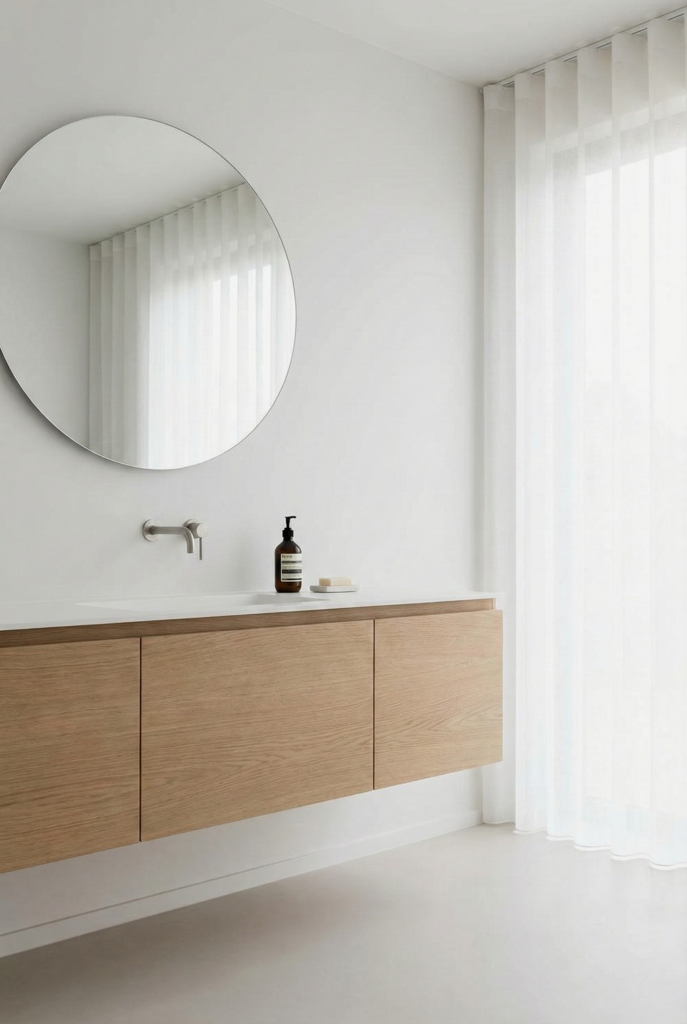
This is the look most people think of. It uses a base of crisp white walls to bounce light around, grounded by light oak cabinetry. The key here is Matte Finishes. Avoid glossy cabinets; stick to natural, matte wood grains to keep it feeling organic.
2. The Moody Japandi (Charcoal & Walnut)
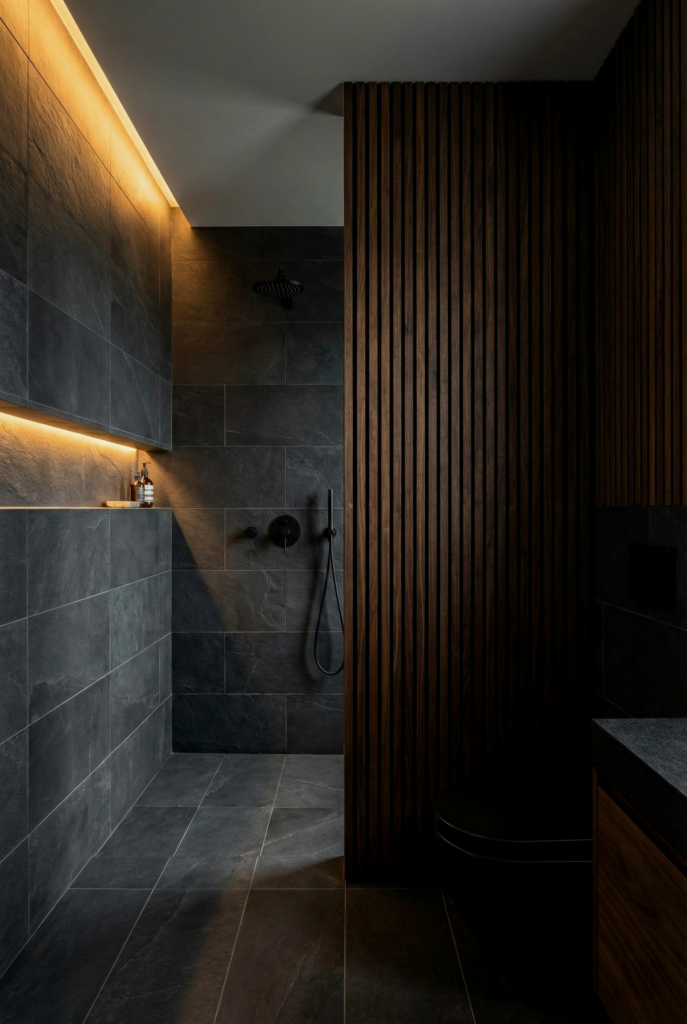
Japandi doesn’t have to be light. The “Dark Japandi” style leans harder into the Japanese aesthetic. Think large-format charcoal slate tiles paired with rich walnut wood. It creates a cozy, enclosed feeling—perfect for a windowless bathroom.
🎨 The Japandi Paint Edit
- Sherwin Williams “Alabaster”
- Benjamin Moore “White Dove”
- Farrow & Ball “Railings”
- Clare Paint “Current Mood”
3. The Microcement Bathroom
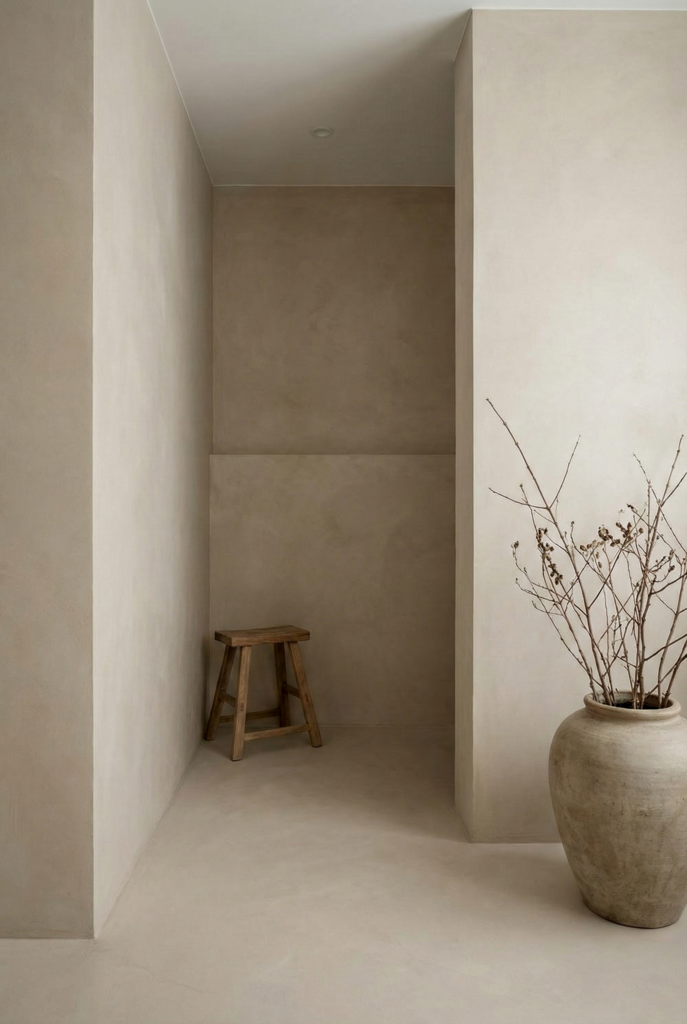
If you hate grout lines, this is for you. Microcement (or Tadelakt) is a seamless plaster coating that can be applied to walls and floors. It creates a soft, cloudy texture that feels ancient yet modern. It’s the ultimate minimalist backdrop.
💡 Microcement vs. Tile
| Feature | Microcement | Tile |
|---|---|---|
| Grout Lines | None (Seamless) | Many |
| Cleaning | Easy Wipe | Scrubbing Grout |
| Cost | $$$ (Labor Intensive) | $$ (Material Dependent) |
4. The Wood Slat Feature
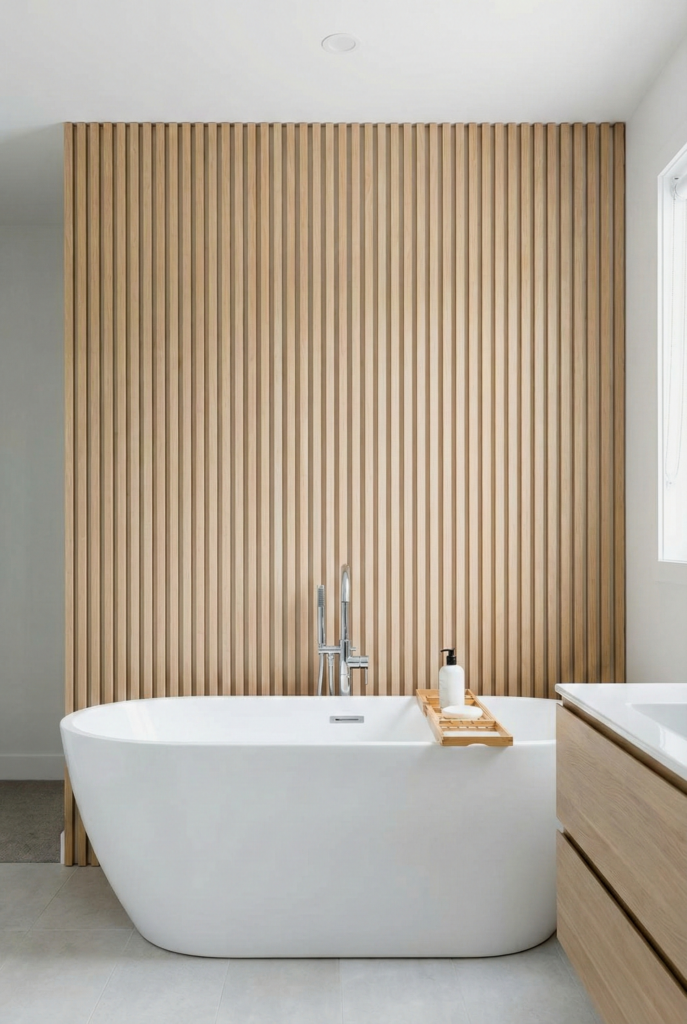
Texture is crucial in a minimalist space. A vertical wood slat wall (often called acoustic paneling) adds visual interest without adding clutter. Install it behind the vanity or use it to frame a freestanding tub.
You don’t need to cut individual strips. Look for “Tambour Paneling” or pre-made acoustic slat panels. You can screw them directly into the drywall for an instant feature.
5. The Stone Sanctuary
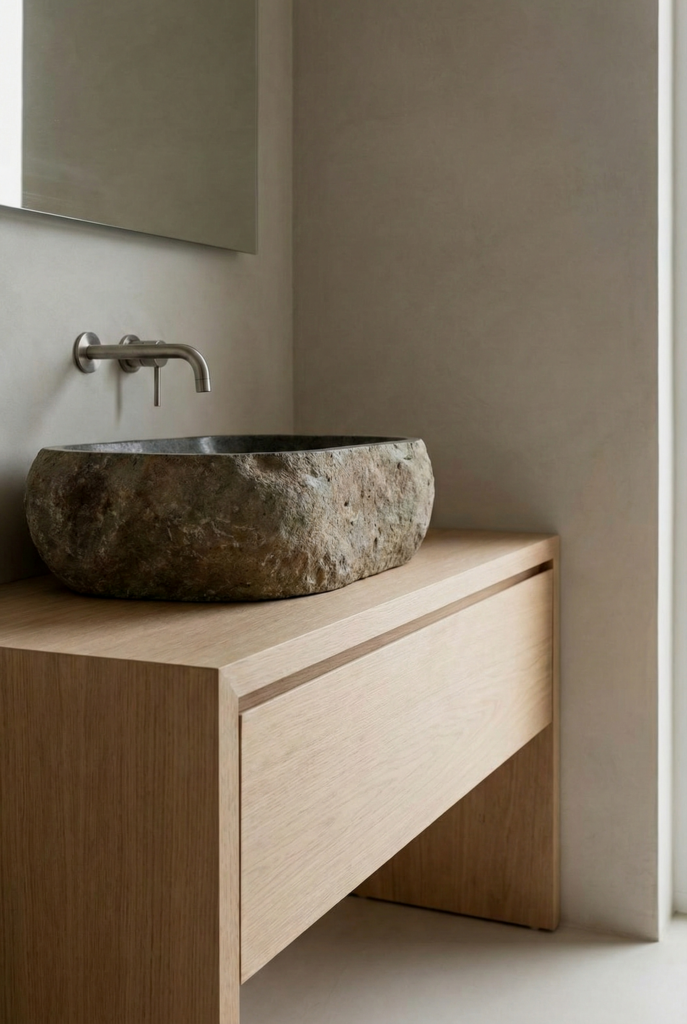
Japandi celebrates raw materials. Instead of a sleek ceramic sink, choose a rough-hewn stone vessel basin. The contrast between the rugged, natural stone and a clean, straight-edged vanity is the definition of the style.
6. The Japanese Soaking Tub (Ofuro)
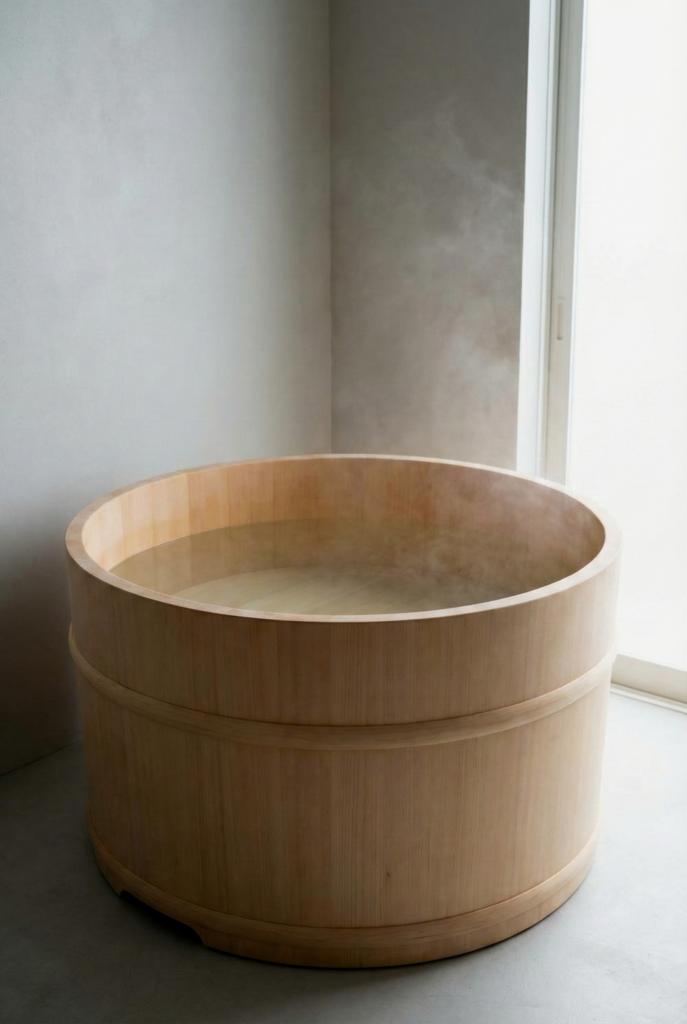
If you love a bath, consider an Ofuro. These Japanese tubs are shorter than Western tubs but much deeper, allowing you to sit upright submerged up to your neck. They are traditionally made of Hinoki wood, which releases a calming scent when warm.
Japanese tubs are deeper but shorter than standard tubs.
*Perfect for small square footage!
7. The Soft Grey Minimalist
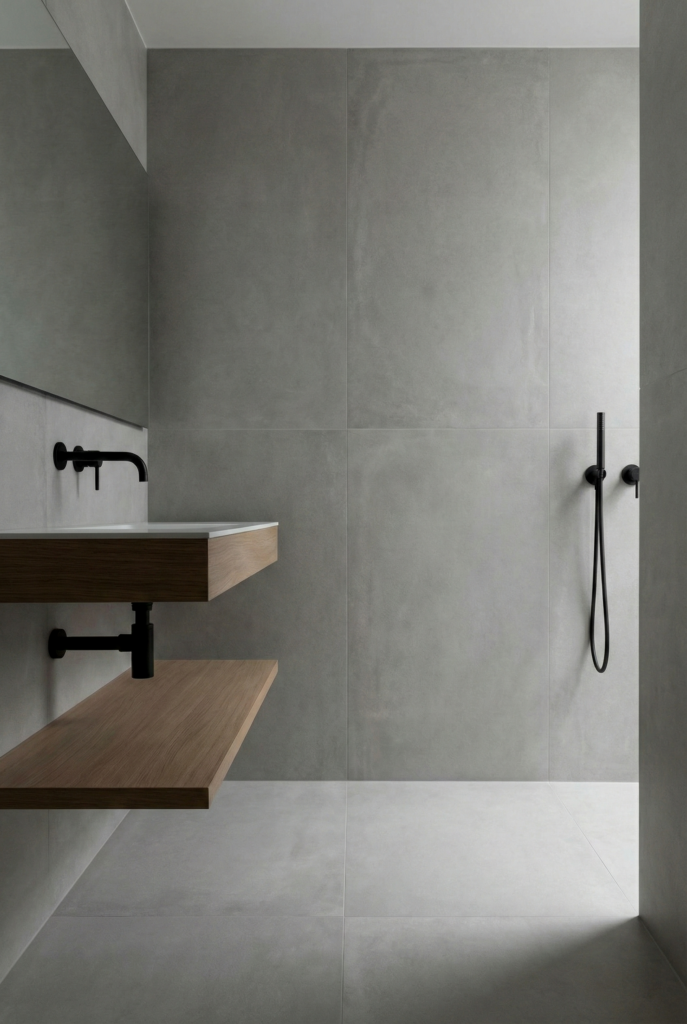
If white feels too clinical and black feels too dark, go for Soft Grey. Use large matte grey tiles for the floor and walls. Warm it up with a timber vanity and brass fixtures. It’s cool, calming, and sophisticated.
8. The Biophilic Japandi
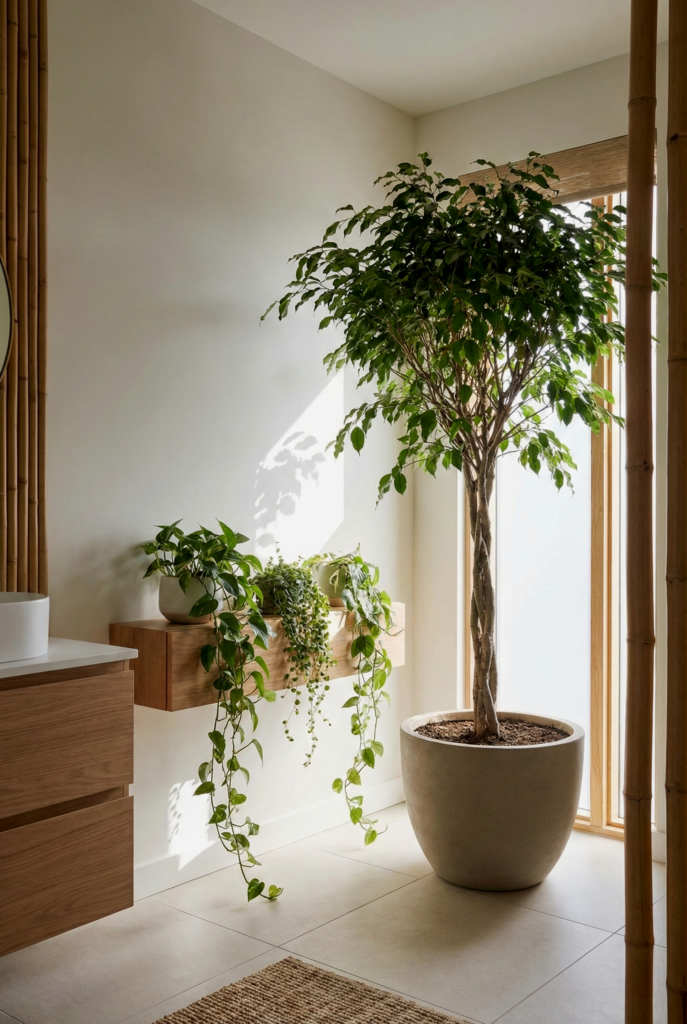
“Biophilic” simply means connecting with nature. In a Japandi bathroom, this means plants. But don’t clutter it. Choose one large statement tree (like an Olive or Ficus) or a simple vase with a single oversized branch.
No window? No problem. These plants thrive in humidity and low light:
- ZZ Plant (The Survivor)
- Snake Plant (Vertical height)
- Pothos (Trailing vines)
- Peace Lily (Loves water)
9. Small Space Japandi
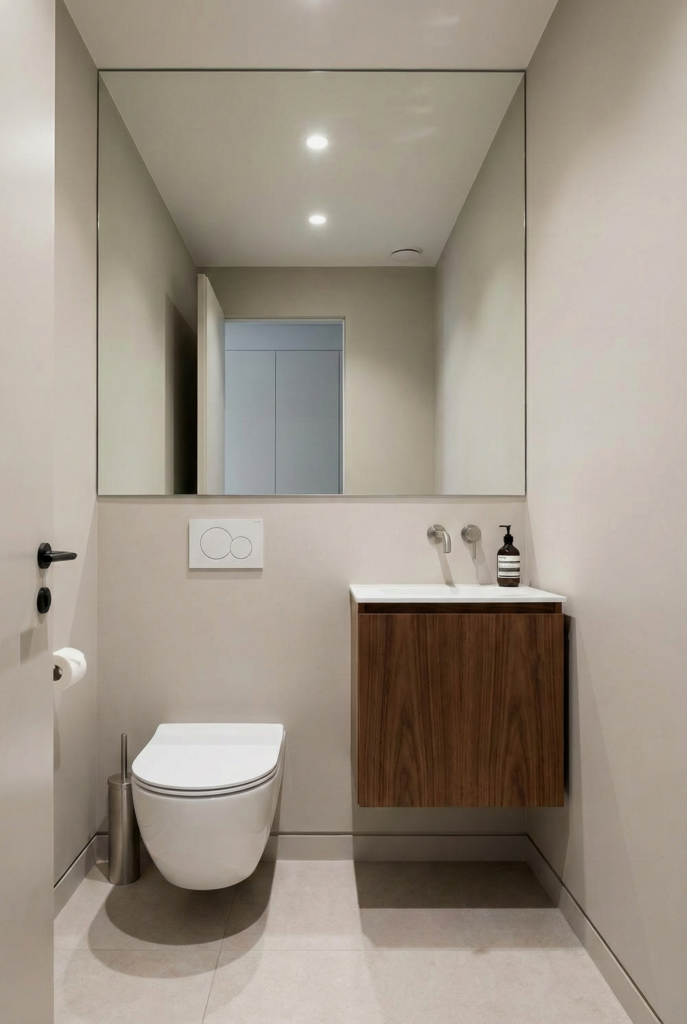
You don’t need a massive spa to get the look. In a small powder room, use a wall-hung toilet and a floating vanity to keep the floor visible (making the room feel bigger). A large, frameless mirror will double the visual space.
10. The Home Spa Retreat
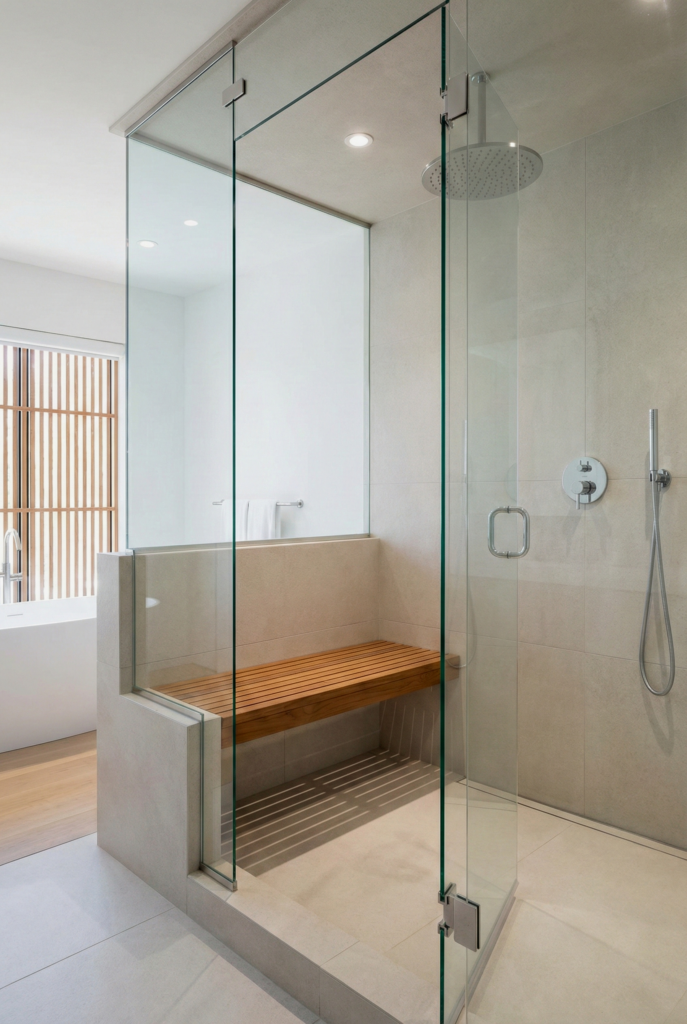
To get that luxury spa vibe, focus on the shower. A glass-enclosed “Wet Room” with a teak wood bench and a rain shower head screams luxury. Keep the toiletries hidden; visible shampoo bottles kill the spa vibe instantly.
11. The Wabi-Sabi (Imperfect) Style
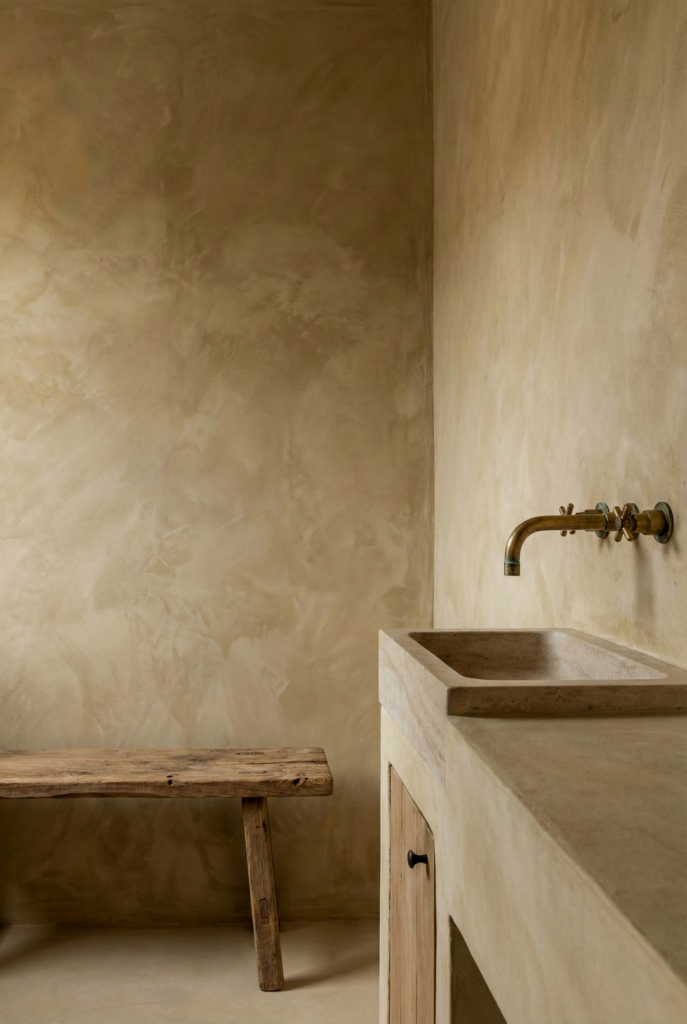
Wabi-Sabi is the Japanese art of finding beauty in imperfection. Embrace materials that age: unlacquered brass that patinas, limestone that pits, or wood that greys. It makes the space feel lived-in and timeless.
12. High Contrast Japandi
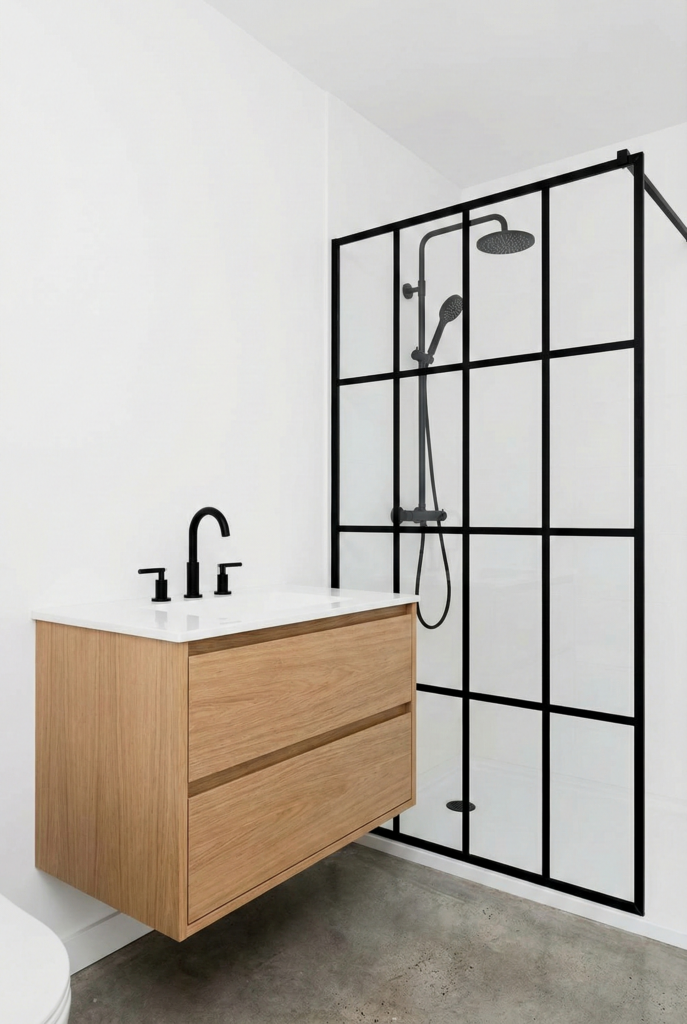
For a sharper, more modern look, use high contrast. Pair stark white walls with matte black plumbing fixtures and black-framed shower screens. The graphic black lines act as “eyeliner” for the room, defining the space.
13. The Bamboo Accent
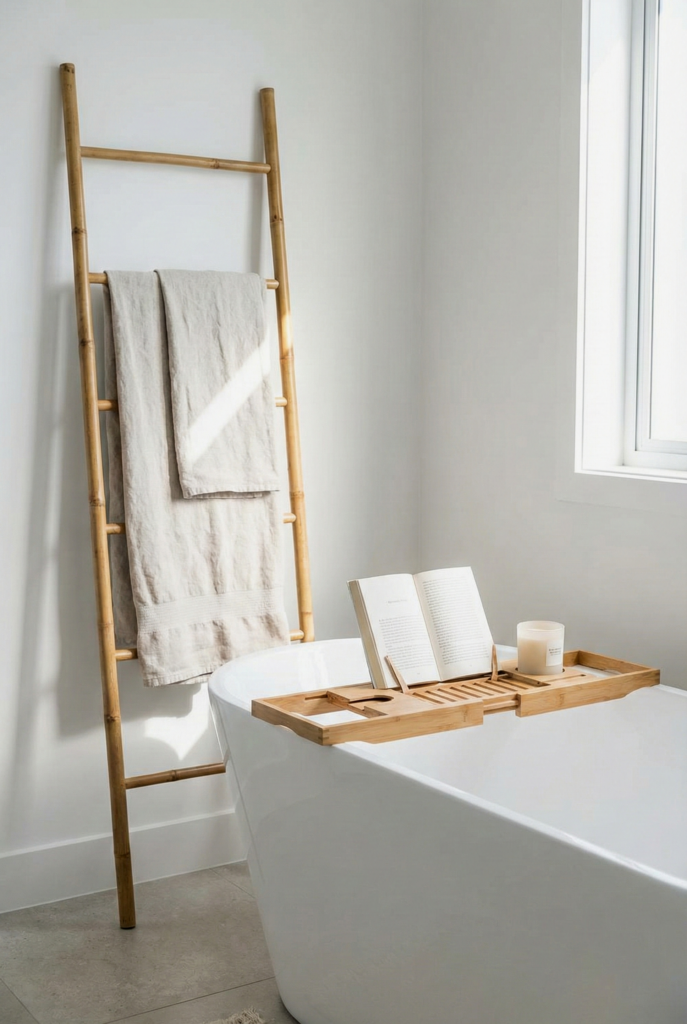
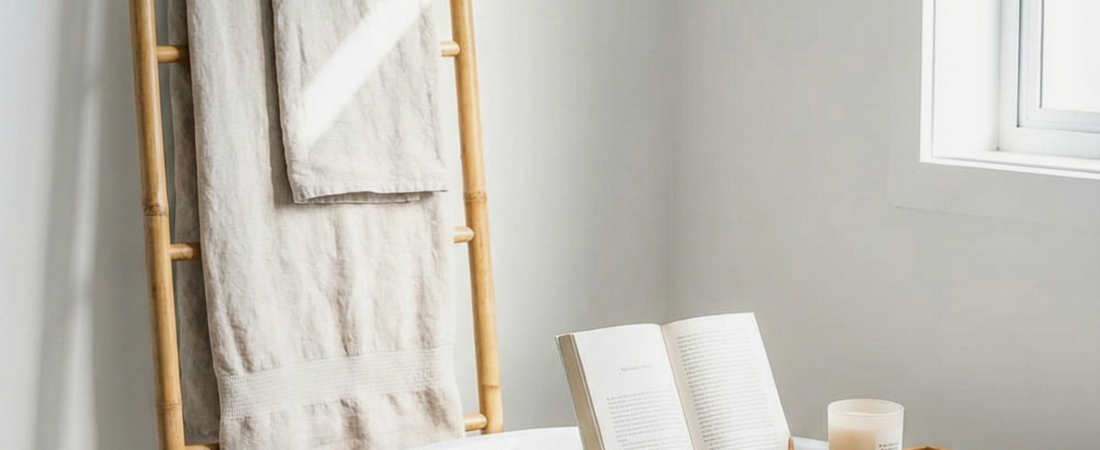
Bamboo is sustainable, water-resistant, and distinctly Eastern. If you can’t renovate, add bamboo accessories: a bath caddy, a ladder for towels, or a bamboo bath mat. It’s an instant, budget-friendly way to add warmth.
Sustainable swaps for your bathroom:
14. The Earthy Terrazzo
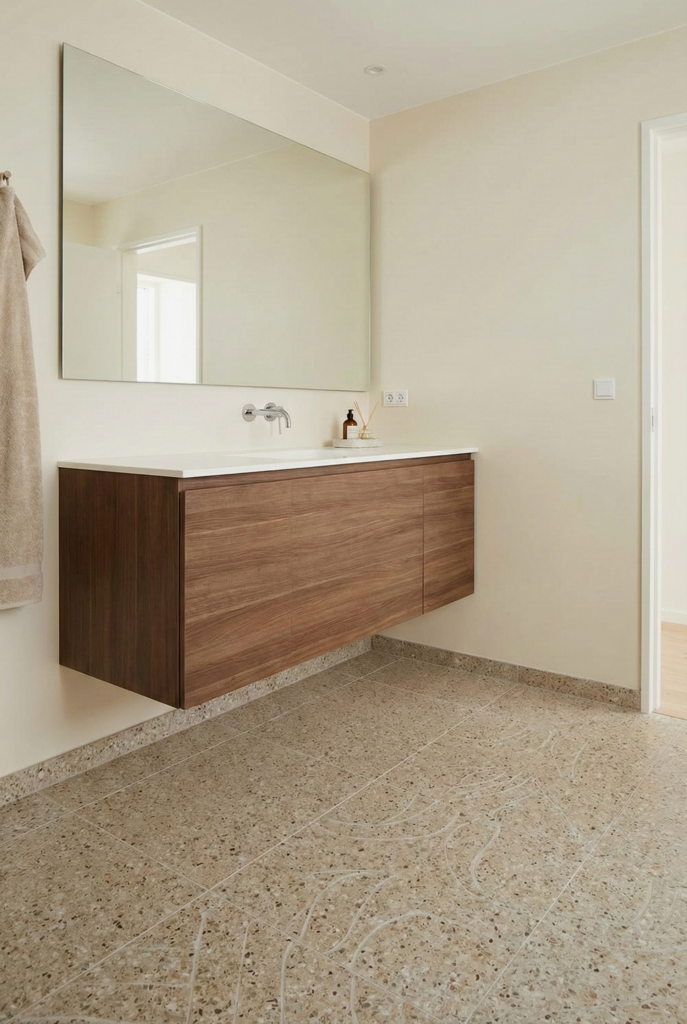
Terrazzo is back, but for Japandi, keep it earthy. Avoid the bright confetti colors. Look for terrazzo with beige, cream, and brown chips. It adds pattern and forgiveness (hides dirt!) without being loud.
15. The Vertical Stack (KitKat Tile)
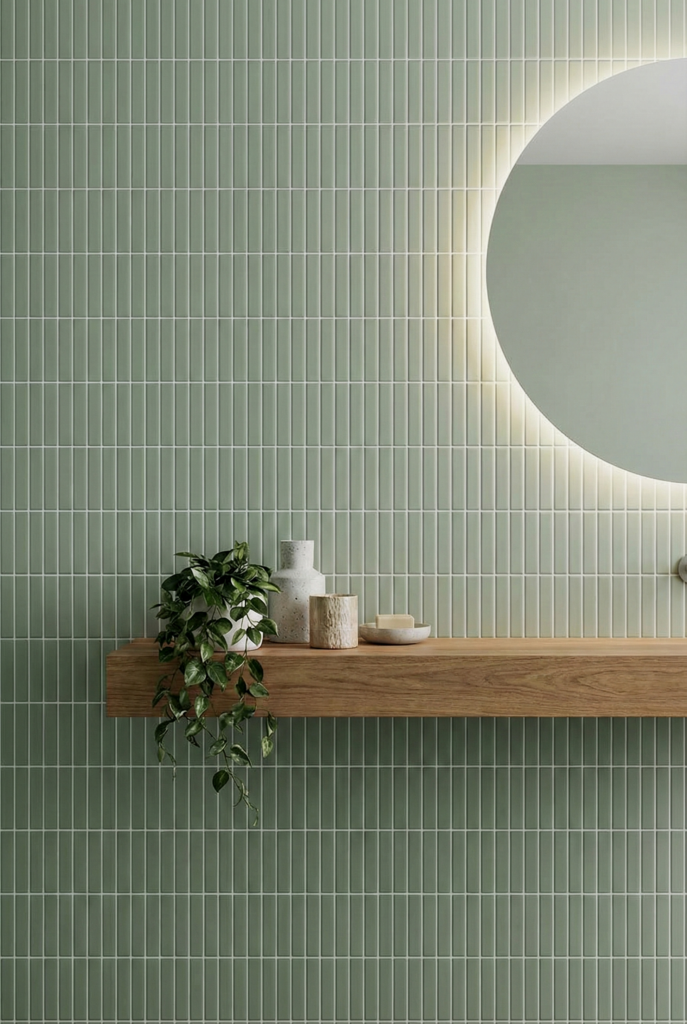
The layout of your tile matters. “KitKat” or “Finger” tiles (thin vertical mosaics) are a staple of Japandi design. Installing them vertically draws the eye up, making low ceilings feel higher.
1. What is the difference between Scandi and Japandi?
Scandi is often all-white, cozy, and soft (think sheepskins and candles). Japandi takes that base and adds Japanese rustic elements: darker woods, black accents, and cleaner, lower-profile furniture. It is slightly more “grounded” and less “fluffy.”
2. What colors are used in a Japandi bathroom?
Stick to neutrals.
Base: White, Cream, Soft Grey, Beige.
Contrast: Charcoal, Black, Dark Brown.
Accent: Sage Green, Terracotta (in small doses).
3. What plants work best in a bathroom?
Bathrooms are humid and often low-light.
Snake Plant: Indestructible and architectural.
ZZ Plant: Thrives in low light.
Eucalyptus: Hang a bundle in the shower for a spa scent (replace monthly).
4. How do I declutter for the Japandi look?
Storage is key. “Visual Silence” is the goal. Use baskets to hide toilet paper rolls. Decant soap into matching ceramic bottles. If it’s plastic and ugly, it goes inside a drawer.