15 Genius Small Bathroom Design Ideas
Designing a small bathroom is a game of inches. Every decision—from the swing of the door to the size of the tile—impacts how spacious the room feels.
But “small” doesn’t have to mean cramped. With the right optical illusions and smart layout hacks, you can trick the eye into seeing more space than is actually there.
Here is our list of 15 genius small bathroom design ideas to maximize your square footage.
The Small Bath Golden Rules
Follow these three laws of physics:
1. The Floating Vanity Hack
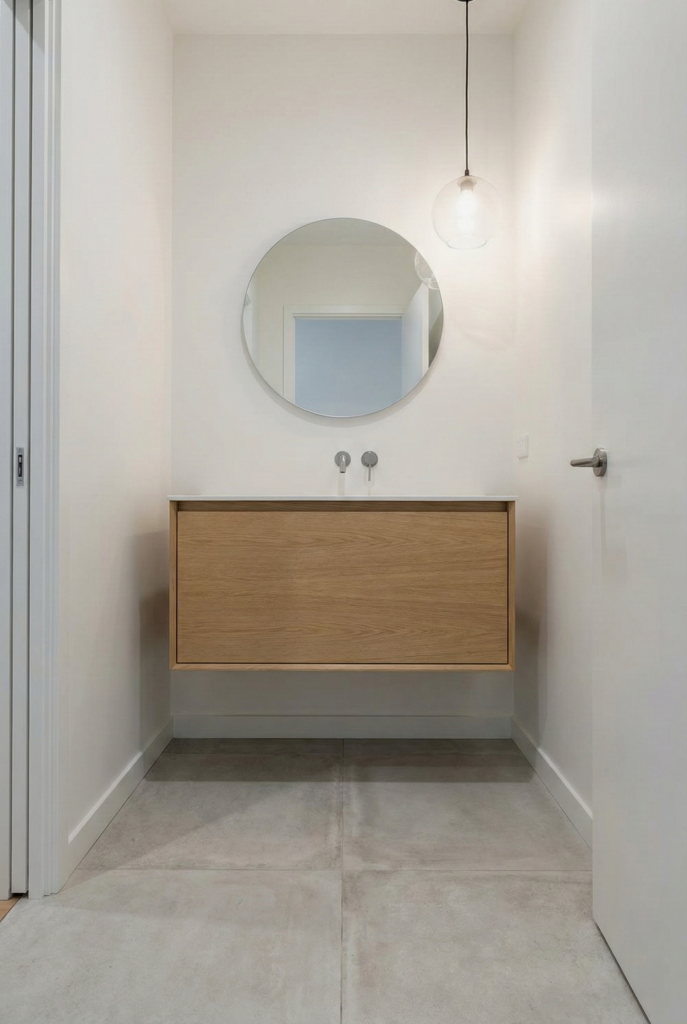
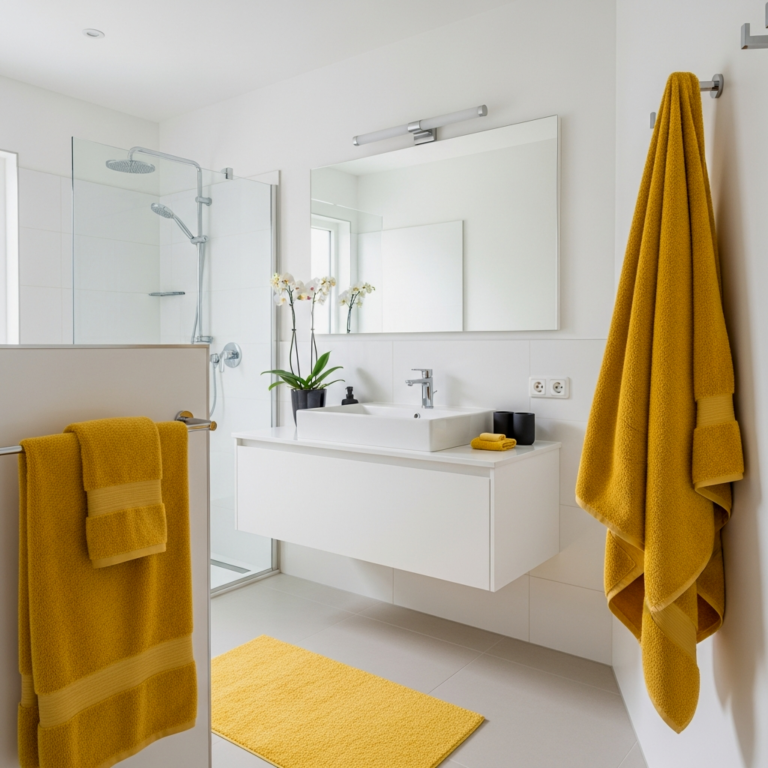
This is the number one rule for small bathrooms: Keep the floor visible. A bulky cabinet that sits on the floor eats up visual space. A floating (wall-mounted) vanity allows the eye to travel all the way to the wall, making the room footprint feel larger. Plus, it gives you a handy spot to tuck away a scale or slide in a couple of textured storage baskets for extra toilet paper.
2. The Wet Room Layout
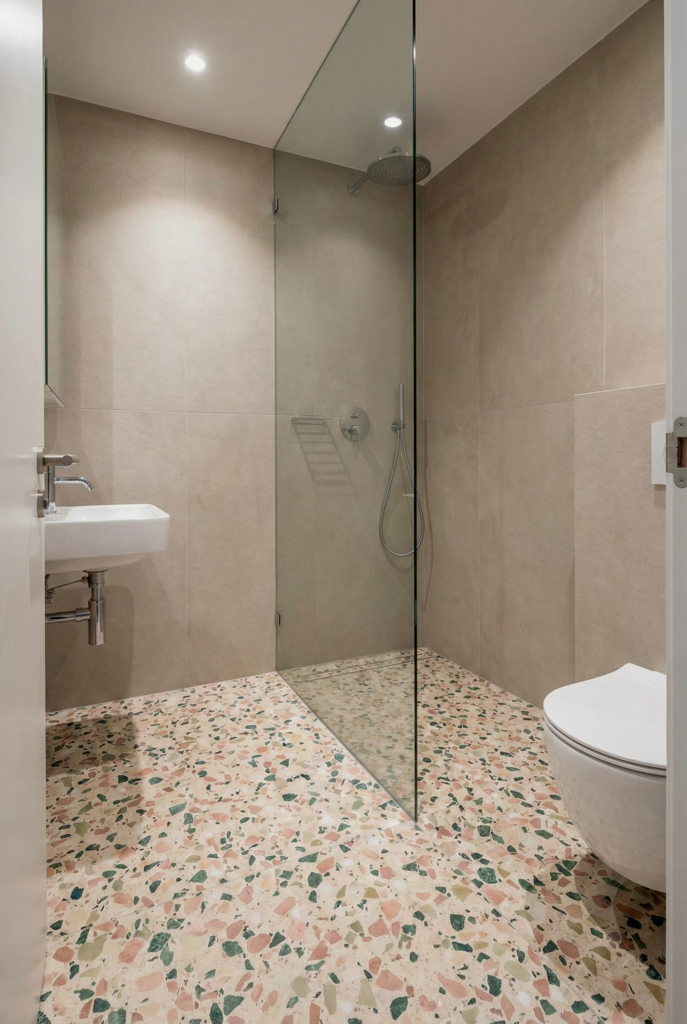
If you are doing a full renovation, consider a wet room. By waterproofing the entire floor and removing the shower curb, you remove the barriers that chop up the room. The shower becomes part of the room rather than a separate stall. This uninterrupted flow of floor tile is the ultimate optical illusion for visually expanding tight quarters.
3. The Wall Hung Toilet
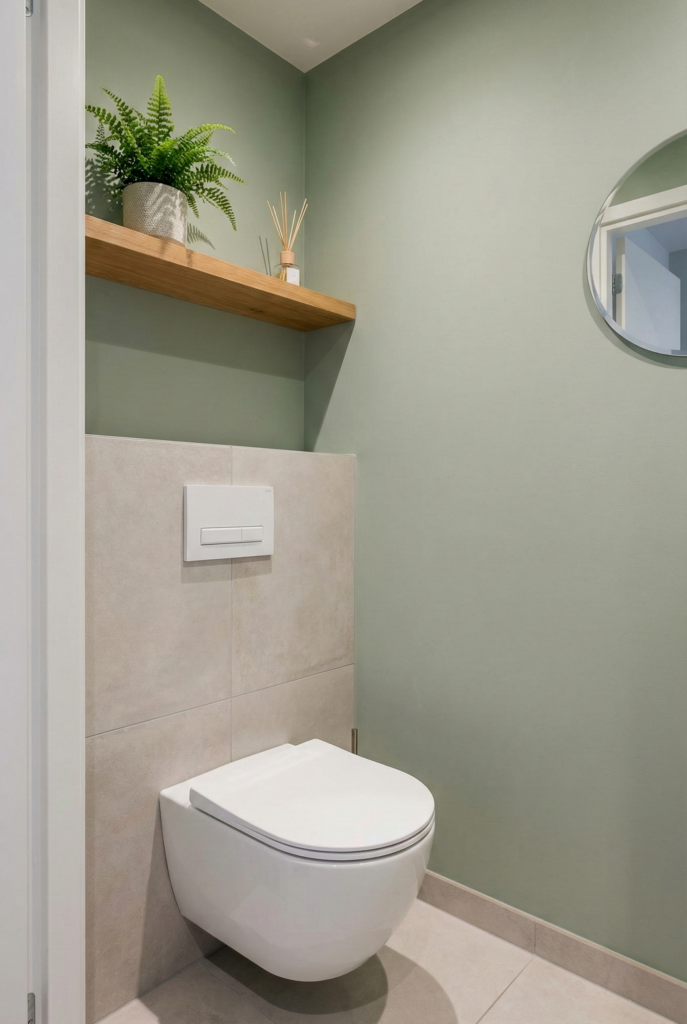
Like the floating vanity, the wall-hung toilet lifts the bulk off the floor. The ugly tank is concealed inside the wall, saving you about 6-10 inches of depth. It’s sleek, modern, and incredibly easy to clean underneath. You’ll also gain a convenient ledge above the concealed tank, which is perfect for displaying a small plant or a reed diffuser.
🚽 Toilet Showdown: Standard vs. Wall-Hung
| Feature | Standard | Wall-Hung |
|---|---|---|
| Depth (Projection) | 28-30 inches | 20-22 inches |
| Cleaning | Hard (Base bolts) | Easy (Mop under) |
| Installation Cost | $ | $$$ (In-wall tank) |
4. The Mirror Illusion
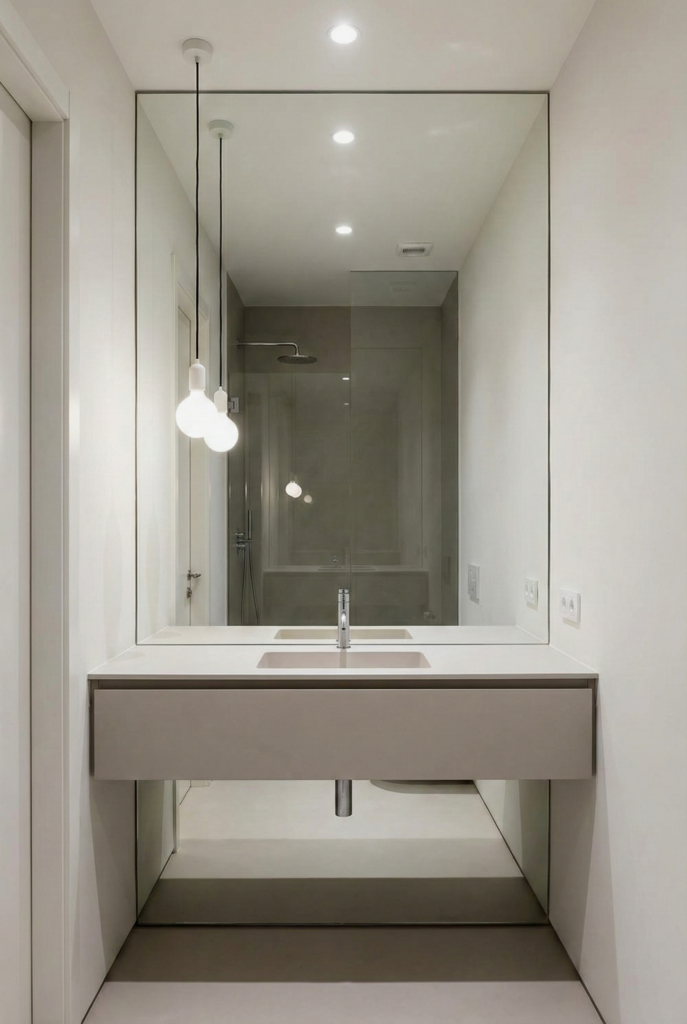
Mirrors are the cheapest way to double your space visually. Don’t settle for a tiny medicine cabinet. Install a massive, frameless mirror that runs floor-to-ceiling or wall-to-wall. It reflects light and tricks the brain into thinking the room continues. If you have a window, position the mirror opposite to bounce that natural light into every dark corner.
5. Vertical Storage Hacks
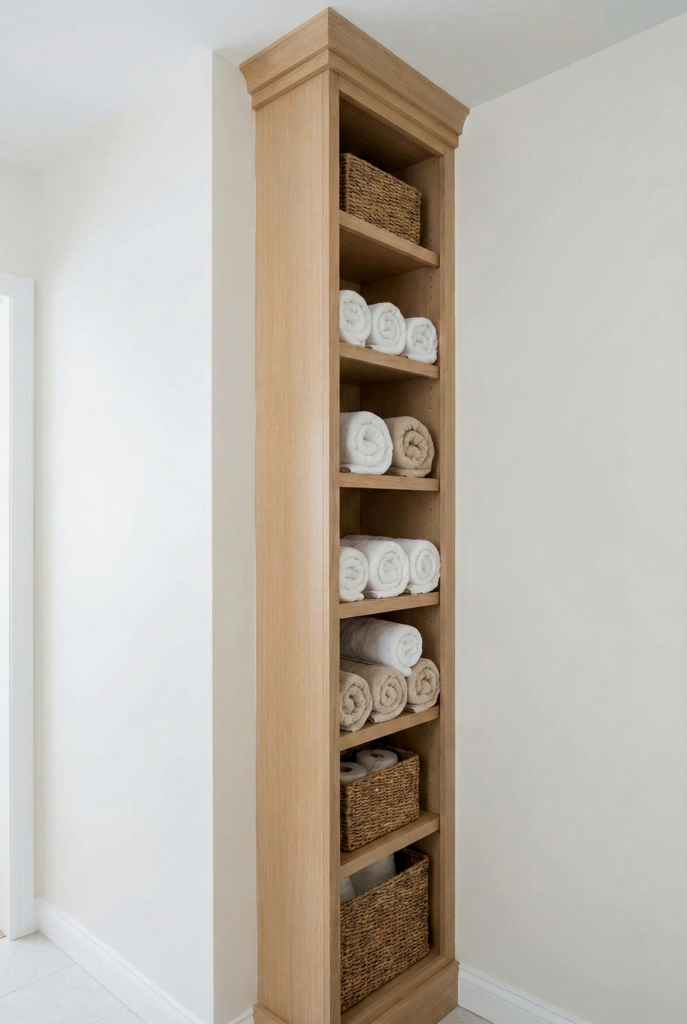
When you can’t build out, build up. Use the “dead space” above the toilet for a linen cabinet or open shelves. Tall, narrow storage towers can fit into corners that are usually wasted. Adding floating shelves all the way up to the ceiling draws the eye upward, emphasizing the height of the room rather than its narrow width.
6. The Monochromatic Palette
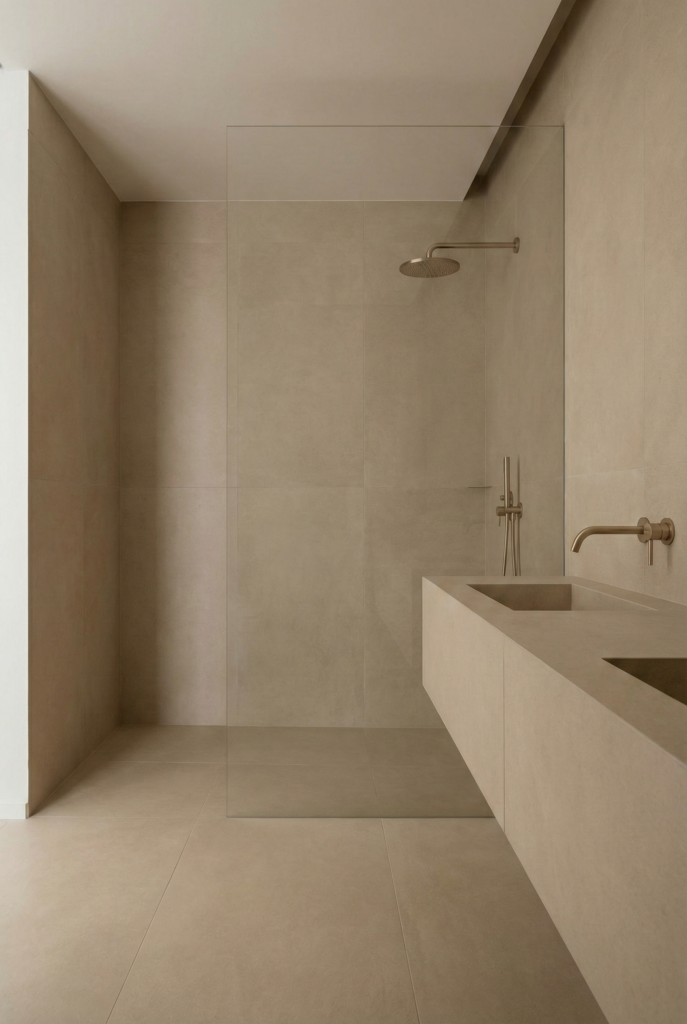
High contrast breaks up a room. To make it feel expansive, reduce the contrast. Match your tile color to your wall color. When the eye doesn’t catch on distinct boundaries, the space feels continuous and airy. To keep it from feeling flat or clinical, introduce subtle texture through ribbed towels, matte ceramics, or a patterned bath mat in the same color family.
7. The Jewel Box Powder Room
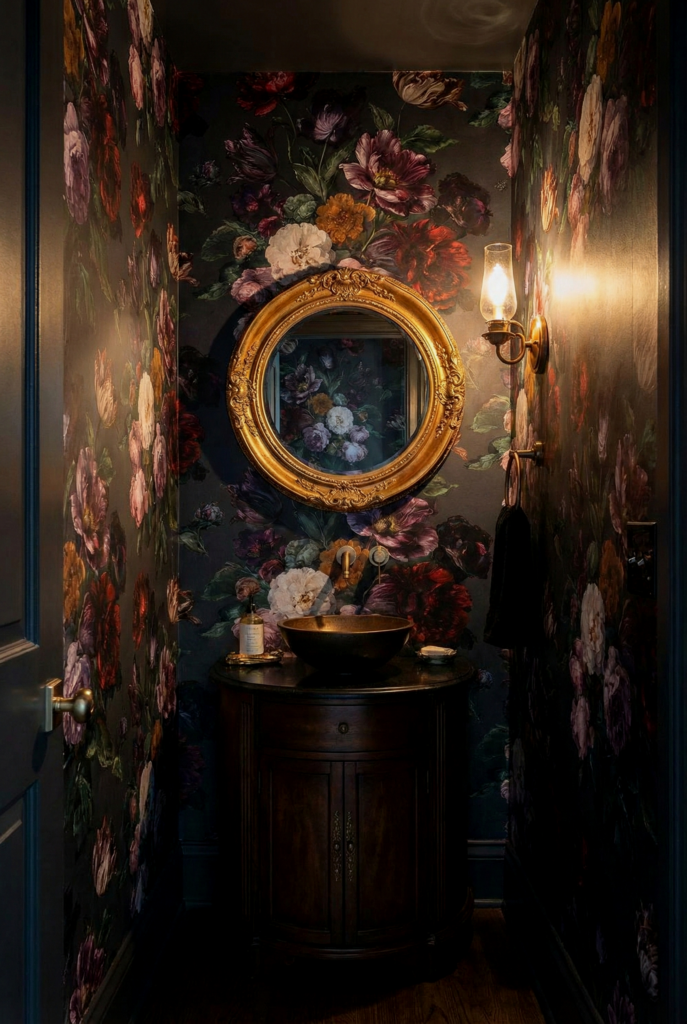
If the room is tiny (like a powder room with no shower), stop trying to make it look big. Instead, make it dramatic. Use dark, bold wallpaper on all four walls. It blurs the corners and creates a cozy, immersive “Jewel Box” effect. Because you don’t spend long periods of time in a powder room, you can afford to take bigger design risks without it feeling overwhelming.
Never rely on a single overhead light. It casts shadows and shrinks the room.
8. The Recessed Niche
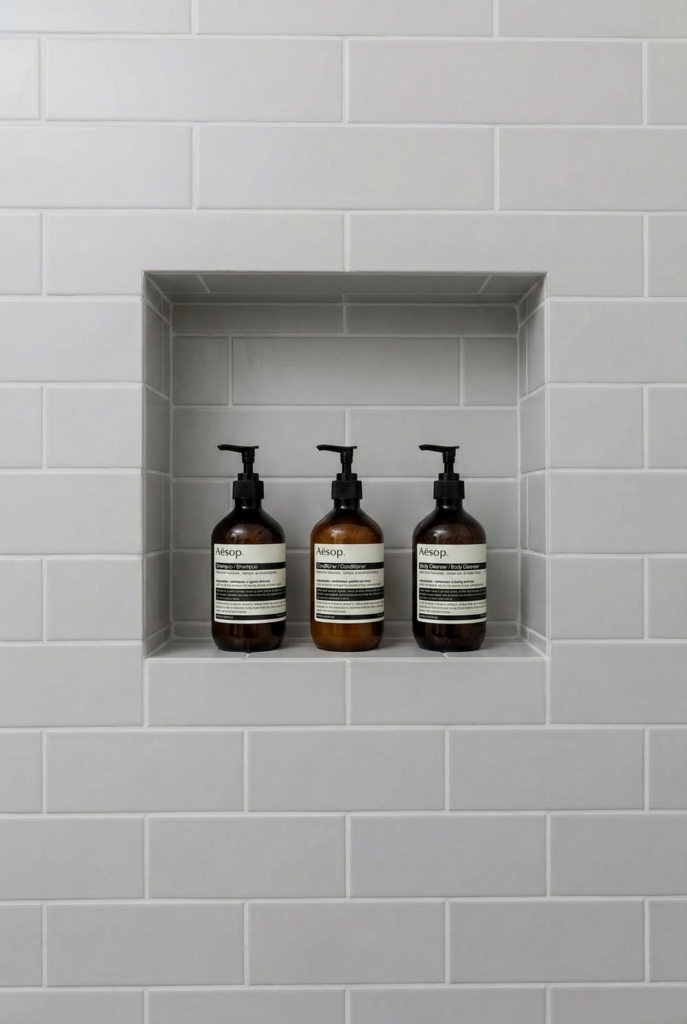
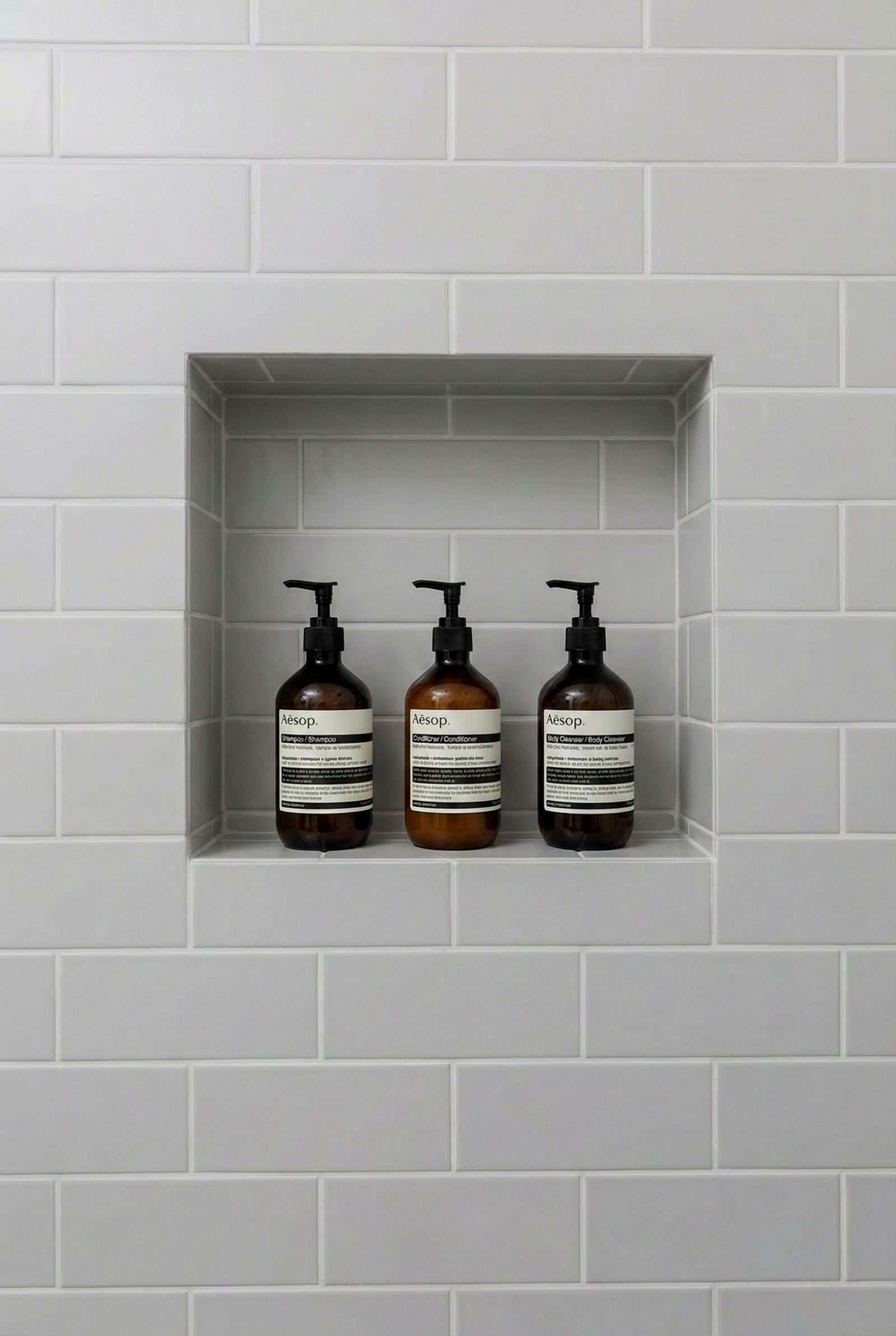
In the shower, protruding metal caddies take up elbow room. Build a recessed niche into the wall between the studs. It provides storage that is flush with the wall, keeping the shower feeling open. To make it look truly custom, tile the back of the niche in a contrasting accent color or pattern to create a beautiful focal point.
9. Sconces vs Overhead
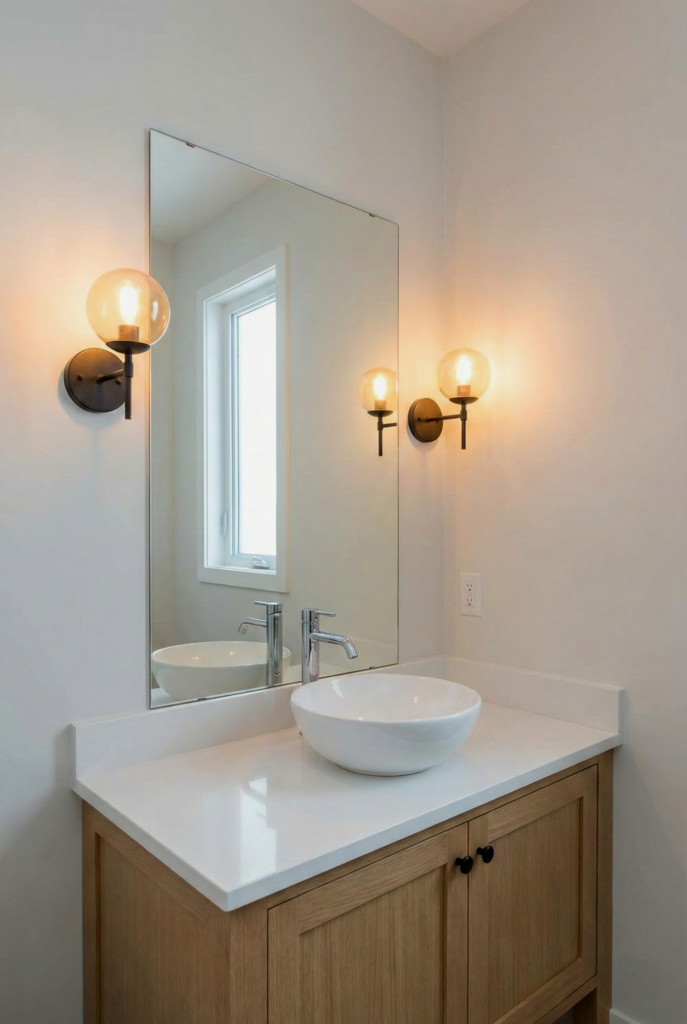
As mentioned above, lighting placement matters. Eye-level sconces on either side of the mirror provide the best lighting for grooming (no raccoon eyes!) and add a layer of design that feels more “living room” than “hospital.” If you don’t have the wall space for side sconces, a stylish linear light mounted directly above the mirror is the next best thing.
10. The Corner Sink Solution
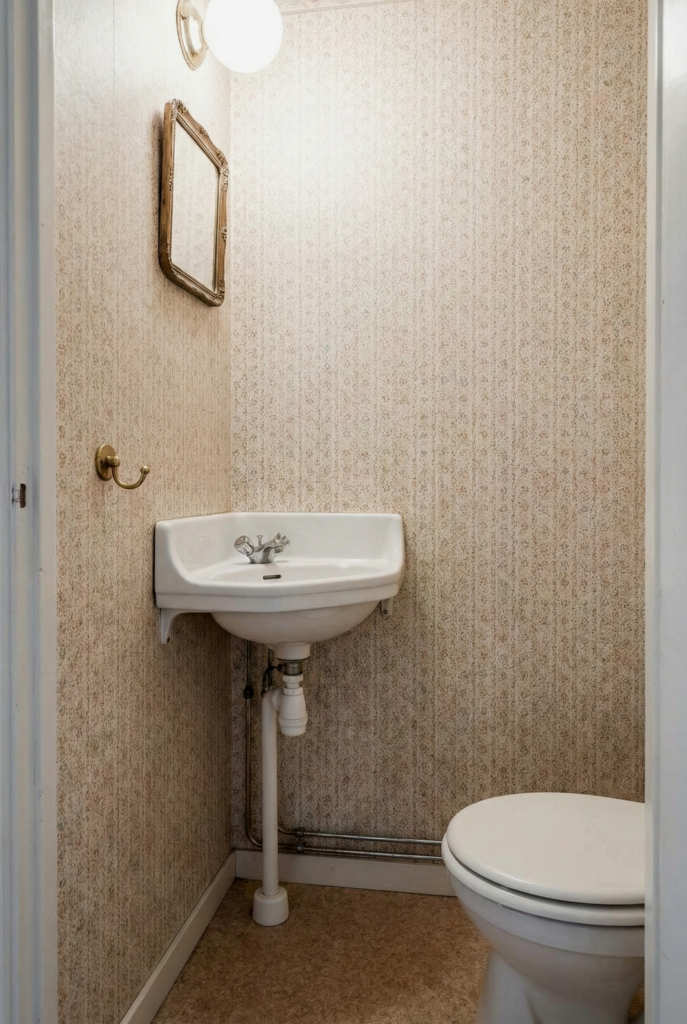
In a really tight powder room, a standard vanity might block the door. A corner sink tucks out of the way, freeing up the central circulation space. Pair it with a rounded corner mirror for a soft look. Leaving the center of the floor completely open prevents that claustrophobic feeling when you first open the bathroom door.
11. Large Tile, Small Room
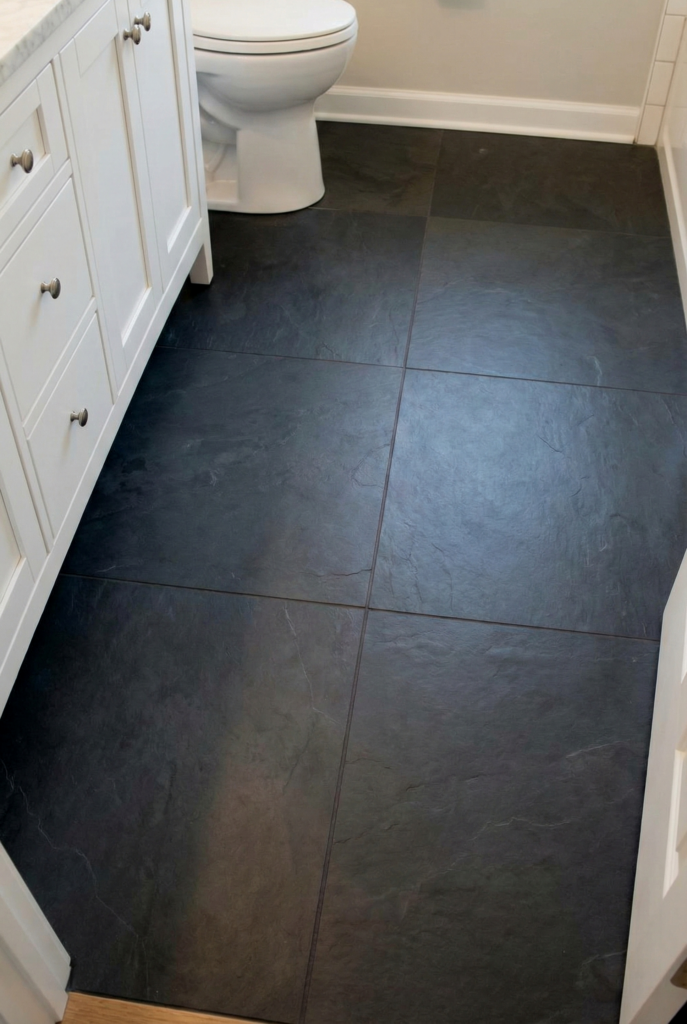
It’s a myth that small rooms need small tiles. Actually, tiny mosaic tiles create thousands of grout lines, which equals visual clutter. Using large format tiles (12×24 or larger) minimizes the grid and makes the floor look like one seamless surface. For maximum impact, run the exact same large-format floor tile straight up the shower wall to create a continuous, unbroken line.
Scenario: 5×5 Bathroom Floor (25 sq ft)
Using 1″ Mosaic: ~3,600 tiles = Thousands of grout lines (Busy)
Using 24″ Tile: ~6 tiles = Almost zero grout lines (Calm)
12. The Frameless Shower
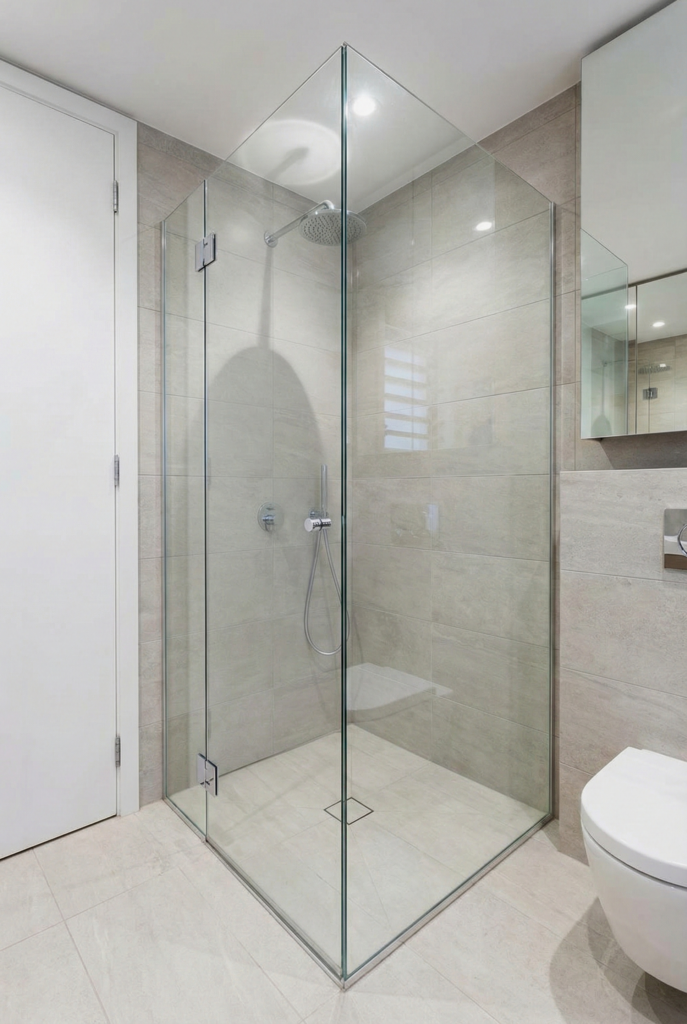
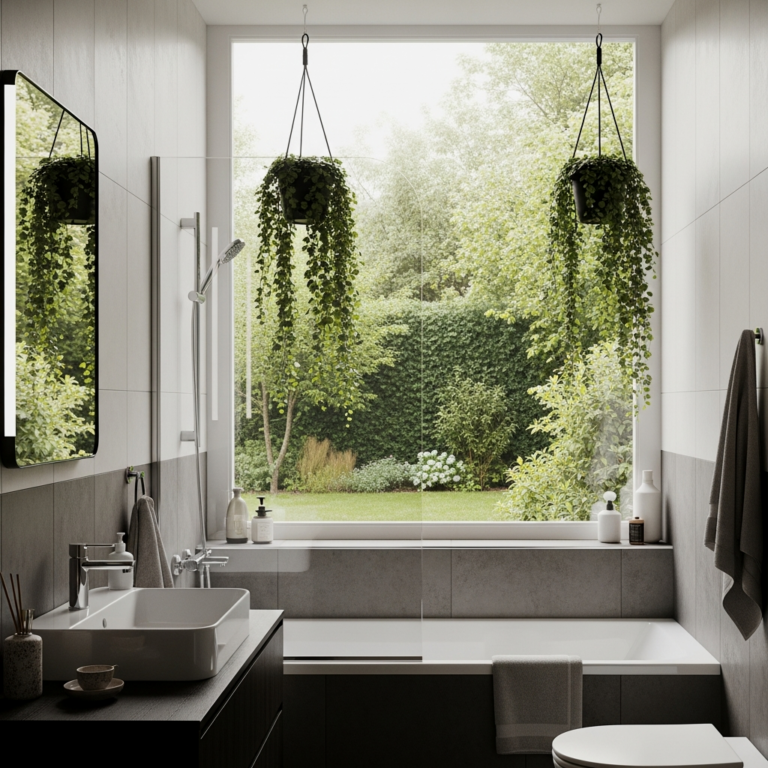
Shower curtains and thick metal frames create a visual wall. A frameless glass enclosure is invisible. It allows you to see the back wall of the shower, making the room feel as deep as it really is. Just be sure to keep your tile work and grout impeccably clean, since a clear glass door puts your shower interior on full display.
13. The Wall Ledge
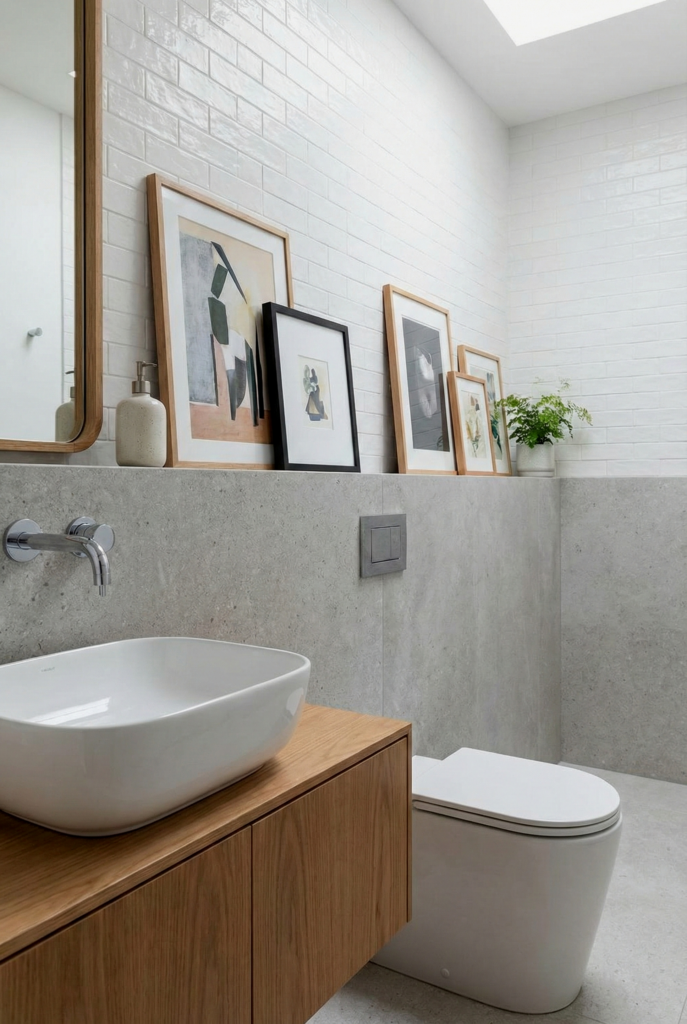
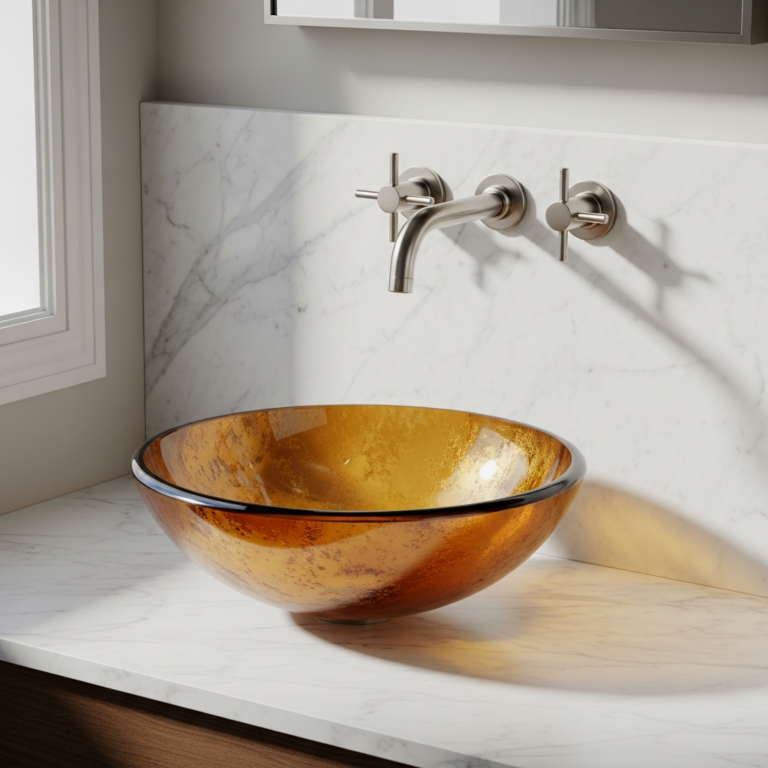
Instead of bulky cabinets, build a shallow ledge (about 4-5 inches deep) that runs the entire length of the wall behind the sink and toilet. It acts as a shelf for soap, toothbrushes, and art, and hides the plumbing in the wall. Capping the ledge with a piece of marble or quartz that matches your vanity ties the whole room together for a cohesive, high-end finish.
14. The Pocket Door Saver
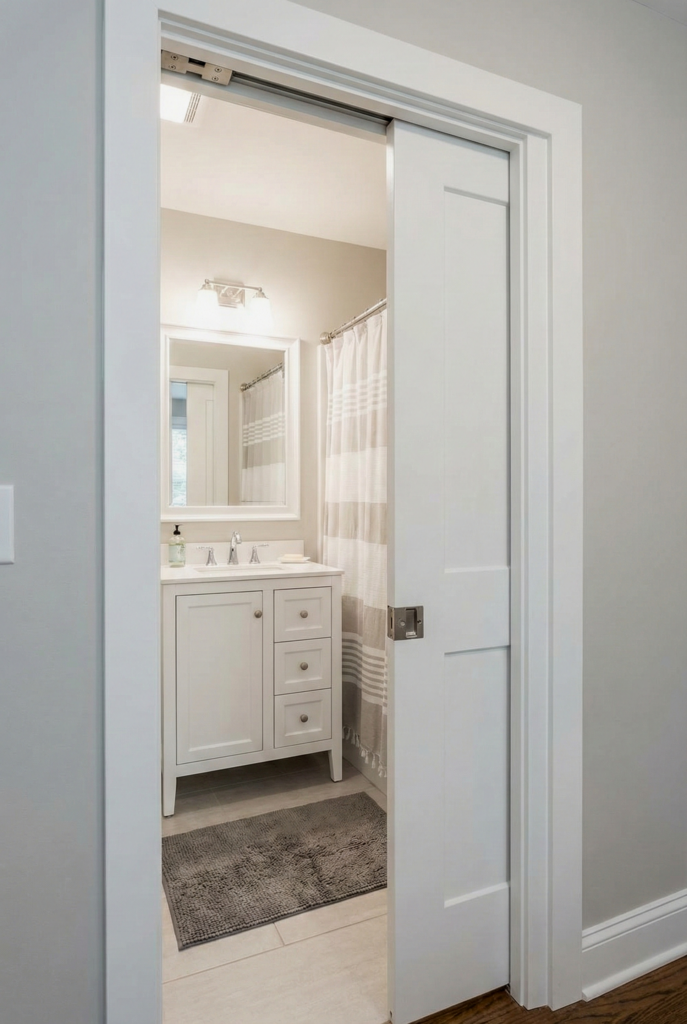
A standard door needs about 9 square feet of swing clearance. In a small bathroom, that’s huge. A pocket door slides into the wall, giving you back 100% of your floor space. If a pocket door isn’t possible due to plumbing or electrical in the walls, a stylish exterior sliding barn door is a great alternative.
Can’t install a pocket door? Try these damage-free swaps:
- Swap the Mirror: Take down the builder grade mirror and hang a cool round one (store the old one safely!).
- Change Hardware: Swap cabinet knobs for instant modernization.
- Shower Curtain Height: Hang the rod as high as possible (ceiling height) to make the room feel taller.
15. The Classic Pedestal
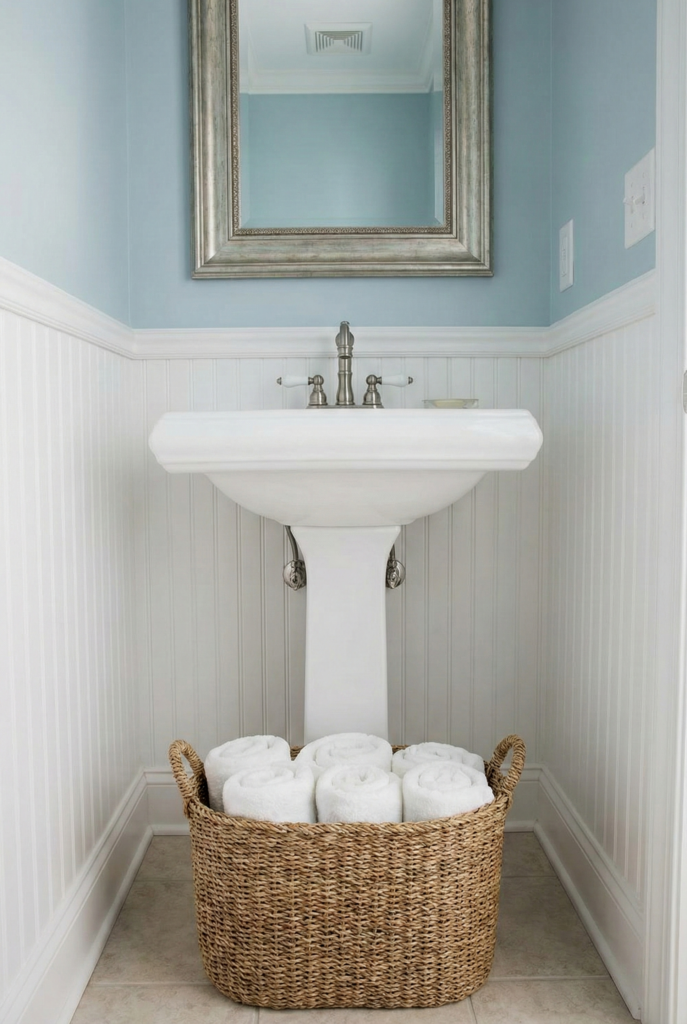
If storage isn’t your main concern (perhaps it’s a guest bath), a pedestal sink is the ultimate space saver. It has a tiny footprint and a classic, airy look. Just be sure to have a plan for where the extra toilet paper goes! Because they don’t block the visual line of the baseboards, pedestal sinks make the room feel much lighter and less bottom-heavy.
Where to put the stuff when you have a Pedestal Sink:
What is the best color for a small bathroom?
White and light neutrals reflect the most light and are the safest bet for expanding space. However, dark colors can work if you commit to them fully (walls, ceiling, trim) to create depth and drama.
Can I use wallpaper in a bathroom?
Yes, but be careful with moisture. In a powder room (no shower), standard wallpaper is fine. In a full bath with a shower, use “Splash-Proof” or vinyl wallpaper, and ensure you have excellent ventilation (a good exhaust fan).
How big should a mirror be in a small bathroom?
As big as possible. A mirror that spans the entire width of the vanity (or even wall-to-wall) is better than a small mirror that floats in the middle of the wall.
Is a tub or shower better for resale?
Most real estate agents recommend keeping at least one bathtub in the house for families with small children. However, if you have two bathrooms, converting the master or the small guest bath to a walk-in shower is a great upgrade.