10 Shared Small Girls Bedroom Ideas for Sisters Who Need Space
I am honestly so tired of seeing shared bedrooms where the twin beds are just shoved side-by-side with a tiny, sad nightstand in the middle. It feels like a barracks, not a sanctuary. When you have two girls sharing one small footprint, the “squashed together” look doesn’t just kill the aesthetic; it kills the peace. Sisters need their own corners of the universe to retreat to, even if that universe is only 100 square feet. I recently realized that many of the 20 small girl bedroom ideas that actually feel huge work specifically because they prioritize personal boundaries over symmetry. We need to stop thinking about a “shared room” and start thinking about “two rooms in one.”
✨ Before You Start: 10 Shared Small Girls Bedroom Ideas for Sisters Who Need Their Space Mindset
Built-In Bunks with Linen Privacy Curtains
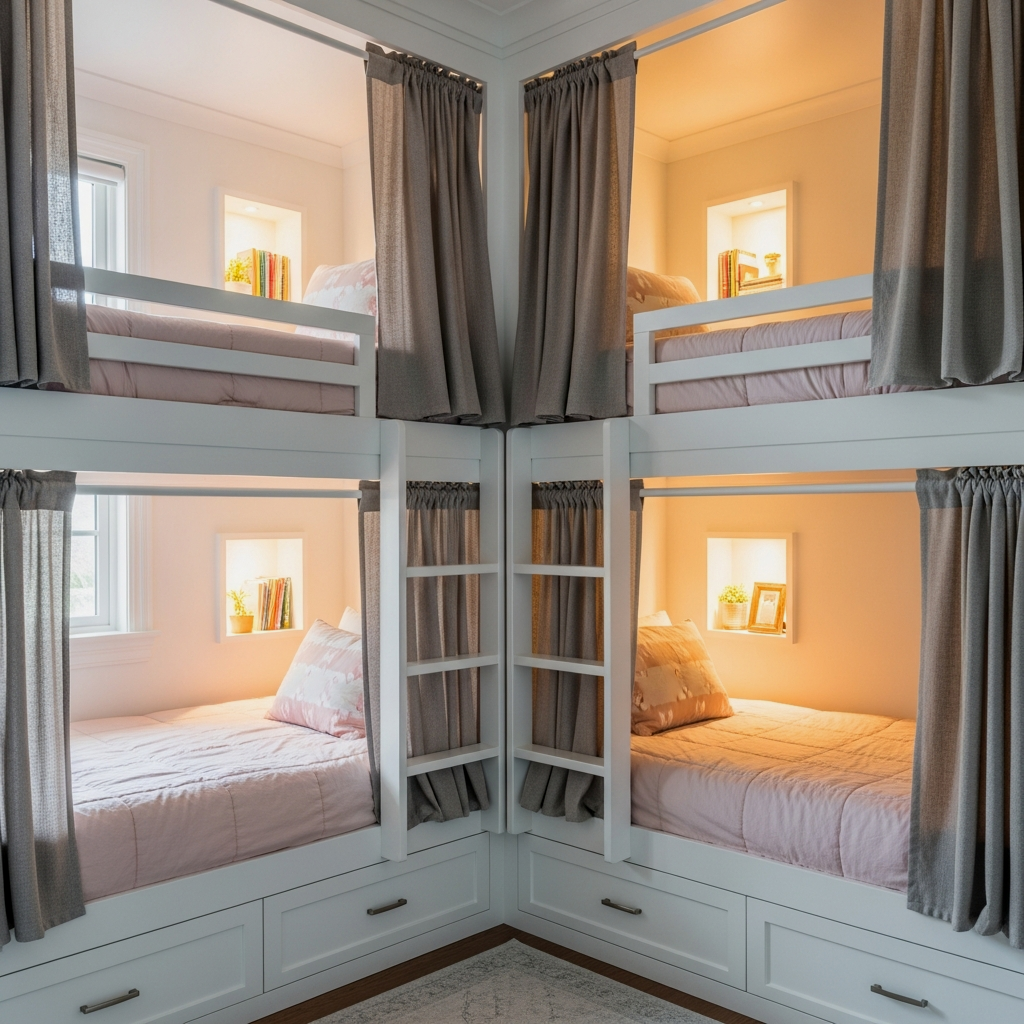
No seriously, built-ins are the gold standard for a reason. If you have the budget or a very handy partner, creating a bunk nook that is recessed into the wall (or looks like it is) changes everything. By adding heavy linen curtains to each bunk, you aren’t just giving them a bed; you’re giving them a tiny house. I was not prepared for how good this looks when the curtains match the wall color. It makes the beds disappear during the day and provides total seclusion at night.
Install a battery-operated, remote-controlled LED puck light inside each bunk. It allows them to read or play without the light from their sister’s bunk disturbing them.
Head-to-Head Layout with a Central Partition
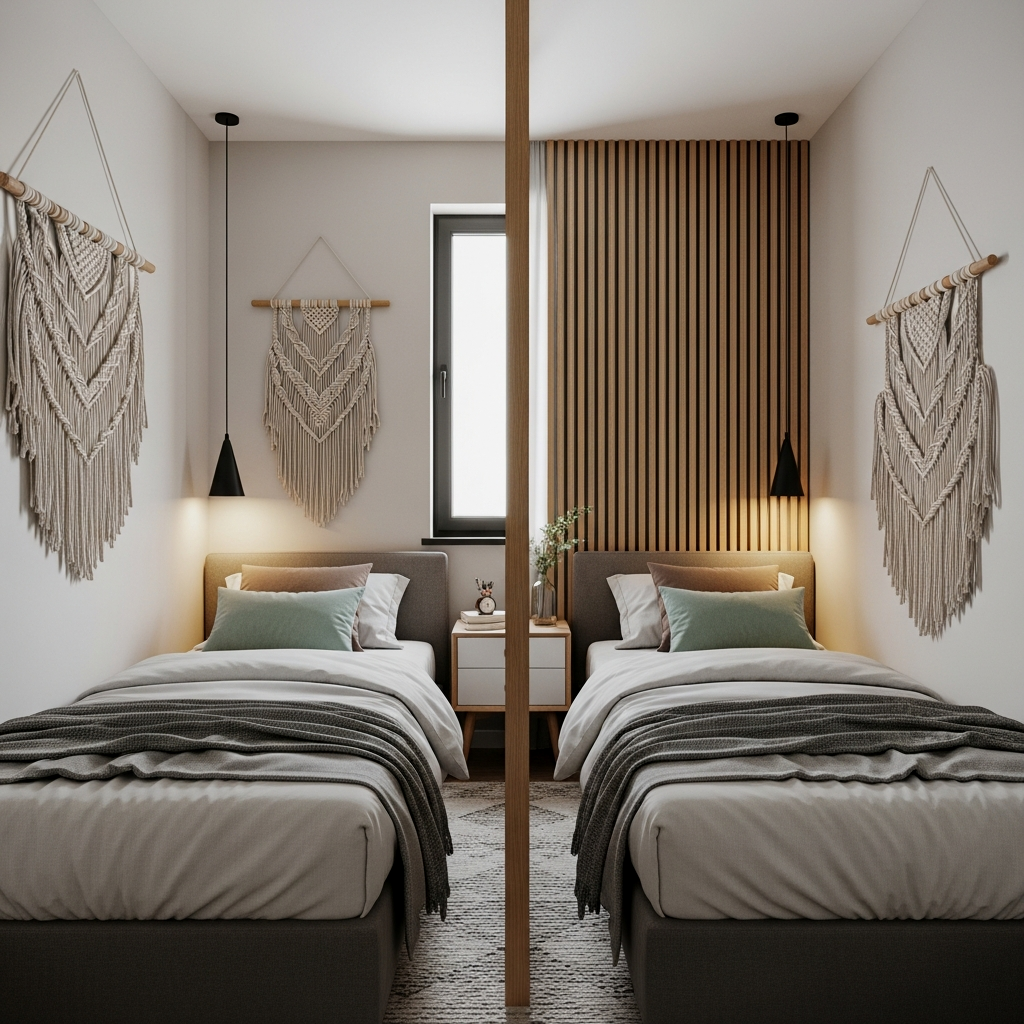
This layout is genuinely life-changing for long, narrow rooms. Instead of parallel beds, place the beds end-to-end along one long wall. In the middle, where their heads meet, place a tall shelving unit or a custom wooden partition. This acts as a headboard for both girls but creates a total visual block. They can be inches away from each other and never have to make eye contact when they’re trying to wind down.
Floor-to-Ceiling Bookshelf Room Divider
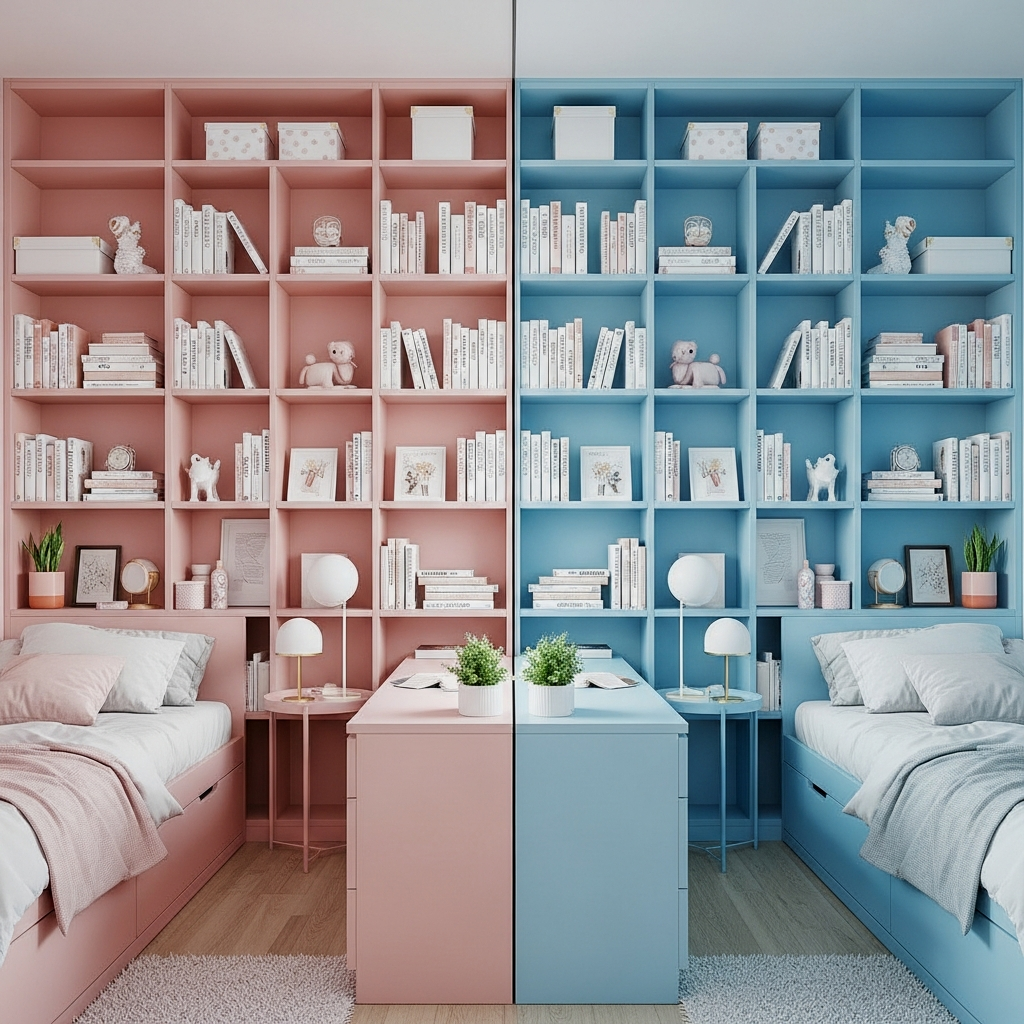
I cannot stress this enough: storage is the enemy of a small shared room, and floor-to-ceiling bookshelves are the solution. If the room is wide enough, use an open-back bookshelf (like the IKEA Kallax, but taller) to bisect the room. It lets light through so the space doesn’t feel like a cave, but it provides a “wall” of books and toys that separates their individual zones. Trust me on this one, the extra storage alone makes the room feel ten times bigger.
Follow the 70/30 Color Rule. Use a shared neutral color for 70% of the room (walls, rug, curtains) and allow each girl to choose their own ‘accent’ color for the remaining 30% (bedding, pillows, desk accessories) to define their personal zone.
Color-Blocked Personal Zones
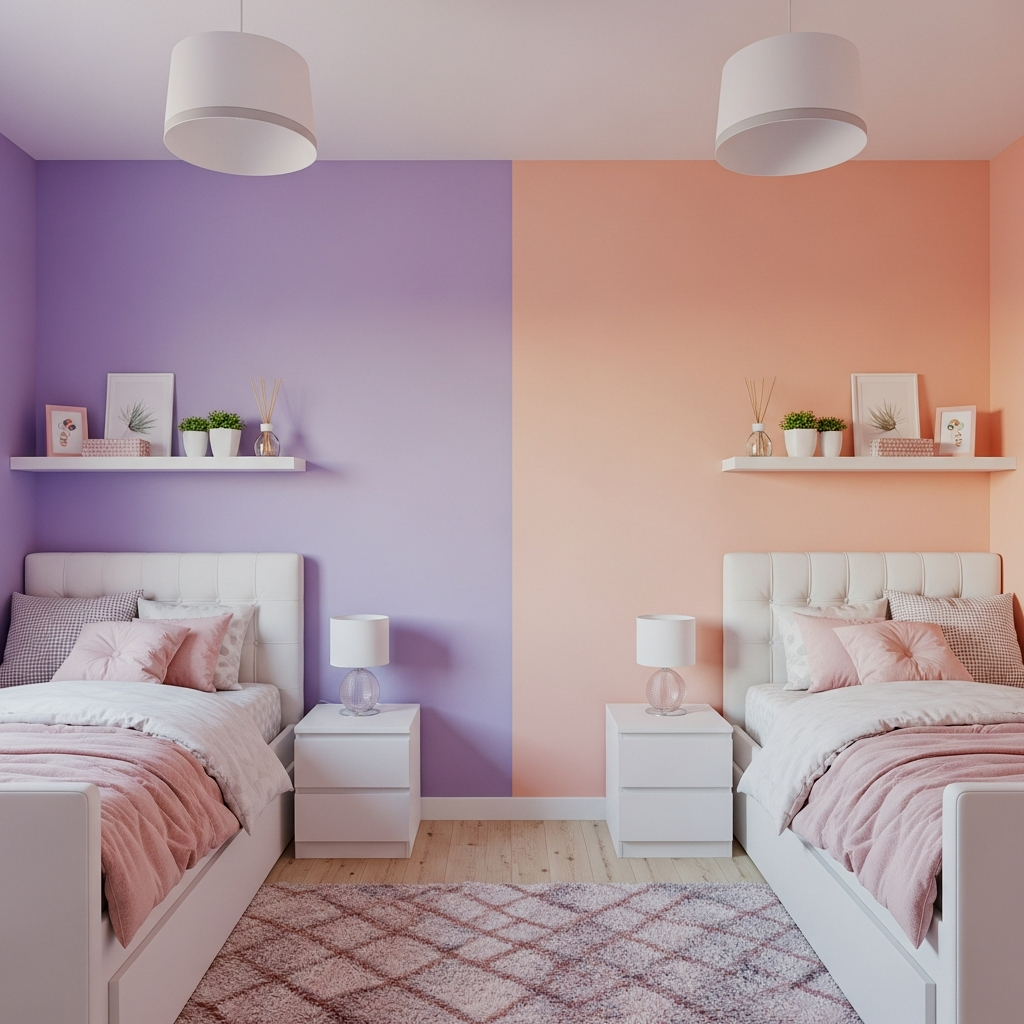
If you can’t build a physical wall, paint one. Obsessed is an understatement when it comes to the power of a bold paint line. Paint one half of the room (including the ceiling!) in a soft sage and the other half in a dusty rose or warm terracotta. This visual “split” tells the brain where one person’s space ends and the other begins. The results speak for themselves when they finally stop fighting over the rug because the paint line has literally drawn the “do not cross” boundary for you.
Carry the paint color onto the furniture pieces in that zone, like the nightstand or chair, to reinforce the ‘separate rooms’ illusion.
Offset L-Shaped Bunk Bed Configuration
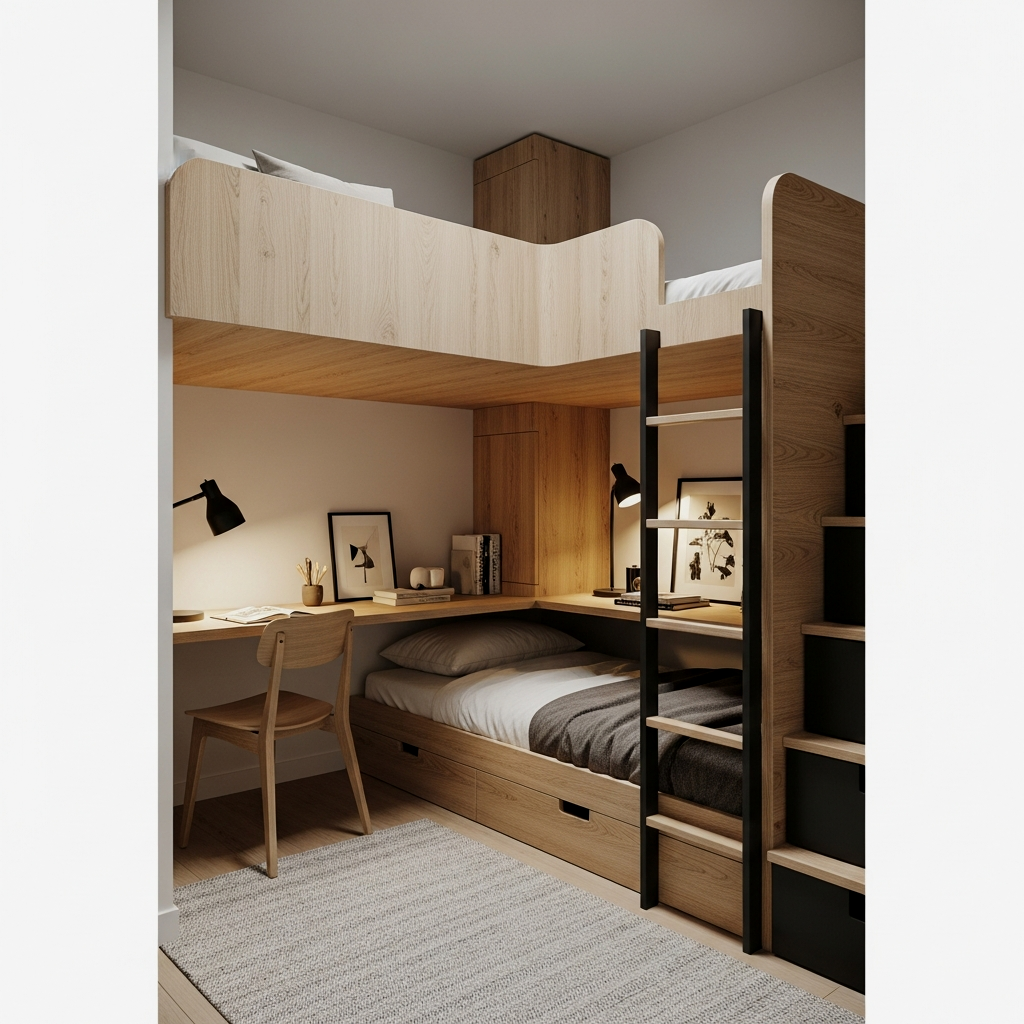
This is the one for those awkward, square rooms. Instead of a traditional bunk where they are stacked like sardines, use an L-shaped loft. The top bunk goes along one wall, and the bottom bed tucks under it at a 90-degree angle. This opens up the center of the room for a shared play area and gives the girl on the bottom a much higher “ceiling” over her bed so she doesn’t feel cramped. It’s a best kept secret for making a small room feel airy.
Central Ceiling-Mounted Track Curtains
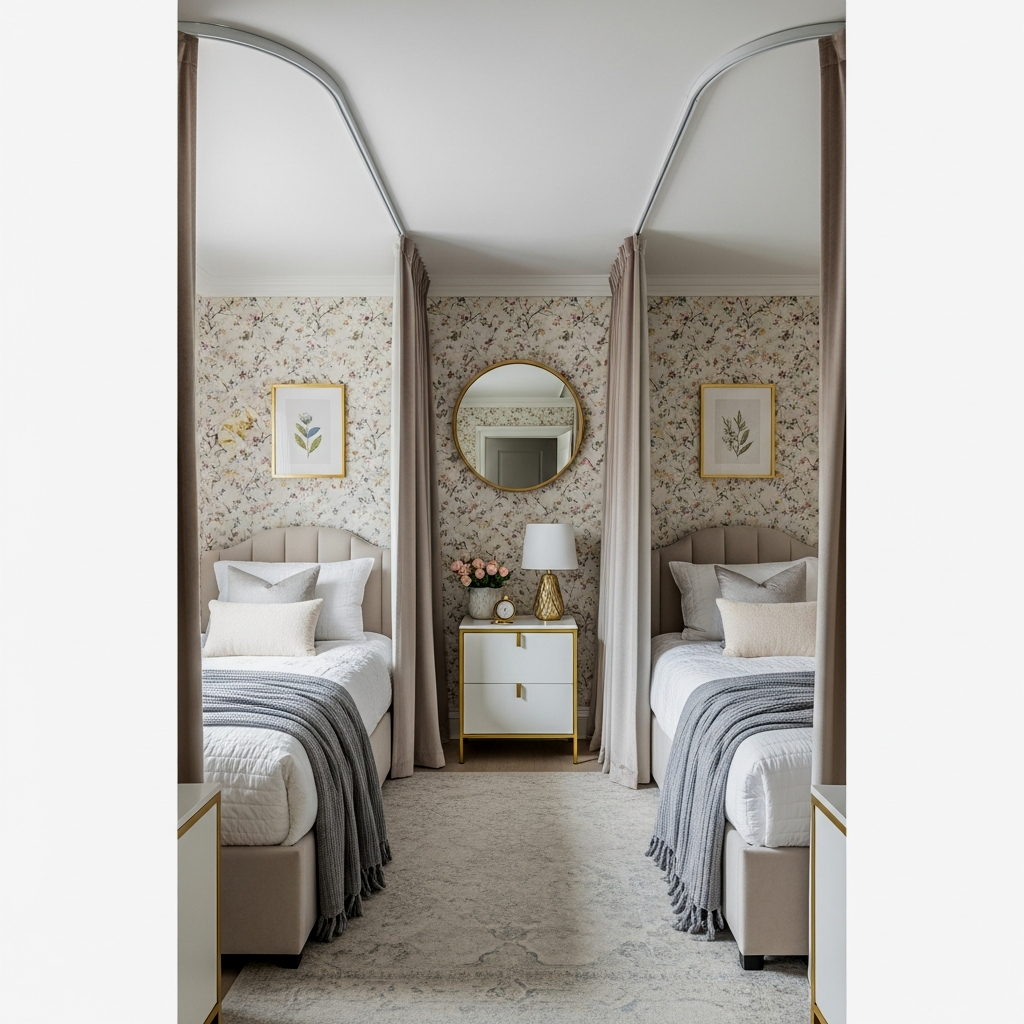
I wish someone had told me sooner that hospital tracks (the pretty kind!) are the ultimate hack for shared rooms. By mounting a track to the ceiling down the center of the room, you can pull a heavy velvet or linen curtain across whenever someone needs a “time out” or quiet time. It gives the flexibility of an open room during the day and two private suites at night. Once you try this you cannot go back to just living in the mess together.
Dual High-Loft Beds with Bottom Sanctuaries
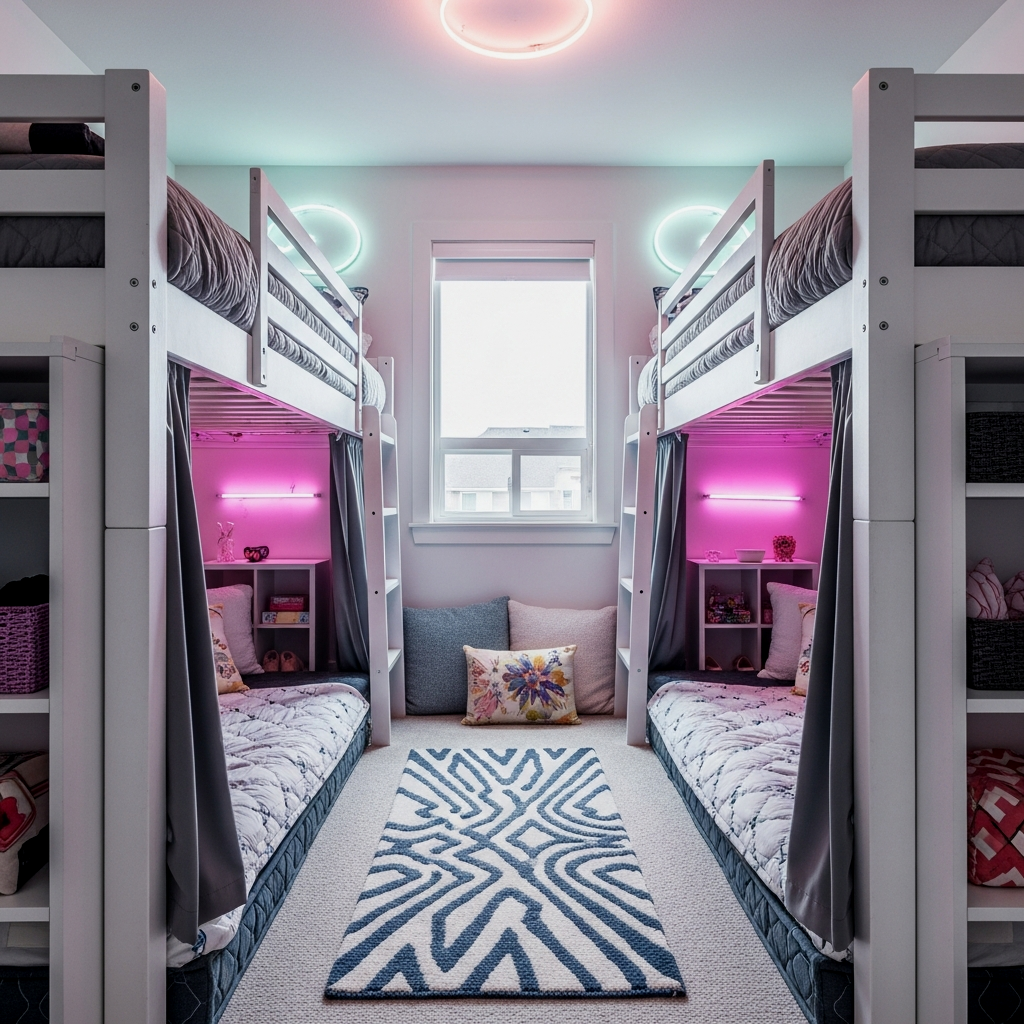
If your ceilings are high enough, do not sleep on the power of dual lofts. By lofting both beds, you double the usable floor space. Underneath each bed, you can create a “bottom sanctuary”—one girl gets a desk and vanity, the other gets a cozy reading nook with a bean bag. This is genuinely life-changing for older sisters who need a place to do homework away from a sibling’s play area.
The exact pieces that make these ideas work:
The Symmetrical Rattan Screen Divider
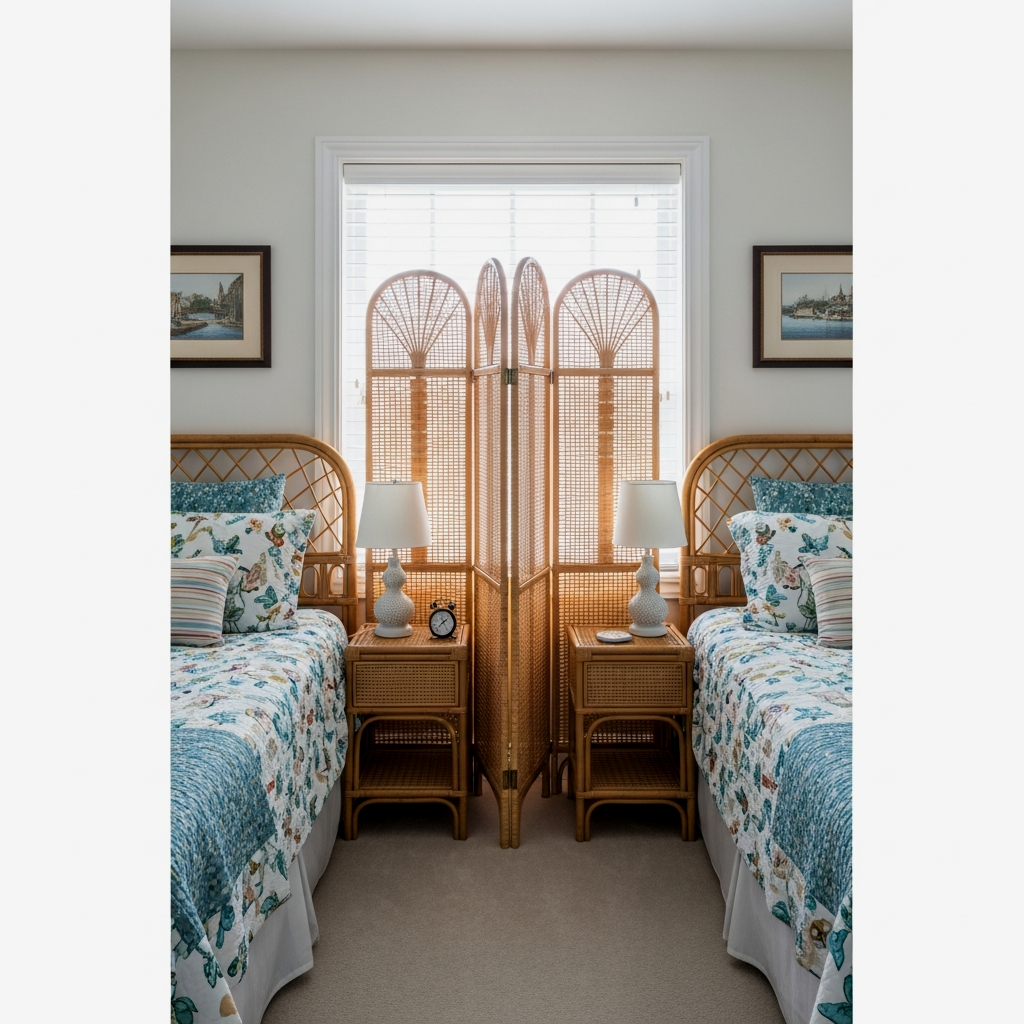
For a more boho-chic look, a rattan screen is the perfect low-effort solution. It’s light enough to move around but substantial enough to provide a visual break between two beds. Place it at the foot of the beds or between them. I love how it adds texture and warmth without the permanence of a built-in wall. The difference is unreal when you add some fairy lights woven through the rattan.
Use small transparent Command hooks to secure the screen to the wall if your kids are younger, preventing it from tipping over during play.
Mirrored Wardrobe Partition Wall
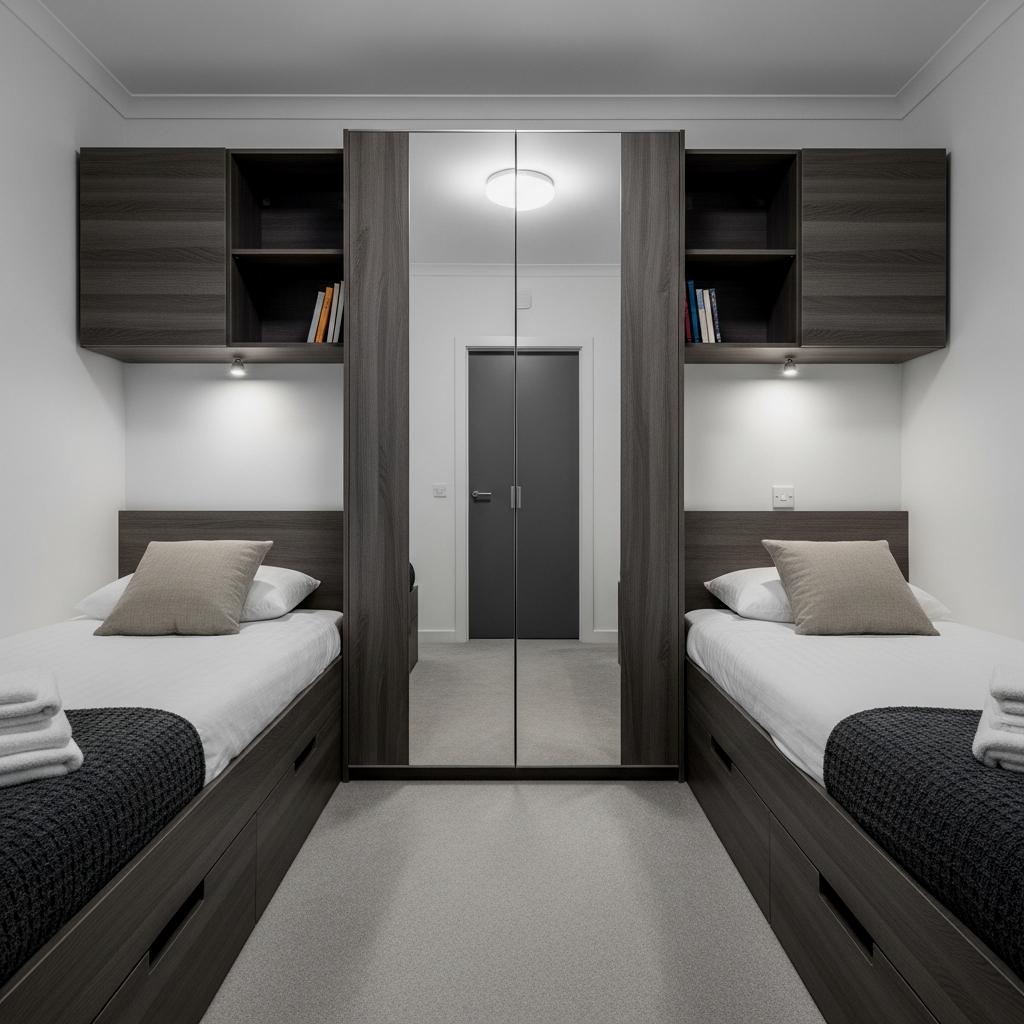
This is a high-level design move, but this alone is worth it for the storage. Use two slim wardrobes (facing opposite directions) as a room divider. On the back of each wardrobe, mount a full-length mirror. Not only does this give each girl her own closet and dressing station, but the mirrors bounce light around the room, making a tiny space feel massive. This changed everything for me when I realized you don’t need a wall if you have furniture that acts like one.
When using furniture as a divider, always finish the ‘back’ of the unit. If it’s a cheap MDF back, cover it with a beautiful peel-and-stick wallpaper or a fabric panel. It makes the piece look like a custom architectural feature rather than the back of a closet.
📏 10 Shared Small Girls Bedroom Ideas for Sisters Who Need Their Space Quick-Win Checklist
- Measure Vertical Space: Check ceiling height before committing to lofts or tall dividers.
- Pick a Shared Base: Choose one neutral wall color to tie the two zones together.
- Prioritize Lighting: Ensure each girl has her own lamp or sconce that she can control.
- Address Sound: Use rugs and curtains to dampen the noise between the two ‘zones’.
- Declutter Daily: Small shared rooms feel messy twice as fast—stick to a storage system.
Canopy Bed Tunnels for Individual Privacy
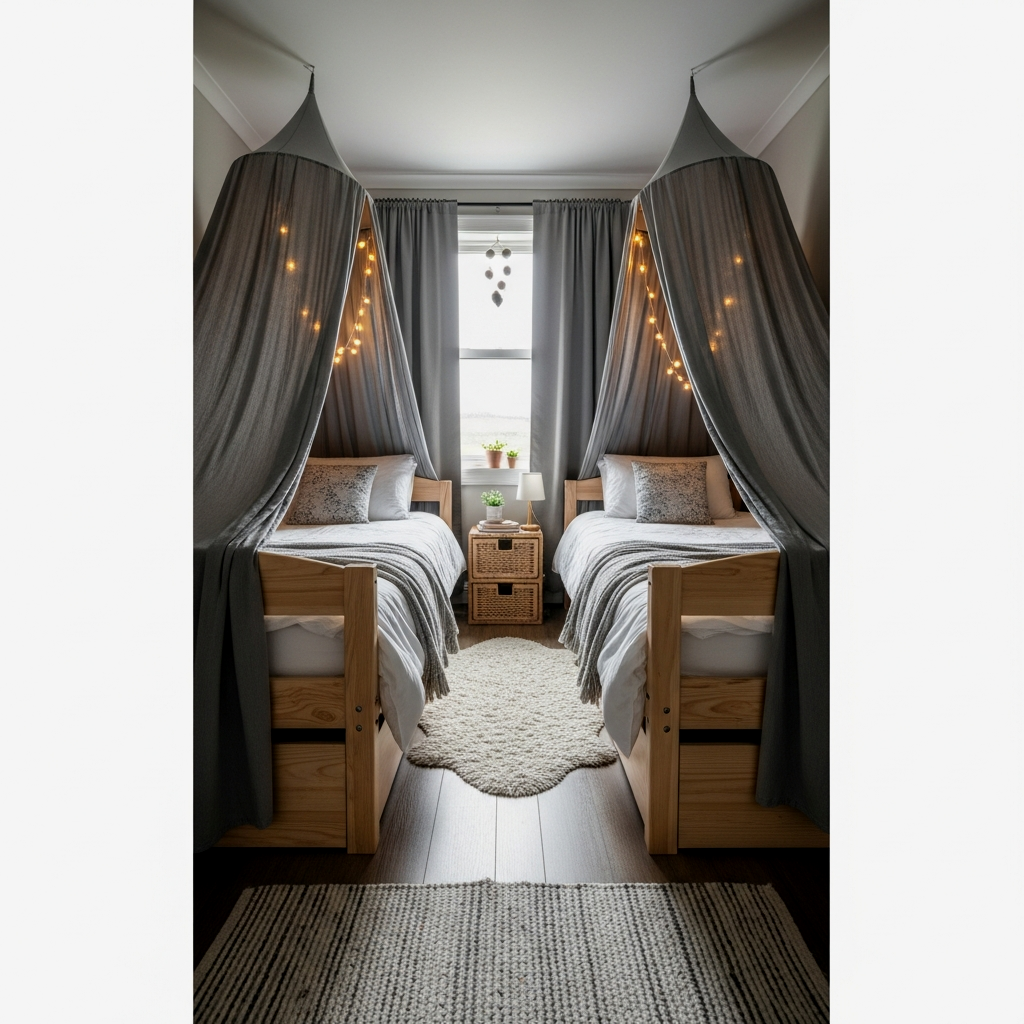
If you are stuck with the standard side-by-side layout, canopy beds are your best friend. But don’t just go for the standard four-poster. Use wall-mounted hoops with sheer fabric that drapes over the head of the bed, creating a “tunnel” effect. It gives each girl a sense of enclosure and her own little world to dream in. You will not regret this, especially if you add some glow-in-the-dark stars inside the canopy fabric.
Choose a washable, lightweight cotton for the canopy rather than polyester. It breathes better and won’t get as dusty, which is a win for everyone’s allergies.
Designing a shared room is honestly a labor of love, but it’s so rewarding when you see them finally have their own little retreats. Just remember that the goal isn’t perfection; it’s peace. If you’re feeling overwhelmed by the small footprint, definitely check back in with my guide on 20 small girl bedroom ideas that actually feel huge for more layout hacks. You’ve got this, and I promise, they’ll appreciate the effort to give them a space that’s truly theirs.
FAQ
How do I stop my daughters from fighting over space in a small room?
The best way is to create clear, visual boundaries. Whether it’s a physical divider like a bookshelf or a visual one like color-blocked paint, giving each girl a designated “zone” helps define ownership and reduces conflict.
Is a bunk bed or two twin beds better for a small room?
In a very small room, a bunk bed is almost always better because it frees up floor space for play or desks. However, if privacy is the main concern, lofts or twin beds with a central partition often work better for older sisters.
What is the best room divider for a child’s bedroom?
For a balance of safety and function, an open-backed bookshelf anchored to the wall is the best choice. It provides storage, allows light to pass through, and creates a solid visual wall between the two sleeping areas.
How can I give each girl privacy in a shared room without building walls?
Ceiling-mounted track curtains are the most effective non-permanent solution. They can be pulled shut for total privacy or pushed back during the day to keep the room feeling open and airy.
Can I use two different styles in one shared small bedroom?
Yes! The key is to have a “bridge.” Use the same flooring and a consistent wall color (even if you color-block), then let the bedding and personal decor reflect their individual styles. Keeping the furniture silhouettes similar also helps maintain a cohesive look.